



Refractories Market Size & Growth Forecast 2027–2036, By Segments (End-use), Regional Demand Trends (North America, Asia Pacific, Europe), Key Country Insights (U.S., Japan, South Korea, Germany, France, Italy), and Competitive Landscape
Market Size and Growth Outlook
Refractories Market size was around USD 50.9 billion in 2026 and is slated to grow at a 9.03% CAGR from 2027 to 2036, surpassing USD 120.83 billion by 2036. The industry revenue for 2027 is calculated at USD 54.77 billion.
Base Year Value (2026)
USD 50.9 billion
CAGR (2027-2036)
9.03%
Forecast Year Value (2036)
USD 120.83 billion

Historical Data Period
2022-2026

Largest Region
Asia Pacific

Forecast Period
2027-2036
Refractories Market Intelligence Snapshot:
-
Regional Market Dynamics:
- Asia Pacific dominates with 72.00% share due to large-scale steel, cement, glass, and metals production, where continuous high-temperature operations drive sustained refractory consumption.
- North America’s 4.56% CAGR is supported by industrial modernization, replacement of aging thermal infrastructure, and demand for higher-performance refractory solutions improving efficiency and lifespan.
-
Segment Momentum:
- Iron & Steel leads because refractory materials are extensively used across high-temperature processing equipment, with continuous replacement needs supporting steady demand and consistent consumption throughout production operations.
- Non-ferrous Metals is expanding fastest as aluminum, copper, and other processing applications require specialized refractory materials capable of handling demanding thermal, chemical, and wear conditions.
-
Market Expansion Drivers:
- Expanding industrial infrastructure investments increasing demand for durable refractory lining solutions.
- Rising industrial automation requiring high-performance refractory materials with superior thermal stability.
- Growing circular economy initiatives supporting adoption of recycled and sustainable refractory products.
-
Leading Market Participants:
Top players in the refractories market include RHI Magnesita N.V. (Austria), Vesuvius plc (United Kingdom), Krosaki Harima Corporation (Japan), Shinagawa Refractories Co., Ltd. (Japan), Saint-Gobain SEFPRO (France), HarbisonWalker International, Inc. (United States), Morgan Advanced Materials plc (United Kingdom), Chosun Refractories Co., Ltd. (South Korea), Imerys S.A. (France), CoorsTek, Inc. (United States).
Global Market Forecast Snapshot:
-
Market Outlook:
- 2026 Market Size: USD 50.9 billion
- 2027 Estimated Market Size: USD 54.77 billion.
- Projected Market Size: USD 120.83 billion by 2036
- Growth Forecasts: 9.03% CAGR (2027-2036)
-
Regional and Segment Outlook:
- Leading Regional Market: Asia Pacific
- High-Growth Regional Hub: North America
- Core Revenue Segment: Iron & Steel (End-use)
- Emerging Opportunity Segment: Non-ferrous Metals (End-use)
Market Growth Drivers and Industry Trends
Expanding industrial infrastructure investments increasing demand for durable refractory lining solutions
Expanding infrastructure and industrial development projects will drive the refractories market growth by increasing the need for durable materials capable of protecting high-temperature processing equipment. Investments in facilities across sectors such as metals, cement, chemicals, and other process-intensive industries require refractory linings that can withstand intense heat, mechanical stress, and corrosive operating environments. As industrial facilities expand or upgrade production capacity, demand increases for refractory systems that support equipment reliability, extend lining service life, and reduce disruptions associated with frequent maintenance or replacement.
Rising industrial automation requiring high-performance refractory materials with superior thermal stability
The refractories market growth is supported by the increasing use of automated industrial processes, where production systems operate under tightly controlled and often demanding thermal conditions. Automation can increase the consistency and intensity of manufacturing operations, creating greater requirements for refractory materials that maintain structural integrity and thermal performance during continuous or high-temperature processing. Materials with superior thermal stability can help protect furnaces, kilns, reactors, and other critical equipment while supporting stable operating conditions, particularly as industrial facilities adopt more sophisticated production technologies and process controls.
Growing circular economy initiatives supporting adoption of recycled and sustainable refractory products
Growing emphasis on resource efficiency and waste reduction is encouraging manufacturers and industrial users to incorporate recycled materials and more sustainable practices into refractory applications, supporting demand in the refractories market. Circular economy initiatives can promote the recovery and reuse of refractory materials from industrial operations, reducing dependence on virgin raw materials and improving material utilization. The development and adoption of recycled refractory products also align with efforts to reduce industrial waste, optimize resource consumption, and improve the environmental performance of high-temperature manufacturing processes.
| Growth Driver Assessment Framework | |||||
| Growth Driver | Impact On CAGR | Regulatory Influence | Geographic Relevance | Adoption Rate | Impact Timeline |
|---|---|---|---|---|---|
| Expanding industrial infrastructure investments increasing demand for durable refractory lining solutions | 1.80% | Moderate | Asia Pacific, Middle East & Africa | High | Mid Term |
| Rising industrial automation requiring high-performance refractory materials with superior thermal stability | 1.60% | Moderate | North America, Europe | Medium | Mid Term |
| Growing circular economy initiatives supporting adoption of recycled and sustainable refractory products | 1.30% | High | Europe, Asia Pacific | Emerging | Long Term |
Unlock insights tailored to your business with our bespoke market research solutions - Click to get your customized report now!
Regional Demand Dynamics
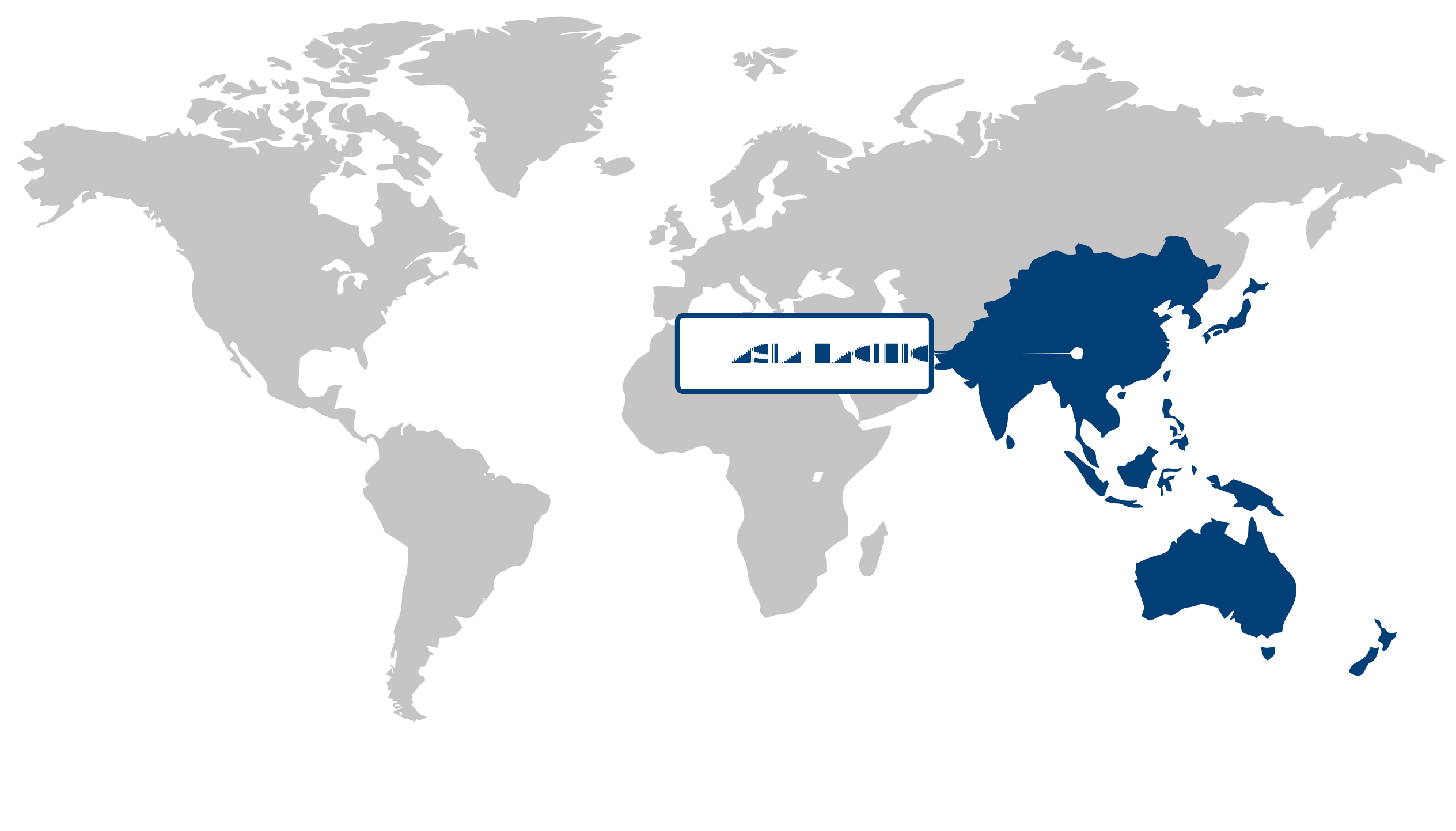
Largest Region
Asia Pacific
72% Market Share in 2026
Asia Pacific (Largest Region) vs North America (Fastest-Growing Region)
Asia Pacific dominated the refractories market in 2026, accounting for a 72.00% share, underpinned by the region’s extensive steel, cement, glass, nonferrous metals, and other high-temperature processing industries. Strong manufacturing activity and continued investments in industrial capacity generate substantial demand for refractory materials capable of withstanding extreme temperatures, chemical corrosion, and mechanical wear. The concentration of heavy industrial production across major economies also supports sustained consumption across furnaces, kilns, reactors, and other thermal processing equipment. In addition, ongoing industrial modernization and efforts to improve energy efficiency are encouraging producers to adopt higher-performance refractory solutions that can extend equipment operating cycles, reduce maintenance requirements, and improve process reliability.
North America is emerging as the fastest-growing regional market, supported by industrial revitalization, modernization of manufacturing facilities, and rising investment in energy-efficient production technologies. Demand for refractories is benefiting from upgrades across steelmaking, foundries, cement production, glass manufacturing, and other heat-intensive industries, where improved material durability can contribute to operational efficiency. Greater emphasis on reducing production downtime and optimizing furnace performance is also encouraging the use of advanced refractory formulations. Furthermore, investments in domestic industrial infrastructure and the modernization of aging thermal-processing assets are creating favorable conditions for higher-value refractory products with enhanced resistance to thermal shock, abrasion, and chemical attack.
Key Country Insights
The U.S. refractories market focuses on supplying durable materials for steel, cement, glass, and industrial processing operations. Manufacturers emphasize longer service life, improved thermal performance, and solutions that reduce maintenance requirements in high-temperature applications.
Japan strengthens the refractories market by developing specialized materials for demanding industrial processes. Japan focuses on high-quality refractory products, consistent production standards, and materials engineered to support advanced manufacturing and thermal efficiency.
South Korea supports the refractories market through sustained demand from steelmaking and heavy industrial operations. The country prioritizes refractory durability, optimized furnace performance, and production technologies that improve operational efficiency under intensive processing conditions.
Germany advances the refractories market through continuous innovation supporting energy-efficient industrial production. Germany prioritizes premium refractory materials, customized solutions for complex manufacturing environments, and technologies that improve furnace performance and operational reliability.
France develops the refractories market by encouraging materials that improve industrial efficiency while supporting sustainability initiatives. France emphasizes refractory solutions with longer operating cycles, reduced energy consumption, and compatibility with modern industrial processing equipment.
Italy advances the refractories market by leveraging strong capabilities in ceramics, metallurgy, and industrial manufacturing. Italy prioritizes specialized refractory materials, application-specific product development, and reliable supply for high-temperature industrial operations.
Segment Leadership and Growth Trends
End-use Segment Analysis: Iron & Steel (Largest Segment) vs Non-ferrous Metals (Fastest-Growing Segment)
The iron & steel segment accounted for the largest share of the refractories market in 2026. Refractory materials are essential throughout high-temperature steelmaking processes because they protect furnaces, vessels, and other processing equipment from heat, chemical attack, and mechanical wear. Continued demand for durable linings that can withstand severe operating environments, improve furnace reliability, and support efficient production makes iron and steel manufacturing a major source of refractory consumption.
By contrast, the non-ferrous metals segment is expanding at the fastest pace as producers of aluminum, copper, and other non-ferrous materials increasingly require refractory systems capable of handling demanding thermal and chemical conditions. Growth in metal processing, along with greater emphasis on operational efficiency, equipment longevity, and reduced maintenance requirements, is encouraging the adoption of specialized refractory solutions across non-ferrous production facilities.
| Report Segmentation | |||
| Segment | Sub-Segment | Largest Segment | Fastest Growing Segment |
|---|---|---|---|
| End-use | Iron & Steel, Cement & Lime, Glass & Ceramics, Non-ferrous Metals, Others | Iron & Steel | Non-ferrous Metals |
 Read our Research Approach
Competitive Landscape and Market Positioning
Major players in the refractories market:
1. RHI Magnesita N.V. (Austria)
2. Vesuvius plc (United Kingdom)
3. Krosaki Harima Corporation (Japan)
4. Shinagawa Refractories Co. Ltd. (Japan)
5. Saint-Gobain SEFPRO (France)
6. HarbisonWalker International Inc. (United States)
7. Morgan Advanced Materials plc (United Kingdom)
8. Chosun Refractories Co. Ltd. (South Korea)
9. Imerys S.A. (France)
10. CoorsTek Inc. (United States)
The refractories market is advancing through high-temperature material innovation and industrial performance improvements. Development efforts are enhancing durability and thermal resistance. Collaborative material engineering is strengthening production capabilities. Continuous innovation is supporting heavy industry applications.
Industry Development/News
| Company Name | Date | Key Development |
|---|---|---|
| Calderys | Apr-26 | Calderys inaugurated the CAPES facility in Odisha, positioning it as the world’s largest refractory manufacturing plant. This capital investment substantially expands global production capacity and strengthens the refractory supply chain serving key industrial sectors in India and international export markets. |
| RHI Magnesita | Feb-26 | RHI Magnesita completed the acquisition of a refractory manufacturing plant from Manishri Refractories & Ceramics for €5.5 million. This transaction strengthens the company’s regional production footprint in India, enhancing its operational ability to serve localized demand and support broader customer segments within the South Asian market. |
| Shinagawa Refractories Co., Ltd. | Oct-24 | Shinagawa Refractories acquired Netherlands-based Gouda Refractories Group B.V. as part of its Vision 2030 and mid-term management strategy. This acquisition provides a critical manufacturing and distribution footprint in the EMEA region, facilitating entry into non-ferrous metals, petrochemicals, and waste-to-energy end-use markets. |
| RHI Magnesita | Jan-25 | RHI Magnesita finalized the acquisition of U.S.-based Resco Group, significantly enhancing its North American presence. The integration expands the company’s technical portfolio of alumina monolithics and specialized refractory products, strengthening its competitive positioning and industrial service capabilities across the North American market. |
| MIRECO | Jun-24 | MIRECO, a joint venture between RHI Magnesita and Horn & Co. Group, acquired Refrattari Trezzi to solidify its competitive standing in the European refractory recycling market. The move secures access to secondary raw material resources, advancing circular economy initiatives and operational resilience within the regional supply chain. |
| Calderys | Aug-25 | Calderys commissioned its first acidic monolithics production line and a new tap-hole clay unit at the Odisha CAPES facility. These technical additions expand the site’s high-performance manufacturing capabilities, specifically targeting increased material requirements for steel industry applications and optimizing output for high-demand industrial processes. |
| JT Thorpe | Nov-25 | Backed by HIG Capital, JT Thorpe launched ThorCan in Ontario, marking a strategic expansion into the Canadian market. This move establishes a specialized refractory services footprint in North America, broadening the company’s regional reach and diversifying its service-based revenue streams within the industrial refractory sector. |
| Calderys | Mar-25 | Calderys invested in a state-of-the-art Innovation Center in Neuwied, Germany, to accelerate refractory technology development. The facility enhances the company's research and development capacity, focusing on product innovation to address evolving industrial needs and maintain a competitive technological edge in high-performance refractory applications. |
| HarbisonWalker International | Jan-24 | HarbisonWalker International, a Calderys company, announced capital upgrades across multiple North American manufacturing facilities. The program focuses on enhancing production efficiency and capacity to meet the rising demand for refractory products, reflecting a broader strategy to optimize the company's North American operational network. |
Why Choose Us
Specialized Expertise: Our team comprises industry experts with a deep understanding of your market segment. We bring specialized knowledge and experience that ensures our research and consulting services are tailored to your unique needs.
Customized Solutions: We understand that every client is different. That's why we offer customized research and consulting solutions designed specifically to address your challenges and capitalize on opportunities within your industry.
Proven Results: With a track record of successful projects and satisfied clients, we have demonstrated our ability to deliver tangible results. Our case studies and testimonials speak to our effectiveness in helping clients achieve their goals.
Cutting-Edge Methodologies: We leverage the latest methodologies and technologies to gather insights and drive informed decision-making. Our innovative approach ensures that you stay ahead of the curve and gain a competitive edge in your market.
Client-Centric Approach: Your satisfaction is our top priority. We prioritize open communication, responsiveness, and transparency to ensure that we not only meet but exceed your expectations at every stage of the engagement.
Continuous Innovation: We are committed to continuous improvement and staying at the forefront of our industry. Through ongoing learning, professional development, and investment in new technologies, we ensure that our services are always evolving to meet your evolving needs.
Value for Money: Our competitive pricing and flexible engagement models ensure that you get maximum value for your investment. We are committed to delivering high-quality results that help you achieve a strong return on your investment.
Select Licence Type

