Returnable Glass Bottle Ink Market Size & Forecasts 2026-2035, By Segments (Ink Type, End-use Industry, Application, Color), Growth Opportunities, Innovation Landscape, Regulatory Shifts, Strategic Regional Insights (U.S., Japan, China, South Korea, UK, Germany, France), and Competitive Dynamics (Sun Chemical, Sakata INX, DIC Corporation, Siegwerk, Flint Group)
Jump to content
Market Size and Growth Outlook
Returnable Glass Bottle Ink Market size is projected to expand significantly, moving from USD 1.33 billion in 2025 to USD 2.27 billion by 2035, with a CAGR of 5.5% during the 2026-2035 forecast period. The expected revenue for 2026 is USD 1.4 billion.
Get more details on this report
Request Free Sample ReportReturnable Glass Bottle Ink Market Intelligence Snapshot
Regional Market Dynamics
Segment Momentum
Market Expansion Drivers
Leading Market Participants
Global Market Forecast Snapshot
Market Outlook
Regional and Segment Outlook
Market Growth Drivers and Industry Trends
The increasing shift towards reusable packaging significantly propels the returnable glass bottle ink market by necessitating durable, high-quality printing solutions that withstand multiple use cycles. Companies like Coca-Cola and Nestlé Waters have ramped up their reusable bottle programs, requiring inks that maintain label clarity and resistance over repeated washes and refills. This trend aligns with heightened consumer preference for eco-conscious purchase decisions and regulatory frameworks promoting waste reduction, such as those advocated by the Ellen MacArthur Foundation. For established ink producers, this creates opportunities to innovate formulations for enhanced longevity and compliance with food safety standards. New entrants can exploit niche demands for customizable inks that cater to premium or small-batch beverage products. With reusable packaging adoption firmly embedded in corporate strategies, the returnable glass bottle ink market is set for sustained demand growth focused on durability and environmental compliance.
Sustainability-Driven Brand Initiatives
Brands increasingly integrating sustainability into product identity drive demand in the returnable glass bottle ink market by emphasizing eco-friendly and non-toxic ink formulations. Esteemed firms like Unilever publicly commit to sustainable packaging, pushing suppliers to provide inks free of harmful solvents and heavy metals, thus supporting circular economy goals. This shift reflects consumer scrutiny on product footprints, compelling innovation in bio-based or UV-curable inks that reduce environmental impact during production and disposal stages. For incumbents, leveraging sustainability credentials offers differentiation in a crowded market, while startups can capitalize on clean-label transparency and certification schemes endorsed by organizations like the Sustainable Packaging Coalition. This driver ensures the market evolves towards greener chemistry, aligning regulatory compliance with consumer trust and brand reputation advances.
Long-Term Circular Economy Adoption
The broad embrace of circular economy principles by governments and industries globally reinforces growth in the returnable glass bottle ink market by embedding reuse and recycling into supply chains. The European Union’s Circular Economy Action Plan exemplifies policy frameworks encouraging companies to design for longevity, thereby increasing the need for inks that maintain legibility and integrity across multiple reuse cycles. This systemic transformation enables incumbent suppliers to develop scalable, standardized ink technologies compatible with global recycling infrastructures, while agile entrants can introduce adaptive and region-specific innovations. As circular economy adoption deepens, the returnable glass bottle ink market will be strategically positioned to support sustainable packaging ecosystems, fostering collaboration among manufacturers, brand owners, and regulatory bodies to optimize lifecycle performance.
Industry Restraints:
Stringent Regulatory Standards for Food-Grade Ink Compliance
The returnable glass bottle ink market faces critical constraints due to increasingly rigorous food safety and environmental regulations, which demand low-toxicity, non-migratory inks that adhere to strict chemical composition limits. Agencies such as the U.S. Food and Drug Administration (FDA) and the European Food Safety Authority (EFSA) impose exacting standards to prevent contamination risks from ink residues, complicating formulation and certification processes. This regulatory environment slows product development cycles and raises compliance costs, particularly burdening smaller ink manufacturers lacking extensive R&D resources. Established firms must invest continuously in innovation to maintain approvals, while entrants encounter high barriers to entry. Given the growing global focus on consumer health and sustainability, regulatory scrutiny will intensify, compelling market players to prioritize certifications and eco-friendly formulations, thus shaping product portfolios and competitive positioning in the foreseeable future.
Raw Material Supply Chain Disruptions and Cost Volatility
The availability and cost stability of specialty pigments and resins essential for returnable glass bottle inks represent a significant market restraint. Geopolitical tensions, such as those highlighted in trade disruptions reported by the International Trade Centre (ITC), alongside pandemic-induced supply shocks, have led to erratic raw material supplies and sharp price fluctuations. These factors constrain production scheduling and margin stability for ink producers, limiting their ability to scale or innovate rapidly. For incumbents, supply unpredictability necessitates diversified sourcing and inventory buffers, while new entrants face substantial hurdles securing reliable inputs at competitive costs. As global supply chains remain vulnerable to external shocks and raw material prices volatile, companies must adopt agile procurement strategies and strengthen supplier partnerships to mitigate risks, fundamentally influencing operational resilience and market competitiveness in the mid-term.
| Growth Driver | Impact on CAGR | Regulatory Influence | Geographic Relevance | Adoption Rate | Impact Timeline |
|---|---|---|---|---|---|
| Growth in reusable packaging | 2.00% | Short term (≤ 2 yrs) | Europe, North America; Spillover: Asia Pacific | Medium | Fast |
| Sustainability-driven brand initiatives | 1.80% | Medium term (2–5 yrs) | Global; Spillover: Latin America | Medium | Moderate |
| Long-term circular economy adoption | 1.70% | Long term (5+ yrs) | Global; Spillover: MEA | Medium | Moderate |
Unlock insights tailored to your business with our bespoke market research solutions.
Click to get your customized report now.
Regional Demand Dynamics
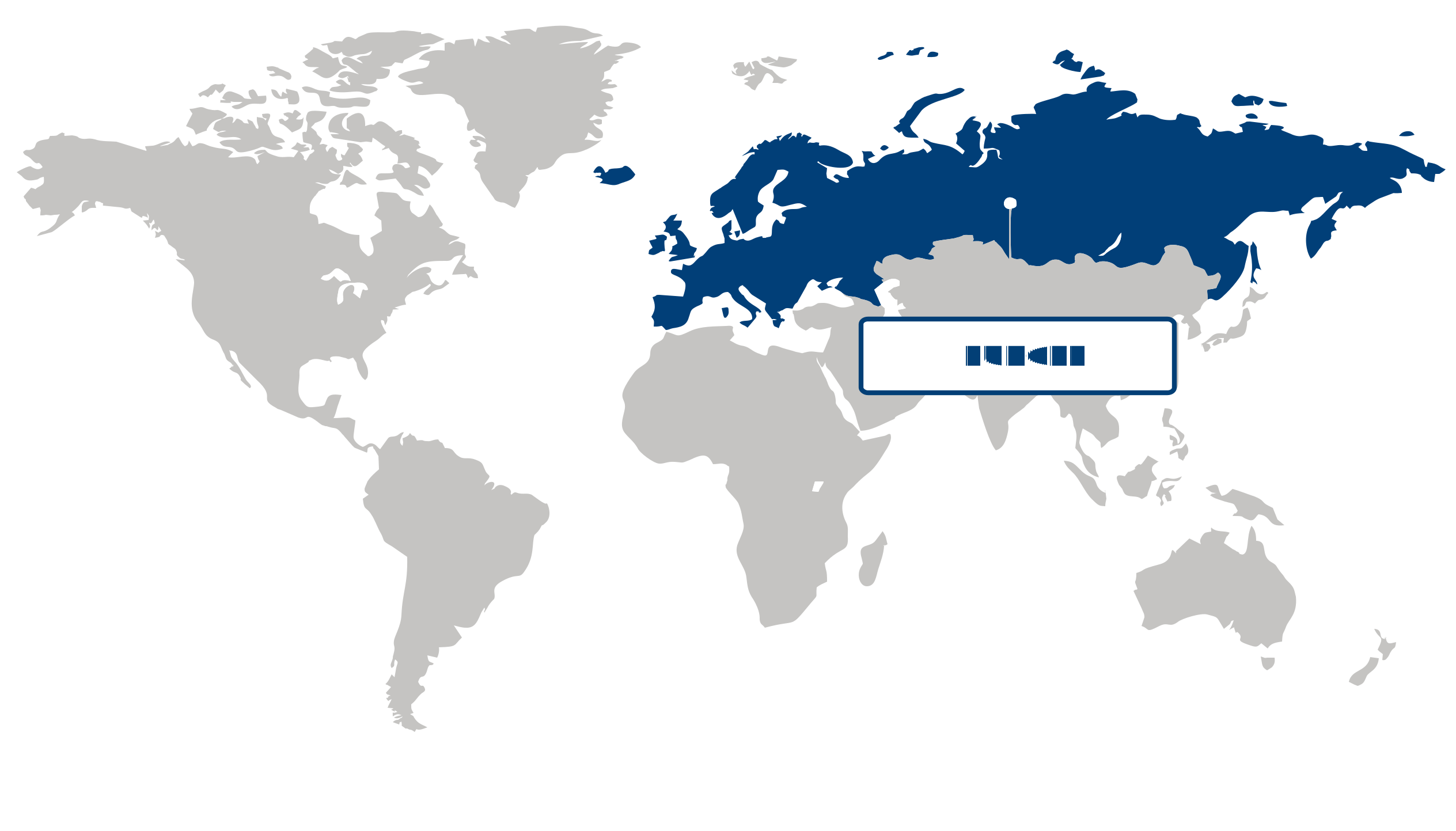
Europe dominated the returnable glass bottle ink market in 2025, capturing approximately 38.2% of the global share. The region leads due to stringent EU sustainability regulations and an advanced glass recycling infrastructure that support a circular economy. Policies enforced by the European Chemicals Agency (ECHA) and the European Environment Agency (EEA) have spurred demand for inks compatible with multiple reuse cycles. Additionally, European consumers increasingly prefer eco-friendly packaging amid rising environmental awareness, further propelling market growth. Industry players like Siegwerk and INX International Ink have expanded operations in Europe, leveraging technological advancements to meet strict regulatory standards. This ecosystem of policy, innovation, and consumer preference positions Europe as a lucrative landscape for returnable glass bottle ink suppliers, promising sustained demand driven by regulatory momentum and continuous investments in sustainable packaging.
Germany anchors the European returnable glass bottle ink market with its robust manufacturing base and stringent environmental policies. The German Environment Agency (UBA) plays a critical role in enforcing standards that require inks to be free from hazardous substances, ensuring recyclability and reuse. Moreover, major beverage producers such as Radeberger Gruppe have adopted returnable glass bottles extensively, incentivizing ink formulations compatible with high durability and multiple washes. This alignment of industrial demand and regulatory precision reinforces Germany’s leadership within the European market and highlights the country’s role as a strategic hub for innovation and sustainable packaging solutions.
France serves as a pivotal contributor to Europe’s returnable glass bottle ink market, driven by strong consumer eco-consciousness and government incentives promoting circular packaging. The French Ministry of Ecological Transition advocates for the widespread adoption of reusable and recycled glass bottles, influencing market demand for specialized ink technologies. Companies like Verallia have announced initiatives focusing on returnable glass, requiring inks that maintain print integrity through repeated use. France’s proactive policies combined with consumer acceptance create favorable conditions for niche ink developments that fulfill durability and environmental requirements, enhancing its significance within the region’s expanding market ecosystem.
Asia Pacific Market Analysis:
Asia Pacific emerged as the fastest-growing region in the returnable glass bottle ink market, registering a robust CAGR of 6.8%. This rapid growth is largely driven by swift industrialization across numerous countries coupled with aggressive governmental bans on single-use plastics. The accelerating shift to sustainable packaging is prompting manufacturers to adopt durable and eco-friendly solutions like returnable glass bottles, necessitating high-performance inks that ensure both durability and recyclability. For example, the Singapore Environment Council has supported initiatives promoting reusable glass packaging to reduce plastic waste. Moreover, rising consumer consciousness around environmental impact, particularly in urban centers, is fostering demand for products with clear sustainability credentials. This dynamic is further reinforced by advancements in ink technology and streamlined supply chain frameworks within the region, positioning Asia Pacific as a pivotal market for innovative returnable glass bottle ink solutions. The region’s economic resilience and policy momentum make it a fertile ground for expanding sustainable packaging applications in the coming years.
Japan plays a prominent role in expanding the returnable glass bottle ink market within Asia Pacific, benefiting from strong government regulations that target single-use plastic reduction. The country’s consumers show a deepening preference for environmentally responsible products, which encourages beverage and food companies to invest in sophisticated ink technologies that offer both aesthetic appeal and eco-compliance. For instance, Kirin Holdings has publicly committed to increasing its use of reusable glass bottles, necessitating specialized inks that withstand multiple wash-and-reuse cycles without degradation. Japan’s advanced manufacturing infrastructure supports the production of high-quality inks tailored to strict regulatory standards, enhancing the country’s leadership in sustainable packaging. These trends highlight Japan as a innovation hub, whose stringent environmental policies and consumer expectations align closely with broader regional growth drivers.
China’s returnable glass bottle ink market reflects the broader Asia Pacific trend of rapid industrial expansion coupled with stringent governmental plastic restrictions. The nation’s aggressive environmental directives, including bans on single-use plastics at municipal levels, have spurred beverage producers and ink formulators to prioritize returnable glass containers with durable, safe inks. Leading companies like China Resources Beer have adopted returnable glass packaging solutions to meet regulatory and consumer demands. Additionally, China’s vast manufacturing base and ongoing investments in digital printing technologies enable scalable production of inks that are both cost-effective and environmentally sustainable. These factors underscore China’s crucial contribution to the regional market’s advancement, as its policy-driven push for sustainability strengthens demand for innovative returnable glass bottle ink applications and solidifies Asia Pacific’s commanding position.
North America Market Trends:
North America held a substantial share in the returnable glass bottle ink market, driven by its mature packaging and beverage industries emphasizing sustainability and brand differentiation. Increasing consumer preference for eco-friendly packaging, coupled with stringent environmental regulations from the U.S. Environmental Protection Agency, has amplified demand for inks compatible with returnable glass bottles. The integration of advanced digital printing technologies by regional key players such as Ball Corporation and Owens-Illinois enables superior customization and enhanced durability, meeting rigorous reuse standards. Furthermore, efficient supply chains and robust infrastructure support seamless operations, reinforcing the region’s competitive edge. With growing investments in circular economy initiatives and rising awareness around sustainability from organizations like the U.S. Green Building Council, North America is poised for continued steady growth and innovation, offering substantial prospects for stakeholders in the returnable glass bottle ink market.
The U.S. serves as a primary market within North America for returnable glass bottle ink, fueled by its dynamic consumer base and progressive regulatory landscape. The adoption of reusable packaging in food and beverage sectors is encouraged by initiatives such as the Sustainable Packaging Coalition, fostering innovation in ink formulations that ensure durability through multiple reuse cycles. Companies like Crown Holdings have announced breakthroughs in eco-friendly ink technology tailored to meet FDA safety standards, underscoring the emphasis on product safety and environmental compliance. Additionally, the U.S. benefits from a well-established supply chain ecosystem that enhances production efficiency and cost-effectiveness. This blend of innovation, regulation, and consumer demand positions the U.S. as a strategic hub, reinforcing North America’s influential role in advancing the returnable glass bottle ink market.
| Parameter | North America | Asia Pacific | Europe | Latin America | MEA |
|---|---|---|---|---|---|
| Innovation HubiScaleNascentDeveloping Advanced | |||||
| Cost-Sensitive RegioniScaleLowMedium High | |||||
| Regulatory EnvironmentiScaleRestrictiveNeutral Supportive | |||||
| Demand DriversiScaleWeakModerate Strong | |||||
| Development StageiScaleEmergingDeveloping Developed | |||||
| Adoption RateiScaleLowMedium High | |||||
| New Entrants / StartupsiScaleSparseModerate Dense | |||||
| Macro IndicatorsiScaleWeakStable Strong |
Returnable Glass Bottle Ink Market Share (%), by Ink Type, 2026
Go beyond the chart, access full insights & data tables
Request Free Sample ReportUV-curable inks held largest share in the returnable glass bottle ink market in 2025, largely due to their rapid drying times, excellent adhesion, and environmentally sustainable, low-VOC formulations favored in packaging and labeling. This segment’s leadership is reinforced by strong industry shifts toward eco-friendly materials, as endorsed by the U.S. Environmental Protection Agency’s initiatives promoting low-emission inks. Consumer demand for sustainable packaging and stricter regulatory standards have driven adoption across beverage and food sectors, fostering supply chain innovation in ink manufacturing. Key players like Flint Group have capitalized on these trends by expanding their UV ink portfolios, creating strategic entry points for new entrants focusing on green technology. Given ongoing regulatory emphasis on sustainability and increasing demand for efficient printing processes, UV-curable inks are positioned to remain a critical growth vector in the near to medium term.
Analysis by End-use Industry
The food and beverage segment represented the largest share in the returnable glass bottle ink market, propelled by escalating use of printed coding and branding for packaging and stringent regulatory traceability requirements. This segment benefits from evolving consumer preferences for product transparency and safety, consistent with guidelines from the Food and Drug Administration (FDA) mandating precise labeling. The surge in demand for returnable bottle packaging, especially in the beverage subsector, has intensified the need for high-quality, durable inks capable of supporting supply chain traceability. Market leaders such as Avery Dennison have leveraged these dynamics to innovate packaging solutions that align with consumer trends and regulatory mandates. This segment’s breadth and regulatory integration ensure its continuing preeminence within the market landscape.
Analysis by Application
Beverage bottles dominated the returnable glass bottle ink market by application, driven by the rising production of returnable beverage containers requiring inks that offer durability and washability during multiple reuse cycles. The segment’s dominance is closely linked to consumer and industry priorities on sustainability, as supported by the Ellen MacArthur Foundation’s advocacy for circular economy packaging models. Such consumer behavior and regulatory pressures have compelled bottlers and ink suppliers to prioritize inks that withstand cleaning processes without compromising print integrity. Organizations like Ball Corporation have openly highlighted their investments in sustainable packaging innovations that incorporate advanced ink technologies, signaling robust competitive activity. This trend underscores a stable outlook for beverage bottle inks, with opportunities for innovators focusing on reusability and compliance with evolving environmental standards.
| Segment | Sub-Segment | Largest Segment | Fastest Growing |
|---|---|---|---|
| Ink Type | Water-based inks, Solvent-based inks, UV-curable inks, Electron beam-curable inks | ||
| End-use Industry | Food and beverage, Pharmaceuticals, Cosmetics, Other industries | ||
| Application | Beverage bottles, Food jars, Pharmaceutical bottles, Cosmetic bottles, Other applications | ||
| Color | Black, White, Clear, Red, Blue, Green, Yellow, Other colors |
Competitive Landscape and Market Positioning
The competitive landscape is characterized by continual enhancement through strategic alliances and product innovation among the top firms. For instance, collaborations focused on developing eco-friendly, durable ink formulations have strengthened market positioning and responded to stricter regulatory frameworks. Investments in research and development drive the introduction of inks with enhanced adhesion and resistance properties, crucial for the longevity of returnable glass bottles. Meanwhile, mergers and acquisitions enable expansion of manufacturing capabilities and geographic footprint, giving firms like Flint Group and Huber Group a competitive edge. These concerted efforts collectively shape a dynamic environment emphasizing quality, sustainability, and customization in ink solutions.
Strategic / Actionable Recommendations for Regional Players
In North America, firms should focus on partnerships that leverage cutting-edge digital printing technologies and sustainability initiatives to meet increasing demand for environmentally safe returnable bottle inks. Embracing cross-sector collaborations can facilitate innovation and accelerate compliance with evolving environmental standards.
For the Asia Pacific region, capitalizing on emerging markets' growth by expanding tailored offerings and tapping into high-volume packaging sectors is vital. Strengthening supply chain integration and investing in R&D centered on enhanced performance inks can differentiate regional players amid intensifying competition.
European players would benefit from deepening ties with packaging manufacturers to co-develop next-generation inks that align with stringent environmental regulations. Prioritizing circular economy principles and technological advancements in ink recyclability can solidify leadership in this mature market.
| Company | Market Share | Company Revenue | Revenue CAGR (%) | Product Portfolio | Geographic Presence | Innovation / R&D Focus | Strategic Developments |
|---|---|---|---|---|---|---|---|
| No companies available. | |||||||
Customize Your Report
Explore examples of how this report can be tailored to different research needs, including custom segments, additional topics or chapters, and related reports. Click a section of the wheel or its numbered marker to explore the available options.
Returnable Glass Bottle Ink Market — Custom Segments
| Segment | Sub-Segment |
|---|---|
| No segment data available. | |
Returnable Glass Bottle Ink Market — Custom TOC
| Custom Chapter | Chapter Details | ||
|---|---|---|---|
| No custom TOC data available. | |||
Need a different cut of the data?
Request Custom ResearchFrequently Asked Questions
How much is the returnable glass bottle ink industry expected to grow by 2035?
Which region captures the largest portion of the returnable glass bottle ink market value?
Which area is showing the greatest surge in returnable glass bottle ink sector?
Why does UV-curable inks sub-segment dominate the ink type segment of returnable glass bottle ink sector?
How does food and beverage segment fare in the returnable glass bottle ink industry?
What share does beverage bottles segment hold in the returnable glass bottle ink sector as of 2025?
Where is the black segment seeing the strongest adoption within the returnable glass bottle ink industry?
What are the prominent companies operating in the returnable glass bottle ink landscape?
Our Clients
"The report helped us understand emerging consumer trends in our product category. It clarified where to focus innovation for the next product launch."
LyondellBasell
"The regional forecast section was incredibly useful. We were able to identify two new potential partners in Europe thanks to the vendor mapping you included."
SABIC
"We appreciated how actionable the recommendations were. It guided us to improve supply chain resilience."
Olin Corporation
Our Research Team & Methodology
Every Fundamental Business Insights report is built by a dedicated vertical research team, validated through a structured primary-and-secondary methodology, and reviewed for accuracy before it reaches you.
Delivery
Published
Available
Support
- Market Size & Forecast
- Market Segmentation
- Regional Analysis
- Growth Drivers & Challenges
- Market Dynamics
- Competitive Landscape
- Company Profiles
- Competitive Benchmarking
- Mergers & Acquisitions
- Market Share Analysis or Key Company Strategies
- Value Chain Analysis
- Porter's Five Forces
- PESTLE Analysis
- Pricing Trends
- Supply-Demand Analysis
- Technology Landscape
- Regulatory Landscape
- Investment & Funding Landscape
- Emerging Opportunities
- Future Market Outlook