Rotels Luxurious Hotels On Wheels Market Size & Forecasts 2026-2035, By Segments (Type, Luxury Level, Travel Duration, Target Audience), Growth Opportunities, Innovation Landscape, Regulatory Shifts, Strategic Regional Insights (U.S., Japan, China, South Korea, UK, Germany, France), and Competitive Dynamics (Las Vegas Tours, The Armored Group, Tiger Expedition Vehicles, EarthCruiser, Global Expedition Vehicles)
Market Size and Growth Outlook
Rotels Luxurious Hotels On Wheels Market size is anticipated to rise from USD 10.85 billion in 2025 to USD 18.36 billion by 2035, reflecting a CAGR surpassing 5.4% over the forecast horizon of 2026-2035. The estimated revenue for 2026 is USD 11.36 billion.
Get more details on this report
Request Free Sample ReportRotels Luxurious Hotels On Wheels Market Intelligence Snapshot
Regional Market Dynamics
Segment Momentum
Market Expansion Drivers
Leading Market Participants
Global Market Forecast Snapshot
Market Outlook
Regional and Segment Outlook
Market Growth Drivers and Industry Trends
The increasing demand for personalized and exclusive travel options is propelling the rotels luxurious hotels on wheels market toward innovative luxury mobile accommodations. Travelers now prioritize unique, customizable experiences that blend comfort with mobility. This shift is evidenced by luxury brands like Abercrombie & Kent unveiling upscale mobile suites, catering to affluent clients seeking privacy and bespoke services on the move. Such innovations position established players to leverage brand heritage while new entrants can capitalize on flexible, technology-driven designs. This trend naturally aligns with increasing preferences for hybrid vacation formats, enabling continued product differentiation. Observing strong initiatives from companies like LUXmobil highlights how investment in smart amenities and seamless service integration will continue to shape market evolution.
Expansion of Experiential Tourism and Road-Trip Leisure
The rotels luxurious hotels on wheels market is significantly influenced by the surge in experiential tourism and the rising popularity of road-trip leisure. Tour operators such as National Geographic Expeditions have reported growing interest in curated road journeys, blending nature immersion with luxury convenience. Consumers increasingly seek authentic, immersive experiences fueled by cultural exploration, making mobile luxury accommodations an attractive alternative to static hotels. This dynamic offers strategic avenues to both incumbents and startups by fostering collaborations with tourism boards and lifestyle brands to design destination-specific offerings. The appeal of off-the-beaten-path travel, reinforced by social media trends documented by the Adventure Travel Trade Association, ensures sustained demand for innovative, immersive rotel solutions catering to discerning travelers.
Regulatory Compliance for Mobile Luxury Accommodations
Compliance with evolving regulatory frameworks is becoming a crucial growth driver in the rotels luxurious hotels on wheels market. Authorities such as the European Union’s mobility and transport bodies have introduced stricter safety, environmental, and zoning regulations for mobile accommodations, pushing providers to adopt higher standards. This regulatory landscape encourages investment in sustainable materials and emission-reducing technologies, aligning with broader climate policies endorsed by the International Energy Agency. Companies like Airstream have proactively updated their fleets to comply with these requirements, gaining competitive advantage through certified sustainability credentials. Navigating these regulations strategically not only ensures market access but also enhances brand reputation, creating opportunities for producers who prioritize compliance-driven innovation within the increasingly eco-sensitive luxury segment.
Industry Restraints:
High Capital Intensity and Operational Complexity
The rotels luxurious hotels on wheels market faces significant friction due to the immense capital outlay and operational intricacies involved. Building and maintaining high-end, fully self-sufficient rolling accommodations requires specialized manufacturing, advanced engineering, and continual upkeep, driving up both CAPEX and OPEX. According to announcements by Ele luxury Rotel and Royal Comfort Travels, these firms highlight challenges maintaining premium amenities onboard while ensuring regulatory compliance for vehicle safety and environmental standards. This complexity raises entry barriers, constraining smaller players and placing pressure on incumbents to optimize fleet utilization and operational efficiencies. Consequently, the market dynamics favor established providers with deep capital resources and operational expertise. Going forward, this restraint will persist as a defining factor, compelling investment in modular design innovations and strategic partnerships to balance luxury offerings with cost-effective operations.
Stringent Regulatory and Environmental Compliance
Regulatory hurdles, particularly relating to vehicle certifications, emissions, and passenger safety, significantly impede market advancement in upscale mobile hospitality. Agencies like the European Union’s Mobility and Transport Directorate have tightened emission standards affecting large vehicle fleets, while the National Highway Traffic Safety Administration (NHTSA) mandates rigorous crashworthiness and passenger safety protocols. These evolving regulations increase development timelines and costs, reducing agility in responding to consumer demand shifts. Market leaders such as ExploreLux Rotels report extended approval cycles and compliance audits, slowing new product introductions. This environment challenges newcomers seeking rapid market entry and forces incumbents to invest heavily in compliance management and green technology integration. Over the next five years, adherence to stricter standards will shape product innovation and force a strategic pivot toward eco-friendly, modular luxury features that meet both regulatory and guest expectations.
| Growth Driver | Impact on CAGR | Regulatory Influence | Geographic Relevance | Adoption Rate | Impact Timeline |
|---|---|---|---|---|---|
| Rising trend of luxury mobile hospitality experiences | 2.00% | Short term (≤ 2 yrs) | North America, Europe | Medium | Fast |
| Expansion of experiential tourism and road-trip leisure | 1.50% | Medium term (2–5 yrs) | Asia Pacific, North America | Low | Moderate |
| Regulatory compliance for mobile luxury accommodations | 0.90% | Long term (5+ yrs) | Europe, North America | High | Moderate |
Explore Growth Opportunities
Request Free Sample ReportRegional Demand Dynamics
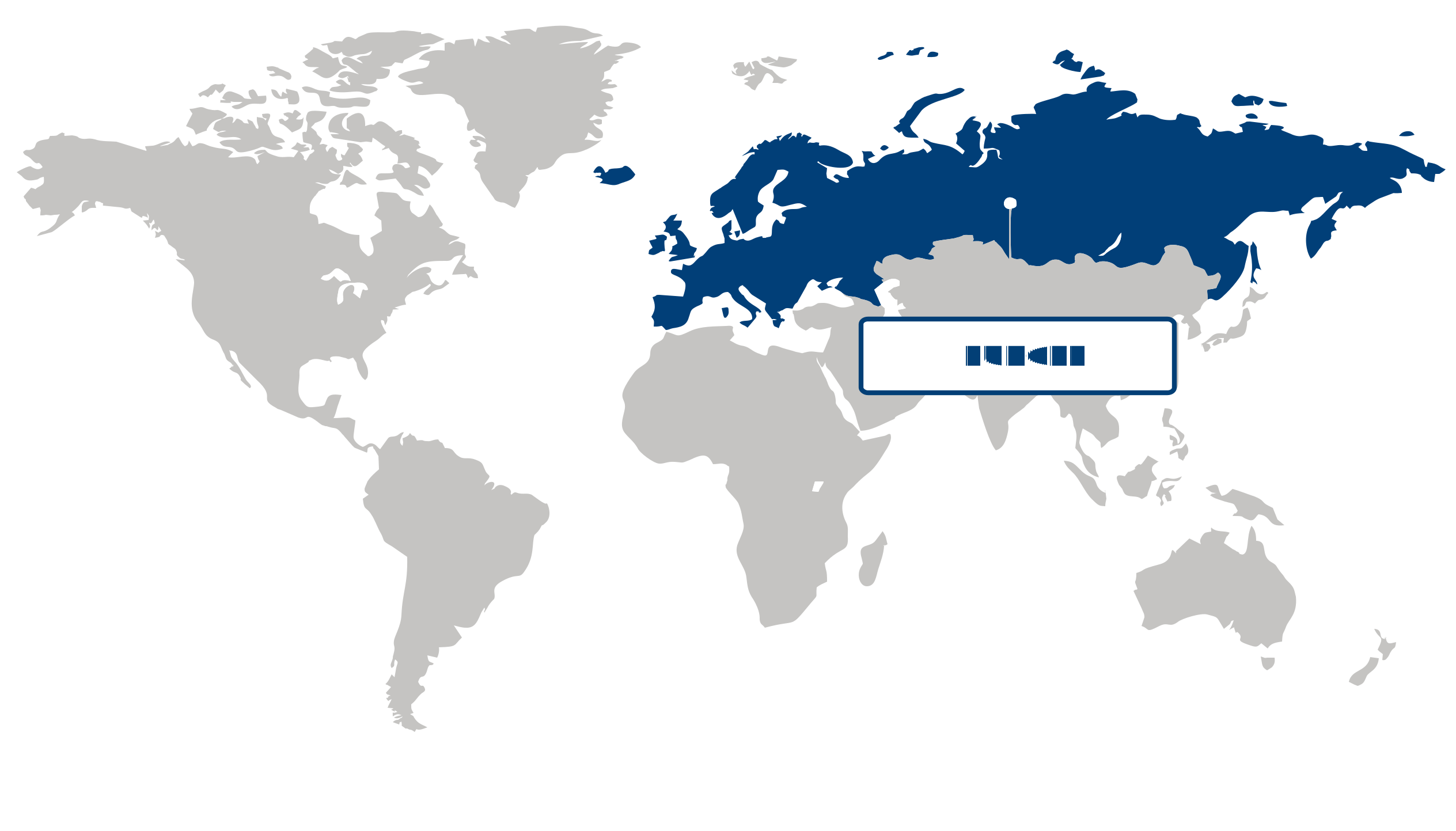
Europe captured over 40% of the global rotels luxurious hotels on wheels market in 2025, establishing itself as the largest regional player. The market growth is supported by a rich cultural tourism heritage and an extensive network of scenic routes that appeal to high-end travelers seeking immersive and unique experiences. Countries across Europe are leveraging well-preserved historical sites and picturesque landscapes to fuel demand for mobile luxury accommodations, as evidenced by industry leaders like Airstream Europe expanding their offerings to tap into this trend. Additionally, Europe's advanced transport infrastructure and strong economic resilience enable seamless operations and premium service delivery. This environment not only accommodates evolving luxury preferences but also encourages innovation in comfort and sustainability, enhancing guest experiences. Looking ahead, Europe's blend of tradition and modern luxury positions it to capture further growth, driven by discerning tourists valuing exclusivity combined with cultural depth.
Germany serves as a key driver in the European rotels luxurious hotels on wheels market, anchored by its robust automotive industry and dynamic travel culture. German consumers’ affinity for premium craftsmanship and high-quality experiences translates into growing demand for sophisticated mobile luxury lodging. Regulatory support for eco-friendly tourism and investments in expansive scenic routes, such as the Romantic Road, reinforce Germany’s position, as noted in recent corporate announcements from Hymer, a leading manufacturer of luxury motorhomes. The country’s focus on integrating cutting-edge technology with sustainability boosts competitiveness and appeal. As Germany spearheads innovation and consumer adoption, it bolsters the region’s overall market by setting high standards in quality and environmental compliance, attracting both domestic and European travelers.
France plays a pivotal role in Europe’s rotels luxurious hotels on wheels market through its world-renowned cultural tourism and scenic diversity, from the vineyards of Bordeaux to the coastlines of the Riviera. French consumer enthusiasm for boutique travel experiences is reflected in partnerships such as those announced by the luxury caravan brand Pilote, which emphasize customization and gastronomic excellence onboard. National policies promoting sustainable tourism and conservation ensure that these mobile luxury offerings align with broader environmental goals. With an established hospitality tradition combined with innovative mobile lodging solutions, France enhances the regional market’s appeal. This dynamic supports Europe’s competitive edge by appealing to luxury travelers prioritizing authentic experiences coupled with modern comforts, thus sustaining regional market momentum.
Asia Pacific Market Analysis:
Asia Pacific emerged as the fastest-growing region in the rotels luxurious hotels on wheels market, registering rapid growth at a robust CAGR of 6.5%. This impressive expansion is primarily driven by the region’s expanding luxury travel sector and continuously improving infrastructure, which together elevate consumer expectations and enable more seamless, high-end travel experiences. The growth is also supported by rising disposable incomes and a burgeoning middle-class population seeking distinctive travel experiences that combine comfort, exclusivity, and innovation. For instance, Japan’s Japan Railways Group has increasingly introduced upscale travel options, reflecting consumer demand for luxury and convenience. Moreover, government investments in digital connectivity and sustainable transport infrastructure across Asia Pacific bolster operational efficiency and customer satisfaction. This synergy of economic resilience, infrastructure modernization, and evolving traveler preferences positions Asia Pacific as a lucrative hub for rotels market growth, promising substantial opportunities for investors and operators focused on premium experiential travel.
Japan plays a pivotal role in Asia Pacific’s rotels luxurious hotels on wheels market by leveraging its extensive railway network and a deep-seated cultural appreciation for bespoke travel experiences. The country’s luxury travel sector benefits from domestic and inbound tourism that values precision, service excellence, and aesthetic design, as seen in JR East’s launch of the Gran Class suite on Shinkansen trains, which combines luxury accommodations with cutting-edge technology and impeccable service standards. Japan’s regulatory frameworks favor innovation in travel hospitality, allowing premium operators to differentiate through unique onboard offerings and experiential itineraries. These factors make Japan a strategic focal point for luxury rail travel growth within Asia Pacific, reinforcing the region’s trajectory by showcasing how tradition and modernization can harmonize in the rotels market.
China’s role complements Asia Pacific’s growth as its rapidly developing infrastructure and growing affluent consumer base create fertile ground for luxury rotel offerings. The government’s commitment to expanding high-speed rail networks and integrating luxury tourism experiences, as evidenced by China State Railway Group’s upscale train services linking major cultural destinations, stimulates demand for premium mobile accommodations. Chinese consumers increasingly prioritize personalized, comfortable travel with enhanced amenities, reflecting shifts in purchasing behavior toward experiential luxury. Additionally, evolving policies supporting domestic tourism and sustainable travel models further propel market momentum. China’s expanding middle and upper classes, combined with strategic infrastructure investments, amplify Asia Pacific’s dominance in the rotels luxurious hotels on wheels market, underlining the region’s robust and interconnected growth prospects.
North America Market Trends:
North America has held a commanding share of the rotels luxurious hotels on wheels market, driven by evolving consumer preferences favoring experiential travel coupled with increasing disposable incomes. The region’s extensive road infrastructure, combined with a cultural affinity for road trips and outdoor leisure, sustains robust demand for luxury mobile accommodations. Regulatory support for enhanced vehicle safety standards, alongside advancements in eco-friendly propulsion systems highlighted by innovations from companies like Thor Industries, further strengthen market dynamics. Industry leaders such as Airstream have capitalized on digital integrations and smart amenities, elevating the guest experience and operational efficiency. These factors, combined with North America’s resilient tourism sector and evolving lifestyle trends, present substantial opportunities for market expansion, particularly as consumers seek personalized travel options blending comfort with mobility.
The U.S. plays a pivotal role in the North American rotels luxurious hotels on wheels market, primarily fueled by its sizable affluence-driven demand and widespread adoption of cutting-edge vehicle technology. Federal initiatives promoting sustainable travel through tax incentives for electric recreational vehicles have accelerated consumer uptake. Moreover, companies like Winnebago Industries have introduced digitally integrated services, enhancing convenience and customization, catering to a tech-savvy clientele. The U.S. also benefits from a well-established supply chain and dealer networks, ensuring efficient distribution and after-sales support. This combination of innovation, regulatory backing, and strong consumer affinity positions the U.S. as a critical hub, driving forward the regional market and unlocking greater investor and strategic potential within North America.
| Parameter | North America | Asia Pacific | Europe | Latin America | MEA |
|---|---|---|---|---|---|
| Innovation Hub i Scale Nascent Developing Advanced | |||||
| Cost-Sensitive Region i Scale Low Medium High | |||||
| Regulatory Environment i Scale Restrictive Neutral Supportive | |||||
| Demand Drivers i Scale Weak Moderate Strong | |||||
| Development Stage i Scale Emerging Developing Developed | |||||
| Adoption Rate i Scale Low Medium High | |||||
| New Entrants / Startups i Scale Sparse Moderate Dense | |||||
| Macro Indicators i Scale Weak Stable Strong |
Segment Leadership and Growth Trends
Rotels Luxurious Hotels On Wheels Market Share (%), by Type, 2026
Go beyond the chart, access full insights & data tables
Request Free Sample ReportThe rotels luxurious hotels on wheels market in 2025 is dominated by the train segment, which holds the largest share due to the rising popularity of luxury train tourism experiences. This segment’s leadership is cemented by evolving consumer preferences for unique, scenic journeys that blend comfort with cultural immersion, as evidenced by the strategic expansions of leading operators like Belmond and the Venice Simplon-Orient-Express, which emphasize heritage and bespoke services. Sustainable practices in rail infrastructure and the integration of advanced onboard amenities further enhance appeal amid growing eco-consciousness. Competitive dynamics favor firms that can offer differentiated routes and seamless luxury touches. This segment presents strategic opportunities for incumbents to leverage established rail networks and for emerging players to innovate in experiential luxury. Given ongoing infrastructure investments and sustained traveler interest, the train segment is poised to maintain dominance in the medium term.
Analysis by Luxury Level
In the rotels luxurious hotels on wheels market, the premium segment represented the largest share in 2025, driven by growing demand for high-end yet accessible luxury travel offerings. This segment capitalizes on evolving demographics favoring affluent travelers seeking upscale experiences that balance exclusivity with value. Market leaders like the Belmond Group promote premium packages that integrate fine dining, curated excursions, and personalized service, responding to consumer demand for tailored yet attainable luxury. Additionally, supply chain enhancements allow for consistent delivery of quality amenities, while regulatory frameworks in key regions facilitate streamlined operations. The premium segment’s broad appeal creates avenues for established brands to scale offerings and for niche entrants to target discerning clientele. Its ability to adapt luxury standards to wider audiences ensures sustained relevance amid evolving travel aspirations.
Analysis by Travel Duration
The rotels luxurious hotels on wheels market is led by the medium-term (4-7 days) travel duration segment in 2025, propelled by consumer preference for immersive travel experiences of moderate length. This segment meets the demand for journeys that allow sufficient time to explore destinations deeply without overwhelming time commitments, aligning with modern lifestyle trends favoring work-life balance and experiential travel. Industry players such as Scenic and AmaWaterways design itineraries optimized for cultural engagement and comfort within this timeframe, supported by evolving workforce flexibility and digital transformation that enable remote work integration. The segment benefits from favorable regulatory environments facilitating cross-border travel and sustainable tourism certifications that attract conscious travelers. Opportunities abound for operators tailoring offerings to curated, story-driven routes. The medium-term duration segment’s alignment with contemporary traveler needs underscores its ongoing strategic importance.
| Segment | Sub-Segment | Largest Segment | Fastest Growing |
|---|---|---|---|
| Type | Train, Bus, Ship | ||
| Luxury Level | Standard, Premium, Ultra-Luxury | ||
| Travel Duration | Short-Term (1-3 Days), Medium-Term (4-7 Days), Long-Term (8+ Days) | ||
| Target Audience | Leisure Travelers, Business Travelers, Special Event Groups |
Unlock insights tailored to your business with our bespoke market research solutions.
Click to get your customized report now.
Competitive Landscape and Market Positioning
The competitive landscape is characterized by an emphasis on advanced design innovation and strategic partnerships to enhance product portfolios. Leading players have deepened their technological capabilities and expanded service ecosystems through targeted collaborations and acquisitions, fostering differentiation in an evolving market. For example, firms like Oakley RV and Overland Custom Vehicles have introduced cutting-edge materials and smart systems to elevate traveler experience. Meanwhile, Action Motors has expanded reach within Asia through alliances that adapt luxury features to local preferences, collectively intensifying competition and accelerating product sophistication across the sector.
Strategic / Actionable Recommendations for Regional Players
North American companies could benefit from forging closer ties with technology providers to embed AI-driven comfort and safety features, addressing the trend for smarter, more responsive mobile living spaces. Aligning with luxury travel operators may also unlock niche clientele segments prioritizing experiential travel.
In the Asia Pacific, leveraging emerging consumer wealth through partnerships with luxury automotive and tourism brands can nurture demand. Investment in rugged yet stylish designs tailored to diverse terrain supports growth in adventure tourism, particularly in rapidly developing markets.
European players should capitalize on their craftsmanship heritage by enhancing bespoke customization and sustainable luxury features. Collaborations focused on eco-friendly materials and energy-efficient technologies may reinforce premium positioning while responding to regulatory and consumer expectations for responsible travel solutions.
| Company | Market Share | Company Revenue | Revenue CAGR (%) | Product Portfolio | Geographic Presence | Innovation / R&D Focus | Strategic Developments |
|---|---|---|---|---|---|---|---|
| No companies available. | |||||||
Customize Your Report
Explore examples of how this report can be tailored to different research needs, including custom segments, additional topics or chapters, and related reports. Click a section of the wheel or its numbered marker to explore the available options.
Rotels Luxurious Hotels On Wheels Market — Custom Segments
| Segment | Sub-Segment |
|---|---|
| No segment data available. | |
Rotels Luxurious Hotels On Wheels Market — Custom TOC
| Custom Chapter | Chapter Details | ||
|---|---|---|---|
| No custom TOC data available. | |||
Need a different cut of the data?
Request Custom ResearchWhat is the anticipated CAGR of the rotels luxurious hotels on wheels industry?
Which part of the world shows the greatest dominance in the rotels luxurious hotels on wheels market?
Which area is showing the greatest surge in rotels luxurious hotels on wheels sector?
How does train segment fare in the rotels luxurious hotels on wheels industry?
What share does premium segment hold in the rotels luxurious hotels on wheels sector as of 2025?
Where is the medium-term (4-7 days) segment seeing the strongest adoption within the rotels luxurious hotels on wheels industry?
When did leisure travelers sub-segment emerge as the largest sub-segment in the target audience segment of rotels luxurious hotels on wheels sector?
Which organizations are considered leaders in the rotels luxurious hotels on wheels landscape?
Our Clients
"The team surpassed our expectations with the report depth. The actionable insights provided proved crucial in navigating market challenges."
Tata Motors
"We found the report to be very informative. The expertise and attention to market nuances significantly influenced our business direction."
DENSO Corporation
"The consumer survey findings were quite good. We now have a clearer picture of the customer churning and retention strategy."
HL Mando
Our Research Team & Methodology
Every Fundamental Business Insights report is built by a dedicated vertical research team, validated through a structured primary-and-secondary methodology, and reviewed for accuracy before it reaches you.
Research Team Overview
Prepared by the Automotive & Transportation Research Team
Delivery
Published
Demand
Available
Support
Trust & Compliance
Research Intelligence
| Source | Reference |
|---|---|
| International Organization of Motor Vehicle Manufacturers (OICA) | www.oica.net |
| SAE International | www.sae.org |
| International Energy Agency (IEA) | www.iea.org |
| International Transport Forum (ITF) | www.itf-oecd.org |
| International Road Federation (IRF) | www.irf.global |
| International Organization for Standardization (ISO) | www.iso.org |
| United Nations Economic Commission for Europe (UNECE) | unece.org |
| National Highway Traffic Safety Administration (NHTSA) | www.nhtsa.gov |
| U.S. Department of Transportation (USDOT) | www.transportation.gov |
| European Automobile Manufacturers' Association (ACEA) | www.acea.auto |
| Society of Indian Automobile Manufacturers (SIAM) | www.siam.in |
| International Air Transport Association (IATA) | www.iata.org |
| International Civil Aviation Organization (ICAO) | www.icao.int |
| International Maritime Organization (IMO) | www.imo.org |
| International Union of Railways (UIC) | uic.org |
| American Public Transportation Association (APTA) | www.apta.com |
| International Federation of Robotics (IFR) | ifr.org |
| CharIN | www.charin.global |
| World Shipping Council | www.worldshipping.org |
| International Federation of Freight Forwarders Associations (FIATA) | fiata.org |
Research Workflow & Quality Assurance
Data Collection
Verified information gathered through primary and secondary research.
Data Triangulation
Cross-validation using multiple independent data sources.
Forecast Modelling
Market estimates developed using historical trends and analytical models.
Analyst Validation
Findings reviewed by domain experts for accuracy and consistency.
Editorial & Quality Review
Final editorial, quality, and compliance checks before publication.
Final Publication
Released after successful completion of the internal review process.
Report Coverage
📊 Market Assessment
- Market Size & Forecast
- Market Segmentation
- Regional Analysis
- Growth Drivers & Challenges
- Market Dynamics
🏢 Competitive Intelligence
- Competitive Landscape
- Company Profiles
- Competitive Benchmarking
- Mergers & Acquisitions
- Market Share Analysis or Key Company Strategies
🔍 Strategic Analysis
- Value Chain Analysis
- Porter's Five Forces
- PESTLE Analysis
- Pricing Trends
- Supply-Demand Analysis
🚀 Future Outlook
- Technology Landscape
- Regulatory Landscape
- Investment & Funding Landscape
- Emerging Opportunities
- Future Market Outlook
Have a question about this report or need a custom scope?
Request Customization