



Rugby Apparel Market Size & Growth Forecast 2027–2036, By Segments (Type), Regional Demand Trends (North America, Asia Pacific, Europe), Key Country Insights (U.S., Japan, South Korea, Germany, France, Italy), and Competitive Landscape
Market Size and Growth Outlook
Rugby Apparel Market size was worth USD 1.49 billion in 2026 and is expected to grow at a 11.31% CAGR between 2027 and 2036, exceeding USD 4.35 billion by 2036. The industry revenue for 2027 is estimated at USD 1.63 billion.
Base Year Value (2026)
USD 1.49 billion
CAGR (2027-2036)
11.31%
Forecast Year Value (2036)
USD 4.35 billion

Historical Data Period
2022-2026

Largest Region
Europe

Forecast Period
2027-2036
Rugby Apparel Market Intelligence Snapshot:
-
Regional Market Dynamics:
- Europe held a 42.40% share in 2026, supported by established rugby culture, strong club networks, mature retail channels, and recurring demand for teamwear, training apparel, and fan merchandise.
- Asia Pacific is projected to grow at a 12.77% CAGR as rugby participation expands, school and club programs develop, and e-commerce improves access to performance and team-linked apparel.
-
Segment Momentum:
- Upper Wear accounted for 53% of the market in 2026, supported by strong replacement demand for jerseys and training apparel used across competitive and recreational rugby, as well as consistent team and supporter purchases.
- Asia Pacific is projected to grow at a 12.77% CAGR, driven by expanding rugby participation, broader school and club programs, improved product accessibility, and growing demand through e-commerce and international rugby exposure.
-
Market Expansion Drivers:
- Rising global participation in rugby across amateur and professional levels driving apparel demand.
- Increasing sports sponsorships and professional league expansion boosting branded apparel sales.
- Growing demand for sustainable and performance-enhancing sportswear materials in athletic apparel.
-
Leading Market Participants:
Key companies in the rugby apparel market include Adidas AG (Germany), Nike, Inc. (United States), Canterbury of New Zealand Limited (New Zealand), Decathlon S.A. (France), Macron S.p.A. (Italy), O'Neills Irish International Sports Company Limited (Ireland), Gilbert Rugby (United Kingdom), Kooga New Zealand Ltd. (New Zealand), Badger Rugby Ltd. (United Kingdom), Rhino Rugby Ltd. (United Kingdom).
Global Market Forecast Snapshot:
-
Market Outlook:
- 2026 Market Size: USD 1.49 billion
- 2027 Estimated Market Size: USD 1.63 billion.
- Projected Market Size: USD 4.35 billion by 2036
- Growth Forecasts: 11.31% CAGR (2027-2036)
-
Regional and Segment Outlook:
- Leading Regional Market: Europe
- High-Growth Regional Hub: Asia Pacific
- Core Revenue Segment: Upper Wear (Type)
- Emerging Opportunity Segment: Upper Wear (Type)
Market Growth Drivers and Industry Trends
Rising global participation in rugby across amateur and professional levels driving apparel demand
Increasing participation in rugby across professional, amateur, youth, and community settings will drive the rugby apparel market growth by expanding the base of players requiring specialized clothing for training, competition, and recreational activities. Rugby participation generates demand for jerseys, shorts, protective clothing, training apparel, and other equipment-related garments suited to the physical nature of the sport. Growth in grassroots programs and organized competitions can also increase demand from clubs, schools, and amateur teams that require coordinated apparel for players and supporters. Broader engagement with rugby therefore creates recurring apparel requirements across different levels of participation and playing environments.
Increasing sports sponsorships and professional league expansion boosting branded apparel sales
Expansion of professional rugby leagues and increasing sports sponsorship activity are strengthening the rugby apparel market as branded jerseys and team merchandise become important components of fan engagement. Sponsorship arrangements can increase the visibility of team apparel through competitions, broadcasts, promotional campaigns, and sporting events, encouraging supporters to purchase merchandise associated with their preferred teams and players. The development of professional leagues also creates opportunities for clubs to introduce new apparel collections, licensed merchandise, and match-day products that appeal to both domestic and international audiences. Greater commercial activity around professional rugby enhances the role of apparel as both sporting equipment and a visible expression of team affiliation.
Growing demand for sustainable and performance-enhancing sportswear materials in athletic apparel
Demand for sustainable and performance-oriented materials is reshaping product development within the rugby apparel market as athletes and consumers increasingly value clothing that combines durability, comfort, and functional performance. Rugby apparel must withstand intensive physical activity while supporting moisture management, flexibility, breathability, and repeated use, encouraging manufacturers to explore advanced textile constructions and performance fabrics. At the same time, greater awareness of environmental considerations is increasing interest in recycled, responsibly sourced, and resource-efficient materials across sportswear production. These material developments are influencing product differentiation as players and teams seek apparel that aligns with both athletic requirements and evolving sustainability preferences.
| Growth Driver Assessment Framework | |||||
| Growth Driver | Impact On CAGR | Regulatory Influence | Geographic Relevance | Adoption Rate | Impact Timeline |
|---|---|---|---|---|---|
| Rising global participation in rugby across amateur and professional levels driving apparel demand | 2.10% | Low | Europe, Asia Pacific | High | Near Term |
| Increasing sports sponsorships and professional league expansion boosting branded apparel sales | 1.90% | Low | Europe, North America | Medium | Mid Term |
| Growing demand for sustainable and performance-enhancing sportswear materials in athletic apparel | 1.70% | Moderate | Europe, Asia Pacific | Medium | Mid Term |
Unlock insights tailored to your business with our bespoke market research solutions - Click to get your customized report now!
Regional Demand Dynamics
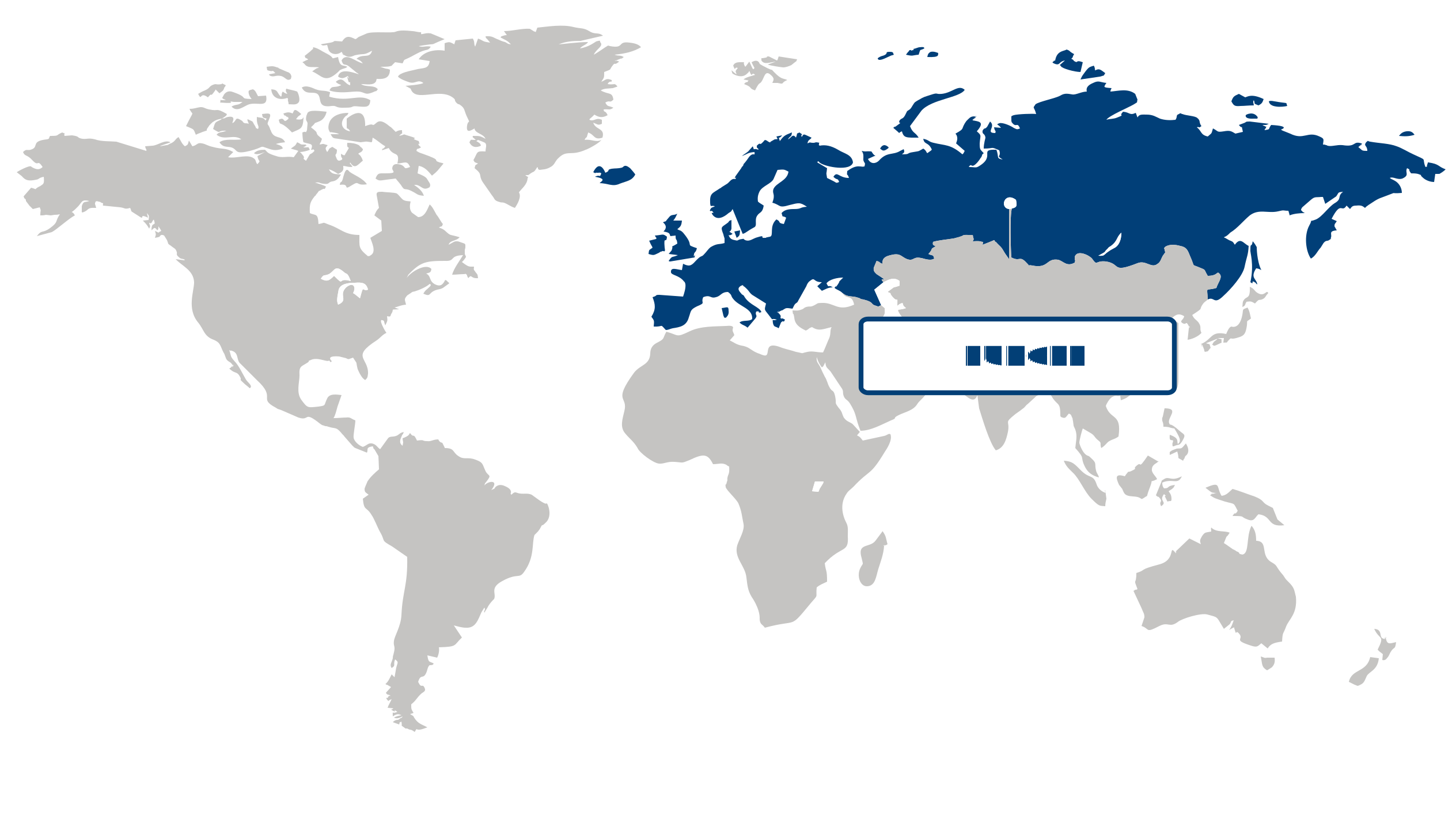
Largest Region
Europe
42.4% Market Share in 2026
Europe (Largest Region) vs Asia Pacific (Fastest-Growing Region)
Europe held the largest share of the rugby apparel market, accounting for 42.40% in 2026, reflecting the sport's established cultural presence, extensive participation base, and strong connection between rugby and local sporting communities. Demand is supported by organized club and professional competitions, established grassroots programs, and sustained interest in team-specific apparel among players and supporters. The region also benefits from mature sporting goods distribution networks and consumer familiarity with performance-oriented athletic clothing. Continued investment in rugby participation and the development of modern apparel featuring improved comfort, durability, and moisture management are helping maintain Europe's leading position.
Asia Pacific is the fastest-growing region, benefiting from increasing participation in rugby, greater exposure to international sporting events, and expanding interest in organized team sports. Growing youth engagement and the development of rugby programs in schools, clubs, and sporting institutions are creating new demand for playing kits, training apparel, and supporter merchandise. Rising sportswear adoption and expanding online retail infrastructure are also making specialized rugby products more accessible to consumers beyond established rugby markets. As the sport gains broader recognition across the region, opportunities for performance apparel and lifestyle-oriented rugby clothing are increasing.
Key Country Insights
The U.S. rugby apparel market is shaped by expanding participation in collegiate, club, and amateur rugby. Brands in the U.S. prioritize lightweight performance fabrics, moisture management, and customizable teamwear to support competitive and recreational players.
Japan prioritizes rugby apparel combining mobility, durability, and ergonomic design for high-intensity play. Companies in Japan continue refining advanced textile technologies while offering products that balance athletic performance with long-term comfort.
South Korea is expanding rugby apparel through growing recreational participation and university-level programs. Brands in South Korea increasingly introduce modern designs and versatile sportswear that appeal to both athletes and consumers seeking multi-purpose activewear.
Germany emphasizes durable rugby apparel designed for organized clubs and regional competitions. Manufacturers serving Germany focus on technical fabrics, reinforced construction, and sustainable textile options that meet the practical needs of regular training and match play.
France maintains steady demand for rugby apparel through its well-established club ecosystem and competitive rugby culture. Suppliers in France emphasize premium match kits, licensed merchandise, and high-performance apparel tailored to professional and grassroots participants alike.
Italy focuses on rugby apparel that supports youth development programs and community clubs. Manufacturers in Italy continue expanding accessible product ranges while incorporating durable materials suitable for frequent training sessions and domestic competitions.
Segment Leadership and Growth Trends
Type Segment Analysis: Upper Wear (Largest & Fastest-Growing Segment)
Upper wear dominated the rugby apparel market with a 53% share in 2026 and is also expected to be the fastest-growing type segment. Rugby jerseys and other upper-body apparel serve both functional and identity-driven roles, providing players with durable garments designed to withstand physical contact while representing teams, clubs, and sporting affiliations. Growing participation in rugby, alongside demand for performance-oriented fabrics that offer breathability, flexibility, and moisture management, is supporting continued investment in upper wear. The strong connection between rugby apparel and team identity also creates opportunities across both playing and supporter-oriented clothing, reinforcing the segment's broad appeal.
| Report Segmentation | |||
| Segment | Sub-Segment | Largest Segment | Fastest Growing Segment |
|---|---|---|---|
| Type | Upper Wear, Bottom Wear, Socks | Upper Wear | Upper Wear |
 Read our Research Approach
Competitive Landscape and Market Positioning
Key companies in the rugby apparel market:
1. Adidas AG (Germany)
2. Nike Inc. (United States)
3. Canterbury of New Zealand Limited (New Zealand)
4. Decathlon S.A. (France)
5. Macron S.p.A. (Italy)
6. O'Neills Irish International Sports Company Limited (Ireland)
7. Gilbert Rugby (United Kingdom)
8. Kooga New Zealand Ltd. (New Zealand)
9. Badger Rugby Ltd. (United Kingdom)
10. Rhino Rugby Ltd. (United Kingdom)
The rugby apparel market is evolving through performance fabric innovation and athlete-driven design improvements. Demand for durability and comfort is shaping product development strategies. The rugby apparel market continues to expand with increasing global participation and sports engagement.
Industry Development/News
| Company Name | Date | Key Development |
|---|---|---|
| BLK | Feb-24 | BLK entered a two-year partnership with the Ba Rugby Union to serve as the official apparel and luggage provider. The agreement covers men’s, women’s, and junior squads, strengthening BLK’s manufacturing presence in regional rugby ecosystems and providing the teams with high-performance kits to support their transition into professional competition structures like the Skipper Cup. |
| Fanatics | May-24 | Fanatics, in partnership with Warner Bros. and England Rugby, launched a limited-edition Looney Tunes-inspired merchandise collection. This collaboration leverages high-profile entertainment intellectual property to diversify licensed sports apparel offerings, aiming to broaden fan engagement and stimulate retail activity within the England Rugby ecosystem through cross-category branding. |
| Canterbury | Sep-25 | Canterbury introduced the Speed Falcon Elite rugby boot, developed in collaboration with elite player Ellie Kildunne. As the first rugby boot designed by a female athlete, the product features advanced weight-reduction technologies and targeted structural reinforcements, reinforcing Canterbury’s strategic commitment to product differentiation and high-performance footwear innovation within the professional rugby segment. |
Why Choose Us
Specialized Expertise: Our team comprises industry experts with a deep understanding of your market segment. We bring specialized knowledge and experience that ensures our research and consulting services are tailored to your unique needs.
Customized Solutions: We understand that every client is different. That's why we offer customized research and consulting solutions designed specifically to address your challenges and capitalize on opportunities within your industry.
Proven Results: With a track record of successful projects and satisfied clients, we have demonstrated our ability to deliver tangible results. Our case studies and testimonials speak to our effectiveness in helping clients achieve their goals.
Cutting-Edge Methodologies: We leverage the latest methodologies and technologies to gather insights and drive informed decision-making. Our innovative approach ensures that you stay ahead of the curve and gain a competitive edge in your market.
Client-Centric Approach: Your satisfaction is our top priority. We prioritize open communication, responsiveness, and transparency to ensure that we not only meet but exceed your expectations at every stage of the engagement.
Continuous Innovation: We are committed to continuous improvement and staying at the forefront of our industry. Through ongoing learning, professional development, and investment in new technologies, we ensure that our services are always evolving to meet your evolving needs.
Value for Money: Our competitive pricing and flexible engagement models ensure that you get maximum value for your investment. We are committed to delivering high-quality results that help you achieve a strong return on your investment.
Select Licence Type

