



Safety Helmets Market Size & Growth Forecast 2027–2036, By Segments (Product, Material, End-use), Regional Demand Trends (North America, Asia Pacific, Europe), Key Country Insights (U.S., Japan, South Korea, Germany, France, Italy), and Competitive Landscape
Market Size and Growth Outlook
Safety Helmets Market size stood at USD 5.5 billion in 2026 and is predicted to grow at a 7.51% CAGR from 2027 to 2036, surpassing USD 11.35 billion by 2036. The industry revenue for 2027 is calculated at USD 5.85 billion.
Base Year Value (2026)
USD 5.5 billion
CAGR (2027-2036)
7.51%
Forecast Year Value (2036)
USD 11.35 billion

Historical Data Period
2022-2026

Largest Region
Europe

Forecast Period
2027-2036
Safety Helmets Market Intelligence Snapshot:
-
Regional Market Dynamics:
- Europe leads with a 32.22% share, supported by strict workplace safety regulations, consistent compliance enforcement, and routine adoption across construction and industrial sectors.
- Asia Pacific is growing at an 8.7% CAGR, driven by expanding industrial activity, rising construction projects, and stronger enforcement of worker safety standards.
-
Segment Momentum:
- Hard hats hold 83.22% share due to mandatory safety compliance across construction and industrial sectors, supported by routine replacement cycles and strong employer preference for high-impact protection.
- ABS helmets are the fastest-growing material segment as buyers seek improved comfort, durability, and performance balance, especially for extended wear in demanding industrial environments.
-
Market Expansion Drivers:
- Stricter workplace safety enforcement increasing adoption of certified industrial protection helmets.
- Expanding infrastructure and construction projects driving demand for ergonomic safety headgear solutions.
- Rising deployment of connected smart helmets improving worker monitoring and operational safety compliance.
-
Leading Market Participants:
Top players in the safety helmets market include 3M Company (United States), MSA Safety Incorporated (United States), Drägerwerk AG & Co. KGaA (Germany), Delta Plus Group (France), Protective Industrial Products, Inc. (United States), uvex group (Germany), JSP Limited (United Kingdom), Portwest UC (Ireland), Bullard (United States), Centurion Safety Products Ltd (United Kingdom).
Global Market Forecast Snapshot:
-
Market Outlook:
- 2026 Market Size: USD 5.5 billion
- 2027 Estimated Market Size: USD 5.85 billion.
- Projected Market Size: USD 11.35 billion by 2036
- Growth Forecasts: 7.51% CAGR (2027-2036)
-
Regional and Segment Outlook:
- Leading Regional Market: Europe
- High-Growth Regional Hub: Asia Pacific
- Core Revenue Segment: Hard Hats (Product) | Polyethylene (Material) | Construction (End-use)
- Emerging Opportunity Segment: Bump Caps (Product) | ABS (Material) | Construction (End-use)
Market Growth Drivers and Industry Trends
Stricter workplace safety enforcement increasing adoption of certified industrial protection helmets
Stricter occupational safety requirements and stronger enforcement of protective equipment standards will drive the safety helmets market by encouraging employers to provide certified head protection across industrial and high-risk work environments. Regulatory compliance has become an important consideration in sectors such as manufacturing, construction, mining, utilities, and transportation, where workers may face risks from falling objects, electrical hazards, and workplace impacts. Employers are increasingly replacing outdated or non-compliant headgear with helmets that meet established safety and performance requirements, while routine inspections and workplace safety programs reinforce consistent usage. Demand is also supported by the need for helmets with improved impact resistance, secure retention systems, ventilation, and compatibility with other personal protective equipment.
Expanding infrastructure and construction projects driving demand for ergonomic safety headgear solutions
Large-scale infrastructure development and continued construction activity will propel the safety helmets market as growing numbers of workers require reliable head protection at active project sites. Road construction, commercial buildings, residential developments, industrial facilities, and utility projects expose workers to multiple head injury risks, increasing the importance of protective equipment throughout project operations. At the same time, employers are placing greater emphasis on ergonomic designs that can be worn comfortably for extended periods, with features such as adjustable suspension systems, balanced weight distribution, ventilation, and compatibility with face and hearing protection. The combination of expanding construction activity and greater attention to worker comfort is increasing demand for protective helmets suited to prolonged and physically demanding work conditions.
Rising deployment of connected smart helmets improving worker monitoring and operational safety compliance
The integration of sensors, communication capabilities, location tracking, and other connected technologies is creating new functionality within industrial head protection, strengthening demand for smart safety solutions. In the safety helmets market, connected helmets can support real-time worker monitoring, hazard alerts, communication, and location-based safety management in environments where rapid response is critical. These capabilities can help supervisors identify unsafe conditions, monitor worker presence in designated areas, and maintain better visibility across large or complex worksites. Smart helmets may also integrate with broader workplace safety systems, enabling organizations to combine personal protective equipment with digital monitoring and compliance processes.
| Growth Driver Assessment Framework | |||||
| Growth Driver | Impact On CAGR | Regulatory Influence | Geographic Relevance | Adoption Rate | Impact Timeline |
|---|---|---|---|---|---|
| Stricter workplace safety enforcement increasing adoption of certified industrial protection helmets | 1.90% | High | North America, Europe | High | Near Term |
| Expanding infrastructure and construction projects driving demand for ergonomic safety headgear solutions | 1.70% | Moderate | Asia Pacific, Middle East & Africa | High | Mid Term |
| Rising deployment of connected smart helmets improving worker monitoring and operational safety compliance | 1.50% | High | North America, Asia Pacific | Emerging | Long Term |
Unlock insights tailored to your business with our bespoke market research solutions - Click to get your customized report now!
Regional Demand Dynamics
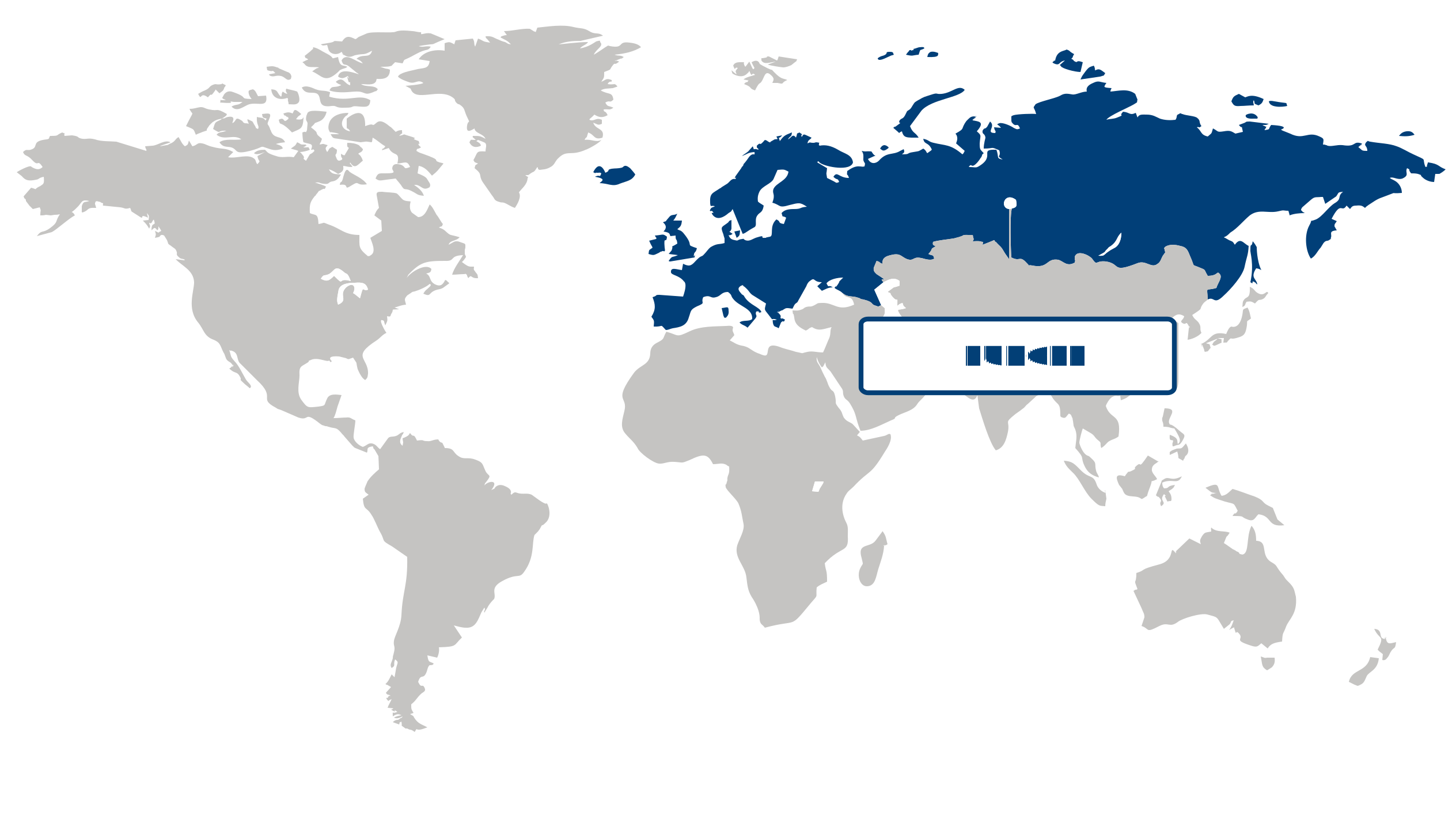
Largest Region
Europe
32.22% Market Share in 2026
Europe (Largest Region) vs Asia Pacific (Fastest-Growing Region)
Europe held the largest share of the safety helmets market in 2026 at 32.22% share, supported by stringent workplace safety requirements, established industrial sectors, and strong awareness of occupational risk prevention. Construction, manufacturing, mining, and other high-risk activities continue to require reliable protective equipment, while regulatory emphasis on worker protection encourages the use of certified safety helmets. The region's mature safety culture and focus on compliance, product quality, and workplace standards further sustain demand. Increasing attention to ergonomics and advanced protective features is also encouraging the adoption of higher-performance head protection solutions.
Asia Pacific is anticipated to be the fastest-growing region in the safety helmets market, driven by rapid industrialization, expanding construction activity, and continued infrastructure development. Growth in manufacturing, transportation, energy, and large-scale construction projects is increasing the need for effective personal protective equipment across diverse work environments. Improving occupational safety awareness and strengthening workplace protection practices are encouraging broader helmet adoption. Rising enforcement of safety requirements and greater emphasis on employee welfare are also supporting demand as industrial activity expands throughout the region.
Key Country Insights
The U.S. safety helmets market is supported by sustained investment in worker protection across construction, manufacturing, mining, and energy sectors. U.S. employers increasingly prioritize lightweight, comfortable helmets with enhanced impact protection and compatibility with connected safety technologies.
Japan focuses on advanced safety helmets for manufacturing, infrastructure, and industrial workplaces requiring dependable protective equipment. Japanese manufacturers prioritize lightweight materials, ergonomic design, and enhanced durability to support long-term occupational safety objectives.
South Korea is increasing demand for safety helmets that combine conventional protection with digital safety features for industrial environments. South Korean employers seek equipment that supports worker monitoring, operational efficiency, and compliance with evolving workplace safety practices.
Germany emphasizes safety helmets designed for demanding industrial environments where regulatory compliance and product durability remain essential. German buyers favor ergonomically designed protective equipment that improves worker comfort while maintaining consistent safety performance.
France applies safety helmets across construction, infrastructure, and industrial projects where occupational protection remains a key priority. French organizations emphasize certified protective equipment that balances wearer comfort with dependable impact resistance during extended use.
Italy relies on safety helmets for construction, manufacturing, and utility operations requiring reliable personal protective equipment. Italian buyers increasingly value durable, lightweight helmet designs that improve worker acceptance while meeting rigorous workplace safety requirements.
Segment Leadership and Growth Trends
Product Segment Analysis: Hard Hats (Largest Segment) vs Bump Caps (Fastest-Growing Segment)
Hard hats led the safety helmets market with an 83.22% share in 2026, reflecting their established role in protecting workers against falling objects, impact hazards, and other workplace risks. Their widespread use across construction, manufacturing, utilities, and industrial operations is reinforced by occupational safety requirements and the need for dependable head protection in high-risk environments. Increasing emphasis on workplace safety programs continues to sustain demand for standardized protective equipment.
Bump caps are the fastest-growing product segment as employers and workers seek lightweight head protection for environments where the primary risk involves minor impacts or contact with fixed objects. Their compact design, lower weight, and suitability for indoor maintenance and industrial activities make them attractive for applications where conventional hard hats may be unnecessary. Greater attention to worker comfort and task-specific protective equipment is further supporting their adoption.
Material Segment Analysis: Polyethylene (Largest Segment) vs ABS (Fastest-Growing Segment)
Polyethylene accounted for the largest share of the safety helmets market, representing 63.73% in 2026. Its combination of lightweight construction, impact resistance, durability, and cost effectiveness makes it suitable for producing protective helmets used across diverse occupational settings. Manufacturers and employers also benefit from its practicality for large-scale deployment where reliable protection and affordability are important purchasing considerations.
ABS is the fastest-growing material segment as demand increases for safety helmets that combine impact protection with enhanced durability and design flexibility. ABS can support robust helmet construction while enabling manufacturers to develop products with improved ergonomics and functional features. Growing demand for more comfortable, durable, and application-specific protective equipment is encouraging greater use of ABS-based helmet designs.
| Report Segmentation | |||
| Segment | Sub-Segment | Largest Segment | Fastest Growing Segment |
|---|---|---|---|
| Product | Hard Hats, Bump Caps | Hard Hats | Bump Caps |
| Material | Polyethylene, ABS, Polycarbonate, Others | Polyethylene | ABS |
| End-use | Construction, Mining, Manufacturing, Others | Construction | Construction |
 Read our Research Approach
Competitive Landscape and Market Positioning
Major players in the safety helmets market:
1. 3M Company (United States)
2. MSA Safety Incorporated (United States)
3. Drägerwerk AG & Co. KGaA (Germany)
4. Delta Plus Group (France)
5. Protective Industrial Products Inc. (United States)
6. uvex group (Germany)
7. JSP Limited (United Kingdom)
8. Portwest UC (Ireland)
9. Bullard (United States)
10. Centurion Safety Products Ltd (United Kingdom)
The safety helmets market is witnessing continuous product advancement as workplace safety standards become increasingly stringent across industrial sectors. Manufacturers are integrating smart sensors, communication systems, and lightweight impact-resistant materials to improve worker protection and comfort. Demand for technologically enhanced safety equipment and compliance-driven procurement strategies is also contributing to ongoing market innovation.
Industry Development/News
| Company Name | Date | Key Development |
|---|---|---|
| Quin | Oct-25 | Quin entered a strategic partnership with Protective Industrial Products to integrate its intelligent, connected safety technology into the Traverse safety helmet line. This collaboration focuses on enabling real-time safety monitoring and enhanced hazard detection, marking a significant advancement in embedding smart technology into industrial personal protective equipment to improve worker safety performance. |
| Bastadgruppen | Nov-24 | Through its Guardio brand, Bastadgruppen partnered with Quin to launch the Armet PRO industrial safety helmet. Featuring integrated sensor technology for fall and impact detection, the product establishes a new performance standard by providing automated incident reporting, thereby enhancing site-wide safety protocols and reducing the potential consequences of workplace accidents. |
| MSA Safety | Jul-24 | MSA Safety launched the V-Gard H2 industrial helmet, integrating advanced brain-protection technology into its established platform. The product meets ANSI Z89.1 Type II standards for top and lateral impact and incorporates an optional Multi-Directional Impact Protection System (MIPS) layer designed to mitigate rotational forces during angled impacts, directly addressing risks of traumatic brain injury in industrial environments. |
| Studson | May-25 | Following a 706% sales increase between 2022 and 2024, Studson relocated to a new headquarters in Oregon. This expansion supports the company’s scaling strategy in the safety helmet sector, providing the necessary operational footprint and production capacity to meet rising demand and strengthen its competitive position in the head protection market. |
| Milwaukee Tool | Jun-25 | Milwaukee Tool expanded its head protection portfolio with the launch of the BOLT Full Brim Safety Helmet range, featuring Type 2 Class C and Class E configurations. This introduction targets industrial users by combining improved impact protection and ventilation options with compliance for rigorous workplace safety standards, enhancing the company’s product offering for professional construction and industrial applications. |
| Ozmo Helmets | Mar-25 | Ozmo Helmets introduced the Sidekick, a specialized safety helmet designed for children utilizing e-bikes. By targeting the expanding urban micro-mobility segment, the company is addressing the growing demand for child-specific protective gear that integrates functional design with safety features specifically tailored for the unique requirements of young riders in transportation environments. |
| Ergodyne | Aug-24 | Ergodyne expanded its head protection portfolio to address both worker-generated and object-generated impact risks. By introducing enhanced safety solutions and visibility-focused accessories beyond traditional hard hat applications, the company is broadening its operational scope to improve safety performance and compliance across a more diverse range of industrial and construction work environments. |
| Breadfast | Mar-26 | Breadfast implemented a multi-phase internal safety program for its delivery workforce in Egypt. By formalizing structured safety protocols and rider protection measures, the initiative aims to enhance occupational safety standards within the company’s logistics operations, reflecting a broader commitment to operational risk management in the last-mile delivery sector. |
Why Choose Us
Specialized Expertise: Our team comprises industry experts with a deep understanding of your market segment. We bring specialized knowledge and experience that ensures our research and consulting services are tailored to your unique needs.
Customized Solutions: We understand that every client is different. That's why we offer customized research and consulting solutions designed specifically to address your challenges and capitalize on opportunities within your industry.
Proven Results: With a track record of successful projects and satisfied clients, we have demonstrated our ability to deliver tangible results. Our case studies and testimonials speak to our effectiveness in helping clients achieve their goals.
Cutting-Edge Methodologies: We leverage the latest methodologies and technologies to gather insights and drive informed decision-making. Our innovative approach ensures that you stay ahead of the curve and gain a competitive edge in your market.
Client-Centric Approach: Your satisfaction is our top priority. We prioritize open communication, responsiveness, and transparency to ensure that we not only meet but exceed your expectations at every stage of the engagement.
Continuous Innovation: We are committed to continuous improvement and staying at the forefront of our industry. Through ongoing learning, professional development, and investment in new technologies, we ensure that our services are always evolving to meet your evolving needs.
Value for Money: Our competitive pricing and flexible engagement models ensure that you get maximum value for your investment. We are committed to delivering high-quality results that help you achieve a strong return on your investment.
Select Licence Type

