



Self-Consolidating Concrete Market Size & Forecasts 2026-2035, By Segments (Application, Type, End Use, Composition), Growth Opportunities, Innovation Landscape, Regulatory Shifts, Strategic Regional Insights (U.S., Japan, China, South Korea, UK, Germany, France), and Competitive Dynamics (HeidelbergCement, CEMEX, LafargeHolcim, Buzzi Unicem, CRH)
Market Size and Growth Outlook
Self-Consolidating Concrete Market size is projected to expand significantly, moving from USD 7.53 billion in 2025 to USD 12.27 billion by 2035, with a CAGR of 5% during the 2026-2035 forecast period. The expected revenue for 2026 is USD 7.85 billion.
Base Year Value (2025)
USD 7.53 billion
CAGR (2026-2035)
5%
Forecast Year Value (2035)
USD 12.27 billion

Historical Data Period
2022-2025

Largest Region
Europe

Forecast Period
2026-2035
Key Takeaways
- Europe region possessed around 42% revenue share in 2025, driven by advanced precast and high-rise construction standards.
- Asia Pacific region will record around 7.2% CAGR through 2035, accelerated by mega infrastructure and urbanization projects.
- In 2025, the infrastructure segment accounted for majority share, driven by accelerating global infrastructure development that increases demand for self‑consolidating concrete in projects requiring efficient placement and high durability such as bridges.
- The flowable concrete segment in the self-consolidating concrete market accounted for majority share in 2025, driven by increasing infrastructure investments worldwide that boost the use of flowable concrete due to its superior flowability and ability to fill complex forms without mechanical vibration.
- The bridges segment held largest share of the market in 2025, driven by expanding bridge construction projects globally that favor the use of self‑consolidating concrete for its enhanced workability and structural performance in heavy civil applications.
- The cement segment maintained its lead in the self-consolidating concrete market, driven by rising global demand for sustainable and high-performance cement formulations that enhance construction efficiency and meet infrastructure development needs in self-consolidating concrete applications.
- The leading players in the self-consolidating concrete market include HeidelbergCement (Germany), CEMEX (Mexico), LafargeHolcim (Switzerland), Buzzi Unicem (Italy), CRH (Ireland), Vulcan Materials (USA), Taiheiyo Cement (Japan), UltraTech Cement (India), Dangote Cement (Nigeria), Cementir Holding (Denmark).
Market Growth Drivers and Industry Trends
Increased Urban Infrastructure Projects Driving Concrete DemandThe surge in urban infrastructure projects worldwide is a key growth driver in the self-consolidating concrete market. Governments and municipalities, such as those highlighted in the U.S. Department of Transportation’s infrastructure initiatives, are prioritizing large-scale construction to support expanding urban populations. This trend enhances demand for concrete materials that can expedite construction timelines and improve structural integrity. The advanced fluidity and ease of placement offered by self-consolidating concrete uniquely address these needs, presenting strategic opportunities for manufacturers to partner on major projects and for new entrants to focus on urban centers with high infrastructure investment. As infrastructure modernization continues globally, companies leveraging this trend through tailored product development and targeted regional expansion will maintain competitive advantage.
Development of High-Performance Concrete Admixtures
Innovation in high-performance admixtures is revolutionizing the self-consolidating concrete market by enabling enhanced material properties such as improved flowability, durability, and reduced segregation. Industry leaders like Sika and BASF are actively introducing proprietary admixture technologies that optimize mix performance for demanding construction applications. This evolution attracts contractors seeking reliable, high-quality concrete solutions to meet increasingly complex engineering requirements. Established firms benefit by expanding product portfolios, while new entrants can capture niche markets with specialized formulations. Continuous advancements in admixture chemistry align with tightening construction standards and evolving project specifications, ensuring the market remains responsive to technical and performance-driven demands.
Adoption of Sustainable and Low-Carbon Concrete Solutions
Sustainability mandates from organizations like the International Energy Agency (IEA) and regional regulatory bodies are accelerating the adoption of low-carbon self-consolidating concrete in the built environment. The imperative to reduce greenhouse gas emissions in construction drives demand for eco-friendly binders and recycled materials incorporated within these mixes. Companies such as LafargeHolcim have publicly committed to developing greener concrete solutions, thereby creating a competitive landscape focused on sustainability credentials. This shift presents distinct opportunities for players prioritizing environmental innovation and certification, attracting environmentally conscious clients and investors. With global policy frameworks increasingly emphasizing carbon reduction, the self-consolidating concrete market’s future growth will be shaped by its ability to integrate sustainable practices effectively.
Industry Restraints:
High Production and Material Costs
The cost-intensive nature of raw materials such as specialized admixtures and high-grade cement used in self-consolidating concrete (SCC) production poses a significant barrier to wider adoption. According to a 2023 report from the Portland Cement Association, fluctuating prices of key inputs driven by supply chain disruptions and energy price volatility have elevated production expenses, constraining pricing flexibility for suppliers. This pressure disproportionately affects smaller producers who lack scale economies, impeding their ability to compete with established firms possessing integrated supply chains. Consequently, buyers in cost-sensitive construction projects remain hesitant to shift from traditional concrete despite SCC’s performance benefits. Moving forward, unless input cost volatility stabilizes or innovative cost-reducing technologies emerge, these economic barriers will continue to suppress market penetration, forcing players to prioritize operational efficiency and strategic sourcing.
Regulatory and Standardization Challenges
Complex regulatory frameworks governing construction materials often delay approval and adoption of SCC formulations. For instance, the American Concrete Institute’s stringent certification standards, while ensuring quality, require extensive testing and documentation that prolong product market entry. Furthermore, varying national and regional building codes create compliance complexity for multinational companies, as highlighted by the International Federation for Structural Concrete. This regulatory fragmentation raises entry barriers for innovators and restricts speed-to-market, favoring incumbents with established certification pipelines. The persistent regulatory burden compels market actors to invest heavily in compliance capabilities, diverting resources from innovation. Over the near term, unless harmonization efforts progress and streamlined approval processes are implemented, regulatory constraints will remain a critical impediment, shaping strategic focus toward regulatory expertise and collaborative standard-setting initiatives.
| Growth Driver Assessment Framework | |||||
| Growth Driver | Impact On CAGR | Regulatory Influence | Geographic Relevance | Adoption Rate | Impact Timeline |
|---|---|---|---|---|---|
| Increased urban infrastructure projects driving concrete demand | 1.80% | Short term (≤ 2 yrs) | Asia Pacific, North America | Low | Fast |
| Development of high-performance concrete admixtures | 1.60% | Medium term (2–5 yrs) | North America, Europe | Medium | Moderate |
| Adoption of sustainable and low-carbon concrete solutions | 1.60% | Long term (5+ yrs) | Europe, North America; spillover: Asia Pacific | High | Moderate |
Unlock insights tailored to your business with our bespoke market research solutions - Click to get your customized report now!
Regional Demand Dynamics
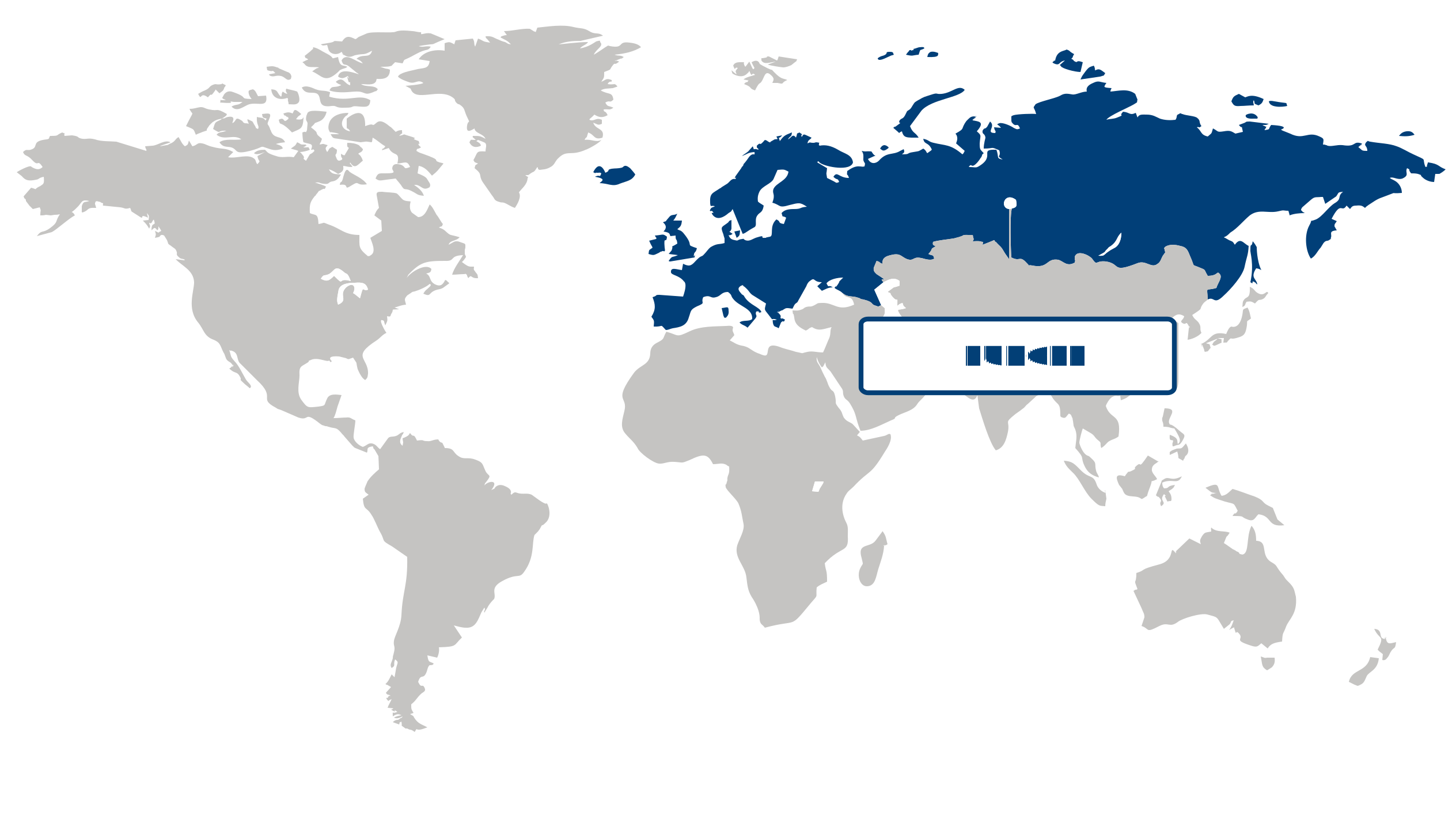
Largest Region
Europe
42% Market Share in 2025
Europe dominated the self-consolidating concrete market in 2025, capturing approximately 42% of the global share. This leadership is primarily fueled by the region’s advanced precast and high-rise construction standards, which demand high-performance materials that improve workability and structural integrity. The European market benefits from stringent regulatory frameworks set by entities like the European Committee for Standardization (CEN), promoting sustainable and innovative concrete solutions. Additionally, economic resilience in key economies and ongoing urban redevelopment initiatives foster steady demand. Companies such as BASF and LafargeHolcim have been actively incorporating digital technologies and sustainable admixtures to enhance product efficiency and environmental compliance. Such factors position Europe as a critical hub for ongoing innovation, offering substantial opportunities for investments in the self-consolidating concrete market.
Germany anchors the European self-consolidating concrete market, driven by rigorous construction standards and a strong focus on industrialized building methods. The country's emphasis on energy-efficient and eco-friendly construction, supported by the German Sustainable Building Council (DGNB), encourages the adoption of advanced concrete mixtures. Corporate strategies from firms like HeidelbergCement illustrate a commitment to enhancing product sustainability and operational excellence. This environment fosters increased demand for self-consolidating concrete in both precast and high-rise projects, reinforcing Germany’s role in strengthening Europe’s market position.
France plays a pivotal role in the European self-consolidating concrete market through innovative infrastructure projects and urban renewal programs. French regulatory agencies, including CSTB (Scientific and Technical Centre for Building), support the integration of self-consolidating concrete for improved quality and labor productivity. Leading firms such as Saint-Gobain have adopted digital tools and sustainable formulations to meet evolving customer demands. France’s balanced approach to regulation and innovation amplifies regional growth dynamics, further consolidating Europe’s dominance in this specialized concrete market.
Asia Pacific Market Analysis:
Asia Pacific emerged as the fastest-growing region in the self-consolidating concrete market, registering a robust CAGR of 7.2%. The acceleration is primarily driven by expansive mega infrastructure and urbanization projects across the region, which are enhancing demand for high-performance construction materials like self-consolidating concrete. Governments and private developers are increasingly prioritizing durable, fast-setting concrete solutions to meet stringent timelines and sustainability goals, as reflected in initiatives such as China’s Belt and Road projects and India’s Smart Cities Mission. Moreover, the adoption of advanced construction technologies, coupled with growing urban populations and rising disposable incomes, reinforces this demand shift. According to data from the Asian Development Bank, infrastructure spending in Asia Pacific remains among the highest globally, indicating sustained opportunities. This dynamic landscape positions Asia Pacific as a critical market for investors and manufacturers aiming to capitalize on scalable, innovation-driven construction trends.
China anchors Asia Pacific’s leadership with its pivotal role in the self-consolidating concrete market, propelled by massive infrastructure undertakings and urban expansion. The government’s continued investment in high-speed rail networks, large-scale residential complexes, and commercial hubs fuels demand for concrete variants that deliver superior flowability and strength. Reports from the National Development and Reform Commission highlight targeted policies supporting eco-friendly construction materials, encouraging the use of self-consolidating concrete for reduced environmental impact. Furthermore, Chinese firms are accelerating technology adoption to improve construction efficiency and reduce labor costs, which strengthens competitive positioning. This operational sophistication positions China as a strategic transmitter of regional growth dynamics.
Japan plays a complementary yet crucial role in the Asia Pacific self-consolidating concrete market, driven by its focus on infrastructure resilience and seismic safety enhancements. The nation’s stringent building codes necessitate advanced concrete types capable of meeting high durability and workability standards. According to the Japan Concrete Institute, ongoing investments in urban redevelopment and infrastructure rehabilitation, notably post-disaster reconstruction efforts, create a steady demand for self-consolidating concrete. Japanese manufacturers and construction firms emphasize innovation and quality control, contributing to industry best practices and setting performance benchmarks that ripple across the region. Japan’s refined approach to material science and sustainability further amplifies Asia Pacific’s growth potential in this specialty concrete segment.
North America Market Trends:
North America maintained notable presence in the self-consolidating concrete market, driven by robust demand from the construction and infrastructure sectors focused on efficiency and sustainability. The region’s emphasis on green building standards and stringent environmental regulations, as outlined by the U.S. Green Building Council, fuels adoption of advanced concrete solutions that reduce waste and enhance structural performance. Technological advancements in mixing and pouring processes, promoted by industry leaders like BASF Corporation, streamline operations and improve quality assurance. Moreover, North America benefits from a resilient supply chain supported by mature logistics networks, enabling timely delivery of specialized materials. These factors, coupled with increasing investments in urban development and smart infrastructure noted by the U.S. Department of Transportation, position the region for significant opportunities in expanding the use of self-consolidating concrete in diverse construction applications.
The U.S. plays a pivotal role in the North American self-consolidating concrete market, driven largely by its dynamic construction environment and focus on innovation. Growing demand for infrastructure rehabilitation and high-rise commercial projects boosts the need for concrete mixes that accelerate construction timelines while ensuring durability, as reflected in recent initiatives from the American Concrete Institute. Policy frameworks encouraging sustainable construction practices, such as incentives under the Environmental Protection Agency’s ENERGY STAR program, further accelerate adoption. Companies like LafargeHolcim have actively expanded their product portfolios and pilot projects in the U.S., showcasing improved mix designs tailored for urban applications. This confluence of innovation, regulatory support, and market demand underscores the U.S.’s critical influence on shaping North America’s growth trajectory in self-consolidating concrete solutions.
No card data available for this language/report.
Segment Leadership and Growth Trends
The self-consolidating concrete market in the infrastructure segment represented the largest share in 2025, primarily due to rapid global infrastructure expansion necessitating materials that ensure efficient placement and long-term durability, particularly in bridge construction. This segment benefits from growing urbanization and government-led initiatives such as those by the World Bank and the Asian Development Bank that prioritize resilient infrastructure investments. Furthermore, the preference for sustainable construction practices has accelerated adoption, as infrastructure projects increasingly require low-waste and labor-efficient materials. Industry leaders like LafargeHolcim have reported enhanced project timelines by deploying self-consolidating concrete in large-scale infrastructure, underscoring competitive advantages. The infrastructure segment offers strategic entry points for both established conglomerates and emerging firms focusing on specialized concrete solutions. Given continuing public sector commitments and advancements in concrete technology, this segment is poised to sustain its prominence through the medium term.
Analysis by Type
Within the self-consolidating concrete market, flowable concrete held the largest share in 2025, driven by its exceptional flow properties that facilitate seamless filling of complex molds without mechanical vibration. This advantage aligns with escalating infrastructure investments globally, as highlighted by announcements from Vulcan Materials Company emphasizing efficiency gains on demanding projects. Enhanced workability supports contractor preferences for faster, cleaner construction cycles, while regulatory frameworks promoting noise reduction on job sites indirectly boost flowable concrete demand. Supply chain improvements in advanced admixtures from chemical suppliers further enable this segment’s leadership. Established producers benefit from premium positioning, while new entrants can leverage innovation in admixture technology to compete effectively. The flowable concrete segment’s unique attributes and integration with modern construction techniques suggest its continued relevance amid evolving industry standards and environmental considerations.
Analysis by End Use
Bridges held the largest share in the self-consolidating concrete market's end-use segment in 2025, attributed to rising global investments in expanding and rehabilitating bridge infrastructure requiring materials that enhance structural integrity and workability. Organizations like the American Association of State Highway and Transportation Officials (AASHTO) recommend self-consolidating concrete for bridge decks due to its superior compaction and reduced mechanical vibration, which improve durability and reduce maintenance costs. Customer demand reflects a trend toward infrastructure longevity and reduced lifecycle expenses, while workforce shortages encourage materials that simplify placement procedures. Competitive dynamics favor manufacturers supplying specialized mixes tailored for civil engineering challenges. The reliance on self-consolidating concrete in bridge applications is expected to persist owing to ongoing infrastructure funding and the sector’s move towards resilient, high-performance construction solutions.
| Report Segmentation | |||
| Segment | Sub-Segment | Largest Segment | Fastest Growing Segment |
|---|---|---|---|
| Application | Residential Construction, Commercial Construction, Infrastructure | ||
| Type | Flowable Concrete, SLUMP Concrete, Self-Compacting Concrete | ||
| End Use | Architectural Structures, Bridges, Roads | ||
| Composition | Cement, Aggregates, Additives | ||
 Read our Research Approach
Competitive Landscape and Market Positioning
Key players in the self-consolidating concrete market include HeidelbergCement, CEMEX, LafargeHolcim, Buzzi Unicem, CRH, Vulcan Materials, Taiheiyo Cement, UltraTech Cement, Dangote Cement, and Cementir Holding. These companies hold strategic importance due to their expansive geographic footprint, diverse product portfolios, and emphasis on sustainable construction practices. HeidelbergCement and LafargeHolcim stand out with their integrated operations and technological advancements, while firms like CEMEX and UltraTech Cement leverage strong regional dominance and innovation in materials. Players such as Dangote Cement and Cementir Holding are gradually increasing influence by addressing emerging market demands. Collectively, these firms shape the industry by combining robust supply chains with a focus on quality and performance tailored to varied construction needs.The competitive environment is marked by concerted efforts from key companies to enhance product offerings and technological capabilities. Initiatives include collaborative innovation platforms and strategic acquisitions that broaden material science expertise and expand geographic penetration. For instance, the emphasis on eco-friendly formulations and bespoke concrete mixes illustrates a commitment to meet stringent regulatory standards and customer expectations. By refining manufacturing processes and employing digital tools for quality control, these companies secure leadership in both efficiency and environmental compliance, sustaining a competitive edge in a rapidly evolving landscape.
Strategic / Actionable Recommendations for Regional Players
In North America, leveraging partnerships with technology firms could accelerate the development of advanced admixtures and automation in concrete mixing, addressing the demand for faster, more consistent construction solutions. Emphasizing collaborations with infrastructure developers will also help capture large-scale projects requiring high-performance concrete.
Within Asia Pacific, embracing digitalization and artificial intelligence to optimize mix designs and reduce carbon footprints will be vital. Cultivating regional alliances focused on sustainable building practices and targeting growing urban infrastructure needs can strengthen market presence amid intensifying competition.
For Europe, where regulatory pressures are stringent, focusing on innovative green concrete variants and circular economy principles will provide differentiation. Regional players may benefit from integrating comprehensive research collaborations and capitalizing on cross-border partnerships to enhance knowledge transfer and scale innovations.
Why Choose Us
Specialized Expertise: Our team comprises industry experts with a deep understanding of your market segment. We bring specialized knowledge and experience that ensures our research and consulting services are tailored to your unique needs.
Customized Solutions: We understand that every client is different. That's why we offer customized research and consulting solutions designed specifically to address your challenges and capitalize on opportunities within your industry.
Proven Results: With a track record of successful projects and satisfied clients, we have demonstrated our ability to deliver tangible results. Our case studies and testimonials speak to our effectiveness in helping clients achieve their goals.
Cutting-Edge Methodologies: We leverage the latest methodologies and technologies to gather insights and drive informed decision-making. Our innovative approach ensures that you stay ahead of the curve and gain a competitive edge in your market.
Client-Centric Approach: Your satisfaction is our top priority. We prioritize open communication, responsiveness, and transparency to ensure that we not only meet but exceed your expectations at every stage of the engagement.
Continuous Innovation: We are committed to continuous improvement and staying at the forefront of our industry. Through ongoing learning, professional development, and investment in new technologies, we ensure that our services are always evolving to meet your evolving needs.
Value for Money: Our competitive pricing and flexible engagement models ensure that you get maximum value for your investment. We are committed to delivering high-quality results that help you achieve a strong return on your investment.
Select Licence Type

