



Senior Friendly Packaging Market Size & Forecasts 2026-2035, By Segments (Product Type, End-Use, Application), Growth Opportunities, Innovation Landscape, Regulatory Shifts, Strategic Regional Insights (U.S., Japan, China, South Korea, UK, Germany, France), and Competitive Dynamics (Amcor, Sealed Air, WestRock, Sonoco, Berry Global)
Market Size and Growth Outlook
Senior Friendly Packaging Market size is projected to expand significantly, moving from USD 4.93 billion in 2025 to USD 8.5 billion by 2035, with a CAGR of 5.6% during the 2026-2035 forecast period. The expected revenue for 2026 is USD 5.17 billion.
Base Year Value (2025)
USD 4.93 billion
CAGR (2026-2035)
5.6%
Forecast Year Value (2035)
USD 8.5 billion

Historical Data Period
2022-2025

Largest Region
Europe

Forecast Period
2026-2035
Key Takeaways
- Europe region possessed over 40% revenue share in 2025, driven by aging population, regulatory standards, and healthcare packaging adoption in Europe.
- Asia Pacific region will expand at over 8% CAGR between 2026 and 2035, accelerated by increasing elderly population, healthcare demand, and packaging innovation in APAC.
- The easy grip bottles and containers segment in the senior friendly packaging market accounted for majority share in 2025, driven by increasing aging population prioritizing ease of handling and accessibility.
- The healthcare segment held largest share of the market in 2025, driven by rising demand for safe, user‑friendly medication packaging for aging consumers.
- The medical tablets, pills, and syrups segment maintained its lead in the senior friendly packaging market, driven by expanded use of senior‑friendly designs in essential healthcare consumables.
- Leading organizations shaping the senior friendly packaging market include Amcor (Australia), Sealed Air (USA), WestRock (USA), Sonoco (USA), Berry Global (USA), Smurfit Kappa (Ireland), Mondi Group (UK/Austria), DS Smith (UK), Huhtamaki (Finland), Toyo Seikan Group (Japan).
Market Growth Drivers and Industry Trends
Increasing Demand for Senior-Friendly Packaging in Healthcare and FoodThe senior friendly packaging market is significantly propelled by rising demand within healthcare and food sectors as aging populations prioritize ease of use and safety. The World Health Organization highlights a global increase in the elderly population, intensifying the need for packaging that addresses diminished dexterity and visual impairments. Companies like Johnson & Johnson have responded by redesigning pharmaceutical packaging for easier handling, minimizing medication errors among seniors. This demographic shift offers strategic openings for both established brands and startups to develop specialized packaging solutions that enhance user experience. As demand patterns evolve, businesses investing in tailored packaging will benefit from deeper market penetration and strengthened consumer loyalty, reflecting a pragmatic approach to aging population needs without reliance on speculative trends.
Technological Innovations in Ergonomic and Easy-Open Packaging
Advancements in packaging technology, particularly ergonomic and easy-open mechanisms, are transforming the senior friendly packaging market by directly addressing physical challenges faced by elderly consumers. Innovations such as peelable lids with tactile features, pioneered by companies like Amcor, offer enhanced usability and reduce frustration, a critical factor influencing purchasing decisions. Integration of smart packaging components that provide tactile or visual cues further elevates product interaction, driving differentiation amid competitive pressure. By prioritizing user-centric design and leveraging emerging materials science, manufacturers can secure competitive advantage while meeting evolving consumer expectations. The market trajectory will increasingly favor those adept at embedding innovative functionalities that reconcile convenience with safety, aligning with broader digital transformation trends within packaging.
Regulatory Emphasis on Accessibility and Safety Standards
Heightened regulatory scrutiny on accessibility and safety standards serves as a pivotal growth driver in the senior friendly packaging market. Agencies like the U.S. Food and Drug Administration have introduced guidelines mandating clear labeling, child resistance balanced with senior accessibility, and safer material use in packaging. Compliance with these regulations compels manufacturers to innovate and prioritize inclusive design, thereby elevating packaging quality across the industry. This regulatory environment incentivizes incumbents and newcomers to invest in adaptive packaging technologies and rigorous testing protocols, fostering differentiation through certified safety and accessibility credentials. Moving forward, regulatory momentum will maintain pressure for inclusive packaging, providing a foundation for sustained innovation and reinforcing trust among aging consumers and caregivers alike.
Industry Restraints:
High Production Costs and Design Complexity
The senior friendly packaging market faces significant constraints from elevated production costs compounded by the complexity of designing user-centric solutions that meet diverse accessibility needs. Packaging tailored for elderly consumers often requires specialized materials, adaptive mechanisms (such as easy-open closures), and clear labeling compliant with regulatory standards set by entities like the U.S. Food and Drug Administration (FDA) and the European Medicines Agency (EMA). These factors drive up manufacturing expenses and complicate supply chain logistics, limiting scalability and adoption. For instance, Johnson & Johnson’s efforts to implement braille and tactile features illustrate cost hurdles that slow widespread rollout. Strategically, both incumbents and startups must balance innovation with cost efficiency, challenging pricing strategies and investment returns. Moving forward, incremental technological advances and material innovations will be critical to reducing costs and simplifying design, yet these will require sustained R&D commitment amid tight margins.
Regulatory Complexity and Inconsistent Global Standards
Navigating fragmented regulatory landscapes remains a formidable barrier to growth in senior friendly packaging. Variability in senior safety mandates across regions—such as the strict child-resistant but senior-accessible packaging regulations in the United States and differing labeling requirements in the European Union—creates operational inefficiencies and market entry challenges. The International Organization for Standardization’s (ISO) ongoing efforts to harmonize packaging standards have yet to fully mitigate these discrepancies, leading companies like Procter & Gamble to adopt region-specific packaging lines that increase complexity and cost. For established firms, regulatory uncertainty impedes streamlined product development cycles, while new entrants face formidable certification hurdles. This restraint will persist as governments update standards in response to evolving demographic needs, compelling market players to invest in regulatory expertise and adaptable packaging platforms to maintain compliance and competitiveness.
| Growth Driver Assessment Framework | |||||
| Growth Driver | Impact On CAGR | Regulatory Influence | Geographic Relevance | Adoption Rate | Impact Timeline |
|---|---|---|---|---|---|
| Increasing demand for senior-friendly packaging in healthcare and food | 2.00% | Short term (≤ 2 yrs) | North America, Europe; Spillover: Asia Pacific | Medium | Fast |
| Technological innovations in ergonomic and easy-open packaging | 1.80% | Medium term (2–5 yrs) | Europe, Asia Pacific; Spillover: North America | Low | Moderate |
| Regulatory emphasis on accessibility and safety standards | 1.80% | Long term (5+ yrs) | Europe, North America; Spillover: Asia Pacific | High | Moderate |
Unlock insights tailored to your business with our bespoke market research solutions - Click to get your customized report now!
Regional Demand Dynamics
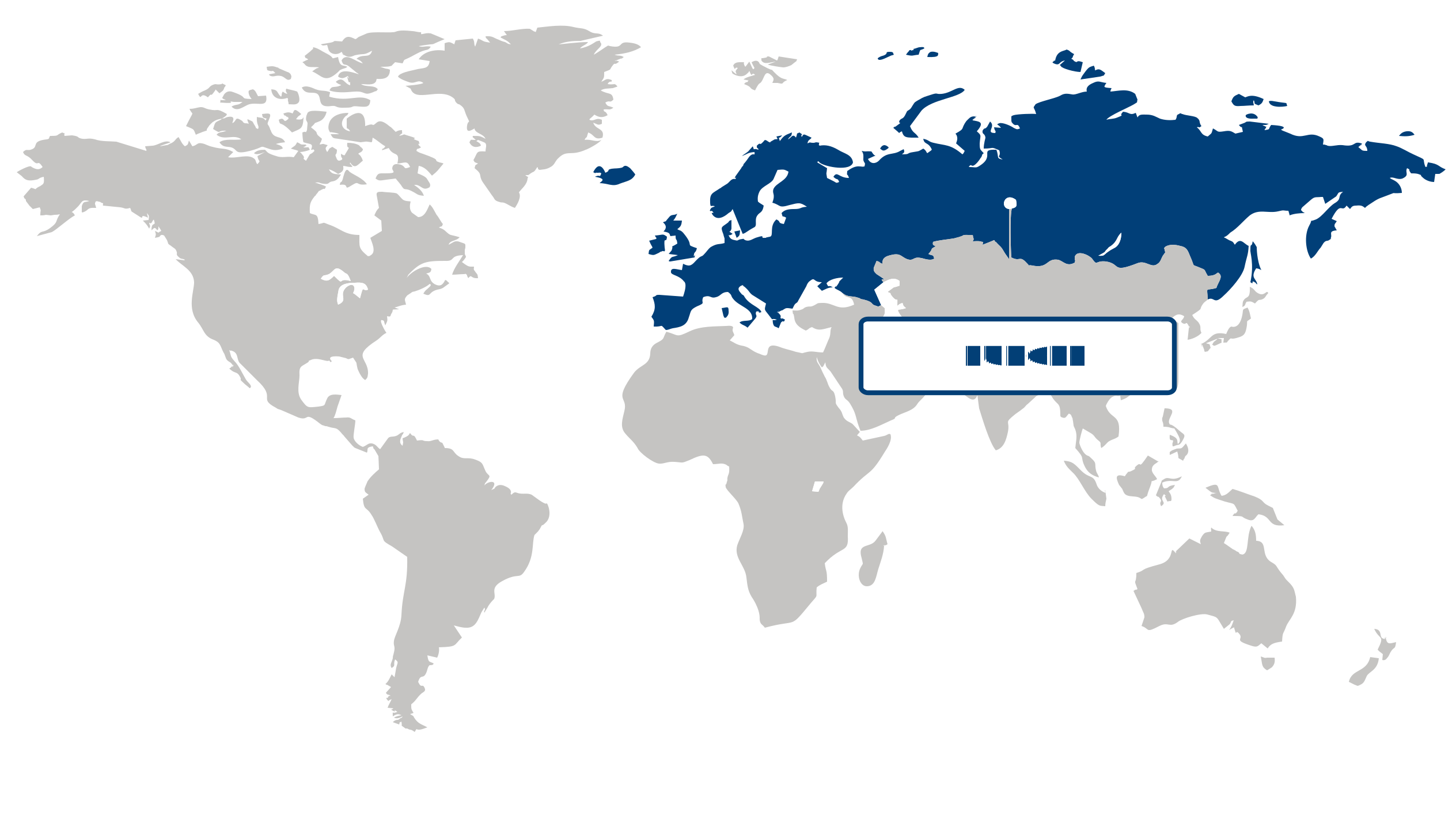
Largest Region
Europe
40% Market Share in 2025
Europe captured more than 40% of the senior friendly packaging market in 2025, solidifying its position as the largest regional segment. The region's dominance stems from its demographic dynamics, notably one of the world’s fastest-aging populations, which intensifies demand for packaging solutions designed for ease of use and accessibility. Regulatory requirements, such as those enforced by the European Medicines Agency (EMA), also stimulate market growth by mandating improved safety and usability standards in healthcare packaging. Companies like Schott AG have responded with innovations tailored for seniors, aligning with heightened consumer expectations and public health priorities. Moreover, investments in sustainable materials and digital labeling technologies reflect Europe's commitment to broader environmental and operational excellence. These dynamics, coupled with efficient supply chains across the European Union, position the region for sustained opportunities in senior friendly packaging as healthcare sectors evolve to meet aging consumers’ needs.
Germany anchors the European senior friendly packaging market, spearheading advances driven by its healthcare infrastructure and regulatory rigor. The German Federal Institute for Drugs and Medical Devices (BfArM) influences packaging standards that prioritize senior usability and safety, prompting manufacturers like Gerresheimer AG to innovate accordingly. Consumer preference for intuitive, ergonomic designs is strong amid an aging nationwide demographic, further elevating demand. This strategic focus heightens Germany’s role as an innovation hub, enhancing the overall European market's responsiveness and competitive edge. The country’s leadership in this niche underscores the region’s broader potential to capture value through regulatory alignment and customer-centric packaging innovations.
France plays a pivotal role in Europe’s senior friendly packaging market, distinguished by government-backed healthcare initiatives and growing public sensitivity to elder care. French regulatory guidelines, reinforced by entities such as the National Agency for the Safety of Medicines and Health Products (ANSM), encourage adoption of senior-friendly designs to improve patient adherence and reduce medication errors. Companies like AptarGroup have cited France’s healthcare system reforms as key drivers for developing easier-to-open and more accessible packaging. Cultural emphasis on quality of life for seniors, alongside expanding pharmaceutical manufacturing, makes France a crucial contributor to Europe’s packaging landscape. This national momentum supports the continent’s leadership in addressing complex packaging needs for aging populations, advancing market growth prospects.
Asia Pacific Market Analysis:
Asia Pacific emerged as the fastest-growing region in the senior friendly packaging market, registering a robust CAGR of 8%. This high growth rate is driven primarily by the increasing elderly population, rising healthcare demand, and rapid packaging innovation across the region. Countries within APAC are experiencing demographic shifts, with a significant rise in seniors requiring accessible, easy-to-use packaging solutions that enhance medication adherence and daily product consumption. The region also benefits from advances in smart packaging technologies and government initiatives focused on healthcare infrastructure, as evidenced by innovations reported by companies like Takeda Pharmaceutical and policy frameworks from the Asia-Pacific Economic Cooperation (APEC). These developments foster adoption of senior-friendly designs that consider dexterity and cognitive challenges. Asia Pacific’s diverse markets show increasing consumer preference for convenience and safety, aligning with sustainability trends and digital transformation in packaging supply chains. Looking ahead, the confluence of demographic trends and technological progress positions APAC as a critical hub for growth opportunities in the senior friendly packaging market.
Japan plays a pivotal role in cementing Asia Pacific’s leadership in the senior friendly packaging market, driven by its advanced healthcare system and rapidly aging population. Japanese consumers increasingly demand packaging that balances functionality with minimal environmental impact, a trend amplified by regulatory nudges from the Ministry of Health, Labour and Welfare and packaging standards promoted by the Japan Packaging Institute. Notably, companies like Otsuka Pharmaceutical have introduced easy-open blisters and ergonomically designed containers tailored to seniors’ needs, blending innovation with Japan’s strong culture of quality and safety. The country’s mature market showcases sophisticated adoption of digital labeling and anti-counterfeiting technologies, enhancing both usability and product security. Japan’s emphasis on integrating senior-friendly features with sustainability initiatives exemplifies broader regional consumer expectations, reinforcing Asia Pacific’s growth trajectory in the senior friendly packaging market.
China's expanding senior population combined with surging healthcare consumption underpins its increasing influence within the Asia Pacific senior friendly packaging market. Regulations such as the National Medical Products Administration’s guidelines have catalyzed reformulation of pharmaceutical packaging for elderly safety and compliance. Chinese consumers show a growing preference for intuitive packaging that supports self-medication among aging adults, stimulating demand for innovation in easy-twist caps, large fonts, and tactile feedback. Key players like Sinopharm Group are progressively investing in packaging solutions tailored toward seniors, reflecting the country’s evolving retail environment and digital integration in healthcare. Moreover, China’s vast manufacturing base enhances supply chain efficiencies, allowing rapid scaling of senior-friendly products. This national momentum contributes substantially to Asia Pacific’s rapid market expansion and underscores China’s strategic position as a leader in advancing accessible packaging technologies.
North America Market Trends:
North America held a substantial share in the senior friendly packaging market, reflecting its mature consumer base and advanced healthcare infrastructure. The region benefits from heightened awareness of accessibility and safety among elderly populations, driving demand for easy-to-open, clearly labeled packaging solutions. Regulatory frameworks such as those enforced by the U.S. Food and Drug Administration (FDA) enhance standards for usability and safety, encouraging innovation in packaging formats. Leading companies like Johnson & Johnson have recently highlighted their commitment to senior-centric design in packaging through product line extensions and sustainability initiatives, addressing consumer preferences for environmentally responsible options. Additionally, advancements in digital printing and smart packaging technologies streamline customization and improve functionality, positioning North America as a leader in this sector. Looking ahead, increasing healthcare expenditures and an aging demographic underpin sustained opportunities for growth and innovation in senior friendly packaging across the region.
The U.S. plays a pivotal role in driving growth within the senior friendly packaging market due to its sizable elderly population and rigorous regulatory environment. U.S. consumer demand is influenced by rising health consciousness and a preference for packaging that reduces physical strain, as evidenced by the American Association of Retired Persons’ (AARP) ongoing advocacy for age-inclusive design standards. Government initiatives such as the FDA’s recent focus on human factors engineering in packaging development have prompted manufacturers to incorporate enhanced grip features and larger, legible fonts. Companies like Pfizer have publicly emphasized their adoption of senior-friendly packaging formats in response to these shifts. This drive towards accessible packaging not only enhances market penetration domestically but also sets benchmarks that bolster North America’s broader regional market leadership in senior friendly packaging.
No card data available for this language/report.
Segment Leadership and Growth Trends
Easy grip bottles and containers held the largest share in the senior friendly packaging market in 2025, led by the aging population's prioritization of ease of handling and accessibility. This segment’s prominence reflects growing consumer demand for ergonomic designs that reduce strain and improve functionality, supported by innovations from companies like Gerresheimer and AptarGroup. Regulatory encouragements from the U.S. Food and Drug Administration (FDA) promoting accessible packaging further solidify leadership. Supply chains adapting to scalable production of user-centric bottles enhance competitive positioning. For established and emerging firms, this segment offers strategic opportunities to integrate sustainable materials and leverage digital design technologies. Continued demographic shifts and increasing regulatory focus on senior usability ensure ongoing relevance for easy grip bottles and containers.
Analysis by End-Use
Healthcare represented the largest share in the senior friendly packaging market, driven by rising demand for safe, user-friendly medication packaging tailored to older adults. This segment benefits from heightened awareness by healthcare providers and regulators such as the World Health Organization (WHO) emphasizing medication adherence through better packaging. Preferences among seniors for intuitive designs, combined with healthcare industry trends toward patient-centric solutions, bolster segment growth. Leading pharmaceutical packaging firms like WestRock and Amcor invest in innovations such as tamper-evident and easy-open features. Both established players and new entrants can capitalize on opportunities in personalized packaging solutions. Given ongoing global aging trends and regulatory milestones supporting senior access, healthcare packaging remains critical in this market.
Analysis by Application
Medical tablets, pills, and syrups dominated the senior friendly packaging market segment due to expanded use of accessible designs in essential healthcare consumables. Increasing consumer reliance on prescription and over-the-counter medications has intensified demand for packaging that simplifies handling and dosage accuracy, as promoted by the National Institute on Aging (NIA). Consumer preferences increasingly favor blister packs and single-dose pouches that reduce errors and improve compliance. Supply chain enhancements in pharmaceutical packaging technologies from firms like BD (Becton, Dickinson and Company) further support market leadership. This segment presents attractive growth prospects for companies investing in innovation and adherence-enhancing packaging formats. The sustained rise in chronic conditions among seniors and evolving guidelines on medication safety position medical consumables packaging as a cornerstone of this market’s future.
| Report Segmentation | |||
| Segment | Sub-Segment | Largest Segment | Fastest Growing Segment |
|---|---|---|---|
| Product Type | Easy Grip Bottles and Containers, Safety Caps and Closures, Single-Dose Pouches and Blister Packs, Graphic Labels and Tags | ||
| End-Use | Food & Beverages, Healthcare, Cosmetics & Personal Care, Consumer Durables | ||
| Application | Consumer Products, Medical Tablets, Pills, Syrups, Body & Hair Care Products | ||
 Read our Research Approach
Competitive Landscape and Market Positioning
Key players in the senior friendly packaging market include Amcor, Sealed Air, WestRock, Sonoco, Berry Global, Smurfit Kappa, Mondi Group, DS Smith, Huhtamaki, and Toyo Seikan Group. These companies have established strong reputations through their innovation and commitment to accessibility, driving market standards globally. Firms like Amcor and Sealed Air, with deep expertise in flexible and protective packaging, exemplify leadership in designing easy-to-open, senior-centric solutions. European leaders such as Smurfit Kappa and Mondi Group contribute sustainable and ergonomic packaging designs, enhancing user experience. Meanwhile, Asian players like Toyo Seikan bring localized insights that cater to aging populations in regional markets. Collectively, these entities shape senior friendly packaging by embedding usability, safety, and sustainability into their portfolios.The competitive landscape is marked by dynamic collaboration and continuous enhancement across the top players. Companies pursue integrated approaches involving material innovation and smart packaging features, strengthening their market foothold. For instance, WestRock and Berry Global increasingly blend eco-friendly materials with advanced functionality to differentiate offerings. Strategic alliances and focused development pipelines enable firms such as Huhtamaki and DS Smith to rapidly address evolving user needs. This environment fosters intensified innovation cycles, solidifying leadership positions while encouraging knowledge exchange for tailored solutions that accommodate seniors' dexterity and cognitive considerations, thereby elevating market responsiveness and diversity.
Strategic / Actionable Recommendations for Regional Players
North American firms should seek alliances that expand capabilities in smart packaging and digital integration, capitalizing on the region's advanced tech infrastructure. Embracing emerging materials tailored to ease of use can unlock untapped sub-segments, particularly in healthcare and pharmaceuticals targeting seniors.
In the Asia Pacific, regional entities could enhance market reach by partnering with local health and eldercare organizations, ensuring culturally appropriate design adaptations. Leveraging rapid urbanization and increasing digital literacy provides avenues to introduce innovative, tech-enabled packaging solutions.
European market participants would benefit from deepening investments in sustainable design while aligning with stringent regulations emphasizing recyclability and eco-friendliness. Collaboration with startups focusing on ergonomic innovations can accelerate responsiveness to aging consumer demands and reinforce competitive differentiation.
Why Choose Us
Specialized Expertise: Our team comprises industry experts with a deep understanding of your market segment. We bring specialized knowledge and experience that ensures our research and consulting services are tailored to your unique needs.
Customized Solutions: We understand that every client is different. That's why we offer customized research and consulting solutions designed specifically to address your challenges and capitalize on opportunities within your industry.
Proven Results: With a track record of successful projects and satisfied clients, we have demonstrated our ability to deliver tangible results. Our case studies and testimonials speak to our effectiveness in helping clients achieve their goals.
Cutting-Edge Methodologies: We leverage the latest methodologies and technologies to gather insights and drive informed decision-making. Our innovative approach ensures that you stay ahead of the curve and gain a competitive edge in your market.
Client-Centric Approach: Your satisfaction is our top priority. We prioritize open communication, responsiveness, and transparency to ensure that we not only meet but exceed your expectations at every stage of the engagement.
Continuous Innovation: We are committed to continuous improvement and staying at the forefront of our industry. Through ongoing learning, professional development, and investment in new technologies, we ensure that our services are always evolving to meet your evolving needs.
Value for Money: Our competitive pricing and flexible engagement models ensure that you get maximum value for your investment. We are committed to delivering high-quality results that help you achieve a strong return on your investment.
Select Licence Type

