Setting Spray Market Size & Growth Forecast 2027–2036, By Segments (End-use, Distribution Channel, Type), Regional Demand Trends (North America, Asia Pacific, Europe), Key Country Insights (U.S., Japan, South Korea, Germany, France, Italy), and Competitive Landscape
Jump to content
Market Size and Growth Outlook
Setting Spray Market size was more than USD 1.22 billion in 2026 and is set to grow at a 7.22% CAGR between 2027 and 2036, reaching USD 2.45 billion by 2036. The industry revenue for 2027 is estimated at USD 1.29 billion.
Get more details on this report
Request Free Sample ReportSetting Spray Market Intelligence Snapshot
Regional Market Dynamics
- Europe holds 32.86% share due to mature beauty market, strong retail penetration, and consistent demand for performance-oriented cosmetics across established usage routines.
- Asia Pacific is growing at 8.7% CAGR driven by rising cosmetics adoption, social-commerce influence, expanding urban consumers, and increased makeup usage among younger demographics.
Segment Momentum
- The professional segment accounted for 64.99% of the market in 2026, supported by consistent demand from salons, makeup studios, fashion shoots, and events where long-lasting makeup performance is essential.
- Online sales are growing fastest because consumers benefit from convenient shopping, broader product selection, reviews, price comparisons, and access to niche and premium beauty products unavailable in many physical stores.
Market Expansion Drivers
- Rising demand for long-lasting and smudge-resistant makeup boosting setting spray adoption.
- Increasing social media and beauty influencer engagement accelerating premium cosmetic product visibility.
- Growing preference for vegan and skincare-infused cosmetics expanding multifunctional setting spray demand.
Leading Market Participants
- Major companies in the setting spray market include L’Oréal S.A. (France), Estée Lauder Companies Inc. (United States), Coty Inc. (United States), Shiseido Company Limited (Japan), e.l.f. Beauty Inc. (United States), Urban Decay (L’Oréal) (France), Anastasia Beverly Hills LLC (United States), Charlotte Tilbury Beauty Ltd. (United Kingdom).
Global Market Forecast Snapshot
Market Outlook
- 2026 Market Size: USD 1.22 billion
- 2027 Estimated Market Size: USD 1.29 billion.
- Projected Market Size: USD 2.45 billion by 2036
- Growth Forecast: 7.22% CAGR (2027-2036)
Regional and Segment Outlook
- Leading Regional Market: Europe
- High-Growth Regional Hub: Asia Pacific
- Core Revenue Segment: Professional (End-use) | Supermarket and Hypermarkets (Distribution Channel) | Matte Setting Spray (Type)
- Emerging Opportunity Segment: Personal (End-use) | Online (Distribution Channel) | Radiant/Dewy Setting Spray (Type)
Market Growth Drivers and Industry Trends
Rising demand for long-lasting and smudge-resistant makeup boosting setting spray adoption
The setting spray market growth is being driven by consumers seeking makeup products that maintain appearance for longer periods and resist smudging under everyday conditions. Setting sprays help form a finishing layer over cosmetics, supporting makeup longevity while reducing the need for frequent touch-ups. Demand is particularly relevant among consumers with extended workdays, social activities, events, or environmental exposure where maintaining makeup consistency is important, increasing the role of setting sprays within complete cosmetic routines.
Increasing social media and beauty influencer engagement accelerating premium cosmetic product visibility
Increasing engagement with social media beauty content will propel the setting spray market as influencers and beauty creators expose consumers to application techniques, product comparisons, and professional-style makeup routines. Digital content can demonstrate the practical benefits of setting sprays, including improved makeup longevity and finish, while also increasing awareness of premium formulations. The visual nature of beauty platforms allows product performance to be communicated through tutorials and demonstrations, encouraging consumers to incorporate setting sprays into increasingly sophisticated makeup routines.
Growing preference for vegan and skincare-infused cosmetics expanding multifunctional setting spray demand
The setting spray market is gaining opportunities from consumer demand for cosmetics that combine makeup functionality with skincare-oriented benefits. Vegan formulations can appeal to consumers seeking products aligned with plant-based and ethical purchasing preferences, while skincare-infused setting sprays can incorporate moisturizing, soothing, or skin-conditioning properties alongside their primary makeup-setting function. This convergence of cosmetic and skincare attributes enables manufacturers to position setting sprays as multifunctional products that provide finishing performance while supporting broader beauty and skin-care routines.
| Growth Driver | Impact on CAGR | Regulatory Influence | Geographic Relevance | Adoption Rate | Impact Timeline |
|---|---|---|---|---|---|
| Rising demand for long-lasting and smudge-resistant makeup boosting setting spray adoption | 2.00% | Low | North America, Asia Pacific | High | Near Term |
| Increasing social media and beauty influencer engagement accelerating premium cosmetic product visibility | 1.70% | Low | North America, Europe | High | Mid Term |
| Growing preference for vegan and skincare-infused cosmetics expanding multifunctional setting spray demand | 1.40% | Moderate | Europe, Asia Pacific | Emerging | Mid Term |
Unlock insights tailored to your business with our bespoke market research solutions.
Click to get your customized report now.
Regional Demand Dynamics
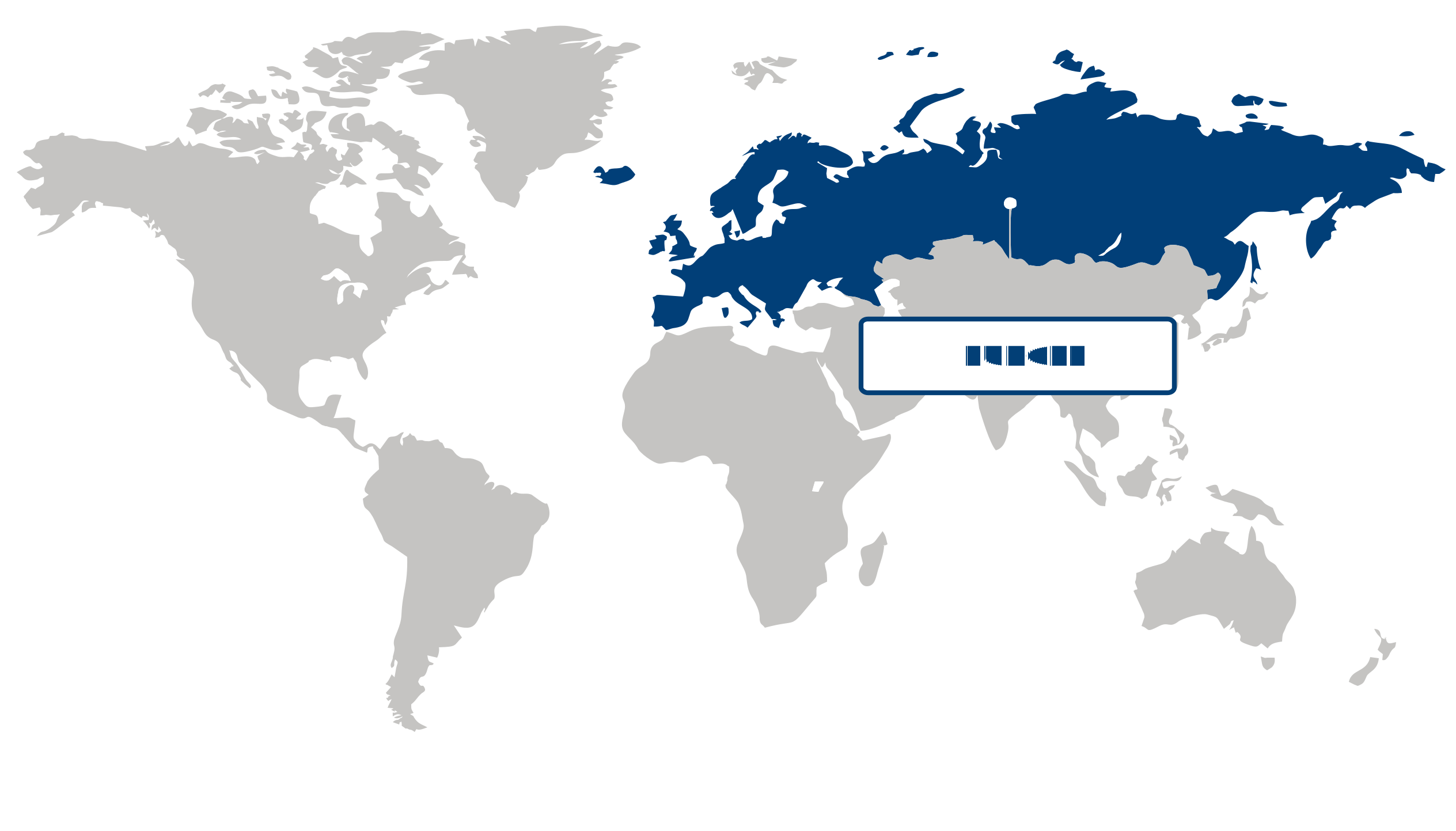
Europe (Largest Region)
Europe dominated the setting spray market with a 32.86% share in 2026, reflecting its established beauty and cosmetics industry, strong consumer preference for high-performance makeup products, and widespread adoption of premium personal-care formulations. Consumers across the region increasingly seek makeup products that provide longer wear while maintaining skin comfort and appearance, supporting demand for specialized setting products. Product innovation around lightweight textures, skin-friendly formulations, and multifunctional cosmetic benefits is also strengthening category appeal. Well-developed beauty retail networks, professional makeup culture, and strong consumer awareness of cosmetic quality and formulation characteristics further reinforce Europe's position as a leading market.
Asia Pacific (Fastest-Growing Region)
Asia Pacific is projected to be the fastest-growing region, supported by expanding beauty and personal-care consumption, rising disposable incomes, and the growing influence of digital beauty culture. Increasing engagement with makeup tutorials, social media trends, and online beauty communities is encouraging consumers to experiment with products designed to improve makeup longevity and finish. The region's diverse climate conditions, particularly warm and humid environments, also create practical demand for cosmetics that can maintain makeup performance throughout the day. Expanding e-commerce, broader availability of international and local beauty products, and growing interest in premium and multifunctional cosmetics are expected to accelerate adoption of setting sprays.
| Parameter | North America | Asia Pacific | Europe | Latin America | MEA |
|---|---|---|---|---|---|
| Innovation HubiScaleNascentDeveloping Advanced | |||||
| Cost-Sensitive RegioniScaleLowMedium High | |||||
| Regulatory EnvironmentiScaleRestrictiveNeutral Supportive | |||||
| Demand DriversiScaleWeakModerate Strong | |||||
| Development StageiScaleEmergingDeveloping Developed | |||||
| Adoption RateiScaleLowMedium High | |||||
| New Entrants / StartupsiScaleSparseModerate Dense | |||||
| Macro IndicatorsiScaleWeakStable Strong |
Key Country Insights
Germany 🇩🇪
Dermatology-Focused FormulationsGermany prioritizes setting sprays with skin-compatible ingredients, fragrance-free options, and scientifically supported performance claims. German consumers increasingly favor products aligned with dermatological standards and sustainable packaging across premium cosmetics categories.
France 🇫🇷
Luxury Cosmetic PositioningFrance emphasizes premium setting sprays that combine elegant formulations with high-quality sensory experiences. French brands strengthen product differentiation through refined ingredients, luxury branding, and compatibility with professional makeup applications.
Italy 🇮🇹
Professional Makeup SolutionsItaly prioritizes setting sprays tailored for professional makeup artists alongside premium consumer offerings. Italian manufacturers focus on performance, finish quality, and compatibility with diverse cosmetic products to support both fashion and everyday beauty applications.
Japan 🇯🇵
Lightweight Finish PreferenceJapan focuses on lightweight setting sprays designed for natural makeup finishes, humidity resistance, and skin comfort. Japanese manufacturers continue refining fine-mist technologies and skincare-infused formulations that complement minimalist beauty routines.
South Korea 🇰🇷
Hybrid Beauty DevelopmentSouth Korea advances setting sprays that integrate cosmetic performance with skincare functions, including hydration and barrier support. The country's beauty companies continuously introduce innovative textures and ingredient combinations that reflect fast-moving consumer trends.
United States 🇺🇸
Prestige Beauty InnovationThe U.S. setting spray market emphasizes multifunctional products that combine long-lasting wear with skincare benefits and clean-label formulations. Brands in the U.S. continue expanding premium and influencer-driven product portfolios to address evolving consumer preferences across retail and e-commerce channels.
Setting Spray Market Share (%), by End-use, 2026
Go beyond the chart, access full insights & data tables
Request Free Sample ReportEnd-use Segment Analysis: Professional (Largest Segment) vs Personal (Fastest-Growing Segment)
The professional segment accounted for the largest share of the setting spray market, reaching 64.99% in 2026. Its strong position is supported by extensive use of setting sprays by makeup artists, salons, beauty professionals, and other service providers seeking durable and consistent makeup finishes. Professional applications often require products that can withstand long working hours, photography, events, and varying environmental conditions, supporting recurring demand. The growing emphasis on long-lasting makeup performance and professional beauty services further reinforces the segment's importance.
Personal use is emerging as the fastest-growing end-use segment as consumers increasingly adopt professional-style makeup routines at home. Social media beauty content, tutorials, and greater product accessibility are encouraging consumers to incorporate setting sprays into everyday and occasion-based makeup applications. Growing interest in long-wear cosmetics, convenient application formats, and personalized beauty routines is expanding usage beyond professional settings.
Distribution Channel Segment Analysis: Supermarket and Hypermarkets (Largest Segment) vs Online (Fastest-Growing Segment)
Supermarket and hypermarkets held the largest share of the setting spray market, accounting for 33.5% in 2026. These retail formats provide consumers with convenient access to a broad selection of beauty and personal-care products while enabling direct product comparison across brands and formulations. High consumer traffic, established shopping habits, and the ability to purchase setting sprays alongside other cosmetics support strong sales through large-format retail outlets.
Online channels are expanding rapidly as consumers increasingly favor convenient digital purchasing for beauty products. E-commerce platforms provide extensive product choices, detailed product information, customer reviews, and home delivery, making it easier for consumers to compare and purchase setting sprays. The growing influence of digital beauty content and social commerce is further encouraging consumers to discover new formulations through online channels.
| Segment | Sub-Segment | Largest Segment | Fastest Growing |
|---|---|---|---|
| End-use | Professional, Personal | Professional | Personal |
| Distribution Channel | Supermarket and Hypermarkets, Specialty Retail Stores, Pharmacy & Drugstore, Online, Offline | Supermarket and Hypermarkets | Online |
| Type | Oil-control Setting Spray, Waterproof Setting Spray, Hydrating Setting Spray, Radiant/Dewy Setting Spray, Matte Setting Spray, Others | Matte Setting Spray | Radiant/Dewy Setting Spray |
Competitive Landscape and Market Positioning
Top players in the setting spray market:
1. L’Oréal S.A. (France)
2. Estée Lauder Companies Inc. (United States)
3. Coty Inc. (United States)
4. Shiseido Company Limited (Japan)
5. e.l.f. Beauty Inc. (United States)
6. Urban Decay (L’Oréal) (France)
7. Anastasia Beverly Hills LLC (United States)
8. Charlotte Tilbury Beauty Ltd. (United Kingdom)
The setting spray market is expanding with improved formulation technologies that enhance makeup longevity and skin compatibility. Innovations in lightweight and skin-friendly ingredients are strengthening product performance. The setting spray market is also shaped by increasing demand for multifunctional beauty products with skincare benefits.
| Company | Market Share | Company Revenue | Revenue CAGR (%) | Product Portfolio | Geographic Presence | Innovation / R&D Focus | Strategic Developments |
|---|---|---|---|---|---|---|---|
| L’Oréal S.A. (France) | |||||||
| Estée Lauder Companies Inc. (United States) | |||||||
| Coty Inc. (United States) | |||||||
| Shiseido Company Limited (Japan) | |||||||
| e.l.f. Beauty Inc. (United States) | |||||||
| Urban Decay (L’Oréal) (France) | |||||||
| Anastasia Beverly Hills LLC (United States) | |||||||
| Charlotte Tilbury Beauty Ltd. (United Kingdom). |
Customize Your Report
Explore examples of how this report can be tailored to different research needs, including custom segments, additional topics or chapters, and related reports. Click a section of the wheel or its numbered marker to explore the available options.
Setting Spray Market — Custom Segments
| Segment | Sub-Segment |
|---|---|
| Skin Type | Dry Skin, Oily Skin, Combination Skin, Normal Skin, Sensitive Skin |
| Retail Price Tier | Mass-Market, Mid-Range, Premium, Luxury |
| Packaging Format | Pump/Spray Bottles, Aerosol Cans, Travel-Size Formats, Refillable Formats |
Setting Spray Market — Custom TOC
| Custom Chapter | Chapter Details |
|---|---|
| Beauty Consumer Usage and Purchase Behavior Analysis |
|
| Social Commerce and Influencer Impact Assessment |
|
| White Space Innovation Mapping for Setting Sprays |
|
Need a different cut of the data?
Request Custom ResearchFrequently Asked Questions
What is the market valuation of setting spray?
How much is the setting spray industry expected to grow by 2036?
How are performance-focused beauty preferences influencing the setting spray market?
How is evolving consumer behavior driving premiumization in the setting spray market?
Why is the professional segment the largest end-use category in the setting spray market?
Why is online the fastest-growing distribution channel in the setting spray market?
Why does Europe hold the largest share in the setting spray market?
What is driving growth in the Asia Pacific setting spray market?
Which companies dominate the setting spray landscape?
Our Clients
"The report provided us with a clear direction, and the level of detail was beyond what we expected. I would definitely recommend their services to others."
Haier Appliances
"The collaboration with Fundamental Business Insights has added significant value to our decision-making process, and we look forward to continuing this partnership for our future market research requirements."
Luxottica Group S.p.A.
"The team at FBI delivered an exceptional research report. The insights on industry innovations were particularly impressive and added a lot of value to the overall report."
Nike
Our Research Team & Methodology
Every Fundamental Business Insights report is built by a dedicated vertical research team, validated through a structured primary-and-secondary methodology, and reviewed for accuracy before it reaches you.
Delivery
Published
Available
Support
- Market Size & Forecast
- Market Segmentation
- Regional Analysis
- Growth Drivers & Challenges
- Market Dynamics
- Competitive Landscape
- Company Profiles
- Competitive Benchmarking
- Mergers & Acquisitions
- Market Share Analysis or Key Company Strategies
- Value Chain Analysis
- Porter's Five Forces
- PESTLE Analysis
- Pricing Trends
- Supply-Demand Analysis
- Technology Landscape
- Regulatory Landscape
- Investment & Funding Landscape
- Emerging Opportunities
- Future Market Outlook