



Single Vision Lenses Market Size & Forecasts 2026-2035, By Segments (Type, Material, Age Group, Application), Growth Opportunities, Innovation Landscape, Regulatory Shifts, Strategic Regional Insights (U.S., Japan, China, South Korea, UK, Germany, France), and Competitive Dynamics (EssilorLuxottica, Zeiss, Hoya, Nikon, Seiko)
Market Size and Growth Outlook
Single Vision Lenses Market size is expected to advance from USD 7.93 billion in 2025 to USD 11.4 billion by 2035, registering a CAGR of more than 3.7% across 2026-2035. By 2026, the industry is anticipated to generate USD 8.18 billion in revenue.
Base Year Value (2025)
USD 7.93 billion
CAGR (2026-2035)
3.7%
Forecast Year Value (2035)
USD 11.4 billion

Historical Data Period
2022-2025

Largest Region
Europe

Forecast Period
2026-2035
Key Takeaways
- Europe region dominated more than 35% revenue share in 2025, owing to strong demand from aging populations and advanced eyewear adoption.
- Asia Pacific region will grow at more than 5.18% CAGR between 2026 and 2035, accelerated by increasing urbanization and rising disposable incomes.
- In 2025, the spherical segment captured a majority share of the single vision lenses market, supported by the global rise in vision impairments, particularly myopia, which increases demand for spherical single vision lenses to correct distance vision in aging and adult populations.
- The polycarbonate segment held largest share of the market in 2025, propelled by consumer preference for durable, lightweight eyewear.
- In 2025, the >= 40 years segment accounted for majority share of the single vision lenses market, propelled by a growing aged population (≥ 40 years) experiencing higher rates of vision deterioration and refractive errors, driving sustained demand for corrective single vision lenses worldwide.
- The myopia (nearsightedness) segment dominated the market in 2025, due to the rising global prevalence of myopia (nearsightedness), which fuels widespread prescription and adoption of single vision lenses to improve distance vision clarity.
- The top participants in the single vision lenses market are EssilorLuxottica (France), Zeiss (Germany), Hoya (Japan), Nikon (Japan), Seiko (Japan), Rodenstock (Germany), Transitions Optical (USA), Indo Lensa (Indonesia), Shamir Insight (Israel), Tokai Optical (Japan).
Market Growth Drivers and Industry Trends
Rising Prevalence of Myopia and Refractive ErrorsThe escalating global incidence of myopia and other refractive errors is a fundamental growth catalyst for the single vision lenses market. With organizations like the World Health Organization highlighting myopia as a growing public health challenge, especially in regions like East Asia, consumer demand is rising for effective vision correction solutions. This shift broadens the customer base, encouraging innovation in lens materials and coatings to enhance comfort and durability. Established optical manufacturers can leverage this trend by expanding tailored product portfolios, while new entrants can focus on niche markets such as pediatric lenses or digital screen protection. As awareness campaigns and clinical initiatives continue to prioritize early detection and treatment, the market will increasingly align with healthcare advancements, fostering sustained growth grounded in medical necessity and consumer convenience.
Increased Adoption of Budget-Friendly Single-Vision Lenses
Affordability is transforming the single vision lenses market through greater adoption of cost-effective alternatives without compromising quality. Leading companies like EssilorLuxottica have introduced budget-friendly lens options, responding to price-sensitive demographics and intensifying competition. This dynamic encourages players to optimize production efficiencies and explore innovative materials such as polycarbonate and high-index plastics to maintain value propositions. Budget-conscious consumers in both developed and emerging regions are driving demand, enabling retailers and manufacturers to widen their reach. For both incumbents and startups, this opens strategic opportunities in mass-market segments and online distribution channels. Maintaining price transparency and investing in accessible eye care services will be pivotal as demographic shifts expand these markets and elevate price sensitivity over the coming years.
Growth of Eyewear Retail Penetration in Emerging Economies
Expanding retail infrastructure in emerging economies is a critical enabler fueling the single vision lenses market’s growth trajectory. According to industry data from the India Brand Equity Foundation (IBEF) and similar agencies, the proliferation of organized retail chains and e-commerce platforms in regions like India and Southeast Asia is enhancing consumer access to optical products. The increased disposable income and urbanization rates amplify this trend, positioning single vision lenses as affordable and essential vision solutions. Established global players can capitalize on this development by strengthening local partnerships and distribution networks, whereas new entrants can differentiate through digital marketing and localized product customization. Continual retail penetration and evolving consumer purchasing behaviors are set to structurally transform the market landscape, enabling scalable growth rooted in improved accessibility and convenience.
Industry Restraints:
Regulatory Compliance Complexities
Stringent regulatory requirements significantly constrain the single vision lenses market by increasing time-to-market and compliance costs. Regions such as the European Union enforce rigorous standards under the Medical Device Regulation (MDR), compelling manufacturers to invest heavily in certification and ongoing quality monitoring. For instance, the European Medicines Agency’s mandates on optical devices have heightened scrutiny over product safety and efficacy, limiting rapid innovation cycles. This complexity disproportionately burdens smaller players with limited resources, while established companies must allocate substantial capital toward compliance infrastructure, reducing agility. As regulatory frameworks evolve to address emerging health and environmental concerns, market entrants and incumbents alike face intensified barriers, slowing product introductions and adoption rates. In the medium term, these compliance demands will continue to shape competitive dynamics, favoring firms that can integrate regulatory expertise into their operational models efficiently.
Raw Material Supply Chain Constraints
The single vision lenses market is also hindered by ongoing supply chain disruptions affecting critical raw materials such as high-index plastics and coatings. The World Trade Organization has identified geopolitical tensions and pandemic-induced logistics bottlenecks as key drivers of raw material scarcity and price volatility. For example, EssilorLuxottica reported extended lead times and cost escalations linked to polymer resins sourced primarily from Southeast Asia. These supply challenges elevate production costs and induce inventory unpredictability, dampening manufacturers’ capacity to meet fluctuating consumer demand promptly. Smaller companies often face amplified risks due to less diversified supplier networks, while larger firms must navigate trade policies and currency fluctuations. Going forward, supply chain resilience will remain a pivotal strategic focus, compelling market participants to pursue localized sourcing or alternative materials to mitigate persistent raw material vulnerabilities.
| Growth Driver Assessment Framework | |||||
| Growth Driver | Impact On CAGR | Regulatory Influence | Geographic Relevance | Adoption Rate | Impact Timeline |
|---|---|---|---|---|---|
| Rising prevalence of myopia and refractive errors | 0.90% | Medium term (2–5 yrs) | Asia Pacific, North America | Low | Moderate |
| Increased adoption of budget-friendly single-vision lenses | 0.70% | Short term (≤ 2 yrs) | Europe, Asia Pacific | Low | Fast |
| Growth of eyewear retail penetration in emerging economies | 0.50% | Long term (5+ yrs) | Latin America, MEA | Low | Moderate |
Unlock insights tailored to your business with our bespoke market research solutions - Click to get your customized report now!
Regional Demand Dynamics
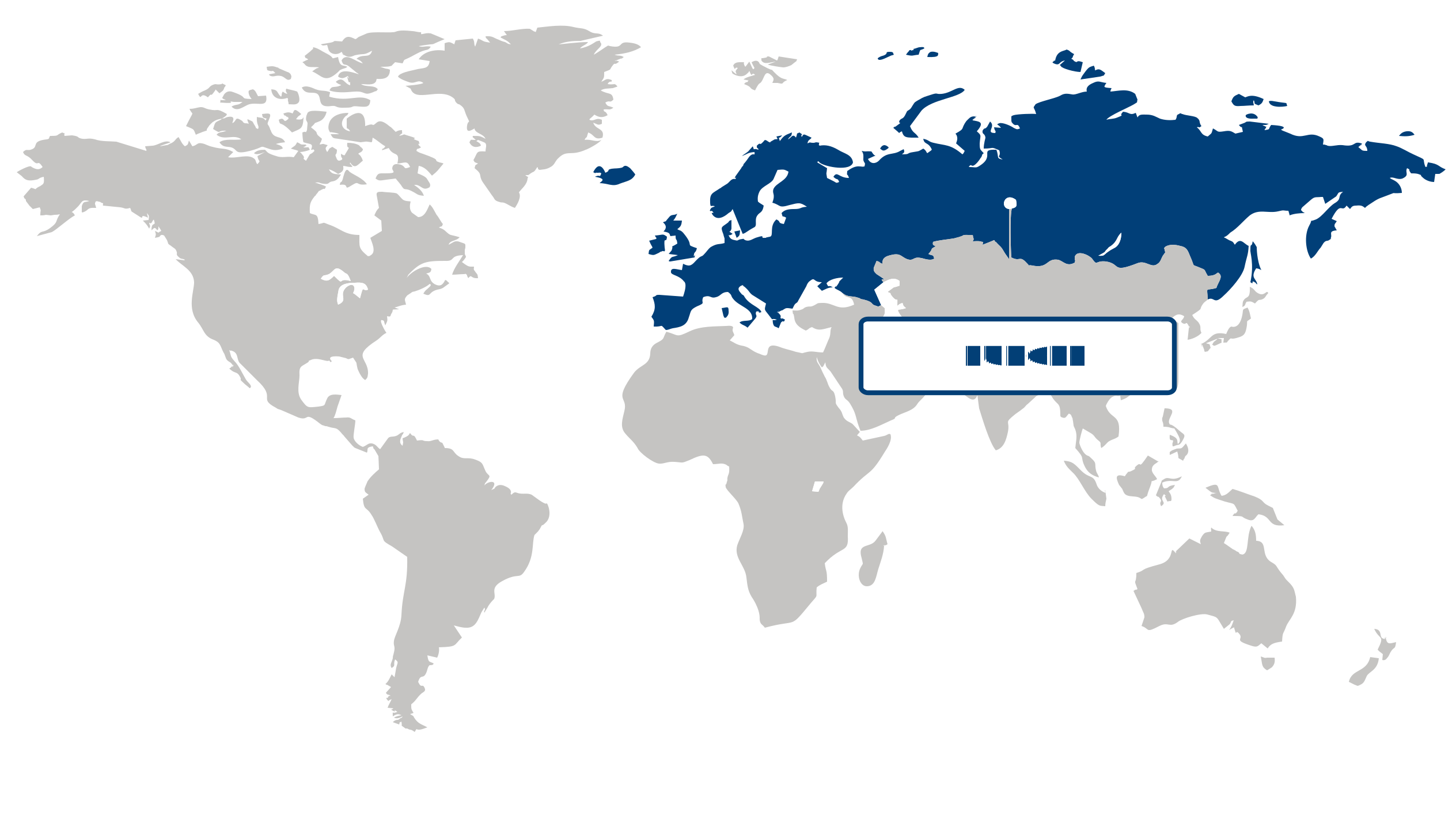
Largest Region
Europe
35% Market Share in 2025
Europe captured over 35% of the global single vision lenses market in 2025, reflecting its dominant position. This leadership is driven primarily by strong demand from aging populations and the widespread adoption of advanced eyewear technologies. Countries such as Germany and France exhibit high consumer spending power and healthcare infrastructure that supports early diagnosis and vision correction, promoting consistent growth. Regulatory frameworks in the European Union also ensure high-quality standards, boosting consumer confidence in single vision lenses. Additionally, sustainability priorities and innovation investments by leading optical companies like EssilorLuxottica reinforce market resilience. According to data from the European Vision Institute, the growing prevalence of myopia and presbyopia in Europe’s older adult demographic is a key factor shaping demand. With ongoing digital transformation in retail and teleoptometry services, Europe offers significant opportunities for expansion and technological advancements in this segment.
Germany anchors the European single vision lenses market, benefiting from its mature healthcare system and robust research ecosystem. Rising awareness of vision health and preventative care has increased demand for personalized, high-quality lenses. The German Ophthalmological Society’s advocacy for access to advanced eyewear solutions underlines this trend, encouraging innovation in lens materials and coatings. Corporations such as Rodenstock have leveraged Germany’s strong manufacturing capabilities to introduce cutting-edge single vision lenses, further intensifying competitive dynamics. This focus on quality and innovation makes Germany a strategic hub that accelerates regional market growth and sets high industry standards.
France plays a pivotal role in Europe’s single vision lenses market due to its combination of an aging population and a sophisticated retail environment. French consumers show a marked preference for technologically enhanced eyewear, supported by initiatives from organizations like the French National Vision Committee that promote regular eye exams and optical health. Companies such as Essilor have a significant presence in France, driving innovation through partnerships with opticians and healthcare providers. The country’s emphasis on sustainable products also influences market offerings, aligning with broader European trends. France’s integration of consumer demand and regulatory support strengthens Europe's overall market prospects in single vision lenses.
Asia Pacific Market Analysis:
Asia Pacific emerged as the fastest-growing region in the single vision lenses market, registering a robust CAGR of 5.18%. The accelerated growth is primarily driven by increasing urbanization and rising disposable incomes across key markets. This urban expansion fosters a shift toward modern eyewear solutions, with consumers demonstrating greater willingness to invest in vision correction products that blend functionality and fashion. According to the Asia Pacific Optical Association, rising awareness of eye health, coupled with enhanced accessibility to quality optical care in urban areas, bolsters demand. Furthermore, growing preferences for technologically advanced single vision lenses, such as blue light filtering and anti-reflective coatings, reflect evolving consumer priorities. Government initiatives supporting better eye care infrastructure and regulatory standards in countries like China and Japan also strengthen market dynamics. These factors collectively enhance the region’s appeal for both established players and new entrants, promising sustained opportunities in the single vision lenses market.
Japan plays a pivotal role in the Asia Pacific single vision lenses market, showcasing a mature consumer base characterized by high disposable incomes and sophisticated demand for premium optical products. The country’s population exhibits a cultural emphasis on eye health, as demonstrated by government programs such as the Ministry of Health, Labour and Welfare’s preventive vision care campaigns. This environment encourages adoption of advanced lens technologies and customization options. Leading Japanese optical companies like Hoya Corporation continuously innovate their single vision lens offerings, aligning with consumer expectations for durability and enhanced visual performance. Strategically, Japan’s blend of stable demand and technological leadership reinforces Asia Pacific’s regional growth trajectory.
China, as a rapidly urbanizing market, significantly contributes to the regional momentum in the single vision lenses market. The swift rise in disposable incomes among urban consumers is fueling demand for affordable, yet improved quality lenses. According to the China National Optometric and Optical Association, increased digital screen exposure has heightened vision correction needs, driving consumer preference for single vision lenses with protective features. Additionally, expansion of retail optical chains and e-commerce platforms, including EssilorLuxottica’s partnerships with local distributors, has improved product accessibility. Regulatory reforms aimed at enhancing optical product safety standards further instill consumer confidence. China’s dynamic consumption patterns and infrastructure investments align closely with the broader Asia Pacific growth narrative, underscoring its integral role in regional opportunities.
North America Market Trends:
North America held a commanding share in the single vision lenses market, driven by a mature healthcare infrastructure and high consumer awareness regarding vision correction. The U.S. leads the region, supported by widespread adoption of advanced lens technologies and a preference for customized eyewear solutions. Enhanced digital eye care platforms and tele-optometry services have improved accessibility and consumer engagement, as highlighted by the American Optometric Association’s recent initiatives promoting eye health education. Additionally, stringent regulatory standards enforced by the U.S. Food and Drug Administration ensure product quality and safety, encouraging innovation and competition. The region’s strong retail networks and evolving e-commerce penetration continue to shape demand patterns, while sustainability concerns push manufacturers toward eco-friendly production methods, evident in the sustainable lens offerings launched by companies like EssilorLuxottica North America. These factors collectively position North America to maintain robust growth and innovation leadership in the single vision lenses market.
The U.S. plays a pivotal role in the single vision lenses market, fueled by high consumer spending power and a tech-savvy population demanding precision eyewear solutions. The integration of AI-driven lens customization by companies such as Hoya Vision Care sets a standard for innovation and personalized eye care services. Furthermore, regulatory frameworks like the U.S. Federal Trade Commission’s guidelines on product labeling and advertising bolster consumer confidence, fostering a competitive yet transparent market. The country’s well-established supply chains and partnerships between eyewear manufacturers and optical retailers streamline distribution, as shown by the strategic alliances between RxOptical and national retail chains. As the leading national market within North America, the U.S. drives regional growth through sustained demand for technologically advanced and user-centric single vision lenses, reinforcing investment and development opportunities across the continent.
No card data available for this language/report.
Segment Leadership and Growth Trends
Spherical lenses held the largest share in the single vision lenses market in 2025, driven by the global rise in vision impairments, particularly myopia, which intensifies demand for distance vision correction among aging and adult populations. This segment benefits from evolving demographic trends and widespread prevalence of refractive errors, which are well-documented by organizations such as the World Health Organization. Advances in lens manufacturing and distribution by leaders like EssilorLuxottica ensure accessibility and compliance with tightening regulatory standards. The spherical segment offers strategic advantages through broad applicability and cost efficiency, appealing both to established optical chains and emerging digital eyewear retailers. Given sustained increases in myopia and age-related vision decline globally, spherical lenses are poised to maintain relevance, supported by ongoing clinical awareness and technological refinements enhancing user comfort and lens performance.
Analysis by Material
Polycarbonate lenses represented the largest share in the single vision lenses market in 2025, propelled by growing consumer preferences for durable and lightweight eyewear that combines protection with comfort. This segment’s growth aligns with heightened safety standards and lifestyle trends prioritizing active, portable living, as observed in product innovations and corporate announcements from companies such as Zeiss and Hoya. The inherent impact resistance and UV protection offered by polycarbonate appeal to diverse demographic groups, including youth and working adults, ensuring resilience against supply chain disruptions favoring efficient production and raw material sourcing. For manufacturers and new market entrants, polycarbonate lenses offer differentiation through enhanced user experience and expanded application scope. These factors underpin the segment’s sustained market leadership, reinforced by ongoing material science innovations and rising consumer awareness of eye health preservation.
Analysis by Age Group
The ≥ 40 years segment dominated the single vision lenses market in 2025, fueled by a growing aged population facing increased vision deterioration and refractive errors requiring corrective eyewear. This demographic trend is supported by health data from agencies such as the Centers for Disease Control and Prevention and reflects changing workforce compositions and longer life expectancy globally. The segment benefits from tailored marketing strategies, enhanced lens technologies addressing presbyopia and cataract-related needs, and regulatory encouragement for preventive eye care in aging populations. Established players like Johnson & Johnson Vision leverage these dynamics to expand service offerings, while startups capitalize on digital eye examination platforms for this age group. The ≥ 40 years cohort will remain critical for sustained demand, driven by ongoing population aging and continuous advancements in optical healthcare delivery and personalized lens solutions.
| Report Segmentation | |||
| Segment | Sub-Segment | Largest Segment | Fastest Growing Segment |
|---|---|---|---|
| Type | Spherical, Aspherical, Freeform | ||
| Material | Glass, Polycarbonate, Other Material Types | ||
| Age Group | < 18 Years, >= 18 Years & < 40 Years, >= 40 Years | ||
| Application | Hyperopia (Farsightedness), Myopia (Nearsightedness), Astigmatism, Presbyopia | ||
 Read our Research Approach
Competitive Landscape and Market Positioning
Key players in the single vision lenses market include EssilorLuxottica, Zeiss, Hoya, Nikon, Seiko, Rodenstock, Transitions Optical, Indo Lensa, Shamir Insight, and Tokai Optical. These companies hold substantial influence through established brand equity and diversified product portfolios tailored to different consumer needs. Leaders like EssilorLuxottica and Zeiss are recognized for advanced lens technology and global reach, while Japanese players such as Hoya, Nikon, and Seiko leverage precision optics expertise. Emerging players from Asia and Israel, including Indo Lensa and Shamir Insight, contribute innovation with specialized lens designs. This blend of veteran multinational corporations and agile regional innovators shapes a dynamic market environment focused on quality, performance, and customer-centric solutions.The competitive landscape reflects intensified efforts to maintain differentiation via technological advancement and market expansion. Key players actively broaden their presence by integrating new optical materials and coatings to enhance lens functionality. Collaborations and strategic alliances further consolidate distribution networks and fuel product innovation cycles. Firms like EssilorLuxottica and Zeiss capitalize on synergistic acquisitions and research-driven development to extend leadership in premium segments. Concurrently, companies such as Transitions Optical emphasize adaptive lens technologies, while Indo Lensa and Shamir Insight explore niche customization options, collectively driving momentum that pressures competitors to adopt more agile and innovation-led approaches.
Strategic / Actionable Recommendations for Regional Players
In North America, aligning with technology innovators and exploring synergies within eyewear ecosystems can enhance value creation. Emphasizing adaptive lens technologies and robust after-sales service could strengthen positioning against established global competitors.
For Asia Pacific, tapping into regional manufacturing capabilities while collaborating with emerging optical tech startups may accelerate market responsiveness. Catering to increasingly discerning consumers with tailored single vision solutions will be vital for capturing untapped demand.
In Europe, leveraging heritage in optics and precision engineering alongside forming cross-border partnerships can drive product differentiation. Investment in sustainable materials and premium customizations is advised to meet evolving regulatory and consumer expectations with greater competitiveness.
Why Choose Us
Specialized Expertise: Our team comprises industry experts with a deep understanding of your market segment. We bring specialized knowledge and experience that ensures our research and consulting services are tailored to your unique needs.
Customized Solutions: We understand that every client is different. That's why we offer customized research and consulting solutions designed specifically to address your challenges and capitalize on opportunities within your industry.
Proven Results: With a track record of successful projects and satisfied clients, we have demonstrated our ability to deliver tangible results. Our case studies and testimonials speak to our effectiveness in helping clients achieve their goals.
Cutting-Edge Methodologies: We leverage the latest methodologies and technologies to gather insights and drive informed decision-making. Our innovative approach ensures that you stay ahead of the curve and gain a competitive edge in your market.
Client-Centric Approach: Your satisfaction is our top priority. We prioritize open communication, responsiveness, and transparency to ensure that we not only meet but exceed your expectations at every stage of the engagement.
Continuous Innovation: We are committed to continuous improvement and staying at the forefront of our industry. Through ongoing learning, professional development, and investment in new technologies, we ensure that our services are always evolving to meet your evolving needs.
Value for Money: Our competitive pricing and flexible engagement models ensure that you get maximum value for your investment. We are committed to delivering high-quality results that help you achieve a strong return on your investment.
Select Licence Type

