



Smart Ticketing Market Size & Growth Forecast 2027–2036, By Segments (Component, System, End-use, Product), Regional Demand Trends (North America, Asia Pacific, Europe), Key Country Insights (U.S., Japan, South Korea, Germany, France, Italy), and Competitive Landscape
Market Size and Growth Outlook
Smart Ticketing Market size was more than USD 17.6 billion in 2026 and is set to grow at a 15.2% CAGR between 2027 and 2036, surpassing USD 72.45 billion by 2036. The industry revenue for 2027 is calculated at USD 19.85 billion.
Base Year Value (2026)
USD 17.6 billion
CAGR (2027-2036)
15.20%
Forecast Year Value (2036)
USD 72.45 billion

Historical Data Period
2022-2026

Largest Region
Europe

Forecast Period
2027-2036
Smart Ticketing Market Intelligence Snapshot:
-
Regional Market Dynamics:
- Europe leads smart ticketing due to mature public transport networks, widespread contactless fare systems, multimodal integration, and established ticket validation infrastructure across urban rail and bus systems.
- Asia Pacific grows at 17.47% CAGR, driven by transit modernization, metro and rail expansion, mobile ticketing adoption, and demand for faster, cashless commuter experiences.
-
Segment Momentum:
- Hardware accounted for a 53.97% share in 2026 because ticketing systems depend on validators, card readers, kiosks, gates, and onboard devices to enable fare collection and access control.
- Near-field Communication is growing fastest as operators and users increasingly prefer contactless, tap-based ticketing through mobile devices, enabling more convenient and flexible travel experiences.
-
Market Expansion Drivers:
- Rapid adoption of contactless and digital payment technologies accelerating smart transit ticketing deployment.
- Growing urban mobility and public transport modernization driving integrated e-ticketing system adoption.
- Expansion of mobile and QR-based ticketing platforms improving accessibility and operational efficiency in transit systems.
-
Leading Market Participants:
Leading companies in the smart ticketing market include Thales Group (France), Cubic Corporation (United States), IDEMIA Group (France), Giesecke+Devrient GmbH (Germany), NXP Semiconductors N.V. (Netherlands), Infineon Technologies AG (Germany), HID Global Corporation (United States), Confidex Ltd. (Finland), CPI Card Group Inc. (United States), Xerox Corporation (United States).
Global Market Forecast Snapshot:
-
Market Outlook:
- 2026 Market Size: USD 17.6 billion
- 2027 Estimated Market Size: USD 19.85 billion.
- Projected Market Size: USD 72.45 billion by 2036
- Growth Forecasts: 15.2% CAGR (2027-2036)
-
Regional and Segment Outlook:
- Leading Regional Market: Europe
- High-Growth Regional Hub: Asia Pacific
- Core Revenue Segment: Hardware (Component) | Smart Card (System) | Transportation (End-use) | E-Ticket (Product)
- Emerging Opportunity Segment: Service (Component) | Near-field Communication (System) | Sport & Entertainment (End-use) | Smart Parking System (Product)
Market Growth Drivers and Industry Trends
Rapid adoption of contactless and digital payment technologies accelerating smart transit ticketing deployment
The smart ticketing market is benefiting from the rapid shift toward contactless and digital payment methods across public transportation networks. Contactless cards, mobile wallets, near-field communication, and other digital payment technologies allow passengers to purchase or validate fares with minimal physical interaction, reducing dependence on cash and traditional paper-based tickets. Transit operators are increasingly adopting these technologies to simplify fare collection, shorten boarding times, and provide a more convenient passenger experience. Integration with existing payment infrastructure also enables flexible fare management and supports seamless travel across different transport modes, encouraging wider deployment of digitally enabled ticketing systems.
Growing urban mobility and public transport modernization driving integrated e-ticketing system adoption
Increasing urbanization and the need to improve public transportation capacity are supporting the smart ticketing market as cities modernize their mobility infrastructure. Transport authorities are implementing integrated e-ticketing solutions that connect buses, rail networks, metro systems, and other shared mobility services within unified fare-management platforms. Such systems help passengers move between transportation modes without repeatedly purchasing separate tickets, while operators gain improved visibility into fare collection and passenger movement. Modernization programs are also encouraging the replacement of fragmented legacy ticketing infrastructure with centralized digital platforms capable of supporting flexible pricing, automated validation, and interoperable transit services.
Expansion of mobile and QR-based ticketing platforms improving accessibility and operational efficiency in transit systems
The growing use of smartphones and QR technology is creating new opportunities for the smart ticketing market by making digital fare access more widely available. Mobile and QR-based platforms enable passengers to purchase, store, and validate tickets directly through smartphones, reducing the need for dedicated physical ticketing devices and improving access across different transportation environments. For transit operators, these solutions can simplify ticket distribution, support real-time fare updates, and reduce the administrative burden associated with paper tickets and manual validation. Their compatibility with mobile applications and digital payment ecosystems also makes it easier to introduce flexible ticketing options for commuters and occasional travelers.
| Growth Driver Assessment Framework | |||||
| Growth Driver | Impact On CAGR | Regulatory Influence | Geographic Relevance | Adoption Rate | Impact Timeline |
|---|---|---|---|---|---|
| Rapid adoption of contactless and digital payment technologies accelerating smart transit ticketing deployment | 2.00% | Moderate | Europe, Asia Pacific | High | Near Term |
| Growing urban mobility and public transport modernization driving integrated e-ticketing system adoption | 1.80% | Moderate | Europe, North America, Asia Pacific | High | Near Term |
| Expansion of mobile and QR-based ticketing platforms improving accessibility and operational efficiency in transit systems | 1.60% | Moderate | Asia Pacific, Latin America | High | Mid Term |
Unlock insights tailored to your business with our bespoke market research solutions - Click to get your customized report now!
Regional Demand Dynamics
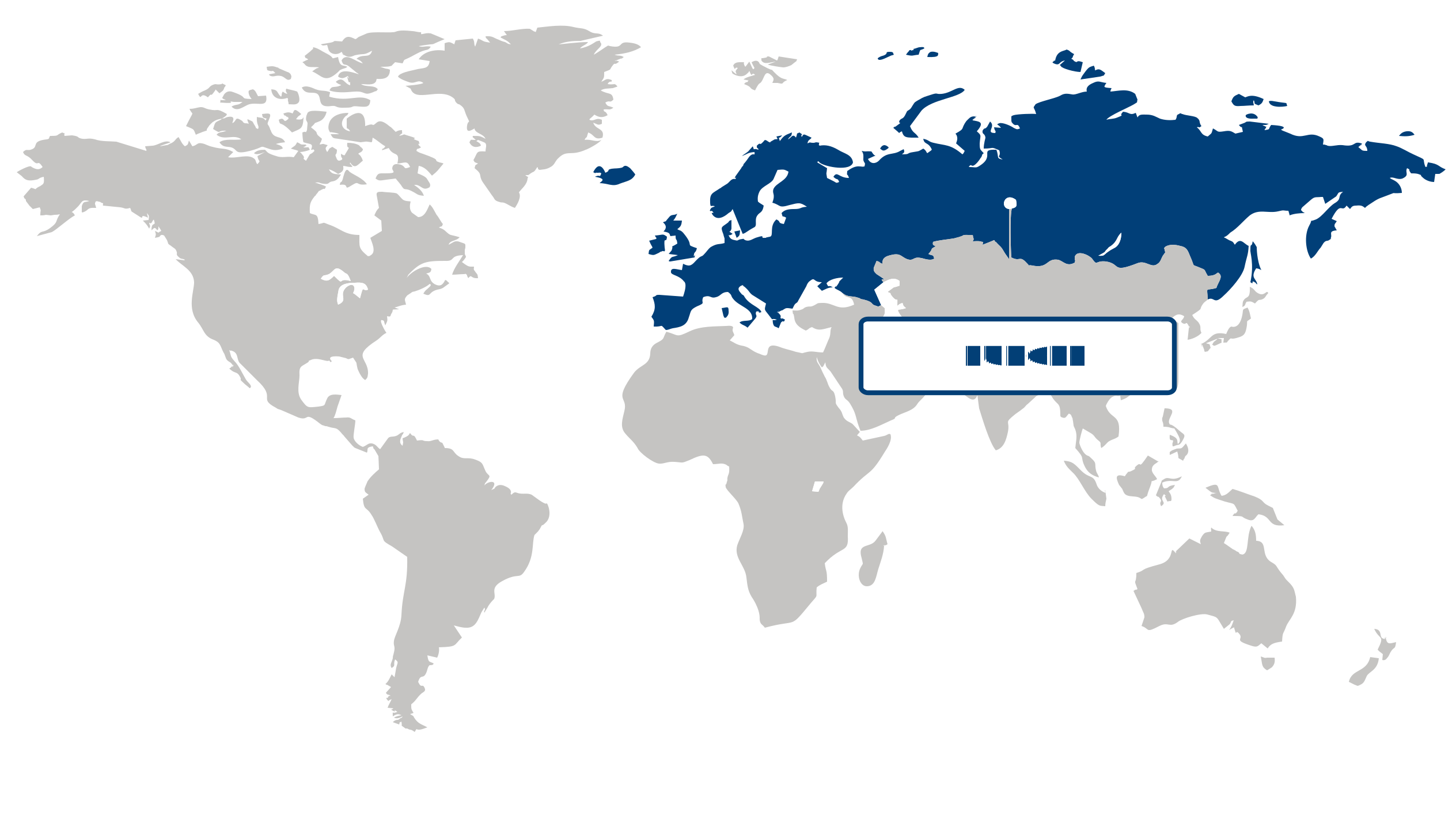
Largest Region
Europe
Largest Market Share in 2026
Europe (Largest Region) vs Asia Pacific (Fastest-Growing Region)
The smart ticketing market was led by Europe, which held the largest share in 2026, supported by extensive public transportation networks, established digital payment ecosystems, and strong adoption of contactless and mobile-based travel solutions. Investments in integrated fare management, multimodal transportation, and connected mobility infrastructure are enabling transport operators to simplify passenger access while improving operational efficiency and providing more seamless journeys across urban and regional networks.
Asia Pacific is the fastest-growing region, driven by rapid urbanization, expanding public transit systems, and increasing deployment of digital payment technologies. Growing passenger volumes and government-led smart mobility initiatives are encouraging transport authorities to modernize fare collection through mobile ticketing, contactless payments, and interoperable platforms, while improving smartphone penetration is making digital ticket access increasingly practical for a broad passenger base.
Key Country Insights
The U.S. smart ticketing market is expanding through digital fare systems that connect public transit, events, and mobile payment platforms. Transit agencies prioritize contactless technologies, seamless passenger experiences, and interoperable ticketing infrastructure across transportation networks.
Japan continues refining smart ticketing systems that support high-volume public transportation with fast, reliable transactions. The country prioritizes seamless mobile and contactless ticketing solutions that enhance commuter convenience across interconnected transit services.
South Korea emphasizes mobile-enabled smart ticketing solutions that align with digitally connected urban transportation ecosystems. Transit providers focus on app-based fare management, contactless validation, and integrated payment experiences for everyday commuters.
Germany advances smart ticketing by integrating digital fare management across regional and urban transportation services. Transport operators emphasize interoperable ticketing platforms that improve passenger convenience while supporting efficient mobility network administration.
France is strengthening smart ticketing adoption through modernization of metropolitan transport systems and digital mobility services. French transit authorities prioritize unified fare platforms that simplify passenger journeys while improving operational efficiency across public transport networks.
Italy is expanding smart ticketing across regional transportation systems to improve travel convenience and fare accessibility. Italian transport operators increasingly implement digital ticketing platforms that support integrated mobility services and streamlined passenger management.
Segment Leadership and Growth Trends
Component Segment Analysis: Hardware (Largest Segment) vs Service (Fastest-Growing Segment)
Hardware accounted for the largest share of the smart ticketing market, representing 53.97% in 2026. Physical components such as validators, ticketing terminals, readers, and associated infrastructure remain fundamental to enabling secure fare collection and passenger identification across transportation networks. The expansion and modernization of public transit systems continue to require reliable equipment capable of processing digital and contactless credentials efficiently. Demand for convenient, secure, and interoperable ticketing experiences therefore sustains the importance of hardware within smart ticketing ecosystems.
Service is expected to be the fastest-growing component segment as transportation operators increasingly require technology support, system integration, maintenance, payment management, and operational optimization. The growing complexity of multimodal ticketing environments creates greater demand for services that can connect different transportation systems and improve the passenger experience. Increasing emphasis on seamless mobility and digitally managed fare systems is further expanding opportunities for service-based offerings.
System Segment Analysis: Smart Card (Largest Segment) vs Near-field Communication (Fastest-Growing Segment)
The smart card system segment held the largest position in the smart ticketing market in 2026, supported by its established use for secure fare storage, passenger identification, and access across public transportation networks. Smart cards offer a familiar and reliable ticketing mechanism while enabling transit operators to manage fare collection and passenger access efficiently. Their established infrastructure and compatibility with existing transportation systems continue to support widespread utilization, particularly where dedicated transit credentials remain important.
Near-field communication is experiencing the fastest growth as passengers increasingly expect contactless and convenient ways to access public transportation using compatible mobile devices and payment credentials. NFC-based ticketing can reduce dependence on dedicated physical cards while enabling faster transactions and flexible passenger experiences. The broader adoption of contactless payments, smartphone-based mobility services, and digital transportation solutions is strengthening the role of NFC within smart ticketing systems.
| Report Segmentation | |||
| Segment | Sub-Segment | Largest Segment | Fastest Growing Segment |
|---|---|---|---|
| Component | Hardware, Software, Service | Hardware | Service |
| System | Open Payment System, Smart Card, Near-field Communication | Smart Card | Near-field Communication |
| End-use | Parking, Sport & Entertainment, Transportation, Others | Transportation | Sport & Entertainment |
| Product | E-Kiosk, E-Ticket, E-Toll, Request Tracker, Smart Parking System, Ticket Machine, Ticket Validators, Others | E-Ticket | Smart Parking System |
 Read our Research Approach
Competitive Landscape and Market Positioning
Major players in the smart ticketing market:
1. Thales Group (France)
2. Cubic Corporation (United States)
3. IDEMIA Group (France)
4. Giesecke+Devrient GmbH (Germany)
5. NXP Semiconductors N.V. (Netherlands)
6. Infineon Technologies AG (Germany)
7. HID Global Corporation (United States)
8. Confidex Ltd. (Finland)
9. CPI Card Group Inc. (United States)
10. Xerox Corporation (United States)
The smart ticketing market is evolving rapidly as transport operators and mobility platforms prioritize seamless digital access and contactless payment ecosystems. Integration of mobile applications, NFC-enabled systems, and cloud-based ticket management solutions is accelerating across urban transit networks. Strategic collaborations focused on interoperability and passenger convenience are further supporting the rollout of secure, real-time ticketing infrastructure capable of improving operational efficiency and traveler engagement.
Industry Development/News
| Company Name | Date | Key Development |
|---|---|---|
| HUB Parking Technology | Jan-26 | HUB Parking Technology introduced a multi-purpose smart kiosk designed to serve as a flexible self-service mobility touchpoint. Featuring a 21.5-inch touchscreen and PCI-compliant payment capabilities, the hardware integrates with the company’s Jupiter platform to support diverse functions including parking payments, subscription renewals, and third-party transport ticketing integrations for airports and transport hubs. |
| IPS Group | Sep-25 | IPS Group launched the MSX Multi-Space Parking Kiosk, a modular smart solution engineered to modernize urban parking infrastructure. The system supports a comprehensive range of contactless and digital payment modes, including mobile applications and text-to-pay functionality, while offering cloud-based management integration to enhance operational efficiency and user accessibility across diverse parking environments. |
| Türk Telekom | May-26 | Türk Telekom partnered with the Turkish Ministry of Culture and Tourism to lead a large-scale digital transformation program. The initiative focuses on deploying smart museum capabilities across archaeological sites and museums, modernizing visitor access through the implementation of integrated smart ticketing and digital entry systems to improve site operations and visitor throughput. |
| Rail Delivery Group | Mar-24 | The Rail Delivery Group transitioned its ticketing back-office operations to Unicard’s cloud-based HOPS platform. This migration serves to strengthen the underlying smart ticketing infrastructure across Britain, providing rail operators with a more scalable and resilient digital architecture to support advanced fare collection and passenger ticketing services. |
| Cubic Transportation Systems | Oct-24 | Cubic Transportation Systems was awarded a contract to deliver a comprehensive smart ticketing solution for Tasmania’s public transport network. The project focuses on modernizing legacy fare collection and passenger payment systems, aligning the region’s transit infrastructure with current digital ticketing standards to improve interoperability and passenger payment convenience. |
| Queensland Government | Mar-25 | The Queensland Government concluded the region-wide rollout of a unified Smart Ticketing system across South East Queensland. This infrastructure project successfully extended contactless fare payment capabilities across multiple transit operators, centralizing the payment ecosystem and facilitating a seamless passenger experience across diverse modes of public transportation. |
| Hanoi Metro | Mar-26 | Hanoi Metro achieved a significant expansion of its smart ticketing system by integrating electronic and biometric verification technologies. This strategic adoption has contributed to improved operational efficiency, higher ticketing revenue, and increased ridership by streamlining passenger processing and facilitating more secure, automated fare collection across the expanding metro rail network. |
Why Choose Us
Specialized Expertise: Our team comprises industry experts with a deep understanding of your market segment. We bring specialized knowledge and experience that ensures our research and consulting services are tailored to your unique needs.
Customized Solutions: We understand that every client is different. That's why we offer customized research and consulting solutions designed specifically to address your challenges and capitalize on opportunities within your industry.
Proven Results: With a track record of successful projects and satisfied clients, we have demonstrated our ability to deliver tangible results. Our case studies and testimonials speak to our effectiveness in helping clients achieve their goals.
Cutting-Edge Methodologies: We leverage the latest methodologies and technologies to gather insights and drive informed decision-making. Our innovative approach ensures that you stay ahead of the curve and gain a competitive edge in your market.
Client-Centric Approach: Your satisfaction is our top priority. We prioritize open communication, responsiveness, and transparency to ensure that we not only meet but exceed your expectations at every stage of the engagement.
Continuous Innovation: We are committed to continuous improvement and staying at the forefront of our industry. Through ongoing learning, professional development, and investment in new technologies, we ensure that our services are always evolving to meet your evolving needs.
Value for Money: Our competitive pricing and flexible engagement models ensure that you get maximum value for your investment. We are committed to delivering high-quality results that help you achieve a strong return on your investment.
Select Licence Type

