



Sodium Benzoate Market Size & Growth Forecast 2027–2036, By Segments (Form, Application), Regional Demand Trends (North America, Asia Pacific, Europe), Key Country Insights (U.S., Japan, South Korea, Germany, France, Italy), and Competitive Landscape
Market Size and Growth Outlook
Sodium Benzoate Market size was estimated at USD 1.58 billion in 2026 and is projected to grow at a 5.8% CAGR from 2027 to 2036, reaching USD 2.78 billion by 2036. The industry revenue for 2027 is assessed at USD 1.66 billion.
Base Year Value (2026)
USD 1.58 billion
CAGR (2027-2036)
5.80%
Forecast Year Value (2036)
USD 2.78 billion

Historical Data Period
2022-2026

Largest Region
Europe

Forecast Period
2027-2036
Sodium Benzoate Market Intelligence Snapshot:
-
Regional Market Dynamics:
- Europe held a 41.66% market share in 2026, supported by its established food processing industry, mature supply chains, and consistent preservative demand across food, personal care, and pharmaceutical manufacturing.
- Asia Pacific is forecast to grow at a 7.01% CAGR, driven by expanding processed food production, rising beverage manufacturing, and increasing demand for cost-effective preservative solutions.
-
Segment Momentum:
- Powder held a 59.07% share in 2026 because it supports easy blending, flexible dosing, and efficient integration into established manufacturing processes across food, beverage, and related applications.
- Cosmetic is the fastest-growing application as manufacturers increasingly require reliable preservation systems that maintain product safety and stability across expanding personal care formulations.
-
Market Expansion Drivers:
- Increasing demand for processed and packaged food driving preservative usage in food preservation systems.
- Growth in pharmaceutical and beverage industries expanding use of antimicrobial stabilization agents.
- Rising regulatory scrutiny on synthetic additives encouraging formulation optimization and alternative preservative development.
-
Leading Market Participants:
Key players in the sodium benzoate market include Merck KGaA (Germany), DuPont de Nemours, Inc. (United States), LANXESS AG (Germany), Avantor, Inc. (United States), Ganesh Benzoplast Limited (India), Foodchem International Corporation (China), Spectrum Chemical Mfg. Corp. (United States), Wuhan Youji Industries Co., Ltd. (China), CellMark AB (Sweden), Tengzhou Tenglong Chemical Co., Ltd. (China).
Global Market Forecast Snapshot:
-
Market Outlook:
- 2026 Market Size: USD 1.58 billion
- 2027 Estimated Market Size: USD 1.66 billion.
- Projected Market Size: USD 2.78 billion by 2036
- Growth Forecasts: 5.8% CAGR (2027-2036)
-
Regional and Segment Outlook:
- Leading Regional Market: Europe
- High-Growth Regional Hub: Asia Pacific
- Core Revenue Segment: Powder (Form) | Beverages & Food (Application)
- Emerging Opportunity Segment: Granule (Form) | Cosmetic (Application)
Market Growth Drivers and Industry Trends
Increasing demand for processed and packaged food driving preservative usage in food preservation systems
Growing consumption and production of processed and packaged foods will support the sodium benzoate market as manufacturers require effective preservation solutions to maintain product stability. Sodium benzoate is used within food preservation systems to help control spoilage-related concerns, making preservative incorporation an important consideration in packaged food formulation and processing.
Growth in pharmaceutical and beverage industries expanding use of antimicrobial stabilization agents
Expansion across pharmaceutical and beverage applications is creating additional demand for the sodium benzoate market through broader use of antimicrobial stabilization agents. Manufacturers in these industries require formulation ingredients that support product stability, encouraging the incorporation of preservative solutions suited to different product compositions and processing requirements.
Rising regulatory scrutiny on synthetic additives encouraging formulation optimization and alternative preservative development
Increasing regulatory scrutiny is influencing the sodium benzoate market by encouraging manufacturers to reassess synthetic additive use and optimize product formulations. Greater attention to preservative selection is prompting producers to evaluate dosage, formulation efficiency, and alternative preservation approaches while adapting products to evolving regulatory expectations surrounding synthetic additives.
| Growth Driver Assessment Framework | |||||
| Growth Driver | Impact On CAGR | Regulatory Influence | Geographic Relevance | Adoption Rate | Impact Timeline |
|---|---|---|---|---|---|
| Increasing demand for processed and packaged food driving preservative usage in food preservation systems | 2.00% | High | Europe, Asia Pacific | High | Near Term |
| Growth in pharmaceutical and beverage industries expanding use of antimicrobial stabilization agents | 1.70% | High | Global | High | Mid Term |
| Rising regulatory scrutiny on synthetic additives encouraging formulation optimization and alternative preservative development | 1.40% | High | North America, Europe | Medium | Mid Term |
Unlock insights tailored to your business with our bespoke market research solutions - Click to get your customized report now!
Regional Demand Dynamics
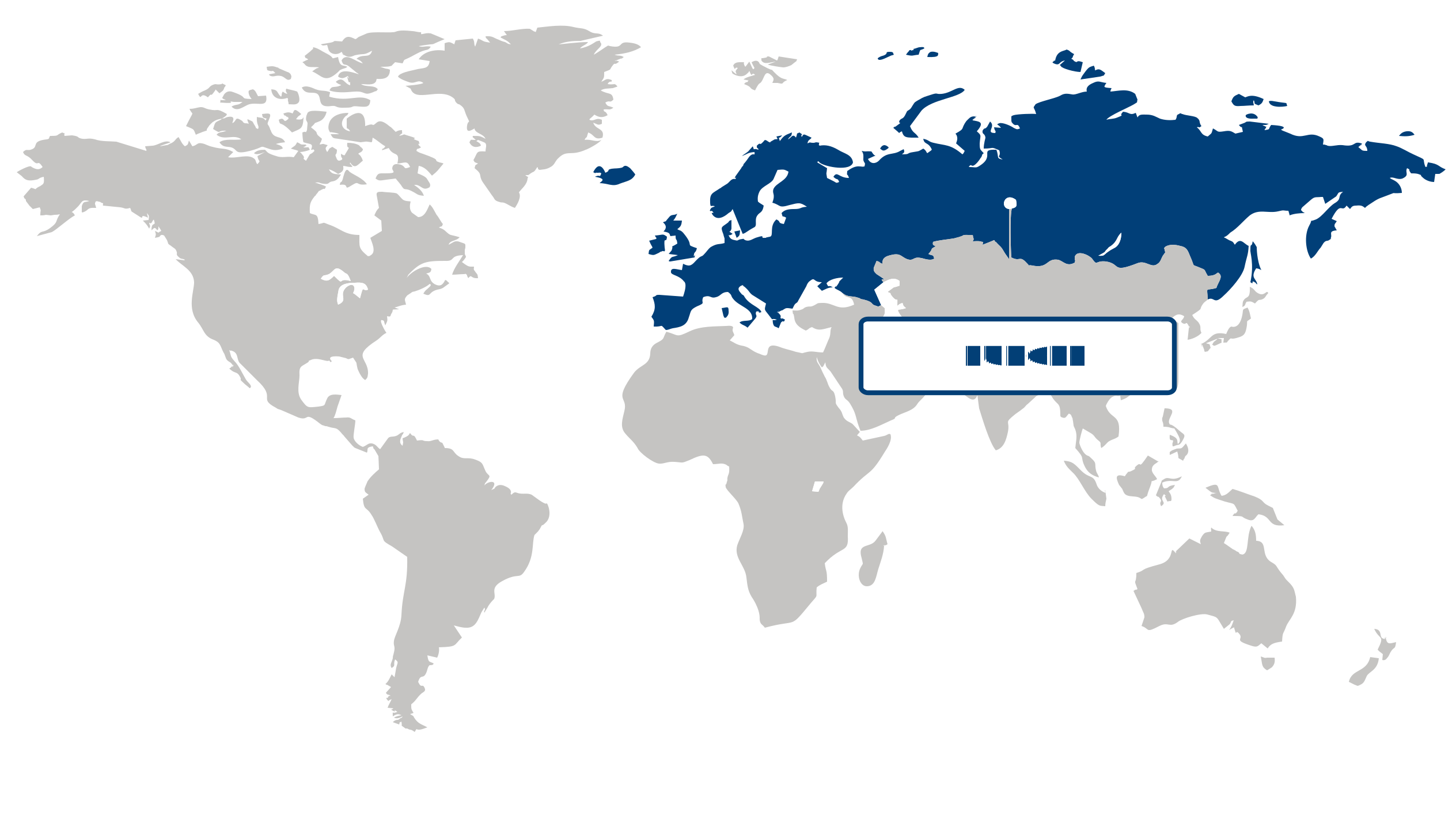
Largest Region
Europe
41.66% Market Share in 2026
Europe (Largest Region) vs Asia Pacific (Fastest-Growing Region)
Europe held the largest share of the sodium benzoate market at 41.66% in 2026, supported by established food and beverage processing industries, strong demand for food preservation solutions, and widespread use of sodium benzoate across processed foods, beverages, and other formulated products. The region’s mature packaged food sector creates consistent demand for preservatives that help maintain product quality and extend shelf life. Strict food safety requirements and strong emphasis on controlled ingredient use also encourage manufacturers to adopt standardized preservation practices. Beyond food applications, sodium benzoate is relevant to pharmaceutical, personal care, and industrial formulations, providing a diversified consumption base. Continued innovation in processed and convenience foods further supports the role of preservation ingredients across European manufacturing.
Asia Pacific represents the fastest-growing region, driven by expanding food processing industries, rising consumption of packaged and convenience foods, and increasing urbanization. Changing lifestyles and growing retail distribution networks are encouraging manufacturers to offer products with longer shelf stability, supporting demand for effective preservation ingredients. Rapid development of beverage, processed food, pharmaceutical, and personal care manufacturing is broadening the application base for sodium benzoate. Improvements in food processing infrastructure and growing investments in organized manufacturing are also strengthening regional consumption. As consumer demand shifts toward convenient packaged products and manufacturers enhance production capabilities, the need for reliable preservation solutions is increasing across Asia Pacific.
Key Country Insights
The U.S. sodium benzoate market is supported by consistent demand from processed food, beverage, and personal care manufacturers. Producers in the U.S. focus on reliable product quality and regulatory compliance while supplying diverse industrial applications.
Japan prioritizes sodium benzoate with consistent quality for food processing and pharmaceutical applications. Companies in Japan increasingly emphasize production precision and stable supply to support demanding formulation requirements.
South Korea continues expanding sodium benzoate consumption alongside processed food and beverage manufacturing. Domestic producers in South Korea focus on dependable preservative performance and compliance with evolving product quality expectations.
Germany emphasizes high-purity sodium benzoate for food preservation, pharmaceutical, and industrial formulations. Manufacturers in Germany continue optimizing production processes to meet stringent quality standards and evolving customer specifications.
France maintains demand for sodium benzoate through food processing and cosmetic manufacturing with close attention to regulatory standards. Suppliers in France increasingly emphasize product traceability and formulation consistency across industrial applications.
Italy utilizes sodium benzoate across food preservation, personal care, and pharmaceutical manufacturing activities. Producers in Italy continue supplying consistent-quality ingredients that support specialized formulation and processing requirements.
Segment Leadership and Growth Trends
Form Segment Analysis: Powder (Largest Segment) vs Granule (Fastest-Growing Segment)
Powder accounted for a 59.07% share in 2026, making it the largest form segment in the sodium benzoate market. Its leading position is supported by ease of handling, straightforward incorporation into dry formulations, and broad applicability across food, beverage, pharmaceutical, and industrial preparations. Powdered sodium benzoate can be efficiently measured, blended, and stored, making it suitable for manufacturing processes that require consistent preservative distribution. Its established use in preservation applications and compatibility with large-scale production processes continue to reinforce demand for the powder form.
Granule is the fastest-growing form segment, supported by increasing demand for improved handling characteristics and more convenient incorporation into manufacturing processes. Granulated sodium benzoate can offer advantages related to reduced dust formation, easier dosing, and improved flow during processing and packaging. These characteristics are particularly relevant for manufacturers seeking greater workplace convenience and operational efficiency. As food, beverage, and other formulation industries increasingly emphasize process optimization, granulated formats are gaining broader adoption.
Application Segment Analysis: Beverages & Food (Largest Segment) vs Cosmetic (Fastest-Growing Segment)
The beverages & food application segment held a 48.02% share in 2026, establishing it as the largest application segment in the sodium benzoate market. Sodium benzoate is widely used as a preservative in food and beverage products to help control microbial growth and extend product shelf life. Its established functionality and compatibility with numerous acidic food and beverage formulations support widespread use across processed foods, beverages, sauces, and other products. Growing demand for packaged and convenience foods is sustaining the need for effective preservation solutions throughout the food and beverage industry.
Cosmetic is the fastest-growing application segment as manufacturers increasingly focus on product stability, shelf life, and protection against microbial contamination. Sodium benzoate can support preservation requirements in formulations where maintaining product quality throughout storage and consumer use is important. The expansion of personal care products and growing consumer demand for stable, safe formulations are encouraging broader use of effective preservation systems. Increasing formulation innovation across skincare, haircare, and other cosmetic categories is further supporting segment growth.
| Report Segmentation | |||
| Segment | Sub-Segment | Largest Segment | Fastest Growing Segment |
|---|---|---|---|
| Form | Powder, Granule, Others | Powder | Granule |
| Application | Beverages & Food, Cosmetic, Pharmaceuticals, Others | Beverages & Food | Cosmetic |
 Read our Research Approach
Competitive Landscape and Market Positioning
Top players in the sodium benzoate market:
1. Merck KGaA (Germany)
2. DuPont de Nemours Inc. (United States)
3. LANXESS AG (Germany)
4. Avantor Inc. (United States)
5. Ganesh Benzoplast Limited (India)
6. Foodchem International Corporation (China)
7. Spectrum Chemical Mfg. Corp. (United States)
8. Wuhan Youji Industries Co. Ltd. (China)
9. CellMark AB (Sweden)
10. Tengzhou Tenglong Chemical Co. Ltd. (China)
In the sodium benzoate market, formulation improvements are being influenced by stricter food safety and preservation standards. Stability and purity enhancements are key focus areas in product development. The sodium benzoate market is also experiencing innovation in multifunctional preservative applications. Continuous research is improving compatibility across food and beverage systems.
Industry Development/News
| Company Name | Date | Key Development |
|---|---|---|
| LANXESS | Sep-25 | LANXESS transitioned its Botlek manufacturing site to low-emission electricity for sodium benzoate production, reducing the carbon footprint of preservative output. The initiative strengthens the company’s positioning in sustainability-driven procurement channels, particularly in Europe, where buyers are increasingly prioritizing low-emission and compliant chemical sourcing for food and industrial preservative applications. |
| Eastman Chemical | Oct-24 | Eastman Chemical invested more than USD 50 million to expand U.S. benzoic acid production capacity, aimed at supporting rising demand for downstream pharmaceutical and preservative applications, including sodium benzoate. The investment also reduces dependence on Asian imports and strengthens regional supply resilience in North America’s food and pharmaceutical ingredient value chains. |
| Wuhan Youji Industries Co. Ltd. | Jan-23 | Wuhan Youji Industries Co. Ltd., in partnership with SINOPEC, established a joint venture to expand sodium benzoate production capacity to 15KT per year alongside 60KT per year of benzoic acid. The development enhances upstream integration and strengthens large-scale supply capabilities for preservative-grade chemicals in the Asian chemicals market. |
| LANXESS | Aug-21 | LANXESS acquired the microbial control business of IFF, expanding its portfolio of antimicrobial active ingredients and preservation solutions. The acquisition strengthens LANXESS’s position in specialty preservatives relevant to sodium benzoate applications, reinforcing its ability to supply integrated material protection and food and industrial preservation solutions. |
| LANXESS | Aug-21 | LANXESS completed the acquisition of Emerald Kalama, expanding its preservatives portfolio to include sodium and potassium benzoates under established brands. The transaction enhances its formulation capabilities and strengthens downstream positioning in food and industrial preservative markets through broader specialty chemical offerings. |
Why Choose Us
Specialized Expertise: Our team comprises industry experts with a deep understanding of your market segment. We bring specialized knowledge and experience that ensures our research and consulting services are tailored to your unique needs.
Customized Solutions: We understand that every client is different. That's why we offer customized research and consulting solutions designed specifically to address your challenges and capitalize on opportunities within your industry.
Proven Results: With a track record of successful projects and satisfied clients, we have demonstrated our ability to deliver tangible results. Our case studies and testimonials speak to our effectiveness in helping clients achieve their goals.
Cutting-Edge Methodologies: We leverage the latest methodologies and technologies to gather insights and drive informed decision-making. Our innovative approach ensures that you stay ahead of the curve and gain a competitive edge in your market.
Client-Centric Approach: Your satisfaction is our top priority. We prioritize open communication, responsiveness, and transparency to ensure that we not only meet but exceed your expectations at every stage of the engagement.
Continuous Innovation: We are committed to continuous improvement and staying at the forefront of our industry. Through ongoing learning, professional development, and investment in new technologies, we ensure that our services are always evolving to meet your evolving needs.
Value for Money: Our competitive pricing and flexible engagement models ensure that you get maximum value for your investment. We are committed to delivering high-quality results that help you achieve a strong return on your investment.
Select Licence Type

