Solid State Drive Market Size & Growth Forecast 2027–2036, By Segments (Type, Storage), Regional Demand Trends (North America, Asia Pacific, Europe), Key Country Insights (U.S., Japan, South Korea, Germany, France, Italy), and Competitive Landscape
Jump to Content
Market Size and Growth Outlook
Solid State Drive Market size was worth USD 29.6 billion in 2026 and is expected to grow at a 15.68% CAGR between 2027 and 2036, reaching USD 127.02 billion by 2036. The industry revenue for 2027 is calculated at USD 33.51 billion.
Get more details on this report
Request Free Sample ReportSolid State Drive Market Intelligence Snapshot
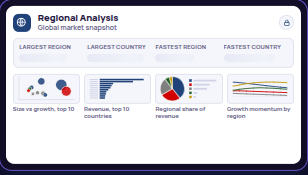
Regional Market Dynamics
- Asia Pacific held the largest share in 2026, supported by electronics manufacturing strength, semiconductor supply chains, and rising SSD adoption across devices and enterprise systems.
- The region is projected to grow at an 18.48% CAGR, driven by expanding data-intensive computing, OEM integration, and broader high-performance storage deployment.
Segment Momentum
- Internal SSDs held a 67.78% share in 2026 because they serve as primary storage in laptops, desktops, servers, and embedded systems, supporting consistent demand across consumer and commercial deployments.
- The 320GB-500GB segment is the fastest-growing as users require more space for applications, media, and local data while maintaining a practical balance between capacity and cost.
Market Expansion Drivers
- Rising cloud computing and data center expansion accelerating demand for high-speed storage solutions.
- Increasing adoption of SSDs in laptops and portable devices improving computing performance.
- Advancements in 3D NAND and PCIe technologies enabling higher-capacity enterprise SSD deployments.
Leading Market Participants
- Major companies in the solid state drive market include Samsung Electronics Co., Ltd. (South Korea), Intel Corporation (United States), Kingston Technology Company, Inc. (Canada), Micron Technology, Inc. (United States), SK hynix Inc. (South Korea), Western Digital Corporation (United States), Seagate Technology Holdings plc (United States), Toshiba Corporation (Japan), ADATA Technology Co., Ltd. (Taiwan).
Global Market Forecast Snapshot
Market Outlook
- 2026 Market Size: USD 29.6 billion
- 2027 Estimated Market Size: USD 33.51 billion.
- Projected Market Size: USD 127.02 billion by 2036
- Growth Forecast: 15.68% CAGR (2027-2036)
Regional and Segment Outlook
- Leading Regional Market: Asia Pacific
- High-Growth Regional Hub: Asia Pacific
- Core Revenue Segment: Internal (Type) | 120GB-320GB (Storage)
- Emerging Opportunity Segment: External (Type) | 320GB-500GB (Storage)
Market Growth Drivers and Industry Trends
Rising cloud computing and data center expansion accelerating demand for high-speed storage solutions
The expansion of cloud computing infrastructure and data-intensive digital services is increasing requirements for fast, reliable storage, which will drive the solid state drive market growth across enterprise and data center environments. Cloud platforms process large volumes of applications, databases, virtual machines, and user workloads that require rapid access to stored information, making storage performance increasingly important to overall infrastructure efficiency. SSDs provide faster data access and lower latency than conventional hard disk-based storage, supporting workloads where rapid processing and consistent responsiveness are critical. Growing reliance on cloud-hosted applications and expanding data center operations is consequently encouraging the deployment of high-performance solid-state storage within enterprise infrastructure.
Increasing adoption of SSDs in laptops and portable devices improving computing performance
The shift toward SSD-based storage in laptops and portable devices is supporting solid state drive market growth as consumers and businesses increasingly prioritize faster system responsiveness, portability, and efficient power usage. SSDs enable quicker boot times, application loading, and file access while eliminating mechanical components associated with traditional storage technologies. Their compact construction also fits the increasingly thin and lightweight designs of modern laptops and portable computing products. As device manufacturers continue optimizing systems around performance and mobility, SSD integration is becoming closely aligned with the broader transition toward more responsive and compact personal computing hardware.
Advancements in 3D NAND and PCIe technologies enabling higher-capacity enterprise SSD deployments
Technological progress in 3D NAND and PCIe interfaces is expanding the performance and capacity capabilities of enterprise storage, strengthening solid state drive market growth by making SSDs more suitable for demanding data-intensive workloads. Higher-density NAND architectures allow manufacturers to increase storage capacity within compact form factors, while newer PCIe-based interfaces support faster communication between storage devices and computing systems. These improvements are particularly relevant for enterprise environments handling databases, virtualization, analytics, and other workloads requiring rapid data transfer and substantial storage capacity. Continued development of NAND architecture and high-speed interface technologies is also giving data center operators greater flexibility in configuring storage infrastructure around performance and capacity requirements.
| Growth Driver | Impact on CAGR | Regulatory Influence | Geographic Relevance | Adoption Rate | Impact Timeline |
|---|---|---|---|---|---|
| Rising cloud computing and data center expansion accelerating demand for high-speed storage solutions | 2.00% | Moderate | North America, Asia Pacific | High | Near Term |
| Increasing adoption of SSDs in laptops and portable devices improving computing performance | 1.80% | Low | North America, Europe, Asia Pacific | High | Mid Term |
| Advancements in 3D NAND and PCIe technologies enabling higher-capacity enterprise SSD deployments | 1.60% | Moderate | Asia Pacific, North America | Emerging | Long Term |
Unlock insights tailored to your business with our bespoke market research solutions.
Click to get your customized report now.
Regional Demand Dynamics

Asia Pacific (Largest & Fastest-Growing Region)
Asia Pacific held the largest share of the solid state drive market in 2026 and is also the fastest-growing region, supported by its extensive electronics manufacturing ecosystem and strong demand for high-performance data storage across consumer and enterprise applications. The region's expanding production of computers, smartphones, servers, and other connected devices continues to support the transition toward faster and more energy-efficient storage technologies. Growing cloud infrastructure, data-intensive applications, and digital transformation initiatives are further increasing demand for solid state drives. Continued investment in semiconductor manufacturing and data center infrastructure, combined with rising adoption of advanced computing technologies, is expected to reinforce both the region's market leadership and its growth momentum.
| Parameter | North America | Asia Pacific | Europe | Latin America | MEA |
|---|---|---|---|---|---|
| Innovation HubiScaleNascentDeveloping Advanced | |||||
| Cost-Sensitive RegioniScaleLowMedium High | |||||
| Regulatory EnvironmentiScaleRestrictiveNeutral Supportive | |||||
| Demand DriversiScaleWeakModerate Strong | |||||
| Development StageiScaleEmergingDeveloping Developed | |||||
| Adoption RateiScaleLowMedium High | |||||
| New Entrants / StartupsiScaleSparseModerate Dense | |||||
| Macro IndicatorsiScaleWeakStable Strong |
Key Country Insights
Germany 🇩🇪
Industrial Data PerformanceGermany adopts solid state drives across industrial automation, enterprise systems, and automotive applications requiring dependable storage performance. Businesses emphasize durability, fast data access, and compatibility with advanced industrial platforms.
France 🇫🇷
Digital Infrastructure StorageFrance expands solid state drive adoption across enterprise IT environments, public sector modernization, and cloud-based services. Organizations increasingly prioritize secure, high-speed storage platforms that enhance digital infrastructure performance.
Italy 🇮🇹
Enterprise Modernization SupportItaly increases deployment of solid state drives as organizations modernize business systems and digital infrastructure. Businesses seek reliable storage technologies that improve application responsiveness while simplifying long-term data management.
Japan 🇯🇵
High-Reliability Storage SolutionsJapan prioritizes solid state drives for consumer electronics, industrial equipment, and enterprise systems where long-term reliability is essential. Manufacturers continue improving storage efficiency to support increasingly data-intensive applications.
South Korea 🇰🇷
Memory Technology AdvancementSouth Korea strengthens the solid state drive market through advanced memory manufacturing and innovation across consumer and enterprise storage products. Companies focus on higher-capacity, energy-efficient solutions that address evolving computing requirements.
United States 🇺🇸
Enterprise Storage EvolutionThe U.S. drives demand for solid state drives through expanding cloud infrastructure, enterprise computing, and artificial intelligence workloads. Organizations increasingly adopt high-performance storage solutions that improve speed, reliability, and energy efficiency.
Solid State Drive Market Share (%), by Type, 2026
Go beyond the chart, access full insights & data tables
Request Free Sample ReportType Segment Analysis: Internal (Largest Segment) vs External (Fastest-Growing Segment)
In the solid state drive market, the internal SSD segment accounted for the largest share of 67.78% in 2026, owing to its widespread use as primary or secondary storage across personal computers, enterprise systems, servers, and other computing devices. Internal drives offer high-speed data access, compact form factors, and direct integration with system hardware, making them well suited to applications requiring improved responsiveness and storage performance. The continuing replacement of conventional storage technologies and rising demand for faster computing systems are further sustaining the segment's leading position.
The external SSD segment is expected to grow the fastest as demand increases for portable, high-performance storage solutions that enable rapid data transfer and convenient access across multiple devices. Their compact design, durability, and suitability for handling large files make them increasingly attractive to professionals, content creators, businesses, and other users requiring flexible storage mobility. Expanding digital content generation and the need for secure, easily transportable storage are expected to support continued segment expansion.
Storage Segment Analysis: 120GB-320GB (Largest Segment) vs 320GB-500GB (Fastest-Growing Segment)
The 120GB-320GB storage segment held the largest share of 23.54% in 2026, supported by its balance between storage capacity, affordability, and suitability for mainstream computing applications. Drives within this storage range are widely used for operating systems, essential software, and general-purpose applications, particularly where users prioritize improved system performance without requiring extensive storage capacity. Their compatibility with a broad range of consumer and commercial devices continues to support strong demand.
The 320GB-500GB storage segment is anticipated to record the fastest growth as users increasingly require additional capacity to accommodate larger applications, digital content, and expanding data requirements. This range provides a practical balance between higher storage availability and accessibility for mainstream users, making it suitable for laptops, desktops, and other devices with growing performance and capacity needs. Increasing file sizes and greater reliance on digital workflows are expected to accelerate adoption of higher-capacity SSD configurations.
| Segment | Sub-Segment | Largest Segment | Fastest Growing |
|---|---|---|---|
| Type | External, Internal | Internal | External |
| Storage | Under 120 GB, 120GB-320GB, 320GB-500GB, 500GB-1TB, 1TB-2TB, Above 2TB | 120GB-320GB | 320GB-500GB |
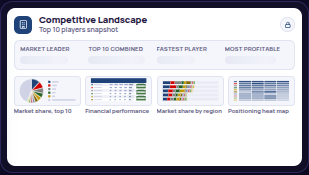
Competitive Landscape and Market Positioning
Top players in the solid state drive market:
1. Samsung Electronics Co. Ltd. (South Korea)
2. Intel Corporation (United States)
3. Kingston Technology Company Inc. (Canada)
4. Micron Technology Inc. (United States)
5. SK hynix Inc. (South Korea)
6. Western Digital Corporation (United States)
7. Seagate Technology Holdings plc (United States)
8. Toshiba Corporation (Japan)
9. ADATA Technology Co. Ltd. (Taiwan)
The solid state drive market is experiencing strong technological advancement driven by rising demand for faster data processing and high-capacity digital storage solutions. Manufacturers are focusing on energy-efficient architectures, improved durability, and next-generation memory technologies to enhance product performance across enterprise and consumer applications. Increasing adoption of cloud computing, gaming, and AI workloads is also fueling continuous investment in SSD innovation.
| Company | Market Share | Company Revenue | Revenue CAGR (%) | Product Portfolio | Geographic Presence | Innovation / R&D Focus | Strategic Developments |
|---|---|---|---|---|---|---|---|
| Samsung Electronics Co. Ltd. (South Korea) | |||||||
| Intel Corporation (United States) | |||||||
| Kingston Technology Company Inc. (Canada) | |||||||
| Micron Technology Inc. (United States) | |||||||
| SK hynix Inc. (South Korea) | |||||||
| Western Digital Corporation (United States) | |||||||
| Seagate Technology Holdings plc (United States) | |||||||
| Toshiba Corporation (Japan) | |||||||
| ADATA Technology Co. Ltd. (Taiwan). |
Industry Development/News
| Company Name | Date | Key Development |
|---|---|---|
| Solidigm | May-26 | Solidigm expanded its AI-focused SSD development center in Vancouver to 50,000 square feet, increasing its regional R&D capacity. This expansion strengthens the company’s dedicated research infrastructure for next-generation storage technologies, supporting the broader development and commercialization of high-performance SSD solutions designed to meet the intensive storage requirements of AI workloads. |
| Seagate | May-26 | Seagate identified a trend of shifting procurement behavior, with enterprise customers securing long-term storage supply contracts extending up to five years. This shift, driven by surging demand from AI data center deployments, indicates tightening supply conditions for both SSDs and HDDs, signaling a strategic focus on supply chain resilience among enterprise storage operators. |
| SK hynix | Apr-26 | SK hynix commenced commercial supply of its 321-layer QLC consumer SSDs to Dell. This deployment represents the first large-scale commercialization of the company’s latest high-density NAND technology in the consumer PC market, significantly increasing available storage density and setting a new benchmark for performance in the high-end consumer storage segment. |
| Nvidia | Dec-25 | Nvidia entered a strategic partnership with SK hynix to develop a specialized AI-focused SSD architecture. By aiming for a tenfold increase in performance over existing solutions, this collaboration focuses on addressing the specific storage bottlenecks encountered in AI computing, with the potential to materially shift performance standards for storage used in AI training and inference. |
| SK hynix | Apr-25 | SK hynix finalized the acquisition of Intel’s NAND flash memory business, a major strategic consolidation that significantly strengthens its competitive position in the global SSD and NAND storage landscape. This integration enhances the company's manufacturing scale and technological capabilities, directly influencing its enterprise and consumer product portfolios. |
| Solidigm | Dec-24 | Solidigm introduced the D5-P5336, a PCIe data-center SSD featuring a 122TB capacity. As one of the highest-capacity PCIe SSDs currently available, this product addresses the critical enterprise need for increased storage density, enabling more efficient data management and reduced physical infrastructure footprints within modern data center environments. |
| SK hynix | Jun-24 | SK hynix developed the PCB01, a 5th-generation 8-channel PCIe SSD specifically optimized for on-device AI applications. Delivering read speeds of 14 GB/s and write speeds of 12 GB/s with 30% improved power efficiency, this innovation directly supports the emerging hardware requirements for high-performance, power-constrained AI-enabled personal computing devices. |
| Micron Technology | Apr-24 | Micron Technology initiated manufacturing of its 232-layer QLC NAND technology, which has been integrated into the Micron 2500 NVMe SSD. This technological advancement provides 28% higher storage density and a 24% improvement in read performance compared to prior generations, enhancing competitive positioning within the high-performance, compact storage market. |
Customize Your Report
Explore examples of how this report can be tailored to different research needs, including custom segments, additional topics or chapters, and related reports. Click a section of the wheel or its numbered marker to explore the available options.
Solid State Drive Market — Custom Segments
| Segment | Sub-Segment |
|---|---|
| NAND Flash Technology | SLC, MLC, TLC, QLC |
| Form Factor | 2.5-Inch, M.2, U.2 and U.3, PCIe Add-In Card |
| End User | Consumer, Enterprise and Data Centers, Industrial, Automotive |
Solid State Drive Market — Custom TOC
| Custom Chapter | Chapter Details |
|---|---|
| AI Infrastructure Storage Requirements |
|
| Hyperscale Data Center Demand Assessment |
|
| NAND Supply Chain Risk and Capacity Strategy |
|
Need a different cut of the data?
Request Custom ResearchFrequently Asked Questions
How much is the solid state drive market worth?
What is the anticipated CAGR of the solid state drive industry?
How are cloud infrastructure investments influencing SSD procurement strategies?
Why are advances in 3D NAND and PCIe technologies expanding enterprise SSD adoption?
Why do internal SSDs lead the solid state drive market?
Which storage capacity segment is growing fastest in the solid state drive market?
Why is Asia Pacific leading the solid state drive market?
How is Asia Pacific’s growth shaping future SSD demand?
What are the key competitors in the solid state drive landscape?
Our Clients
"Working with FBI has been a good experience. The market report provided a holistic view, covering everything from emerging trends to potential risks."
Semtech Corporation
"The experience was highly positive. The team showcased remarkable flexibility in adapting to our specific needs and delivered report that perfectly aligned with all our requirements."
TSMC
"What really stood out to me was how clearly and promptly the Fundamental Business Insights team communicated throughout. It made the collaboration feel effortless."
NXP Semiconductors
Our Research Team & Methodology
Every Fundamental Business Insights report is built by a dedicated vertical research team, validated through a structured primary-and-secondary methodology, and reviewed for accuracy before it reaches you.
This report was prepared by the Electronics & Semiconductors Research Team at Fundamental Business Insights, a dedicated research group specializing in the global electronics and semiconductor ecosystem. Our analysts continuously monitor technology innovations, manufacturing trends, competitive developments, supply chain dynamics, regulatory changes, and end-user demand to deliver timely market intelligence. The research is developed using a structured methodology that combines primary industry interactions, company financial disclosures, government publications, trade associations, technical literature, patent analysis, and other authoritative secondary sources. Market estimates are validated through multiple research techniques, including top-down and bottom-up analysis, before undergoing an internal quality review to ensure accuracy, consistency, and methodological integrity prior to publication.
Delivery
Published
Available
Support
- Market Size & Forecast
- Market Segmentation
- Regional Analysis
- Growth Drivers & Challenges
- Market Dynamics
- Competitive Landscape
- Company Profiles
- Competitive Benchmarking
- Mergers & Acquisitions
- Market Share Analysis or Key Company Strategies
- Value Chain Analysis
- Porter's Five Forces
- PESTLE Analysis
- Pricing Trends
- Supply-Demand Analysis
- Technology Landscape
- Regulatory Landscape
- Investment & Funding Landscape
- Emerging Opportunities
- Future Market Outlook