



Solid Waste Management Market Size & Growth Forecast 2027–2036, By Segments (Treatment, Waste, Material), Regional Demand Trends (North America, Asia Pacific, Europe), Key Country Insights (U.S., Japan, South Korea, Germany, France, Italy), and Competitive Landscape
Market Size and Growth Outlook
Solid Waste Management Market size stood at USD 1.21 Trillion in 2026 and is predicted to grow at 2.48% CAGR from 2027 to 2036, attaining USD 1.55 Trillion by 2036. The industry revenue for 2027 is estimated at USD 1.24 Trillion.
Base Year Value (2026)
USD 1.21 Trillion
CAGR (2027-2036)
2.48%
Forecast Year Value (2036)
USD 1.55 Trillion

Historical Data Period
2022-2026

Largest Region
Europe

Forecast Period
2027-2036
Solid Waste Management Market Intelligence Snapshot:
-
Regional Market Dynamics:
- Europe led in 2025 through established collection and treatment infrastructure, stringent environmental policies, recycling investment, and growing adoption of circular economy practices.
- Asia Pacific is growing fastest as urbanization, industrial expansion, rising waste volumes, and investments in recycling, waste-to-energy, and modern processing infrastructure accelerate.
-
Segment Momentum:
- The disposal segment led the market in 2025 and was also the fastest-growing, supported by investments in engineered landfills, stricter environmental regulations, modernized disposal infrastructure, and rising urban waste volumes.
- The plastics segment is expanding rapidly due to increasing concerns over plastic pollution, growing recycling infrastructure, circular economy initiatives, stronger regulations on single-use plastics, and advances in recycling technologies.
-
Market Expansion Drivers:
- Rising municipal investment in integrated recycling and waste segregation infrastructure
- Adoption of waste-to-energy technologies enhancing sustainable municipal waste processing
- Increasing urban smart city programs improving digitalized waste collection systems
-
Leading Market Participants:
Key players in the solid waste management market include Veolia Environnement S.A. (France), SUEZ S.A. (France), Waste Management, Inc. (United States), Waste Connections, Inc. (Canada), Clean Harbors, Inc. (United States), Cleanaway Waste Management Limited (Australia), Covanta Holding Corporation (United States), China Everbright Environment Group Limited (China), Stericycle, Inc. (United States)
Global Market Forecast Snapshot:
-
Market Outlook:
- 2026 Market Size: USD 1.21 Trillion
- 2027 Estimated Market Size: USD 1.24 Trillion
- Projected Market Size: USD 1.55 Trillion by 2036
- Growth Forecasts: 2.48% CAGR (2027-2036)
-
Regional and Segment Outlook:
- Leading Regional Market: Europe
- High-Growth Regional Hub: Asia Pacific
- Core Revenue Segment: Disposal (Treatment) | Industrial Solid Waste (Waste) | Food (Material)
- Emerging Opportunity Segment: Disposal (Treatment) | Industrial Solid Waste (Waste) | Plastics (Material)
Market Growth Drivers and Industry Trends
Rising municipal investment in integrated recycling and waste segregation infrastructure
Growing urban waste volumes and sustainability priorities are encouraging governments to invest in modern waste handling systems, which will drive the solid waste management market growth. Municipalities are developing integrated recycling networks and segregation facilities to improve resource recovery, reduce landfill dependence, and enhance operational efficiency. Investments in collection infrastructure, processing facilities, and waste sorting capabilities are enabling cities to manage increasing waste generation through more organized and environmentally responsible approaches.
Adoption of waste-to-energy technologies enhancing sustainable municipal waste processing
The increasing focus on converting waste into usable energy is strengthening demand for advanced waste processing solutions, supporting the solid waste management market expansion. Waste-to-energy systems provide municipalities with alternatives to conventional disposal methods by utilizing residual waste for energy generation while improving resource efficiency. As cities pursue cleaner waste management strategies, these technologies are becoming an important component of integrated waste treatment frameworks.
Increasing urban smart city programs improving digitalized waste collection systems
Smart city initiatives are accelerating the adoption of connected waste management solutions, which will propel the solid waste management market demand. Municipal authorities are integrating digital monitoring, automated collection planning, and data-driven optimization tools to improve waste service efficiency. These technologies help reduce unnecessary collection activities, enhance route management, and provide better visibility into urban waste operations as cities modernize their infrastructure.
| Growth Driver Assessment Framework | |||||
| Growth Driver | Impact On CAGR | Regulatory Influence | Geographic Relevance | Adoption Rate | Impact Timeline |
|---|---|---|---|---|---|
| Rising municipal investment in integrated recycling and waste segregation infrastructure | 2% | High | Europe, Asia Pacific | High | Near Term |
| Adoption of waste-to-energy technologies enhancing sustainable municipal waste processing | 1.5% | High | North America, Europe | Medium | Mid Term |
| Increasing urban smart city programs improving digitalized waste collection systems | 1% | Moderate | Asia Pacific, Middle East & Africa | Emerging | Mid Term |
Unlock insights tailored to your business with our bespoke market research solutions - Click to get your customized report now!
Regional Demand Dynamics
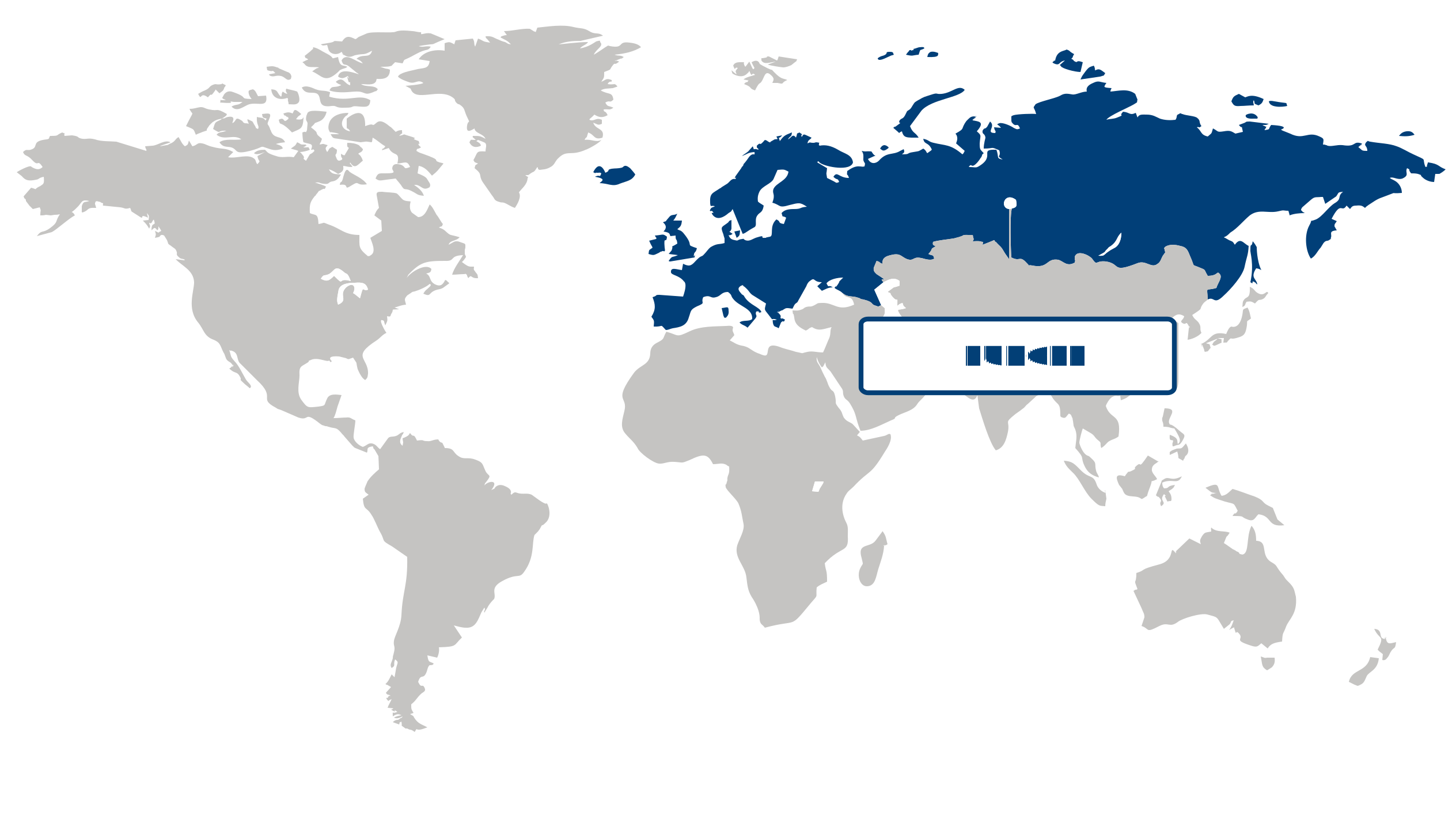
Largest Region
Europe
Largest Market Share in 2026
Europe (Largest Region) vs Asia Pacific (Fastest-Growing Region)
Europe dominated the solid waste management market in 2026, supported by established waste collection and treatment infrastructure, stringent environmental policies, and strong emphasis on resource efficiency. Governments and municipalities across the region are increasingly prioritizing waste reduction, recycling, recovery, and circular economy practices, encouraging investment in modern waste management systems. Growing urbanization and rising volumes of municipal and commercial waste are also increasing the need for efficient collection, sorting, processing, and disposal solutions. In addition, the transition toward sustainable waste treatment and greater recovery of valuable materials is strengthening demand for advanced waste management technologies and supporting Europe's leading market position.
Asia Pacific is expected to witness the fastest growth in the solid waste management market, driven by rapid urbanization, industrial expansion, and increasing pressure on existing waste disposal infrastructure. Growing populations and rising consumption levels are generating greater volumes of municipal and commercial waste, creating a pressing need for organized collection and treatment systems. Governments are also placing greater emphasis on improving sanitation, reducing environmental pollution, and developing sustainable waste handling infrastructure. Increasing investments in recycling facilities, waste-to-energy projects, and modern waste processing systems are expected to accelerate the region's transition toward more efficient and environmentally responsible waste management.
No card data available for this language/report.
Segment Leadership and Growth Trends
Treatment Segment Analysis: Disposal (Largest & Fastest-Growing Segment)
The disposal segment led the solid waste management market and held the largest share in 2026 while also emerging as the fastest-growing segment. Disposal remains a fundamental component of integrated waste management systems because it provides a practical solution for handling waste that cannot be economically recycled or recovered. Continuous investments in engineered landfill facilities, stricter environmental regulations governing waste handling, and the modernization of disposal infrastructure are supporting sustained demand. Increasing urban waste volumes and the need for environmentally compliant disposal practices further reinforce the segment’s leading position.
Waste Segment Analysis: Industrial Solid Waste (Largest & Fastest-Growing Segment)
Industrial solid waste represented the largest share in 2026 and is also expected to maintain the fastest growth within the waste segment. Expansion of manufacturing, construction, mining, and processing industries continues to generate substantial volumes of industrial waste that require specialized collection, treatment, and disposal services. At the same time, tightening environmental compliance requirements and increasing adoption of sustainable industrial waste management practices are encouraging investments in advanced waste handling solutions, supporting continued growth of this segment.
Material Segment Analysis: Food (Largest Segment) vs Plastics (Fastest-Growing Segment)
The food waste segment held the largest share in 2026 due to the substantial volume of organic waste generated across households, food processing facilities, restaurants, and retail establishments. Rising emphasis on reducing landfill dependency, improving organic waste segregation, and expanding composting and anaerobic digestion initiatives are strengthening the importance of effective food waste management. Regulatory efforts aimed at minimizing food waste and promoting resource recovery also contribute to the segment's dominant position.
The plastics segment is anticipated to record the fastest growth during the forecast period in the solid waste management market. Increasing concerns regarding plastic pollution, expanding recycling infrastructure, and growing implementation of circular economy initiatives are accelerating investments in plastic waste collection and processing. Stronger regulatory measures targeting single-use plastics, together with advancements in recycling technologies, are expected to further increase demand for dedicated plastic waste management solutions.
| Report Segmentation | |||
| Segment | Sub-Segment | Largest Segment | Fastest Growing Segment |
|---|---|---|---|
| Treatment | Open Dumping, Disposal | Disposal | Disposal |
| Waste | Municipal Solid Waste, Residential, Commercial, Industrial Solid Waste | Industrial Solid Waste | Industrial Solid Waste |
| Material | Paper & Paperboard, Metals, Plastics, Food, Glass, Others | Food | Plastics |
 Read our Research Approach
Competitive Landscape and Market Positioning
Prominent players in the solid waste management market:
- Veolia Environnement S.A. (France)
- SUEZ S.A. (France)
- Waste Management, Inc. (United States)
- Waste Connections, Inc. (Canada)
- Clean Harbors, Inc. (United States)
- Cleanaway Waste Management Limited (Australia)
- Covanta Holding Corporation (United States)
- China Everbright Environment Group Limited (China)
- Stericycle, Inc. (United States)
The solid waste management market is evolving as competition moves from basic collection and disposal services toward integrated waste solutions that emphasize resource recovery, sustainability, and operational optimization. Service providers are strengthening their capabilities through advanced sorting technologies, recycling infrastructure, and data-driven management systems that improve efficiency across waste streams. Competitive differentiation is increasingly tied to the ability to support circular economy models, manage complex waste categories, and deliver environmentally responsible outcomes for municipalities and industries. Companies with broader service networks and stronger processing capabilities are better positioned as waste management expectations continue to expand.
Industry Development/News
| Company Name | Date | Key Development |
|---|---|---|
| Presidio Environmental | May-26 | Presidio Environmental secured construction permit approval from the Missouri Department of Natural Resources for its proposed solid waste management facility near La Monte, allowing the project to advance to active facility infrastructure development. |
| Kinderhook Industries | Jan-26 | Kinderhook Industries completed a $1 billion merger of Cards Recycling and Live Oak Environmental to form EcoWaste. Partnered with Goldman Sachs Alternatives and Apollo S3, this strategic consolidation materially expands the firm's solid waste platform and regional competitive footprint. |
| WCG | Dec-25 | WCG partnered with Seneca Meadows to deploy New York's first facility-scale PFAS treatment system. The 300,000-gallon-per-day plant utilizes low-energy foam fractionation technology to expand landfill leachate treatment capabilities. |
| STADLER | Nov-25 | STADLER partnered with Ecourbis Ambiental to construct an advanced municipal waste treatment facility in Brazil. The site will integrate high-performance automated waste sorting technology to optimize industrial recycling efficiency and processing capacity. |
| FCC Environmental Services | Jul-25 | FCC Environmental Services was selected by Miami-Dade County to enter formal negotiations for the development of a new waste-to-energy facility, altering long-term regional processing capacity and disposal strategy. |
| Rutherford County Solid Waste | Jun-25 | Rutherford County inaugurated a new 12,500-square-foot solid waste transfer station capable of processing up to 2,000 tons of waste per day, significantly enhancing regional municipal waste handling and logistics infrastructure. |
| Integrated Solid Waste Management Facility (ISWMF) | Apr-25 | Construction commenced on Iloilo City's Integrated Solid Waste Management Facility, establishing critical municipal waste processing infrastructure designed to simultaneously support local power generation and regional water security. |
| Meridian Waste | Jan-25 | Meridian Waste acquired Foothill Waste Solutions in North Carolina. The strategic acquisition expands the company's regional waste collection, hauling operations, and asset footprint within the southeastern solid waste management market. |
| Asian Infrastructure Investment Bank (AIIB) | Oct-24 | The Asian Infrastructure Investment Bank and the Alliance to End Plastic Waste launched a joint co-financing initiative in Indonesia, scaling integrated municipal solid waste management infrastructure across more than 10 cities and districts. |
| Rumpke Waste & Recycling | Feb-24 | Rumpke Waste & Recycling acquired Illinois-based Sanitation Services and Landfill 33. This asset transaction vertically integrates its operations, directly expanding the company's regional municipal landfill capacity and solid waste collection network. |
Why Choose Us
Specialized Expertise: Our team comprises industry experts with a deep understanding of your market segment. We bring specialized knowledge and experience that ensures our research and consulting services are tailored to your unique needs.
Customized Solutions: We understand that every client is different. That's why we offer customized research and consulting solutions designed specifically to address your challenges and capitalize on opportunities within your industry.
Proven Results: With a track record of successful projects and satisfied clients, we have demonstrated our ability to deliver tangible results. Our case studies and testimonials speak to our effectiveness in helping clients achieve their goals.
Cutting-Edge Methodologies: We leverage the latest methodologies and technologies to gather insights and drive informed decision-making. Our innovative approach ensures that you stay ahead of the curve and gain a competitive edge in your market.
Client-Centric Approach: Your satisfaction is our top priority. We prioritize open communication, responsiveness, and transparency to ensure that we not only meet but exceed your expectations at every stage of the engagement.
Continuous Innovation: We are committed to continuous improvement and staying at the forefront of our industry. Through ongoing learning, professional development, and investment in new technologies, we ensure that our services are always evolving to meet your evolving needs.
Value for Money: Our competitive pricing and flexible engagement models ensure that you get maximum value for your investment. We are committed to delivering high-quality results that help you achieve a strong return on your investment.
Select Licence Type

