



Sourdough Market Size & Growth Forecast 2027–2036, By Segments (Type, Application), Regional Demand Trends (North America, Asia Pacific, Europe), Key Country Insights (U.S., Japan, South Korea, Germany, France, Italy), and Competitive Landscape
Market Size and Growth Outlook
Sourdough Market size was valued at USD 4 billion in 2026 and is anticipated to grow at a 6.84% CAGR from 2027 to 2036, exceeding USD 7.75 billion by 2036. The industry revenue for 2027 is assessed at USD 4.23 billion.
Base Year Value (2026)
USD 4 billion
CAGR (2027-2036)
6.84%
Forecast Year Value (2036)
USD 7.75 billion

Historical Data Period
2022-2026

Largest Region
Europe

Forecast Period
2027-2036
Sourdough Market Intelligence Snapshot:
-
Regional Market Dynamics:
- Europe leads due to strong bakery culture, widespread artisanal bread consumption, and steady retail and foodservice demand integrated into everyday dietary habits.
- Asia Pacific’s 8.25% CAGR is driven by changing urban diets, rising exposure to Western bakery products, expanding retail and café channels, and broader product availability.
-
Segment Momentum:
- Type III held a 45.37% share in 2026 due to its suitability for large-scale baking, offering easier storage, transport, and consistent dosing that supports reliable production and product quality.
- Pizza is the fastest-growing application as manufacturers and foodservice operators use sourdough to enhance crust texture, fermentation characteristics, and flavor differentiation in premium offerings.
-
Market Expansion Drivers:
- Growing consumer preference for artisanal and clean-label bakery products boosting sourdough demand.
- Expanding product innovation across snacks, pizza, and crackers increasing sourdough application diversity.
- Rising adoption of sustainable and organic baking practices strengthening sourdough market penetration.
-
Leading Market Participants:
Leading players in the sourdough market include Puratos Group (Belgium), Lallemand Inc. (Canada), Alpha Baking Company Inc. (United States), Boudin Bakery Inc. (United States), Josey Baker Bread (United States), Bread SRSLY (United States), Riverside Sourdough (United States), Truckee Sourdough Company (United States), Gold Coast Bakeries Pty Ltd (Australia), Morabito Baking Co. Inc. (United States).
Global Market Forecast Snapshot:
-
Market Outlook:
- 2026 Market Size: USD 4 billion
- 2027 Estimated Market Size: USD 4.23 billion.
- Projected Market Size: USD 7.75 billion by 2036
- Growth Forecasts: 6.84% CAGR (2027-2036)
-
Regional and Segment Outlook:
- Leading Regional Market: Europe
- High-Growth Regional Hub: Asia Pacific
- Core Revenue Segment: Type III (Type) | Breads (Application)
- Emerging Opportunity Segment: Type II (Type) | Pizza (Application)
Market Growth Drivers and Industry Trends
Growing consumer preference for artisanal and clean-label bakery products boosting sourdough demand
Consumers are increasingly seeking bakery products associated with traditional preparation methods, recognizable ingredients, and artisanal quality, creating favorable conditions for naturally fermented products. Within the sourdough market, this preference is encouraging bakeries and food manufacturers to incorporate sourdough into offerings positioned around authentic production, distinctive flavor, and clean-label characteristics. Interest in simpler ingredient formulations and traditional fermentation processes is also influencing purchasing decisions, while the premium perception associated with handcrafted bakery products supports broader consumer acceptance.
Expanding product innovation across snacks, pizza, and crackers increasing sourdough application diversity
The use of sourdough is extending beyond conventional bread products as manufacturers explore new applications across snack foods, pizza bases, crackers, and other baked formats. This expansion will propel the sourdough market by allowing producers to introduce the characteristic flavor and fermentation attributes of sourdough into additional product categories and consumption occasions. Product development across these applications also gives manufacturers opportunities to differentiate offerings through texture, flavor profiles, and fermentation-based positioning, increasing the versatility of sourdough ingredients and formulations.
Rising adoption of sustainable and organic baking practices strengthening sourdough market penetration
Growing attention to environmentally responsible food production and organic ingredient sourcing is influencing bakery operations and consumer preferences. The sourdough market is gaining from this shift because sourdough fermentation aligns with traditional baking practices and can be incorporated into formulations emphasizing natural processes and organic ingredients. Bakeries adopting sustainable sourcing, waste-conscious production methods, and cleaner formulation approaches can use sourdough as part of product portfolios designed to appeal to consumers who place greater importance on ingredient transparency and responsible food production.
| Growth Driver Assessment Framework | |||||
| Growth Driver | Impact On CAGR | Regulatory Influence | Geographic Relevance | Adoption Rate | Impact Timeline |
|---|---|---|---|---|---|
| Growing consumer preference for artisanal and clean-label bakery products boosting sourdough demand | 2.00% | Moderate | Europe, North America | High | Near Term |
| Expanding product innovation across snacks, pizza, and crackers increasing sourdough application diversity | 1.70% | Low | Asia Pacific, Europe | Medium | Mid Term |
| Rising adoption of sustainable and organic baking practices strengthening sourdough market penetration | 1.40% | Moderate | Europe, North America | Emerging | Long Term |
Unlock insights tailored to your business with our bespoke market research solutions - Click to get your customized report now!
Regional Demand Dynamics
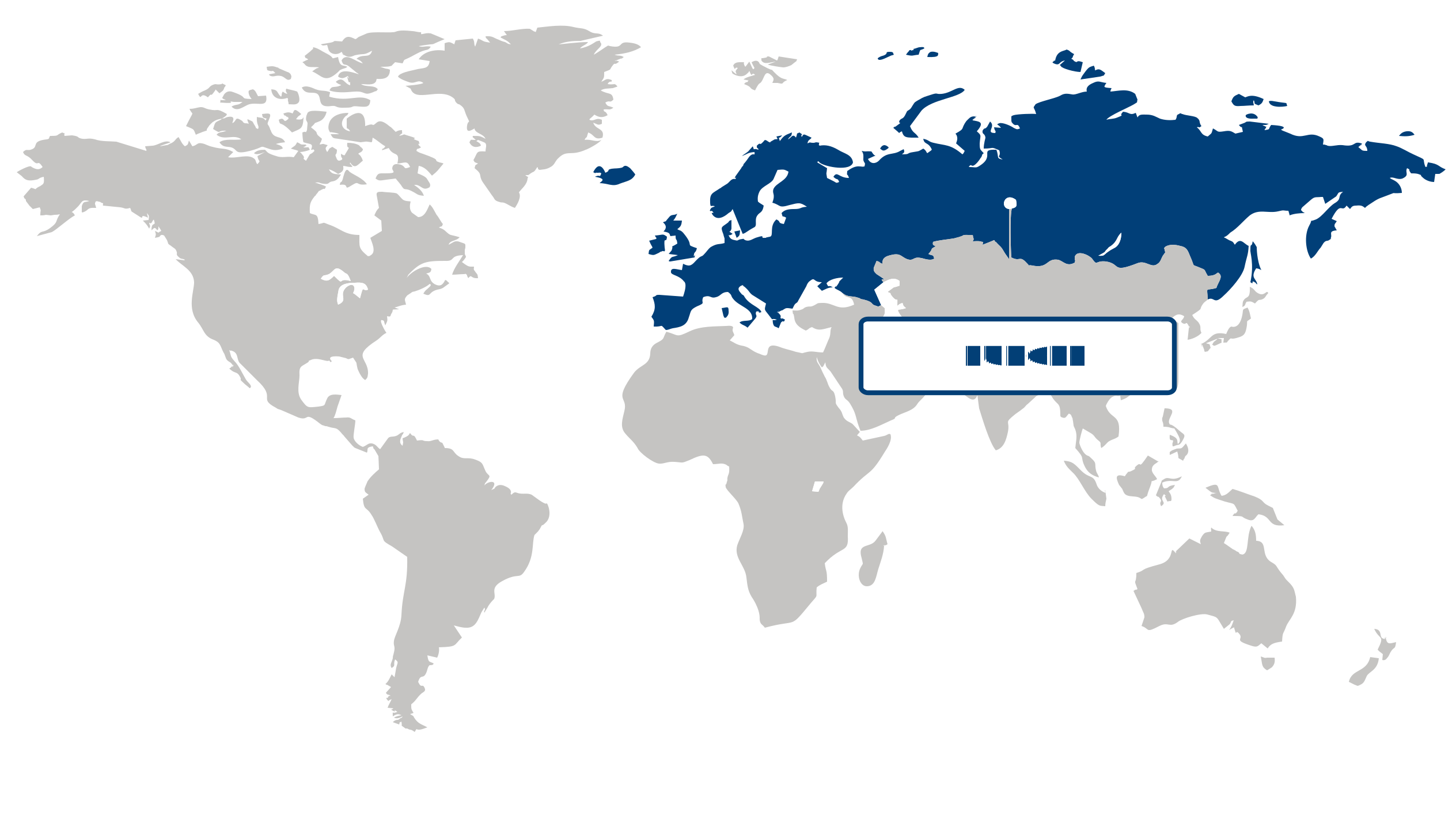
Largest Region
Europe
Largest Market Share in 2026
Europe (Largest Region) vs Asia Pacific (Fastest-Growing Region)
Europe held the largest share of the sourdough market in 2026, reflecting the region's strong bread-making heritage, established bakery industry, and longstanding consumer familiarity with fermented bakery products. Demand is supported by growing interest in traditional preparation methods, distinctive flavors, and bakery products perceived as more natural or artisanal. Expanding premium bakery segments and continued innovation in sourdough-based formulations are also enabling producers to appeal to consumers seeking quality, authenticity, and differentiated eating experiences.
Asia Pacific is the fastest-growing region, driven by changing dietary preferences, expanding urban populations, and increasing exposure to international bakery products. Growing demand for premium and artisanal baked goods is encouraging bakeries and food manufacturers to incorporate sourdough into broader product portfolios, while rising consumer interest in fermentation and naturally prepared foods is supporting category awareness. Expansion of modern retail, foodservice, and specialty bakery channels is further improving consumer access to sourdough products across the region.
Key Country Insights
The U.S. sourdough market is shaped by consumer preference for artisan bakery products with clean-label ingredients and distinctive flavor profiles. Bakeries and food manufacturers continue expanding premium sourdough offerings to address demand for authentic and naturally fermented products.
Japan incorporates sourdough into premium bakery offerings that emphasize texture, freshness, and product differentiation. Manufacturers continue adapting traditional sourdough methods to local consumer preferences while expanding specialty bread selections.
South Korea is experiencing increasing interest in sourdough products through premium bakeries and café culture. Food producers continue introducing naturally fermented breads that appeal to consumers seeking distinctive taste and higher-quality bakery experiences.
Germany maintains strong demand for sourdough products rooted in established bread-making traditions and consumer appreciation for quality baked goods. Bakers continue refining fermentation techniques while introducing product variations that balance authenticity with convenience.
France emphasizes authentic sourdough production supported by traditional baking expertise and demand for premium bread. Bakers continue investing in fermentation quality and ingredient selection to maintain product consistency while meeting evolving consumer expectations.
Italy strengthens its sourdough market through artisan bakeries that combine traditional fermentation with innovative product formats. Italian consumers increasingly value handcrafted bakery products that deliver distinctive flavor and perceived product authenticity.
Segment Leadership and Growth Trends
Type Segment Analysis: Type III (Largest Segment) vs Type II (Fastest-Growing Segment)
Type III segment held the largest share of the sourdough market at 45.37% in 2026, supported by its established use in sourdough production and its suitability for fermentation processes that deliver distinctive flavor, texture, and baking characteristics. Demand for naturally fermented bakery products is encouraging manufacturers and artisanal producers to maintain consistent sourdough cultures while responding to consumer interest in traditional preparation methods and differentiated baked goods. The segment also benefits from the broader premiumization of bakery products, where fermentation characteristics and perceived authenticity influence product selection.
Type II is emerging as the fastest-growing segment as bakers and food manufacturers increasingly explore sourdough formulations that offer flexibility in production and fermentation management. Its expanding adoption is supported by continued experimentation with fermentation methods, product formulations, and bakery applications designed to meet changing consumer preferences. Growing interest in naturally fermented foods and the diversification of sourdough-based products are creating additional opportunities for type II within the market.
Application Segment Analysis: Breads (Largest Segment) vs Pizza (Fastest-Growing Segment)
Breads segment accounted for the largest share of the sourdough market at 58.3% in 2026, reflecting the long-standing association between sourdough fermentation and bread production. Sourdough is widely valued in bread applications for its distinctive flavor, aroma, texture, and fermentation characteristics, making it a preferred option across artisanal and premium bakery products. Increasing consumer interest in traditionally prepared and naturally fermented bread is reinforcing demand, while product innovation is expanding the range of sourdough bread formats available to consumers.
Pizza is expected to experience the fastest growth as sourdough increasingly becomes a differentiated base for premium and artisanal pizza offerings. Fermented pizza dough can provide distinctive flavor and texture while supporting the broader consumer preference for handcrafted and specialty food experiences. The expansion of premium foodservice concepts and growing experimentation with alternative dough formulations are encouraging greater use of sourdough in pizza applications.
| Report Segmentation | |||
| Segment | Sub-Segment | Largest Segment | Fastest Growing Segment |
|---|---|---|---|
| Type | Type I, Type II, Type III | Type III | Type II |
| Application | Breads, Cookies, Cakes, Waffles, Pizza, Others | Breads | Pizza |
 Read our Research Approach
Competitive Landscape and Market Positioning
Key companies in the sourdough market:
1. Puratos Group (Belgium)
2. Lallemand Inc. (Canada)
3. Alpha Baking Company Inc. (United States)
4. Boudin Bakery Inc. (United States)
5. Josey Baker Bread (United States)
6. Bread SRSLY (United States)
7. Riverside Sourdough (United States)
8. Truckee Sourdough Company (United States)
9. Gold Coast Bakeries Pty Ltd (Australia)
10. Morabito Baking Co. Inc. (United States)
The sourdough market is witnessing growing popularity as consumers increasingly seek artisanal bakery products with natural fermentation processes and distinctive flavor profiles. Manufacturers and bakeries are expanding specialty product offerings to align with demand for clean-label ingredients and traditional baking techniques. Innovation in functional recipes and premium bakery experiences is also shaping growth across the sourdough market.
Industry Development/News
| Company Name | Date | Key Development |
|---|---|---|
| Lallemand | Dec-23 | Lallemand finalized the acquisition of Swiss biotechnology specialist Evolva, absorbing its technical operations to scale industrial fermentation capabilities. The strategic transaction enhances Lallemand's proprietary enzymatic and yeast platforms used to formulate functional ingredients for commercial sourdough processing. |
| Cain Food Industries | Sep-25 | Cain Food Industries completed a definitive merger with Millbio following a corporate acquisition by private equity firm Apheon. The transaction establishes a combined clean-label bakery ingredient entity, optimizing supply chains and biotechnology R&D for artisanal sourdough industrial scaling. |
| Bavaro’s Hospitality | Sep-24 | Bavaro’s Hospitality acquired the wholesale manufacturing operations of Gulf Coast Sourdough to vertically integrate its supply network. The manufacturing acquisition expands Bavaro's production footprint, allowing it to supply artisanal sourdough breads and specialty pizza doughs directly to commercial restaurants. |
| Boulangerie Copain | May-26 | Boulangerie Copain announced a capital investment to construct a new 10,000-square-foot commercial bread production facility in Charlotte. Outfitted with specialized French deck ovens, the manufacturing site will scale production of naturally fermented bread products utilizing a 30-year-old sourdough culture. |
| Izzio Artisan Bakery | Jan-26 | Izzio Artisan Bakery expanded its manufacturing capacity by constructing a second dedicated production facility. The capital project scales the firm's volume throughput for naturally fermented sourdough loaves, supporting its strategic volume push into regional retail packaged bread distribution networks. |
| Izola | Jun-24 | Izola completed a retail and manufacturing expansion by opening a larger, permanent industrial bakery location in San Diego. The modern facility scales daily artisanal output of high-hydration sourdough loaves and laminated pastries to support accelerating commercial demand. |
| Puratos | Jul-23 | Puratos executed a market-entry and distribution scaling initiative in Kosovo through an exclusive joint partnership with Korabi Corporation. The geographical expansion establishes a direct commercial pipeline for Puratos’ technical bakery solutions and sourdough fermentation components to local industrial bakers. |
| King Arthur Baking Company | Jan-26 | King Arthur Baking Company partnered with GE Appliances’ FirstBuild unit to commercialize the Sourdough Sidekick appliance nationwide. The connected kitchen device automates temperature regulation and hydration cycles for sourdough culture maintenance, marking the brand's entry into smart kitchen hardware. |
| Siete Foods | May-26 | Siete Foods expanded its specialty portfolio with the launch of Siete Sourdough Style Tortillas alongside an organic yellow corn variant. The product roll-out introduces traditional wild-fermentation flavor profiles into the alternative, gluten-free flatbread market segment to capture health-conscious demographic growth. |
| Dave's Killer Bread | Nov-25 | Dave’s Killer Bread announced its entry into the long-fermentation segment with the commercial introduction of Supreme Sourdough. The organic, artisan-style product rolled out across West Coast retail networks, representing a strategic portfolio diversification into premium, gut-health-focused bread categories. |
Why Choose Us
Specialized Expertise: Our team comprises industry experts with a deep understanding of your market segment. We bring specialized knowledge and experience that ensures our research and consulting services are tailored to your unique needs.
Customized Solutions: We understand that every client is different. That's why we offer customized research and consulting solutions designed specifically to address your challenges and capitalize on opportunities within your industry.
Proven Results: With a track record of successful projects and satisfied clients, we have demonstrated our ability to deliver tangible results. Our case studies and testimonials speak to our effectiveness in helping clients achieve their goals.
Cutting-Edge Methodologies: We leverage the latest methodologies and technologies to gather insights and drive informed decision-making. Our innovative approach ensures that you stay ahead of the curve and gain a competitive edge in your market.
Client-Centric Approach: Your satisfaction is our top priority. We prioritize open communication, responsiveness, and transparency to ensure that we not only meet but exceed your expectations at every stage of the engagement.
Continuous Innovation: We are committed to continuous improvement and staying at the forefront of our industry. Through ongoing learning, professional development, and investment in new technologies, we ensure that our services are always evolving to meet your evolving needs.
Value for Money: Our competitive pricing and flexible engagement models ensure that you get maximum value for your investment. We are committed to delivering high-quality results that help you achieve a strong return on your investment.
Select Licence Type

