



Spa Market Size & Growth Forecast 2027–2036, By Segments (Spa, End Use, Service, Type), Regional Demand Trends (North America, Asia Pacific, Europe), Key Country Insights (U.S., Japan, South Korea, Germany, France, Italy), and Competitive Landscape
Market Size and Growth Outlook
Spa Market size was over USD 108.9 billion in 2026 and is likely to grow at a 8.17% CAGR between 2027 and 2036, reaching USD 238.83 billion by 2036. The industry revenue for 2027 is estimated at USD 116.39 billion.
Base Year Value (2026)
USD 108.9 billion
CAGR (2027-2036)
8.17%
Forecast Year Value (2036)
USD 238.83 billion

Historical Data Period
2022-2026

Largest Region
Europe

Forecast Period
2027-2036
Spa Market Intelligence Snapshot:
-
Regional Market Dynamics:
- Europe leads with 27.97% share, supported by mature wellness destinations, strong hospitality integration, and consistent demand across urban and destination spa formats.
- Asia Pacific’s 14.78% CAGR is driven by rising wellness spending, expanding tourism flows, and rapid hospitality infrastructure growth integrating spa services into hotels and retreats.
-
Segment Momentum:
- Hotel/Resort Spas accounted for 32.12% of the market in 2026, benefiting from established hospitality infrastructure, consistent guest traffic, and convenient access to bundled wellness services during travel.
- Men represent the fastest-growing end-use segment as wellness, grooming, and stress-relief services become more widely accepted, expanding participation from a previously smaller but increasingly engaged customer base.
-
Market Expansion Drivers:
- Rising wellness awareness increasing demand for massage therapies and preventive self-care services.
- Expanding wellness tourism driving luxury hotel and resort spa partnership investments.
- Increasing demand for personalized male-focused spa treatments expanding premium service portfolios.
-
Leading Market Participants:
Major companies in the spa market include Marriott International, Inc. (United States), Four Seasons Hotels Limited (Canada), Mandarin Oriental Hotel Group Limited (Hong Kong), Aman Group S.à r.l. (Switzerland), Hyatt Hotels Corporation (United States), Accor S.A. (France), Kempinski Hotels S.A. (Switzerland), Banyan Tree Holdings Limited (Singapore), The Ritz-Carlton Hotel Company, L.L.C. (United States), Raffles Hotels & Resorts (Singapore).
Global Market Forecast Snapshot:
-
Market Outlook:
- 2026 Market Size: USD 108.9 billion
- 2027 Estimated Market Size: USD 116.39 billion.
- Projected Market Size: USD 238.83 billion by 2036
- Growth Forecasts: 8.17% CAGR (2027-2036)
-
Regional and Segment Outlook:
- Leading Regional Market: Europe
- High-Growth Regional Hub: Asia Pacific
- Core Revenue Segment: Hotel/Resort Spa (Spa) | Women (End Use) | Massage Therapies (Service) | Affordable (Type)
- Emerging Opportunity Segment: Destination Spa (Spa) | Men (End Use) | Body Treatments (Service) | Luxury (Type)
Market Growth Drivers and Industry Trends
Rising wellness awareness increasing demand for massage therapies and preventive self-care services
Growing awareness of physical and mental wellness is encouraging consumers to incorporate relaxation, recovery, and preventive self-care into their lifestyles. The spa market will expand as massage therapies and wellness treatments become part of broader routines focused on stress management, physical comfort, and personal well-being. Consumers are increasingly viewing spa services not only as occasional indulgences but also as components of regular wellness practices, supporting demand for diverse therapeutic and relaxation offerings.
Expanding wellness tourism driving luxury hotel and resort spa partnership investments
The rise of wellness-focused travel is encouraging hotels and resorts to strengthen their service offerings through specialized spa facilities and partnerships with wellness operators. The spa market will benefit as hospitality businesses seek to differentiate their properties by providing integrated relaxation, beauty, and therapeutic experiences to travelers. Spa services can enhance the overall value proposition of luxury accommodations while allowing resorts to attract visitors specifically interested in wellness-oriented travel experiences.
Increasing demand for personalized male-focused spa treatments expanding premium service portfolios
Men are becoming a more important consumer segment for personal grooming, relaxation, and wellness services, encouraging spas to develop treatments specifically aligned with male preferences and needs. The spa market is gaining from this shift as providers expand beyond traditional offerings to include tailored massage, skincare, grooming, and recovery treatments for male customers. Personalized service design can also support premium pricing structures by creating more specialized experiences and encouraging repeat engagement among customers seeking targeted wellness solutions.
| Growth Driver Assessment Framework | |||||
| Growth Driver | Impact On CAGR | Regulatory Influence | Geographic Relevance | Adoption Rate | Impact Timeline |
|---|---|---|---|---|---|
| Rising wellness awareness increasing demand for massage therapies and preventive self-care services | 2.00% | Low | North America, Europe | High | Near Term |
| Expanding wellness tourism driving luxury hotel and resort spa partnership investments | 1.80% | Moderate | Europe, Asia Pacific | High | Mid Term |
| Increasing demand for personalized male-focused spa treatments expanding premium service portfolios | 1.30% | Low | North America, Asia Pacific | Emerging | Mid Term |
Unlock insights tailored to your business with our bespoke market research solutions - Click to get your customized report now!
Regional Demand Dynamics
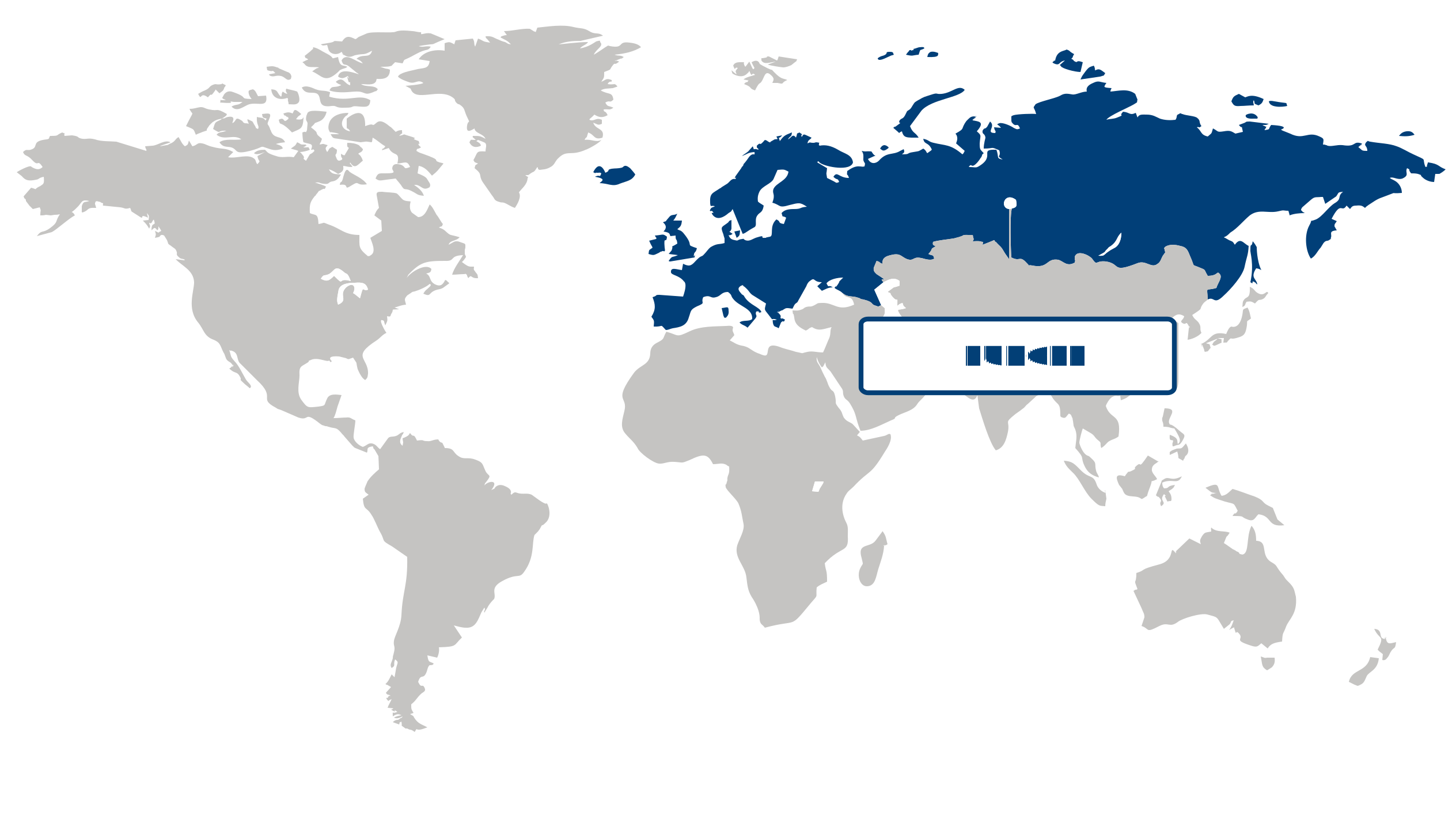
Largest Region
Europe
27.97% Market Share in 2026
Europe (Largest Region) vs Asia Pacific (Fastest-Growing Region)
Europe held the largest share of the spa market at 27.97% in 2026, supported by a well-established wellness culture and strong consumer interest in preventive health, relaxation, and personal well-being. The region benefits from a mature hospitality and tourism ecosystem in which destination spas, hotel-based wellness facilities, and specialized treatment centers have become important components of the broader leisure experience. Rising awareness of stress management and holistic wellness is encouraging consumers to allocate more spending toward spa and personal care services. Demand is also being supported by premiumization, with customers increasingly seeking personalized treatments, wellness programs, and integrated experiences. In addition, established tourism infrastructure and the presence of diverse wellness destinations provide a stable foundation for the region’s spa industry.
Asia Pacific is emerging as the fastest-growing regional market for spa services, driven by expanding tourism, increasing disposable incomes, and growing consumer awareness of wellness-oriented lifestyles. Urbanization and changing work patterns are encouraging demand for stress-relief, beauty, and relaxation services, particularly among consumers in rapidly developing metropolitan areas. The expansion of hotels, resorts, wellness destinations, and lifestyle-oriented facilities is broadening access to professional spa services, while international tourism is creating additional demand in established and emerging travel markets. At the same time, greater interest in holistic health, traditional wellness practices, and personalized treatments is helping diversify the regional service offering. These trends, combined with expanding middle-class consumption and ongoing development of tourism infrastructure, are strengthening Asia Pacific’s growth prospects.
Key Country Insights
The U.S. spa market emphasizes personalized wellness experiences that combine traditional therapies with technology-enabled services and premium skincare offerings. Operators increasingly invest in membership programs, holistic treatments, and integrated wellness packages to strengthen customer retention and service differentiation.
Japan continues to integrate traditional wellness practices with modern spa treatments to meet demand for stress management and lifestyle-focused services. Spa providers increasingly refine premium experiences through customized therapies, natural ingredients, and high-quality hospitality standards.
South Korea's spa market benefits from close integration with the country's advanced beauty and skincare ecosystem. Operators increasingly combine aesthetic treatments, wellness therapies, and premium skincare services to deliver comprehensive customer experiences across urban wellness centers.
Germany's spa market is shaped by demand for therapeutic wellness services supported by established health and rehabilitation traditions. Spa operators continue expanding preventive care, hydrotherapy, and medically oriented wellness programs that appeal to both domestic and international visitors.
France focuses on premium spa experiences that combine luxury hospitality, natural cosmetics, and wellness-oriented treatments. French spa operators continue enhancing personalized services and destination wellness offerings that complement established tourism and hospitality activities.
Italy's spa market leverages thermal wellness traditions alongside modern hospitality services to attract diverse consumer segments. Spa facilities increasingly invest in integrated wellness packages, relaxation therapies, and premium accommodation experiences that enhance visitor engagement.
Segment Leadership and Growth Trends
Spa Segment Analysis: Hotel/Resort Spa (Largest Segment) vs Destination Spa (Fastest-Growing Segment)
Hotel/resort spas held the largest share of the spa market in 2026, accounting for 32.12% share, supported by their integration with established hospitality infrastructure and the growing preference for wellness experiences during leisure and business travel. These facilities benefit from convenient access to accommodation, dining, fitness, and recreational services, allowing guests to combine relaxation and personal care within a single destination. The expansion of wellness-oriented hospitality offerings, along with increasing consumer interest in stress management, beauty treatments, and holistic well-being, continues to reinforce demand for spa services within hotels and resorts.
Destination spas are emerging as the fastest-growing segment as consumers increasingly seek dedicated wellness experiences rather than occasional treatments incorporated into conventional travel. These facilities provide more immersive programs centered on relaxation, fitness, nutrition, mindfulness, and lifestyle improvement, appealing to consumers seeking sustained physical and mental rejuvenation. Growing awareness of preventive wellness and the shift toward experience-led travel are strengthening the appeal of destination-based retreats, while premium wellness tourism is creating additional opportunities for specialized spa offerings.
End Use Segment Analysis: Women (Largest Segment) vs Men (Fastest-Growing Segment)
Women represented the largest end-use segment in the spa market in 2026, reflecting sustained demand for skincare, body treatments, relaxation therapies, and beauty-focused wellness services. Spa visits among female consumers are increasingly influenced by broader interest in self-care, stress reduction, personal grooming, and holistic well-being. The expansion of customized treatment menus and the integration of beauty and wellness services also supports recurring engagement, particularly as consumers place greater emphasis on maintaining both physical appearance and overall wellness.
Men are the fastest-growing end-use segment as perceptions surrounding male grooming, wellness, and self-care continue to evolve. Increasing acceptance of spa treatments among male consumers is expanding demand for services such as massages, skincare, recovery therapies, and stress-relief treatments. Wellness-focused lifestyles and greater awareness of the benefits of preventive relaxation and physical recovery are encouraging more men to incorporate spa services into their regular personal-care routines.
| Report Segmentation | |||
| Segment | Sub-Segment | Largest Segment | Fastest Growing Segment |
|---|---|---|---|
| Spa | Hotel/Resort Spa, Destination Spa, Day/Salon Spa, Medical Spa, Thermal/Mineral Spring Spa, Others | Hotel/Resort Spa | Destination Spa |
| End Use | Women, Men | Women | Men |
| Service | Massage Therapies, Body Treatments, Salon Services, Others | Massage Therapies | Body Treatments |
| Type | Affordable, Luxury | Affordable | Luxury |
 Read our Research Approach
Competitive Landscape and Market Positioning
Top players in the spa market:
1. Marriott International Inc. (United States)
2. Four Seasons Hotels Limited (Canada)
3. Mandarin Oriental Hotel Group Limited (Hong Kong)
4. Aman Group S.Ã r.l. (Switzerland)
5. Hyatt Hotels Corporation (United States)
6. Accor S.A. (France)
7. Kempinski Hotels S.A. (Switzerland)
8. Banyan Tree Holdings Limited (Singapore)
9. The Ritz-Carlton Hotel Company L.L.C. (United States)
10. Raffles Hotels & Resorts (Singapore)
The spa market is evolving with enhanced wellness experiences that integrate relaxation, health, and lifestyle services. Personalization of spa treatments is becoming increasingly important in consumer decision-making. The spa market is also influenced by rising demand for holistic wellness and stress management solutions.
Industry Development/News
| Company Name | Date | Key Development |
|---|---|---|
| Ryman Hospitality Properties | May-25 | Ryman Hospitality Properties acquired the JW Marriott Phoenix Desert Ridge resort for $865 million. This strategic investment significantly expands the company's footprint within the high-end resort and wellness hospitality segment, integrating extensive spa amenities and strengthening its competitive position in the luxury wellness market. |
| Vio Med Spa | Oct-24 | Vio Med Spa secured a majority investment from private equity firm Freeman Spogli. The transaction provides the capital necessary to accelerate the expansion of its franchise network and enhance corporate leadership capabilities, supporting a broader strategy of scaling its medical spa footprint. |
| Hand & Stone | Nov-24 | Hand & Stone completed the acquisition and rebranding of 30 LaVida Massage locations across seven states. This strategic expansion increased the company's total footprint and facilitated its entry into new markets, such as Arkansas, while integrating new franchisees through comprehensive training and operational support. |
| QC New York | Oct-24 | QC New York completed a 15,000-square-foot expansion on Governors Island, adding new wellness and hospitality amenities. The project significantly increases the facility's total service capacity and enhances its competitive standing as a major urban destination spa in the New York market. |
| Watershed Spa | Oct-25 | Watershed Spa announced a regional expansion plan in Minneapolis, involving the growth of its Northeast operations and the addition of a second location in the North Loop. The initiative aims to capture increasing consumer demand and strengthen the brand’s presence in the competitive local wellness market. |
| The Alfond Inn | Feb-24 | The Alfond Inn completed a major property expansion, which included the launch of a new dedicated spa and expanded guest amenities. This development represents a strategic effort to enhance the facility's wellness and hospitality service portfolio as part of the company's long-term growth and differentiation strategy. |
| Ottine Mineral Springs | May-26 | Ottine Mineral Springs announced an expansion following extensive facility renovations and a repositioning as a luxury destination spa. The project builds on previous redevelopment efforts to scale its wellness and hospitality offerings, aiming to capture a higher-value segment of the luxury wellness market. |
| Gasparilla Inn | Jan-26 | Gasparilla Inn received official approval for a comprehensive spa expansion project. The development is designed to modernize and broaden its wellness facilities and guest amenities, serving as a key component of the company's hospitality development strategy to increase market competitiveness. |
| Steyn City | Jul-25 | Steyn City announced a major investment in its spa infrastructure as part of a wellness-focused development strategy. The project aims to elevate the estate's lifestyle and wellness offerings, reinforcing its positioning and market appeal within the competitive luxury wellness and residential destination segment. |
| Bamboo Luxury Spa | Jun-25 | Bamboo Luxury Spa launched its operations in Mumbai, focusing on premium holistic therapies and nature-inspired facility design. The entry targets the rising demand for sophisticated, urban wellness experiences, signaling an increase in competition and service differentiation within the regional luxury spa landscape. |
Why Choose Us
Specialized Expertise: Our team comprises industry experts with a deep understanding of your market segment. We bring specialized knowledge and experience that ensures our research and consulting services are tailored to your unique needs.
Customized Solutions: We understand that every client is different. That's why we offer customized research and consulting solutions designed specifically to address your challenges and capitalize on opportunities within your industry.
Proven Results: With a track record of successful projects and satisfied clients, we have demonstrated our ability to deliver tangible results. Our case studies and testimonials speak to our effectiveness in helping clients achieve their goals.
Cutting-Edge Methodologies: We leverage the latest methodologies and technologies to gather insights and drive informed decision-making. Our innovative approach ensures that you stay ahead of the curve and gain a competitive edge in your market.
Client-Centric Approach: Your satisfaction is our top priority. We prioritize open communication, responsiveness, and transparency to ensure that we not only meet but exceed your expectations at every stage of the engagement.
Continuous Innovation: We are committed to continuous improvement and staying at the forefront of our industry. Through ongoing learning, professional development, and investment in new technologies, we ensure that our services are always evolving to meet your evolving needs.
Value for Money: Our competitive pricing and flexible engagement models ensure that you get maximum value for your investment. We are committed to delivering high-quality results that help you achieve a strong return on your investment.
Select Licence Type

