



Specialty Coatings Market Size & Growth Forecast 2027–2036, By Segments (Distribution Channel, Technology, End User, Coating Type), Regional Demand Trends (North America, Asia Pacific, Europe), Key Country Insights (U.S., Japan, South Korea, Germany, France, Italy), and Competitive Landscape
Market Size and Growth Outlook
Specialty Coatings Market size was over USD 3.63 Billion in 2026 and is likely to grow at 4.1% CAGR between 2027 and 2036, exceeding USD 5.43 Billion by 2036. The industry revenue for 2027 is estimated at USD 3.75 Billion.
Base Year Value (2026)
USD 3.63 Billion
CAGR (2027-2036)
4.1%
Forecast Year Value (2036)
USD 5.43 Billion

Historical Data Period
2022-2026

Largest Region
Asia Pacific

Forecast Period
2027-2036
Specialty Coatings Market Intelligence Snapshot:
-
Regional Market Dynamics:
- Asia Pacific led in 2025, supported by manufacturing expansion, infrastructure development, and demand for coatings offering corrosion, wear, chemical, and environmental protection.
- Investments in modern production facilities, advanced materials, automotive, construction, electronics, and industrial equipment are expanding demand for durable, high-performance coating technologies.
-
Segment Momentum:
- Solvent-based coatings held the largest share at 32.08% in 2025, supported by strong adhesion, durability, chemical resistance, and widespread use across automotive, industrial, marine, and construction applications.
- Powder coatings are expanding rapidly due to their reduced waste, improved durability, and alignment with sustainable manufacturing practices. Increasing demand for efficient and environmentally favorable coating solutions is driving adoption.
-
Market Expansion Drivers:
- Rapid industrialization and manufacturing expansion driving protective coatings demand
- Construction sector growth increasing demand for weather-resistant surface coatings
- Automotive lightweighting trends accelerating demand for advanced functional coatings
-
Leading Market Participants:
Major players in the specialty coatings market include PPG Industries, Inc. (United States), Akzo Nobel N.V. (Netherlands), The Sherwin-Williams Company (United States), Axalta Coating Systems Ltd. (United States), RPM International Inc. (United States), BASF SE (Germany), Nippon Paint Holdings Co., Ltd. (Japan), Kansai Paint Co., Ltd. (Japan), Jotun A/S (Norway), Asian Paints Limited (India)
Global Market Forecast Snapshot:
-
Market Outlook:
- 2026 Market Size: USD 3.63 Billion
- 2027 Estimated Market Size: USD 3.75 Billion
- Projected Market Size: USD 5.43 Billion by 2036
- Growth Forecasts: 4.1% CAGR (2027-2036)
-
Regional and Segment Outlook:
- Leading Regional Market: Asia Pacific
- High-Growth Regional Hub: Asia Pacific
- Core Revenue Segment: Direct Sales (Distribution Channel) | Solvent-Based Coatings (Technology) | Automotive (End User) | Anti-Corrosion Coatings (Coating Type)
- Emerging Opportunity Segment: Online Sales (Distribution Channel) | Powder Coatings (Technology) | Electronics (End User) | UV-Resistant Coatings (Coating Type)
Market Growth Drivers and Industry Trends
Rapid industrialization and manufacturing expansion driving protective coatings demand
Growing industrial production across sectors such as manufacturing, energy, transportation, and heavy equipment is increasing the need for coatings that protect assets from wear and environmental exposure. This development will drive the specialty coatings market growth as manufacturers seek advanced coating technologies that improve corrosion resistance, chemical protection, and operational durability across industrial equipment and infrastructure. Enhanced surface protection also contributes to lower maintenance requirements and longer service life for critical production assets.
Construction sector growth increasing demand for weather-resistant surface coatings
Expanding residential, commercial, and infrastructure development is creating sustained demand for coating solutions capable of preserving building materials under diverse environmental conditions. The specialty coatings market benefits from this trend because weather-resistant coatings help protect exterior surfaces against moisture, ultraviolet exposure, temperature fluctuations, and atmospheric pollutants. Builders and property owners are increasingly selecting high-performance coating systems that maintain structural appearance while extending the lifespan of construction materials.
Automotive lightweighting trends accelerating demand for advanced functional coatings
The automotive industry's focus on reducing vehicle weight is encouraging greater use of lightweight materials that require specialized surface protection and performance enhancement. This trend will propel the specialty coatings market as manufacturers apply advanced coatings to improve adhesion, corrosion resistance, abrasion protection, and compatibility with lightweight substrates used in modern vehicle production. Functional coating technologies also contribute to improved component durability while supporting manufacturing processes for next-generation automotive platforms.
| Growth Driver Assessment Framework | |||||
| Growth Driver | Impact On CAGR | Regulatory Influence | Geographic Relevance | Adoption Rate | Impact Timeline |
|---|---|---|---|---|---|
| Rapid industrialization and manufacturing expansion driving protective coatings demand | 2% | Low | Asia Pacific | High | Near Term |
| Construction sector growth increasing demand for weather-resistant surface coatings | 1.7% | Low | Asia Pacific, Middle East & Africa | High | Mid Term |
| Automotive lightweighting trends accelerating demand for advanced functional coatings | 1.5% | Low | North America, Europe | Medium | Mid Term |
Unlock insights tailored to your business with our bespoke market research solutions - Click to get your customized report now!
Regional Demand Dynamics
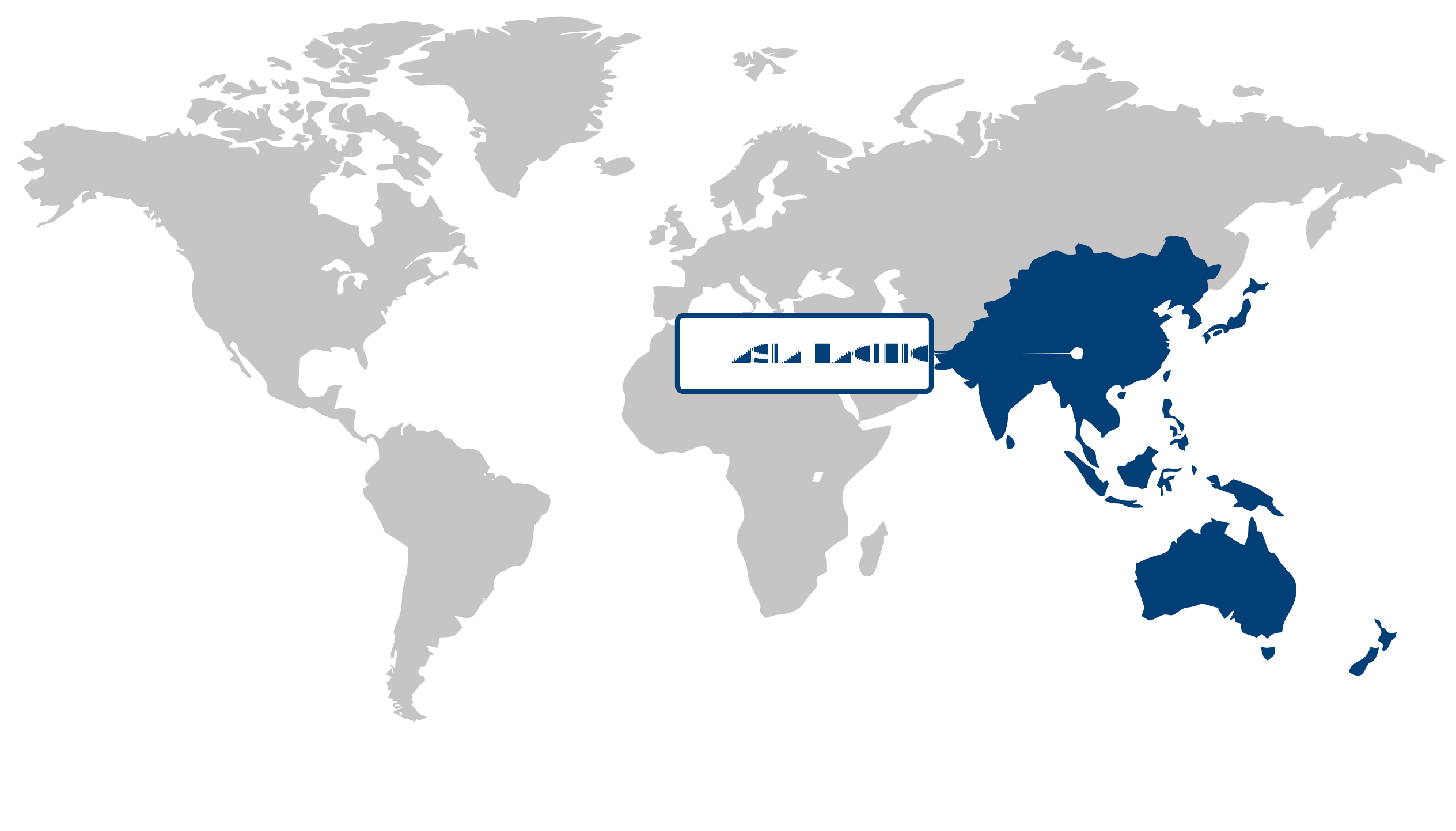
Largest Region
Asia Pacific
Largest Market Share in 2026
Asia Pacific (Largest & Fastest-Growing Region)
Asia Pacific dominated the specialty coatings market and held the largest share in 2026, while also representing the fastest-growing regional market. The region's strong position is supported by expanding manufacturing activity, infrastructure development, and rising demand for high-performance coatings that provide enhanced protection against corrosion, wear, chemicals, heat, and environmental exposure. Growth across automotive, construction, electronics, industrial equipment, and packaging applications is creating broad opportunities for specialized coating technologies. Increasing investments in modern production facilities and the adoption of advanced materials are further encouraging manufacturers to improve product durability, functional performance, and resource efficiency, strengthening the regional demand outlook.
No card data available for this language/report.
Segment Leadership and Growth Trends
Distribution Channel Segment Analysis: Direct Sales (Largest Segment) vs Online Sales (Fastest-Growing Segment)
The direct sales segment dominated the specialty coatings market, accounting for the largest share of 62.12% in 2026. This leadership is primarily driven by the technical complexity and customized requirements associated with specialty coatings, which often require direct engagement between manufacturers and end users. Direct sales channels enable better product consultation, application support, and tailored coating solutions based on specific performance requirements across industries such as automotive, construction, electronics, and industrial applications. The need for technical guidance, reliable supply relationships, and customized coating formulations continues to encourage customers to rely on direct purchasing channels. Additionally, long-term partnerships between coating suppliers and industrial users further strengthen the importance of direct sales in the market.
The online sales segment is expected to grow at the fastest pace within the distribution channel category, supported by increasing digital adoption and the growing preference for convenient purchasing methods. Online platforms are enabling easier access to specialty coating products, improving product visibility, and simplifying procurement processes for smaller businesses and individual buyers. The rising acceptance of digital marketplaces and online ordering systems is encouraging manufacturers and distributors to expand their digital presence. Furthermore, the availability of detailed product information and streamlined purchasing experiences is contributing to the rapid growth of the online sales segment.
Technology Segment Analysis: Solvent-Based Coatings (Largest Segment) vs Powder Coatings (Fastest-Growing Segment)
The solvent-based coatings segment accounted for the largest share of the specialty coatings market, representing 32.08% in 2026. This strong market position is attributed to the established use of solvent-based formulations across applications requiring superior adhesion, durability, and resistance to harsh operating conditions. These coatings are widely utilized in automotive, industrial, marine, and construction applications where high-performance protective properties are essential. The ability of solvent-based coatings to deliver smooth finishes, strong chemical resistance, and reliable surface protection continues to support their widespread adoption. In addition, their compatibility with various substrates and proven performance in demanding environments reinforces their leading position.
The powder coatings segment is projected to witness the fastest growth in the technology category, driven by increasing demand for environmentally favorable coating solutions and efficient application processes. Powder coatings offer advantages such as reduced waste, improved durability, and enhanced finishing quality, making them increasingly attractive across industrial applications. The growing emphasis on sustainable manufacturing practices and reduced emissions is encouraging industries to adopt powder coating technologies. Moreover, advancements in coating performance and expanding applications across multiple end-use sectors are accelerating the growth of this segment.
End User Segment Analysis: Automotive (Largest Segment) vs Electronics (Fastest-Growing Segment)
The automotive segment represented the largest share of the specialty coatings market, accounting for 26.35% in 2026. This dominance is supported by the extensive use of specialty coatings for vehicle protection, appearance enhancement, corrosion resistance, and performance improvement. Automotive manufacturers increasingly rely on advanced coatings to improve durability, maintain aesthetic quality, and enhance resistance against environmental factors. The growing demand for high-quality finishes and protective solutions across vehicle components is supporting strong adoption within the automotive sector. Additionally, increasing focus on vehicle longevity and material performance continues to drive demand for specialty coatings in automotive applications.
The electronics segment is anticipated to grow at the fastest rate, driven by increasing requirements for protective coatings in electronic components, devices, and advanced equipment. Specialty coatings help enhance resistance against moisture, chemicals, thermal stress, and environmental exposure, making them essential for improving electronic product reliability. The growing complexity of electronic systems and increasing demand for durable protection solutions are encouraging wider adoption of advanced coating technologies. Furthermore, the expansion of electronic applications across various industries is supporting the rapid growth of the electronics segment.
| Report Segmentation | |||
| Segment | Sub-Segment | Largest Segment | Fastest Growing Segment |
|---|---|---|---|
| Distribution Channel | Direct Sales, Retail Sales, Online Sales | Direct Sales | Online Sales |
| Technology | Solvent-Based Coatings, Water-Based Coatings, Powder Coatings, High-Solid Coatings, Nano Coatings, Others | Solvent-Based Coatings | Powder Coatings |
| End User | Automotive, Industrial, Marine, Construction, Electronics, Others | Automotive | Electronics |
| Coating Type | Anti-Corrosion Coatings, Fire-resistant Coatings, Waterproof Coatings, Heat Resistant Coatings, Anti-Graffiti Coatings, UV-Resistant Coatings, Abrasion-Resistant Coatings, Others | Anti-Corrosion Coatings | UV-Resistant Coatings |
 Read our Research Approach
Competitive Landscape and Market Positioning
Top players in the specialty coatings market:
- PPG Industries, Inc. (United States)
- Akzo Nobel N.V. (Netherlands)
- The Sherwin-Williams Company (United States)
- Axalta Coating Systems Ltd. (United States)
- RPM International, Inc. (United States)
- BASF SE (Germany)
- Nippon Paint Holdings Co., Ltd. (Japan)
- Kansai Paint Co., Ltd. (Japan)
- Jotun A/S (Norway)
- Asian Paints Limited (India)
Performance expectations are steadily moving beyond surface protection, prompting suppliers in the specialty coatings market to compete through multifunctional technologies that enhance durability, efficiency, and operational reliability under demanding conditions. Innovation is becoming increasingly centered on tailoring coating chemistries for highly specialized applications, where long-term performance and compatibility with different substrates influence purchasing decisions more than standardized offerings. As environmental standards continue to shape product development, manufacturers are refining formulations that balance regulatory compliance with advanced functional characteristics, creating stronger differentiation through technical expertise, formulation flexibility, and application-specific knowledge.
Industry Development/News
| Company Name | Date | Key Development |
|---|---|---|
| Henkel | Feb-26 | Henkel signed a definitive agreement to acquire Netherlands-based Stahl Group for approximately €2.1 billion, a major consolidation that significantly expands Henkel's high-performance specialty coatings portfolio across flexible materials, leather finishing, and packaging segments. |
| Wesco | Dec-25 | Wesco agreed to acquire National Coatings & Supplies to scale its automotive paint distribution infrastructure, substantially strengthening its market position and nationwide footprint in the commercial coatings supply sector. |
| AkzoNobel | Dec-25 | AkzoNobel announced a €50 million investment to expand and modernize its Waukegan, Illinois aerospace coatings manufacturing facility alongside adding warehouse capacity in Wisconsin, securing the firm's production capabilities and regional footprint through 2030. |
| BirlaNu | Nov-25 | BirlaNu acquired Clean Coats in a ₹1.2 billion transaction, strategically expanding its construction chemicals infrastructure and accelerating the company's manufacturing capacity in high-performance specialty coatings. |
| Fenix Specialty Coatings | May-25 | Fenix Specialty Coatings merged with National Coatings, integrating the high-performance supplier to scale operations and broaden its commercial portfolio across industrial paints and concrete coatings. |
| Wendel SE | Nov-24 | Wendel SE initiated plans to divest its majority stake in Stahl Holdings BV, triggering a significant structural shift in the competitive landscape of the global specialty coatings and surface treatments market. |
| Tencarva Machinery | May-24 | Tencarva Machinery acquired Tri-State Coating & Machine, integrating specialized thermal coating services and expanding its industrial distribution footprint and technical capabilities. |
| ACTEGA | Mar-24 | ACTEGA established a contract manufacturing partnership with Elantas Beck India to set up a new UV coatings production arrangement, expanding localized manufacturing capacity for specialty coatings in the print and packaging sectors. |
| AkzoNobel | Mar-24 | AkzoNobel commissioned a €26 million manufacturing plant in Pakistan, expanding its regional production footprint to meet escalating market demand for specialty coatings across multiple industrial segments. |
| BASF | Oct-23 | BASF partnered with Oriental Yuhong to deliver optimized light stabilizer formulations for thermoplastic polyolefin membranes, integrating advanced technology to enhance the durability of building-integrated rooftop solar systems in China. |
Why Choose Us
Specialized Expertise: Our team comprises industry experts with a deep understanding of your market segment. We bring specialized knowledge and experience that ensures our research and consulting services are tailored to your unique needs.
Customized Solutions: We understand that every client is different. That's why we offer customized research and consulting solutions designed specifically to address your challenges and capitalize on opportunities within your industry.
Proven Results: With a track record of successful projects and satisfied clients, we have demonstrated our ability to deliver tangible results. Our case studies and testimonials speak to our effectiveness in helping clients achieve their goals.
Cutting-Edge Methodologies: We leverage the latest methodologies and technologies to gather insights and drive informed decision-making. Our innovative approach ensures that you stay ahead of the curve and gain a competitive edge in your market.
Client-Centric Approach: Your satisfaction is our top priority. We prioritize open communication, responsiveness, and transparency to ensure that we not only meet but exceed your expectations at every stage of the engagement.
Continuous Innovation: We are committed to continuous improvement and staying at the forefront of our industry. Through ongoing learning, professional development, and investment in new technologies, we ensure that our services are always evolving to meet your evolving needs.
Value for Money: Our competitive pricing and flexible engagement models ensure that you get maximum value for your investment. We are committed to delivering high-quality results that help you achieve a strong return on your investment.
Select Licence Type

