



Specialty Papers Market Size & Forecasts 2026-2035, By Segments (Raw Material, Application, Type), Growth Opportunities, Innovation Landscape, Regulatory Shifts, Strategic Regional Insights (U.S., Japan, China, South Korea, UK, Germany, France), and Competitive Dynamics (International Paper, Sappi, UPM-Kymmene, WestRock, Stora Enso)
Market Size and Growth Outlook
Base Year Value (2025)
USD 52.43 billion
CAGR (2026-2035)
6.4%
Forecast Year Value (2035)
USD 97.5 billion

Historical Data Period
2022-2025

Largest Region
Europe

Forecast Period
2026-2035
Key Takeaways
- Europe region possessed over 33.8% revenue share in 2025, supported by a strong focus on sustainability and advanced manufacturing infrastructure.
- Asia Pacific region will witness over 9.2% CAGR through 2035, propelled by aggressive industrialization and a rising need for eco-friendly packaging.
- In 2025, the pulp segment held largest share of the market, owing to pulp’s foundational role in manufacturing diverse specialty paper grades.
- In 2025, the packaging & labeling segment held the largest share of the specialty papers market, driven by strong demand for specialty papers in sustainable packaging and labeling.
- The flexible packaging papers segment captured majority of the market share in 2025, accelerated by growth in flexible and sustainable packaging solutions.
- Leading organizations shaping the specialty papers market include International Paper (USA), Sappi (South Africa), UPM-Kymmene (Finland), WestRock (USA), Stora Enso (Finland), Nippon Paper Industries (Japan), Domtar Corporation (Canada), Mondi Group (UK), Oji Holdings Corporation (Japan), Resolute Forest Products (Canada).
Market Growth Drivers and Industry Trends
Rising Demand for Specialty Papers in Packaging and PrintingThe specialty papers market is increasingly driven by heightened demand for advanced packaging and printing solutions, aligned with evolving consumer preferences for sustainable, high-quality packaging. According to the European Federation of Corrugated Board Manufacturers (FEFCO), packaging innovations focused on recyclability and consumer appeal are pushing manufacturers to adopt specialty papers with enhanced barrier properties and design versatility. This shift opens strategic opportunities for both legacy paper producers to diversify portfolios and nimble startups to innovate lightweight, eco-friendly materials. As regulatory frameworks tighten on single-use plastics and non-recyclable packaging, such as initiatives by the U.S. Environmental Protection Agency (EPA), these trends will continue to underpin growth by compelling businesses to adopt specialty papers that meet both performance and environmental standards.
Technological Innovations in Coated and Functional Papers
Advancements in coating technologies and functional paper treatments play a pivotal role in evolving the specialty papers market by enabling superior durability, printability, and barrier properties. Companies like UPM-Kymmene and Stora Enso have introduced proprietary coatings that improve moisture resistance and enable integration with electronics, enhancing paper functionality beyond traditional uses. These innovations allow market participants to target niche sectors such as healthcare packaging and smart labeling, thereby broadening application avenues. Established players can leverage their R&D capabilities to maintain competitive advantages, while new entrants with specialized technology can disrupt market segments. As material science continues to evolve, this driver promises to solidify specialty papers as indispensable in high-value applications demanding both functionality and sustainability.
Expansion of Digital and Specialty Printing Applications
The specialty papers market is benefiting from the growing adoption of digital and specialty printing technologies that require high-performance substrates to support vibrant colors and complex designs. Epson’s launch of digital printers optimized for fine art and packaging markets exemplifies how advances in digital print tech increase demand for papers engineered for precision ink absorption and durability. This trend is reshaping consumer behavior by enabling personalized and short-run print products, fostering growth in sectors like custom packaging and limited-edition publications. Legacy manufacturers can capitalize by developing specialty papers tailored for these digital platforms, while new entrants can innovate around print compatibility and environmental credentials. Continued digital transformation will sustain this momentum, positioning specialty papers as crucial enablers of creative and commercial printing solutions.
Industry Restraints:
Raw Material Price Volatility
Fluctuating costs of key raw materials such as pulp, wood fibers, and specialty additives significantly constrain the specialty papers market’s development by escalating operational expenses and compressing margins. For instance, the Food and Agriculture Organization (FAO) has reported ongoing global supply pressures due to climate-induced crop variations and increasing demand from adjacent industries, contributing to volatile pulp prices. Such uncertainties compel manufacturers like International Paper and Domtar to adopt cautious production scaling and inventory management, delaying investments in capacity expansion or R&D. Both incumbents and entrants encounter elevated financial risk, undermining pricing stability and long-term contract negotiations. Unless supply chain diversification and alternative material innovation improve, price volatility will remain a critical challenge, influencing strategic decisions around sourcing, product portfolio, and market positioning for the foreseeable future.
Stringent Environmental Regulations
Intensifying regulatory frameworks aimed at reducing environmental impact impose stringent compliance costs and operational constraints on specialty paper producers. Agencies like the U.S. Environmental Protection Agency (EPA) and the European Chemicals Agency (ECHA) have implemented stricter limits on emissions, effluents, and chemical usage, compelling companies such as Stora Enso and UPM-Kymmene to invest heavily in cleaner technologies and sustainable certifications. These regulatory demands slow time-to-market and favor larger players with capital to absorb compliance costs, creating higher entry barriers for smaller innovators. As global sustainability standards tighten and consumer environmental awareness grows, adherence to evolving regulations will shape competitive dynamics and drive continuous investments in eco-friendly product development, making environmental compliance a defining factor in strategic planning within the specialty papers sector.
| Growth Driver Assessment Framework | |||||
| Growth Driver | Impact On CAGR | Regulatory Influence | Geographic Relevance | Adoption Rate | Impact Timeline |
|---|---|---|---|---|---|
| Rising demand for specialty papers in packaging and printing | 2.50% | Short term (≤ 2 yrs) | Asia Pacific, Europe | Medium | Fast |
| Technological innovations in coated and functional papers | 2.00% | Medium term (2–5 yrs) | North America, Europe | Medium | Moderate |
| Expansion of digital and specialty printing applications | 1.90% | Long term (5+ yrs) | Asia Pacific, North America | Low | Slow |
Unlock insights tailored to your business with our bespoke market research solutions - Click to get your customized report now!
Regional Demand Dynamics
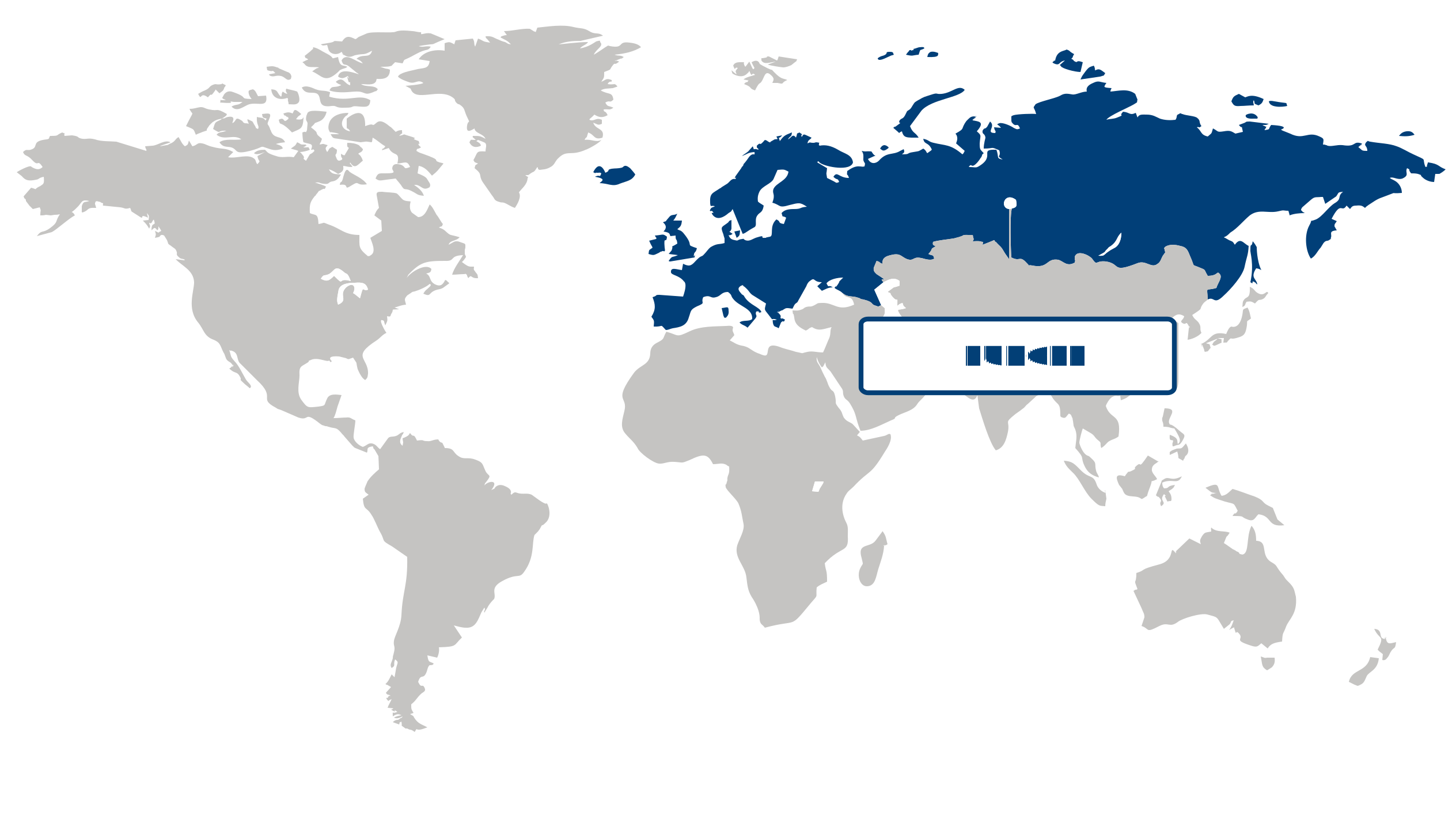
Largest Region
Europe
33.8% Market Share in 2025
Europe captured over 33.8% of the global specialty papers market in 2025, establishing itself as the largest regional player. The market growth is strongly supported by a robust commitment to sustainability and advanced manufacturing infrastructure. This region benefits from stringent environmental regulations imposed by the European Union, prompting manufacturers to innovate with eco-friendly materials and processes. Leading companies like Stora Enso and UPM have invested heavily in sustainable production technologies, boosting product appeal among environmentally conscious European consumers. Additionally, Europe's efficient supply chains and skilled workforce enhance operational excellence, driving competitive advantage. These factors, coupled with rising demand for specialty papers in packaging, labeling, and promotional materials, present significant growth opportunities. As Europe continues integrating circular economy principles and digital printing technologies, the specialty papers market is poised for sustained expansion and leadership.
Germany anchors the European specialty papers market, leveraging its advanced industrial ecosystem and stringent regulatory framework that prioritize sustainable sourcing and production. Key players such as Koehler Paper have launched innovative biodegradable specialty paper products in response to growing consumer demand for sustainable packaging options. Germany's commitment to reducing carbon footprints aligns with broader EU climate goals, encouraging investments in renewable energy and waste reduction within paper manufacturing. This dynamic fosters a competitive environment where innovation thrives, enhancing product quality and environmental credentials. As a result, Germany reinforces Europe’s position as a global leader, providing strategic momentum for the regional specialty papers market.
France plays a pivotal role in Europe’s specialty papers market through its focus on high-value applications and cultural trends favoring premium and environmentally responsible goods. French companies like Arjowiggins have emphasized specialty papers for luxury packaging and high-end printing, incorporating recycled fibers and sustainable coatings. France’s strong policy frameworks, like the French Environment and Energy Management Agency’s regulations, stimulate adoption of green technologies in paper production. Consumer preferences for artisanal, eco-conscious products in France further fuel demand for differentiated specialty papers. Through such targeted innovation and sustainability-driven growth, France contributes to expanding Europe’s specialty papers market, supporting regional competitiveness and resilience.
Asia Pacific Market Analysis:
Asia Pacific emerged as the fastest-growing region in the specialty papers market, registering rapid growth with a robust CAGR of 9.2%. This remarkable expansion is propelled primarily by aggressive industrialization and an escalating demand for eco-friendly packaging solutions. The region’s industrial landscape is evolving swiftly, driven by increasing manufacturing activities and higher consumer awareness of sustainability practices. For instance, the Asian Development Bank has highlighted the region’s commitment to greener industrial policies, which is accelerating the adoption of biodegradable and recycled papers. Concurrently, stringent regulations around plastic waste management across nations like India and South Korea are further amplifying the shift towards specialty papers. These factors, coupled with advancements in digital printing technology and extensive supply chain networks, position Asia Pacific as a pivotal hub for innovation and sustainable growth in the specialty papers market. Given the region’s dynamic demographic trends and rising disposable incomes, demand for premium, environmentally responsible paper products is expected to strengthen further.
Japan plays a crucial role in Asia Pacific’s specialty papers market as a leading innovator in high-performance and eco-conscious paper products. The country’s focus on reducing carbon footprints is evident through initiatives led by the Ministry of the Environment, which supports sustainable packaging development and encourages manufacturers such as Oji Holdings Corporation to invest in biodegradable specialty papers. Japanese consumers’ preference for quality and environmentally sound products drives companies to adopt advanced cellulose fiber technologies and digital print integration. These developments not only cater to domestic demand but also fuel exports of specialty papers throughout Asia. This strategic emphasis on R&D and regulatory backing strengthens Japan’s position as a trendsetter in the region’s evolving market landscape.
China serves as a powerful engine in Asia Pacific’s specialty papers market, fuelled by rapid industrialization and an intensifying requirement for sustainable packaging across its vast manufacturing and e-commerce sectors. The Chinese government’s 14th Five-Year Plan underscores environmental sustainability, promoting circular economy principles that encourage paper recycling and reduce waste. Corporations like Nine Dragons Paper Holdings leverage this policy environment to expand eco-friendly product lines, meeting soaring consumer and industrial demand. Additionally, rising digital commerce drives innovations in customized specialty papers for packaging and promotional applications. China’s expansive production capabilities and evolving regulatory context make it a linchpin in propelling Asia Pacific’s specialty papers market forward, complementing the region’s overall growth momentum.
North America Market Trends:
North America held a commanding share in the specialty papers market, driven by the region's advanced manufacturing capabilities and strong demand from end-user industries such as packaging, healthcare, and printing. The presence of stringent environmental regulations, as promoted by the U.S. Environmental Protection Agency (EPA), has accelerated the adoption of sustainable specialty papers with biodegradable and recycled content. Companies like Domtar Corporation and International Paper have announced expansions in eco-friendly product lines, reflecting shifting consumer preferences toward sustainability. Furthermore, North America's robust logistics infrastructure and technological integration in production processes enhance supply chain efficiency, reinforcing the market’s competitive intensity. With increasing digital transformation fostering innovation in paper treatments and functional attributes, coupled with ongoing investment in renewable fiber sources, the region remains well-positioned to capitalize on evolving industry demands and regulatory landscapes.
The U.S. stands as a pivotal market within North America’s specialty papers market, propelled by high consumer awareness around environmental impact and stringent regulatory frameworks from agencies such as the U.S. Food and Drug Administration (FDA) for food-grade specialty papers. This has stimulated innovation in packaging and labeling specialties, as evident in Avery Dennison’s recent introduction of sustainable adhesive materials tailored for specialty paper applications. Additionally, the country’s emphasis on advanced manufacturing technologies supports improved product consistency and customization. The synergy between regulatory oversight and innovation creates a competitive environment that encourages players to elevate product performance, aligning with broader regional opportunities for growth in sustainable and value-added specialty papers.
No card data available for this language/report.
Segment Leadership and Growth Trends
Pulp held the largest share in the specialty papers market in 2025, underscoring its foundational role in producing a wide range of specialty paper grades. This leadership is driven by pulp’s superior fiber quality and versatility, which facilitate enhanced paper strength and performance tailored to diverse applications. Stakeholders such as International Paper and Stora Enso emphasize sustainable pulp sourcing, aligning with increasing regulatory emphasis on responsible forestry management. The segment benefits from evolving customer preferences favoring eco-friendly and high-quality specialty papers, supported by supply chain innovations that optimize pulp processing efficiency. Both established producers and emerging players gain strategic advantages by investing in advanced pulping technologies and sustainable raw materials. Given ongoing sustainability mandates and advancements in pulp refinement, this segment is poised to sustain its relevance as a backbone of specialty paper manufacturing.
Analysis by Application
Packaging & labeling represented the largest share in the specialty papers market in 2025, fueled chiefly by surging demand for sustainable packaging solutions. The segment thrives on the increasing shift among brands and consumers toward biodegradable and recyclable materials, reinforced by stringent packaging regulations globally, including those from the U.S. Environmental Protection Agency. The prominence of this segment aligns with growing e-commerce and retail sectors that prioritize brand differentiation via innovative labeling technologies. Industry leaders like WestRock actively promote specialty papers that combine aesthetic appeal with recyclability, reflecting evolving market needs. This dynamic offers significant entry points for both incumbents and startups specializing in eco-conscious packaging. As environmental policies tighten and consumer consciousness rises, the packaging & labeling segment is set to maintain robust demand and innovation momentum.
Analysis by Type
Flexible packaging papers dominated the specialty papers market in 2025, propelled by expanding applications in flexible and sustainable packaging. The segment’s growth correlates with rising consumer demand for lightweight, durable, and recyclable packaging formats that reduce environmental footprints. Organizations such as Amcor highlight investments in bio-based and recyclable flexible papers, underscoring this trend. Additionally, technological advancements in barrier coatings and printability enhance product performance, aligning with manufacturers’ needs for multifunctional materials. The competitive landscape rewards agility and innovation, enabling both long-established players and new entrants to capture value in this evolving segment. Given ongoing shifts toward circular economy principles and packaging efficiency, flexible packaging papers are expected to remain integral to specialty papers market growth in the medium term.
| Report Segmentation | |||
| Segment | Sub-Segment | Largest Segment | Fastest Growing Segment |
|---|---|---|---|
| Raw Material | Pulp, Fillers & Binders, Additives, Others | ||
| Application | Building & Construction, Packaging & Labeling, Industrial, Printing & Writing, Others | ||
| Type | Décor Paper, Flexible Packaging Papers, Release Liner Paper, Printing Paper, Masking Tape, Others | ||
 Read our Research Approach
Competitive Landscape and Market Positioning
Key players in the specialty papers market include International Paper, Sappi, UPM-Kymmene, WestRock, Stora Enso, Nippon Paper Industries, Domtar Corporation, Mondi Group, Oji Holdings Corporation, and Resolute Forest Products. These companies hold commanding positions due to their extensive geographical reach, diversified product portfolios, and longstanding expertise in niche paper categories such as release liners, label papers, and food packaging substrates. Their established supply chains and commitment to sustainability enhance their reputation and influence, often setting industry standards. Several, like UPM-Kymmene and Stora Enso, leverage innovation in biodegradable specialty papers, while players such as International Paper and WestRock capitalize on scale and custom solutions to serve varied end markets.The competitive landscape reveals dynamic maneuvers aimed at solidifying innovation leadership and global presence. Investments in advanced manufacturing technologies and enhanced barrier coatings have helped these players differentiate their offerings. Collaboration with downstream industries has accelerated the development of value-added specialty papers tailored for evolving packaging and labeling demands. Strategic integrations and resource optimizations further enable these companies to streamline production and respond swiftly to customer needs. Such initiatives underpin their competitive edge, fostering resilience amid fluctuating raw material costs and intensified sustainability expectations.
Strategic / Actionable Recommendations for Regional Players
In North America, firms could benefit from forging alliances with technology providers focused on biodegradable and functional coatings, amplifying their ability to meet rising regulatory and consumer demands for eco-friendly packaging. Exploring partnerships with regional converters and brand owners can help customize niche products and secure downstream market footholds.
In the Asia Pacific, tapping into emerging sub-segments like flexible electronics and medical-grade specialty papers presents growth opportunities. Collaborative innovation ecosystems combining academic research and industrial expertise may accelerate product development, while leveraging digital tools could optimize supply chains in rapidly urbanizing countries.
European players should intensify efforts to integrate circular economy principles, collaborating with recycling stakeholders to develop recycled-content specialty papers. Fostering cross-border joint ventures can facilitate resource sharing and technology transfer, enhancing competitiveness amid stringent environmental mandates and evolving industry standards.
Why Choose Us
Specialized Expertise: Our team comprises industry experts with a deep understanding of your market segment. We bring specialized knowledge and experience that ensures our research and consulting services are tailored to your unique needs.
Customized Solutions: We understand that every client is different. That's why we offer customized research and consulting solutions designed specifically to address your challenges and capitalize on opportunities within your industry.
Proven Results: With a track record of successful projects and satisfied clients, we have demonstrated our ability to deliver tangible results. Our case studies and testimonials speak to our effectiveness in helping clients achieve their goals.
Cutting-Edge Methodologies: We leverage the latest methodologies and technologies to gather insights and drive informed decision-making. Our innovative approach ensures that you stay ahead of the curve and gain a competitive edge in your market.
Client-Centric Approach: Your satisfaction is our top priority. We prioritize open communication, responsiveness, and transparency to ensure that we not only meet but exceed your expectations at every stage of the engagement.
Continuous Innovation: We are committed to continuous improvement and staying at the forefront of our industry. Through ongoing learning, professional development, and investment in new technologies, we ensure that our services are always evolving to meet your evolving needs.
Value for Money: Our competitive pricing and flexible engagement models ensure that you get maximum value for your investment. We are committed to delivering high-quality results that help you achieve a strong return on your investment.
Select Licence Type

