



Sports Devices Market Size & Growth Forecast 2027–2036, By Segments (Component, Deployment, Device, Sport), Regional Demand Trends (North America, Asia Pacific, Europe), Key Country Insights (U.S., Japan, South Korea, Germany, France, Italy), and Competitive Landscape
Market Size and Growth Outlook
Sports Devices Market size was more than USD 5.1 billion in 2026 and is set to grow at a 12.92% CAGR between 2027 and 2036, surpassing USD 17.19 billion by 2036. The industry revenue for 2027 is calculated at USD 5.65 billion.
Base Year Value (2026)
USD 5.1 billion
CAGR (2027-2036)
12.92%
Forecast Year Value (2036)
USD 17.19 billion

Historical Data Period
2022-2026

Largest Region
Europe

Forecast Period
2027-2036
Sports Devices Market Intelligence Snapshot:
-
Regional Market Dynamics:
- Europe accounted for a 31.32% share in 2026, supported by strong sports participation, mature retail networks, and consistent spending on performance tracking and connected training technologies.
- Asia Pacific is forecast to expand at a 15.01% CAGR as fitness awareness rises, organized sports participation grows, and digital commerce increases access to connected sports devices.
-
Segment Momentum:
- Hardware held a 59.17% market share in 2026 because sensors, wearables, and tracking devices provide the essential infrastructure for capturing and transmitting performance data before software can deliver analytics.
- Cloud is the fastest-growing deployment model because it enables flexible data access, easier software updates, and scalable management of performance information across multiple teams, devices, and training locations.
-
Market Expansion Drivers:
- Increasing adoption of wearable fitness devices enabling real-time athlete performance tracking.
- Integration of AI analytics and AR technologies enhancing immersive sports training systems.
- Growth of data-driven coaching platforms and esports convergence accelerating digital sports adoption.
-
Leading Market Participants:
Leading companies in the sports devices market include Apple Inc. (United States), Garmin Ltd. (United States), Samsung Electronics Co., Ltd. (South Korea), Alphabet Inc. (Google) (United States), Sony Group Corporation (Japan), Xiaomi Corporation (China), Huawei Technologies Co., Ltd. (China), Under Armour, Inc. (United States), Catapult Sports Pty Ltd (Australia).
Global Market Forecast Snapshot:
-
Market Outlook:
- 2026 Market Size: USD 5.1 billion
- 2027 Estimated Market Size: USD 5.65 billion.
- Projected Market Size: USD 17.19 billion by 2036
- Growth Forecasts: 12.92% CAGR (2027-2036)
-
Regional and Segment Outlook:
- Leading Regional Market: Europe
- High-Growth Regional Hub: Asia Pacific
- Core Revenue Segment: Hardware (Component) | On-premise (Deployment) | Digital Signage (Device) | Football (Sport)
- Emerging Opportunity Segment: Software (Component) | Cloud (Deployment) | Wearables (Device) | Cricket (Sport)
Market Growth Drivers and Industry Trends
Increasing adoption of wearable fitness devices enabling real-time athlete performance tracking
The increasing use of connected fitness technologies will drive the sports devices market as athletes, coaches, and fitness professionals increasingly rely on wearable devices to monitor performance during training and competition. Smartwatches, fitness trackers, heart-rate monitors, and other connected devices can capture information related to movement, exertion, recovery, and physical activity, providing users with immediate insights into training conditions. Real-time access to performance information allows athletes to adjust workloads, monitor progress, and identify changes in physical performance more efficiently than conventional assessment methods. The growing emphasis on personalized training and measurable performance outcomes is encouraging sports organizations and individual users to incorporate wearable technologies into routine fitness and athletic activities.
Integration of AI analytics and AR technologies enhancing immersive sports training systems
Integration of artificial intelligence analytics and augmented reality technologies is strengthening the sports devices market by making training environments more interactive, personalized, and data-driven. AI-enabled systems can process performance information to identify movement patterns, evaluate training outcomes, and provide insights that help athletes refine techniques, while AR technologies can overlay visual guidance and simulated scenarios during practice sessions. Combining these capabilities with connected sports equipment enables users to receive more immediate and context-specific feedback without relying exclusively on conventional coaching methods. The increasing use of immersive training environments across professional sports, fitness facilities, and individual athletic programs is expanding demand for technologically advanced sports devices.
Growth of data-driven coaching platforms and esports convergence accelerating digital sports adoption
The expansion of data-driven coaching platforms will propel the sports devices market as coaches and athletes increasingly use digital performance information to support training decisions and optimize individual development. Connected devices can generate detailed activity and performance inputs that can be incorporated into coaching platforms for monitoring progress, comparing training sessions, and developing personalized programs. At the same time, the convergence of traditional sports technologies with esports is broadening the role of digital tools across competitive environments, where performance analytics, interactive equipment, and connected training systems are increasingly relevant. This convergence is encouraging greater adoption of sports technology among users seeking more measurable and digitally integrated approaches to athletic performance.
| Growth Driver Assessment Framework | |||||
| Growth Driver | Impact On CAGR | Regulatory Influence | Geographic Relevance | Adoption Rate | Impact Timeline |
|---|---|---|---|---|---|
| Increasing adoption of wearable fitness devices enabling real-time athlete performance tracking | 2.00% | Moderate | Europe, North America | High | Near Term |
| Integration of AI analytics and AR technologies enhancing immersive sports training systems | 1.70% | Moderate | Europe, Asia Pacific | High | Mid Term |
| Growth of data-driven coaching platforms and esports convergence accelerating digital sports adoption | 1.40% | Moderate | Asia Pacific, North America | Emerging | Mid Term |
Unlock insights tailored to your business with our bespoke market research solutions - Click to get your customized report now!
Regional Demand Dynamics
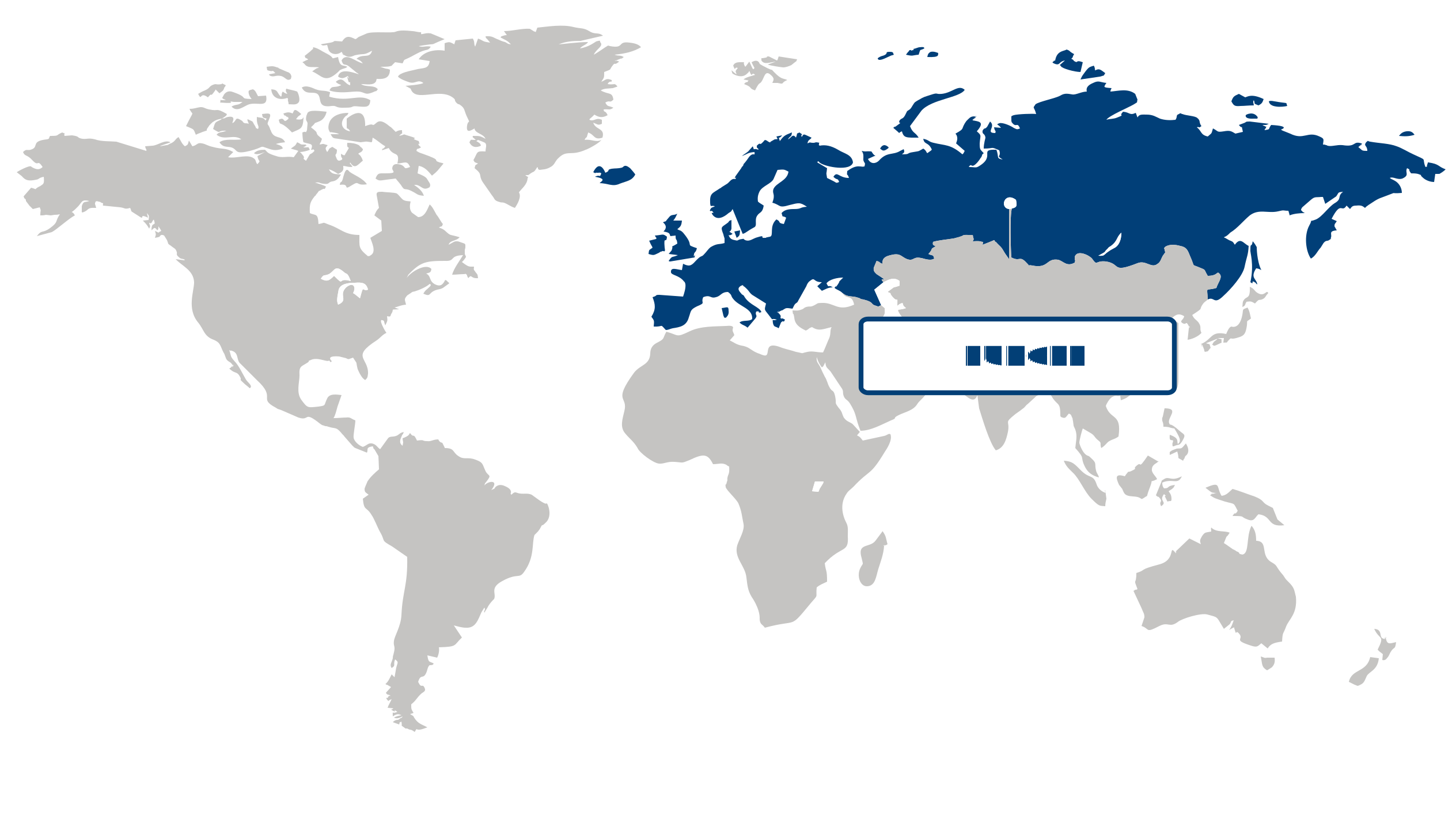
Largest Region
Europe
31.32% Market Share in 2026
Europe (Largest Region) vs Asia Pacific (Fastest-Growing Region)
Europe held the largest share of the sports devices market at 31.32% in 2026, supported by strong participation in organized sports, widespread fitness awareness, and established demand for connected equipment that enables performance tracking and health monitoring. Consumers across the region increasingly use wearable and sensor-enabled devices to measure activity, training intensity, recovery, and other performance indicators. Mature sports infrastructure, well-developed healthcare and fitness ecosystems, and growing interest in personalized wellness are reinforcing adoption. Technological improvements in wearable sensors, connectivity, and mobile applications are also making sports devices more useful for both professional athletes and recreational users, while demand for data-driven training is expanding their role beyond conventional sporting equipment.
Asia Pacific is the fastest-growing regional market, driven by rising health consciousness, expanding participation in fitness and recreational sports, and rapid adoption of connected consumer technologies. Increasing urbanization and disposable incomes are encouraging consumers to spend more on fitness-oriented products that support activity tracking and personalized exercise routines. The region's strong electronics manufacturing ecosystem also promotes accessibility to smart wearables and connected sports devices, while expanding digital platforms make these products easier to purchase and integrate with mobile health applications. Growing interest in preventive wellness and technology-assisted training is further broadening demand among younger and digitally engaged consumers.
Key Country Insights
The U.S. sports devices market increasingly incorporates connected sensors and performance analytics for athletes, fitness enthusiasts, and sports organizations. Buyers prioritize devices that provide measurable training insights and integration with digital fitness ecosystems.
Japan focuses on sports devices that combine compact engineering with digital functionality for fitness and recreational activities. Japanese consumers increasingly value connected products that deliver personalized performance tracking and convenient daily use.
South Korea encourages adoption of sports devices integrated with mobile applications and connected fitness platforms. Manufacturers continue introducing technology-rich equipment that supports interactive training experiences and data-driven athletic improvement.
Germany emphasizes sports devices engineered for reliability, accuracy, and long-term performance across professional and recreational sports. German users increasingly adopt connected equipment that supports structured training and measurable athletic development.
France supports sports devices that encourage recreational participation, outdoor activities, and structured fitness programs. French consumers increasingly prefer connected products that combine ease of use with reliable performance tracking capabilities.
Italy's sports devices market reflects growing demand for equipment supporting both competitive sports and everyday fitness activities. Italian consumers increasingly select connected devices offering durability, ergonomic design, and practical performance measurement features.
Segment Leadership and Growth Trends
Component Segment Analysis: Hardware (Largest Segment) vs Software (Fastest-Growing Segment)
Hardware held the largest position in the sports devices market, representing a 59.17% share in 2026, driven by the foundational role of physical devices in sports performance monitoring, fitness tracking, and athlete assessment. Wearable and connected equipment provides the sensing and measurement capabilities required to capture performance-related information, making hardware an essential component of technology-enabled sports activities. Increasing emphasis on data-driven training and real-time performance monitoring continues to support demand for sophisticated sports hardware.
Software is expected to be the fastest-growing component as sports organizations, athletes, and fitness users increasingly rely on digital platforms to interpret and utilize performance data. Advances in analytics, connected-device integration, and personalized performance insights are expanding the functionality of sports technology beyond physical measurement. Software solutions can support data visualization, performance evaluation, training optimization, and user engagement, strengthening their importance within increasingly connected sports ecosystems.
Deployment Segment Analysis: On-premise (Largest Segment) vs Cloud (Fastest-Growing Segment)
On-premise deployment accounted for the largest share of 59.17% in 2026, reflecting the continued preference among organizations for maintaining direct control over sports technology infrastructure and associated data. This deployment approach can provide greater control over system configuration, data management, and integration with existing organizational environments. Established infrastructure and familiarity with internally managed technology platforms further contribute to the segment's strong position.
Cloud deployment is expected to witness the fastest growth as sports organizations increasingly seek scalable and accessible technology environments that can support data-intensive applications. Cloud-based platforms enable users to access sports information and analytical capabilities across connected devices while reducing dependence on extensive locally managed infrastructure. The growing adoption of remote collaboration, centralized data management, and flexible digital services is strengthening the appeal of cloud deployment across the sports technology landscape.
| Report Segmentation | |||
| Segment | Sub-Segment | Largest Segment | Fastest Growing Segment |
|---|---|---|---|
| Component | Hardware, Software | Hardware | Software |
| Deployment | On-premise, Cloud | On-premise | Cloud |
| Device | Wearables, Digital Signage, Camera | Digital Signage | Wearables |
| Sport | Football, Cricket, Baseball, Basketball, Rugby, Others | Football | Cricket |
 Read our Research Approach
Competitive Landscape and Market Positioning
Major players in the sports devices market:
1. Apple Inc. (United States)
2. Garmin Ltd. (United States)
3. Samsung Electronics Co. Ltd. (South Korea)
4. Alphabet Inc. (Google) (United States)
5. Sony Group Corporation (Japan)
6. Xiaomi Corporation (China)
7. Huawei Technologies Co. Ltd. (China)
8. Under Armour Inc. (United States)
9. Catapult Sports Pty Ltd (Australia)
The sports devices market is growing with increasing integration of performance tracking and connected fitness technologies. Innovation in wearable and training equipment is enhancing athletic performance insights. The sports devices market is strongly influenced by health-conscious consumer behavior.
Industry Development/News
| Company Name | Date | Key Development |
|---|---|---|
| Sportradar Group AG | Mar-25 | Sportradar Group AG acquired IMG ARENA and its global sports betting rights portfolio, expanding its content and data distribution capabilities across major sports including tennis, soccer, and basketball. The acquisition strengthens its integrated sports data ecosystem and enhances its ability to deliver real-time sports analytics and content solutions to partners and platforms. |
| Catapult | Jan-25 | Catapult increased R&D investment in wearable sports technology, focusing on GPS-based tracking and video analytics systems. The initiative supports rising demand from women’s professional sports and broader adoption of athlete performance monitoring tools, strengthening its positioning in elite sports analytics and performance optimization solutions. |
| Catapult | Mar-25 | Catapult launched the Vector 8 athlete performance monitoring platform, enabling real-time decision-making through live performance analytics. The system enhances wearable data capture and team performance evaluation, reinforcing Catapult’s role in advanced sports performance monitoring and expanding its integrated analytics offering for professional teams and sports organizations. |
| Sky | Apr-24 | Sky Sports+ expanded its live sports coverage offering through a new streaming service with enhanced viewing features, launching via app and linear channels. The rollout increases live event accessibility for subscribers and strengthens Sky’s position in digital sports broadcasting and multi-platform sports content distribution. |
| DAZN | Apr-24 | DAZN expanded its distribution by launching its streaming app across Sky Glass, Sky Stream, and Sky Q in the UK, significantly broadening its reach within connected TV ecosystems. The expansion enhances access to its sports content portfolio, including boxing, MMA, and women’s football pay-per-view events, strengthening platform penetration and viewer accessibility. |
| Samsung | Feb-26 | Samsung launched the Galaxy Watch7 and Galaxy Watch Ultra featuring on-device neural networks for real-time workout classification. The devices enhance fitness tracking accuracy and contextual activity recognition, strengthening Samsung’s position in advanced wearable sports devices and expanding AI-driven health and performance monitoring capabilities. |
| Garmin | Jan-26 | Garmin introduced Xero L60i heads-up rangefinder glasses, extending its product portfolio beyond wrist-based wearables into optical performance devices. The launch broadens Garmin’s presence in sports technology by integrating heads-up visualization with precision tracking capabilities for athletic and training applications. |
| Sony | Oct-25 | Sony acquired STATSports to integrate elite GPS athlete tracking and performance analytics into its sports technology ecosystem. The acquisition strengthens Sony’s capabilities in sports data analytics and wearable performance monitoring, enhancing its position in professional-grade athlete tracking and digital sports intelligence solutions. |
| Catapult | Oct-25 | Catapult raised A$130 million in funding following its acquisition of the Perch strength analytics platform, supporting expansion of its product portfolio. The capital is directed toward advancing athlete performance technologies and scaling integrated analytics solutions across elite sports organizations. |
| La Liga | Apr-25 | La Liga advanced its AI-driven sports analytics capabilities, focusing on automated match analysis and real-time video content generation for digital platforms. The initiative supports enhanced performance insights and content delivery, strengthening its technological infrastructure for global sports media and fan engagement applications. |
Why Choose Us
Specialized Expertise: Our team comprises industry experts with a deep understanding of your market segment. We bring specialized knowledge and experience that ensures our research and consulting services are tailored to your unique needs.
Customized Solutions: We understand that every client is different. That's why we offer customized research and consulting solutions designed specifically to address your challenges and capitalize on opportunities within your industry.
Proven Results: With a track record of successful projects and satisfied clients, we have demonstrated our ability to deliver tangible results. Our case studies and testimonials speak to our effectiveness in helping clients achieve their goals.
Cutting-Edge Methodologies: We leverage the latest methodologies and technologies to gather insights and drive informed decision-making. Our innovative approach ensures that you stay ahead of the curve and gain a competitive edge in your market.
Client-Centric Approach: Your satisfaction is our top priority. We prioritize open communication, responsiveness, and transparency to ensure that we not only meet but exceed your expectations at every stage of the engagement.
Continuous Innovation: We are committed to continuous improvement and staying at the forefront of our industry. Through ongoing learning, professional development, and investment in new technologies, we ensure that our services are always evolving to meet your evolving needs.
Value for Money: Our competitive pricing and flexible engagement models ensure that you get maximum value for your investment. We are committed to delivering high-quality results that help you achieve a strong return on your investment.
Select Licence Type

