



Structural Wood Screws Market Size & Growth Forecast 2027–2036, By Segments (Type, Application), Regional Demand Trends (North America, Asia Pacific, Europe), Key Country Insights (U.S., Japan, South Korea, Germany, France, Italy), and Competitive Landscape
Market Size and Growth Outlook
Structural Wood Screws Market size stood at USD 5.1 billion in 2026 and is predicted to grow at a 5.23% CAGR from 2027 to 2036, surpassing USD 8.49 billion by 2036. The industry revenue for 2027 is calculated at USD 5.32 billion.
Base Year Value (2026)
USD 5.1 billion
CAGR (2027-2036)
5.23%
Forecast Year Value (2036)
USD 8.49 billion

Historical Data Period
2022-2026

Largest Region
Europe

Forecast Period
2027-2036
Structural Wood Screws Market Intelligence Snapshot:
-
Regional Market Dynamics:
- Europe captured a 44.52% market share in 2026, supported by established timber construction, mature renovation activity, and strong demand for certified fastening systems in engineered wood applications.
- Asia Pacific is projected to grow at a 5.88% CAGR, driven by expanding construction activity, wider adoption of modular building systems, and increasing demand for efficient fastening solutions in wood-based structures.
-
Segment Momentum:
- Stainless steel held a 75.65% share in 2026 because buyers value its corrosion resistance, long service life, and dependable performance in demanding indoor and outdoor construction environments.
- Furniture & Crafts is the fastest-growing application segment, supported by increasing use in custom furniture and woodworking projects that require strong, durable, and clean fastening solutions.
-
Market Expansion Drivers:
- Strict building codes and safety standards increasing demand for compliant fastening systems.
- Rapid construction and housing infrastructure expansion boosting structural screw adoption.
- Growing adoption of prefabricated timber and modular construction systems in modern buildings.
-
Leading Market Participants:
Top players in the structural wood screws market include SPAX International GmbH & Co. KG (Germany), SFS Group AG (Switzerland), Simpson Strong-Tie Company Inc. (United States), Fischer Group (Germany), Würth Group (Germany), Rothoblaas Srl (Italy), GRK Fasteners (United States), FastenMaster (United States), MITEK Inc. (United States), Eurotec GmbH (Germany).
Global Market Forecast Snapshot:
-
Market Outlook:
- 2026 Market Size: USD 5.1 billion
- 2027 Estimated Market Size: USD 5.32 billion.
- Projected Market Size: USD 8.49 billion by 2036
- Growth Forecasts: 5.23% CAGR (2027-2036)
-
Regional and Segment Outlook:
- Leading Regional Market: Europe
- High-Growth Regional Hub: Asia Pacific
- Core Revenue Segment: Stainless Steel (Type) | Construction (Application)
- Emerging Opportunity Segment: Carbon Steel (Type) | Furniture & Crafts (Application)
Market Growth Drivers and Industry Trends
Strict building codes and safety standards increasing demand for compliant fastening systems
Stringent construction requirements are increasing the importance of fastening products that provide reliable structural performance and meet established safety specifications. The structural wood screws market is supported by builders and contractors requiring fastening systems capable of securing timber assemblies under demanding load and environmental conditions. Compliance requirements encourage the use of purpose-designed structural screws with verified mechanical properties, appropriate corrosion resistance, and compatibility with specific wood construction applications. As building authorities place greater emphasis on structural integrity and material performance, fastening selection is becoming an increasingly important component of compliant timber construction.
Rapid construction and housing infrastructure expansion boosting structural screw adoption
Expansion of residential construction and broader infrastructure development is increasing the volume of timber framing and structural wood applications. The structural wood screws market will benefit as builders require efficient fastening solutions for connecting beams, joists, panels, framing components, and other load-bearing wood elements. Structural screws can simplify installation compared with traditional fastening methods while providing strong connections for modern timber assemblies. Increasing construction activity, renovation requirements, and demand for efficient building methods are encouraging contractors to adopt fastening products designed specifically for structural wood applications.
Growing adoption of prefabricated timber and modular construction systems in modern buildings
The shift toward off-site construction is increasing the use of prefabricated timber components and modular building systems that require dependable and efficient joining methods. In this environment, the structural wood screws market is gaining from the need for fastening solutions that can support rapid assembly while maintaining structural reliability. Prefabricated components are manufactured under controlled conditions and then transported for on-site installation, placing greater emphasis on standardized connections and installation efficiency. Structural screws are well suited to these systems because they can facilitate repeatable connections across timber frames, panels, and modular assemblies while accommodating the increasing use of engineered wood components.
| Growth Driver Assessment Framework | |||||
| Growth Driver | Impact On CAGR | Regulatory Influence | Geographic Relevance | Adoption Rate | Impact Timeline |
|---|---|---|---|---|---|
| Strict building codes and safety standards increasing demand for compliant fastening systems | 2.30% | High | Europe, North America | High | Near Term |
| Rapid construction and housing infrastructure expansion boosting structural screw adoption | 2.00% | Moderate | Asia Pacific, Europe | High | Mid Term |
| Growing adoption of prefabricated timber and modular construction systems in modern buildings | 1.60% | Moderate | Europe, North America, Asia Pacific | Emerging | Mid Term |
Unlock insights tailored to your business with our bespoke market research solutions - Click to get your customized report now!
Regional Demand Dynamics
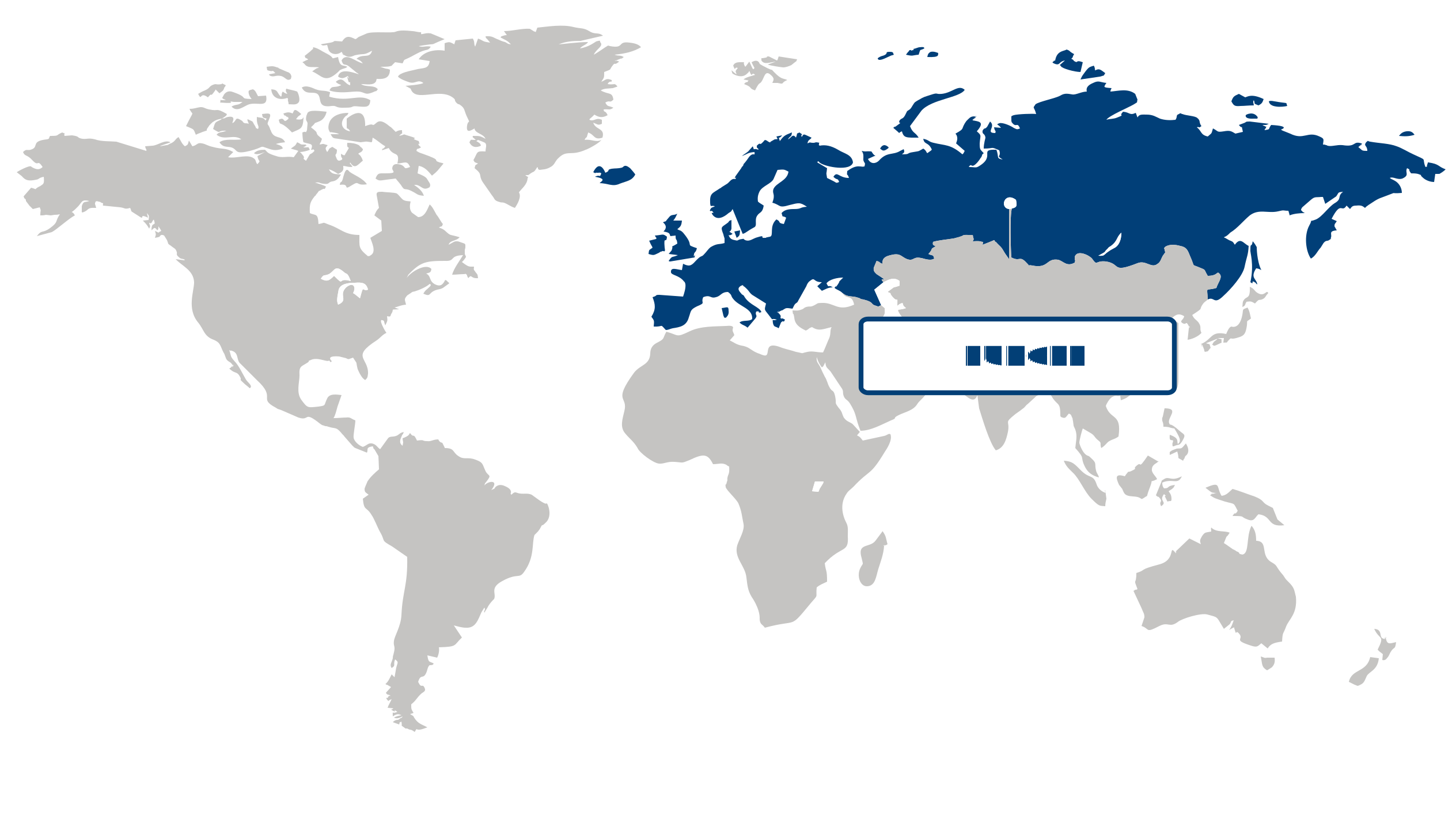
Largest Region
Europe
44.52% Market Share in 2026
Europe (Largest Region) vs Asia Pacific (Fastest-Growing Region)
Europe dominated the structural wood screws market, accounting for 44.52% share in 2026. The region’s strong position is closely linked to the established use of timber construction, mature woodworking industries, and continued emphasis on durable and efficient building systems. Growing interest in sustainable construction also supports wood-based structural applications, increasing the need for reliable fastening solutions. Well-developed construction practices and technical familiarity with engineered wood products further encourage the use of specialized screws designed to provide secure connections and support increasingly sophisticated timber structures.
Asia Pacific is the fastest-growing region for the structural wood screws market, supported by expanding construction activity, urban development, and increasing adoption of modern wood-based building techniques. Rising interest in sustainable construction materials is creating additional opportunities for timber applications, while improvements in construction technology are encouraging more standardized and engineered approaches to wood assembly. The development of residential and commercial infrastructure, combined with growing awareness of efficient fastening systems, is strengthening demand for structural screws across emerging and established markets in the region.
Key Country Insights
The U.S. structural wood screws market benefits from expanding engineered wood construction and residential renovation activity. Builders increasingly select high-strength fastening systems that simplify installation while supporting modern timber framing and prefabricated building methods.
Japan utilizes structural wood screws to strengthen timber buildings designed for seismic resilience. Construction professionals increasingly adopt advanced fastening systems that improve structural integrity while supporting efficient installation in residential and commercial projects.
South Korea incorporates structural wood screws into modern wood construction and interior building applications. Demand is supported by interest in efficient fastening technologies that reduce installation time while maintaining reliable structural performance.
Germany prioritizes structural wood screws that meet demanding construction standards for timber engineering and modular building projects. Manufacturers focus on high-performance fastening solutions that improve structural reliability and installation efficiency across wood applications.
France encourages structural wood screw adoption alongside growing use of sustainable timber construction techniques. Builders prioritize fastening solutions that improve assembly efficiency while supporting architectural flexibility and long-term structural durability.
Italy's structural wood screws market is influenced by renovation projects and expanding timber construction practices. Contractors increasingly value fastening systems that deliver secure structural connections while improving installation productivity across residential and commercial developments.
Segment Leadership and Growth Trends
Type Segment Analysis: Stainless Steel (Largest Segment) vs Carbon Steel (Fastest-Growing Segment)
Stainless steel screws represented the largest share of the structural wood screws market, accounting for 75.65% in 2026. Their strong corrosion resistance, durability, and suitability for demanding environmental conditions make them well suited to structural wood applications where long-term fastening performance is important. Stainless steel also offers reliable performance in humid and outdoor environments, reducing concerns related to rust and premature deterioration. Increasing attention to durable construction materials and the need for dependable structural connections continue to reinforce their market position.
Carbon steel is anticipated to be the fastest-growing type as users seek structurally capable fastening solutions that balance strength, availability, and application-specific performance. Carbon steel screws can provide robust mechanical fastening for a broad range of wood construction tasks, making them suitable for applications where corrosion exposure is more controlled. Expanding construction activity, demand for efficient fastening systems, and continued development of protective finishes that improve durability are supporting greater adoption of carbon steel structural wood screws.
Application Segment Analysis: Construction (Largest Segment) vs Furniture & Crafts (Fastest-Growing Segment)
The construction segment dominated the structural wood screws market with a 67.3% share in 2026. Structural wood screws are extensively used to create secure connections in timber framing, decking, roofing structures, and other wood-based construction applications where fastening strength and reliability are essential. Growing use of engineered wood and timber construction, along with increasing demand for efficient installation methods, is supporting consumption. The need for durable connections that can withstand structural loads further strengthens the importance of this application.
Furniture and crafts are expected to be the fastest-growing application segment as manufacturers, artisans, and consumers increasingly use specialized wood screws for assembly, repair, customization, and decorative woodworking. The growing popularity of customized furniture and do-it-yourself projects is expanding demand for reliable fastening solutions that are easy to install while maintaining a clean finish. Greater interest in woodworking as both a commercial and creative activity is creating additional opportunities for structural wood screws in this segment.
| Report Segmentation | |||
| Segment | Sub-Segment | Largest Segment | Fastest Growing Segment |
|---|---|---|---|
| Type | Carbon Steel, Stainless Steel | Stainless Steel | Carbon Steel |
| Application | Construction, Furniture & Crafts, Others | Construction | Furniture & Crafts |
 Read our Research Approach
Competitive Landscape and Market Positioning
Major players in the structural wood screws market:
1. SPAX International GmbH & Co. KG (Germany)
2. SFS Group AG (Switzerland)
3. Simpson Strong-Tie Company Inc. (United States)
4. Fischer Group (Germany)
5. Würth Group (Germany)
6. Rothoblaas Srl (Italy)
7. GRK Fasteners (United States)
8. FastenMaster (United States)
9. MITEK Inc. (United States)
10. Eurotec GmbH (Germany)
The structural wood screws market is witnessing advancements in fastening technologies designed to improve load-bearing performance, corrosion resistance, and installation efficiency. Manufacturers are expanding product portfolios with specialized screw designs tailored for modern construction and engineered wood applications. Greater emphasis on durability, ease of installation, and compliance with evolving building standards is supporting competitive differentiation across the market.
Industry Development/News
| Company Name | Date | Key Development |
|---|---|---|
| Simpson Strong-Tie | Sep-24 | Simpson Strong-Tie expanded its structural fastener lineup by introducing the Strong-Drive SWD Double-Threaded screw. Engineered with unique double-thread geometries and a smooth mid-shank, the design allows the fastener to replace traditional interior and exterior post-cap connectors, accelerating installation speeds while reducing labor costs. |
| FastenMaster | Jun-23 | FastenMaster celebrated 25 years in the manufacturing sector, highlighting its specialized structural wood screw portfolio designed for professional contractors. The product line features advanced fastening systems, including the Cortex Hidden Fastening System with integrated wood plugs and the self-tightening ThruLOK nut assembly. |
| Starborn Industries | Jan-23 | Starborn Industries, recognized as a premier global importer of specialized drywall fasteners, officially introduced its own dedicated structural fastener product line. The product expansion targets the commercial deck construction and exterior wood fabrication markets to capture growing demand for heavy-duty timber connectors. |
Why Choose Us
Specialized Expertise: Our team comprises industry experts with a deep understanding of your market segment. We bring specialized knowledge and experience that ensures our research and consulting services are tailored to your unique needs.
Customized Solutions: We understand that every client is different. That's why we offer customized research and consulting solutions designed specifically to address your challenges and capitalize on opportunities within your industry.
Proven Results: With a track record of successful projects and satisfied clients, we have demonstrated our ability to deliver tangible results. Our case studies and testimonials speak to our effectiveness in helping clients achieve their goals.
Cutting-Edge Methodologies: We leverage the latest methodologies and technologies to gather insights and drive informed decision-making. Our innovative approach ensures that you stay ahead of the curve and gain a competitive edge in your market.
Client-Centric Approach: Your satisfaction is our top priority. We prioritize open communication, responsiveness, and transparency to ensure that we not only meet but exceed your expectations at every stage of the engagement.
Continuous Innovation: We are committed to continuous improvement and staying at the forefront of our industry. Through ongoing learning, professional development, and investment in new technologies, we ensure that our services are always evolving to meet your evolving needs.
Value for Money: Our competitive pricing and flexible engagement models ensure that you get maximum value for your investment. We are committed to delivering high-quality results that help you achieve a strong return on your investment.
Select Licence Type

