



Sun Lounger Market Size & Growth Forecast 2027–2036, By Segments (Material, Category, Armrest, End-User, Distribution Channel, Lounger Width), Regional Demand Trends (North America, Asia Pacific, Europe), Key Country Insights (U.S., Japan, South Korea, Germany, France, Italy), and Competitive Landscape
Market Size and Growth Outlook
Sun Lounger Market size was more than USD 3.42 Billion in 2026 and is set to grow at 5.51% CAGR between 2027 and 2036, reaching USD 5.85 Billion by 2036. The industry revenue for 2027 is estimated at USD 3.58 Billion.
Base Year Value (2026)
USD 3.42 Billion
CAGR (2027-2036)
5.51%
Forecast Year Value (2036)
USD 5.85 Billion

Historical Data Period
2022-2026

Largest Region
Europe

Forecast Period
2027-2036
Sun Lounger Market Intelligence Snapshot:
-
Regional Market Dynamics:
- Europe leads due to its established outdoor leisure culture, strong tourism activity, and extensive resort and hospitality infrastructure supporting premium outdoor furniture demand.
- Asia Pacific is the fastest-growing region, supported by expanding tourism infrastructure, rising incomes, urbanization, and growing hotel, resort, and wellness development.
-
Segment Momentum:
- The wood segment accounted for 43.2% of the market in 2026 due to its premium appearance, durability, natural aesthetic, and widespread use across hotels, resorts, residential patios, and luxury outdoor spaces.
- The portable category is the fastest-growing as consumers increasingly prefer lightweight, foldable sun loungers for beaches, camping, gardens, and other outdoor leisure activities that require easy transport.
-
Market Expansion Drivers:
- Rising tourism and hospitality expansion driving outdoor leisure furniture demand
- Growing wellness and lifestyle trends increasing outdoor recreational product adoption
- Urban residential development boosting demand for balcony and terrace leisure furniture
-
Leading Market Participants:
Major players in the sun lounger market include Brown Jordan International (United States), Dedon GmbH (Germany), Fermob S.A. (France), Kettler GmbH (Germany), Gloster Furniture GmbH (Germany), Tropitone Furniture Co., Inc. (United States), Royal Botania (Belgium), Cane-line A/S (Denmark), EMU Group S.p.A. (Italy), Woodard Furniture (United States)
Global Market Forecast Snapshot:
-
Market Outlook:
- 2026 Market Size: USD 3.42 Billion
- 2027 Estimated Market Size: USD 3.58 Billion
- Projected Market Size: USD 5.85 Billion by 2036
- Growth Forecasts: 5.51% CAGR (2027-2036)
-
Regional and Segment Outlook:
- Leading Regional Market: Europe
- High-Growth Regional Hub: Asia Pacific
- Core Revenue Segment: Wood (Material) | Fixed (Category) | With Armrest (Armrest) | Commercial (End-User) | Offline (Distribution Channel) | 50 -80 Cm (Lounger Width)
- Emerging Opportunity Segment: Resin (Material) | Portable (Category) | With Armrest (Armrest) | Commercial (End-User) | Online (Distribution Channel) | 50 -80 Cm (Lounger Width)
Market Growth Drivers and Industry Trends
Rising tourism and hospitality expansion driving outdoor leisure furniture demand
The continued growth of tourism and hospitality infrastructure is creating strong demand for premium outdoor furnishings, contributing to the sun lounger market growth. Hotels, resorts, beach destinations, wellness retreats, and recreational facilities increasingly invest in comfortable and durable lounge furniture to enhance guest experiences and elevate outdoor relaxation spaces. Product selection is also influenced by design aesthetics, weather resistance, and ease of maintenance, encouraging wider adoption across commercial hospitality environments.
Growing wellness and lifestyle trends increasing outdoor recreational product adoption
Rising consumer interest in wellness, relaxation, and outdoor living will drive the sun lounger market growth as individuals increasingly create leisure-oriented spaces for recreation and personal well-being. Outdoor furniture has become an important element of home gardens, poolside areas, and recreational facilities where consumers seek comfortable environments for relaxation and social activities. Manufacturers are responding with ergonomic designs, adjustable features, and premium materials that combine comfort with long-term durability.
Urban residential development boosting demand for balcony and terrace leisure furniture
Expanding urban residential construction is strengthening the sun lounger market by increasing demand for space-efficient outdoor furniture designed for balconies, terraces, rooftops, and compact recreational areas. Homeowners and apartment residents are increasingly utilizing these spaces as functional extensions of indoor living environments, encouraging investment in stylish and versatile leisure furnishings. Foldable designs, lightweight materials, and contemporary aesthetics further improve product suitability for modern urban residences with limited outdoor space.
| Growth Driver Assessment Framework | |||||
| Growth Driver | Impact On CAGR | Regulatory Influence | Geographic Relevance | Adoption Rate | Impact Timeline |
|---|---|---|---|---|---|
| Rising tourism and hospitality expansion driving outdoor leisure furniture demand | 2% | Low | Europe, Asia Pacific | High | Near Term |
| Growing wellness and lifestyle trends increasing outdoor recreational product adoption | 1.7% | Low | North America, Europe | High | Mid Term |
| Urban residential development boosting demand for balcony and terrace leisure furniture | 1.5% | Low | Asia Pacific, Latin America | Medium | Mid Term |
Unlock insights tailored to your business with our bespoke market research solutions - Click to get your customized report now!
Regional Demand Dynamics
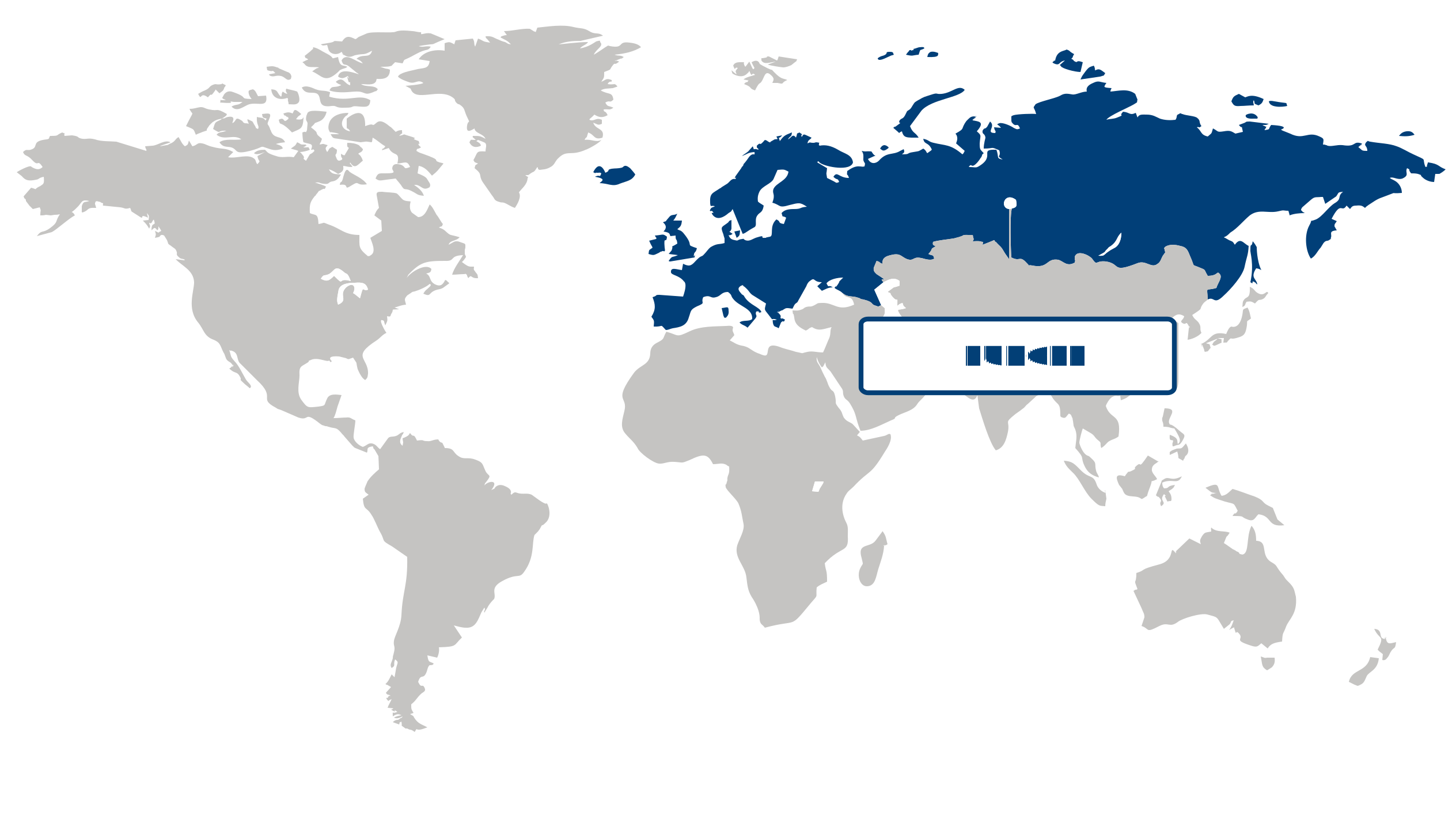
Largest Region
Europe
Largest Market Share in 2026
Europe (Largest Region) vs Asia Pacific (Fastest-Growing Region)
Europe held the largest position in the sun lounger market in 2026, supported by a well-established outdoor leisure culture, strong tourism activity, and widespread demand for premium residential and hospitality furnishings. The region’s extensive network of resorts, hotels, spas, and recreational facilities creates a consistent requirement for durable and aesthetically appealing outdoor seating products. Favorable consumer spending patterns and growing interest in upgrading gardens, terraces, balconies, and poolside spaces are also supporting product demand. In addition, manufacturers are increasingly emphasizing weather-resistant materials, ergonomic designs, and visually refined products to align with European preferences for outdoor comfort and long-lasting furniture.
Asia Pacific is projected to register the fastest growth in the sun lounger market, driven by expanding tourism infrastructure, rising disposable incomes, and increasing development of hotels, resorts, and recreational destinations. Rapid urbanization is encouraging consumers to invest in improved outdoor living spaces, while the growth of hospitality and wellness facilities is creating additional commercial demand for sun loungers. Growing interest in leisure-oriented lifestyles and the expansion of coastal tourism are further broadening the application base. Moreover, improving retail infrastructure and the increasing availability of contemporary outdoor furniture through organized and online distribution channels are making sun loungers more accessible across emerging markets in the region.
No card data available for this language/report.
Segment Leadership and Growth Trends
Material Segment Analysis: Wood (Largest Segment) vs Resin (Fastest-Growing Segment)
The wood material segment accounted for 43.2% of the sun lounger market in 2026, making it the largest material category. Wood remains a preferred choice because it offers a premium appearance, excellent durability, and a natural aesthetic that complements outdoor leisure environments. Its widespread use across hotels, resorts, residential patios, and luxury recreational spaces has strengthened demand, while the availability of treated wood varieties has further enhanced product longevity and consumer preference.
The resin material segment is emerging as the fastest-growing category. Resin sun loungers are gaining popularity due to their lightweight construction, resistance to moisture and ultraviolet exposure, and minimal maintenance requirements. Growing consumer demand for weather-resistant outdoor furniture with modern designs and long service life continues to support rapid adoption of resin-based products.
Category Segment Analysis: Fixed (Largest Segment) vs Portable (Fastest-Growing Segment)
Holding the largest share of the sun lounger market, the fixed category segment held the leading position in 2026. Fixed sun loungers are widely utilized in hotels, resorts, swimming pools, and permanent recreational spaces where stability, durability, and long-term performance are essential. Their robust construction and ability to withstand continuous outdoor use make them a preferred choice for commercial hospitality environments.
The portable category segment is witnessing the fastest growth. Consumers increasingly prefer lightweight and foldable sun loungers that can be transported easily for beaches, camping, gardens, and outdoor leisure activities. Growing interest in outdoor recreation, travel, and multifunctional furniture solutions is contributing to the rapid expansion of portable sun loungers.
Armrest Segment Analysis: With Armrest (Largest & Fastest-Growing Segment)
The sun lounger market was led by the with armrest segment, which held the largest position in 2026 while also emerging as the fastest-growing armrest category. Sun loungers equipped with armrests provide enhanced comfort, ergonomic support, and greater convenience during extended periods of outdoor relaxation. Their popularity is increasing across residential, hospitality, and commercial settings where user comfort and premium seating experiences are key purchasing considerations. Continuous demand for high-comfort outdoor furniture and premium leisure products is expected to reinforce the segment's dominant position.
| Report Segmentation | |||
| Segment | Sub-Segment | Largest Segment | Fastest Growing Segment |
|---|---|---|---|
| Material | Wood, Aluminum, Plastic, Resin, Others | Wood | Resin |
| Category | Portable, Fixed | Fixed | Portable |
| Armrest | With Armrest, Without Armrest | With Armrest | With Armrest |
| End-User | Individual, Commercial | Commercial | Commercial |
| Distribution Channel | Online, Offline | Offline | Online |
| Lounger Width | Below 50 Cm, 50 -80 Cm, 80 - 120 Cm, 120 -150 Cm, Above 150 Cm | 50 -80 Cm | 50 -80 Cm |
 Read our Research Approach
Competitive Landscape and Market Positioning
Top players in the sun lounger market:
- Brown Jordan International (United States)
- Dedon GmbH (Germany)
- Fermob S.A. (France)
- Kettler GmbH (Germany)
- Gloster Furniture GmbH (Germany)
- Tropitone Furniture Co., Inc. (United States)
- Royal Botania (Belgium)
- Cane-line A/S (Denmark)
- EMU Group S.p.A. (Italy)
- Woodard Furniture (United States)
Design differentiation is becoming increasingly influential as purchasing decisions shift toward products that combine visual appeal with long-term outdoor performance. Manufacturers are investing in weather-resistant materials, ergonomic construction, and lightweight designs that simplify handling without compromising durability, creating stronger separation in both residential and commercial segments. Sustainability considerations are further influencing product development, encouraging wider use of recyclable materials and production methods aligned with evolving consumer preferences. Suppliers are also expanding customization options and coordinated outdoor furniture collections, positioning product ecosystems and design flexibility as increasingly important competitive advantages.
Industry Development/News
| Company Name | Date | Key Development |
|---|---|---|
| Carnival Cruise Line | Jul-25 | Carnival Cruise Line is developing Celebration Key, a purpose-built destination featuring extensive beachfront infrastructure. The project represents a significant expansion of leisure capacity, integrating dedicated relaxation zones equipped with large-scale sun lounger installations to support high-volume guest throughput and enhance the visitor experience within the company's proprietary resort portfolio. |
| Missoni | Jun-25 | Missoni entered a partnership with Drift Beach Dubai to establish the Missoni Resort Club, integrating branded outdoor furnishings into a premium hospitality environment. This collaboration functions as a strategic entry into the high-end beach leisure market, showcasing luxury designer sun loungers and outdoor furniture within an operational resort setting to elevate brand positioning. |
| Fermain Beach Café | Apr-25 | Fermain Beach Café secured a long-term site lease in Guernsey and announced a capital investment to develop a dedicated sun lounger area alongside a new digital ordering platform. This initiative serves to modernize local beach hospitality amenities, expanding onsite service capacity and optimizing space utilization for visitor leisure activities. |
| IKEA | Jun-23 | IKEA acquired a 12.5% stake in Auckland-based Nilo Ltd., a developer of non-toxic adhesives derived from recycled plastic waste. This strategic investment enables the replacement of urea-formaldehyde in engineered wood components, facilitating the production of more sustainable outdoor furniture, including sun loungers, and advancing environmentally conscious manufacturing processes. |
Why Choose Us
Specialized Expertise: Our team comprises industry experts with a deep understanding of your market segment. We bring specialized knowledge and experience that ensures our research and consulting services are tailored to your unique needs.
Customized Solutions: We understand that every client is different. That's why we offer customized research and consulting solutions designed specifically to address your challenges and capitalize on opportunities within your industry.
Proven Results: With a track record of successful projects and satisfied clients, we have demonstrated our ability to deliver tangible results. Our case studies and testimonials speak to our effectiveness in helping clients achieve their goals.
Cutting-Edge Methodologies: We leverage the latest methodologies and technologies to gather insights and drive informed decision-making. Our innovative approach ensures that you stay ahead of the curve and gain a competitive edge in your market.
Client-Centric Approach: Your satisfaction is our top priority. We prioritize open communication, responsiveness, and transparency to ensure that we not only meet but exceed your expectations at every stage of the engagement.
Continuous Innovation: We are committed to continuous improvement and staying at the forefront of our industry. Through ongoing learning, professional development, and investment in new technologies, we ensure that our services are always evolving to meet your evolving needs.
Value for Money: Our competitive pricing and flexible engagement models ensure that you get maximum value for your investment. We are committed to delivering high-quality results that help you achieve a strong return on your investment.
Select Licence Type

