



Surgical Masks Market Size & Growth Forecast 2027–2036, By Segments (Distribution Channel, Product), Regional Demand Trends (North America, Asia Pacific, Europe), Key Country Insights (U.S., Japan, South Korea, Germany, France, Italy), and Competitive Landscape
Market Size and Growth Outlook
Surgical Masks Market size was around USD 1.2 billion in 2026 and is slated to grow at a 6.75% CAGR from 2027 to 2036, crossing USD 2.31 billion by 2036. The industry revenue for 2027 is assessed at USD 1.27 billion.
Base Year Value (2026)
USD 1.2 billion
CAGR (2027-2036)
6.75%
Forecast Year Value (2036)
USD 2.31 billion

Historical Data Period
2022-2026

Largest Region
Europe

Forecast Period
2027-2036
Surgical Masks Market Intelligence Snapshot:
-
Regional Market Dynamics:
- Europe held a 36.46% market share in 2026, supported by established healthcare systems, consistent hospital procurement, mature distribution networks, and sustained demand for infection prevention products.
- Asia Pacific is projected to grow at an 8.14% CAGR, fueled by expanding healthcare infrastructure, rising healthcare utilization, stronger distribution networks, and increasing demand for disposable protective products.
-
Segment Momentum:
- Offline distribution held a 57.96% share in 2026 because hospitals and institutional buyers rely on established suppliers, bulk procurement contracts, and dependable inventory for continuous mask supply.
- Fluid/Splash Resistant Surgical Masks are the fastest-growing product segment as healthcare providers increasingly prioritize enhanced barrier protection for procedures with greater fluid exposure risks.
-
Market Expansion Drivers:
- Rising healthcare expenditure and heightened respiratory protection requirements across clinical settings.
- Government-led PPE stockpiling and emergency preparedness policies strengthening supply resilience.
- Strengthening hospital infection control protocols driving routine adoption of surgical-grade masks.
-
Leading Market Participants:
Prominent players in the surgical masks market include 3M Company (United States), DuPont de Nemours, Inc. (United States), Cardinal Health, Inc. (United States), Medline Industries, LP (United States), Kimberly-Clark Corporation (United States), Ansell Limited (Australia), O&M Halyard, Inc. (United States), Alpha Pro Tech, Ltd. (Canada), Dynarex Corporation (United States), Crosstex International, Inc. (United States).
Global Market Forecast Snapshot:
-
Market Outlook:
- 2026 Market Size: USD 1.2 billion
- 2027 Estimated Market Size: USD 1.27 billion.
- Projected Market Size: USD 2.31 billion by 2036
- Growth Forecasts: 6.75% CAGR (2027-2036)
-
Regional and Segment Outlook:
- Leading Regional Market: Europe
- High-Growth Regional Hub: Asia Pacific
- Core Revenue Segment: Offline (Distribution Channel) | Basic Surgical Masks (Product)
- Emerging Opportunity Segment: Online (Distribution Channel) | Fluid/Splash Resistant Surgical Masks (Product)
Market Growth Drivers and Industry Trends
Rising healthcare expenditure and heightened respiratory protection requirements across clinical settings
Increasing healthcare expenditure is expanding clinical infrastructure and strengthening requirements for protective equipment across hospitals, clinics, diagnostic facilities, and other healthcare environments. This development will drive the surgical masks market growth as healthcare professionals and patients require respiratory protection during procedures and interactions where exposure to infectious particles or contaminants may occur. Surgical masks remain an important component of routine infection prevention practices because they provide a physical barrier during clinical activities and can help limit the spread of respiratory droplets. Expanding healthcare services and continued attention to occupational and patient safety are supporting consistent demand across clinical settings.
Government-led PPE stockpiling and emergency preparedness policies strengthening supply resilience
Governments and healthcare authorities are placing greater emphasis on maintaining adequate supplies of personal protective equipment to respond effectively to infectious disease outbreaks and other public health emergencies. These preparedness measures will propel the surgical masks market growth by encouraging the procurement, storage, and replenishment of protective equipment beyond immediate routine healthcare requirements. Strategic stockpiling can also strengthen supply resilience by reducing dependence on emergency procurement during periods of sudden demand increases. Greater focus on domestic and regional availability of essential PPE is encouraging healthcare systems and public agencies to maintain more structured procurement and inventory strategies.
Strengthening hospital infection control protocols driving routine adoption of surgical-grade masks
Hospitals are strengthening infection prevention and control practices to reduce the transmission of infectious agents among patients, healthcare workers, and visitors. These protocols will boost the surgical masks market demand by supporting routine use of surgical-grade masks during procedures and in clinical environments where respiratory protection is required. Standardized infection control practices can establish consistent mask usage across operating rooms, treatment areas, and other healthcare settings based on institutional risk assessments and clinical requirements. Continued emphasis on hygiene, source control, and healthcare-associated infection prevention is reinforcing the role of surgical masks within everyday clinical protection protocols.
| Growth Driver Assessment Framework | |||||
| Growth Driver | Impact On CAGR | Regulatory Influence | Geographic Relevance | Adoption Rate | Impact Timeline |
|---|---|---|---|---|---|
| Surge in Healthcare & PPE Demand | 3.00% | Short term (≤ 2 yrs) | North America, Europe (spillover: Asia Pacific) | Medium | Fast |
| Innovation in Surgical Mask Materials & Comfort | 2.20% | Medium term (2–5 yrs) | Europe, North America (spillover: Asia Pacific) | Low | Moderate |
| Regulatory & Health Safety Guidelines | 2.00% | Long term (5+ yrs) | North America, Europe (spillover: MEA) | High | Moderate |
| Rising healthcare expenditure and heightened respiratory protection requirements across clinical settings | 2.00% | High | North America, Europe | High | Near Term |
| Government-led PPE stockpiling and emergency preparedness policies strengthening supply resilience | 1.80% | High | Global | High | Near Term |
| Strengthening hospital infection control protocols driving routine adoption of surgical-grade masks | 1.40% | Moderate | North America, Asia Pacific | High | Mid Term |
Unlock insights tailored to your business with our bespoke market research solutions - Click to get your customized report now!
Regional Demand Dynamics
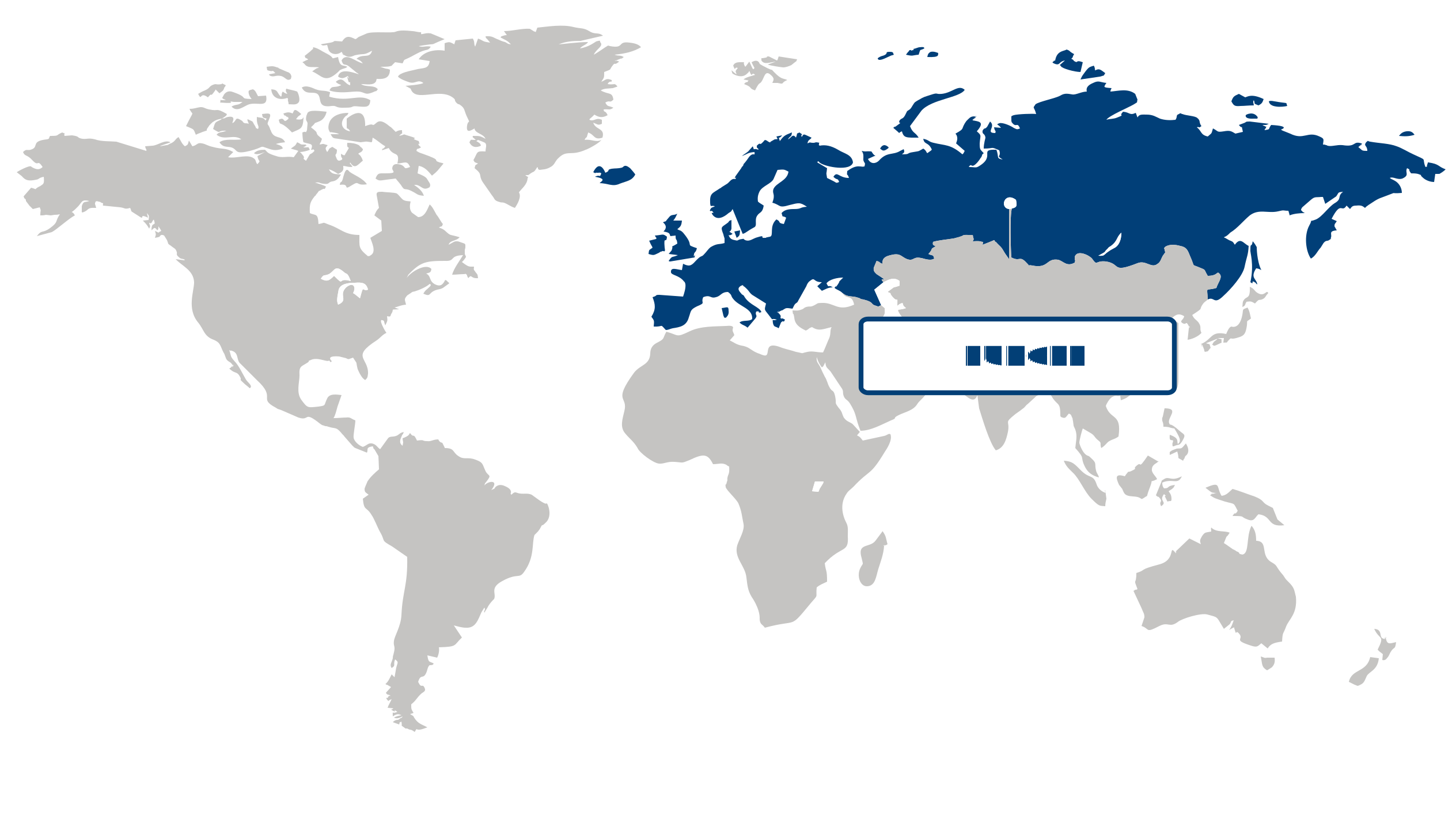
Largest Region
Europe
36.46% Market Share in 2026
Europe (Largest Region) vs Asia Pacific (Fastest-Growing Region)
In the surgical masks market, Europe held the largest share of 36.46% in 2026, supported by established healthcare systems, strong emphasis on infection prevention, and widespread use of protective medical products in hospitals and clinical settings. Healthcare facilities maintain consistent requirements for surgical masks across operating rooms, patient care environments, and procedures where protection from airborne contaminants is essential. Established medical-device manufacturing capabilities and stringent quality and safety expectations further support regional demand. In addition, heightened awareness of healthcare-associated infections and preparedness for infectious disease events continue to reinforce the importance of reliable protective equipment within healthcare settings.
Asia Pacific is emerging as the fastest-growing region, driven by expanding healthcare infrastructure, increasing healthcare expenditure, and growing awareness of infection control. Rising hospital capacity and improving access to medical services are creating broader demand for protective equipment across clinical environments. The region's large population and expanding healthcare workforce also provide a substantial base for surgical mask consumption, while local manufacturing capabilities are strengthening supply availability. Greater attention to hygiene, occupational safety, and preparedness for infectious disease outbreaks is encouraging healthcare institutions and other end users to maintain stronger protective-equipment practices, supporting continued market expansion.
Key Country Insights
United States surgical masks demand is strongly influenced by healthcare emergency preparedness and institutional infection control systems. In the U.S., hospitals and public health agencies maintain structured procurement for certified products, ensuring resilient supply chains and sustained baseline usage beyond outbreak-driven spikes.
Japan demonstrates consistent surgical mask usage driven by strong public health discipline and seasonal illness prevention norms. In Japan, both consumers and healthcare providers maintain routine adoption, particularly during influenza seasons and in densely populated urban commuting environments.
South Korea’s surgical masks demand is shaped by dense urban living and strong hygiene awareness. In South Korea, consumers regularly use masks for pollution and seasonal health concerns, while healthcare procurement in metropolitan areas reinforces stable institutional and retail consumption.
Germany’s surgical masks market is defined by strict hospital compliance requirements and filtration performance standards. In Germany, public healthcare institutions rely on regulated procurement channels and certified products, supporting steady institutional consumption aligned with infection control protocols across hospitals and clinics.
France’s surgical masks procurement is anchored in standardized public healthcare purchasing systems. In France, institutional buyers prioritize regulatory compliance, supplier reliability, and centralized distribution frameworks, ensuring structured demand aligned with national infection control and preparedness planning.
Italy’s surgical masks usage is largely influenced by seasonal respiratory illness cycles and public health guidance. In Italy, demand fluctuates predictably around flu seasons, with hospitals and consumers balancing cost efficiency with compliance to European medical standards.
Segment Leadership and Growth Trends
Distribution Channel Segment Analysis: Offline (Largest Segment) vs Online (Fastest-Growing Segment)
The offline segment dominated the surgical masks market, accounting for a 57.96% share in 2026. Its leading position is supported by the established procurement practices of hospitals, clinics, pharmacies, and other healthcare facilities, where physical distribution channels provide immediate product availability and allow buyers to assess packaging, specifications, and supply consistency. Offline purchasing also remains important for institutional buyers that require dependable access to protective equipment as part of routine healthcare operations. Meanwhile, the online segment is the fastest-growing distribution channel as digital purchasing platforms provide greater convenience, broader product visibility, and streamlined ordering for healthcare facilities and individual consumers. Increasing adoption of e-commerce across medical supplies, coupled with the ability to compare products and arrange delivery remotely, is strengthening the role of online channels in surgical mask procurement.
Product Segment Analysis: Basic Surgical Masks (Largest Segment) vs Fluid/Splash Resistant Surgical Masks (Fastest-Growing Segment)
Basic surgical masks held the largest share of the surgical masks market, representing 45.58% in 2026. Their widespread use is driven by their suitability for routine infection-control practices across hospitals, outpatient facilities, clinics, and other healthcare environments where protection against respiratory droplets and general contamination is required. Their relatively straightforward design and broad applicability make them a practical choice for high-frequency use in everyday medical settings. Fluid/Splash resistant surgical masks are the fastest-growing product segment as healthcare providers place greater emphasis on protection against exposure to potentially infectious fluids during procedures and other higher-risk clinical activities. Increasing awareness of occupational exposure risks and the need for enhanced protective performance are supporting greater adoption of masks designed to provide an additional barrier against fluid and splash penetration.
| Report Segmentation | |||
| Segment | Sub-Segment | Largest Segment | Fastest Growing Segment |
|---|---|---|---|
| Distribution Channel | Online, Offline | Offline | Online |
| Product | Basic Surgical Masks, Anti-fog Foam Surgical Masks, Fluid/Splash Resistant Surgical Masks, Others | Basic Surgical Masks | Fluid/Splash Resistant Surgical Masks |
 Read our Research Approach
Competitive Landscape and Market Positioning
Leading companies in the surgical masks market:
1. 3M Company (United States)
2. DuPont de Nemours Inc. (United States)
3. Cardinal Health Inc. (United States)
4. Medline Industries LP (United States)
5. Kimberly-Clark Corporation (United States)
6. Ansell Limited (Australia)
7. O&M Halyard Inc. (United States)
8. Alpha Pro Tech Ltd. (Canada)
9. Dynarex Corporation (United States)
10. Crosstex International Inc. (United States)
The surgical masks market is increasingly shaped by evolving expectations around comfort, filtration efficiency, and material innovation. Development efforts are shifting toward breathable yet high-protection designs, especially as usage scenarios diversify beyond traditional healthcare settings. Within the surgical masks market, continuous refinement of material engineering is reinforcing product differentiation while responding to heightened awareness of protective hygiene standards.
Industry Development/News
| Company Name | Date | Key Development |
|---|---|---|
| HaloMedix Global | Mar-26 | HaloMedix Global has scaled its international medical supply network to enhance distribution capabilities for critical healthcare products, including surgical masks. The initiative is designed to bolster supply chain resilience and increase delivery capacity to meet growing requirements from hospitals and clinics across diversified global healthcare markets. |
| Rajshree Fabrics | Oct-24 | Rajshree Fabrics has diversified its manufacturing operations from nonwoven fabrics into value-added consumer products featuring functional finishes. By leveraging its expertise in spunbond nonwovens, the company is strengthening its position within the protective materials supply chain, specifically targeting downstream production for surgical masks and hygiene-focused healthcare goods. |
| Doctors Without Borders (MSF) | Jun-24 | Doctors Without Borders (MSF) launched a pilot program for reusable medical-grade face masks designed for up to 40 cleaning cycles. This initiative aims to address sustainability challenges in clinical settings, providing a functional, high-standard alternative to single-use protective equipment and impacting the adoption patterns of sustainable PPE in medical environments. |
Why Choose Us
Specialized Expertise: Our team comprises industry experts with a deep understanding of your market segment. We bring specialized knowledge and experience that ensures our research and consulting services are tailored to your unique needs.
Customized Solutions: We understand that every client is different. That's why we offer customized research and consulting solutions designed specifically to address your challenges and capitalize on opportunities within your industry.
Proven Results: With a track record of successful projects and satisfied clients, we have demonstrated our ability to deliver tangible results. Our case studies and testimonials speak to our effectiveness in helping clients achieve their goals.
Cutting-Edge Methodologies: We leverage the latest methodologies and technologies to gather insights and drive informed decision-making. Our innovative approach ensures that you stay ahead of the curve and gain a competitive edge in your market.
Client-Centric Approach: Your satisfaction is our top priority. We prioritize open communication, responsiveness, and transparency to ensure that we not only meet but exceed your expectations at every stage of the engagement.
Continuous Innovation: We are committed to continuous improvement and staying at the forefront of our industry. Through ongoing learning, professional development, and investment in new technologies, we ensure that our services are always evolving to meet your evolving needs.
Value for Money: Our competitive pricing and flexible engagement models ensure that you get maximum value for your investment. We are committed to delivering high-quality results that help you achieve a strong return on your investment.
Select Licence Type

