Sustainable Manufacturing Equipment Market Size & Growth Forecast 2027–2036, By Segments (Distribution Channel, End Use, End Use Industry, Equipment Type), Regional Demand Trends (North America, Asia Pacific, Europe), Key Country Insights (U.S., Japan, South Korea, Germany, France, Italy), and Competitive Landscape
Jump to Content
Market Size and Growth Outlook
Sustainable Manufacturing Equipment Market size was over USD 254.89 billion in 2026 and is likely to grow at a 2.48% CAGR between 2027 and 2036, surpassing USD 325.64 billion by 2036. The industry revenue for 2027 is estimated at USD 260.17 billion.
Get more details on this report
Request Free Sample ReportSustainable Manufacturing Equipment Market Intelligence Snapshot
Regional Market Dynamics
- Europe holds the largest share due to strong environmental regulations, industrial decarbonization initiatives, and investment in equipment that reduces energy consumption, emissions, material waste, and resource intensity.
- Asia Pacific is growing fastest as industrialization, manufacturing expansion, renewable energy adoption, and facility modernization increase demand for energy-efficient machinery and cleaner production technologies.
Segment Momentum
- Large enterprises lead demand through substantial production capacity, established sustainability programs, and investment capabilities that support energy-efficient machinery, resource-saving systems, waste reduction, and equipment modernization across multiple facilities.
- Sustainable manufacturing startups are the fastest-growing end-user segment, creating demand for flexible, technology-enabled equipment that supports energy efficiency, material optimization, waste minimization, and scalable production from early business development stages.
Market Expansion Drivers
- Increasing adoption of sustainable and energy-efficient manufacturing.
- Government incentives and sustainability regulations.
- Technological innovation in manufacturing equipment for sustainability.
Leading Market Participants
- Leading companies in the sustainable manufacturing equipment market include Siemens (Germany), Schneider Electric (France), ABB (Switzerland), Rockwell Automation (United States), Emerson (United States), Mitsubishi Electric (Japan), Bosch Rexroth (Germany), FANUC (Japan), Honeywell (United States), Danfoss (Denmark).
Global Market Forecast Snapshot
Market Outlook
- 2026 Market Size: USD 254.89 billion
- 2027 Estimated Market Size: USD 260.17 billion
- Projected Market Size: USD 325.64 billion by 2036
- Growth Forecast: 2.48% CAGR (2027-2036)
Regional and Segment Outlook
- Leading Regional Market: Europe
- High-Growth Regional Hub: Asia Pacific
- Core Revenue Segment: Distribution Channel (Direct) | End Use (Large Enterprises) | End Use Industry (Automotive) | Equipment Type (Energy-efficient Machinery)
- Emerging Opportunity Segment: Distribution Channel (Indirect) | End Use (Sustainable Manufacturing Startups) | End Use Industry (Electronics and Semiconductor) | Equipment Type (Smart Manufacturing & Monitoring Equipment)
Market Growth Drivers and Industry Trends
Increasing adoption of sustainable and energy-efficient manufacturing
The increasing focus on reducing energy consumption, material waste, and environmental impact is driving manufacturers to adopt sustainable and energy-efficient equipment. Businesses are increasingly integrating machinery designed to optimize resource utilization, improve production efficiency, and reduce emissions across manufacturing processes. Growing emphasis on operational cost optimization alongside environmental performance is further encouraging investments in equipment that supports cleaner production and more efficient use of energy and raw materials.
Government incentives and sustainability regulations
Government incentives and increasingly stringent sustainability regulations are encouraging manufacturers to modernize equipment and adopt environmentally responsible production practices. Policies promoting energy efficiency, emissions reduction, waste minimization, and resource conservation are creating stronger incentives for industrial facilities to replace conventional machinery with more sustainable alternatives. Regulatory compliance is also becoming an important consideration in equipment investment decisions, supporting demand for technologies capable of meeting evolving environmental and operational requirements.
Technological innovation in manufacturing equipment for sustainability
Technological advancements are improving the ability of manufacturing equipment to deliver higher productivity while reducing energy and material consumption. Innovations in automation, intelligent monitoring, energy management, and process optimization enable manufacturers to identify inefficiencies and adjust operations in real time. Integration of connected technologies and advanced control systems is further supporting predictive maintenance, improved resource utilization, and reduced production waste, strengthening the adoption of sustainable manufacturing equipment.
| Growth Driver | Impact on CAGR | Regulatory Influence | Geographic Relevance | Adoption Rate | Impact Timeline |
|---|---|---|---|---|---|
| Increasing adoption of sustainable and energy-efficient manufacturing | 1% | Short term (≤ 2 yrs) | Europe; North America; spillover: Asia Pacific | Medium | Fast |
| Government incentives and sustainability regulations | 0.8% | Medium term (2–5 yrs) | Europe; North America; spillover: Asia Pacific | High | Moderate |
| Technological innovation in manufacturing equipment for sustainability | 0.6% | Long term (5+ yrs) | North America; Europe; spillover: Asia Pacific | Low | Slow |
Explore Growth Opportunities
Request Free Sample ReportRegional Demand Dynamics
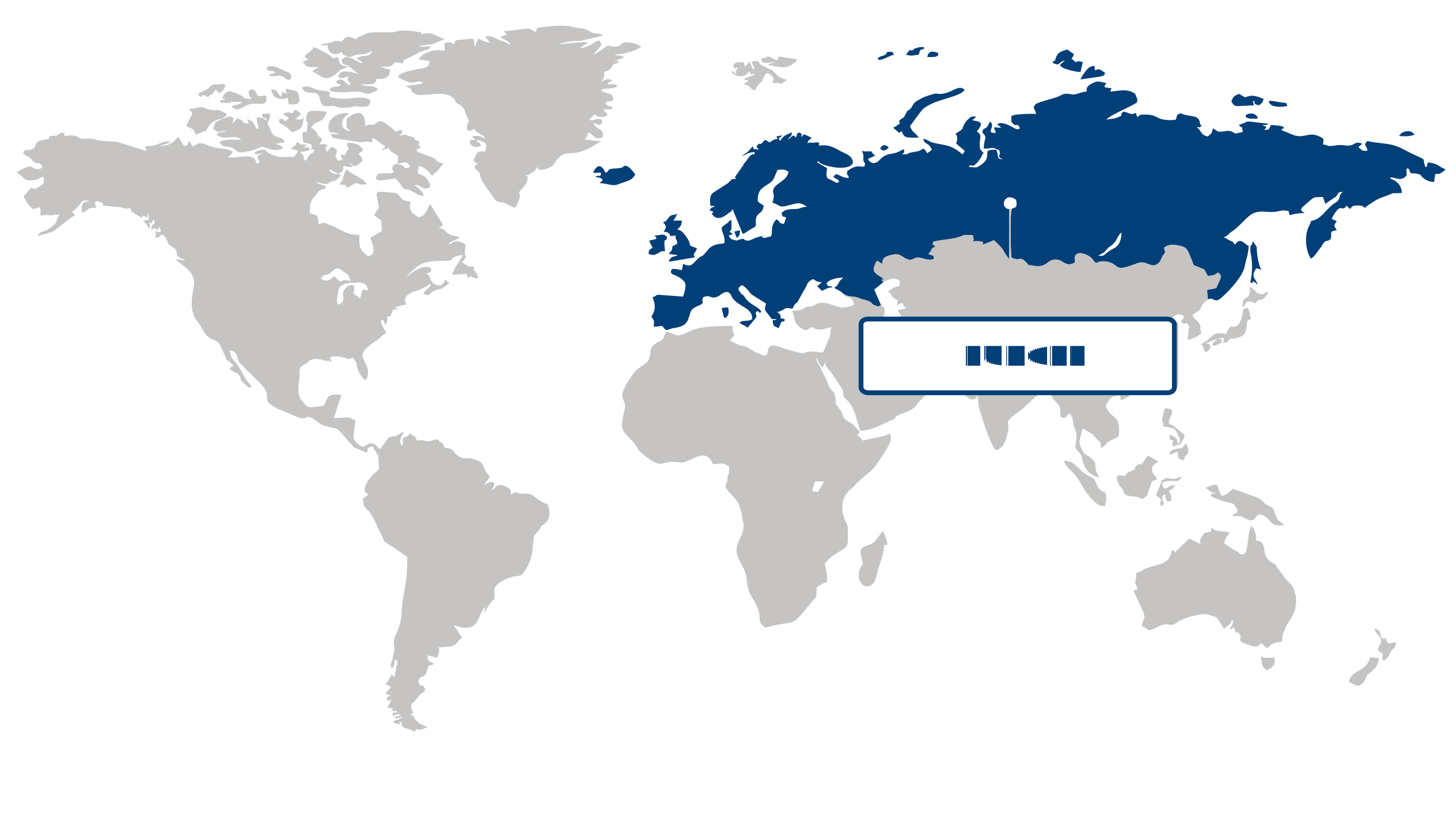
Europe (Largest Region)
Europe held the largest share in 2026 in the sustainable manufacturing equipment market, propelled by strong environmental regulations, industrial decarbonization initiatives, and increasing investment in energy-efficient production technologies. Manufacturers across the region are adopting advanced equipment designed to reduce energy consumption, material waste, emissions, and resource intensity while maintaining production efficiency. The growing integration of circular economy principles into industrial operations is encouraging investments in machinery that supports resource recovery, efficient material utilization, electrification, and cleaner production processes. Increasing emphasis on sustainable industrial infrastructure is further strengthening demand for equipment that enables manufacturers to align operational performance with environmental objectives.
Asia Pacific (Fastest-Growing Region)
Asia Pacific is the fastest-growing regional market for sustainable manufacturing equipment, backed by rapid industrialization, expanding manufacturing capacity, and increasing adoption of energy-efficient production technologies. Manufacturers are increasingly investing in modern equipment to improve resource efficiency, reduce production waste, and address rising environmental requirements. Growing government attention toward industrial sustainability, combined with expanding renewable energy adoption and modernization of manufacturing facilities, is supporting demand for advanced machinery that enables cleaner and more efficient production. The region’s expanding industrial base and increasing focus on sustainable supply chains are creating additional opportunities for equipment providers serving diverse manufacturing sectors.
| Parameter | North America | Asia Pacific | Europe | Latin America | MEA |
|---|---|---|---|---|---|
| Innovation HubiScaleNascentDeveloping Advanced | |||||
| Cost-Sensitive RegioniScaleLowMedium High | |||||
| Regulatory EnvironmentiScaleRestrictiveNeutral Supportive | |||||
| Demand DriversiScaleWeakModerate Strong | |||||
| Development StageiScaleEmergingDeveloping Developed | |||||
| Adoption RateiScaleLowMedium High | |||||
| New Entrants / StartupsiScaleSparseModerate Dense | |||||
| Macro IndicatorsiScaleWeakStable Strong |
Key Country Insights
United States 🇺🇸
Automation-Led EfficiencyThe U.S. market is prioritizing sustainable manufacturing equipment that combines energy efficiency with automation, predictive maintenance, and measurable operational savings. Manufacturers are increasingly evaluating equipment upgrades through total cost of ownership, while industrial decarbonization initiatives support adoption across production-intensive facilities.
Germany 🇩🇪
Industrial DecarbonizationGermany is emphasizing sustainable manufacturing equipment that reduces energy consumption, material waste, and production emissions without compromising precision. Strong industrial automation capabilities and established environmental requirements encourage manufacturers to integrate efficient machinery, electrification, and resource-monitoring technologies into modern production lines.
Japan 🇯🇵
Precision Resource OptimizationJapan is focusing on sustainable manufacturing equipment that improves resource utilization while maintaining high production precision and reliability. Manufacturers are adopting energy-efficient machinery, smart monitoring, and automation solutions to reduce operational waste, particularly where equipment modernization can support lean production and long-term factory efficiency.
South Korea 🇰🇷
Smart Factory IntegrationSouth Korea is linking sustainable manufacturing equipment with smart-factory modernization, particularly through connected machinery, automation, and real-time energy monitoring. Electronics, automotive, and advanced manufacturing operations are creating demand for equipment that can improve production efficiency while providing greater visibility into resource consumption and operational performance.
France 🇫🇷
Low-Carbon ProductionFrance is prioritizing sustainable manufacturing equipment that supports lower-carbon production and more efficient industrial resource use. Manufacturers are increasingly considering electrified systems, energy-efficient machinery, and process-monitoring technologies as part of factory modernization, with sustainability requirements influencing equipment selection alongside productivity and operating-cost considerations.
Italy 🇮🇹
Efficient Production UpgradesItaly is seeing demand for sustainable manufacturing equipment that enables energy and material savings while fitting the modernization needs of specialized manufacturing operations. Equipment suppliers can benefit from solutions combining compact automation, efficient motors, digital monitoring, and flexible production capabilities suited to Italy’s diverse industrial base.
Sustainable Manufacturing Equipment Market Share (%), by Distribution Channel, 2026
Go beyond the chart, access full insights & data tables
Request Free Sample ReportDistribution Channel Segment Analysis: Direct (Largest Segment) vs Indirect (Fastest-Growing Segment)
The direct distribution channel held the largest position in the sustainable manufacturing equipment market in 2026, supported by the need for manufacturers to maintain closer control over equipment selection, technical specifications, installation, and after-sales support. Direct purchasing allows equipment providers to engage closely with manufacturing organizations, understand their sustainability and operational requirements, and offer solutions tailored to specific production environments. This channel is particularly relevant for complex sustainable manufacturing equipment that may require technical consultation, customization, commissioning, training, and ongoing maintenance. Direct relationships also enable manufacturers to strengthen customer engagement, provide faster technical assistance, and build long-term service relationships, while end users can benefit from clearer communication throughout the procurement and implementation process. Growing emphasis on energy efficiency, resource optimization, waste reduction, and environmentally responsible production is further supporting direct engagement between equipment suppliers and industrial buyers.
The indirect distribution channel is expected to grow at the fastest pace, driven by the expanding role of distributors, resellers, system integrators, and specialized industrial suppliers in improving market access. Indirect channels allow sustainable manufacturing equipment providers to reach a broader base of customers without establishing direct sales infrastructure across every geographic and industrial market. Distributors can also provide localized product availability, technical assistance, installation support, and service capabilities, making sustainable equipment more accessible to manufacturers that may have limited procurement resources or technical expertise. The increasing adoption of sustainable production practices among small and medium-sized manufacturers, along with the need for convenient procurement and integrated equipment solutions, is creating additional opportunities for indirect distribution. As manufacturers increasingly seek efficient ways to upgrade production systems while meeting sustainability objectives, partnerships across the industrial distribution network are expected to strengthen the expansion of this channel.
End Use Segment Analysis: Large Enterprises (Largest Segment) vs Sustainable Manufacturing Startups (Fastest-Growing Segment)
The large enterprises segment held the largest position in the sustainable manufacturing equipment market, supported by the substantial production capacity, established sustainability programs, and greater ability of large organizations to invest in advanced manufacturing technologies. Large enterprises across industrial sectors are increasingly integrating energy-efficient machinery, resource-saving systems, waste-reduction technologies, and environmentally responsible production equipment into their operations to improve operational efficiency and support broader sustainability objectives. Their extensive manufacturing footprints also create greater opportunities for equipment modernization across multiple facilities and production lines. In addition, large organizations generally have dedicated procurement, engineering, and sustainability teams that can evaluate complex equipment solutions, manage technology upgrades, and integrate new systems with existing production infrastructure. Increasing focus on reducing environmental impact while maintaining productivity and operational resilience is therefore supporting continued demand for sustainable manufacturing equipment among large enterprises.
The sustainable manufacturing startups segment is expected to grow at the fastest pace, driven by the increasing emergence of new businesses built around resource-efficient production, clean technologies, circular manufacturing models, and environmentally responsible industrial processes. These startups are more likely to incorporate sustainability principles into their production systems from the early stages of business development, creating demand for equipment designed around energy efficiency, material optimization, waste minimization, and cleaner manufacturing processes. Their focus on flexible and technology-enabled production can also encourage adoption of modern equipment that supports automation, monitoring, and efficient resource management. Growing entrepreneurial activity in sustainable manufacturing, increasing access to innovative production technologies, and rising demand for environmentally responsible products are creating favorable conditions for this segment. As sustainable manufacturing startups expand their production capabilities and seek scalable technologies that can support growth without compromising environmental objectives, their adoption of specialized sustainable manufacturing equipment is expected to accelerate.
End Use Industry Segment Analysis: Automotive (Largest Segment) vs Electronics and Semiconductor (Fastest-Growing Segment)
The automotive segment held the largest position in the sustainable manufacturing equipment market, driven by the industry's extensive manufacturing operations, high resource consumption, and growing emphasis on improving production sustainability. Automotive manufacturers are increasingly adopting energy-efficient equipment, cleaner production technologies, material-saving systems, and advanced manufacturing solutions to reduce resource consumption while maintaining high production efficiency. The transition toward more environmentally responsible vehicle production is also encouraging manufacturers to modernize production facilities and introduce equipment capable of supporting evolving manufacturing processes. In addition, automotive production involves complex assembly, machining, painting, component manufacturing, and material-handling activities, creating broad opportunities for sustainable equipment across multiple stages of the manufacturing process. Increasing attention to production efficiency, waste reduction, resource conservation, and environmentally responsible manufacturing practices is therefore supporting strong demand for sustainable manufacturing equipment across the automotive industry.
The electronics and semiconductor segment is expected to grow at the fastest pace, supported by the increasing complexity of electronic manufacturing and the industry's strong focus on precision, energy efficiency, resource utilization, and process control. Semiconductor and electronics production requires highly controlled manufacturing environments and sophisticated equipment, creating opportunities for advanced solutions that can improve energy performance, reduce material waste, and optimize production processes. The expansion of electronics manufacturing, increasing demand for semiconductor-enabled technologies, and continued development of advanced electronic components are further encouraging investments in modern production infrastructure. At the same time, manufacturers are placing greater emphasis on reducing the environmental impact of resource-intensive production processes and improving operational efficiency throughout manufacturing facilities. The growing integration of automation, monitoring, and digitally enabled production technologies with sustainable equipment is further supporting the rapid expansion of this industry segment.
| Segment | Sub-Segment | Largest Segment | Fastest Growing |
|---|---|---|---|
| Distribution Channel | Direct, Indirect | Direct | Indirect |
| End Use | Large Enterprises, Small & Medium Enterprises (SMEs), Government & Research Institutes, Sustainable Manufacturing Startups | Large Enterprises | Sustainable Manufacturing Startups |
| End Use Industry | Automotive, Electronics and Semiconductor, Food and Beverage, Chemical Manufacturing, Pharmaceuticals, Metals and Mining, Consumer Goods, Others | Automotive | Electronics and Semiconductor |
| Equipment Type | Energy-efficient Machinery, Waste Management Equipment, Water & Wastewater Treatment Equipment, Carbon Emission Control Systems, Renewable Energy Integration Equipment, Smart Manufacturing & Monitoring Equipment, Sustainable Packaging Equipment, Additive Manufacturing Equipment, Others | Energy-efficient Machinery | Smart Manufacturing & Monitoring Equipment |
Unlock insights tailored to your business with our bespoke market research solutions.
Click to get your customized report now.
Competitive Landscape and Market Positioning
Analyst Perspective:
Differentiating sustainable manufacturing equipment requires balancing environmental efficiency with core operational productivity. Advanced closed-loop processing systems and waste-reducing precision machining tools gain traction by cutting raw material scrap, energy draw, and rework while maintaining essential throughput and dimensional accuracy. Similarly, adopting eco-friendly lubricants and coolants lowers hazardous waste exposure, provided these fluids preserve tool life and surface finish without disrupting existing maintenance workflows. Equipment providers must therefore look beyond isolated sustainability metrics, as industrial buyers increasingly demand verified full-lifecycle performance. Ultimately, vendors that pair low-carbon equipment designs with proven reliability and manageable integration costs will establish the strongest competitive positioning across demanding production environments.
Prominent players in the sustainable manufacturing equipment market:
- Siemens (Germany)
- Schneider Electric (France)
- ABB (Switzerland)
- Rockwell Automation (United States)
- Emerson (United States)
- Mitsubishi Electric (Japan)
- Bosch Rexroth (Germany)
- FANUC (Japan)
- Honeywell (United States)
- Danfoss (Denmark)
| Company | Market Share | Company Revenue | Revenue CAGR (%) | Product Portfolio | Geographic Presence | Innovation / R&D Focus | Strategic Developments |
|---|---|---|---|---|---|---|---|
| Siemens (Germany) | |||||||
| Schneider Electric (France) | |||||||
| ABB (Switzerland) | |||||||
| Rockwell Automation (United States) | |||||||
| Emerson (United States) | |||||||
| Mitsubishi Electric (Japan) | |||||||
| Bosch Rexroth (Germany) | |||||||
| FANUC (Japan) | |||||||
| Honeywell (United States) | |||||||
| Danfoss (Denmark) |
Industry Development/News
| Company Name | Date | Key Development |
|---|---|---|
| Atlas Copco | June 2025 | Atlas Copco launched the EcoFlow Zero compressor line, utilizing advanced electric drives, artificial intelligence-based energy management, and carbon offsetting to achieve net-zero operational standards alongside a twenty percent efficiency gain for industrial manufacturing applications. |
| GE Renewable Energy | April 2024 | GE Renewable Energy announced an expansion of its offshore wind turbine manufacturing facilities across the Asia Pacific region, specifically targeting China and Taiwan to increase regional production capacity and support sustainable manufacturing processes in energy-intensive sectors. |
| Siemens | March 2024 | Siemens established a strategic partnership with Airbus to accelerate sustainable aircraft manufacturing by integrating smart manufacturing technologies, including energy-efficient automation systems, digital twins, and predictive maintenance solutions into production facilities. |
Customize Your Report
Explore examples of how this report can be tailored to different research needs, including custom segments, additional topics or chapters, and related reports. Click a section of the wheel or its numbered marker to explore the available options.
Sustainable Manufacturing Equipment Market — Custom Segments
| Segment | Sub-Segment |
|---|---|
| Sustainability Objective | Energy efficiency and decarbonization, Water conservation and treatment, Waste reduction and resource recovery, Emissions control, Renewable energy integration |
| Deployment Scale | Single-line deployment, Plant-level deployment, Multi-plant deployment, Enterprise-wide deployment |
| Project Type | New-build installations, Equipment replacement, Retrofit and modernization, Capacity expansion |
Sustainable Manufacturing Equipment Market — Custom TOC
| Custom Chapter | Chapter Details |
|---|---|
| Industrial Decarbonization Investment Roadmaps |
|
| Retrofit Economics & Replacement Priorities |
|
| Circular Equipment Lifecycle Strategies |
|
Need a different cut of the data?
Request Custom ResearchFrequently Asked Questions
What is the estimated worth of the sustainable manufacturing equipment market?
How is the sustainable manufacturing equipment industry size expected to evolve during the forecast period?
How are sustainability priorities changing manufacturing equipment investment decisions?
How are regulations and intelligent technologies accelerating adoption of sustainable manufacturing equipment?
Why do large enterprises account for the largest share of sustainable manufacturing equipment demand?
How are sustainable manufacturing startups driving demand for specialized equipment?
Why does Europe lead the sustainable manufacturing equipment market?
What is accelerating sustainable manufacturing equipment growth in Asia Pacific?
Who are the major participants shaping the sustainable manufacturing equipment landscape?
Our Clients
"The team at Fundamental Business Insights & Consulting demonstrated a commitment to excellence, not only in the quality of the report but also in their client-centric approach."
FANUC
"The level of detail in the market segmentation provided were particularly noteworthy. The detailed country-level insights were also very helpful."
B&R Industrial Automation GmbH
"The consultant took the time to understand our specific business objectives, ensuring that the reports were tailored to address our unique challenges and opportunities."
KUKA SE & Co. KGaA
Our Research Team & Methodology
Every Fundamental Business Insights report is built by a dedicated vertical research team, validated through a structured primary-and-secondary methodology, and reviewed for accuracy before it reaches you.
This report was prepared by the Industrial Automation & Equipment Research Team at Fundamental Business Insights, a dedicated research group specializing in industrial automation technologies, manufacturing systems, and industrial equipment markets. Our analysts continuously monitor advancements in factory automation, robotics, industrial IoT (IIoT), smart manufacturing, process optimization, equipment modernization, supply chain developments, industrial safety standards, and evolving digital transformation initiatives across manufacturing industries to deliver timely and reliable market intelligence. The research is developed using a structured methodology that combines primary discussions with equipment manufacturers, automation solution providers, system integrators, industrial end users, distributors, and industry experts, along with company annual reports, regulatory publications, government industrial statistics, industry associations, technical standards, engineering publications, and other authoritative secondary sources. Market estimates are validated through multiple research techniques, including top-down and bottom-up analysis, before undergoing an internal quality review to ensure accuracy, consistency, and methodological integrity prior to publication.
Delivery
Published
Available
Support
- Market Size & Forecast
- Market Segmentation
- Regional Analysis
- Growth Drivers & Challenges
- Market Dynamics
- Competitive Landscape
- Company Profiles
- Competitive Benchmarking
- Mergers & Acquisitions
- Market Share Analysis or Key Company Strategies
- Value Chain Analysis
- Porter's Five Forces
- PESTLE Analysis
- Pricing Trends
- Supply-Demand Analysis
- Technology Landscape
- Regulatory Landscape
- Investment & Funding Landscape
- Emerging Opportunities
- Future Market Outlook