



Tabletop Kitchen Products Market Size & Growth Forecast 2026–2035, By Segments (Application, Product), Regional Demand Trends (North America, Asia Pacific, Europe), Key Country Insights (U.S., Japan, South Korea, Germany, France, Italy), and Competitive Landscape
Market Size and Growth Outlook
Base Year Value (2025)
USD 47.96 Billion
CAGR (2026-2035)
4.2%
Forecast Year Value (2035)
USD 72.37 Billion

Historical Data Period
2022-2025

Largest Region
Europe

Forecast Period
2026-2035
Tabletop Kitchen Products Market Intelligence Snapshot:
-
Regional Market Dynamics:
- Europe held a 36.57% market share in 2025, supported by mature retail networks, strong hospitality demand, and consistent replacement purchases driven by design preferences and seasonal household spending.
- Asia Pacific is projected to grow at a 4.79% CAGR, fueled by rising household spending, expanding digital and modern retail access, and increasing demand for functional, visually appealing kitchenware.
-
Segment Momentum:
- Commercial accounted for 62.76% of the market in 2025, driven by bulk purchasing, steady replacement cycles, and demand from restaurants, hotels, catering businesses, and institutional foodservice operations.
- Drinkware is growing fastest as changing beverage habits, gifting demand, and consumer interest in specialized glasses, mugs, and cups encourage more frequent purchases and collection upgrades.
-
Market Expansion Drivers:
- Rising foodservice and hospitality sector expansion increasing demand for commercial tabletop solutions.
- Growing consumer preference for premium dining and home décor-driven kitchenware adoption.
- Increasing nuclear family households driving demand for compact and multifunctional dining products.
-
Leading Market Participants:
Leading companies in the tabletop kitchen products market include Arc International S.A. (France), Zalto Glas GmbH (Austria), Oneida Consumer LLC (United States), The Vollrath Company, LLC (United States), Hendi B.V. (Netherlands), Matfer Bourgeat International SAS (France), WMF Group GmbH (Germany), Villeroy & Boch AG (Germany), Rosenthal GmbH (Germany).
Global Market Forecast Snapshot:
-
Market Outlook:
- 2025 Market Size: USD 47.96 Billion
- Projected Market Size: USD 72.37 Billion by 2035
- Growth Forecasts: 4.2% CAGR (2026-2035)
-
Regional and Segment Outlook:
- Leading Regional Market: Europe
- High-Growth Regional Hub: Asia Pacific
- Core Revenue Segment: Commercial (Application) | Dinnerware (Product)
- Emerging Opportunity Segment: Residential (Application) | Drinkware (Product)
Market Growth Drivers and Industry Trends
Rising foodservice and hospitality sector expansion increasing demand for commercial tabletop solutionsAs restaurants, cafés, hotels, catering operators, and quick-service chains expand footprints and refresh service formats, procurement of durable, presentation-focused tabletop items rises in parallel. The tabletop kitchen products market benefits because commercial buyers replace and standardize dinnerware, glassware, cutlery, serving pieces, and table accessories at scale, often prioritizing break resistance, stackability, ease of cleaning, and brand-consistent aesthetics. This shifts demand toward product lines designed for high turnover environments, while repeat purchasing from hospitality operators supports steady order cycles tied to outlet openings, menu changes, and refurbishment activity, strengthening market development through institutional volume rather than one-time household spending.
Growing consumer preference for premium dining and home décor-driven kitchenware adoption
A stronger emphasis on curated dining experiences at home is changing how consumers evaluate everyday kitchen and tableware, with appearance, material finish, design coordination, and gifting appeal becoming more influential in purchase decisions. In the tabletop kitchen products market, this behavior supports trading up from basic utility items to premium plates, bowls, serveware, flatware, and drinkware that align with interior styles and entertaining occasions. Demand is shaped less by replacement need alone and more by lifestyle-led purchasing, where tabletop products function as visible décor elements, increasing market penetration through higher-value assortments, seasonal collections, and design-led product differentiation.
Increasing nuclear family households increasing demand for compact and multifunctional dining products
Smaller household formats tend to buy for limited storage, flexible daily use, and lower piece counts, which redirects product development toward space-efficient and versatile tabletop ranges. The tabletop kitchen products market gains from this shift as consumers favor stackable dinnerware, multi-use serving bowls, compact cutlery sets, and products suited to both routine meals and informal hosting without requiring large cabinets or extensive place settings. Purchasing decisions increasingly center on convenience and adaptability, encouraging brands and retailers to emphasize modular sets and practical design features that fit modern apartment living while contributing to market size growth through frequent first-home and household-formation purchases.
| Growth Driver Assessment Framework | |||||
| Growth Driver | Impact On CAGR | Regulatory Influence | Geographic Relevance | Adoption Rate | Impact Timeline |
|---|---|---|---|---|---|
| Rising foodservice and hospitality sector expansion increasing demand for commercial tabletop solutions | 1.90% | Low | Asia Pacific, North America | High | Near Term |
| Growing consumer preference for premium dining and home décor-driven kitchenware adoption | 1.70% | Low | North America, Europe, Asia Pacific | High | Mid Term |
| Increasing nuclear family households driving demand for compact and multifunctional dining products | 1.60% | Low | Asia Pacific, Latin America | High | Mid Term |
Unlock insights tailored to your business with our bespoke market research solutions - Click to get your customized report now!
Regional Demand Dynamics
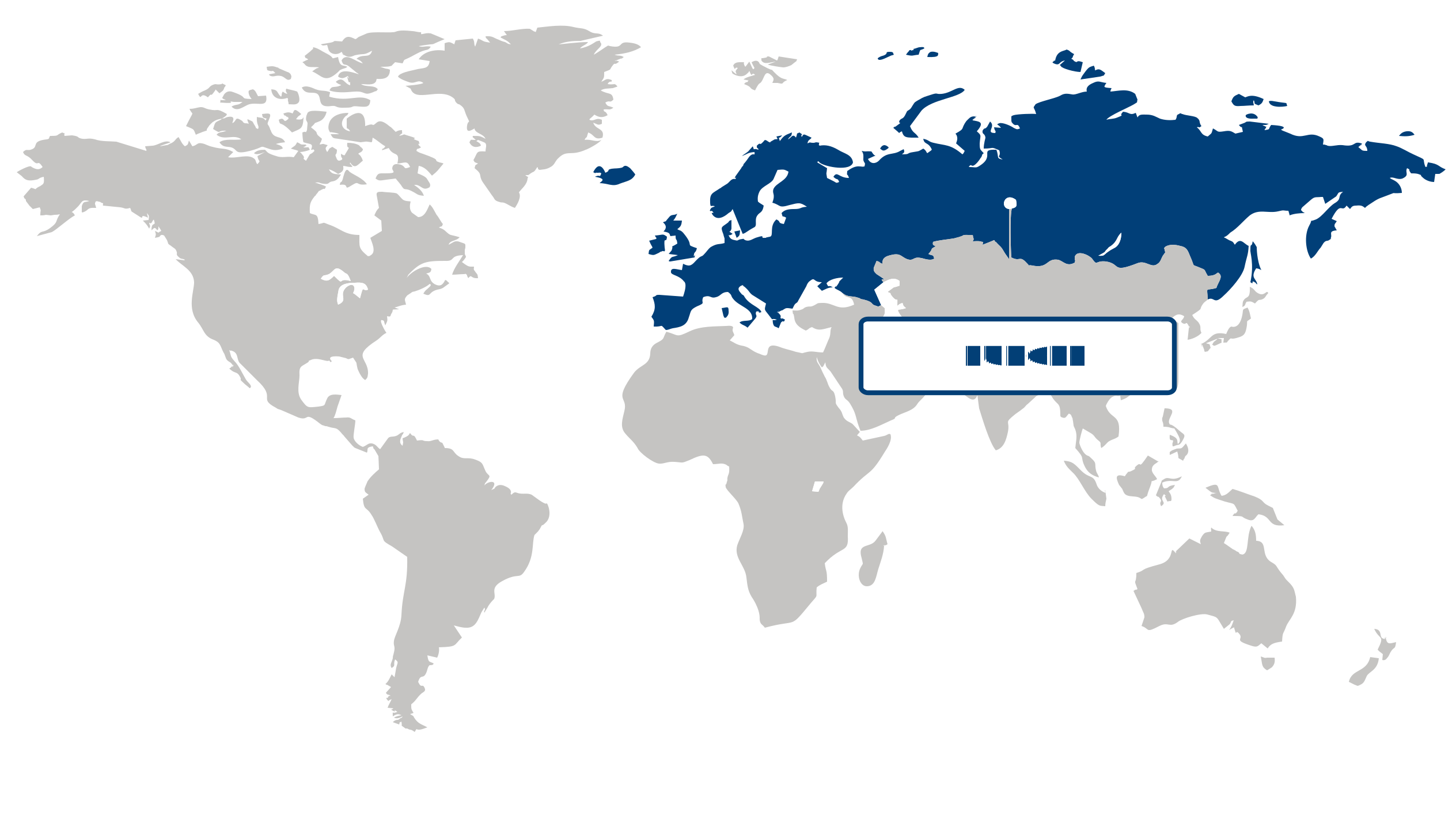
Largest Region
Europe
36.57% Market Share in 2025
Europe held the leading position in 2025, accounting for a 36.57% share of the tabletop kitchen products market. This leadership is supported by steady consumer demand for coordinated dining and kitchen presentation items, a well-established retail structure spanning specialty stores and organized homeware channels, and strong replacement purchasing tied to design preferences and seasonal household spending. The region’s mature hospitality and home décor purchasing patterns also help sustain volume, as product selection is often influenced by material quality, aesthetic consistency, and brand familiarity in everyday buying decisions.
Asia Pacific is projected to expand at a 4.79% CAGR over the forecast period in the tabletop kitchen products market, propelled by rising household spending on home improvement and dining-related products across urban consumer bases. Growth is being aided by expanding access through modern retail and digital commerce platforms, which make a broader range of tabletop items available to first-time and repeat buyers alike. Demand is also benefiting from changing lifestyle patterns, with more consumers purchasing visually appealing and functional kitchenware for daily use, informal hosting, and compact urban living environments.
Key Country Insights
The U.S. tabletop kitchen products market is benefiting from demand for premium cookware, serveware, and aesthetically designed dining accessories. Consumers in the U.S. are increasingly seeking products that combine functionality with lifestyle-oriented kitchen and entertaining experiences.
Japan is favoring compact and multifunctional tabletop kitchen products that suit smaller living spaces and everyday convenience. Manufacturers in Japan are introducing products that blend minimalist design with usability and premium craftsmanship.
South Korea is experiencing strong interest in tabletop kitchen products influenced by home entertaining and social media-driven dining trends. Consumers in South Korea are seeking visually appealing tableware and kitchen accessories that complement contemporary lifestyles.
Germany is characterized by demand for durable and practical tabletop kitchen products with strong design credentials. Consumers in Germany are showing interest in high-quality materials and products that align with long-term use and efficient household management.
France places significant emphasis on tabletop kitchen products that enhance food presentation and dining experiences. Consumers in France continue to value refined table settings, encouraging demand for premium tableware and specialty serving products.
Italy maintains demand for tabletop kitchen products that combine craftsmanship with contemporary design. Consumers in Italy are showing continued interest in decorative and functional tableware that reflects culinary traditions and elevated home dining experiences.
Segment Leadership and Growth Trends
Commercial held a 62.76% share of the tabletop kitchen products market in 2025, reflecting the segment’s entrenched demand across restaurants, hotels, catering operations, and institutional foodservice settings. its position is maintained through steady replacement cycles, the need for coordinated bulk purchases, and the operational importance of durable, presentation-ready tabletop items in high-usage environments. In the tabletop kitchen products market, commercial buyers also tend to standardize product selections across locations, which supports consistent volume demand and helps this segment maintain its leading share.
Residential is the fastest-growing segment in the tabletop kitchen products market as household purchasing increasingly reflects greater attention to dining aesthetics, home entertaining, and coordinated kitchen presentation. Growth is gaining pace because residential buyers are more responsive to shifting lifestyle preferences and design-led product upgrades than commercial operators, whose purchases are often tied to budget discipline and utility. This makes the residential segment more dynamic relative to alternatives, especially as consumers treat tabletop kitchen products as both functional essentials and visible home décor elements.
Product Segment Analysis: Dinnerware (Largest Segment) vs Drinkware (Fastest-Growing Segment)
Within the tabletop kitchen products market, dinnerware accounted for a 37.1% share in 2025, making it the leading product segment due to its central role in everyday meal service across both commercial and residential settings. Its position is supported by the fact that plates, bowls, and related serving pieces form the foundation of table setup and are purchased as core essentials rather than discretionary additions. In the tabletop kitchen products market, this broad and recurring utility keeps dinnerware demand consistently ahead of more occasion-specific product categories.
Drinkware is emerging as the fastest-growing product segment in the tabletop kitchen products market, supported by changing beverage consumption habits and stronger consumer interest in specialized glasses, mugs, and cups for different use occasions. The segment is gaining momentum because buyers often expand drinkware collections incrementally and replace them more frequently to match lifestyle trends, gifting demand, and presentation preferences. Compared with other tabletop categories, drinkware benefits from a wider range of usage moments throughout the day, which creates more active purchasing behavior and supports faster growth.
| Report Segmentation | |||
| Segment | Sub-Segment | Largest Segment | Fastest Growing Segment |
|---|---|---|---|
| Application | Residential, Commercial | Commercial | Residential |
| Product | Dinnerware, Flatware, Whitegoods, Buffet Products, Drinkware, Others | Dinnerware | Drinkware |
 Read our Research Approach
Competitive Landscape and Market Positioning
Major players in the tabletop kitchen products market:1. Arc International S.A. (France)
2. Zalto Glas GmbH (Austria)
3. Oneida Consumer LLC (United States)
4. The Vollrath Company LLC (United States)
5. Hendi B.V. (Netherlands)
6. Matfer Bourgeat International SAS (France)
7. WMF Group GmbH (Germany)
8. Villeroy & Boch AG (Germany)
9. Rosenthal GmbH (Germany)
The tabletop kitchen products market is driven by evolving consumer interest in design-oriented and functional home solutions. Product innovation focuses on aesthetics combined with durability and convenience. The tabletop kitchen products market is expanding as lifestyle-driven consumption patterns increase globally.
Industry Development/News
| Company Name | Date | Key Development |
|---|---|---|
| Lenox Corp. | Jun-21 | Lenox Corp. acquired Oneida Consumer LLC, including its flatware, tableware, and cutlery product portfolio. The acquisition consolidates Lenox’s position in the tabletop kitchen products segment by expanding its brand portfolio and strengthening its presence across core dining and lifestyle categories in the global household goods market. |
| Samsung Electronics Co., Ltd. | Nov-21 | Samsung Electronics Co., Ltd. entered a technological partnership with Mindful Chef, a UK-based healthy recipe box company. The collaboration reflects Samsung’s expansion into connected lifestyle ecosystems, integrating kitchen-related digital engagement initiatives and strengthening its positioning within smart home and food-tech adjacent applications linked to consumer kitchen ecosystems. |
Why Choose Us
Specialized Expertise: Our team comprises industry experts with a deep understanding of your market segment. We bring specialized knowledge and experience that ensures our research and consulting services are tailored to your unique needs.
Customized Solutions: We understand that every client is different. That's why we offer customized research and consulting solutions designed specifically to address your challenges and capitalize on opportunities within your industry.
Proven Results: With a track record of successful projects and satisfied clients, we have demonstrated our ability to deliver tangible results. Our case studies and testimonials speak to our effectiveness in helping clients achieve their goals.
Cutting-Edge Methodologies: We leverage the latest methodologies and technologies to gather insights and drive informed decision-making. Our innovative approach ensures that you stay ahead of the curve and gain a competitive edge in your market.
Client-Centric Approach: Your satisfaction is our top priority. We prioritize open communication, responsiveness, and transparency to ensure that we not only meet but exceed your expectations at every stage of the engagement.
Continuous Innovation: We are committed to continuous improvement and staying at the forefront of our industry. Through ongoing learning, professional development, and investment in new technologies, we ensure that our services are always evolving to meet your evolving needs.
Value for Money: Our competitive pricing and flexible engagement models ensure that you get maximum value for your investment. We are committed to delivering high-quality results that help you achieve a strong return on your investment.
Select Licence Type

