Tinted Sunscreen Market Size & Forecasts 2026-2035, By Segments (Price Range, Category, SPF, Form, End-User, Product Type), Growth Opportunities, Innovation Landscape, Regulatory Shifts, Strategic Regional Insights (U.S., Japan, China, South Korea, UK, Germany, France), and Competitive Dynamics (Estée Lauder, L'Oréal, Shiseido, Johnson & Johnson, Beiersdorf)
Market Size and Growth Outlook
Tinted Sunscreen Market size is projected to expand significantly, moving from USD 244.85 million in 2025 to USD 523.74 million by 2035, with a CAGR of 7.9% during the 2026-2035 forecast period. The expected revenue for 2026 is USD 261.82 million.
Get more details on this report
Request Free Sample ReportTinted Sunscreen Market Intelligence Snapshot
Regional Market Dynamics
Segment Momentum
Market Expansion Drivers
Leading Market Participants
Global Market Forecast Snapshot
Market Outlook
Regional and Segment Outlook
Market Growth Drivers and Industry Trends
The growing awareness of sun-related skin damage significantly shapes the tinted sunscreen market, as consumers prioritize preventive skincare. Public health campaigns from agencies like the World Health Organization (WHO) and the U.S. Food and Drug Administration (FDA) have elevated understanding of UV risks, leading to greater demand for daily sun protection products that blend skincare with cosmetic benefits. This shift encourages brands such as Neutrogena and La Roche-Posay to enhance product lines with visibly effective, tinted formulas that appeal to health-conscious buyers. For incumbents, this highlights the opportunity to deepen consumer trust through education and dermatologically tested offerings, while newcomers can differentiate via targeted messaging. With continued public health emphasis on sun safety worldwide, products integrating both protection and cosmetic appeal are set to become a staple in personal care routines.
Demand for Multifunctional Cosmetic Products
Consumers increasingly seek convenience and efficacy from personal care items, propelling the tinted sunscreen market toward multifunctional solutions that combine sun protection, coverage, and skincare in one product. Leading brands like Shiseido and IT Cosmetics have capitalized on this trend by launching tinted sunscreens enriched with antioxidants and moisturizers, meeting customer demand for efficiency without compromising aesthetic benefits. This convergence supports premiumization and brand loyalty, challenging newcomers to innovate on formulation and positioning. As time-conscious consumers continue to favor all-in-one products that simplify daily routines, the tinted sunscreen market is positioned to expand through offerings that balance beauty and health benefits seamlessly.
Innovation in Clean and Tinted Formulations
The tinted sunscreen market is increasingly influenced by advancements in clean beauty innovation, reflecting consumer preference for safe, natural ingredients without performance compromises. Industry leaders such as Drunk Elephant and Supergoop! emphasize transparency and non-toxic formulations, responding to regulatory scrutiny and sustainability pressures championed by organizations like the Environmental Working Group (EWG). This trend opens avenues for both established and emerging players to develop tinted sunscreens free from harmful chemicals, appealing to environmentally and health-conscious demographics. As ingredient technologies evolve, the market will likely see a surge in clean, effective tinted products that leverage natural mineral filters and skin-friendly botanicals, aligning with broader consumer shifts toward holistic wellness and sustainability.
Industry Restraints:
Regulatory Complexity and Compliance Challenges
The tinted sunscreen market is significantly restrained by varying and often stringent regulatory requirements across global regions, particularly regarding ingredient safety and labeling. For instance, the U.S. Food and Drug Administration (FDA) classifies sunscreen as an over-the-counter drug, imposing rigorous testing and approval processes that delay product launches. Simultaneously, the European Chemicals Agency (ECHA) enforces strict constraints on UV filters, limiting formulation flexibility. These divergent regulatory frameworks create operational inefficiencies and increase compliance costs for manufacturers, complicating product standardization and market entry. Established brands must invest heavily in regulatory affairs, while startups face formidable barriers to commercialization. Going forward, evolving regulations—especially those emphasizing ingredient transparency and environmental impact—will continue to slow product innovation and distribution, necessitating robust regulatory intelligence and flexible R&D strategies.
Consumer Skepticism and Adoption Barriers
Consumer hesitation toward tinted sunscreen, driven by concerns over product safety, skin compatibility, and cosmetic appeal, further constrains market growth. A 2023 survey by the Skin Cancer Foundation reveals that while awareness of UV protection is high, consumers remain wary of tinted variants due to perceived heaviness, unnatural tint colors, and risk of skin irritation. This skepticism particularly affects adoption among diverse skin tones and sensitive skin segments, limiting market penetration despite growing demand for multifunctional skincare products. For market players, this translates into challenges in product differentiation and targeted marketing, requiring significant investment in clinical validation and consumer education campaigns. As consumer preferences increasingly prioritize natural ingredients and personalized formulations, overcoming this restraint will be critical to expanding tinted sunscreen usage in the near term.
| Growth Driver | Impact on CAGR | Regulatory Influence | Geographic Relevance | Adoption Rate | Impact Timeline |
|---|---|---|---|---|---|
| Increased sun protection awareness | 1.30% | Short term (≤ 2 yrs) | Asia Pacific; Latin America | Medium | Fast |
| Demand for multifunctional cosmetic products | 1.60% | Medium term (2–5 yrs) | North America, Europe; Asia Pacific | Low | Moderate |
| Innovation in clean and tinted formulations | 1.00% | Long term (5+ yrs) | Europe; North America | Medium | Moderate |
Explore Growth Opportunities
Request Free Sample ReportRegional Demand Dynamics
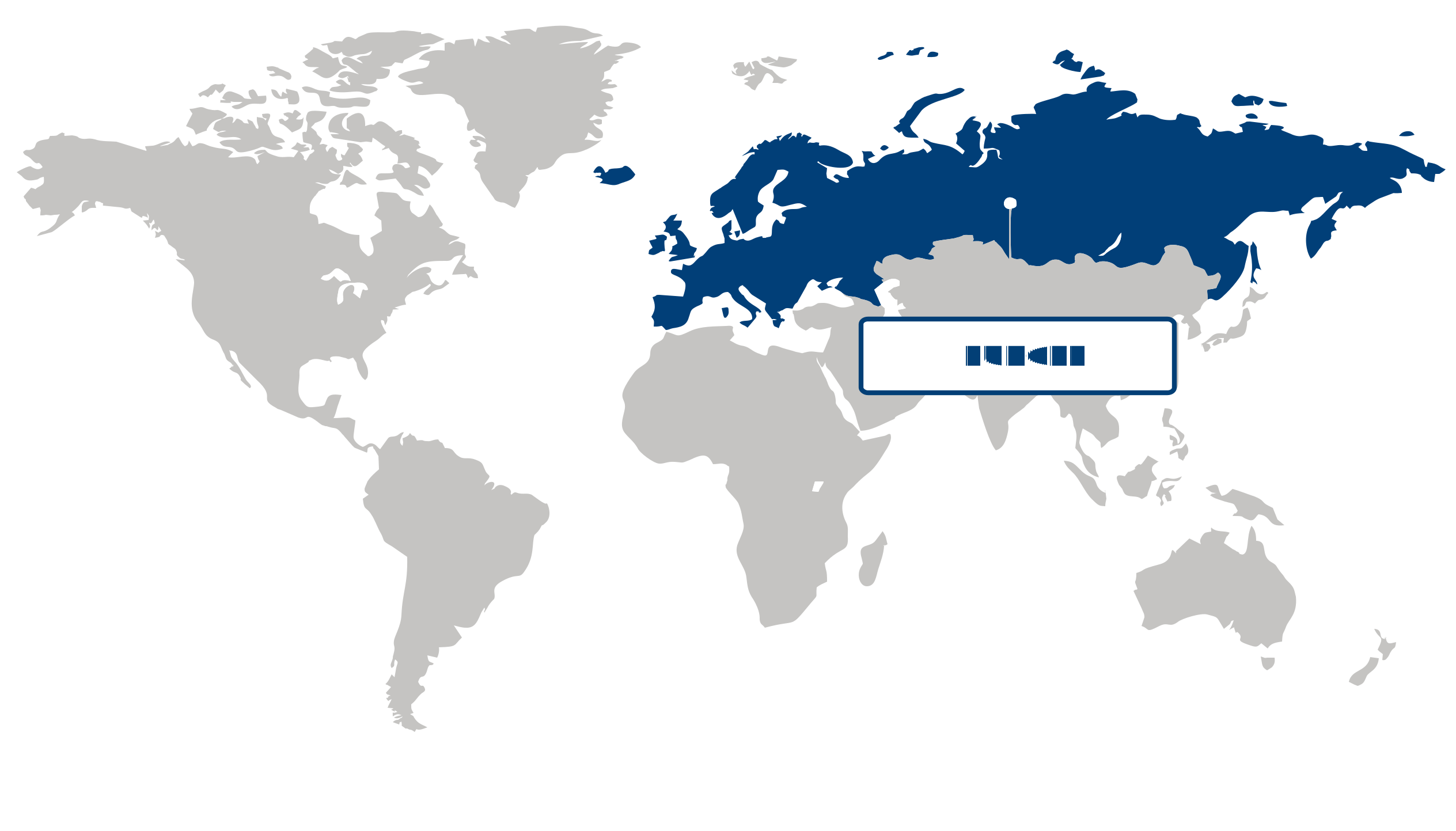
Europe captured over 45.1% of the global tinted sunscreen market in 2025, asserting itself as the largest regional player. This dominance is fueled by rising consumer awareness regarding skin protection and a pronounced demand for clean beauty products, reflecting shifts toward transparent, eco-conscious formulations. Regulatory frameworks in Europe, including the European Commission’s stringent cosmetic safety standards, encourage innovation aligned with sustainability and safety, further bolstering market expansion. Additionally, the region’s mature retail infrastructure and digital beauty platforms, as highlighted by L’Oréal’s European digital initiatives, enhance product accessibility and consumer engagement. These combined forces position Europe as a robust and evolving landscape, offering significant opportunities for tinted sunscreen brands attuned to health-conscious, environmentally aware consumers.
Germany anchors Europe’s tinted sunscreen market with a sophisticated consumer base prioritizing efficacy and ingredient transparency. German companies, such as Beiersdorf, leverage strong R&D capabilities to meet rising demands for multifunctional, clean-label sunscreen products. France plays a pivotal role by integrating luxury skincare traditions with clean beauty trends, supported by regulatory bodies like ANSM (Agence Nationale de Sécurité du Médicament) enforcing high product safety standards. French players such as La Roche-Posay emphasize dermatologically tested tinted sunscreens, enhancing consumer trust. These national market dynamics reinforce Europe’s leadership, underscoring a region-wide opportunity for tailored, clinically validated, and eco-conscious sunscreen innovations.
Asia Pacific Market Analysis:
Asia Pacific emerged as the fastest-growing region in the tinted sunscreen market, registering a robust CAGR of 9.48%. This growth is primarily accelerated by rapid urbanization and rising disposable incomes across the region, fueling heightened consumer awareness and demand for multifunctional skincare products. Increased urban living has exposed consumers to higher UV radiation levels and pollution, driving the need for protective and cosmetic skincare solutions like tinted sunscreens. Moreover, affordability gains have expanded the customer base beyond premium segments, supported by targeted marketing campaigns emphasizing product efficacy and aesthetics. Reports from the Asia-Pacific Economic Cooperation (APEC) underscore a shift towards premium, health-conscious personal care choices, further supporting this trend. The rising digital penetration also facilitates brand education and direct consumer engagement. Consequently, Asia Pacific is poised to offer substantial opportunities for market expansion, innovation, and diversified consumer engagement in the tinted sunscreen market.
Japan plays a pivotal role within the Asia Pacific tinted sunscreen market due to its sophisticated consumer base that prioritizes high-quality, scientifically advanced skincare products. Rising disposable incomes and urban lifestyles in metropolitan hubs like Tokyo have amplified demand for effective sun protection with cosmetic benefits. As documented by the Japan Cosmetic Industry Association, consumers increasingly favor tinted sunscreens that offer anti-aging and skin-evening properties, reflecting a blend of skincare and cosmetic trends unique to Japanese culture. Additionally, stringent regulatory standards maintained by Japan’s Ministry of Health, Labour and Welfare ensure product safety and efficacy, fostering consumer trust and sustained market growth. Japan’s leadership in innovation and premium product formulations bolsters the region’s competitive edge in tinted sunscreens.
China, marked by rapid urbanization and growing middle-class affluence, is a critical driver of the Asia Pacific tinted sunscreen market’s expansion. Urban centers such as Shanghai and Beijing see rising consumer spending on multifunctional skincare items, propelled by heightened concerns over skin health amid pollution and stronger sunlight exposure. The China Food and Drug Administration’s enhanced regulatory directives on cosmetic ingredients have driven companies to innovate safer, more effective tinted sunscreen formulations, aligning with evolving consumer preferences. Market research from Euromonitor International confirms a strong trend towards natural and multifunctional products, encouraging local and international brands to expand their presence. China’s vast consumer base and evolving retail infrastructure, including e-commerce channels, make it a vital growth engine supporting the region’s dominance in the tinted sunscreen market.
North America Market Trends:
North America held a substantial share in the tinted sunscreen market, driven by heightened consumer awareness around multifunctional skincare products that combine sun protection with cosmetic appeal. Increasing urbanization and rising disposable income have shifted preferences toward premium, dermatologist-recommended formulations that address both UV protection and aesthetic enhancement. Regulatory oversight by the U.S. Food and Drug Administration (FDA) ensures product safety and efficacy, prompting innovation in broad-spectrum and mineral-based tinted sunscreens. Leading companies such as Johnson & Johnson and L’Oréal have advanced product lines in response to these demands, integrating clean beauty trends and sustainable packaging solutions. Furthermore, digital transformation in retail and marketing has accelerated consumer access to personalized tinted sunscreen products. This region’s robust e-commerce infrastructure and evolving beauty standards create fertile ground for sustained innovation and market penetration, underscoring North America’s role as a pivotal growth hub in the tinted sunscreen industry.
The U.S. plays a central role in the North American tinted sunscreen market, propelled by diverse demographic profiles that prioritize both skin protection and cosmetic enhancement. Rising incidences of skin cancer reported by the Centers for Disease Control and Prevention have augmented public and healthcare provider emphasis on daily sunscreen use, supporting growth. Regulatory frameworks administered by the FDA encourage product innovation, particularly in the creation of formulations that cater to a broad range of skin tones, as evidenced by recent launches from Neutrogena and La Roche-Posay. Additionally, the U.S. market benefits from strong distribution networks spanning specialty retailers, pharmacies, and digital platforms, enabling quick adoption and feedback loops. This convergence of consumer priorities and regulatory environment positions the U.S. as an indispensable driver of regional success in the tinted sunscreen market, further stimulating product development and expanded market access across North America.
| Parameter | North America | Asia Pacific | Europe | Latin America | MEA |
|---|---|---|---|---|---|
| Innovation Hub i Scale Nascent Developing Advanced | |||||
| Cost-Sensitive Region i Scale Low Medium High | |||||
| Regulatory Environment i Scale Restrictive Neutral Supportive | |||||
| Demand Drivers i Scale Weak Moderate Strong | |||||
| Development Stage i Scale Emerging Developing Developed | |||||
| Adoption Rate i Scale Low Medium High | |||||
| New Entrants / Startups i Scale Sparse Moderate Dense | |||||
| Macro Indicators i Scale Weak Stable Strong |
Segment Leadership and Growth Trends
Tinted Sunscreen Market Share (%), by Price Range, 2026
Go beyond the chart, access full insights & data tables
Request Free Sample ReportThe tinted sunscreen market is led by the premium segment, which dominated market share in 2025 due to increasing consumer preference for premium skincare products offering multifunctional benefits such as anti-aging and skin tone evening. Affluent customer bases in regions like North America and Europe, driven by heightened awareness from organizations such as the Skin Cancer Foundation, prefer high-quality formulations with advanced ingredients, emphasizing sustainability and dermatological safety. Premium brands like La Roche-Posay and Shiseido have leveraged innovation and targeted marketing to deepen consumer trust and loyalty, strengthening supply chains for specialty ingredients. This segment presents strategic opportunities for both established companies and niche entrants to capitalize on consumers’ willingness to invest in superior products. Given ongoing digital transformation and rising interest in personalized skincare, the premium segment is poised to maintain its dominance in the near to medium term.
Analysis by Category
Within the tinted sunscreen market, the non-medicated segment represented the largest share in 2025, reflecting widespread consumer demand for everyday sun protection integrated into cosmetic routines. This preference is influenced by demographic trends such as the growing millennial and Gen Z populations who prioritize light, multitasking formulations without prescription constraints. Regulatory agencies like the U.S. FDA's recent guidelines on cosmetic sunscreen efficacy have fostered innovation, enabling manufacturers to meet safety expectations without medicated additives. Leading brands, including Neutrogena and Clinique, have capitalized on these dynamics by expanding non-medicated tinted sunscreen lines with natural and eco-friendly components, responding to sustainability priorities. The segment offers fertile ground for product diversification and expansion, with consumers continually seeking convenient daily protection. It is expected to sustain relevance, supported by increasing sun safety campaigns and lifestyle shifts emphasizing preventive care.
Analysis by SPF
SPF 30 to 50 held the largest share of the tinted sunscreen market in 2025, propelled by its optimal balance between effective UV protection and cosmetic appeal for everyday use. This segment addresses consumer demand for reliable defense against harmful rays while maintaining skin comfort and aesthetic versatility, resonating particularly across urban markets with high pollution levels. Industry leaders such as Estée Lauder Companies have showcased formulations combining broad-spectrum efficacy with lightweight textures to suit diverse skin types and complexions. The balance achieved in this SPF range aligns with global health advocacy from the World Health Organization promoting accessible yet potent sun protection. As technological advances yield finer particle dispersion and photo-stability enhancements, the SPF 30 to 50 segment offers lucrative growth avenues for innovators catering to both premium and mass-market tiers. Its established effectiveness and user-friendliness underpin ongoing consumer loyalty and sustained market prominence.
| Segment | Sub-Segment | Largest Segment | Fastest Growing |
|---|---|---|---|
| Price Range | Premium, Economy | ||
| Category | Medicated, Non-Medicated | ||
| SPF | SPF 15 to 30, SPF 30 to 50, Above SPF 50+ | ||
| Form | Sticks, Tubes, Roll On | ||
| End-User | Female, Male, Unisex | ||
| Product Type | Cream, Gel, Moisturizer, Lotion, Powder |
Unlock insights tailored to your business with our bespoke market research solutions.
Click to get your customized report now.
Competitive Landscape and Market Positioning
The competitive landscape reveals that leading firms are actively enhancing product portfolios with tinted sunscreens that incorporate novel formulations and multifunctional benefits. Collaborative efforts, including technology integrations and ingredient breakthroughs, are evident as players aim to amplify efficacy and aesthetic appeal. The focus on consumer-centric innovation drives differentiation, with new launches tailored to regional skin tones and sensitivities. These dynamics bolster market competitiveness, enabling companies to solidify loyalty while attracting emerging consumer cohorts. Continuous investment in research and strategic alliances strengthens innovation pipelines, positioning these players advantageously amid evolving market expectations.
Strategic / Actionable Recommendations for Regional Players
North American entities could deepen engagements with dermatological research centers and leverage advanced biotechnologies to create differentiated tinted sunscreen products. Emphasizing formulation transparency and environmentally responsible ingredients can further resonate with a health-conscious consumer base.
In the Asia Pacific region, capitalizing on localized skin tone diversity through customized product offerings can enhance relevance. Partnering with regional influencers and e-commerce platforms may expand consumer reach, while integrating traditional botanical ingredients can enrich product appeal.
European players should consider intensifying collaborations across luxury and mass-market segments to bridge innovation with accessibility. Embracing sustainable packaging innovations and aligning with evolving regulatory frameworks will likely strengthen market positioning and consumer confidence in tinted sunscreen products.
| Company | Market Share | Company Revenue | Revenue CAGR (%) | Product Portfolio | Geographic Presence | Innovation / R&D Focus | Strategic Developments |
|---|---|---|---|---|---|---|---|
| No companies available. | |||||||
Customize Your Report
Explore examples of how this report can be tailored to different research needs, including custom segments, additional topics or chapters, and related reports. Click a section of the wheel or its numbered marker to explore the available options.
Tinted Sunscreen Market — Custom Segments
| Segment | Sub-Segment |
|---|---|
| No segment data available. | |
Tinted Sunscreen Market — Custom TOC
| Custom Chapter | Chapter Details | ||
|---|---|---|---|
| No custom TOC data available. | |||
Need a different cut of the data?
Request Custom ResearchHow much is the tinted sunscreen industry expected to grow by 2035?
Which geographical region leads the tinted sunscreen market market?
What region has posted the highest CAGR in the tinted sunscreen sector?
Where is the premium segment seeing the strongest adoption within the tinted sunscreen industry?
When did non-medicated sub-segment emerge as the largest sub-segment in the category segment of tinted sunscreen sector?
Why is the SPF 30 to 50 segment leading in the tinted sunscreen industry?
Why does tubes sub-segment dominate the form segment of tinted sunscreen sector?
How much is the female segment expected to grow in the tinted sunscreen industry beyond 2025?
What factors give cream segment a competitive edge in the tinted sunscreen sector?
Which companies dominate the tinted sunscreen landscape?
Our Clients
"The report provided us with a clear direction, and the level of detail was beyond what we expected. I would definitely recommend their services to others."
Haier Appliances
"The collaboration with Fundamental Business Insights has added significant value to our decision-making process, and we look forward to continuing this partnership for our future market research requirements."
Luxottica Group S.p.A.
"The team at FBI delivered an exceptional research report. The insights on industry innovations were particularly impressive and added a lot of value to the overall report."
Nike
Our Research Team & Methodology
Every Fundamental Business Insights report is built by a dedicated vertical research team, validated through a structured primary-and-secondary methodology, and reviewed for accuracy before it reaches you.
Research Team Overview
Prepared by the Consumer Goods & Services Research Team
Delivery
Published
Demand
Available
Support
Trust & Compliance
Research Intelligence
| Source | Reference |
|---|---|
| International Organization for Standardization (ISO) | www.iso.org |
| ASTM International | www.astm.org |
| U.S. Consumer Product Safety Commission (CPSC) | www.cpsc.gov |
| European Commission – Consumer Safety | ec.europa.eu/safety-gate |
| Consumer Technology Association (CTA) | www.cta.tech |
| National Retail Federation (NRF) | nrf.com |
| World Retail Congress | www.worldretailcongress.com |
| World Travel & Tourism Council (WTTC) | wttc.org |
| UN Tourism | www.unwto.org |
| Personal Care Products Council (PCPC) | www.personalcarecouncil.org |
| Cosmetics Europe | cosmeticseurope.eu |
| International Housewares Association (IHA) | www.housewares.org |
| American Apparel & Footwear Association (AAFA) | www.aafaglobal.org |
| World Federation of the Sporting Goods Industry (WFSGI) | wfsgi.org |
| Juvenile Products Manufacturers Association (JPMA) | www.jpma.org |
| Pet Industry Joint Advisory Council (PIJAC) | pijac.org |
| International Council of Toy Industries (ICTI) | www.toy-icti.org |
| International Association of Amusement Parks and Attractions (IAAPA) | iaapa.org |
| Organisation for Economic Co-operation and Development (OECD) | www.oecd.org |
| World Bank Data | data.worldbank.org |
Research Workflow & Quality Assurance
Data Collection
Verified information gathered through primary and secondary research.
Data Triangulation
Cross-validation using multiple independent data sources.
Forecast Modelling
Market estimates developed using historical trends and analytical models.
Analyst Validation
Findings reviewed by domain experts for accuracy and consistency.
Editorial & Quality Review
Final editorial, quality, and compliance checks before publication.
Final Publication
Released after successful completion of the internal review process.
Report Coverage
📊 Market Assessment
- Market Size & Forecast
- Market Segmentation
- Regional Analysis
- Growth Drivers & Challenges
- Market Dynamics
🏢 Competitive Intelligence
- Competitive Landscape
- Company Profiles
- Competitive Benchmarking
- Mergers & Acquisitions
- Market Share Analysis or Key Company Strategies
🔍 Strategic Analysis
- Value Chain Analysis
- Porter's Five Forces
- PESTLE Analysis
- Pricing Trends
- Supply-Demand Analysis
🚀 Future Outlook
- Technology Landscape
- Regulatory Landscape
- Investment & Funding Landscape
- Emerging Opportunities
- Future Market Outlook
Have a question about this report or need a custom scope?
Request Customization