



Tonka Beans Market Size & Growth Forecast 2027–2036, By Segments (Type, Application), Regional Demand Trends (North America, Asia Pacific, Europe), Key Country Insights (U.S., Japan, South Korea, Germany, France, Italy), and Competitive Landscape
Market Size and Growth Outlook
Tonka Beans Market size was estimated at USD 803.21 million in 2026 and is projected to grow at a 19% CAGR from 2027 to 2036, exceeding USD 4.57 billion by 2036. The industry revenue for 2027 is calculated at USD 931.72 million.
Base Year Value (2026)
USD 803.21 million
CAGR (2027-2036)
19.00%
Forecast Year Value (2036)
USD 4.57 billion

Historical Data Period
2022-2026

Largest Region
Europe

Forecast Period
2027-2036
Tonka Beans Market Intelligence Snapshot:
-
Regional Market Dynamics:
- Europe led the market in 2026 due to mature trade channels, established sourcing networks, and steady demand from specialty flavoring and fragrance industries requiring regulated ingredient distribution.
- Asia Pacific is projected to grow at a 22.06% CAGR, driven by expanding food, beverage, and fragrance manufacturing and rising demand for differentiated, premium sensory ingredients.
-
Segment Momentum:
- Tonka beans extract captured a 70.66% share in 2026 because manufacturers value its consistency, concentrated aromatic properties, and ease of formulation for fragrance and flavor applications.
- Cosmetics is the fastest-growing application as brands increasingly incorporate distinctive botanical ingredients to enhance product experience and storytelling across premium personal care formulations.
-
Market Expansion Drivers:
- Rising demand for exotic natural ingredients increasing tonka bean usage in gourmet food applications.
- Expanding premium fragrance and perfumery markets strengthening demand for tonka-based aromatic formulations.
- Growing focus on sustainable sourcing and plant-based ingredients supporting long-term tonka bean adoption.
-
Leading Market Participants:
Leading players in the tonka beans market include Givaudan SA (Switzerland), Symrise AG (Germany), Firmenich SA (Switzerland), Biolandes SAS (France), Elixens Group (France), Thiercelin 1809 SAS (France), De Hekserij BV (Netherlands), Sambavanilla SARL (France), Kaapi Ingredients Pvt. Ltd. (India), Robertet SA (France).
Global Market Forecast Snapshot:
-
Market Outlook:
- 2026 Market Size: USD 803.21 million
- 2027 Estimated Market Size: USD 931.72 million.
- Projected Market Size: USD 4.57 billion by 2036
- Growth Forecasts: 19% CAGR (2027-2036)
-
Regional and Segment Outlook:
- Leading Regional Market: Europe
- High-Growth Regional Hub: Asia Pacific
- Core Revenue Segment: Tonka Beans Extract (Type) | Luxury Fragrances (Application)
- Emerging Opportunity Segment: Tonka Beans Whole (Type) | Cosmetics (Application)
Market Growth Drivers and Industry Trends
Rising demand for exotic natural ingredients increasing tonka bean usage in gourmet food applications
The growing preference for distinctive and exotic natural ingredients in gourmet food is expanding the role of tonka beans in premium culinary formulations. Their characteristic aromatic profile allows chefs and food producers to introduce differentiated flavor experiences across desserts and other specialty preparations, supporting greater usage in high-end food applications.
Expanding premium fragrance and perfumery markets strengthening demand for tonka-based aromatic formulations
Premium fragrance and perfumery products increasingly emphasize distinctive aromatic profiles, creating stronger opportunities for tonka-based formulations. The tonka beans market benefits from its use as an aromatic ingredient that can add depth and recognizable character to sophisticated fragrance compositions, particularly where consumers seek differentiated premium scents.
Growing focus on sustainable sourcing and plant-based ingredients supporting long-term tonka bean adoption
Greater attention to sustainable sourcing and plant-based ingredient choices is encouraging manufacturers to evaluate naturally derived materials for product formulations. For the tonka beans market, this preference supports continued adoption by positioning tonka beans as a plant-based ingredient suitable for applications where natural sourcing and ingredient transparency are increasingly valued.
| Growth Driver Assessment Framework | |||||
| Growth Driver | Impact On CAGR | Regulatory Influence | Geographic Relevance | Adoption Rate | Impact Timeline |
|---|---|---|---|---|---|
| Rising demand for exotic natural ingredients increasing tonka bean usage in gourmet food applications | 2.00% | Moderate | Europe, North America | High | Near Term |
| Expanding premium fragrance and perfumery markets strengthening demand for tonka-based aromatic formulations | 1.80% | Moderate | Europe, Latin America | High | Mid Term |
| Growing focus on sustainable sourcing and plant-based ingredients supporting long-term tonka bean adoption | 1.50% | High | Latin America, Europe | Emerging | Long Term |
Unlock insights tailored to your business with our bespoke market research solutions - Click to get your customized report now!
Regional Demand Dynamics
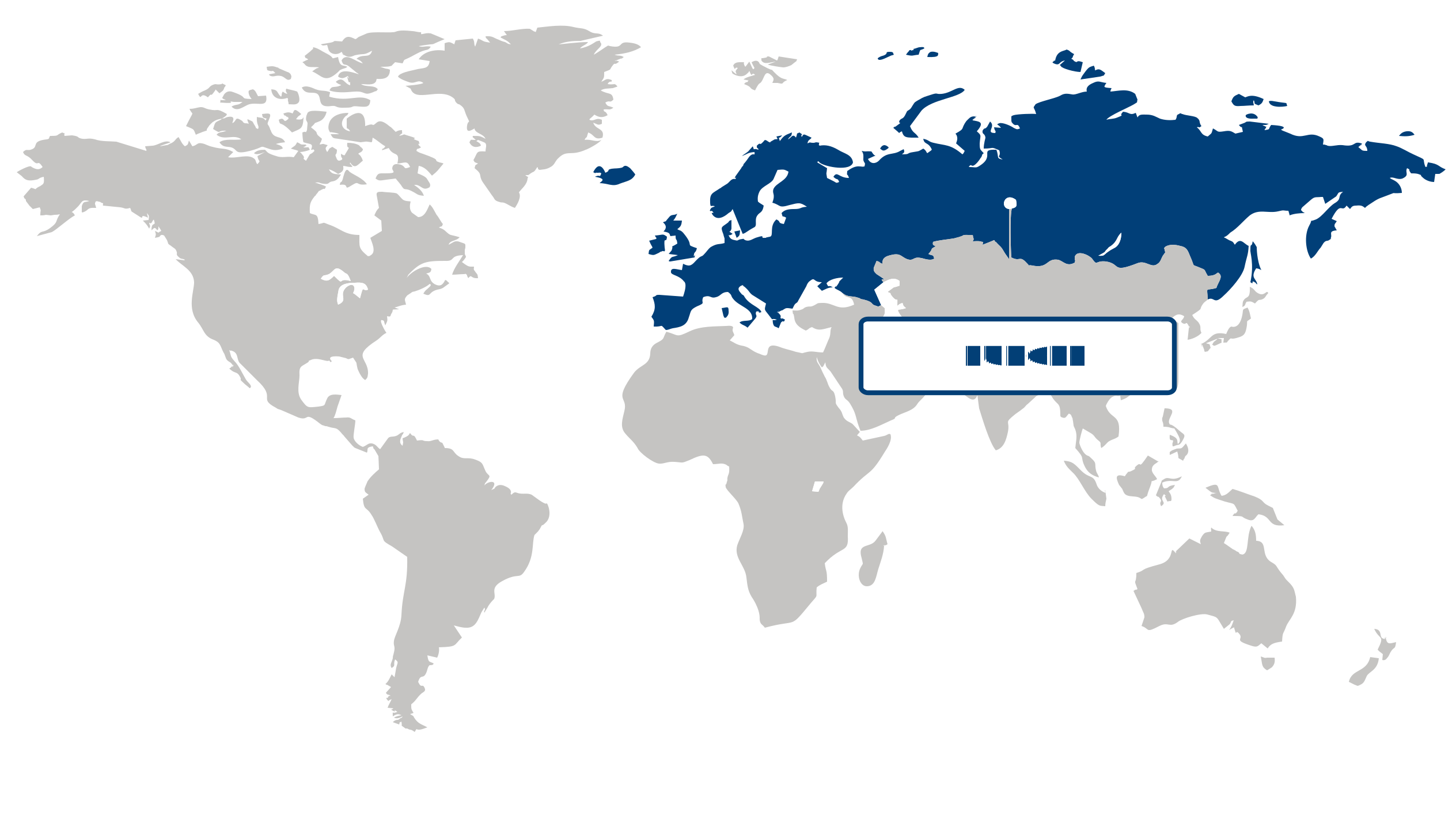
Largest Region
Europe
Largest Market Share in 2026
Europe (Largest Region) vs Asia Pacific (Fastest-Growing Region)
The tonka beans market was led by Europe, supported by the region’s mature fragrance, flavor, food, and specialty ingredient industries. Established demand for natural and distinctive aromatic ingredients continues to create opportunities for tonka beans across premium food formulations, beverages, confectionery, personal care products, and fragrance applications. Europe’s strong consumer preference for sophisticated flavor profiles and naturally derived ingredients, combined with well-developed processing, distribution, and regulatory frameworks, reinforces its leading market position. Growing interest in botanical and exotic ingredients is also encouraging manufacturers to incorporate tonka bean-derived flavors and aromas into differentiated product offerings.
Asia Pacific is positioned as the fastest-growing region, driven by expanding food and beverage manufacturing, rising consumer interest in premium and novel flavors, and the broader development of fragrance and personal care industries. Increasing urbanization and evolving consumption patterns are supporting demand for specialty natural ingredients, while improvements in ingredient processing, supply-chain infrastructure, and distribution networks are making distinctive botanical products more accessible to regional manufacturers. The region’s expanding middle-class consumer base and growing interest in premium packaged foods and sensory-focused personal care products are expected to further strengthen demand for tonka beans.
Key Country Insights
The U.S. tonka beans market is driven by demand from gourmet food, premium beverage, and niche fragrance applications where distinctive flavor and aroma profiles are valued. Businesses carefully position tonka bean usage within applicable regulatory frameworks while serving specialty market segments.
Japan incorporates tonka beans into selected premium fragrance and specialty product applications that prioritize sophisticated aroma profiles. Companies in Japan focus on controlled ingredient usage and high-quality sourcing to support distinctive product development within niche commercial segments.
South Korea utilizes tonka beans primarily in premium fragrance and cosmetic formulations seeking warm, complex scent profiles. Businesses increasingly explore differentiated ingredient combinations that enhance premium positioning while maintaining quality and formulation consistency.
Germany values tonka beans for specialized fragrance, flavor, and artisanal product development where unique aromatic characteristics create product differentiation. Manufacturers increasingly emphasize responsible sourcing and consistent ingredient quality for premium industrial applications.
France maintains strong interest in tonka beans through premium perfumery and specialty fragrance development. French manufacturers emphasize ingredient authenticity, refined aromatic performance, and dependable sourcing to support high-value fragrance formulations and artisanal creations.
Italy applies tonka beans in selected gourmet and fragrance applications where distinctive sensory characteristics enhance premium product positioning. Italian businesses prioritize carefully sourced ingredients that complement artisanal manufacturing traditions and specialized consumer offerings.
Segment Leadership and Growth Trends
Type Segment Analysis: Tonka Beans Extract (Largest Segment) vs Tonka Beans Whole (Fastest-Growing Segment)
Tonka beans extract accounted for the largest share of the tonka beans market in 2026, benefiting from its convenient integration into fragrance, cosmetic, and specialty formulation applications. Extracts provide concentrated aromatic characteristics and can be incorporated more easily into finished formulations, supporting demand from manufacturers seeking consistent sensory profiles. Their versatility across premium fragrance and personal care products, combined with the distinctive sweet, warm, and vanilla-like characteristics associated with tonka beans, strengthens their position among processed tonka bean offerings.
The tonka beans whole segment is experiencing the fastest growth as consumers and specialty buyers show greater interest in natural, minimally processed botanical ingredients. Whole beans offer flexibility for artisanal fragrance creation, culinary applications, and customized extraction, appealing to users seeking greater control over preparation and formulation. Growing interest in authentic natural ingredients and premium botanical materials is supporting broader adoption of whole tonka beans across specialized end uses.
Application Segment Analysis: Luxury Fragrances (Largest Segment) vs Cosmetics (Fastest-Growing Segment)
Luxury fragrances held the largest share of the tonka beans market in 2026, reflecting the ingredient's strong value in premium scent formulations. Its distinctive warm, sweet, and complex aromatic profile enables perfumers to create rich compositions and enhance the depth of sophisticated fragrances. Continued consumer interest in premium personal scents and differentiated fragrance profiles supports the use of tonka bean-derived ingredients in high-value fragrance applications.
Cosmetics represent the fastest-growing application segment, supported by increasing incorporation of botanical and naturally derived ingredients into personal care formulations. Tonka bean characteristics can contribute distinctive sensory properties to cosmetic products while aligning with consumer interest in specialty plant-based ingredients. Expanding product innovation across skincare, body care, and other cosmetic categories is creating additional opportunities for tonka bean ingredients beyond traditional fragrance applications.
| Report Segmentation | |||
| Segment | Sub-Segment | Largest Segment | Fastest Growing Segment |
|---|---|---|---|
| Type | Tonka Beans Extract, Tonka Beans Whole | Tonka Beans Extract | Tonka Beans Whole |
| Application | Luxury Fragrances, Cosmetics, Food & Beverages, Liquor, Fixatives in Dyes, Flavoring Tobacco, Others | Luxury Fragrances | Cosmetics |
 Read our Research Approach
Competitive Landscape and Market Positioning
Key companies in the tonka beans market:
1. Givaudan SA (Switzerland)
2. Symrise AG (Germany)
3. Firmenich SA (Switzerland)
4. Biolandes SAS (France)
5. Elixens Group (France)
6. Thiercelin 1809 SAS (France)
7. De Hekserij BV (Netherlands)
8. Sambavanilla SARL (France)
9. Kaapi Ingredients Pvt. Ltd. (India)
10. Robertet SA (France)
The tonka beans market is expanding as demand for unique flavoring ingredients grows across culinary and fragrance applications. Extraction and processing improvements are enhancing aroma consistency and usability. Continuous innovation in application development is supporting broader specialty ingredient adoption.
Industry Development/News
| Company Name | Date | Key Development |
|---|---|---|
| Rare Beauty | Jul-25 | Rare Beauty entered the fine fragrance category with the launch of its first Eau de Parfum and complementary layering balms. This move signifies a strategic diversification into the scent market, leveraging tonka bean-based compositions to capture consumer demand for customizable and premium fragrance experiences. |
| Victorinox | Nov-21 | Victorinox expanded its fragrance portfolio with the launch of "First Snow," a scent incorporating tonka bean, white tea, and vanilla. This development highlights the continued adoption of natural and vegan-certified ingredients in the luxury fragrance segment to meet evolving consumer preferences for sustainable and complex aromatic profiles. |
| BDK Parfums | Oct-21 | BDK Parfums launched "Velvet Tonka," a fragrance positioning the tonka bean as its core aromatic element. This product launch underscores the growing trend of utilizing specific, high-quality botanical ingredients as central focal points in niche perfumery to differentiate offerings within the highly competitive luxury fragrance market. |
Why Choose Us
Specialized Expertise: Our team comprises industry experts with a deep understanding of your market segment. We bring specialized knowledge and experience that ensures our research and consulting services are tailored to your unique needs.
Customized Solutions: We understand that every client is different. That's why we offer customized research and consulting solutions designed specifically to address your challenges and capitalize on opportunities within your industry.
Proven Results: With a track record of successful projects and satisfied clients, we have demonstrated our ability to deliver tangible results. Our case studies and testimonials speak to our effectiveness in helping clients achieve their goals.
Cutting-Edge Methodologies: We leverage the latest methodologies and technologies to gather insights and drive informed decision-making. Our innovative approach ensures that you stay ahead of the curve and gain a competitive edge in your market.
Client-Centric Approach: Your satisfaction is our top priority. We prioritize open communication, responsiveness, and transparency to ensure that we not only meet but exceed your expectations at every stage of the engagement.
Continuous Innovation: We are committed to continuous improvement and staying at the forefront of our industry. Through ongoing learning, professional development, and investment in new technologies, we ensure that our services are always evolving to meet your evolving needs.
Value for Money: Our competitive pricing and flexible engagement models ensure that you get maximum value for your investment. We are committed to delivering high-quality results that help you achieve a strong return on your investment.
Select Licence Type

