



Traffic Signal Recognition Market Size & Forecasts 2026-2035, By Segments (Component, Vehicle Type, Technology, Application), Growth Opportunities, Innovation Landscape, Regulatory Shifts, Strategic Regional Insights (U.S., Japan, China, South Korea, UK, Germany, France), and Competitive Dynamics (Mobileye, Aptiv, Valeo, Bosch, Continental)
Market Size and Growth Outlook
Traffic Signal Recognition Market size is predicted to expand from USD 516.75 million in 2025 to USD 1.59 billion by 2035, with growth underpinned by a CAGR above 11.9% between 2026 and 2035. The industry revenue outlook for 2026 is USD 571.65 million.
Base Year Value (2025)
USD 516.75 Million
CAGR (2026-2035)
11.9%
Forecast Year Value (2035)
USD 1.59 Billion

Historical Data Period
2022-2025

Largest Region
Europe

Forecast Period
2026-2035
Key Takeaways
- Europe region dominated over 36.75% market share in 2025, due to advanced automotive safety regulations.
- Asia Pacific region will grow at over 14% CAGR through 2035, propelled by rising adoption of autonomous vehicles in Asia.
- The hardware segment captured a 65.48% share of the traffic signal recognition market in 2025, fueled by high-resolution cameras essential for real-time signal detection.
- In 2025, the passenger vehicles segment dominated the market with a 64.02% share, driven by high sales volumes integrating ADAS safety features.
- The deep learning segment contributed a 41.2% share to the traffic signal recognition market in 2025, attributed to superior accuracy in variable lighting and weather conditions.
- The leading players in the traffic signal recognition market include Mobileye (Israel), Aptiv (Ireland), Valeo (France), Bosch (Germany), Continental (Germany), Denso (Japan), Magna International (Canada), ZF Friedrichshafen (Germany), NVIDIA (United States), Hyundai Mobis (South Korea).
Market Growth Drivers and Industry Trends
ADAS Adoption in Passenger Cars Boosting TSR Systems
The increasing adoption of Advanced Driver-Assistance Systems (ADAS) in passenger vehicles is significantly shaping the traffic signal recognition market. As consumers prioritize safety and convenience, automakers are integrating sophisticated TSR systems into their vehicles to enhance driving experiences. According to the European Automobile Manufacturers Association, nearly 40% of new cars in Europe were equipped with some form of ADAS in 2022, reflecting a growing trend that underscores consumer demand for enhanced safety features. This shift not only presents established automotive players with opportunities to innovate but also invites new entrants to develop specialized TSR technologies, fostering a vibrant competitive landscape. As the market evolves, the alignment of TSR systems with consumer expectations will be crucial for driving continued adoption and differentiation among manufacturers.
Regulatory Mandates for Road Safety Compliance
Regulatory frameworks emphasizing road safety compliance are playing a pivotal role in the evolution of the traffic signal recognition market. Governments worldwide are increasingly implementing stringent safety standards, compelling automakers to adopt advanced technologies that ensure adherence to traffic regulations. For instance, the National Highway Traffic Safety Administration in the United States has proposed new guidelines that mandate the integration of technologies capable of recognizing traffic signals. This regulatory push not only accelerates the adoption of TSR systems but also creates strategic opportunities for technology providers to collaborate with automotive manufacturers, enhancing product offerings that meet compliance requirements. As regulations evolve, stakeholders must stay attuned to these changes to leverage market opportunities effectively and ensure alignment with safety mandates.
Long-Term Integration with Autonomous Vehicle Ecosystems
The long-term integration of traffic signal recognition systems with autonomous vehicle ecosystems is reshaping the landscape of the traffic signal recognition market. As the automotive industry pivots towards fully autonomous driving, the need for seamless communication between vehicles and infrastructure becomes paramount. Industry leaders such as Waymo are investing heavily in developing technologies that allow vehicles to interpret and respond to traffic signals autonomously, thereby enhancing operational safety and efficiency. This integration not only presents established players with opportunities to refine their technologies but also opens doors for startups focused on innovative TSR solutions. As the push for autonomy intensifies, the synergy between TSR systems and autonomous vehicle frameworks will be critical in shaping future mobility solutions.
Industry Restraints:
Technological Integration Challenges
The traffic signal recognition market faces significant challenges due to the complexities involved in integrating advanced technologies into existing infrastructure. Many municipalities operate with outdated traffic management systems that lack the capacity for sophisticated signal recognition technologies. This disparity creates operational inefficiencies, as newer systems may require extensive upgrades or complete overhauls of current traffic frameworks. For instance, a report by the International Transport Forum highlights that cities with older traffic systems often struggle to adopt AI-based solutions, resulting in slower implementation rates and heightened costs. As a result, established companies may find it difficult to penetrate these markets, while new entrants face barriers in demonstrating the effectiveness of their technologies in environments that are not technologically compatible.
Data Privacy Regulations
Another critical restraint is the growing concern around data privacy regulations, which significantly impacts the deployment of traffic signal recognition systems. With increasing scrutiny on how data is collected, stored, and utilized, companies must navigate a complex landscape of regulations, such as the General Data Protection Regulation (GDPR) in Europe. This regulatory environment can deter investment and innovation, as companies may be hesitant to develop solutions that could inadvertently violate privacy laws. According to a study by the European Commission, compliance with data protection regulations can increase operational costs by up to 30%, creating a barrier for both established firms and startups looking to enter the market. As awareness of privacy issues continues to rise, this restraint is likely to shape the strategic decisions of market participants, pushing them to invest in compliance solutions and potentially stifling innovation in the near to medium term.
| Growth Driver Assessment Framework | |||||
| Growth Driver | Impact On CAGR | Regulatory Influence | Geographic Relevance | Adoption Rate | Impact Timeline |
|---|---|---|---|---|---|
| ADAS adoption in passenger cars boosting TSR systems | 2.50% | Short term (≤ 2 yrs) | Europe, North America (spillover: Asia Pacific) | High | Fast |
| Regulatory mandates for road safety compliance | 2.00% | Medium term (2–5 yrs) | Asia Pacific, Europe (spillover: North America) | High | Moderate |
| Long-term integration with autonomous vehicle ecosystems | 1.50% | Long term (5+ yrs) | North America, Asia Pacific (spillover: MEA) | High | Slow |
Unlock insights tailored to your business with our bespoke market research solutions - Click to get your customized report now!
Regional Demand Dynamics
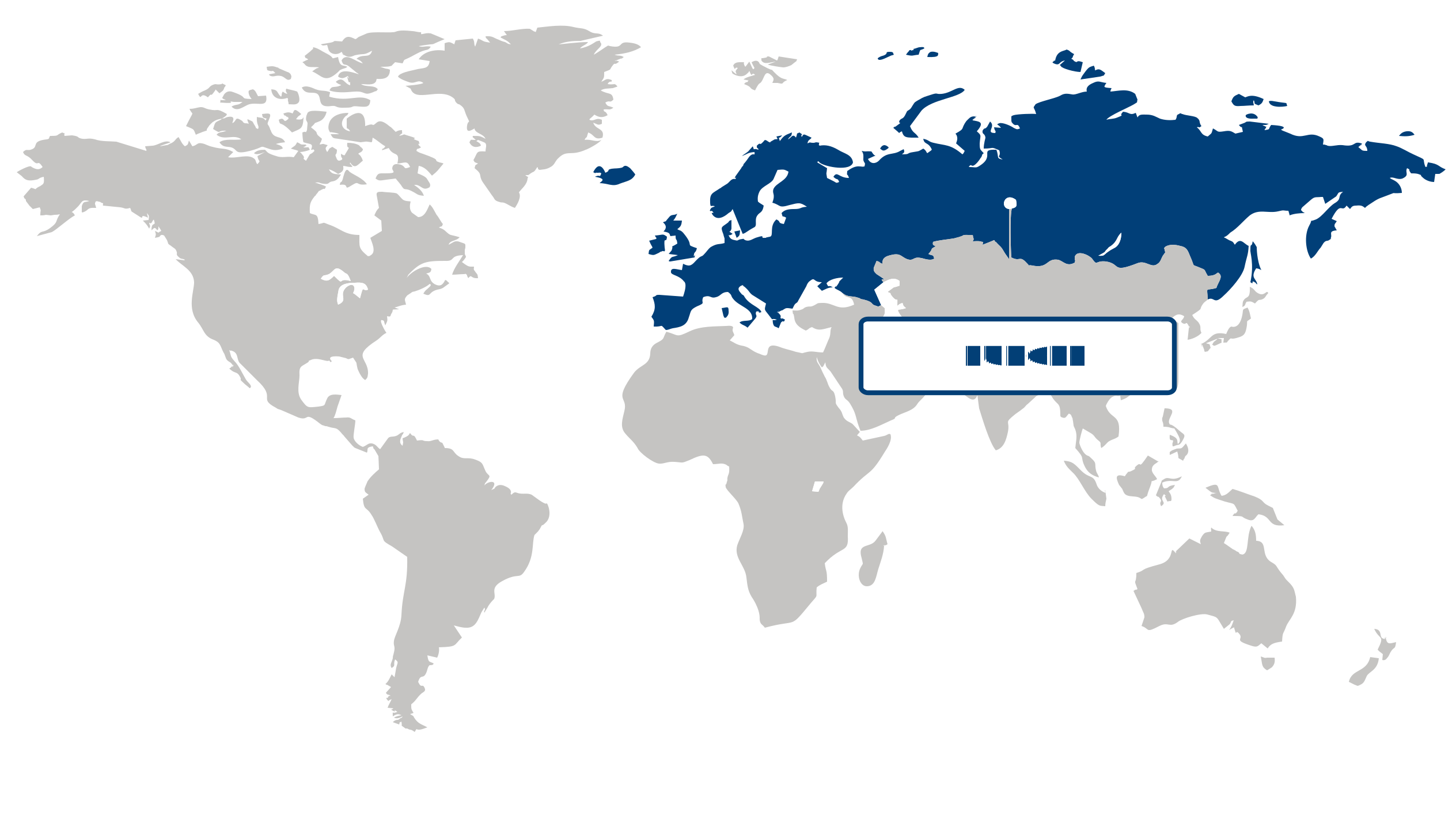
Largest Region
Europe
36.75% Market Share in 2025
Europe Market Statistics:
Europe represented more than 36.75% of the global traffic signal recognition market in 2025, establishing itself as the largest region in this sector. This dominance is driven by advanced automotive safety regulations that have catalyzed the adoption of sophisticated traffic management systems. The region's commitment to enhancing road safety and reducing traffic-related incidents has led to a significant investment in technologies that improve vehicle awareness and compliance with traffic signals. This proactive stance aligns with shifting consumer preferences towards safer driving experiences, supported by initiatives from organizations such as the European Commission, which emphasizes the importance of intelligent transport systems in urban planning. As Europe continues to prioritize sustainability and smart city development, the traffic signal recognition market is poised for substantial growth, presenting lucrative opportunities for stakeholders.
Germany anchors the European traffic signal recognition market, leveraging its robust automotive industry and stringent safety regulations. The country's focus on integrating advanced technologies into vehicles has spurred demand for innovative traffic management solutions, particularly in urban areas. For instance, the Federal Ministry for Digital and Transport has been actively promoting the deployment of intelligent traffic systems to enhance road safety and efficiency. This regulatory environment fosters a competitive landscape where companies are increasingly adopting cutting-edge technologies to meet consumer expectations for safety and convenience. As Germany continues to lead in automotive innovation, its advancements in traffic signal recognition will significantly contribute to the overall growth of the European market.
France plays a pivotal role in the traffic signal recognition market within Europe, driven by its commitment to modernizing transportation infrastructure. The French government has initiated several projects aimed at improving traffic flow and reducing congestion, which directly influences the demand for advanced traffic signal recognition systems. Initiatives from the Ministry for the Ecological Transition highlight the importance of integrating technology in urban mobility solutions, aligning with broader sustainability goals. The competitive strategies employed by French automotive manufacturers, such as Renault and Peugeot, to incorporate smart technologies into their vehicles further underscore the country's position in this market. France's strategic investments in traffic management solutions not only enhance road safety but also reinforce the overall growth trajectory of the European traffic signal recognition market.
Asia Pacific Market Analysis:
The Asia Pacific region emerged as the fastest-growing market for traffic signal recognition, registering rapid growth, posting a CAGR of 14%. This growth is significantly driven by the rising adoption of autonomous vehicles in Asia, which has heightened the demand for advanced traffic management solutions. As countries in this region increasingly prioritize smart city initiatives, the integration of traffic signal recognition systems is becoming essential for enhancing road safety and efficiency. Moreover, the region's robust technological infrastructure and supportive government policies are fostering an environment conducive to innovation in traffic management technologies. For instance, initiatives by the Asian Development Bank to promote sustainable urban transport solutions are reinforcing the importance of traffic signal recognition systems in urban planning and development. Given these dynamics, the Asia Pacific region presents substantial opportunities for investment and growth in the traffic signal recognition market, driven by the convergence of technology and urban mobility solutions.
Japan plays a pivotal role in the traffic signal recognition market, characterized by its advanced technological landscape and strong consumer preference for innovative automotive solutions. The rising adoption of autonomous vehicles is particularly pronounced in Japan, where major automotive manufacturers like Toyota and Honda are actively investing in AI-driven technologies to enhance vehicle safety and navigation. The Japanese government’s commitment to smart mobility, as evidenced by its "Connected and Autonomous Vehicle Strategy," is further propelling the demand for traffic signal recognition systems. This strategy emphasizes the integration of advanced technologies into urban infrastructure, fostering a seamless transition towards autonomous driving. As Japan continues to lead in automotive innovation, its role in the regional traffic signal recognition market is likely to grow, reflecting a broader trend towards smart transportation solutions.
China, as the largest automotive market globally, holds significant potential in the traffic signal recognition space, driven by its rapid urbanization and increasing focus on smart city development. The country’s aggressive push towards autonomous vehicle adoption is supported by substantial investments from both the government and private sector, with companies like Baidu and Tencent leading the charge in AI and smart transportation technologies. Regulatory frameworks, such as the "New Energy Vehicle Policy," are incentivizing the integration of advanced traffic management systems, including traffic signal recognition, into urban infrastructure. This focus on innovation and digital transformation is reshaping consumer expectations, with a growing preference for vehicles equipped with cutting-edge safety and navigation features. As China continues to evolve as a hub for automotive technology, its advancements in traffic signal recognition will significantly contribute to the overall growth of the Asia Pacific market.
North America Market Trends:
The North America region has held a commanding share in the traffic signal recognition market, driven by its advanced technological landscape and robust infrastructure investments. This region's significance is underscored by a growing emphasis on smart city initiatives and the integration of AI-driven solutions in urban planning. The increasing demand for enhanced traffic management systems reflects a shift towards sustainable urban mobility, influenced by consumer preferences for safety and efficiency. Recent initiatives, such as those reported by the U.S. Department of Transportation, highlight the commitment to modernizing traffic systems, thereby enhancing operational efficiency and reducing congestion. Furthermore, the competitive intensity in this market is amplified by the presence of innovative players like Waymo and Tesla, pushing the boundaries of traffic signal recognition technologies. Looking ahead, North America offers substantial opportunities for growth, particularly as municipalities seek to invest in intelligent transportation systems that align with sustainability goals and digital transformation efforts.
The U.S. plays a pivotal role in the North American traffic signal recognition market, exhibiting significant growth driven by regulatory advancements and technological adoption. The push for smart infrastructure, as outlined by the Federal Highway Administration, has catalyzed investments in traffic signal recognition systems, enhancing urban mobility and safety. This regulatory framework encourages the adoption of cutting-edge technologies, such as machine learning and computer vision, to optimize traffic flow. Companies like Siemens and Cisco are actively developing solutions that integrate real-time data analytics to improve traffic management. The cultural shift towards embracing smart technologies is evident, with cities like San Francisco and New York leading the charge in implementing these systems. This trend positions the U.S. as a key player in the regional market, creating strategic implications for stakeholders looking to capitalize on the evolving landscape of traffic signal recognition.
Canada also contributes significantly to the North American traffic signal recognition market, marked by a moderate growth trajectory fueled by urbanization and technological innovation. The Canadian government’s commitment to sustainable transportation, as detailed in Transport Canada's reports, supports the integration of advanced traffic management systems in metropolitan areas. With cities like Toronto and Vancouver investing in smart infrastructure, there is an increasing demand for traffic signal recognition technologies that enhance safety and efficiency. The competitive landscape is characterized by local firms, such as QNX Software Systems, which are pioneering solutions tailored to the unique challenges of Canadian urban environments. This growth not only reinforces Canada’s role in the regional market but also highlights the collaborative potential between Canadian and U.S. companies to drive innovation in traffic signal recognition.
No card data available for this language/report.
Segment Leadership and Growth Trends
Analysis by Component
Traffic signal recognition market in the hardware segment dominated with a commanding 65.48% share in 2025. This leadership is primarily driven by the increasing demand for high-resolution cameras, which are essential for real-time signal detection, enhancing the overall safety and efficiency of traffic management systems. The shift towards more sophisticated hardware solutions reflects evolving customer preferences for advanced technology that supports smarter cities and sustainable urban mobility. Notably, the International Telecommunication Union (ITU) emphasizes the critical role of hardware advancements in facilitating seamless communication in smart transportation networks. Established firms can leverage their expertise in hardware development, while emerging players have opportunities to innovate in this space. Given the ongoing advancements in sensor technology and urban infrastructure projects, the hardware segment is expected to maintain its relevance in the near to medium term.
Analysis by Vehicle Type
The traffic signal recognition market for passenger vehicles captured over 64.02% share in 2025, reflecting its significant role in the overall landscape. This segment's dominance is attributed to high sales volumes driven by the integration of Advanced Driver Assistance Systems (ADAS) safety features, which are increasingly sought after by consumers prioritizing vehicle safety and connectivity. The growing awareness of road safety and regulatory mandates for ADAS technologies are influencing purchasing decisions, as highlighted by the National Highway Traffic Safety Administration (NHTSA). Established automotive manufacturers are well-positioned to capitalize on this trend, while new entrants can focus on developing innovative ADAS solutions tailored to consumer needs. As the automotive industry continues to evolve towards greater automation and connectivity, the passenger vehicle segment is poised to remain crucial in the traffic signal recognition market.
Analysis by Technology
In the traffic signal recognition market, the deep learning technology segment represented more than 41.2% of the market share in 2025. This segment leads due to its superior accuracy in variable lighting and weather conditions, making it a preferred choice for enhancing traffic signal recognition systems. As consumers and municipalities demand more reliable and efficient traffic management solutions, the adoption of deep learning algorithms has surged, aligning with trends in digital transformation and technological innovation. The European Commission has recognized the potential of AI-driven technologies in improving urban mobility, further validating this segment's importance. Established tech companies can leverage their deep learning expertise, while startups have opportunities to develop targeted applications. With continuous advancements in AI and machine learning, the deep learning segment is expected to remain a pivotal force in the traffic signal recognition market.
| Report Segmentation | |||
| Segment | Sub-Segment | Largest Segment | Fastest Growing Segment |
|---|---|---|---|
| Component | Hardware, Software | ||
| Vehicle Type | Passenger vehicles, Commercial vehicles, Special purpose vehicles | ||
| Technology | Image processing, Deep learning, Computer vision, Machine learning, Pattern recognition, Sensor fusion | ||
| Application | Traffic light detection, Stop sign recognition, Speed limit detection, Warning sign recognition, Lane marking detection, Pedestrian crossing recognition, Railroad crossing detection, Yield sign recognition | ||
 Read our Research Approach
Competitive Landscape and Market Positioning
Key players in the traffic signal recognition market include Mobileye, Aptiv, Valeo, Bosch, Continental, Denso, Magna International, ZF Friedrichshafen, NVIDIA, and Hyundai Mobis. Mobileye stands out with its advanced computer vision technology, significantly influencing the market's direction and innovation. Aptiv leverages its expertise in automated driving systems to enhance traffic signal recognition capabilities, while Valeo is recognized for its commitment to developing smart mobility solutions. Bosch and Continental are notable for their integrated approach, combining sensor technology with software solutions, thus reinforcing their positions. Denso, with its strong automotive partnerships, contributes to the market through innovative sensor technologies. Magna International and ZF Friedrichshafen are also prominent, focusing on advanced driver-assistance systems that incorporate traffic signal recognition. NVIDIA's cutting-edge AI solutions provide a significant competitive edge, and Hyundai Mobis is increasingly recognized for its focus on smart vehicle technologies, solidifying its role in the evolving landscape.
The competitive environment in the traffic signal recognition market is characterized by dynamic strategic initiatives among these leading players. Collaborations between automotive manufacturers and tech companies are reshaping product offerings, enhancing capabilities in real-time traffic signal detection. Noteworthy advancements in technology and R&D investments are evident, as companies strive to integrate artificial intelligence and machine learning into their systems. This focus on innovation is further supported by ongoing partnerships aimed at developing next-generation traffic management solutions. New product launches have been pivotal, allowing players to respond swiftly to emerging market needs, thereby enhancing their competitive positioning. The interplay of these initiatives not only drives technological advancements but also fosters an ecosystem where collaboration and innovation are paramount for sustained growth.
Strategic / Actionable Recommendations for Regional Players
For players in North America, fostering partnerships with technology firms specializing in AI and machine learning can enhance capabilities in traffic signal recognition. Collaborating with local government agencies to pilot smart city initiatives could also create avenues for innovative solutions, positioning companies as leaders in urban mobility.
In the Asia Pacific region, tapping into emerging technologies such as 5G connectivity can significantly improve the efficacy of traffic signal recognition systems. Engaging in joint ventures with automotive manufacturers focused on electric and autonomous vehicles may unlock new market opportunities, ensuring relevance in a rapidly evolving landscape.
In Europe, targeting high-growth sub-segments such as electric vehicles and smart infrastructure can provide a competitive edge. Forming alliances with regulatory bodies and industry groups to establish standards for traffic signal recognition technology will not only enhance credibility but also facilitate smoother market entry and adoption.
Why Choose Us
Specialized Expertise: Our team comprises industry experts with a deep understanding of your market segment. We bring specialized knowledge and experience that ensures our research and consulting services are tailored to your unique needs.
Customized Solutions: We understand that every client is different. That's why we offer customized research and consulting solutions designed specifically to address your challenges and capitalize on opportunities within your industry.
Proven Results: With a track record of successful projects and satisfied clients, we have demonstrated our ability to deliver tangible results. Our case studies and testimonials speak to our effectiveness in helping clients achieve their goals.
Cutting-Edge Methodologies: We leverage the latest methodologies and technologies to gather insights and drive informed decision-making. Our innovative approach ensures that you stay ahead of the curve and gain a competitive edge in your market.
Client-Centric Approach: Your satisfaction is our top priority. We prioritize open communication, responsiveness, and transparency to ensure that we not only meet but exceed your expectations at every stage of the engagement.
Continuous Innovation: We are committed to continuous improvement and staying at the forefront of our industry. Through ongoing learning, professional development, and investment in new technologies, we ensure that our services are always evolving to meet your evolving needs.
Value for Money: Our competitive pricing and flexible engagement models ensure that you get maximum value for your investment. We are committed to delivering high-quality results that help you achieve a strong return on your investment.
Select Licence Type

