Tree Nuts Market Size & Growth Forecast 2027–2036, By Segments (Distribution Channel, Form, Product), Regional Demand Trends (North America, Asia Pacific, Europe), Key Country Insights (U.S., Japan, South Korea, Germany, France, Italy), and Competitive Landscape
Jump to content
Market Size and Growth Outlook
Tree Nuts Market size was estimated at USD 65.98 billion in 2026 and is projected to grow at a 10.55% CAGR from 2027 to 2036, attaining USD 179.89 billion by 2036. The industry revenue for 2027 is assessed at USD 71.84 billion.
Get more details on this report
Request Free Sample ReportTree Nuts Market Intelligence Snapshot
Regional Market Dynamics
- Europe held a 32.40% market share in 2026, supported by established consumption across retail and foodservice, diversified applications, and mature distribution networks that sustain consistent demand.
- Asia Pacific is expected to expand at a 12.32% CAGR as urban consumers increasingly adopt nutrient-dense foods, supported by modern retail expansion, e-commerce, and wider household consumption.
Segment Momentum
- Online held a 55.65% share in 2026 due to easier product comparison, wider assortment availability, and strong suitability for repeat and bulk purchasing behavior.
- Split is the fastest-growing segment as it better supports processing, baking, and ready-to-use applications where convenience and handling efficiency are prioritized over whole-kernel presentation.
Market Expansion Drivers
- Growing consumer shift toward wellness-driven healthy snacking and nutrition awareness.
- Expanding online retail channels increasing global accessibility of tree nut products.
- Rising plant-based protein adoption strengthening demand for almonds and cashews.
Leading Market Participants
- Major players in the tree nuts market include Blue Diamond Growers (United States), Olam Group Limited (Singapore), Select Harvests Limited (Australia), Archer Daniels Midland Company (United States), Borges Agricultural & Industrial Nuts S.A. (Spain), Diamond Foods LLC (United States), Mariani Nut Company (United States), Waterford Nut Co. (United States), Golden Peanut and Tree Nuts LLC (United States).
Global Market Forecast Snapshot
Market Outlook
- 2026 Market Size: USD 65.98 billion
- 2027 Estimated Market Size: USD 71.84 billion.
- Projected Market Size: USD 179.89 billion by 2036
- Growth Forecast: 10.55% CAGR (2027-2036)
Regional and Segment Outlook
- Leading Regional Market: Europe
- High-Growth Regional Hub: Asia Pacific
- Core Revenue Segment: Online (Distribution Channel) | Whole (Form) | Almonds (Product)
- Emerging Opportunity Segment: Online (Distribution Channel) | Split (Form) | Almonds (Product)
Market Growth Drivers and Industry Trends
Growing consumer shift toward wellness-driven healthy snacking and nutrition awareness
Increasing awareness of balanced nutrition is encouraging consumers to replace highly processed snacks with nutrient-dense alternatives, supporting tree nuts market growth across retail and foodservice applications. Tree nuts are widely incorporated into diets because they provide protein, healthy fats, fiber, vitamins, minerals, and other nutritional components that fit wellness-oriented eating patterns. Their convenience also makes them suitable for on-the-go consumption, while their use in breakfast foods, snack mixes, bakery products, confectionery, and prepared foods broadens consumption occasions. Rising interest in portion-conscious and nutrient-focused snacking is therefore encouraging demand for almonds, walnuts, pistachios, cashews, and other tree nut varieties.
Expanding online retail channels increasing global accessibility of tree nut products
The rapid development of e-commerce and digital grocery platforms is improving consumer access to a broader selection of tree nut products, which will boost tree nuts market demand across geographically diverse consumer groups. Online channels allow shoppers to compare different varieties, formats, pack sizes, and value-added products without relying solely on local store assortments. Producers and retailers can also use digital platforms to reach specialized consumer segments interested in roasted nuts, flavored products, mixed nuts, and nutrition-oriented offerings. Greater visibility through online marketplaces is helping tree nut products reach households in locations where product variety through traditional retail channels may be comparatively limited.
Rising plant-based protein adoption strengthening demand for almonds and cashews
The growing incorporation of plant-based foods into everyday diets is creating additional applications for nuts as versatile sources of plant-derived protein and other nutrients. Within the tree nuts market, almonds and cashews benefit from their adaptability across plant-based beverages, spreads, snacks, dairy alternatives, sauces, and prepared foods. Food manufacturers increasingly use these nuts to enhance flavor, texture, nutritional value, and formulation characteristics in products designed for consumers reducing or replacing animal-derived ingredients. Their ability to function as both direct food ingredients and components of value-added plant-based products is expanding their role across multiple categories.
| Growth Driver | Impact on CAGR | Regulatory Influence | Geographic Relevance | Adoption Rate | Impact Timeline |
|---|---|---|---|---|---|
| Growing consumer shift toward wellness-driven healthy snacking and nutrition awareness | 2.50% | Moderate | Europe, North America | High | Near Term |
| Expanding online retail channels increasing global accessibility of tree nut products | 2.10% | Moderate | North America, Asia Pacific | High | Mid Term |
| Rising plant-based protein adoption strengthening demand for almonds and cashews | 1.60% | Moderate | Europe, Asia Pacific | Medium | Mid Term |
Unlock insights tailored to your business with our bespoke market research solutions.
Click to get your customized report now.
Regional Demand Dynamics
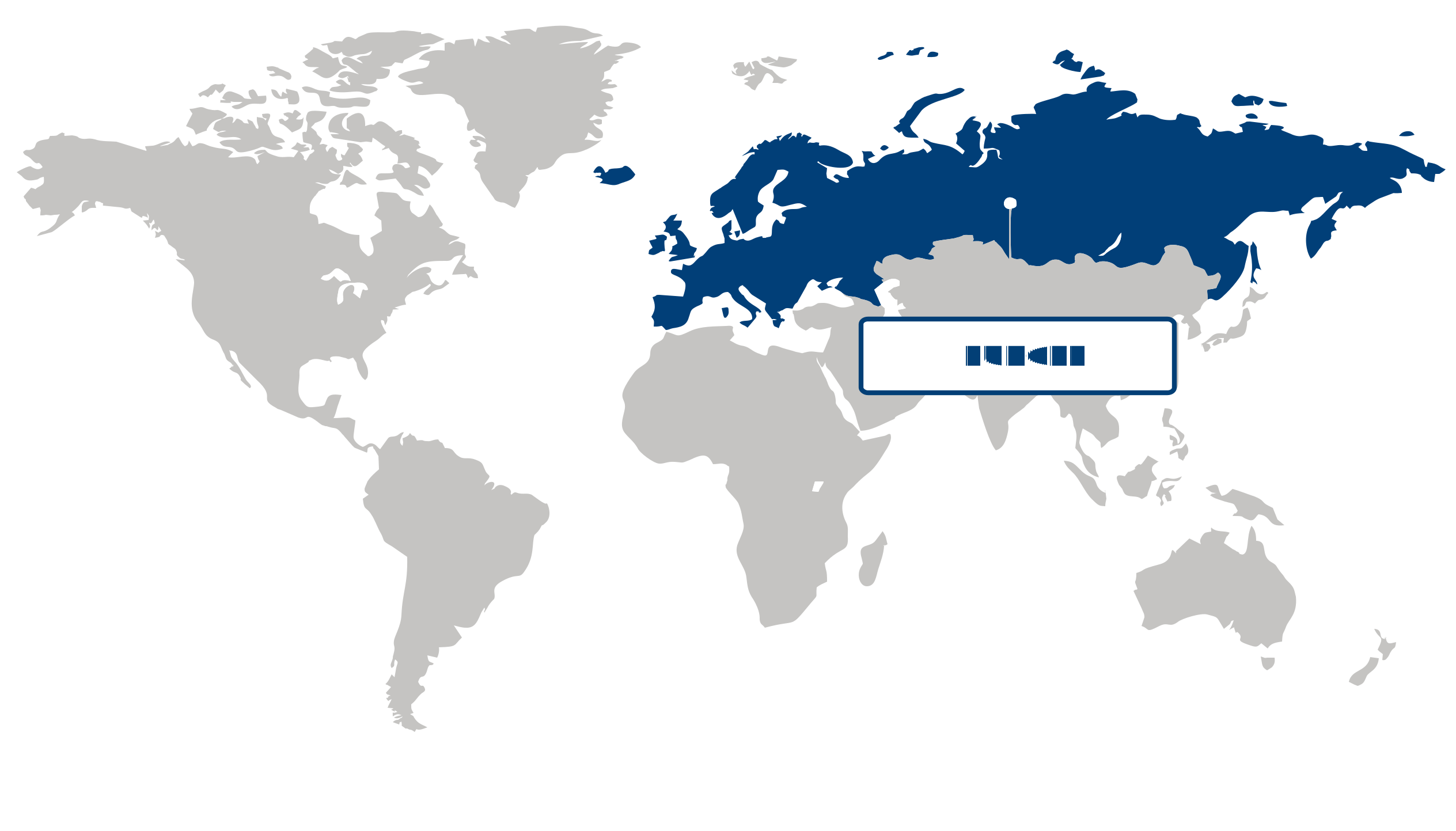
Europe (Largest Region)
The tree nuts market was led by Europe, which accounted for a 32.40% share in 2026, reflecting established consumption of nuts across snack foods, bakery products, confectionery, and health-focused food applications. Strong consumer interest in nutritious and plant-based foods supports continued demand, while sophisticated food processing and distribution networks facilitate the incorporation of tree nuts into a wide range of products. Premium positioning and growing preference for natural, nutrient-rich ingredients further reinforce the region's market presence.
Asia Pacific (Fastest-Growing Region)
Asia Pacific is experiencing the fastest growth in the tree nuts market as rising disposable incomes, urbanization, and changing dietary habits expand demand for nutritious and convenient foods. Increasing exposure to international food products and the development of modern retail channels are improving access to packaged and processed tree nut products. Growing use of nuts in snacks, bakery items, confectionery, and health-oriented formulations is also broadening applications and creating favorable conditions for regional market expansion.
| Parameter | North America | Asia Pacific | Europe | Latin America | MEA |
|---|---|---|---|---|---|
| Innovation HubiScaleNascentDeveloping Advanced | |||||
| Cost-Sensitive RegioniScaleLowMedium High | |||||
| Regulatory EnvironmentiScaleRestrictiveNeutral Supportive | |||||
| Demand DriversiScaleWeakModerate Strong | |||||
| Development StageiScaleEmergingDeveloping Developed | |||||
| Adoption RateiScaleLowMedium High | |||||
| New Entrants / StartupsiScaleSparseModerate Dense | |||||
| Macro IndicatorsiScaleWeakStable Strong |
Key Country Insights
Germany 🇩🇪
Premium Natural NutritionGermany’s tree nuts market reflects strong preference for natural, minimally processed, and sustainably sourced products. Consumers prioritize organic certification and traceability, with growing use of nuts in healthy snacking and baking applications.
France 🇫🇷
Gourmet Ingredient UseFrance’s tree nuts market is supported by culinary and gourmet applications across bakery, confectionery, and fine dining. Demand is reinforced by preference for high-quality sourcing and premium packaged nut assortments.
Italy 🇮🇹
Culinary Heritage IntegrationItaly integrates tree nuts deeply into traditional culinary uses, especially in desserts, sauces, and regional recipes. Market demand is sustained by both household cooking habits and artisanal food production emphasizing authentic ingredients.
Japan 🇯🇵
Packaged Portion HealthJapan’s tree nuts market is influenced by demand for small-pack, portion-controlled health snacks. Consumption is closely tied to aging population nutrition needs and convenience-focused retail offerings in supermarkets and vending channels.
South Korea 🇰🇷
Functional Snack ExpansionSouth Korea is expanding tree nut consumption through functional snack positioning and wellness-focused retail products. Brands emphasize mixed nut blends and fortified snack formats targeting fitness-oriented and young urban consumers.
United States 🇺🇸
Snacking Protein ShiftThe U.S. tree nuts market is driven by rising demand for protein-rich snacking and plant-based diets. Retailers and brands increasingly expand flavored, portion-controlled, and functional nut products across mainstream grocery and e-commerce channels.
Tree Nuts Market Share (%), by Distribution Channel, 2026
Go beyond the chart, access full insights & data tables
Request Free Sample ReportDistribution Channel Segment Analysis: Online (Largest & Fastest-Growing Segment)
The online segment led the tree nuts market with a 55.65% share in 2026 and is also the fastest-growing distribution channel. Digital purchasing provides consumers with convenient access to a broad selection of tree nuts while enabling easy product comparison and doorstep delivery. Growing consumer preference for convenient grocery shopping, combined with the expanding availability of packaged and premium nut products through digital channels, is strengthening online sales. The channel also allows suppliers to reach wider customer groups without relying solely on physical retail presence, supporting its continued market expansion.
Form Segment Analysis: Whole (Largest Segment) vs Split (Fastest-Growing Segment)
Whole tree nuts accounted for the largest share of the tree nuts market at 67.9% in 2026, reflecting strong consumer and commercial preference for products that retain their natural appearance, texture, and versatility. Whole nuts are widely suited to direct snacking as well as use in bakery, confectionery, cereals, and food preparation. Their broad applicability and suitability for premium packaging and gifting further support demand across retail and foodservice channels.
The split segment is experiencing the fastest growth as food manufacturers and consumers increasingly favor convenient formats that simplify preparation and incorporation into finished products. Split nuts can be readily used in bakery items, desserts, snack mixes, toppings, and culinary applications, reducing processing requirements. Their compatibility with value-added food formulations is supporting broader adoption as demand increases for convenient and versatile nut ingredients.
| Segment | Sub-Segment | Largest Segment | Fastest Growing |
|---|---|---|---|
| Distribution Channel | Online, Offline | Online | Online |
| Form | Whole, Split, Others | Whole | Split |
| Product | Almonds, Cashews, Walnuts, Pistachios, Others | Almonds | Almonds |
Competitive Landscape and Market Positioning
Prominent players in the tree nuts market:
1. Blue Diamond Growers (United States)
2. Olam Group Limited (Singapore)
3. Select Harvests Limited (Australia)
4. Archer Daniels Midland Company (United States)
5. Borges Agricultural & Industrial Nuts S.A. (Spain)
6. Diamond Foods LLC (United States)
7. Mariani Nut Company (United States)
8. Waterford Nut Co. (United States)
9. Golden Peanut and Tree Nuts LLC (United States)
Increasing demand for plant-based nutrition is encouraging innovation in the tree nuts market, with research focused on improving crop quality, processing efficiency, and sustainable cultivation practices. Product diversification continues to expand applications across food, beverage, and nutritional products.
| Company | Market Share | Company Revenue | Revenue CAGR (%) | Product Portfolio | Geographic Presence | Innovation / R&D Focus | Strategic Developments |
|---|---|---|---|---|---|---|---|
| Blue Diamond Growers (United States) | |||||||
| Olam Group Limited (Singapore) | |||||||
| Select Harvests Limited (Australia) | |||||||
| Archer Daniels Midland Company (United States) | |||||||
| Borges Agricultural & Industrial Nuts S.A. (Spain) | |||||||
| Diamond Foods LLC (United States) | |||||||
| Mariani Nut Company (United States) | |||||||
| Waterford Nut Co. (United States) | |||||||
| Golden Peanut and Tree Nuts LLC (United States). |
Industry Development / News
| Company Name | Date | Key Development |
|---|---|---|
| Vaulted Deep | Mar-26 | Vaulted Deep partnered with the Idaho National Laboratory to develop a process for converting fibrous agricultural residues from nut processing into industrial carbon-management inputs. This initiative represents a strategic shift toward circular economy practices, aiming to valorize agricultural waste streams and provide sustainable end-of-life solutions for biomass byproducts within the tree nut supply chain. |
| Kubota | Oct-24 | Kubota acquired Bloomfield Robotics to integrate advanced AI-driven crop monitoring and predictive analytics into its precision agriculture ecosystem. This technology enables enhanced orchard management for tree nut growers by providing high-resolution field intelligence, thereby optimizing yield performance and operational efficiency across high-value specialty crop segments. |
| Mars | Jan-24 | Mars opened a $42 million Global Research and Development Hub in Chicago to accelerate innovation in the chocolate and nut snacking categories. The facility provides dedicated infrastructure for advanced ingredient formulation and product testing, supporting the company's long-term strategy to expand its premium confectionery and nut-based product portfolio through enhanced global R&D capabilities. |
Customize Your Report
Explore examples of how this report can be tailored to different research needs, including custom segments, additional topics or chapters, and related reports. Click a section of the wheel or its numbered marker to explore the available options.
Tree Nuts Market — Custom Segments
| Segment | Sub-Segment |
|---|---|
| Application | Direct Consumption, Food & Beverage Processing, Bakery & Confectionery, Foodservice |
| Cultivation Method | Conventional, Organic, Regenerative & Sustainable |
| Quality Grade | Standard Grade, Premium Grade, Industrial Grade |
Tree Nuts Market — Custom TOC
| Custom Chapter | Chapter Details |
|---|---|
| Global Sourcing and Origin Diversification Strategy |
|
| Crop Yield Risk and Climate Resilience Assessment |
|
| Value-Added Processing and Product Diversification Opportunities |
|
Need a different cut of the data?
Request Custom ResearchFrequently Asked Questions
How big is the tree nuts market?
What is the anticipated CAGR of the tree nuts industry?
How is digital commerce reshaping growth opportunities in the tree nuts market?
Which demand trends are strengthening long-term growth in the tree nuts market?
Why is Online the leading distribution channel in the tree nuts market?
Which form segment is expanding the fastest in the tree nuts market?
Why does Europe lead the tree nuts market?
What is fueling tree nuts market growth in Asia Pacific?
Who are the major participants shaping the tree nuts landscape?
Our Clients
"The report provided a thorough look at market trends, technological advancements, and the competitive landscape. The depth of insights was really valuable."
ITC Limited
"We would highly recommend Fundamental Business Insights & Consulting to anyone looking for reliable, detailed, and comprehensive market research in the Food industry."
Tyson Foods
"The clarity and presentation of the information were commendable. The report was delivered timely, which made the overall experience smooth and convenient."
Mondelēz International
Our Research Team & Methodology
Every Fundamental Business Insights report is built by a dedicated vertical research team, validated through a structured primary-and-secondary methodology, and reviewed for accuracy before it reaches you.
Delivery
Published
Available
Support
- Market Size & Forecast
- Market Segmentation
- Regional Analysis
- Growth Drivers & Challenges
- Market Dynamics
- Competitive Landscape
- Company Profiles
- Competitive Benchmarking
- Mergers & Acquisitions
- Market Share Analysis or Key Company Strategies
- Value Chain Analysis
- Porter's Five Forces
- PESTLE Analysis
- Pricing Trends
- Supply-Demand Analysis
- Technology Landscape
- Regulatory Landscape
- Investment & Funding Landscape
- Emerging Opportunities
- Future Market Outlook