Uncooked Pasta and Noodles Market Size & Growth Forecast 2027–2036, By Segments (Form, Raw Material, Distribution Channel), Regional Demand Trends (North America, Asia Pacific, Europe), Key Country Insights (U.S., Japan, South Korea, Germany, France, Italy), and Competitive Landscape
Jump to content
Market Size and Growth Outlook
Uncooked Pasta and Noodles Market size was assessed at USD 77.12 Billion in 2026 and is poised to grow at 3.24% CAGR between 2027 and 2036, reaching USD 106.08 Billion by 2036. The industry revenue for 2027 is estimated at USD 79.2 Billion.
Get more details on this report
Request Free Sample ReportUncooked Pasta and Noodles Market Intelligence Snapshot
Regional Market Dynamics
- Europe benefited from established food processing, strong pasta and noodle consumption, mature retail infrastructure, and widespread household and foodservice demand.
- Urbanization, rising incomes, modern retail expansion, changing dietary preferences, and greater acceptance of international cuisines are supporting regional growth.
Segment Momentum
- Dried pasta and noodles held a 70.08% market share in 2026, supported by long shelf life, convenient storage, easy distribution, and broad acceptance across households and food service channels.
- Online retail is growing rapidly as consumers increasingly prefer digital grocery shopping, benefiting from wider product selection, doorstep delivery, and greater convenience for packaged food purchases.
Market Expansion Drivers
- Increasing demand for affordable staple foods driving sustained packaged carbohydrate consumption growth
- Growth in quick-service restaurants boosting bulk procurement of pasta and noodle products
- Urbanization trends increasing reliance on convenient packaged food products in dense cities
Leading Market Participants
- Prominent players in the uncooked pasta and noodles market include Barilla Group (Italy), Nestlé S.A. (Switzerland), Nissin Foods Holdings Co., Ltd. (Japan), Ebro Foods S.A. (Spain), Toyo Suisan Kaisha, Ltd. (Japan), Campbell Soup Company (United States), Kraft Heinz Company (United States), Unilever plc (United Kingdom), De Cecco S.p.A. (Italy), ITC Limited (India)
Global Market Forecast Snapshot
Market Outlook
- 2026 Market Size: USD 77.12 Billion
- 2027 Estimated Market Size: USD 79.2 Billion
- Projected Market Size: USD 106.08 Billion by 2036
- Growth Forecast: 3.24% CAGR (2027-2036)
Regional and Segment Outlook
- Leading Regional Market: Europe
- High-Growth Regional Hub: Asia Pacific
- Core Revenue Segment: Dried Pasta and Noodles (Form) | Durum Wheat (Raw Material) | Supermarkets and Hypermarkets (Distribution Channel)
- Emerging Opportunity Segment: Chilled/frozen Pasta and Noodles (Form) | Durum Wheat (Raw Material) | Online Retail (Distribution Channel)
Market Growth Drivers and Industry Trends
Increasing demand for affordable staple foods driving sustained packaged carbohydrate consumption growth
Consumers continue to prioritize affordable and filling food options that provide convenience and long shelf life, particularly during periods of changing household spending patterns. This trend will drive the uncooked pasta and noodles market growth as packaged carbohydrate products remain widely preferred for everyday meals across households, institutional foodservice, and retail channels. Their versatility, ease of storage, and compatibility with diverse cuisines make them a dependable staple for consumers seeking economical meal solutions without compromising preparation flexibility.
Growth in quick-service restaurants boosting bulk procurement of pasta and noodle products
The uncooked pasta and noodles market growth is supported by the ongoing expansion of quick-service restaurants and casual dining establishments that rely on consistent supplies of pasta and noodle products for menu preparation. Foodservice operators increasingly procure bulk quantities to meet rising customer demand while maintaining standardized product quality and efficient kitchen operations. The broad adaptability of these products across regional and international cuisines enables restaurants to expand menu offerings while managing ingredient inventories effectively.
Urbanization trends increasing reliance on convenient packaged food products in dense cities
Rapid urbanization is reshaping consumer lifestyles by increasing demand for food products that are easy to store, prepare, and incorporate into busy daily routines. This shift will propel the uncooked pasta and noodles market growth as urban consumers increasingly choose packaged food products that offer convenience, extended shelf life, and flexibility across a variety of meal occasions. Expanding retail availability and changing dietary habits in densely populated cities are further supporting consistent demand for uncooked pasta and noodle products across diverse consumer segments.
| Growth Driver | Impact on CAGR | Regulatory Influence | Geographic Relevance | Adoption Rate | Impact Timeline |
|---|---|---|---|---|---|
| Increasing demand for affordable staple foods driving sustained packaged carbohydrate consumption growth | 2% | Low | Asia Pacific, Latin America | High | Near Term |
| Growth in quick-service restaurants boosting bulk procurement of pasta and noodle products | 1.7% | Low | North America, Europe | High | Near Term |
| Urbanization trends increasing reliance on convenient packaged food products in dense cities | 1.5% | Low | Asia Pacific, Europe | High | Mid Term |
Unlock insights tailored to your business with our bespoke market research solutions.
Click to get your customized report now.
Regional Demand Dynamics
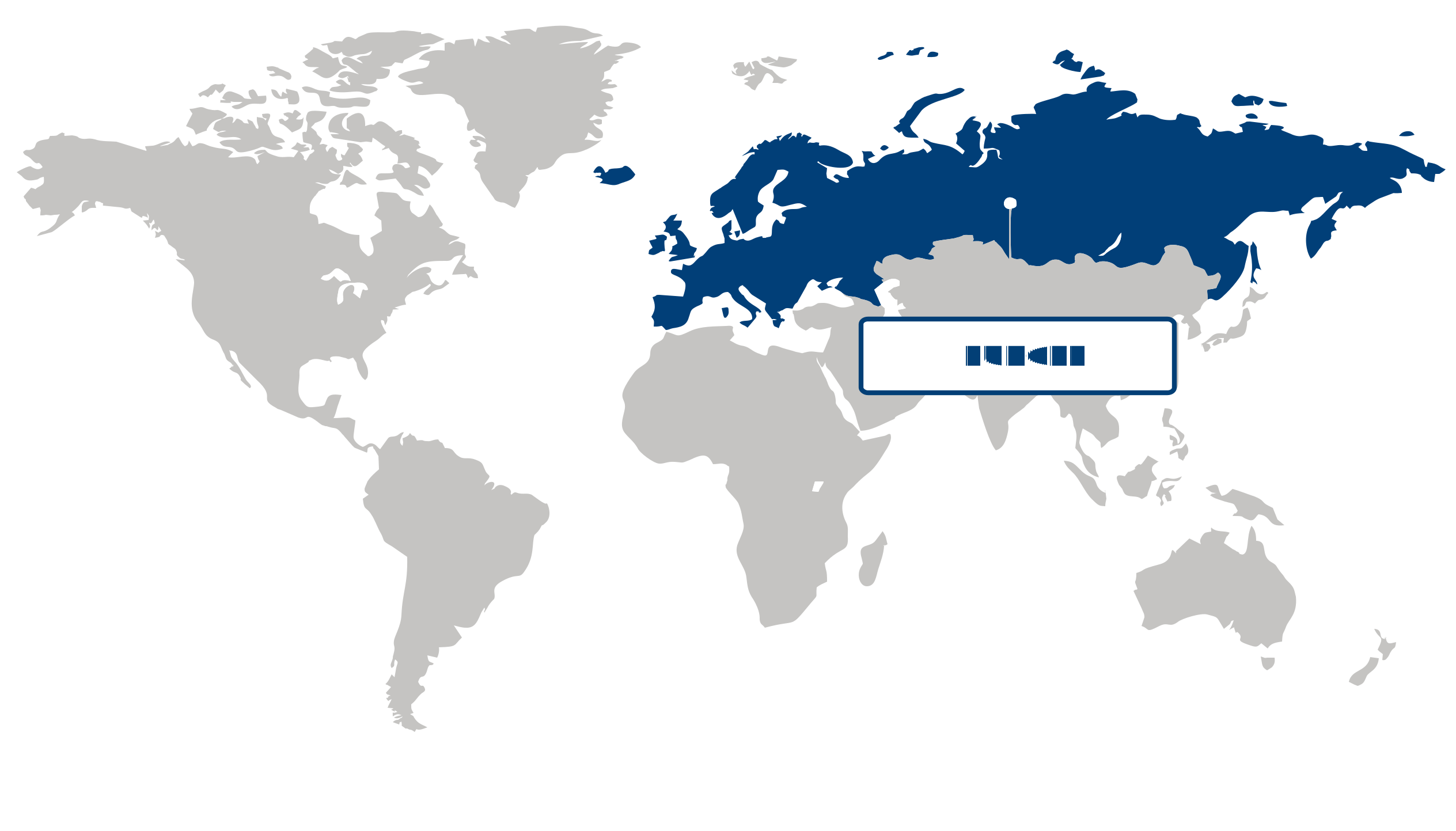
Europe (Largest Region)
Europe held the largest position in the uncooked pasta and noodles market in 2026, underpinned by the deep-rooted role of pasta and noodles in regional food culture, established food processing capabilities, and widespread consumption across both household and foodservice channels. The region benefits from a mature packaged food industry supported by sophisticated distribution networks and strong availability of conventional, premium, organic, and specialty pasta products. Increasing consumer interest in convenient meal solutions, healthier formulations, and products made with alternative ingredients is also encouraging product innovation. In addition, established retail infrastructure and continued demand for familiar staple foods provide manufacturers with a stable foundation for expanding product offerings.
Asia Pacific (Fastest-Growing Region)
Asia Pacific is expected to experience the fastest growth, supported by expanding urban populations, changing dietary preferences, and increasing demand for convenient packaged foods. Rising disposable incomes and the development of modern retail and foodservice channels are broadening access to packaged pasta and noodles across emerging economies. Consumers are also becoming more receptive to international cuisines while manufacturers are adapting products to local taste preferences through differentiated flavors, ingredients, and formats. Improvements in food processing, packaging, and distribution infrastructure are further enabling broader market penetration and supporting the region's growth momentum.
| Parameter | North America | Asia Pacific | Europe | Latin America | MEA |
|---|---|---|---|---|---|
| Innovation HubiScaleNascentDeveloping Advanced | |||||
| Cost-Sensitive RegioniScaleLowMedium High | |||||
| Regulatory EnvironmentiScaleRestrictiveNeutral Supportive | |||||
| Demand DriversiScaleWeakModerate Strong | |||||
| Development StageiScaleEmergingDeveloping Developed | |||||
| Adoption RateiScaleLowMedium High | |||||
| New Entrants / StartupsiScaleSparseModerate Dense | |||||
| Macro IndicatorsiScaleWeakStable Strong |
Key Country Insights
United States 🇺🇸
Premium Convenience ChoicesThe U.S. uncooked pasta and noodles market is experiencing growing demand for premium, specialty, and healthier product options alongside traditional varieties. Manufacturers are expanding product portfolios to address convenience, diverse dietary preferences, and retail innovation.
Germany 🇩🇪
Quality Ingredient FocusGermany continues to prioritize uncooked pasta and noodles made with high-quality ingredients, clean-label formulations, and sustainable packaging. Consumer demand encourages manufacturers to broaden premium offerings while maintaining consistent product quality.
Japan 🇯🇵
Diverse Meal InnovationJapan is expanding its uncooked pasta and noodles market through product innovation tailored to evolving household cooking habits and international cuisine preferences. Companies are introducing differentiated formats and premium ingredients to strengthen retail appeal.
South Korea 🇰🇷
Premium Retail ExpansionSouth Korea is witnessing broader demand for uncooked pasta and noodles as consumers embrace international meal options and convenient home cooking. Producers are focusing on premium ingredients, distinctive flavors, and modern packaging to support market development.
France 🇫🇷
Culinary Premium SelectionFrance maintains demand for uncooked pasta and noodles that emphasize authentic recipes, premium raw materials, and artisanal positioning. Manufacturers continue to diversify product ranges to align with evolving consumer expectations for quality and convenience.
Italy 🇮🇹
Authentic Product HeritageItaly remains focused on uncooked pasta and noodles that preserve traditional production methods while incorporating premium ingredients and sustainable packaging. The country continues to support product differentiation through authenticity, quality, and evolving consumer preferences.
Uncooked Pasta and Noodles Market Share (%), by Form, 2026
Go beyond the chart, access full insights & data tables
Request Free Sample ReportForm Segment Analysis: Dried Pasta and Noodles (Largest Segment) vs Chilled/frozen Pasta and Noodles (Fastest-Growing Segment)
Dried pasta and noodles segment led the uncooked pasta and noodles market, capturing the largest share of 70.08% in 2026. The segment’s strong market position is driven by its longer shelf life, convenient storage characteristics, and widespread consumer acceptance across households and food service channels. Dried products offer ease of preparation and distribution advantages, making them a preferred choice among consumers and manufacturers. The established supply chain and broad availability of dried pasta and noodles continue to support its leading role in the market.
Chilled/frozen pasta and noodles segment is witnessing increasing adoption due to rising consumer interest in convenient meal solutions with enhanced freshness and texture. The growing preference for ready-to-cook food options and premium-quality pasta products is encouraging manufacturers to expand chilled and frozen offerings. Improved cold-chain infrastructure and changing consumption patterns are further supporting the growth of this segment within the uncooked pasta and noodles market.
Raw Material Segment Analysis: Durum Wheat (Largest & Fastest-Growing Segment)
Durum wheat segment dominated the uncooked pasta and noodles market, accounting for the largest share of 59.36% in 2026, while also representing the fastest-growing raw material segment. The segment’s leadership is attributed to the superior quality characteristics of durum wheat, including its firmness, texture retention, and suitability for pasta production. Manufacturers widely prefer durum wheat due to its ability to deliver desirable product quality and consistency. Increasing demand for high-quality pasta products and consumer preference for authentic formulations are further strengthening the adoption of durum wheat.
Distribution Channel Segment Analysis: Supermarkets and Hypermarkets (Largest Segment) vs Online Retail (Fastest-Growing Segment)
Supermarkets and hypermarkets segment held the largest position in the uncooked pasta and noodles market in 2026, supported by their extensive product availability, convenient shopping experience, and strong consumer reach. These retail channels provide consumers with access to diverse pasta and noodle products while enabling manufacturers to achieve broad market visibility. The established presence of supermarkets and hypermarkets as primary grocery purchasing destinations continues to support their dominance.
Online retail segment is expected to experience faster growth as consumers increasingly adopt digital purchasing channels for grocery and packaged food products. Online platforms provide convenience, wider product selection, and doorstep delivery options, which are appealing to consumers seeking efficient shopping experiences. The expansion of digital commerce and changing purchasing behaviors are contributing to the rising adoption of online retail channels for uncooked pasta and noodles.
| Segment | Sub-Segment | Largest Segment | Fastest Growing |
|---|---|---|---|
| Form | Dried Pasta and Noodles, Ambient/canned Pasta and Noodles, Chilled/frozen Pasta and Noodles | Dried Pasta and Noodles | Chilled/frozen Pasta and Noodles |
| Raw Material | Semolina, Flour, Durum Wheat, Others | Durum Wheat | Durum Wheat |
| Distribution Channel | Supermarkets and Hypermarkets, Convenience Stores, Online Retail, Others | Supermarkets and Hypermarkets | Online Retail |
Competitive Landscape and Market Positioning
Prominent players in the uncooked pasta and noodles market:
- Barilla Group (Italy)
- Nestlé S.A. (Switzerland)
- Nissin Foods Holdings Co., Ltd. (Japan)
- Ebro Foods S.A. (Spain)
- Toyo Suisan Kaisha Ltd. (Japan)
- Campbell Soup Company (United States)
- Kraft Heinz Company (United States)
- Unilever plc (United Kingdom)
- De Cecco S.p.A. (Italy)
- ITC Limited (India)
Competitive dynamics are expanding beyond traditional manufacturing scale as producers respond to changing consumer preferences with broader product differentiation across ingredients, nutritional profiles, and premium positioning. Innovation in raw material selection, processing techniques, and packaging is becoming an important avenue for building brand relevance in mature retail environments while supporting expansion into foodservice and export channels. Supply chain resilience has also become a meaningful source of competitive strength, as manufacturers seek greater flexibility in sourcing agricultural inputs and maintaining consistent product quality despite fluctuations in raw material availability.
| Company | Market Share | Company Revenue | Revenue CAGR (%) | Product Portfolio | Geographic Presence | Innovation / R&D Focus | Strategic Developments |
|---|---|---|---|---|---|---|---|
| Barilla Group (Italy) | |||||||
| Nestlé S.A. (Switzerland) | |||||||
| Nissin Foods Holdings Co. Ltd. (Japan) | |||||||
| Ebro Foods S.A. (Spain) | |||||||
| Toyo Suisan Kaisha Ltd. (Japan) | |||||||
| Campbell Soup Company (United States) | |||||||
| Kraft Heinz Company (United States) | |||||||
| Unilever plc (United Kingdom) | |||||||
| De Cecco S.p.A. (Italy) | |||||||
| ITC Limited (India) |
Customize Your Report
Explore examples of how this report can be tailored to different research needs, including custom segments, additional topics or chapters, and related reports. Click a section of the wheel or its numbered marker to explore the available options.
Uncooked Pasta and Noodles Market — Custom Segments
| Segment | Sub-Segment |
|---|---|
| Meal Occasion | Everyday Meals, Quick-Service Meals, Special Occasions, Snack and Convenience Consumption |
| Price Tier | Economy, Mid-Range, Premium |
| Brand Ownership | Branded Products, Private Label Products |
Uncooked Pasta and Noodles Market — Custom TOC
| Custom Chapter | Chapter Details |
|---|---|
| Consumer Preference & Format Evolution |
|
| Private Label & Brand Strategy |
|
| Premiumization & Product Innovation |
|
Need a different cut of the data?
Request Custom ResearchFrequently Asked Questions
What is the current size of the uncooked pasta and noodles market?
What is the projected value of the uncooked pasta and noodles industry by 2036?
How are changing consumer spending patterns influencing the uncooked pasta and noodles market?
Why is foodservice expansion supporting growth in the uncooked pasta and noodles market?
Why do dried pasta and noodles lead the uncooked pasta and noodles market?
Why is online retail becoming the fastest-growing distribution channel in the uncooked pasta and noodles market?
How did Europe maintain its leading position in the uncooked pasta and noodles market in 2026?
Why is Asia Pacific expected to be the fastest-growing region for uncooked pasta and noodles?
Who are the leading players in the uncooked pasta and noodles landscape?
Our Clients
"The report provided a thorough look at market trends, technological advancements, and the competitive landscape. The depth of insights was really valuable."
ITC Limited
"We would highly recommend Fundamental Business Insights & Consulting to anyone looking for reliable, detailed, and comprehensive market research in the Food industry."
Tyson Foods
"The clarity and presentation of the information were commendable. The report was delivered timely, which made the overall experience smooth and convenient."
Mondelēz International
Our Research Team & Methodology
Every Fundamental Business Insights report is built by a dedicated vertical research team, validated through a structured primary-and-secondary methodology, and reviewed for accuracy before it reaches you.
Delivery
Published
Available
Support
- Market Size & Forecast
- Market Segmentation
- Regional Analysis
- Growth Drivers & Challenges
- Market Dynamics
- Competitive Landscape
- Company Profiles
- Competitive Benchmarking
- Mergers & Acquisitions
- Market Share Analysis or Key Company Strategies
- Value Chain Analysis
- Porter's Five Forces
- PESTLE Analysis
- Pricing Trends
- Supply-Demand Analysis
- Technology Landscape
- Regulatory Landscape
- Investment & Funding Landscape
- Emerging Opportunities
- Future Market Outlook