Vegan Cheese Market Size & Growth Forecast 2027–2036, By Segments (End-use, Source, Product), Regional Demand Trends (North America, Asia Pacific, Europe), Key Country Insights (U.S., Japan, South Korea, Germany, France, Italy), and Competitive Landscape
Market Size and Growth Outlook
Vegan Cheese Market size was valued at USD 4.5 billion in 2026 and is projected to grow at a 11.5% CAGR from 2027 to 2036, reaching USD 13.36 billion by 2036. The industry revenue for 2027 is estimated at USD 4.94 billion.
Get more details on this report
Request Free Sample ReportVegan Cheese Market Intelligence Snapshot
Regional Market Dynamics
- Europe held a 41.76% market share in 2026, supported by a mature plant-based food ecosystem, extensive retail availability, and strong consumer familiarity with dairy alternatives.
- Asia Pacific is forecast to grow at a 13.89% CAGR as plant-based eating expands, modern retail introduces more dairy-free products, and foodservice channels increase vegan cheese adoption.
Segment Momentum
- B2C accounted for a 53.03% share in 2026 because direct retail purchases and repeat household consumption keep vegan cheese highly visible and consistently purchased across everyday meal occasions.
- Soy is the fastest-growing source segment as manufacturers increasingly adopt it for scalable product development and broader commercial applications across expanding vegan cheese portfolios.
Market Expansion Drivers
- Rising plant-based dietary adoption and flexitarian lifestyles driving mainstream dairy alternative demand.
- Advances in fermentation and protein engineering improving taste and texture parity with dairy cheese.
- Expansion of retail and e-commerce distribution channels increasing global product accessibility.
Leading Market Participants
- Key players in the vegan cheese market include Daiya Foods Inc. (Canada), Flora Food Group B.V. (Netherlands), Miyoko's Creamery (United States), Kite Hill (United States), Follow Your Heart (United States), Tofutti Brands Inc. (United States), Treeline Cheese LLC (United States), GOOD PLANeT Foods, Inc. (United States), Parmela Creamery (United States).
Global Market Forecast Snapshot
Market Outlook
- 2026 Market Size: USD 4.5 billion
- 2027 Estimated Market Size: USD 4.94 billion.
- Projected Market Size: USD 13.36 billion by 2036
- Growth Forecast: 11.5% CAGR (2027-2036)
Regional and Segment Outlook
- Leading Regional Market: Europe
- High-Growth Regional Hub: Asia Pacific
- Core Revenue Segment: B2C (End-use) | Cashew (Source) | Mozzarella (Product)
- Emerging Opportunity Segment: B2B (End-use) | Soy (Source) | Ricotta (Product)
Market Growth Drivers and Industry Trends
Rising plant-based dietary adoption and flexitarian lifestyles driving mainstream dairy alternative demand
The vegan cheese market is gaining from wider adoption of plant-based diets and increasingly flexible eating patterns among consumers. Growing interest in reducing conventional dairy consumption is bringing dairy alternatives into mainstream purchasing behavior, encouraging food manufacturers and retailers to expand cheese substitutes across everyday meal and snacking occasions.
Advances in fermentation and protein engineering improving taste and texture parity with dairy cheese
Improvements in fermentation and protein engineering are strengthening the vegan cheese market by addressing product characteristics that influence consumer acceptance. Better control over taste and texture enables manufacturers to develop alternatives that more closely resemble conventional cheese, supporting broader adoption among consumers who prioritize familiar sensory experiences when purchasing plant-based products.
Expansion of retail and e-commerce distribution channels increasing global product accessibility
Greater availability through supermarkets, other retail outlets, and online platforms will propel the vegan cheese market by making products easier for consumers to discover and purchase. Expanded distribution reduces access limitations, supports wider geographic reach, and gives manufacturers additional channels for presenting plant-based cheese products to established and emerging consumer segments.
| Growth Driver | Impact on CAGR | Regulatory Influence | Geographic Relevance | Adoption Rate | Impact Timeline |
|---|---|---|---|---|---|
| Rising vegan and plant-based food trends | 4.00% | Short term (≤ 2 yrs) | North America, Europe | Low | Fast |
| Technological advancements in vegan cheese processing | 4.20% | Medium term (2–5 yrs) | North America, Asia Pacific | Low | Moderate |
| Expansion of vegan food distribution in emerging markets | 4.20% | Long term (5+ yrs) | Asia Pacific, Latin America | Low | Slow |
| Rising plant-based dietary adoption and flexitarian lifestyles driving mainstream dairy alternative demand | 2.30% | Moderate | Europe, North America | High | Near Term |
| Advances in fermentation and protein engineering improving taste and texture parity with dairy cheese | 2.10% | High | Europe, Asia Pacific | Medium | Mid Term |
| Expansion of retail and e-commerce distribution channels increasing global product accessibility | 1.90% | Low | Global | High | Near Term |
Explore Growth Opportunities
Request Free Sample ReportRegional Demand Dynamics
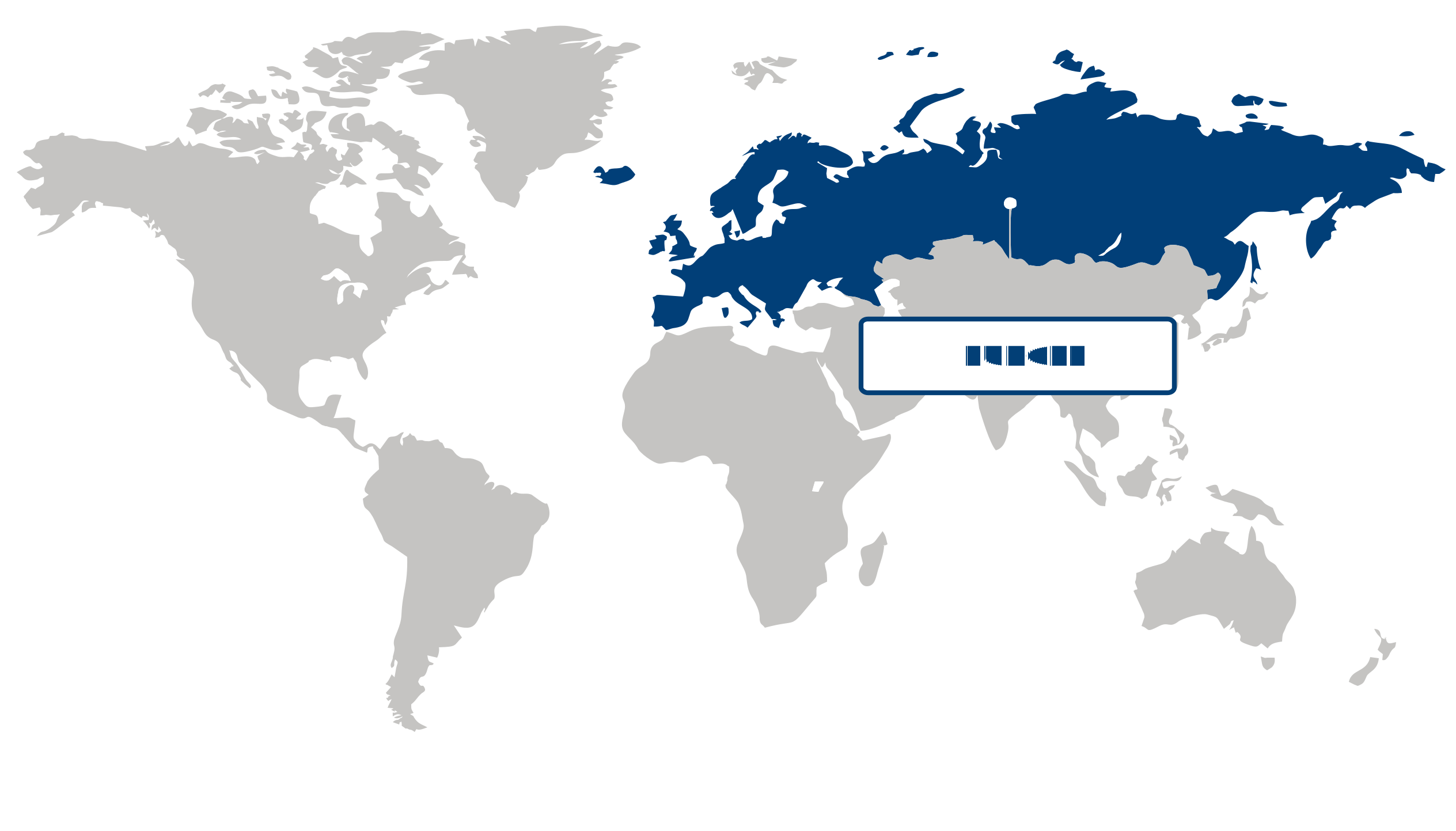
Europe (Largest Region)
The vegan cheese market was led by Europe, which accounted for 41.76% of the market in 2026, reflecting strong consumer interest in plant-based diets, established alternative-protein consumption patterns, and a well-developed market for dairy-free foods. Growing awareness of animal welfare, environmental sustainability, and healthy eating is encouraging consumers to substitute conventional dairy products with plant-based alternatives. European food manufacturers and retailers have also expanded the availability of vegan cheese across formats such as slices, spreads, shreds, and specialty varieties, making these products more accessible for everyday consumption. Improvements in plant-based formulation technologies are enhancing taste, texture, melting performance, and nutritional characteristics, supporting broader adoption beyond dedicated vegan consumers.
Asia Pacific (Fastest-Growing Region)
Asia Pacific is experiencing the fastest growth in the vegan cheese market as changing dietary preferences, urbanization, and increasing exposure to plant-based food trends create new demand opportunities. Growing interest in healthier lifestyles and dairy alternatives is encouraging consumers to experiment with plant-based versions of familiar foods, particularly in urban markets with expanding modern retail and foodservice infrastructure. The region's diverse culinary traditions also provide opportunities to develop localized vegan cheese applications suited to different cuisines and eating habits. Increasing investment in alternative-protein processing, greater product availability, and rising awareness of sustainable food choices are helping move plant-based cheese from a niche category toward broader consumer adoption.
| Parameter | North America | Asia Pacific | Europe | Latin America | MEA |
|---|---|---|---|---|---|
| Innovation Hub i Scale Nascent Developing Advanced | |||||
| Cost-Sensitive Region i Scale Low Medium High | |||||
| Regulatory Environment i Scale Restrictive Neutral Supportive | |||||
| Demand Drivers i Scale Weak Moderate Strong | |||||
| Development Stage i Scale Emerging Developing Developed | |||||
| Adoption Rate i Scale Low Medium High | |||||
| New Entrants / Startups i Scale Sparse Moderate Dense | |||||
| Macro Indicators i Scale Weak Stable Strong |
Key Country Insights
Germany 🇩🇪
Sustainable Dairy AlternativesGermany prioritizes vegan cheese products that align with sustainability objectives and demand for clean-label ingredients. Producers in Germany are expanding formulations using oats, almonds, and legumes to appeal to environmentally conscious and flexitarian consumers.
France 🇫🇷
Gourmet Plant-Based OptionsFrance is expanding premium vegan cheese offerings that complement traditional culinary applications while addressing changing dietary preferences. Producers in France focus on artisanal production methods and ingredient quality to strengthen acceptance among specialty food consumers.
Italy 🇮🇹
Culinary Reformulation FocusItaly integrates vegan cheese into pizzas, pasta, and specialty prepared foods without compromising culinary authenticity. Italian manufacturers continue refining plant-based formulations that satisfy evolving consumer expectations for flavor, texture, and cooking performance.
Japan 🇯🇵
Functional Recipe DevelopmentJapan emphasizes vegan cheese products with refined flavor profiles suited to local culinary preferences. Companies in Japan invest in fermentation technologies and functional plant ingredients to improve product acceptance across retail and restaurant applications.
South Korea 🇰🇷
Modern Food IntegrationSouth Korea incorporates vegan cheese into convenience foods, bakery products, and quick-service restaurant menus. Manufacturers in South Korea are responding to rising interest in plant-based diets through diversified product formats and localized flavor innovation.
United States 🇺🇸
Product Innovation HubThe U.S. vegan cheese market is characterized by continuous product innovation across retail and foodservice channels. Manufacturers in the U.S. focus on improving taste, texture, and nutritional profiles while expanding plant-based cheese options for mainstream consumers.
Segment Leadership and Growth Trends
Vegan Cheese Market Share (%), by End-use, 2026
Go beyond the chart, access full insights & data tables
Request Free Sample ReportEnd-use Segment Analysis: B2C (Largest Segment) vs B2B (Fastest-Growing Segment)
The B2C segment dominated the vegan cheese market with a 53.03% share in 2026, reflecting strong consumer-driven demand for dairy-free alternatives. Increasing interest in plant-based diets, dietary flexibility, and products perceived as more aligned with evolving wellness preferences is encouraging households to incorporate vegan cheese into everyday meals. Wider product availability across retail channels and improvements in taste, texture, and usability are also helping vegan cheese appeal to consumers beyond those following strictly vegan lifestyles.
B2B is expected to be the fastest-growing end-use segment as foodservice operators, restaurants, cafés, and commercial food producers increasingly incorporate plant-based ingredients into their menus and prepared foods. Vegan cheese enables these businesses to offer dairy-free options while responding to changing customer preferences. Its application in pizzas, sandwiches, baked products, prepared meals, and other foodservice formats creates multiple avenues for commercial adoption and strengthens demand from institutional and foodservice buyers.
Source Segment Analysis: Cashew (Largest Segment) vs Soy (Fastest-Growing Segment)
Within the vegan cheese market, cashew-based products held the largest share of 40.07% in 2026, supported by the ingredient's creamy texture and suitability for producing cheese-like formulations. Cashews can provide a rich mouthfeel that closely resembles characteristics consumers associate with conventional cheese, making them particularly useful in spreads, sauces, and soft cheese alternatives. Their versatility also supports product innovation across different vegan cheese formats and helps manufacturers address demand for indulgent plant-based foods.
Soy is anticipated to be the fastest-growing source segment, benefiting from its established role as a plant-based protein ingredient and its adaptability across food formulations. Soy-based cheese alternatives can support manufacturers seeking scalable plant-derived ingredients while catering to consumers reducing their reliance on dairy. Increasing acceptance of plant-based foods and continued innovation in vegan product formulations are expected to strengthen the use of soy as a source for dairy-free cheese products.
| Segment | Sub-Segment | Largest Segment | Fastest Growing |
|---|---|---|---|
| End-use | B2C, B2B | B2C | B2B |
| Source | Soy, Almond, Cashew, Coconut, Others | Cashew | Soy |
| Product | Mozzarella, Cheddar, Parmesan, Ricotta, Cream Cheese, Others | Mozzarella | Ricotta |
Unlock insights tailored to your business with our bespoke market research solutions.
Click to get your customized report now.
Competitive Landscape and Market Positioning
Top players in the vegan cheese market:
1. Daiya Foods Inc. (Canada)
2. Flora Food Group B.V. (Netherlands)
3. Miyoko's Creamery (United States)
4. Kite Hill (United States)
5. Follow Your Heart (United States)
6. Tofutti Brands Inc. (United States)
7. Treeline Cheese LLC (United States)
8. GOOD PLANeT Foods Inc. (United States)
9. Parmela Creamery (United States)
Rising consumer interest in plant-based alternatives is reshaping purchasing behavior in the vegan cheese market, where taste replication and texture authenticity remain central competitive priorities. Continuous experimentation with ingredient composition and fermentation techniques is driving noticeable improvements in product quality and sensory experience. Innovation is further reinforced through collaborations that combine food science expertise with alternative protein development, accelerating formulation breakthroughs. A growing wave of new product introductions is also broadening category appeal, catering to both premium and everyday consumption segments. These developments collectively strengthen differentiation strategies while aligning offerings more closely with evolving dietary and sustainability expectations.
| Company | Market Share | Company Revenue | Revenue CAGR (%) | Product Portfolio | Geographic Presence | Innovation / R&D Focus | Strategic Developments |
|---|---|---|---|---|---|---|---|
| Daiya Foods Inc. (Canada) | |||||||
| Flora Food Group B.V. (Netherlands) | |||||||
| Miyoko's Creamery (United States) | |||||||
| Kite Hill (United States) | |||||||
| Follow Your Heart (United States) | |||||||
| Tofutti Brands Inc. (United States) | |||||||
| Treeline Cheese LLC (United States) | |||||||
| GOOD PLANeT Foods Inc. (United States) | |||||||
| Parmela Creamery (United States). |
Industry Development/News
| Company Name | Date | Key Development |
|---|---|---|
| Julienne Bruno | May-26 | Julienne Bruno expanded the retail and foodservice availability of its vegan cheese portfolio through a relaunch into major UK supermarkets and restaurant menus. This move strengthens the company's distribution footprint and enhances the commercial presence of its award-winning plant-based cheese line, reflecting continued efforts to drive consumer adoption through increased accessibility in mainstream channels. |
| Daiya Foods | Apr-26 | Daiya Foods partnered with pizza chain Panago to launch a reformulated, oat cream-based dairy-free shredded cheese. The product, refined based on consumer feedback regarding texture and flavor, represents a strategic effort to improve product performance and strengthen Daiya’s competitive standing in high-volume foodservice applications for vegan cheese alternatives. |
| Jay&Joy | Mar-26 | Jay&Joy secured €2.3 million in funding to scale production capacity and accelerate geographic expansion across the UK and European markets. This capital injection is targeted at supporting the company’s growth strategy for its cashew-based dairy-free cheese portfolio, strengthening its competitive positioning in the professional and retail plant-based segments. |
| Mö Foods | Jan-26 | Mö Foods raised €2.4 million, led by Nordic Foodtech VC, to scale the production and commercialization of its oat-based cheese alternatives. This investment is directed toward enhancing manufacturing capabilities to meet increasing demand for plant-based dairy substitutes within European markets, marking a critical step in the company's operational and distribution expansion. |
| Nutropy | Oct-25 | Precision fermentation startup Nutropy raised approximately €7 million to scale the production of animal-free casein proteins. The funding supports the development of its “cheeseable milk” powder, a foundational technology for next-generation dairy-free cheese production that aims to replicate the functional and organoleptic properties of traditional cheese through advanced protein manufacturing. |
| Itz Nutz | Sep-25 | Turkish startup Itz Nutz raised $535,000 to expand its cashew-based dairy alternative product line and distribution network. The funding is intended to support scaled production and regional market penetration, reflecting the increasing global activity in the development and commercialization of nut-based cheese and yogurt alternatives. |
| Bel Group | Jun-25 | Bel Group announced the discontinuation of its Nurishh vegan cheese brand, citing insufficient profitability. This strategic pivot highlights the ongoing challenges of scaling plant-based offerings within large, diversified dairy corporations and signals a necessary rationalization of portfolios as major players adjust to competitive pressures and realistic adoption rates in the vegan cheese market. |
| New Culture | Mar-25 | New Culture secured $5 million in pre-launch demand from US pizza chefs and restaurant groups for its precision-fermented mozzarella. This significant commercial commitment highlights strong market interest in animal-free casein-based cheese alternatives, underscoring the potential for food-tech solutions to address the performance and functional requirements of professional foodservice operators. |
| Misha’s Inc | Jan-25 | Misha’s Inc completed the acquisition of fellow vegan cheese producer Vertage to consolidate its artisanal plant-based cheese capabilities. The integration expands Misha’s product portfolio and strengthens its operational reach, positioning the combined entity to leverage enhanced market presence in the premium dairy-free cheese segment against both plant-based incumbents and traditional dairy players. |
| Plonts | Aug-24 | Plonts secured $12 million in funding to scale production of its fermented soy-based cheese alternatives. The company simultaneously initiated commercialization through select US restaurant channels, demonstrating a strategic focus on utilizing advanced fermentation technology to deliver next-generation plant-based products that compete directly with traditional dairy in foodservice and retail environments. |
Customize Your Report
Explore examples of how this report can be tailored to different research needs, including custom segments, additional topics or chapters, and related reports. Click a section of the wheel or its numbered marker to explore the available options.
Vegan Cheese Market — Custom Segments
| Segment | Sub-Segment |
|---|---|
| Distribution Channel | Supermarkets & Hypermarkets, Convenience Stores, Specialty & Health Food Stores, Online Retail, Foodservice |
| Price Tier | Economy, Mid-Range, Premium |
| Packaging Format | Blocks & Slices, Shreds, Spreads & Soft Packs, Portions & Singles |
Vegan Cheese Market — Custom TOC
| Custom Chapter | Chapter Details |
|---|---|
| Product Innovation Opportunity Mapping |
|
| Retail Adoption Strategy Assessment |
|
| Foodservice Expansion Opportunities |
|
Need a different cut of the data?
Request Custom ResearchWhat is the current revenue of the vegan cheese market?
How is the vegan cheese industry size expected to evolve during the forecast period?
How is the rise of flexitarian diets influencing demand patterns in the vegan cheese market?
What role is product innovation playing in improving acceptance of vegan cheese in mainstream markets?
Why is the B2C segment the largest in the vegan cheese market?
Which source segment is growing fastest in the vegan cheese market?
What factors make Europe the leading vegan cheese market?
Why is Asia Pacific emerging as the fastest-growing vegan cheese market?
Which companies are driving growth in the vegan cheese landscape?
Our Clients
"The report provided a thorough look at market trends, technological advancements, and the competitive landscape. The depth of insights was really valuable."
ITC Limited
"We would highly recommend Fundamental Business Insights & Consulting to anyone looking for reliable, detailed, and comprehensive market research in the Food industry."
Tyson Foods
"The clarity and presentation of the information were commendable. The report was delivered timely, which made the overall experience smooth and convenient."
Mondelēz International
Our Research Team & Methodology
Every Fundamental Business Insights report is built by a dedicated vertical research team, validated through a structured primary-and-secondary methodology, and reviewed for accuracy before it reaches you.
Research Team Overview
Prepared by the Food & Beverage Research Team
Delivery
Published
Demand
Available
Support
Trust & Compliance
Research Intelligence
| Source | Reference |
|---|---|
| Food and Agriculture Organization (FAO) | www.fao.org |
| World Health Organization (WHO) | www.who.int |
| U.S. Food & Drug Administration (FDA) | www.fda.gov |
| European Food Safety Authority (EFSA) | www.efsa.europa.eu |
| U.S. Department of Agriculture (USDA) | www.usda.gov |
| Codex Alimentarius Commission | www.fao.org/fao-who-codexalimentarius |
| International Organization for Standardization (ISO) | www.iso.org |
| AOAC INTERNATIONAL | www.aoac.org |
| Institute of Food Technologists (IFT) | www.ift.org |
| International Dairy Foods Association (IDFA) | www.idfa.org |
| International Sweeteners Association (ISA) | www.sweeteners.org |
| International Probiotics Association (IPA) | internationalprobiotics.org |
| Good Food Institute (GFI) | gfi.org |
| American Feed Industry Association (AFIA) | www.afia.org |
| International Feed Industry Federation (IFIF) | ifif.org |
| Specialty Food Association (SFA) | www.specialtyfood.com |
| Brewers Association | www.brewersassociation.org |
| International Bottled Water Association (IBWA) | bottledwater.org |
| International Alliance for Dietary/Food Supplement Associations (IADSA) | www.iadsa.org |
| OECD Agriculture & Food | www.oecd.org/agriculture |
Research Workflow & Quality Assurance
Data Collection
Verified information gathered through primary and secondary research.
Data Triangulation
Cross-validation using multiple independent data sources.
Forecast Modelling
Market estimates developed using historical trends and analytical models.
Analyst Validation
Findings reviewed by domain experts for accuracy and consistency.
Editorial & Quality Review
Final editorial, quality, and compliance checks before publication.
Final Publication
Released after successful completion of the internal review process.
Report Coverage
📊 Market Assessment
- Market Size & Forecast
- Market Segmentation
- Regional Analysis
- Growth Drivers & Challenges
- Market Dynamics
🏢 Competitive Intelligence
- Competitive Landscape
- Company Profiles
- Competitive Benchmarking
- Mergers & Acquisitions
- Market Share Analysis or Key Company Strategies
🔍 Strategic Analysis
- Value Chain Analysis
- Porter's Five Forces
- PESTLE Analysis
- Pricing Trends
- Supply-Demand Analysis
🚀 Future Outlook
- Technology Landscape
- Regulatory Landscape
- Investment & Funding Landscape
- Emerging Opportunities
- Future Market Outlook
Have a question about this report or need a custom scope?
Request Customization