



Vegan Chocolate Market Size & Growth Forecast 2027–2036, By Segments (Flavors, Type, Product, Distribution Channel, Application), Regional Demand Trends (North America, Asia Pacific, Europe), Key Country Insights (U.S., Japan, South Korea, Germany, France, Italy), and Competitive Landscape
Market Size and Growth Outlook
Vegan Chocolate Market size was around USD 927.74 Million in 2026 and is slated to grow at 13.73% CAGR from 2027 to 2036, crossing USD 3.36 Billion by 2036. The industry revenue for 2027 is assessed at USD 1.04 Billion.
Base Year Value (2026)
USD 927.74 Million
CAGR (2027-2036)
13.73%
Forecast Year Value (2036)
USD 3.36 Billion

Historical Data Period
2022-2026

Largest Region
Europe

Forecast Period
2027-2036
Vegan Chocolate Market Intelligence Snapshot:
-
Regional Market Dynamics:
- Europe held the largest position in 2025, supported by strong plant-based demand, sustainability awareness, premium confectionery culture, and broad retail availability.
- Asia Pacific is the fastest-growing region, driven by rising incomes, urbanization, plant-based dietary trends, expanding e-commerce, and evolving preferences among younger consumers.
-
Segment Momentum:
- Dark chocolate held a 54.06% market share in 2025, supported by its premium positioning, rich cocoa flavor, and strong compatibility with plant-based formulations, encouraging broader product innovation.
- Chips & bites are the fastest-growing product segment due to increasing demand for convenient, portion-controlled plant-based snacks suitable for direct consumption, baking, and dessert applications.
-
Market Expansion Drivers:
- Rising consumer shift toward plant-based diets driving vegan confectionery adoption
- Increasing awareness of lactose intolerance and dairy allergies boosting product demand
- Expansion of premium vegan chocolate offerings through mainstream retail and e-commerce channels
-
Leading Market Participants:
Major companies in the vegan chocolate market include Lindt & Sprüngli AG (Switzerland), Mondelez International, Inc. (United States), Alter Eco Foods (United States), Hu Products LLC (United States), Pascha Chocolate Co. (Canada), Plamil Foods Ltd. (United Kingdom), Montezuma's Direct Ltd. (United Kingdom), Taza Chocolate, LLC (United States), Endorfin Foods (United States), Schmilk Chocolate Ltd. (United Kingdom)
Global Market Forecast Snapshot:
-
Market Outlook:
- 2026 Market Size: USD 927.74 Million
- 2027 Estimated Market Size: USD 1.04 Billion
- Projected Market Size: USD 3.36 Billion by 2036
- Growth Forecasts: 13.73% CAGR (2027-2036)
-
Regional and Segment Outlook:
- Leading Regional Market: Europe
- High-Growth Regional Hub: Asia Pacific
- Core Revenue Segment: Flavored (Flavors) | Dark Chocolate (Type) | Molded Bars (Product) | Offline Retail (Distribution Channel) | Bakery & Confectionery (Application)
- Emerging Opportunity Segment: Flavored (Flavors) | Milk Chocolate (Type) | Chips & Bites (Product) | Online Retail (Distribution Channel) | Ice-cream & Desserts (Application)
Market Growth Drivers and Industry Trends
Rising consumer shift toward plant-based diets driving vegan confectionery adoption
The growing adoption of plant-based lifestyles is reshaping consumer preferences across the confectionery sector, with more shoppers seeking alternatives that align with ethical, environmental, and dietary considerations. The vegan chocolate market growth is driven by increasing demand for dairy-free chocolate products that deliver indulgent experiences without animal-derived ingredients. Manufacturers are expanding formulations using plant-based alternatives such as oat, almond, coconut, and other dairy substitutes to appeal to flexitarian and vegan consumers while maintaining desirable taste and texture profiles.
Increasing awareness of lactose intolerance and dairy allergies boosting product demand
Rising awareness of digestive sensitivities and food allergies is encouraging consumers to explore chocolate products that avoid traditional dairy ingredients. The vegan chocolate market is benefiting from demand among lactose-intolerant individuals and consumers seeking allergen-conscious options, as dairy-free formulations provide a suitable alternative to conventional chocolate products. Brands are increasingly emphasizing ingredient transparency and simplified formulations to address concerns related to dietary restrictions and broader wellness preferences.
Expansion of premium vegan chocolate offerings through mainstream retail and e-commerce channels
The increasing availability of premium plant-based confectionery products through supermarkets, specialty stores, and online platforms is improving consumer access and product visibility. Expansion of premium offerings will propel vegan chocolate market growth as brands introduce higher-quality formulations featuring unique flavors, sustainable ingredients, and elevated packaging experiences. E-commerce platforms further support category growth by enabling niche vegan chocolate brands to reach targeted consumers beyond traditional retail channels.
| Growth Driver Assessment Framework | |||||
| Growth Driver | Impact On CAGR | Regulatory Influence | Geographic Relevance | Adoption Rate | Impact Timeline |
|---|---|---|---|---|---|
| Rising consumer shift toward plant-based diets driving vegan confectionery adoption | 2% | Low | Europe, North America | High | Near Term |
| Increasing awareness of lactose intolerance and dairy allergies boosting product demand | 1.8% | Low | North America, Europe | High | Mid Term |
| Expansion of premium vegan chocolate offerings through mainstream retail and e-commerce channels | 1.6% | Low | Asia Pacific, Europe | Medium | Mid Term |
Unlock insights tailored to your business with our bespoke market research solutions - Click to get your customized report now!
Regional Demand Dynamics
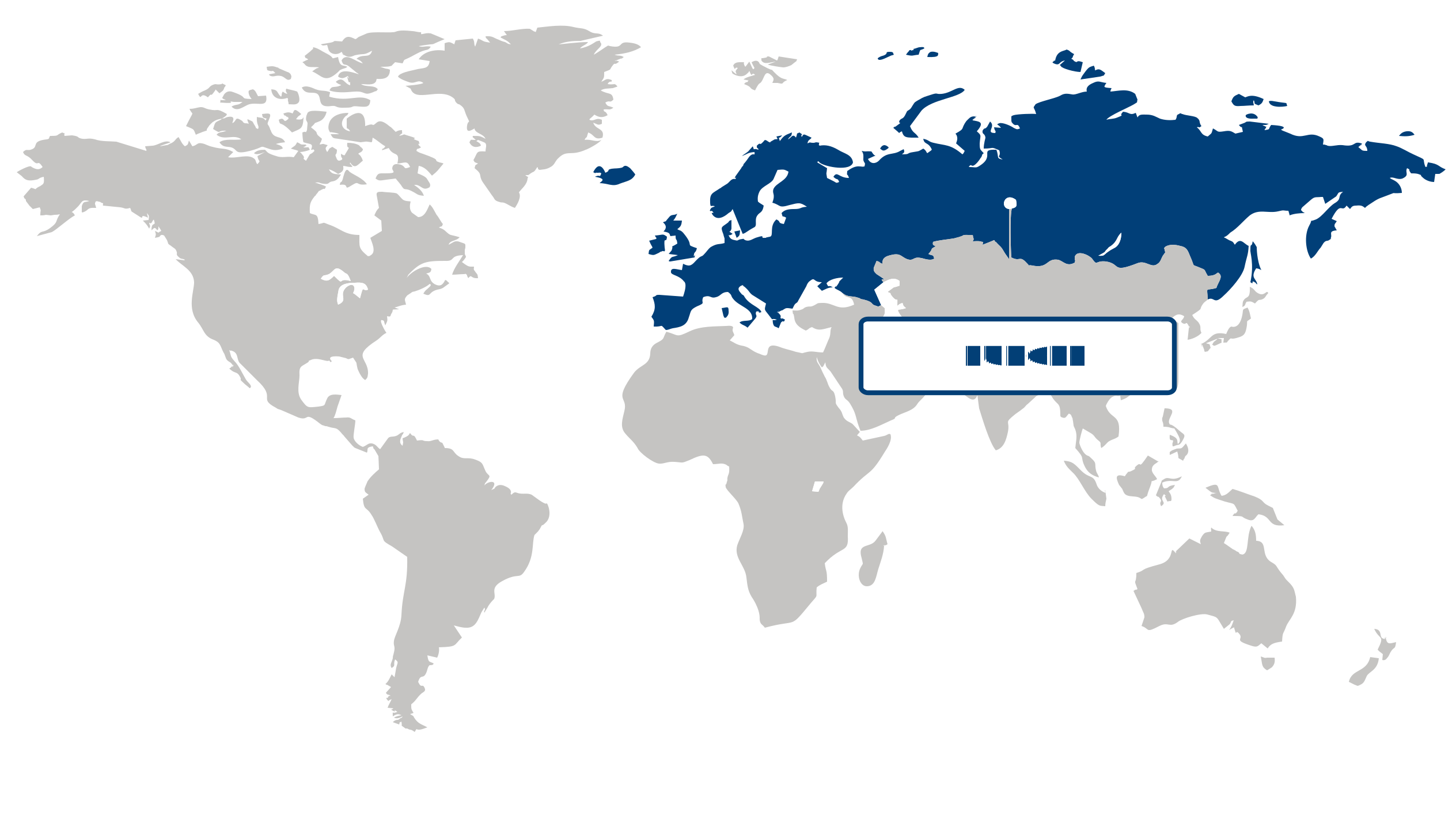
Largest Region
Europe
Largest Market Share in 2026
Europe (Largest Region) vs Asia Pacific (Fastest-Growing Region)
Europe held the largest regional position in the vegan chocolate market in 2026, reflecting strong consumer interest in plant-based foods, sustainability, and ethical consumption. Growing awareness of animal welfare and environmental considerations is encouraging consumers to seek chocolate products made without dairy ingredients, while the region's established premium confectionery culture is supporting the development of more sophisticated vegan offerings. Product innovation involving plant-based milk alternatives, improved textures, and diverse flavor profiles is broadening consumer acceptance beyond dedicated vegan groups. In addition, the growing availability of plant-based products through supermarkets, specialty retailers, and foodservice channels is improving accessibility and encouraging wider adoption among health-conscious and environmentally aware consumers.
Asia Pacific is expected to experience the fastest growth, driven by rising disposable incomes, expanding urban populations, and increasing exposure to plant-based dietary trends. Growing awareness of health, wellness, and sustainable food choices is encouraging consumers to explore dairy-free confectionery products, while the region's large and diverse consumer base creates opportunities for localized flavors and product formats. Expanding modern retail and e-commerce channels are also improving access to vegan chocolate, particularly in urban markets. At the same time, evolving dietary preferences among younger consumers and greater interest in alternative food products are supporting the expansion of plant-based confectionery, creating a favorable environment for continued regional demand.
No card data available for this language/report.
Segment Leadership and Growth Trends
Flavors Segment Analysis: Flavored (Largest & Fastest-Growing Segment)
The vegan chocolate market was dominated by the flavored segment, which held the largest share of 71.41% in 2026 while also emerging as the fastest-growing flavor category. Consumers increasingly seek distinctive taste experiences that combine plant-based ingredients with innovative flavor profiles, encouraging manufacturers to introduce a wide range of fruit, nut, spice, and botanical combinations. Continuous product innovation, premium positioning, and evolving consumer preferences for indulgent yet vegan-friendly confectionery continue to reinforce the segment's market leadership.
Type Segment Analysis: Dark Chocolate (Largest Segment) vs Milk Chocolate (Fastest-Growing Segment)
The dark chocolate segment accounted for the largest share of 54.06% in 2026, supported by its strong association with premium quality, rich cocoa flavor, and compatibility with plant-based formulations. Consumers often perceive vegan dark chocolate as an authentic and naturally suitable alternative to conventional chocolate, encouraging manufacturers to expand premium offerings with diverse cocoa origins and flavor combinations.
In the vegan chocolate market, the milk chocolate segment is witnessing the fastest growth as advancements in plant-based dairy alternatives enable manufacturers to replicate the creamy texture and taste traditionally associated with milk chocolate. Increasing consumer interest in familiar flavor experiences without animal-derived ingredients is driving broader acceptance of vegan milk chocolate products across mainstream retail channels.
Product Segment Analysis: Molded Bars (Largest Segment) vs Chips & Bites (Fastest-Growing Segment)
Molded bars secured the largest share of 61.15% in 2026, reflecting their widespread consumer acceptance, convenient packaging, and strong presence across retail outlets. Manufacturers continue to introduce premium formulations, diverse flavor combinations, and functional ingredient additions within molded bar formats, strengthening their appeal among consumers seeking convenient plant-based confectionery products.
The vegan chocolate market is experiencing the fastest growth in the chips & bites segment as consumers increasingly prefer portion-controlled snacks that align with busy lifestyles and on-the-go consumption habits. Their versatility for direct snacking, baking, and inclusion in desserts, combined with growing demand for convenient plant-based treats, is supporting rapid expansion of this product category.
| Report Segmentation | |||
| Segment | Sub-Segment | Largest Segment | Fastest Growing Segment |
|---|---|---|---|
| Flavors | Flavored, Unflavored | Flavored | Flavored |
| Type | Dark Chocolate, Milk Chocolate, White Chocolate, Others | Dark Chocolate | Milk Chocolate |
| Product | Molded Bars, Chips & Bites, Boxed Assortments, Othe | Molded Bars | Chips & Bites |
| Distribution Channel | Online Retail, Offline Retail, Foodservice / HoReCa, Other | Offline Retail | Online Retail |
| Application | Bakery & Confectionery, Ice-cream & Desserts, Beverages, Standalone Snacks, Other | Bakery & Confectionery | Ice-cream & Desserts |
 Read our Research Approach
Competitive Landscape and Market Positioning
Leading companies in the vegan chocolate market:
- Lindt & Sprüngli AG (Switzerland)
- Mondelez International, Inc. (United States)
- Alter Eco Foods (United States)
- Hu Products LLC (United States)
- Pascha Chocolate Co. (Canada)
- Plamil Foods Ltd. (United Kingdom)
- Montezuma's Direct Ltd. (United Kingdom)
- Taza Chocolate LLC (United States)
- Endorfin Foods (United States)
- Schmilk Chocolate Ltd. (United Kingdom)
Consumer expectations for premium taste, clean-label ingredients, and sustainable sourcing are redefining competitive priorities in the vegan chocolate market. Producers are moving beyond basic dairy-free alternatives by investing in formulation techniques that improve texture, flavor complexity, and product quality, narrowing the sensory gap with conventional chocolate. At the same time, competition increasingly extends to ingredient transparency, responsible sourcing practices, and product differentiation across premium and specialty segments, prompting manufacturers to combine innovation with strong brand positioning and continuous product refinement.
Industry Development/News
| Company Name | Date | Key Development |
|---|---|---|
| Foreverland | Mar-26 | Foreverland secured $7 million in funding to scale the production and distribution of Choruba, its proprietary cocoa-free chocolate alternative. The investment accelerates the commercialization of its alternative ingredient platform and expands its B2B supply footprint across European manufacturing markets. |
| Foreverland | Jan-26 | Foreverland executed commercial distribution partnerships with multiple European confectionery manufacturers to expand the integration of its cocoa-free Choruba product. The initiative accelerates the commercialization of sustainable, alternative chocolate platforms across industrial baking and manufacturing channels. |
| Planet A Foods | Sep-24 | Planet A Foods partnered with confectionery manufacturer Katjes to commercialize a cocoa-free, plant-based version of Treets Peanuts utilizing its ChoViva chocolate alternative. The strategic collaboration demonstrates the enterprise-level adoption and integration of climate-resilient ingredients into mass-market confectionery supply chains. |
| Ferrero | Sep-24 | Ferrero expanded its presence in the plant-based confectionery category by launching Nutella Plant-Based, a dairy-free iteration of its flagship spread. The initial retail rollout targets key European hubs, including Italy, Belgium, and France, establishing new benchmarks for mass-market vegan distribution. |
| Mummy Meegz | Jun-24 | Mummy Meegz introduced M’z Gems, a new plant-based product format serving as a direct alternative to traditional shell-coated milk chocolate and peanut confectionery. The rollout diversifies the company's product architecture, shifting its competitive positioning into mainstream candy alternatives. |
| Lindt & Sprüngli | Apr-24 | Lindt expanded its premium non-dairy portfolio through the launch of Lindor Oatmilk Truffles, establishing its second major oatmilk-based line extension. The product introduction targets specialized consumer segments, strengthening the brand's competitive positioning in the high-growth premium vegan chocolate vertical. |
| Nestlé | Sep-22 | Nestlé commercialized KitKat V, a rice-based dairy alternative to its traditional chocolate confection, across 15 European countries. The large-scale multinational launch leverages the company's regional distribution networks to capture the growing corporate demand for plant-based alternatives to mass-market confectionery lines. |
| Plamil Foods | Jan-22 | Plamil Foods implemented a significant manufacturing upgrade to expand production capacity for its plant-based chocolate and dairy-free formulations. The capital investment directly targets scaling supply chain resilience to fulfill rising international demand for certified vegan contract manufacturing. |
Why Choose Us
Specialized Expertise: Our team comprises industry experts with a deep understanding of your market segment. We bring specialized knowledge and experience that ensures our research and consulting services are tailored to your unique needs.
Customized Solutions: We understand that every client is different. That's why we offer customized research and consulting solutions designed specifically to address your challenges and capitalize on opportunities within your industry.
Proven Results: With a track record of successful projects and satisfied clients, we have demonstrated our ability to deliver tangible results. Our case studies and testimonials speak to our effectiveness in helping clients achieve their goals.
Cutting-Edge Methodologies: We leverage the latest methodologies and technologies to gather insights and drive informed decision-making. Our innovative approach ensures that you stay ahead of the curve and gain a competitive edge in your market.
Client-Centric Approach: Your satisfaction is our top priority. We prioritize open communication, responsiveness, and transparency to ensure that we not only meet but exceed your expectations at every stage of the engagement.
Continuous Innovation: We are committed to continuous improvement and staying at the forefront of our industry. Through ongoing learning, professional development, and investment in new technologies, we ensure that our services are always evolving to meet your evolving needs.
Value for Money: Our competitive pricing and flexible engagement models ensure that you get maximum value for your investment. We are committed to delivering high-quality results that help you achieve a strong return on your investment.
Select Licence Type

