Ventilated Rainscreen Facade Market Size & Growth Forecast 2027–2036, By Segments (System Type, Application, Material Type), Regional Demand Trends (North America, Asia Pacific, Europe), Key Country Insights (U.S., Japan, South Korea, Germany, France, Italy), and Competitive Landscape
Jump to Content
Market Size and Growth Outlook
Ventilated Rainscreen Facade Market size was assessed at USD 41.08 billion in 2026 and is poised to grow at a 5.4% CAGR between 2027 and 2036, surpassing USD 69.51 billion by 2036. The industry revenue for 2027 is calculated at USD 42.93 billion.
Get more details on this report
Request Free Sample ReportVentilated Rainscreen Facade Market Intelligence Snapshot
Regional Market Dynamics
- Europe benefits from established building standards, energy-efficient construction priorities, and renovation activity. Demand for durable, moisture-managing facade systems supports adoption across modern residential and commercial developments.
- Rapid urbanization, high-rise construction, and expanding commercial infrastructure are increasing demand for advanced cladding. Greater emphasis on thermal comfort, moisture control, and sustainable building performance further supports adoption.
Segment Momentum
- Pressure equalized rainscreen systems accounted for 45.69% of the market in 2026, supported by effective moisture management, reduced wind-driven rain infiltration, and demand for durable, weather-resistant building envelopes.
- Commercial buildings held 53.56% of the market in 2026 and are also the fastest-growing application segment, driven by demand for durable, energy-efficient, and visually appealing facades across new developments and property renovations.
Market Expansion Drivers
- Urbanization & Demand for Sustainable Facades.
- Building Codes Promoting Ventilated Facades.
- Adoption in Retrofitting & Green Renovations.
Leading Market Participants
- Leading companies in the ventilated rainscreen facade market include Kingspan Group (Ireland), Rockwool (Denmark), Saint-Gobain (France), Trespa (Netherlands), Arconic (USA), Swisspearl Group (Switzerland), Eternit (Belgium), James Hardie (Ireland), Fundermax (Austria), Sika (Switzerland).
Global Market Forecast Snapshot
Market Outlook
- 2026 Market Size: USD 41.08 billion
- 2027 Estimated Market Size: USD 42.93 billion
- Projected Market Size: USD 69.51 billion by 2036
- Growth Forecast: 5.4% CAGR (2027-2036)
Regional and Segment Outlook
- Leading Regional Market: Europe
- High-Growth Regional Hub: Asia Pacific
- Core Revenue Segment: System Type (Pressure Equalized Rainscreen Systems) | Application (Commercial Buildings) | Material Type (Metal Composite Materials)
- Emerging Opportunity Segment: System Type (Pressure Equalized Rainscreen Systems) | Application (Commercial Buildings) | Material Type (Metal Composite Materials)
Market Growth Drivers and Industry Trends
Urbanization & Demand for Sustainable Facades
Rapid urban development and increasing emphasis on sustainable construction are driving the adoption of ventilated rainscreen facade systems in modern buildings. These systems create a ventilated cavity that helps manage moisture while supporting thermal performance and protecting the building envelope from external weather conditions. Their ability to combine functional performance with architectural flexibility makes them suitable for contemporary commercial, residential, and institutional structures. As developers and building owners place greater emphasis on energy efficiency, durability, and sustainable design, ventilated facade solutions are gaining importance in building envelope strategies.
Building Codes Promoting Ventilated Facades
Evolving building regulations and performance standards are encouraging the use of facade systems that provide improved moisture management, fire performance, thermal efficiency, and weather resistance. Ventilated rainscreen designs can address several building envelope requirements through layered construction that separates external cladding from the primary wall structure. Greater regulatory attention to building safety, energy performance, and long-term durability is prompting architects and contractors to consider facade systems that offer enhanced technical performance. This regulatory environment is supporting wider integration of ventilated rainscreen principles into contemporary building design and construction.
Adoption in Retrofitting & Green Renovations
Growing investment in building renovation and energy-efficient upgrades is creating opportunities for ventilated rainscreen facades in retrofit applications. Existing buildings often require improvements to thermal insulation, moisture protection, exterior durability, and visual appearance, making facade renovation an important component of modernization programs. Ventilated rainscreen systems can provide an additional protective layer while allowing improvements to the building envelope without requiring complete reconstruction of the underlying structure. As building owners increasingly pursue sustainable renovation strategies, these systems are becoming a practical option for improving existing properties while extending facade service life.
| Growth Driver | Impact on CAGR | Regulatory Influence | Geographic Relevance | Adoption Rate | Impact Timeline |
|---|---|---|---|---|---|
| Urbanization & Demand for Sustainable Facades | 1.6% | Short term (≤ 2 yrs) | Europe; North America; Spillover Asia Pacific | Medium | Fast |
| Building Codes Promoting Ventilated Facades | 1.4% | Medium term (2–5 yrs) | Europe; Asia Pacific; Spillover North America | High | Moderate |
| Adoption in Retrofitting & Green Renovations | 1.2% | Long term (5+ yrs) | Europe; North America; Spillover Asia Pacific | Medium | Moderate |
Explore Growth Opportunities
Request Free Sample ReportRegional Demand Dynamics
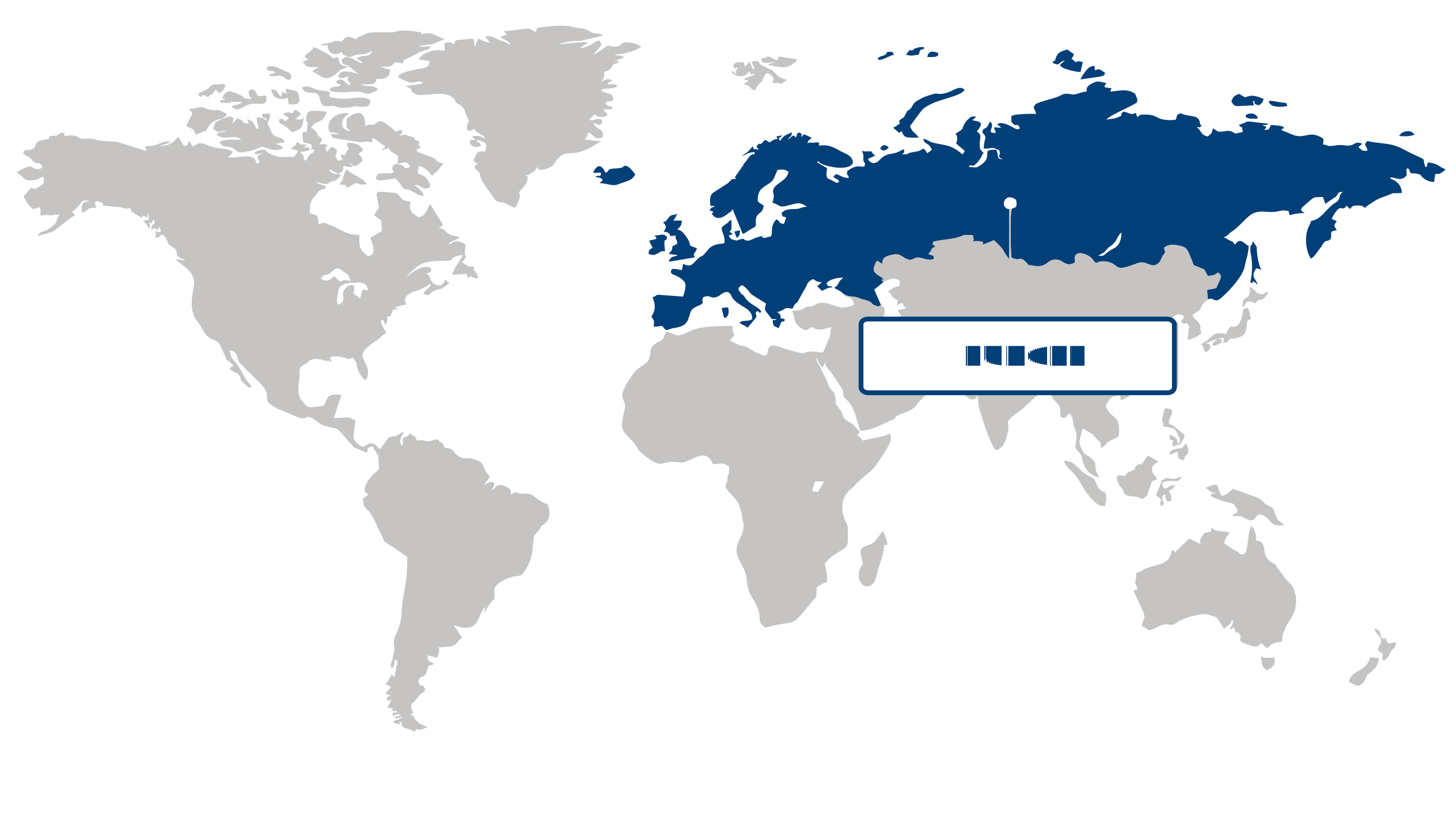
Europe (Largest Region)
Europe holds the largest regional share of the global ventilated rainscreen facade market, supported by established building standards, a strong focus on energy-efficient construction, and growing demand for durable exterior building systems. Ventilated rainscreen facades provide an external protective layer that helps manage moisture, improve weather resistance, and support thermal performance when integrated with appropriate insulation systems. The region’s emphasis on sustainable building practices and long-term building durability is encouraging the adoption of facade solutions that enhance both functional performance and architectural appearance. In addition, renovation of existing buildings and investment in modern commercial and residential developments are creating opportunities for ventilated facade systems. Growing attention to building energy efficiency, moisture management, and contemporary architectural design is further supporting market development across Europe.
Asia Pacific (Fastest-Growing Region)
The Asia Pacific ventilated rainscreen facade market is anticipated to register the fastest growth, driven by rapid urbanization, expanding construction activity, and increasing demand for modern, energy-efficient buildings. The development of commercial complexes, high-rise residential buildings, institutional facilities, and urban infrastructure is creating opportunities for advanced exterior cladding systems. Furthermore, growing awareness of building durability, moisture control, and thermal comfort is encouraging architects and developers to consider ventilated facade designs. The increasing emphasis on sustainable construction and improvements in building performance is also supporting interest in facade systems that can accommodate insulation and effective moisture management. As urban development continues and construction standards evolve, demand for ventilated rainscreen facades is expected to expand across the region.
| Parameter | North America | Asia Pacific | Europe | Latin America | MEA |
|---|---|---|---|---|---|
| Innovation HubiScaleNascentDeveloping Advanced | |||||
| Cost-Sensitive RegioniScaleLowMedium High | |||||
| Regulatory EnvironmentiScaleRestrictiveNeutral Supportive | |||||
| Demand DriversiScaleWeakModerate Strong | |||||
| Development StageiScaleEmergingDeveloping Developed | |||||
| Adoption RateiScaleLowMedium High | |||||
| New Entrants / StartupsiScaleSparseModerate Dense | |||||
| Macro IndicatorsiScaleWeakStable Strong |
Key Country Insights
United States 🇺🇸
Energy Retrofit FocusIn the U.S., ventilated rainscreen façades are gaining relevance in commercial and institutional projects where envelope upgrades must address energy performance, moisture control, and aging building stock. Product selection increasingly emphasizes durable cladding systems, thermal detailing, and compliance with evolving building-envelope requirements.
Germany 🇩🇪
High-Performance EnvelopesGermany places strong emphasis on façade systems that improve thermal efficiency, moisture management, and long-term building performance. Ventilated rainscreen solutions fit refurbishment and new-build priorities where architects and contractors seek robust insulation integration, precise detailing, and durable exterior finishes.
Japan 🇯🇵
Seismic Façade DesignJapan’s façade demand is shaped by the need to balance lightweight construction, weather resistance, and seismic considerations. Ventilated rainscreen systems can support these requirements when designed with secure fixing methods, controlled cavity ventilation, and materials suited to Japan’s demanding climatic and building-performance conditions.
South Korea 🇰🇷
Advanced Façade SystemsSouth Korea’s construction sector is supporting greater use of technically engineered façade assemblies that combine insulation, ventilation, and architectural flexibility. Ventilated rainscreen systems are relevant for high-performance commercial and residential buildings, with attention to installation precision, thermal detailing, and durable cladding materials.
France 🇫🇷
Renovation-Led AdoptionFrance offers substantial scope for ventilated rainscreen façades through building renovation and energy-efficiency initiatives. Market priorities center on improving envelope insulation and moisture protection while preserving architectural appearance, making system compatibility with refurbishment projects and a broad range of cladding finishes particularly important.
Italy 🇮🇹
Architectural Cladding DemandItaly’s market is closely linked to façade renovation and design-conscious construction, where rainscreen assemblies provide both envelope performance and aesthetic flexibility. Suppliers can benefit from demand for ceramic, stone, metal, and composite cladding options that accommodate varied architectural requirements while improving moisture and thermal management.
Ventilated Rainscreen Facade Market Share (%), by System Type, 2026
Go beyond the chart, access full insights & data tables
Request Free Sample ReportSystem Type Segment Analysis: Pressure Equalized Rainscreen Systems (Largest & Fastest-Growing Segment)
The pressure equalized rainscreen systems segment accounted for 45.69% market share in 2026, supported by its ability to manage air pressure differences and control moisture penetration in ventilated facade assemblies. These systems provide an effective approach to improving building envelope performance by reducing wind-driven rain infiltration while supporting drainage and ventilation in the facade cavity. Their growing application in modern construction is further encouraged by increasing emphasis on durable, energy-efficient, and weather-resistant building envelopes, particularly in projects where long-term facade performance and moisture management are important. The same performance advantages are expected to support the segment's rapid growth as architects and building owners increasingly prioritize advanced rainscreen solutions that offer weather protection, thermal performance, and facade durability.
Application Segment Analysis: Commercial Buildings (Largest & Fastest-Growing Segment)
The commercial buildings segment held the largest market share of 53.56% in 2026, driven by the widespread adoption of ventilated rainscreen facades in offices, retail facilities, institutional properties, and other commercial structures where aesthetics, durability, and building envelope performance are key considerations. Commercial construction increasingly incorporates advanced facade systems to improve moisture management, thermal efficiency, and exterior durability while enabling greater architectural flexibility. In addition, renovation and modernization of existing commercial properties are creating opportunities for upgraded facade solutions that can enhance building performance and appearance. These factors are also contributing to the segment's fast growth as commercial developers increasingly seek facade systems that support energy-conscious design, weather resistance, and long-term building value.
Material Type Segment Analysis: Metal Composite Materials (Largest & Fastest-Growing Segment)
The metal composite materials segment represented the largest market share in 2026, supported by the lightweight construction, structural versatility, durability, and design flexibility offered by these materials in ventilated facade applications. Metal composite materials can accommodate a broad range of architectural designs while providing a durable exterior surface and facilitating efficient facade installation, making them suitable for contemporary commercial and institutional construction. Their resistance to weather exposure and ability to support varied finishes and configurations are further strengthening their use in modern building envelopes. These characteristics are expected to sustain the segment's rapid growth as construction stakeholders increasingly demand facade materials that balance visual appeal, performance, installation efficiency, and long-term durability.
| Segment | Sub-Segment | Largest Segment | Fastest Growing |
|---|---|---|---|
| System Type | Pressure Equalized Rainscreen Systems, Drained and Back Ventilated Systems, Ventilated Cavity Systems, Cross-system Analysis | Pressure Equalized Rainscreen Systems | Pressure Equalized Rainscreen Systems |
| Application | Commercial Buildings, Residential Buildings, Industrial Buildings, Institutional Buildings | Commercial Buildings | Commercial Buildings |
| Material Type | Metal Composite Materials, Fiber Cement Panels, Natural Stone Panels, Ceramic and Terracotta Panels, High-pressure Laminate Panels | Metal Composite Materials | Metal Composite Materials |
Unlock insights tailored to your business with our bespoke market research solutions.
Click to get your customized report now.
Competitive Landscape and Market Positioning
Analyst Perspective:
The competitive landscape for ventilated rainscreen facades is shaped by the ability to integrate building-envelope performance with architectural flexibility. Thermal insulation, moisture drainage, and wind-load resistance are interdependent considerations that influence energy performance, durability, and structural reliability. Suppliers must demonstrate that panels, supporting rails, fasteners, anchors, and insulation function effectively as a complete system under project-specific conditions. Consistent installation and system validation are therefore important alongside individual material specifications. Design versatility provides another competitive dimension, as varied materials, colors, textures, and panel formats allow manufacturers to address diverse architectural requirements. However, aesthetic differentiation is most commercially meaningful when it remains compatible with dependable installation and functional performance. Providers that combine engineering capability with adaptable design options can serve a broader range of project specifications without treating appearance and performance as separate priorities.
Prominent players in the ventilated rainscreen facade market:
- Kingspan Group (Ireland)
- Rockwool (Denmark)
- Saint-Gobain (France)
- Trespa (Netherlands)
- Arconic (USA)
- Swisspearl Group (Switzerland)
- Eternit (Belgium)
- James Hardie (Ireland)
- Fundermax (Austria)
- Sika (Switzerland)
| Company | Market Share | Company Revenue | Revenue CAGR (%) | Product Portfolio | Geographic Presence | Innovation / R&D Focus | Strategic Developments |
|---|---|---|---|---|---|---|---|
| Kingspan Group (Ireland) | |||||||
| Rockwool (Denmark) | |||||||
| Saint-Gobain (France) | |||||||
| Trespa (Netherlands) | |||||||
| Arconic (USA) | |||||||
| Swisspearl Group (Switzerland) | |||||||
| Eternit (Belgium) | |||||||
| James Hardie (Ireland) | |||||||
| Fundermax (Austria) | |||||||
| Sika (Switzerland) |
Industry Development/News
| Company Name | Date | Key Development |
|---|---|---|
| Fischer | March 2025 | Fischer introduced a portfolio of advanced rear-ventilated rainscreen façade systems, featuring solar façade adaptors and passive fire protection solutions engineered with German stainless steel and aluminum subframes alongside a Passive House-certified configuration to enhance energy efficiency and thermal decoupling. |
| Laminators Inc. | April 2024 | Laminators Inc. launched AdaptaClad, an RS wall system incorporating Omega-Lite FR ACM panels that utilizes a shop-fabricated mechanical open-joint design to reduce on-site labor requirements while meeting key regulatory standards including NFPA 285 and AAMA 509. |
| Knauf Insulation | March 2024 | Knauf Insulation released its Rocksilk 26 rainscreen cavity systems, offering a fully tested technical solution designed to streamline architectural specification processes and simplify installation procedures for building façade applications. |
Customize Your Report
Explore examples of how this report can be tailored to different research needs, including custom segments, additional topics or chapters, and related reports. Click a section of the wheel or its numbered marker to explore the available options.
Ventilated Rainscreen Facade Market — Custom Segments
| Segment | Sub-Segment |
|---|---|
| Building Height | Low-rise buildings, Mid-rise buildings, High-rise buildings, Supertall buildings |
| Installation Method | Site-assembled systems, Prefabricated systems, Modular façade systems |
| Project Delivery Model | Design-bid-build, Design-build, Construction management, Public-private partnership |
Ventilated Rainscreen Facade Market — Custom TOC
| Custom Chapter | Chapter Details |
|---|---|
| Façade Retrofit Opportunity Mapping |
|
| Building Envelope Performance Economics |
|
| Contractor and Installer Ecosystem |
|
Need a different cut of the data?
Request Custom ResearchFrequently Asked Questions
How large is the ventilated rainscreen facade market?
How is the ventilated rainscreen facade industry size expected to evolve during the forecast period?
How are sustainable construction priorities accelerating adoption of ventilated rainscreen facades?
Why are building regulations and renovation programs creating new demand for ventilated rainscreen facades?
Why do pressure equalized rainscreen systems lead the ventilated rainscreen facade market?
Why are commercial buildings driving demand for ventilated rainscreen facades?
Why does Europe lead the ventilated rainscreen facade market?
How is Asia Pacific accelerating growth in the ventilated rainscreen facade market?
What are the key competitors in the ventilated rainscreen facade landscape?
Our Clients
"Your insights on workforce structures were spot-on. The analysis on mid-to-senior level roles validated some of our hiring decisions and highlighted gaps."
Ateliers De France
"The report gave us insights on competitors in the market. It helped our team refine our bidding strategy for upcoming contracts."
Clark Construction
"The reports provided a deep dive into market trends, and competitive landscape. The strategic insights and recommendations have been very helpful."
Rudolph and Sletten
Our Research Team & Methodology
Every Fundamental Business Insights report is built by a dedicated vertical research team, validated through a structured primary-and-secondary methodology, and reviewed for accuracy before it reaches you.
This report was prepared by the Construction & Manufacturing Research Team at Fundamental Business Insights, a dedicated research group specializing in global construction, building materials, manufacturing processes, and industrial infrastructure markets. The team closely tracks construction activity, infrastructure investments, manufacturing technologies, raw material trends, equipment adoption, labor and productivity developments, sustainability initiatives, regulatory standards, and supply chain dynamics to provide timely and reliable market intelligence. The research is developed using a structured methodology that combines primary discussions with manufacturers, construction companies, equipment suppliers, distributors, contractors, and industry experts, along with company annual reports, government infrastructure statistics, regulatory publications, industry associations, engineering standards, technical publications, and other authoritative secondary sources. Market estimates are validated through multiple research techniques, including top-down and bottom-up analysis, before undergoing an internal quality review to ensure accuracy, consistency, and methodological integrity prior to publication.
Delivery
Published
Available
Support
- Market Size & Forecast
- Market Segmentation
- Regional Analysis
- Growth Drivers & Challenges
- Market Dynamics
- Competitive Landscape
- Company Profiles
- Competitive Benchmarking
- Mergers & Acquisitions
- Market Share Analysis or Key Company Strategies
- Value Chain Analysis
- Porter's Five Forces
- PESTLE Analysis
- Pricing Trends
- Supply-Demand Analysis
- Technology Landscape
- Regulatory Landscape
- Investment & Funding Landscape
- Emerging Opportunities
- Future Market Outlook