Welding Sticks Market Size & Growth Forecast 2027–2036, By Segments (End Use), Regional Demand Trends (North America, Asia Pacific, Europe), Key Country Insights (U.S., Japan, South Korea, Germany, France, Italy), and Competitive Landscape
Jump to Content
Market Size and Growth Outlook
Welding Sticks Market size was valued at USD 6.15 billion in 2026 and is anticipated to grow at a 4.97% CAGR from 2027 to 2036, attaining USD 9.99 billion by 2036. The industry revenue for 2027 is assessed at USD 6.4 billion.
Get more details on this report
Request Free Sample ReportWelding Sticks Market Intelligence Snapshot
Regional Market Dynamics
- Europe accounted for 48.3% of global revenue, supported by its established manufacturing base, industrial infrastructure, and sustained welding consumable demand across construction, automotive, shipbuilding, machinery, and maintenance applications.
- Infrastructure development, manufacturing modernization, and investments in energy and transportation networks are increasing demand for welding sticks used in fabrication, structural assembly, and industrial repair.
Segment Momentum
- Building and construction accounted for 45% of the market in 2026, driven by welding requirements in structural fabrication, infrastructure development, steel frameworks, and recurring construction maintenance and repair activities.
- Building and construction is also the fastest-growing end-use segment, supported by expanding residential, commercial, and infrastructure projects that require reliable welding consumables for durable metal connections and fabricated structural components.
Market Expansion Drivers
- Increasing industrialization and demand for welding materials.
- Technological improvements in welding stick durability and efficiency.
- Regulatory standards for occupational safety and welding quality.
Leading Market Participants
- Major players in the welding sticks market include Lincoln Electric (USA), ESAB (Sweden), Bohler Welding (Austria), Victor Technologies (USA), ITW Welding (USA), Panasonic Welding Systems (Japan), Hobart Brothers (USA), Daihen Corporation (Japan), Soudogaz (France), OTC Daihen (Japan).
Global Market Forecast Snapshot
Market Outlook
- 2026 Market Size: USD 6.15 billion
- 2027 Estimated Market Size: USD 6.4 billion
- Projected Market Size: USD 9.99 billion by 2036
- Growth Forecast: 4.97% CAGR (2027-2036)
Regional and Segment Outlook
- Leading Regional Market: Europe
- High-Growth Regional Hub: North America
- Core Revenue Segment: End Use (Building & Construction)
- Emerging Opportunity Segment: End Use (Building & Construction)
Market Growth Drivers and Industry Trends
Increasing industrialization and demand for welding materials
Increasing industrialization across construction, infrastructure, manufacturing, transportation, and heavy engineering sectors is generating sustained demand for welding materials. The expansion of fabrication activities and the growing need for joining and repairing metal components are supporting the use of welding sticks across diverse industrial applications. Rising construction activity and continued development of industrial infrastructure are further strengthening demand for reliable welding consumables.
Technological improvements in welding stick durability and efficiency
Technological improvements in welding stick composition and performance are enhancing durability, weld quality, and operational efficiency across industrial applications. Developments aimed at improving arc stability, reducing material wastage, and supporting consistent weld formation are enabling users to achieve more reliable results under demanding operating conditions. These advancements are encouraging the adoption of improved welding sticks as industries seek higher productivity and better performance from welding processes.
Regulatory standards for occupational safety and welding quality
Increasing emphasis on occupational safety and welding quality is supporting demand for welding sticks that comply with established industry standards. Safety requirements related to worker exposure, equipment operation, material handling, and welding practices are encouraging industries to adopt products designed for controlled and reliable welding operations. At the same time, quality standards are promoting greater consistency in fabrication processes, supporting the use of welding consumables that deliver dependable performance and meet required application specifications.
| Growth Driver | Impact on CAGR | Regulatory Influence | Geographic Relevance | Adoption Rate | Impact Timeline |
|---|---|---|---|---|---|
| Increasing industrialization and demand for welding materials | 2% | Short term (≤ 2 yrs) | North America; Europe | Medium | Fast |
| Technological improvements in welding stick durability and efficiency | 1.5% | Medium term (2–5 yrs) | Asia Pacific; North America | Low | Moderate |
| Regulatory standards for occupational safety and welding quality | 1.3% | Long term (5+ yrs) | Europe; North America; Spillover: MEA | High | Moderate |
Explore Growth Opportunities
Request Free Sample ReportRegional Demand Dynamics
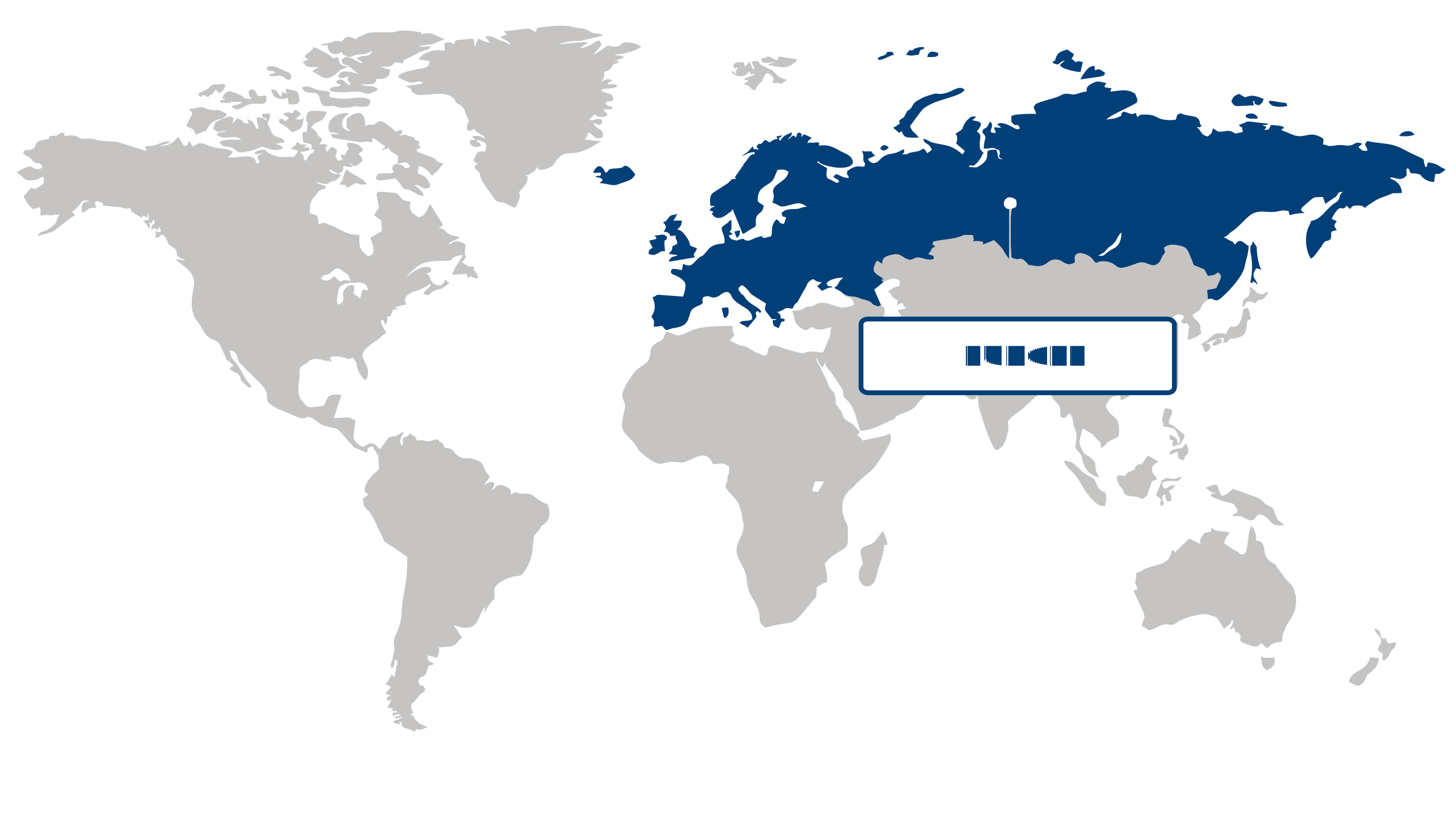
Europe (Largest Region)
Europe dominated the global welding sticks market, accounting for the largest revenue share of 48.3%. The region’s established manufacturing base, strong industrial infrastructure, and sustained demand for metal fabrication solutions are key factors supporting market dominance. Welding sticks remain essential across construction, automotive manufacturing, shipbuilding, machinery production, and infrastructure maintenance because of their versatility and suitability for a wide range of welding applications. Furthermore, the region’s emphasis on industrial quality standards and reliable joining techniques is encouraging continued demand for welding consumables. Investments in infrastructure modernization, equipment maintenance, and advanced manufacturing processes are further supporting market growth across Europe.
North America (Fastest-Growing Region)
The North America welding sticks market is anticipated to register the fastest growth, driven by increasing infrastructure development, industrial modernization, and rising demand for fabrication and repair activities. The expansion of construction projects and manufacturing operations is creating opportunities for welding consumables used in structural assembly, equipment maintenance, and metalworking applications. In addition, the need to maintain aging infrastructure is supporting demand for dependable welding solutions across industrial and commercial sectors. Growing investments in energy infrastructure, transportation networks, and manufacturing facilities are further contributing to market expansion. The continued importance of manual and maintenance welding applications is expected to sustain demand for welding sticks across the region.
| Parameter | North America | Asia Pacific | Europe | Latin America | MEA |
|---|---|---|---|---|---|
| Innovation HubiScaleNascentDeveloping Advanced | |||||
| Cost-Sensitive RegioniScaleLowMedium High | |||||
| Regulatory EnvironmentiScaleRestrictiveNeutral Supportive | |||||
| Demand DriversiScaleWeakModerate Strong | |||||
| Development StageiScaleEmergingDeveloping Developed | |||||
| Adoption RateiScaleLowMedium High | |||||
| New Entrants / StartupsiScaleSparseModerate Dense | |||||
| Macro IndicatorsiScaleWeakStable Strong |
Key Country Insights
United States 🇺🇸
Industrial Welding DemandThe U.S. welding sticks market is supported by fabrication, construction, repair, and maintenance applications requiring dependable consumables across diverse operating conditions. Suppliers are prioritizing consistent electrode performance, application-specific formulations, and compatibility with evolving welding equipment to serve professional and industrial users.
Germany 🇩🇪
Precision Fabrication NeedsGermany’s welding sticks market centers on demanding fabrication and industrial maintenance applications where weld quality and process consistency are critical. Manufacturers and distributors prioritize electrodes suited to engineered components, specialized metals, and automated or semi-automated production environments while maintaining stringent quality requirements.
Japan 🇯🇵
High-Quality Welding ConsumablesJapan’s welding sticks market emphasizes reliable consumables for machinery, automotive, shipbuilding, and precision fabrication applications. Market priorities include stable arc characteristics, controlled weld quality, and electrodes engineered for specialized materials and demanding production environments, supporting efficient and repeatable industrial welding processes.
South Korea 🇰🇷
Heavy Fabrication ApplicationsSouth Korea’s welding sticks market is closely tied to shipbuilding, heavy fabrication, industrial equipment, and infrastructure-related welding. Suppliers prioritize electrodes capable of maintaining consistent performance across demanding applications, with product selection increasingly influenced by weld quality, productivity, and compatibility with specialized fabrication processes.
France 🇫🇷
Industrial Repair ApplicationsFrance’s welding sticks market serves construction, industrial fabrication, maintenance, and repair activities where versatile manual welding remains important. Suppliers focus on dependable electrodes for varied materials and field conditions, while end users prioritize ease of use, weld integrity, and suitability for maintenance-intensive operations.
Italy 🇮🇹
Fabrication-Centric ConsumablesItaly’s welding sticks market is closely connected with machinery manufacturing, metal fabrication, construction, and industrial repair. Commercial priorities include electrodes tailored to different steel grades and fabrication requirements, alongside dependable handling and weld performance for small and medium-scale production and maintenance operations.
Welding Sticks Market Share (%), by End Use, 2026
Go beyond the chart, access full insights & data tables
Request Free Sample ReportEnd Use Segment Analysis: Building & Construction (Largest & Fastest-Growing Segment)
The building & construction end-use segment accounts for a 45% share of the welding sticks market in 2026 and is also the fastest-growing segment, driven by the extensive use of welding in structural fabrication, infrastructure development, building frameworks, and construction-related metalworking activities. Welding sticks remain important for joining and repairing steel and other metal components across a wide range of construction applications, particularly where durable connections and reliable fabrication are required. Expansion of residential, commercial, and infrastructure projects is supporting demand for welding consumables, while ongoing maintenance and repair activities provide recurring requirements beyond new construction. Increasing use of structural steel and fabricated metal components is further strengthening the need for dependable welding solutions at construction sites. The continued development of infrastructure and expansion of construction activity are therefore supporting the segment's dominant position and growth momentum.
| Segment | Sub-Segment | Largest Segment | Fastest Growing |
|---|---|---|---|
| End Use | Automotive & Transportation, Building & Construction, Marine, Repair & Maintenance | Building & Construction | Building & Construction |
Unlock insights tailored to your business with our bespoke market research solutions.
Click to get your customized report now.
Competitive Landscape and Market Positioning
Analyst Perspective:
Competitive success in the welding sticks market relies on balancing precise mechanical reliability with practical operational usability. Electrode manufacturers differentiate their offerings through proprietary coating formulations that ensure predictable arc stability, controlled penetration, and minimal spatter across various spatial orientations. Because structural integrity depends on achieving consistent tensile strength and crack resistance under rigorous operating conditions, industrial buyers prioritize standardized classifications and repeatable weld quality over single performance metrics. Consequently, suppliers that deliver moisture-resistant, multi-positional electrodes capable of reducing rework and simplifying field inventory stand to capture greater market share across safety-critical fabrication and maintenance applications.
Prominent players in the welding sticks market:
- Lincoln Electric (USA)
- ESAB (Sweden)
- Bohler Welding (Austria)
- Victor Technologies (USA)
- ITW Welding (USA)
- Panasonic Welding Systems (Japan)
- Hobart Brothers (USA)
- Daihen Corporation (Japan)
- Soudogaz (France)
- OTC Daihen (Japan)
| Company | Market Share | Company Revenue | Revenue CAGR (%) | Product Portfolio | Geographic Presence | Innovation / R&D Focus | Strategic Developments |
|---|---|---|---|---|---|---|---|
| Lincoln Electric (USA) | |||||||
| ESAB (Sweden) | |||||||
| Bohler Welding (Austria) | |||||||
| Victor Technologies (USA) | |||||||
| ITW Welding (USA) | |||||||
| Panasonic Welding Systems (Japan) | |||||||
| Hobart Brothers (USA) | |||||||
| Daihen Corporation (Japan) | |||||||
| Soudogaz (France) | |||||||
| OTC Daihen (Japan) |
Customize Your Report
Explore examples of how this report can be tailored to different research needs, including custom segments, additional topics or chapters, and related reports. Click a section of the wheel or its numbered marker to explore the available options.
Welding Sticks Market — Custom Segments
| Segment | Sub-Segment |
|---|---|
| Electrode Coating Type | Rutile, Basic / Low-Hydrogen, Cellulosic, Iron-Oxide, Metal-Powder, Acid / Specialty |
| Electrode Diameter | Up to 2.5 mm, 3.2 mm, 4.0 mm, Above 4.0 mm |
Welding Sticks Market — Custom TOC
| Custom Chapter | Chapter Details |
|---|---|
| Electrode Selection & Application Economics |
|
| Welding Consumables Procurement Strategy |
|
| Localization & Supply Security Assessment |
|
Need a different cut of the data?
Request Custom ResearchFrequently Asked Questions
What is the market valuation of the welding sticks market?
What is the projected value of the welding sticks industry by 2036?
How is industrial expansion influencing demand for welding sticks?
How are performance improvements reshaping purchasing priorities for welding sticks?
Why does building and construction lead the welding sticks market?
How is construction activity driving future demand for welding sticks?
Why does Europe dominate the welding sticks market?
What is driving the fastest growth in North America's welding sticks market?
Who holds a significant market share in the welding sticks landscape?
Our Clients
"The team at Fundamental Business Insights & Consulting demonstrated a commitment to excellence, not only in the quality of the report but also in their client-centric approach."
FANUC
"The level of detail in the market segmentation provided were particularly noteworthy. The detailed country-level insights were also very helpful."
B&R Industrial Automation GmbH
"The consultant took the time to understand our specific business objectives, ensuring that the reports were tailored to address our unique challenges and opportunities."
KUKA SE & Co. KGaA
Our Research Team & Methodology
Every Fundamental Business Insights report is built by a dedicated vertical research team, validated through a structured primary-and-secondary methodology, and reviewed for accuracy before it reaches you.
This report was prepared by the Industrial Automation & Equipment Research Team at Fundamental Business Insights, a dedicated research group specializing in industrial automation technologies, manufacturing systems, and industrial equipment markets. Our analysts continuously monitor advancements in factory automation, robotics, industrial IoT (IIoT), smart manufacturing, process optimization, equipment modernization, supply chain developments, industrial safety standards, and evolving digital transformation initiatives across manufacturing industries to deliver timely and reliable market intelligence. The research is developed using a structured methodology that combines primary discussions with equipment manufacturers, automation solution providers, system integrators, industrial end users, distributors, and industry experts, along with company annual reports, regulatory publications, government industrial statistics, industry associations, technical standards, engineering publications, and other authoritative secondary sources. Market estimates are validated through multiple research techniques, including top-down and bottom-up analysis, before undergoing an internal quality review to ensure accuracy, consistency, and methodological integrity prior to publication.
Delivery
Published
Available
Support
- Market Size & Forecast
- Market Segmentation
- Regional Analysis
- Growth Drivers & Challenges
- Market Dynamics
- Competitive Landscape
- Company Profiles
- Competitive Benchmarking
- Mergers & Acquisitions
- Market Share Analysis or Key Company Strategies
- Value Chain Analysis
- Porter's Five Forces
- PESTLE Analysis
- Pricing Trends
- Supply-Demand Analysis
- Technology Landscape
- Regulatory Landscape
- Investment & Funding Landscape
- Emerging Opportunities
- Future Market Outlook