Whipping Cream Powder Market Size & Growth Forecast 2027–2036, By Segments (Source, Type, Application), Regional Demand Trends (North America, Asia Pacific, Europe), Key Country Insights (U.S., Japan, South Korea, Germany, France, Italy), and Competitive Landscape
Jump to content
Market Size and Growth Outlook
Whipping Cream Powder Market size was worth USD 1.19 billion in 2026 and is expected to grow at a 7.22% CAGR between 2027 and 2036, exceeding USD 2.39 billion by 2036. The industry revenue for 2027 is assessed at USD 1.26 billion.
Get more details on this report
Request Free Sample ReportWhipping Cream Powder Market Intelligence Snapshot
Regional Market Dynamics
- Europe held a 35.09% market share in 2026, supported by its established dairy processing industry, mature food production networks, and consistent demand from bakery and confectionery manufacturers.
- Asia Pacific is projected to expand at an 8.59% CAGR, driven by rising processed food production, expanding foodservice formats, and growing demand for shelf-stable dairy ingredients.
Segment Momentum
- Dairy accounted for a 71.71% share in 2026 due to its established use in bakery, confectionery, and dessert applications where consistent taste, texture, and whipping performance are essential.
- Unsweetened Whipping Cream Powder is the fastest-growing type because it offers greater formulation flexibility, allowing manufacturers to control sugar levels across both sweet and savory applications.
Market Expansion Drivers
- Rising popularity of baking, pastry culture, and social media-driven home baking trends.
- Increasing disposable income and urbanization driving dairy-based product consumption in emerging markets.
- Growing demand for low-fat and sugar-free dairy alternatives supporting health-conscious product innovation.
Leading Market Participants
- Key companies in the whipping cream powder market include The Kraft Heinz Company (United States), Dr. Oetker GmbH (Germany), Wilton Brands LLC (United States), Betty Crocker LLC (United States), Weikfield Foods Pvt. Ltd. (India), Hoosier Hill Farm LLC (United States), Adams Food Ingredients Ltd. (United Kingdom), Swiss Bake Ingredients Pvt. Ltd. (India), FrieslandCampina N.V. (Netherlands), Arla Foods amba (Denmark).
Global Market Forecast Snapshot
Market Outlook
- 2026 Market Size: USD 1.19 billion
- 2027 Estimated Market Size: USD 1.26 billion.
- Projected Market Size: USD 2.39 billion by 2036
- Growth Forecast: 7.22% CAGR (2027-2036)
Regional and Segment Outlook
- Leading Regional Market: Europe
- High-Growth Regional Hub: Asia Pacific
- Core Revenue Segment: Dairy (Source) | Sweetened Whipping Cream Powder (Type) | Bakery & Confectionery (Application)
- Emerging Opportunity Segment: Non-dairy (Source) | Unsweetened Whipping Cream Powder (Type) | Beverages (Application)
Market Growth Drivers and Industry Trends
Rising popularity of baking, pastry culture, and social media-driven home baking trends
The whipping cream powder market is gaining momentum as home baking and pastry preparation become increasingly popular among consumers seeking convenient ingredients for cakes, desserts, frostings, and decorative applications. Whipping cream powder offers practical advantages because it can be stored for longer periods than many ready-to-use dairy cream products and prepared when required, making it suitable for household baking and small-scale food preparation. Growing interest in visually appealing desserts, recipe experimentation, and baking content shared through social media is encouraging consumers to explore specialized ingredients and recreate professional-style products at home. Baking enthusiasts also value ingredients that simplify preparation while providing consistent whipping characteristics, which supports the use of powdered cream formulations across a range of sweet applications.
Increasing disposable income and urbanization driving dairy-based product consumption in emerging markets
Rising household purchasing power and continued urbanization are expanding access to packaged dairy ingredients and supporting the whipping cream powder market across emerging economies. As disposable income increases, consumers are able to spend more frequently on bakery products, desserts, convenience ingredients, and premium food preparations, while urban lifestyles encourage demand for products that are easy to store and convenient to prepare. Whipping cream powder can serve both household consumers and small food businesses by providing a practical ingredient for desserts and bakery formulations without requiring the same storage conditions associated with fresh cream. Expanding modern retail and foodservice channels in urban areas can further improve product availability, while greater exposure to international dessert formats is encouraging consumers to incorporate cream-based preparations into everyday and occasion-oriented food consumption.
Growing demand for low-fat and sugar-free dairy alternatives supporting health-conscious product innovation
Health-conscious consumption patterns are encouraging manufacturers to develop whipping cream powder formulations that address preferences for lower-fat, reduced-sugar, and other nutritional alternatives, contributing to the whipping cream powder market. Consumers increasingly examine the nutritional characteristics of dessert ingredients while still seeking products that deliver desirable texture, stability, and taste, creating opportunities for formulation improvements. Low-fat and sugar-free options can appeal to consumers who want greater control over their dietary intake without completely avoiding whipped toppings and cream-based desserts. Product development can also focus on balancing nutritional attributes with whipping performance, mouthfeel, and compatibility with different bakery and confectionery applications. This shift toward more differentiated formulations is broadening the range of products available to health-conscious consumers and food manufacturers.
| Growth Driver | Impact on CAGR | Regulatory Influence | Geographic Relevance | Adoption Rate | Impact Timeline |
|---|---|---|---|---|---|
| Increasing Consumption of Dairy Products | 3.00% | Short term (≤ 2 yrs) | North America, Europe (spillover: Asia Pacific) | Medium | Fast |
| Innovation in Powdered Cream Processing & Storage | 2.30% | Medium term (2–5 yrs) | Europe, North America (spillover: Asia Pacific) | Low | Moderate |
| Regulatory Food Safety Standards | 2.30% | Long term (5+ yrs) | North America, Europe (spillover: MEA) | High | Moderate |
| Rising popularity of baking, pastry culture, and social media-driven home baking trends | 2.00% | Low | North America, Europe, Asia Pacific | High | Near Term |
| Increasing disposable income and urbanization driving dairy-based product consumption in emerging markets | 1.80% | Moderate | Asia Pacific, Latin America, Africa | High | Mid Term |
| Growing demand for low-fat and sugar-free dairy alternatives supporting health-conscious product innovation | 1.60% | Moderate | Global | Medium | Mid Term |
Unlock insights tailored to your business with our bespoke market research solutions.
Click to get your customized report now.
Regional Demand Dynamics
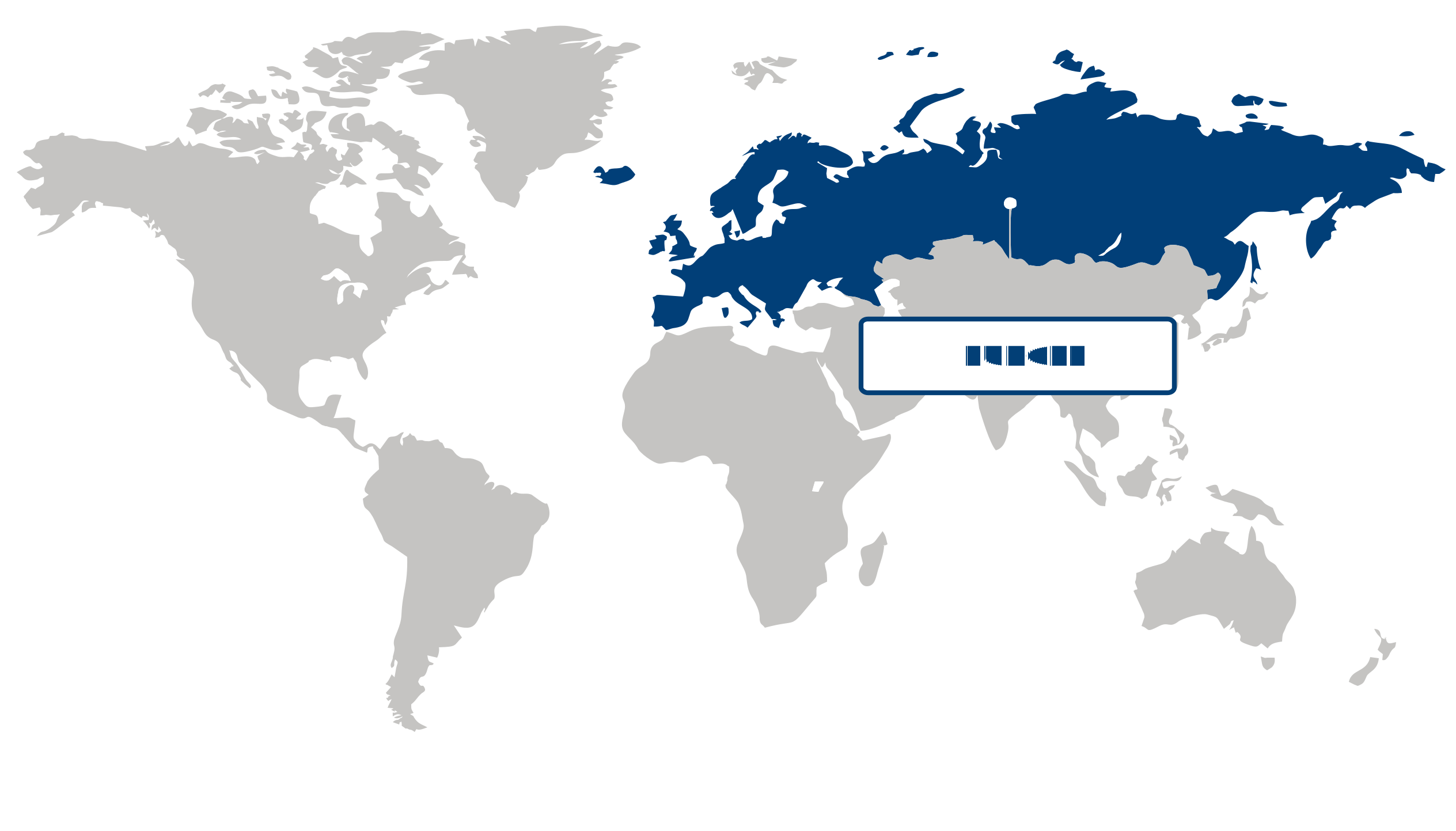
Europe (Largest Region)
Europe held the largest share of the whipping cream powder market, accounting for 35.09% in 2026, supported by a mature bakery, confectionery, foodservice, and processed-food industry. Strong consumer demand for premium desserts and convenient food preparation solutions sustains the use of whipping cream powder across commercial and household applications. The region also benefits from established food-processing infrastructure, sophisticated quality and food-safety standards, and continued product development focused on convenience, stability, and functional performance. Established consumption patterns for bakery and dessert products further reinforce demand, while manufacturers increasingly emphasize formulations suited to evolving dietary and clean-label preferences.
Asia Pacific (Fastest-Growing Region)
Asia Pacific is the fastest-growing region, driven by expanding bakery and confectionery consumption, rapid urbanization, and the development of modern foodservice channels. Rising disposable incomes and changing lifestyles are encouraging greater demand for convenient dessert ingredients, while the growth of organized retail and food manufacturing is widening distribution opportunities for powdered cream products. The region's expanding hospitality sector and increasing adoption of western-style bakery and dessert formats are also creating new applications. Improvements in food-processing capabilities and greater availability of packaged ingredients are expected to support broader commercial use of whipping cream powder across emerging markets.
| Parameter | North America | Asia Pacific | Europe | Latin America | MEA |
|---|---|---|---|---|---|
| Innovation HubiScaleNascentDeveloping Advanced | |||||
| Cost-Sensitive RegioniScaleLowMedium High | |||||
| Regulatory EnvironmentiScaleRestrictiveNeutral Supportive | |||||
| Demand DriversiScaleWeakModerate Strong | |||||
| Development StageiScaleEmergingDeveloping Developed | |||||
| Adoption RateiScaleLowMedium High | |||||
| New Entrants / StartupsiScaleSparseModerate Dense | |||||
| Macro IndicatorsiScaleWeakStable Strong |
Key Country Insights
Germany 🇩🇪
Premium Ingredient StandardsGermany emphasizes high-quality whipping cream powder formulations suited for industrial bakery and premium dairy applications. Germany continues investing in product consistency, clean-label ingredients, and manufacturing efficiency to meet evolving food industry requirements.
France 🇫🇷
Artisan Dairy ApplicationsFrance applies whipping cream powder across bakery, pastry, and specialty food production where consistent dairy functionality is essential. France emphasizes premium ingredient quality and processing reliability while supporting diversified food manufacturing needs.
Italy 🇮🇹
Confectionery Ingredient FocusItaly integrates whipping cream powder into confectionery, bakery, and dessert manufacturing requiring dependable texture and shelf stability. Italy prioritizes ingredient quality and efficient production processes that support premium food product development.
Japan 🇯🇵
Convenience Food FormulationsJapan utilizes whipping cream powder in compact, convenience-oriented food products and premium confectionery manufacturing. Japan focuses on stable product performance, precise formulation, and quality preservation for processed food applications.
South Korea 🇰🇷
Bakery Innovation SupplySouth Korea supports whipping cream powder demand through expanding bakery chains and dessert manufacturing. South Korea encourages ingredient solutions offering improved whipping performance, storage stability, and compatibility with modern food processing operations.
United States 🇺🇸
Food Processing DemandThe U.S. whipping cream powder market benefits from broad demand across bakery, confectionery, and ready-to-mix food applications. U.S. manufacturers prioritize consistent product functionality, extended shelf life, and ingredient innovation for commercial food production.
Whipping Cream Powder Market Share (%), by Source, 2026
Go beyond the chart, access full insights & data tables
Request Free Sample ReportSource Segment Analysis: Dairy (Largest Segment) vs Non-dairy (Fastest-Growing Segment)
The dairy segment dominated the whipping cream powder market, accounting for a 71.71% share in 2026. Its leading position is supported by the established use of dairy-based whipping cream powder across bakery, confectionery, dessert, and foodservice applications, where consistent whipping performance, creamy texture, and convenient storage are important. Dairy-based formulations also benefit from familiarity among manufacturers and consumers, while the powdered format provides handling and shelf-life advantages compared with liquid cream. Continued demand for convenient ingredients that simplify preparation and improve formulation consistency reinforces the segment's strong market position.
Non-dairy is the fastest-growing source segment, supported by increasing demand for plant-based and dairy-free food ingredients. Non-dairy whipping cream powders provide formulators with greater flexibility in developing products suited to consumers seeking alternatives to conventional dairy ingredients, while also supporting applications where storage stability and formulation convenience are important. The broader expansion of plant-based food offerings and growing interest in versatile alternatives are encouraging manufacturers to incorporate non-dairy whipping solutions across bakery, dessert, and specialty food applications.
Type Segment Analysis: Sweetened Whipping Cream Powder (Largest Segment) vs Unsweetened Whipping Cream Powder (Fastest-Growing Segment)
Sweetened whipping cream powder held a 64.6% share in 2026, making it the leading type in the whipping cream powder market. Its strong adoption is linked to its ability to combine creaminess and sweetness in a convenient ingredient, reducing preparation requirements for food manufacturers and commercial kitchens. The product is particularly suited to desserts, bakery fillings, toppings, confectionery products, and other formulations where sweetness is an integral part of the final product profile. Demand for convenient and consistent food preparation solutions continues to support the widespread use of sweetened formulations.
Unsweetened whipping cream powder represents the fastest-growing type segment as manufacturers increasingly seek greater control over sweetness and formulation characteristics. The absence of added sweetness allows food processors and professional users to adjust sugar levels according to specific recipes, dietary preferences, and product positioning. This flexibility is particularly valuable across bakery, culinary, and specialty food applications, where customized taste profiles and ingredient control are becoming increasingly important.
| Segment | Sub-Segment | Largest Segment | Fastest Growing |
|---|---|---|---|
| Source | Dairy, Non-dairy | Dairy | Non-dairy |
| Type | Sweetened Whipping Cream Powder, Unsweetened Whipping Cream Powder | Sweetened Whipping Cream Powder | Unsweetened Whipping Cream Powder |
| Application | Bakery & Confectionery, Icecream & Frozen Desserts, Beverages, Others | Bakery & Confectionery | Beverages |
Competitive Landscape and Market Positioning
Key companies in the whipping cream powder market:
1. The Kraft Heinz Company (United States)
2. Dr. Oetker GmbH (Germany)
3. Wilton Brands LLC (United States)
4. Betty Crocker LLC (United States)
5. Weikfield Foods Pvt. Ltd. (India)
6. Hoosier Hill Farm LLC (United States)
7. Adams Food Ingredients Ltd. (United Kingdom)
8. Swiss Bake Ingredients Pvt. Ltd. (India)
9. FrieslandCampina N.V. (Netherlands)
10. Arla Foods amba (Denmark)
The whipping cream powder market is experiencing steady innovation focused on texture enhancement, stability, and application versatility across food segments. Product development efforts are increasingly aligned with improving solubility and consistency under varied processing conditions. The whipping cream powder market continues to evolve as manufacturers refine formulations to meet diverse culinary requirements.
| Company | Market Share | Company Revenue | Revenue CAGR (%) | Product Portfolio | Geographic Presence | Innovation / R&D Focus | Strategic Developments |
|---|---|---|---|---|---|---|---|
| The Kraft Heinz Company (United States) | |||||||
| Dr. Oetker GmbH (Germany) | |||||||
| Wilton Brands LLC (United States) | |||||||
| Betty Crocker LLC (United States) | |||||||
| Weikfield Foods Pvt. Ltd. (India) | |||||||
| Hoosier Hill Farm LLC (United States) | |||||||
| Adams Food Ingredients Ltd. (United Kingdom) | |||||||
| Swiss Bake Ingredients Pvt. Ltd. (India) | |||||||
| FrieslandCampina N.V. (Netherlands) | |||||||
| Arla Foods amba (Denmark). |
Customize Your Report
Explore examples of how this report can be tailored to different research needs, including custom segments, additional topics or chapters, and related reports. Click a section of the wheel or its numbered marker to explore the available options.
Whipping Cream Powder Market — Custom Segments
| Segment | Sub-Segment |
|---|---|
| Customer Type | Industrial Food Manufacturers, Foodservice Operators, Bakeries & Confectioneries, Dairy & Dessert Manufacturers, Retail Consumers |
| Packaging Format | Bulk Sacks, Bag-in-Box, Pouches, Cans, Small Consumer Packs |
| Price Tier | Economy, Mid-Range, Premium |
Whipping Cream Powder Market — Custom TOC
| Custom Chapter | Chapter Details |
|---|---|
| Foodservice Demand Opportunity Assessment |
|
| Clean Label and Reformulation Trends |
|
| Brand Differentiation Strategy |
|
Need a different cut of the data?
Request Custom ResearchFrequently Asked Questions
What is the market valuation of whipping cream powder?
How is the whipping cream powder industry size expected to evolve during the forecast period?
How are social media-driven baking trends and home dessert culture influencing demand in the whipping cream powder market?
How is rising demand for health-conscious and flexible formulations reshaping product development in the whipping cream powder market?
Why is the Dairy source segment the largest in the whipping cream powder market?
Which type segment is expanding the fastest in the whipping cream powder market?
Why is Europe the leading region in the whipping cream powder market?
What factors are driving whipping cream powder market growth in Asia Pacific?
Which companies dominate the whipping cream powder landscape?
Our Clients
"The report provided a thorough look at market trends, technological advancements, and the competitive landscape. The depth of insights was really valuable."
ITC Limited
"We would highly recommend Fundamental Business Insights & Consulting to anyone looking for reliable, detailed, and comprehensive market research in the Food industry."
Tyson Foods
"The clarity and presentation of the information were commendable. The report was delivered timely, which made the overall experience smooth and convenient."
Mondelēz International
Our Research Team & Methodology
Every Fundamental Business Insights report is built by a dedicated vertical research team, validated through a structured primary-and-secondary methodology, and reviewed for accuracy before it reaches you.
Delivery
Published
Available
Support
- Market Size & Forecast
- Market Segmentation
- Regional Analysis
- Growth Drivers & Challenges
- Market Dynamics
- Competitive Landscape
- Company Profiles
- Competitive Benchmarking
- Mergers & Acquisitions
- Market Share Analysis or Key Company Strategies
- Value Chain Analysis
- Porter's Five Forces
- PESTLE Analysis
- Pricing Trends
- Supply-Demand Analysis
- Technology Landscape
- Regulatory Landscape
- Investment & Funding Landscape
- Emerging Opportunities
- Future Market Outlook