



Wind Power Coating Market Size & Forecasts 2026-2035, By Segments (Application Area, Wind Turbine Component, Coating Property, Technology, Coating Type), Growth Opportunities, Innovation Landscape, Regulatory Shifts, Strategic Regional Insights (U.S., Japan, China, South Korea, UK, Germany, France), and Competitive Dynamics (Tikkurila, AkzoNobel, PPG Industries, Axalta Coating Systems, Jotun)
Market Size and Growth Outlook
Wind Power Coating Market size is projected to grow steadily from USD 35.88 billion in 2025 to USD 114.46 billion by 2035, demonstrating a CAGR exceeding 12.3% through the forecast period (2026-2035). The 2026 revenue is estimated at USD 39.82 billion.
Base Year Value (2025)
USD 35.88 billion
CAGR (2026-2035)
12.3%
Forecast Year Value (2035)
USD 114.46 billion

Historical Data Period
2022-2025

Largest Region
Europe

Forecast Period
2026-2035
Key Takeaways
- Europe region accounted for around 37% revenue share in 2025, driven by advanced offshore and onshore wind projects, supported by strict anti-corrosion standards.
- Asia Pacific region will expand at around 14.76% CAGR during the forecast period, propelled by rapid expansion of wind energy infrastructure and renewable energy policies.
- In 2025, the onshore segment accounted for majority share of the wind power coating market, driven by rapid deployment of onshore wind projects globally.
- The blades segment dominated the market in 2025, propelled by demand for durable protective coatings to increase blade service life.
- In 2025, the corrosion resistance segment contributed the largest share to the wind power coating market, owing to need for coatings that protect critical components from environmental degradation.
- The conventional coating segment led the market in 2025, driven by its proven performance, cost-effectiveness, and widespread adoption in wind turbine protection.
- The polyester segment captured a majority share of the wind power coating market in 2025, supported by cost-effectiveness and reliable performance of polyester-base coatings.
- Major competitors in the wind power coating market include Tikkurila (Finland), AkzoNobel (Netherlands), PPG Industries (USA), Axalta Coating Systems (USA), Jotun (Norway), Sherwin-Williams (USA), Kansai Paint (Japan), Nippon Paint (Japan), Hempel (Denmark), RPM International (USA).
Market Growth Drivers and Industry Trends
Expansion of Offshore and Onshore Wind Energy ProjectsThe rapid growth of wind energy infrastructure, driven by government targets such as the U.S. Department of Energy’s goal to deploy 30 GW of offshore wind by 2030, is a pivotal force in shaping the wind power coating market. As vast new projects emerge both offshore and onshore, the demand for specialized coatings to protect turbines from harsh environmental conditions intensifies. This trend is underscored by Europe's commitment, highlighted by the European Commission’s Green Deal, which further accelerates wind farm installations. For established coating manufacturers, this expansion invites collaboration with turbine producers to tailor coatings for diverse environments, while new entrants can capitalize on niche development in corrosion resistance and anti-fouling solutions. The ongoing build-out of wind infrastructure ensures sustained market momentum, fostering innovation in protective technologies aligned with evolving energy policies.
Demand for Protective Coatings in Wind Turbine Manufacturing
Heightened attention to turbine longevity and maintenance, as reported by GE Renewable Energy’s recent turbine upgrades, underscores the critical role of protective coatings in the wind power coating market. Turbine components encounter extreme weather, salt spray, and abrasive particles, necessitating coatings that reduce wear and extend service intervals. Reflecting an industry-wide shift, regulatory agencies like the International Electrotechnical Commission encourage standards that mandate robust protective solutions, increasing coating adoption. This dynamic incentivizes incumbents to emphasize R&D and optimize product durability, while startups can introduce breakthrough materials with enhanced performance characteristics. Strategic partnerships between turbine manufacturers and coating specialists will be pivotal, fortifying competitive positioning as environmental resilience becomes a decisive procurement criterion.
Adoption of Durable, Long-Life Coatings for Next-Generation Turbines
Innovation in coating chemistry, highlighted by AkzoNobel’s recent launch of advanced polymer-based coatings, is driving the wind power coating market toward products that deliver longer life cycles and reduced maintenance costs. Next-generation turbines with larger blades and taller towers demand coatings with enhanced elasticity and UV resistance to withstand mechanical stresses and environmental exposure. This technological evolution aligns with sustainability imperatives prioritizing reduced material waste and lifecycle emissions, as emphasized by the World Economic Forum’s Clean Energy Initiative. For investors and strategists, focusing on durable coating technologies offers a competitive edge, enabling differentiation through performance guarantees. Continued material advancements will anchor the market’s future trajectory by enabling turbines to operate efficiently in increasingly challenging locations.
Industry Restraints:
Environmental Regulation Complexity
Stringent and evolving environmental regulations significantly constrain the wind power coating market, as formulations must align with reduced volatile organic compounds (VOC) and hazardous substance limits. The European Chemicals Agency (ECHA) enforces rigorous REACH restrictions, which compel manufacturers to redesign coatings avoiding regulated substances like chromium and certain isocyanates. This regulatory environment increases R&D costs and delays product approvals, affecting time-to-market and profitability. Established players face pressure to reformulate existing products, while new entrants require substantial expertise to navigate compliance. Given the global push toward sustainability, regulatory scrutiny is expected to intensify, forcing continuous innovation in eco-friendly coatings and potentially favoring technologically advanced firms capable of agile adaptation.
Raw Material Supply Volatility
The wind power coating market grapples with raw material supply volatility, stemming from dependence on specialty chemicals such as fluoropolymers and titanium dioxide, essential for durability and corrosion resistance. Recent disruptions reported by companies like AkzoNobel and PPG Industries highlight challenges sourcing these inputs amid geopolitical tensions and fluctuating commodity prices. Such supply chain unpredictability raises production costs and compromises delivery schedules, slowing market expansion and damaging customer trust. Market incumbents must invest in diversified sourcing strategies and secure long-term supply contracts, while startups face barriers due to capital intensity and supplier relationships. This dynamic is likely to persist, driving consolidation and strategic partnerships to stabilize supply and ensure consistent product quality.
| Growth Driver Assessment Framework | |||||
| Growth Driver | Impact On CAGR | Regulatory Influence | Geographic Relevance | Adoption Rate | Impact Timeline |
|---|---|---|---|---|---|
| Demand for protective coatings in wind turbine manufacturing | 4.00% | Short term (≤ 2 yrs) | Europe, North America | Medium | Fast |
| Expansion of offshore and onshore wind energy projects | 4.00% | Medium term (2–5 yrs) | Europe, Asia Pacific | Medium | Moderate |
| Adoption of durable, long-life coatings for next-generation turbines | 4.30% | Long term (5+ yrs) | Europe, North America; Spillover: Asia Pacific | High | Slow |
Unlock insights tailored to your business with our bespoke market research solutions - Click to get your customized report now!
Regional Demand Dynamics
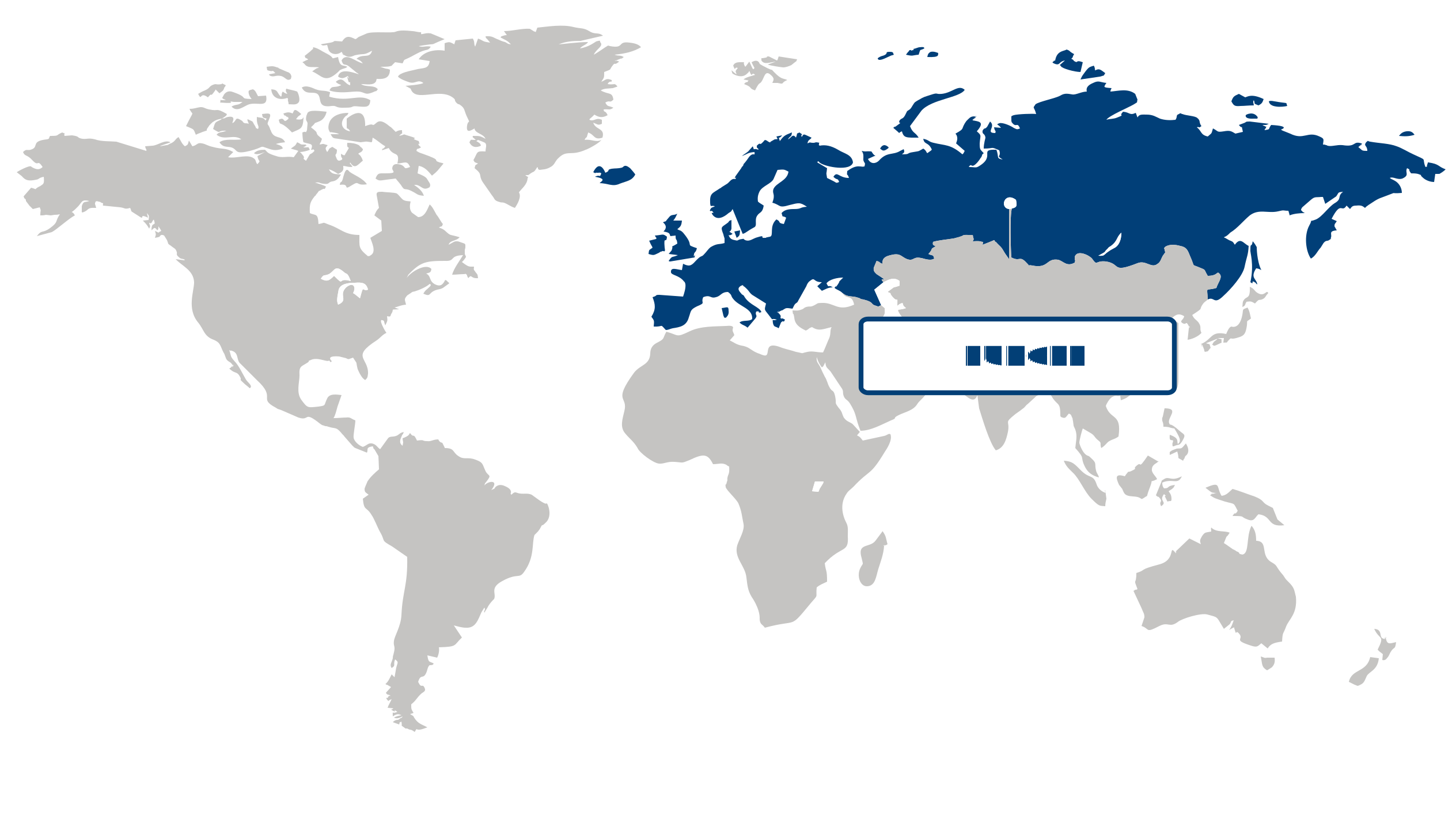
Largest Region
Europe
37% Market Share in 2025
Europe captured over 37% of the global wind power coating market in 2025, establishing itself as the largest regional market. This leadership stems from the region’s robust development of advanced offshore and onshore wind projects, which elevate demand for high-performance, durable coatings. Notably, the European Union’s stringent anti-corrosion standards, enforced by regulatory bodies like the European Chemicals Agency (ECHA), have driven innovation and adoption of specialized coatings to extend the lifespan of wind turbines. Combined with Europe's commitment to sustainability and heavy investment in renewable infrastructure, as highlighted by the European Wind Energy Association, these factors reinforce steady spending patterns and adoption of cutting-edge technological solutions in coatings. This dynamic positions Europe as a critical hub for wind power coating market growth, providing ample opportunities for suppliers who can meet evolving regulatory requirements and operational demands.
Germany anchors the European wind power coating market, benefitting from its aggressive renewable energy policies, such as the Energiewende strategy. Germany’s development of extensive offshore wind farms in the North Sea, promoted by the Federal Ministry for Economic Affairs and Energy, has escalated demand for coatings that offer superior corrosion resistance under harsh marine conditions. Companies like BASF have introduced tailored solutions to address these needs, illustrating how Germany’s regulatory environment and innovative industrial capacity drive market expansion. This leadership reaffirms Germany’s pivotal role in sustaining Europe’s dominance and advancing opportunities in the wind power coating market.
France plays a complementary role in Europe’s wind power coating market by focusing on expanding both onshore and offshore capacities, with policies aligned through the French Ministry of Ecological Transition. The country emphasizes durable coatings compatible with growing offshore projects in the Atlantic, as evidenced by Engie’s recent offshore wind declarations. France’s competitive strategies encompass collaborations with coating technology developers to enhance turbine efficiency and resilience. This strengthens the European market’s overall supply chain flexibility and innovation pace, underlining France’s strategic contribution to the region’s wind power coating market growth and European leadership sustainability.
Asia Pacific Market Analysis:
Asia Pacific emerged as the fastest-growing region in the wind power coating market, registering a robust CAGR of 14.76%. This impressive growth is primarily driven by the rapid expansion of wind energy infrastructure and supportive renewable energy policies across the region. Governments in Asia Pacific, notably through incentives and stringent environmental mandates, are fostering a shift toward sustainable energy investments, boosting demand for advanced wind power coatings that enhance turbine durability and efficiency. For instance, the International Energy Agency (IEA) highlights Asia Pacific’s leading role in global renewable capacity additions, reflecting strong regional commitments. Moreover, evolving consumer and industrial preferences for longer-lasting, corrosion-resistant coatings align with the technological advancements in wind turbine manufacturing hubs. These factors collectively position Asia Pacific as a vital arena for innovation and investment in wind power coatings, promising sustained growth potential in line with the ongoing green transition.
Japan stands out in the Asia Pacific wind power coating market due to its strategic emphasis on refurbishing existing offshore wind farms alongside new project developments. The nation's drive to mitigate environmental impact through stringent regulations, exemplified by Japan’s Ministry of Economy, Trade and Industry (METI) initiatives, supports high-performance coatings that endure harsh marine conditions. Consumer demand in Japan gravitates towards coatings that extend turbine lifespan while reducing maintenance costs, encouraging suppliers to innovate with eco-friendly formulations. Meanwhile, China dominates the regional market with expansive wind energy deployments fueled by massive renewable energy targets under the National Energy Administration (NEA). China’s scale of infrastructure development generates significant bulk purchasing power and swift adoption cycles, fostering competitive pricing and technological improvements in coating solutions. Together, Japan’s focus on sustainability and China’s infrastructure scale reinforce Asia Pacific’s preeminence, making the region a critical target for market entrants and existing players seeking growth in wind power coatings.
North America Market Trends:
North America held a commanding share in the wind power coating market, driven by its mature renewable energy infrastructure and stringent environmental standards that promote durability and efficiency in turbine coatings. The region’s emphasis on sustainability, supported by robust government incentives such as those from the U.S. Department of Energy, has accelerated the adoption of advanced coating technologies that extend asset lifespan and reduce maintenance costs. Additionally, North America’s logistics capabilities and innovation hubs contribute to rapid deployment and customization of high-performance coatings, addressing diverse climatic conditions across the continent. Corporate initiatives spotlighting green energy transitions, such as General Electric’s advancements in turbine coatings, further reinforce this position. Moving forward, North America’s integration of digital monitoring and predictive maintenance in wind farms positions it as a fertile ground for innovative coating solutions, unlocking substantial growth opportunities for investors.
The U.S. serves as a pivotal market within the North American wind power coating market, fueled by aggressive targets for wind energy capacity expansion and progressive regulatory frameworks emphasizing environmental compliance. Market leaders like PPG Industries have advanced specialized coatings that improve corrosion resistance and blade performance, aligning with the U.S. offshore wind development strategy outlined by the Bureau of Ocean Energy Management. Enhanced focus on reducing turbine downtime through coatings optimized for harsh offshore environments underscores the country’s leadership in operational efficiency. This dynamic fosters a competitive landscape ripe for technological innovation while supporting nationwide decarbonization goals. Consequently, the U.S. market's sustained momentum significantly amplifies broader North American prospects in wind power coating solutions, making it an essential focus for strategic investment.
No card data available for this language/report.
Segment Leadership and Growth Trends
The onshore segment represented the largest share in the wind power coating market in 2025, driven by the rapid deployment of onshore wind projects worldwide. This leadership arises from the cost-effectiveness and easier accessibility associated with onshore installations, fostering increased demand for specialized coatings to enhance durability. Furthermore, government initiatives such as the U.S. Department of Energy’s Wind Vision report emphasize onshore wind expansion, creating steady demand for robust coating solutions tailored to varied terrestrial environments. The segment offers strategic advantages for established players with extensive supply chains and for emerging firms focusing on niche, high-performance formulations. Given ongoing infrastructure investments and policy support favoring onshore wind expansion, this segment is poised to maintain its dominance in the near to medium term.
Analysis by Wind Turbine Component
The blades segment held the largest share of the wind power coating market in 2025, propelled by the growing need for durable protective coatings to extend blade service life under harsh operational conditions. Blades are exposed to significant mechanical stress and environmental wear, prompting demand for coatings that enhance resistance to erosion and fatigue. Leading turbine manufacturers such as Siemens Gamesa and Vestas highlight blade longevity as a key performance metric, encouraging coating innovation. This segment's focus on sustainability and efficiency provides notable opportunities for companies developing advanced polymer- and ceramic-based coatings. As turbine designs evolve and blades increase in size and complexity, the blades segment will continue to be central to wind power coating strategies.
Analysis by Coating Property
Corrosion resistance held the largest share in the wind power coating market in 2025, fueled by the essential need to protect critical components from environmental degradation, especially in offshore and humid locations. The segment thrives on coatings engineered to withstand saltwater, humidity, and chemical exposure, reflecting growing regulatory emphasis on environmental resilience by agencies like the European Chemicals Agency (ECHA). Rising concerns over lifecycle costs and asset reliability drive demand for such coatings, reinforcing their strategic value for manufacturers and service providers alike. Continuous innovations in anti-corrosive technologies and increasing adoption of eco-friendly materials signal that corrosion resistance will remain a vital property, securing its relevance for the foreseeable future.
| Report Segmentation | |||
| Segment | Sub-Segment | Largest Segment | Fastest Growing Segment |
|---|---|---|---|
| Application Area | Onshore, Offshore | ||
| Wind Turbine Component | Blades, Towers, Nacelles | ||
| Coating Property | Corrosion resistance, UV resistance, Erosion resistance, Chemical resistance | ||
| Technology | Conventional coating, Waterborne coating, Powder coating, UV-curable coating | ||
| Coating Type | Polyester, Polyurethane, Acrylic, Epoxy, Polyvinyl Fluoride (PVF) | ||
 Read our Research Approach
Competitive Landscape and Market Positioning
Key players in the wind power coating market include Tikkurila, AkzoNobel, PPG Industries, Axalta Coating Systems, Jotun, Sherwin-Williams, Kansai Paint, Nippon Paint, Hempel, and RPM International. These companies hold distinguished positions, leveraging their extensive coating technologies and industry heritage to address the unique demands of wind turbine protection. Their influence spans multiple stages of the wind power value chain, ranging from specialized surface treatments to durable formulations that enhance turbine longevity amid harsh environmental conditions. Collectively, they shape the market landscape through strong brand recognition and tailored product portfolios designed for performance and sustainability.The competitive environment is marked by robust initiatives among the top players, who actively enhance their technological capabilities and expand product offerings focused on innovation. Collaborative approaches, such as partnerships with renewable energy developers and material scientists, are common to accelerate solution deployment. Additionally, strategic expansions via acquisitions enable these companies to diversify their geographic footprint and product range. The emphasis on R&D manifests in improved coating formulations that optimize durability and environmental compliance, positioning these firms competitively against emerging market entrants and reinforcing their leadership in wind power coating solutions.
Strategic / Actionable Recommendations for Regional Players
In North America, players could enhance market penetration by forging alliances with regional turbine manufacturers and leveraging advanced polymer technologies to cater to evolving regulatory and environmental standards. Developing tailored coatings addressing local climatic challenges would further strengthen competitiveness.
For the Asia Pacific market, deepening collaboration with rapidly growing wind farm operators and investing in innovation for corrosion resistance and anti-erosion properties can unlock high-growth sub-segments. Integrating digital monitoring of coating performance could serve as a differentiator.
European players would benefit from focusing on sustainability-driven coatings, aligned with stringent EU environmental mandates, while nurturing partnerships across the renewable energy ecosystem. Emphasizing experimental R&D focused on next-generation protective materials may secure long-term leadership in this matured yet evolving market.
Why Choose Us
Specialized Expertise: Our team comprises industry experts with a deep understanding of your market segment. We bring specialized knowledge and experience that ensures our research and consulting services are tailored to your unique needs.
Customized Solutions: We understand that every client is different. That's why we offer customized research and consulting solutions designed specifically to address your challenges and capitalize on opportunities within your industry.
Proven Results: With a track record of successful projects and satisfied clients, we have demonstrated our ability to deliver tangible results. Our case studies and testimonials speak to our effectiveness in helping clients achieve their goals.
Cutting-Edge Methodologies: We leverage the latest methodologies and technologies to gather insights and drive informed decision-making. Our innovative approach ensures that you stay ahead of the curve and gain a competitive edge in your market.
Client-Centric Approach: Your satisfaction is our top priority. We prioritize open communication, responsiveness, and transparency to ensure that we not only meet but exceed your expectations at every stage of the engagement.
Continuous Innovation: We are committed to continuous improvement and staying at the forefront of our industry. Through ongoing learning, professional development, and investment in new technologies, we ensure that our services are always evolving to meet your evolving needs.
Value for Money: Our competitive pricing and flexible engagement models ensure that you get maximum value for your investment. We are committed to delivering high-quality results that help you achieve a strong return on your investment.
Select Licence Type

