Winter Hats Market Size & Growth Forecast 2027–2036, By Segments (Distribution Channel, Material, Gender, Type), Regional Demand Trends (North America, Asia Pacific, Europe), Key Country Insights (U.S., Japan, South Korea, Germany, France, Italy), and Competitive Landscape
Jump to Content
Market Size and Growth Outlook
Winter Hats Market size was around USD 30.41 billion in 2026 and is slated to grow at a 3.8% CAGR from 2027 to 2036, surpassing USD 44.16 billion by 2036. The industry revenue for 2027 is estimated at USD 31.38 billion.
Get more details on this report
Request Free Sample ReportWinter Hats Market Intelligence Snapshot
Regional Market Dynamics
- Europe accounted for 40.28% of the market in 2026, supported by strong seasonal demand, mature apparel retail networks, and recurring replacement purchases across offline and online channels.
- Asia Pacific is projected to grow at a 4.67% CAGR, fueled by rising retail penetration, higher consumer spending, expanding e-commerce access, and increasing adoption of fashion accessories in urban markets.
Segment Momentum
- Wool held a 56.7% share in 2026 due to strong consumer preference for natural insulation, reliable warmth, and its long-standing association with effective cold-weather performance.
- Polyester is the fastest-growing segment as consumers increasingly favor lightweight, affordable, and easy-care materials that support high-volume production and versatile fashion-oriented designs.
Market Expansion Drivers
- Rising disposable income and urban lifestyle expansion driving seasonal apparel consumption.
- Changing climatic conditions and temperature variability increasing cold-weather apparel usage.
- E-commerce penetration and social media fashion influence accelerating winter headwear purchases.
Leading Market Participants
- Top players in the winter hats market include H&M Hennes & Mauritz AB (Sweden), Inditex, S.A. (Spain), Gap Inc. (United States), Woolrich, Inc. (United States), Blauer Manufacturing Co., Inc. (United States), OVS S.p.A. (Italy), Supreme New York (United States), Timberland LLC (United States), Rothco, Inc. (United States), Canada Goose Holdings Inc. (Canada).
Global Market Forecast Snapshot
Market Outlook
- 2026 Market Size: USD 30.41 billion
- 2027 Estimated Market Size: USD 31.38 billion.
- Projected Market Size: USD 44.16 billion by 2036
- Growth Forecast: 3.8% CAGR (2027-2036)
Regional and Segment Outlook
- Leading Regional Market: Europe
- High-Growth Regional Hub: Asia Pacific
- Core Revenue Segment: Offline (Distribution Channel) | Wool (Material) | Men (Gender) | Beanies Hat (Type)
- Emerging Opportunity Segment: Online (Distribution Channel) | Polyester (Material) | Women (Gender) | Winter Headbands (Type)
Market Growth Drivers and Industry Trends
Rising disposable income and urban lifestyle expansion driving seasonal apparel consumption
Rising disposable income and expanding urban lifestyles will propel the winter hats market growth as consumers gain greater flexibility to spend on seasonal apparel that combines warmth with style. Urban consumers increasingly view winter accessories as part of everyday fashion, encouraging purchases based on color, material, design, and coordination with other clothing rather than temperature protection alone. Higher purchasing power also supports demand for multiple styles suitable for casual outings, commuting, travel, and outdoor activities. Retailers can respond to these preferences by offering diverse headwear collections across different price points and fashion categories.
Changing climatic conditions and temperature variability increasing cold-weather apparel usage
Changing weather patterns and greater temperature variability are contributing to demand in the winter hats market by influencing consumer requirements for adaptable cold-weather clothing. Fluctuations in temperatures can create demand for headwear across a wider range of seasonal conditions, particularly in regions where colder periods vary in duration or intensity. Winter hats provide a practical layer of protection against cold, wind, and other outdoor conditions while also serving as an easily accessible seasonal accessory. Consumers in colder urban and outdoor environments may therefore prioritize comfortable materials, insulation, and designs suitable for changing weather conditions.
E-commerce penetration and social media fashion influence accelerating winter headwear purchases
Growing online retail access will strengthen the winter hats market as consumers can easily compare styles, materials, prices, and product reviews without relying solely on physical stores. Social media platforms further influence purchasing decisions by exposing consumers to seasonal trends, styling ideas, and emerging headwear designs through fashion content and creator-led recommendations. Digital channels allow brands and retailers to introduce new collections quickly and reach consumers beyond their local markets, while targeted product discovery can encourage impulse and trend-driven purchases. The combination of convenient online shopping and continuous fashion exposure makes winter headwear more accessible to style-conscious consumers.
| Growth Driver | Impact on CAGR | Regulatory Influence | Geographic Relevance | Adoption Rate | Impact Timeline |
|---|---|---|---|---|---|
| Rising disposable income and urban lifestyle expansion driving seasonal apparel consumption | 2.00% | Low | Europe, Asia Pacific | High | Near Term |
| Changing climatic conditions and temperature variability increasing cold-weather apparel usage | 1.60% | Low | North America, Europe | High | Near Term |
| E-commerce penetration and social media fashion influence accelerating winter headwear purchases | 1.30% | Low | Asia Pacific, North America | High | Near Term |
Explore Growth Opportunities
Request Free Sample ReportRegional Demand Dynamics
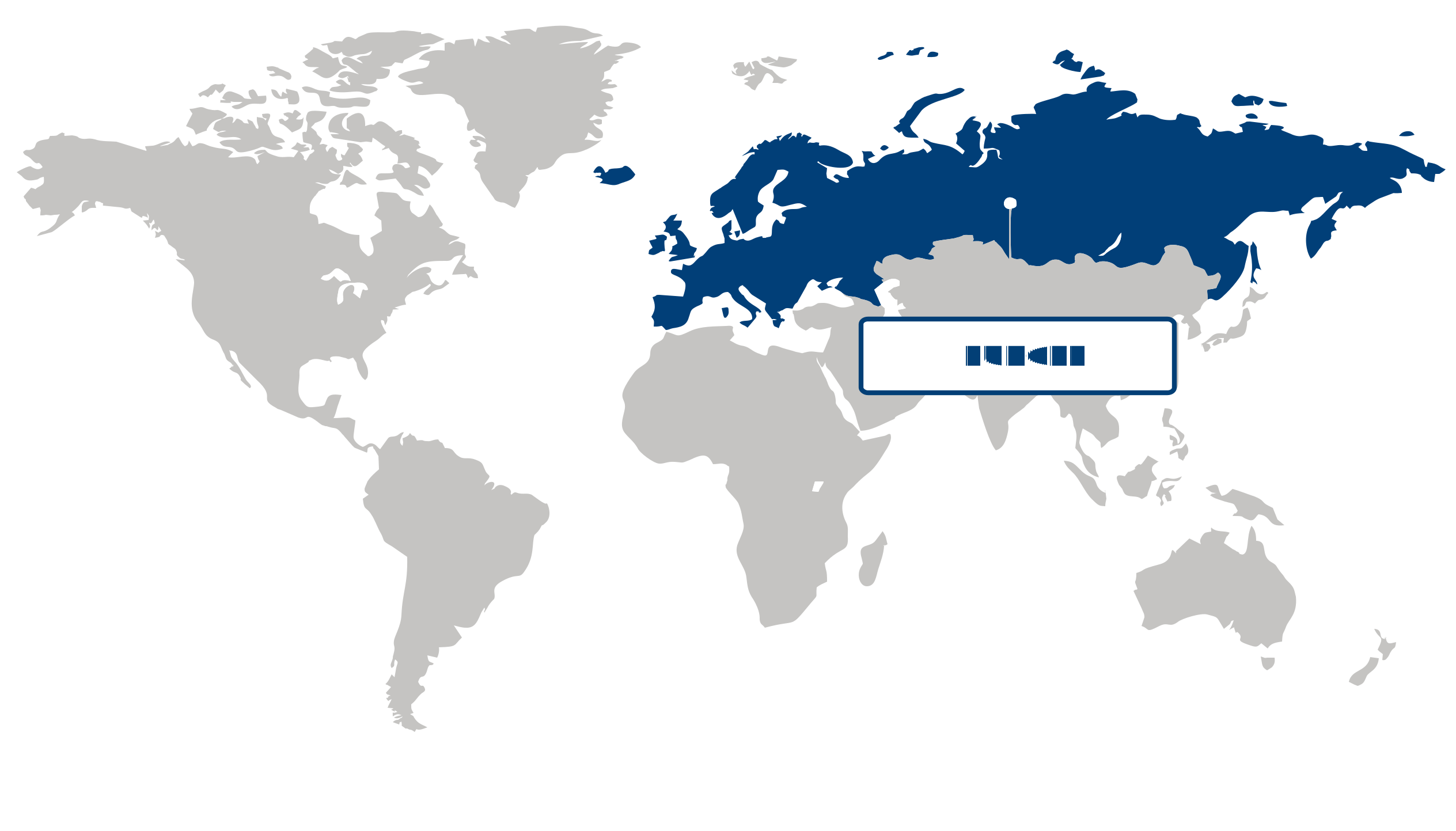
Europe (Largest Region)
In the winter hats market, Europe held the largest share of 40.28% in 2026, reflecting sustained consumer demand for cold-weather apparel across countries with extended winter seasons and established fashion markets. Winter hats serve both functional and style-oriented purposes, with consumers increasingly seeking products that combine thermal protection, comfort, and contemporary design. Strong retail networks, established apparel consumption patterns, and the influence of seasonal fashion trends continue to support regional demand, while growing interest in premium materials and versatile accessories provides additional opportunities for market development.
Asia Pacific (Fastest-Growing Region)
Asia Pacific represents the fastest-growing regional market, supported by varied climatic conditions, expanding urban consumer populations, and rising interest in fashionable winter accessories. Demand is benefiting from increasing exposure to global apparel trends and broader access to organized retail and digital commerce channels. In colder markets, practical requirements for warmth remain a fundamental driver, while younger consumers in urban centers are contributing to demand for products that complement seasonal clothing and personal style. Expanding disposable incomes and evolving consumer preferences are also creating favorable conditions for wider adoption of winter hats.
| Parameter | North America | Asia Pacific | Europe | Latin America | MEA |
|---|---|---|---|---|---|
| Innovation HubiScaleNascentDeveloping Advanced | |||||
| Cost-Sensitive RegioniScaleLowMedium High | |||||
| Regulatory EnvironmentiScaleRestrictiveNeutral Supportive | |||||
| Demand DriversiScaleWeakModerate Strong | |||||
| Development StageiScaleEmergingDeveloping Developed | |||||
| Adoption RateiScaleLowMedium High | |||||
| New Entrants / StartupsiScaleSparseModerate Dense | |||||
| Macro IndicatorsiScaleWeakStable Strong |
Key Country Insights
Germany 🇩🇪
Technical Cold-Weather ApparelGermany prioritizes winter hats with thermal performance, premium fabrics, and durable construction suited to extended outdoor use. German brands continue integrating recycled fibers and functional textiles that align with consumer expectations for quality and environmental responsibility.
France 🇫🇷
Luxury Fashion IntegrationFrance emphasizes winter hats that combine craftsmanship with premium fashion positioning across luxury and designer brands. French manufacturers increasingly incorporate natural fibers and distinctive styling to support both domestic demand and international fashion distribution.
Italy 🇮🇹
Artisan Knitwear FocusItaly supports the winter hats market through high-quality knitwear production and premium textile expertise. Italian manufacturers prioritize fine yarns, heritage craftsmanship, and design-driven collections that strengthen value across fashion and specialty retail channels.
Japan 🇯🇵
Premium Everyday StylingJapan focuses on winter hats that blend lightweight insulation with refined aesthetics for daily commuting and casual fashion. Japanese consumers value compact designs, premium craftsmanship, and seasonal collections that complement evolving apparel trends.
South Korea 🇰🇷
Trend-Led Fashion AccessoriesSouth Korea integrates winter hats into fast-moving fashion collections influenced by youth trends and digital retail channels. Brands in South Korea frequently introduce updated colors, textures, and collaborative product launches to maintain consumer engagement during winter seasons.
United States 🇺🇸
Seasonal Lifestyle DemandThe U.S. winter hats market emphasizes versatile designs that combine warmth, comfort, and fashion appeal for outdoor recreation and urban wear. Retailers in the U.S. increasingly expand sustainable materials and omnichannel collections to address changing seasonal purchasing behavior.
Winter Hats Market Share (%), by Distribution Channel, 2026
Go beyond the chart, access full insights & data tables
Request Free Sample ReportDistribution Channel Segment Analysis: Offline (Largest Segment) vs Online (Fastest-Growing Segment)
The offline segment led the winter hats market with a 72% share in 2026, supported by consumers' continued preference for physically assessing winter accessories before purchase. Retail stores allow shoppers to evaluate fit, comfort, warmth, material feel, color, and overall appearance directly, which is particularly relevant for apparel products where sizing and tactile characteristics influence buying decisions. Seasonal retail displays and the availability of winter accessories alongside broader cold-weather apparel also encourage impulse and complementary purchases, reinforcing the importance of physical channels.
Online distribution is expected to expand at the fastest rate as digital shopping increasingly becomes an important route for apparel and seasonal accessories. E-commerce platforms provide consumers with extensive style and material choices, convenient product discovery, reviews, and doorstep delivery. The ability to compare winter hats across designs and price points without visiting multiple stores further improves purchasing convenience. Greater consumer familiarity with online apparel shopping and improvements in digital merchandising are supporting the continued shift toward online channels.
Material Segment Analysis: Wool (Largest Segment) vs Polyester (Fastest-Growing Segment)
Wool accounted for the largest share of the winter hats market at 56.7% in 2026, reflecting its strong association with warmth, insulation, comfort, and traditional cold-weather apparel. Wool's natural thermal properties make it well suited for winter hats, while its established consumer recognition as a premium cold-weather material supports continued demand. Its ability to provide warmth while maintaining breathability also contributes to its suitability across different winter conditions, strengthening its established position within the material landscape.
Polyester is projected to be the fastest-growing material segment, supported by its versatility, durability, and suitability for cost-effective winter apparel production. Polyester fibers can be engineered to deliver lightweight warmth, moisture management, shape retention, and resistance to frequent wear, making them attractive for contemporary winter accessories. The material's compatibility with a wide range of colors, textures, and blended constructions also enables manufacturers to address changing fashion preferences while maintaining functional performance. These characteristics are supporting broader adoption of polyester-based winter hats.
| Segment | Sub-Segment | Largest Segment | Fastest Growing |
|---|---|---|---|
| Distribution Channel | Offline, Online | Offline | Online |
| Material | Wool, Polyester, Other | Wool | Polyester |
| Gender | Men, Women, Kids | Men | Women |
| Type | Beanies Hat, Bobble Hat, Winter Headbands, Others | Beanies Hat | Winter Headbands |
Unlock insights tailored to your business with our bespoke market research solutions.
Click to get your customized report now.
Competitive Landscape and Market Positioning
Major players in the winter hats market:
1. H&M Hennes & Mauritz AB (Sweden)
2. Inditex S.A. (Spain)
3. Gap Inc. (United States)
4. Woolrich Inc. (United States)
5. Blauer Manufacturing Co. Inc. (United States)
6. OVS S.p.A. (Italy)
7. Supreme New York (United States)
8. Timberland LLC (United States)
9. Rothco Inc. (United States)
10. Canada Goose Holdings Inc. (Canada)
Seasonal fashion cycles and functional performance are influencing design direction. Material innovation is enhancing comfort and thermal efficiency. The winter hats market is increasingly shaped by style diversity and functional adaptability.
| Company | Market Share | Company Revenue | Revenue CAGR (%) | Product Portfolio | Geographic Presence | Innovation / R&D Focus | Strategic Developments |
|---|---|---|---|---|---|---|---|
| H&M Hennes & Mauritz AB (Sweden) | |||||||
| Inditex S.A. (Spain) | |||||||
| Gap Inc. (United States) | |||||||
| Woolrich Inc. (United States) | |||||||
| Blauer Manufacturing Co. Inc. (United States) | |||||||
| OVS S.p.A. (Italy) | |||||||
| Supreme New York (United States) | |||||||
| Timberland LLC (United States) | |||||||
| Rothco Inc. (United States) | |||||||
| Canada Goose Holdings Inc. (Canada). |
Customize Your Report
Explore examples of how this report can be tailored to different research needs, including custom segments, additional topics or chapters, and related reports. Click a section of the wheel or its numbered marker to explore the available options.
Winter Hats Market — Custom Segments
| Segment | Sub-Segment |
|---|---|
| Price Range | Economy, Mid-Range, Premium |
| Usage Occasion | Everyday Wear, Outdoor & Sports, Fashion & Lifestyle |
| Consumer Age Group | Infants & Toddlers, Children, Adults |
Winter Hats Market — Custom TOC
| Custom Chapter | Chapter Details |
|---|---|
| Consumer Purchase Behavior and Seasonal Demand Insights |
|
| Retail Channel and Merchandising Strategy Assessment |
|
| Sustainable Materials and Ethical Sourcing Benchmark |
|
Need a different cut of the data?
Request Custom ResearchFrequently Asked Questions
How large is the winter hats market?
How is the winter hats industry expected to grow over the next 10 years?
How are changing consumer lifestyles influencing purchasing behavior in the winter hats market?
Why is digital commerce accelerating growth in the winter hats market?
Why does wool remain the dominant material in winter hats?
What is driving the rapid growth of polyester winter hats?
Why does Europe lead the winter hats market?
What is driving the rapid growth of the winter hats market in Asia Pacific?
Who holds a significant market share in the winter hats landscape?
Our Clients
"The report provided us with a clear direction, and the level of detail was beyond what we expected. I would definitely recommend their services to others."
Haier Appliances
"The collaboration with Fundamental Business Insights has added significant value to our decision-making process, and we look forward to continuing this partnership for our future market research requirements."
Luxottica Group S.p.A.
"The team at FBI delivered an exceptional research report. The insights on industry innovations were particularly impressive and added a lot of value to the overall report."
Nike
Our Research Team & Methodology
Every Fundamental Business Insights report is built by a dedicated vertical research team, validated through a structured primary-and-secondary methodology, and reviewed for accuracy before it reaches you.
This report was prepared by the Consumer Goods & Services Research Team at Fundamental Business Insights, a dedicated research group specializing in global consumer markets, retail industries, and service-oriented businesses. The team closely tracks evolving consumer preferences, purchasing behavior, product innovation, brand strategies, retail and e-commerce developments, pricing trends, distribution channels, sustainability initiatives, demographic shifts, and changing lifestyle patterns to deliver timely and reliable market intelligence. The research is developed using a structured methodology that combines primary discussions with manufacturers, brand owners, retailers, distributors, service providers, industry experts, and other key stakeholders, along with company annual reports, government consumer statistics, regulatory publications, industry associations, retail market data, trade publications, and other authoritative secondary sources. Market estimates are validated through multiple research techniques, including top-down and bottom-up analysis, before undergoing an internal quality review to ensure accuracy, consistency, and methodological integrity prior to publication.
Delivery
Published
Available
Support
- Market Size & Forecast
- Market Segmentation
- Regional Analysis
- Growth Drivers & Challenges
- Market Dynamics
- Competitive Landscape
- Company Profiles
- Competitive Benchmarking
- Mergers & Acquisitions
- Market Share Analysis or Key Company Strategies
- Value Chain Analysis
- Porter's Five Forces
- PESTLE Analysis
- Pricing Trends
- Supply-Demand Analysis
- Technology Landscape
- Regulatory Landscape
- Investment & Funding Landscape
- Emerging Opportunities
- Future Market Outlook