



Women's Dresses & Skirts Market Size & Growth Forecast 2027–2036, By Segments (Type, Distribution Channel, Fiber), Regional Demand Trends (North America, Asia Pacific, Europe), Key Country Insights (U.S., Japan, South Korea, Germany, France, Italy), and Competitive Landscape
Market Size and Growth Outlook
Women's Dresses & Skirts Market size was valued at USD 189.2 billion in 2026 and is anticipated to grow at a 4.75% CAGR from 2027 to 2036, attaining USD 300.93 billion by 2036. The industry revenue for 2027 is estimated at USD 196.77 billion.
Base Year Value (2026)
USD 189.2 billion
CAGR (2027-2036)
4.75%
Forecast Year Value (2036)
USD 300.93 billion

Historical Data Period
2022-2026

Largest Region
Europe

Forecast Period
2027-2036
Women's Dresses & Skirts Market Intelligence Snapshot:
-
Regional Market Dynamics:
- Europe held a 32.40% market share in 2026 due to its mature fashion retail ecosystem, strong omnichannel distribution, frequent collection updates, and high consumer engagement across apparel segments.
- Asia Pacific is expected to grow at a 5.76% CAGR, supported by rising apparel consumption, expanding urban retail, faster online fashion adoption, and responsive regional fashion sellers.
-
Segment Momentum:
- Dresses lead because they function as complete outfits across casual, workwear, and occasion categories, supporting consistent demand and strong sell-through across multiple retail price points.
- Skirts are growing faster due to rising preference for versatile mix-and-match styling, allowing consumers to extend wardrobe use across casual, office, and layered fashion applications.
-
Market Expansion Drivers:
- Rising female workforce participation and disposable income driving apparel consumption.
- Expansion of e-commerce fashion platforms enhancing global product accessibility and sales.
- Increasing fashion consciousness and Western style adoption influencing global apparel demand.
-
Leading Market Participants:
Major players in the women's dresses & skirts market include Christian Dior SE (France), Chanel Limited (France), Gucci (Guccio Gucci S.p.A.) (Italy), Prada S.p.A. (Italy), Giorgio Armani S.p.A. (Italy), Burberry Group plc (United Kingdom), Dolce & Gabbana S.r.l. (Italy), Gianni Versace S.r.l. (Italy), Industria de Diseño Textil, S.A. (Spain), H & M Hennes & Mauritz AB (Sweden).
Global Market Forecast Snapshot:
-
Market Outlook:
- 2026 Market Size: USD 189.2 billion
- 2027 Estimated Market Size: USD 196.77 billion.
- Projected Market Size: USD 300.93 billion by 2036
- Growth Forecasts: 4.75% CAGR (2027-2036)
-
Regional and Segment Outlook:
- Leading Regional Market: Europe
- High-Growth Regional Hub: Asia Pacific
- Core Revenue Segment: Dresses (Type) | Offline (Distribution Channel) | Polyester (Fiber)
- Emerging Opportunity Segment: Skirts (Type) | Online (Distribution Channel) | Cellulosic (Fiber)
Market Growth Drivers and Industry Trends
Rising female workforce participation and disposable income driving apparel consumption
Greater participation of women in the workforce, combined with improving purchasing power, is supporting higher spending on clothing and will drive the women's dresses & skirts market growth. Professional environments create recurring demand for versatile apparel suitable for office settings, business events, commuting, and social occasions, while higher disposable income allows consumers to diversify their wardrobes beyond basic necessities. Dresses and skirts can serve multiple styling purposes through variations in fabrics, silhouettes, lengths, and accessories, enabling consumers to select products for both formal and casual settings. Increasing financial independence is also giving women greater influence over personal apparel purchases, contributing to more frequent wardrobe updates and greater interest in varied clothing styles across different occasions.
Expansion of e-commerce fashion platforms enhancing global product accessibility and sales
The rapid expansion of online fashion retail is widening consumer access to apparel across geographic markets and will propel the women's dresses & skirts market growth. E-commerce platforms provide shoppers with extensive selections of designs, sizes, colors, fabrics, and price points without the geographic limitations associated with traditional physical stores. Digital product discovery through search, recommendations, social content, and personalized merchandising also enables consumers to identify emerging styles and niche fashion offerings more easily. Improved online purchasing experiences, including detailed product information, customer reviews, convenient payment options, and flexible delivery services, are reducing barriers to apparel purchases. For fashion sellers, digital channels additionally provide access to broader customer segments and allow new collections to reach consumers across domestic and international markets.
Increasing fashion consciousness and Western style adoption influencing global apparel demand
Growing awareness of fashion trends is influencing purchasing decisions as consumers increasingly seek contemporary designs that reflect evolving lifestyles and personal identities, supporting women's dresses & skirts market demand. Exposure to international fashion through digital media, entertainment, social platforms, and online retail is accelerating the adoption of western-inspired silhouettes and styling preferences in markets where apparel choices are becoming more globally influenced. Consumers are also becoming more attentive to seasonal trends, colors, cuts, and styling combinations, encouraging experimentation with different types of dresses and skirts. The blending of international fashion influences with local preferences is creating demand for diverse designs that can be adapted to cultural, social, and occasion-specific requirements.
| Growth Driver Assessment Framework | |||||
| Growth Driver | Impact On CAGR | Regulatory Influence | Geographic Relevance | Adoption Rate | Impact Timeline |
|---|---|---|---|---|---|
| Rising female workforce participation and disposable income driving apparel consumption | 2.00% | Low | Asia Pacific, North America | High | Near Term |
| Expansion of e-commerce fashion platforms enhancing global product accessibility and sales | 1.90% | Low | Asia Pacific, Europe | High | Near Term |
| Increasing fashion consciousness and Western style adoption influencing global apparel demand | 1.70% | Low | Asia Pacific, Latin America | Medium | Mid Term |
Unlock insights tailored to your business with our bespoke market research solutions - Click to get your customized report now!
Regional Demand Dynamics
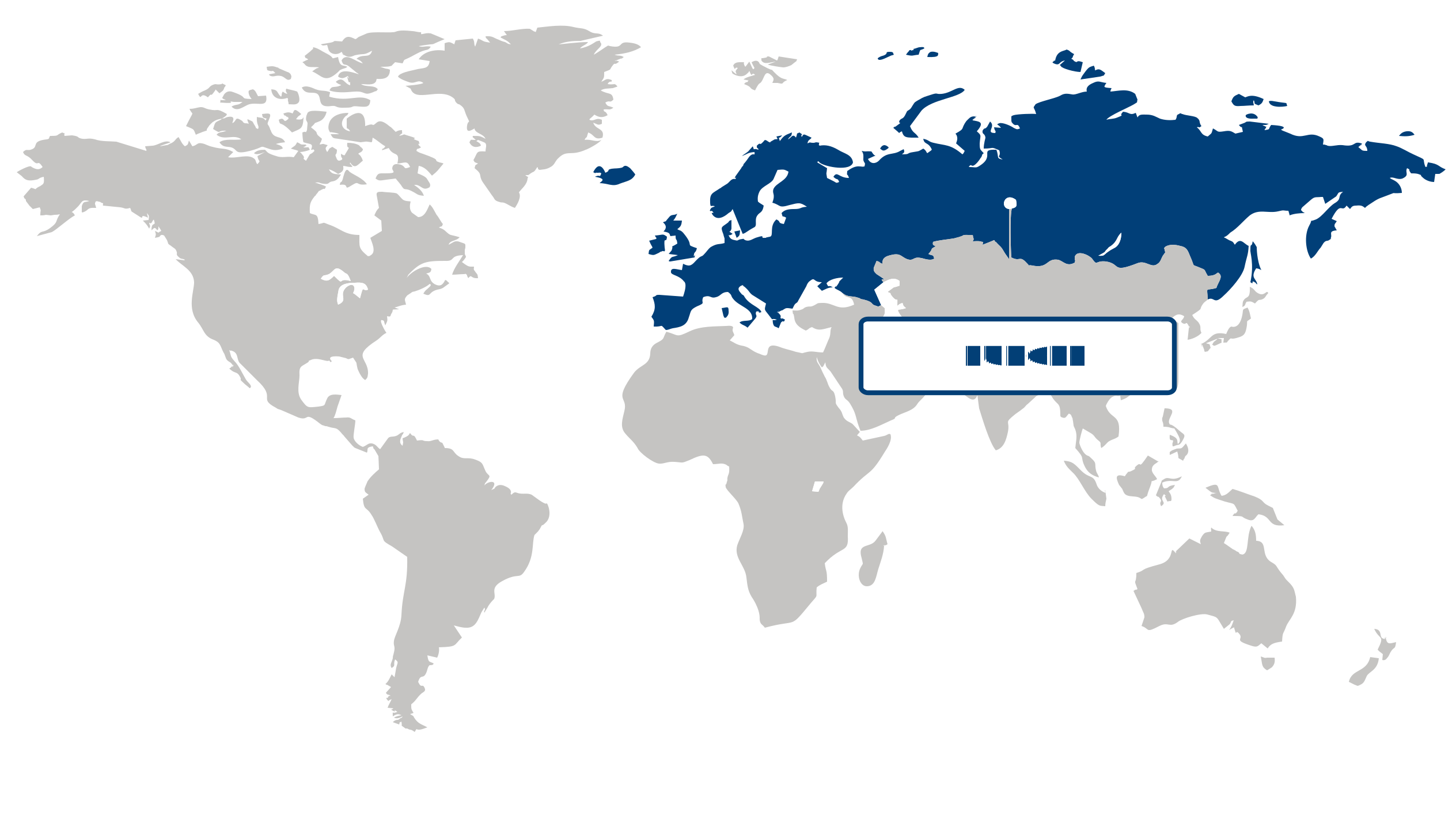
Largest Region
Europe
32.4% Market Share in 2026
Europe (Largest Region) vs Asia Pacific (Fastest-Growing Region)
Europe held the largest share of the women's dresses & skirts market, accounting for 32.40% in 2026, supported by established fashion industries, strong consumer interest in apparel, and the region’s influence on global clothing trends. Dresses and skirts remain important components of women's wardrobes across casual, professional, formal, and occasion-based segments, creating demand for diverse styles and materials. Consumers are increasingly seeking garments that combine fashion appeal with comfort, versatility, and responsible sourcing, encouraging brands and retailers to expand sustainable and adaptable collections. Well-developed retail infrastructure, strong e-commerce penetration, and established fashion culture further reinforce regional demand.
Asia Pacific represents the fastest-growing region as rising disposable incomes, urbanization, and changing lifestyles expand consumer spending on fashion and apparel. Younger consumers are increasingly influenced by digital media, international fashion trends, and online shopping, accelerating adoption of contemporary dress and skirt styles. The expansion of organized retail and e-commerce is making a wider variety of products accessible across metropolitan and emerging markets. Growing participation of women in professional and social activities is also supporting demand for versatile apparel suitable for work, leisure, and occasions, while localized designs and culturally relevant styles are helping retailers appeal to diverse regional preferences.
Key Country Insights
The U.S. women's dresses & skirts market emphasizes rapid style refreshes, omnichannel merchandising, and inclusive size assortments. Brands in the U.S. continue expanding premium collections alongside value-focused offerings to respond to shifting consumer preferences and seasonal demand.
Japan favors sophisticated silhouettes, premium craftsmanship, and seasonally curated collections in the women's dresses & skirts market. Domestic and international brands adapt product lines to meet demand for functional elegance, comfort, and premium finishing.
South Korea's women's dresses & skirts market is shaped by digital commerce, influencer-driven collections, and frequent product launches. Fashion companies prioritize agile merchandising and limited-edition styles to align with rapidly evolving consumer trends.
Germany prioritizes durable fabrics, responsible sourcing, and timeless dress designs that support long product lifecycles. Retailers increasingly highlight certified materials and versatile collections to appeal to consumers seeking quality and sustainability in everyday fashion.
France emphasizes design quality, refined tailoring, and premium fashion positioning across the women's dresses & skirts market. Local brands strengthen collections with sustainable materials and contemporary styling while preserving established fashion aesthetics.
Italy leverages textile expertise and premium garment manufacturing to support the women's dresses & skirts market. Italian brands focus on high-quality fabrics, elegant construction, and distinctive seasonal collections that reinforce product differentiation.
Segment Leadership and Growth Trends
Type Segment Analysis: Dresses (Largest Segment) vs Skirts (Fastest-Growing Segment)
Dresses held the largest share of the women's dresses & skirts market in 2026, reflecting their broad appeal across casual, professional, social, and occasion-based dressing. Their versatility allows consumers to choose from diverse silhouettes, fabrics, lengths, and styling options suited to different settings and personal preferences. Dresses also provide a complete outfit solution, supporting convenience for consumers while enabling fashion brands to address a wide range of style requirements through varied collections. Continued interest in fashion variety, seasonal designs, and occasion-specific apparel helps sustain the segment's leading position.
Skirts are experiencing the fastest growth as consumers increasingly seek flexible apparel pieces that can be styled across different occasions and combined with varied tops, footwear, and accessories. The versatility of skirts supports experimentation with silhouettes, lengths, fabrics, and layering, aligning with evolving preferences for personalized fashion. Changing workplace and social dress codes, alongside greater interest in adaptable wardrobe pieces, is creating additional opportunities for skirts to expand their role within women's apparel collections.
Distribution Channel Segment Analysis: Offline (Largest Segment) vs Online (Fastest-Growing Segment)
Offline distribution represented the largest share of the women's dresses & skirts market in 2026, supported by the importance of physical product evaluation in apparel purchasing. Consumers often prefer to visit stores to assess fit, fabric texture, construction, and overall appearance before purchasing clothing. In-store shopping also provides immediate access to different styles and the opportunity to receive assistance with sizing and outfit selection, maintaining the relevance of physical retail across women's fashion.
Online distribution is advancing at the fastest pace as digital shopping offers greater convenience, broader style availability, and easier comparison of products across fashion categories. Consumers can explore extensive collections, review sizing information, and use customer feedback to support purchase decisions without visiting physical stores. The growing integration of digital fashion retail with personalized recommendations, convenient delivery, and flexible purchasing experiences is further encouraging consumers to shift a greater portion of apparel shopping toward online channels.
| Report Segmentation | |||
| Segment | Sub-Segment | Largest Segment | Fastest Growing Segment |
|---|---|---|---|
| Type | Dresses, Skirts | Dresses | Skirts |
| Distribution Channel | Offline, Online | Offline | Online |
| Fiber | Cotton, Polyester, Cellulosic, Others | Polyester | Cellulosic |
 Read our Research Approach
Competitive Landscape and Market Positioning
Prominent players in the women's dresses & skirts market:
1. Christian Dior SE (France)
2. Chanel Limited (France)
3. Gucci (Guccio Gucci S.p.A.) (Italy)
4. Prada S.p.A. (Italy)
5. Giorgio Armani S.p.A. (Italy)
6. Burberry Group plc (United Kingdom)
7. Dolce & Gabbana S.r.l. (Italy)
8. Gianni Versace S.r.l. (Italy)
9. Industria de Diseño Textil S.A. (Spain)
10. H & M Hennes & Mauritz AB (Sweden)
The women’s dresses & skirts market is influenced by shifting fashion preferences and increasing online retail penetration. Continuous product refresh cycles are helping brands align with seasonal trends. Differentiation through design and fabric innovation is shaping competitive positioning. In the women’s dresses & skirts market, adaptability to fashion cycles is crucial for growth.
Why Choose Us
Specialized Expertise: Our team comprises industry experts with a deep understanding of your market segment. We bring specialized knowledge and experience that ensures our research and consulting services are tailored to your unique needs.
Customized Solutions: We understand that every client is different. That's why we offer customized research and consulting solutions designed specifically to address your challenges and capitalize on opportunities within your industry.
Proven Results: With a track record of successful projects and satisfied clients, we have demonstrated our ability to deliver tangible results. Our case studies and testimonials speak to our effectiveness in helping clients achieve their goals.
Cutting-Edge Methodologies: We leverage the latest methodologies and technologies to gather insights and drive informed decision-making. Our innovative approach ensures that you stay ahead of the curve and gain a competitive edge in your market.
Client-Centric Approach: Your satisfaction is our top priority. We prioritize open communication, responsiveness, and transparency to ensure that we not only meet but exceed your expectations at every stage of the engagement.
Continuous Innovation: We are committed to continuous improvement and staying at the forefront of our industry. Through ongoing learning, professional development, and investment in new technologies, we ensure that our services are always evolving to meet your evolving needs.
Value for Money: Our competitive pricing and flexible engagement models ensure that you get maximum value for your investment. We are committed to delivering high-quality results that help you achieve a strong return on your investment.
Select Licence Type

