



Women's Night and Underwear Market Size & Growth Forecast 2027–2036, By Segments (Distribution Channel, Fiber), Regional Demand Trends (North America, Asia Pacific, Europe), Key Country Insights (U.S., Japan, South Korea, Germany, France, Italy), and Competitive Landscape
Market Size and Growth Outlook
Women's Night and Underwear Market size was valued at USD 118.9 billion in 2026 and is anticipated to grow at a 7.03% CAGR from 2027 to 2036, exceeding USD 234.55 billion by 2036. The industry revenue for 2027 is calculated at USD 125.94 billion.
Base Year Value (2026)
USD 118.9 billion
CAGR (2027-2036)
7.03%
Forecast Year Value (2036)
USD 234.55 billion

Historical Data Period
2022-2026

Largest Region
Europe

Forecast Period
2027-2036
Women's Night And Underwear Market Intelligence Snapshot:
-
Regional Market Dynamics:
- Europe held a 32.40% market share in 2026, supported by mature retail networks, strong brand presence, established distribution channels, and consistent consumer demand for quality innerwear and sleepwear.
- Asia Pacific is projected to grow at a 5.59% CAGR as urban consumption rises, organized retail expands, digital shopping adoption increases, and demand for branded intimate apparel strengthens.
-
Segment Momentum:
- Offline distribution accounted for 72% of the market in 2026 because consumers value trying products, checking fabric feel, comparing sizes, and receiving immediate purchase assistance in stores.
- Cellulosic is the fastest-growing fiber segment as consumers increasingly prefer softer, comfort-focused materials that enhance feel, drape, and wearability in intimate apparel and sleepwear.
-
Market Expansion Drivers:
- Rising female financial independence increasing spending on intimate fashion and personal apparel categories.
- Expanding e-commerce platforms enhancing lingerie and nightwear accessibility, variety, and price comparison.
- Growing athleisure-inspired loungewear adoption reshaping everyday underwear as comfort-focused fashion wear.
-
Leading Market Participants:
Leading players in the women's night and underwear market include Calvin Klein Inc. (United States), Agent Provocateur Limited (United Kingdom), Christian Dior SE (France), Gucci S.p.A. (Italy), Prada S.p.A. (Italy), Burberry Group plc (United Kingdom), Dolce & Gabbana S.r.l. (Italy), Gianni Versace S.r.l. (Italy), Victoria's Secret & Co. (United States).
Global Market Forecast Snapshot:
-
Market Outlook:
- 2026 Market Size: USD 118.9 billion
- 2027 Estimated Market Size: USD 125.94 billion.
- Projected Market Size: USD 234.55 billion by 2036
- Growth Forecasts: 7.03% CAGR (2027-2036)
-
Regional and Segment Outlook:
- Leading Regional Market: Europe
- High-Growth Regional Hub: Asia Pacific
- Core Revenue Segment: Offline (Distribution Channel) | Polyester (Fiber)
- Emerging Opportunity Segment: Online (Distribution Channel) | Cellulosic (Fiber)
Market Growth Drivers and Industry Trends
Rising female financial independence increasing spending on intimate fashion and personal apparel categories
Greater female financial independence is strengthening discretionary spending across intimate apparel, and the women's night and underwear market is benefiting as consumers gain greater control over personal fashion purchases. Rising participation in professional employment, expanding income opportunities, and greater financial autonomy are enabling women to allocate more spending toward products that combine personal comfort, aesthetics, fit, and self-expression. This shift is also encouraging more frequent consideration of lingerie and nightwear as individual fashion categories rather than purely functional necessities, supporting demand for varied styles, coordinated collections, premium fabrics, and occasion-specific designs.
Expanding e-commerce platforms enhancing lingerie and nightwear accessibility, variety, and price comparison
Digital retail channels are broadening access to intimate apparel by allowing consumers to explore a wider selection of products without the limitations of physical store locations. For the women's night and underwear market, e-commerce platforms provide greater visibility across designs, sizes, materials, and price points while enabling convenient comparison between alternatives. Online shopping also supports discreet purchasing, personalized recommendations, customer reviews, and flexible delivery options, making lingerie and nightwear more accessible to consumers who may prefer privacy or have limited access to specialized retail outlets.
Growing athleisure-inspired loungewear adoption reshaping everyday underwear as comfort-focused fashion wear
The growing preference for relaxed clothing is influencing intimate apparel design as consumers increasingly prioritize softness, flexibility, breathability, and ease of movement in everyday wear. Within the women's night and underwear market, athleisure-inspired styling is encouraging products that combine functional comfort with contemporary aesthetics, including relaxed silhouettes, stretch fabrics, coordinated sets, and versatile loungewear pieces. The overlap between sleepwear, underwear, and casual homewear is also expanding usage occasions, as consumers seek apparel that can transition comfortably between sleeping, relaxing, and informal daily activities.
| Growth Driver Assessment Framework | |||||
| Growth Driver | Impact On CAGR | Regulatory Influence | Geographic Relevance | Adoption Rate | Impact Timeline |
|---|---|---|---|---|---|
| Rising female financial independence increasing spending on intimate fashion and personal apparel categories | 2.20% | Low | Europe, North America | High | Mid Term |
| Expanding e-commerce platforms enhancing lingerie and nightwear accessibility, variety, and price comparison | 2.00% | Low | Asia Pacific, Europe | High | Near Term |
| Growing athleisure-inspired loungewear adoption reshaping everyday underwear as comfort-focused fashion wear | 1.60% | Low | North America, Asia Pacific | High | Mid Term |
Unlock insights tailored to your business with our bespoke market research solutions - Click to get your customized report now!
Regional Demand Dynamics
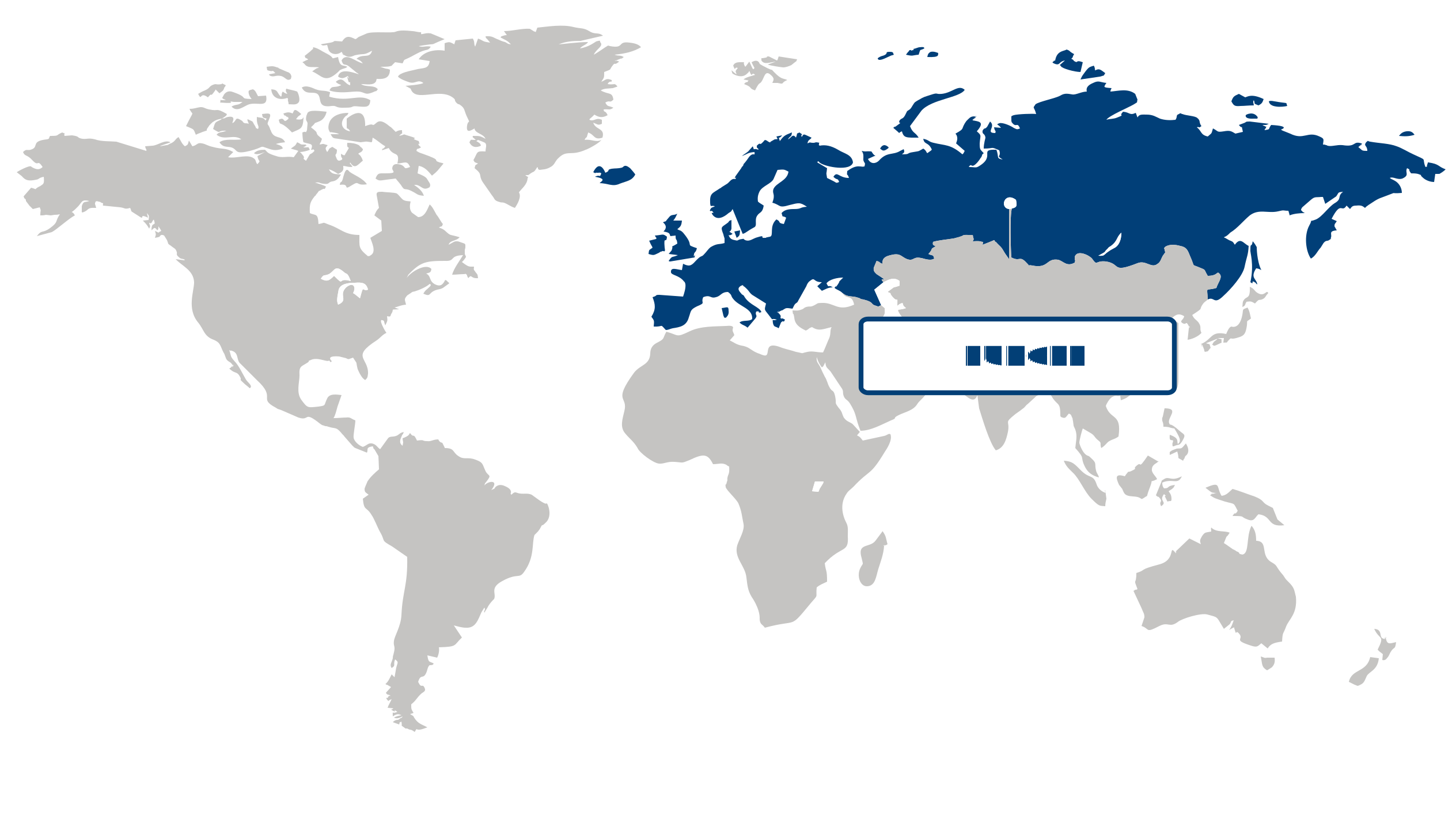
Largest Region
Europe
32.4% Market Share in 2026
Europe (Largest Region) vs Asia Pacific (Fastest-Growing Region)
Europe held the largest share of the women's night and underwear market at 32.40% in 2026, supported by strong consumer awareness of comfort, quality, fit, and design across intimate apparel categories. Established fashion and retail ecosystems, along with sustained demand for premium and functional sleepwear, continue to reinforce the region's market position. Consumers are also showing greater interest in fabrics that provide softness, breathability, durability, and enhanced comfort, encouraging product innovation and diversification. The growing influence of e-commerce and personalized shopping experiences is further expanding access to specialized nightwear and underwear products, while evolving lifestyle preferences are supporting demand for products that combine everyday functionality with fashion-oriented styling.
Asia Pacific represents the fastest-growing regional market, benefiting from rising disposable incomes, expanding urban populations, and changing consumer attitudes toward intimate apparel. Increasing exposure to international fashion trends and greater emphasis on personal comfort and appearance are encouraging consumers to broaden their spending across nightwear and underwear categories. The expansion of organized retail and digital commerce is also improving product availability across both developed and emerging markets in the region. In addition, younger consumers are increasingly receptive to contemporary designs, premium materials, and digitally influenced purchasing experiences, creating favorable conditions for continued market expansion.
Key Country Insights
The U.S. women's night and underwear market emphasizes comfort, inclusive sizing, and functional fabric innovations. Brands are expanding product collections with sustainable materials and omnichannel retail strategies to meet evolving consumer purchasing preferences.
Japan focuses on lightweight, breathable, and functional women's night and underwear products that balance comfort with everyday usability. Companies continue developing advanced textiles that improve wearability while maintaining premium product standards.
South Korea combines fashion trends with comfort-oriented product development in the women's night and underwear market. Brands frequently introduce updated designs and performance fabrics while strengthening online retail engagement with consumers.
Germany prioritizes durable fabrics, product quality, and sustainable manufacturing in the women's night and underwear market. Manufacturers continue enhancing textile performance and responsible material sourcing to meet consumer expectations for long-lasting apparel.
France supports women's night and underwear products that combine refined aesthetics with premium materials and comfort. Brands are incorporating sustainable textiles and elegant product design to align with evolving consumer purchasing preferences.
Italy emphasizes craftsmanship, premium fabrics, and contemporary styling within the women's night and underwear market. Manufacturers continue refining product quality and material selection while responding to growing consumer interest in sustainable textile solutions.
Segment Leadership and Growth Trends
Distribution Channel Segment Analysis: Offline (Largest Segment) vs Online (Fastest-Growing Segment)
The offline distribution channel accounted for 72% share of the women's night and underwear market in 2026, supported by consumers' preference for physically evaluating garments before purchase. Brick-and-mortar stores provide opportunities to assess fabric softness, fit, comfort, sizing, and product quality, which are particularly important considerations for intimate apparel and sleepwear. Established retail networks, personalized assistance, and immediate product availability continue to reinforce the relevance of offline purchasing despite the expansion of digital commerce.
Online distribution is experiencing the fastest growth as consumers increasingly value convenience, privacy, broader product selection, and flexible purchasing options. Digital platforms allow shoppers to compare styles, materials, sizes, and prices without visiting physical stores, while improved delivery and return services are reducing barriers associated with purchasing apparel remotely. The growing integration of personalized recommendations, customer reviews, and targeted digital merchandising is further strengthening online engagement within this category.
Fiber Segment Analysis: Polyester (Largest Segment) vs Cellulosic (Fastest-Growing Segment)
Polyester held the largest share of the women's night and underwear market at 47.7% in 2026, reflecting its widespread use in garments requiring durability, shape retention, moisture management, and cost-effective manufacturing. The fiber's versatility allows it to be incorporated into a broad range of sleepwear and intimate apparel designs, while its compatibility with blended fabrics provides manufacturers with flexibility in achieving desired comfort and performance characteristics. Established textile processing capabilities and broad availability further support polyester's continued use.
Cellulosic fibers are expanding at the fastest pace as consumers place greater emphasis on softness, breathability, comfort, and more sustainable material choices. These fibers can provide a natural feel that aligns well with intimate apparel and nightwear, where skin comfort is a central purchasing consideration. Growing interest in environmentally conscious textiles and the development of improved cellulosic fabric technologies are encouraging manufacturers to incorporate these materials into a wider range of women's garments.
| Report Segmentation | |||
| Segment | Sub-Segment | Largest Segment | Fastest Growing Segment |
|---|---|---|---|
| Distribution Channel | Offline, Online | Offline | Online |
| Fiber | Cotton, Polyester, Cellulosic, Others | Polyester | Cellulosic |
 Read our Research Approach
Competitive Landscape and Market Positioning
Key companies in the women's night and underwear market:
1. Calvin Klein Inc. (United States)
2. Agent Provocateur Limited (United Kingdom)
3. Christian Dior SE (France)
4. Gucci S.p.A. (Italy)
5. Prada S.p.A. (Italy)
6. Burberry Group plc (United Kingdom)
7. Dolce & Gabbana S.r.l. (Italy)
8. Gianni Versace S.r.l. (Italy)
9. Victoria's Secret & Co. (United States)
The women's night and underwear market is evolving with increasing focus on comfort-driven and body-positive designs. Product innovation is emphasizing soft materials and improved fit diversity. Sustainability considerations are influencing material choices, while differentiation is driven by fabric quality and design personalization.
Why Choose Us
Specialized Expertise: Our team comprises industry experts with a deep understanding of your market segment. We bring specialized knowledge and experience that ensures our research and consulting services are tailored to your unique needs.
Customized Solutions: We understand that every client is different. That's why we offer customized research and consulting solutions designed specifically to address your challenges and capitalize on opportunities within your industry.
Proven Results: With a track record of successful projects and satisfied clients, we have demonstrated our ability to deliver tangible results. Our case studies and testimonials speak to our effectiveness in helping clients achieve their goals.
Cutting-Edge Methodologies: We leverage the latest methodologies and technologies to gather insights and drive informed decision-making. Our innovative approach ensures that you stay ahead of the curve and gain a competitive edge in your market.
Client-Centric Approach: Your satisfaction is our top priority. We prioritize open communication, responsiveness, and transparency to ensure that we not only meet but exceed your expectations at every stage of the engagement.
Continuous Innovation: We are committed to continuous improvement and staying at the forefront of our industry. Through ongoing learning, professional development, and investment in new technologies, we ensure that our services are always evolving to meet your evolving needs.
Value for Money: Our competitive pricing and flexible engagement models ensure that you get maximum value for your investment. We are committed to delivering high-quality results that help you achieve a strong return on your investment.
Select Licence Type

