



Women's Sports and Swimwear Market Size & Growth Forecast 2026–2035, By Segments (Distribution Channel, Fiber), Regional Demand Trends (North America, Asia Pacific, Europe), Key Country Insights (U.S., Japan, South Korea, Germany, France, Italy), and Competitive Landscape
Market Size and Growth Outlook
Women's Sports and Swimwear Market size was around USD 162.44 Billion in 2025 and is slated to grow at a 6.1% CAGR from 2026 to 2035, exceeding USD 293.66 Billion by 2035. The industry revenue for 2026 is assessed at USD 171.07 billion.
Base Year Value (2025)
USD 162.44 Billion
CAGR (2026-2035)
6.1%
Forecast Year Value (2035)
USD 293.66 Billion

Historical Data Period
2022-2025

Largest Region
Europe

Forecast Period
2026-2035
Women's Sports and Swimwear Market Intelligence Snapshot:
-
Regional Market Dynamics:
- Europe accounted for 37.10% of the market in 2025, supported by mature retail networks, strong brand penetration, frequent product refreshes, and sustained participation in fitness and leisure activities.
- Asia Pacific is forecast to expand at a 6.89% CAGR, driven by rising fitness participation, growing athleisure adoption, higher spending by urban consumers, and stronger digital commerce access.
-
Segment Momentum:
- Offline accounted for 72% of the market in 2025 because consumers prefer trying on fit-sensitive apparel, assessing comfort, sizing, support, fabric feel, and style before making a purchase.
- Cotton is the fastest-growing fiber segment as consumers increasingly favor softer, more breathable fabrics for versatile and casual use, supporting demand beyond intensive performance-focused applications.
-
Market Expansion Drivers:
- Increasing female sports participation and rising disposable income driving swimwear demand.
- Social media fashion trends and e-commerce boosting sportswear purchase frequency.
- Advanced performance fabrics and eco materials enhancing product functionality adoption.
-
Leading Market Participants:
Leading players in the women's sports and swimwear market include Nike, Inc. (U.S.), Adidas AG (Germany), Lululemon Athletica Inc. (Canada), Puma SE (Germany), Under Armour, Inc. (U.S.), ASICS Corporation (Japan), New Balance Athletics, Inc. (U.S.), Columbia Sportswear Company (U.S.), Fila Holdings Corp. (South Korea), Arena S.p.A. (Italy).
Global Market Forecast Snapshot:
-
Market Outlook:
- 2025 Market Size: USD 162.44 Billion
- Projected Market Size: USD 293.66 Billion by 2035
- Growth Forecasts: 6.1% CAGR (2026-2035)
-
Regional and Segment Outlook:
- Leading Regional Market: Europe
- High-Growth Regional Hub: Asia Pacific
- Core Revenue Segment: Offline (Distribution Channel) | Polyester (Fiber)
- Emerging Opportunity Segment: Online (Distribution Channel) | Cotton (Fiber)
Market Growth Drivers and Industry Trends
Increasing female sports participation and rising disposable income driving swimwear demandAs more women engage in fitness, swimming, water sports, and recreational travel, purchase behavior in the women's sports and swimwear market shifts from occasional buying to more purpose-led and repeat replacement cycles. Higher disposable income supports this transition by widening willingness to spend on separate products for training, leisure swimming, beachwear, and style-driven seasonal use, rather than relying on a single multipurpose option. This combination is increasing demand for the women's sports and swimwear market by expanding both the active customer base and average spend per buyer, especially in categories where fit, comfort, and confidence strongly influence brand choice and upgrade decisions.
Social media fashion trends and e-commerce boosting sportswear purchase frequency
Social platforms have turned sportswear and swimwear into fast-moving style categories, where new silhouettes, influencer-led looks, and occasion-based dressing quickly shape what consumers consider current. In the women's sports and swimwear market, this shortens purchase intervals because buyers respond not only to functional need but also to visibility, trend relevance, and the ease of discovering coordinated collections online. E-commerce strengthens market expansion by reducing search friction, broadening access to brands and size ranges, and enabling rapid comparison, which makes impulse purchases and repeat buying more common than in traditional retail-led shopping journeys.
Advanced performance fabrics and eco materials enhancing product functionality adoption
Material innovation is influencing market adoption by making product performance more tangible at the point of purchase, particularly in categories where support, stretch recovery, moisture management, chlorine resistance, and comfort affect actual wear frequency. In the women's sports and swimwear market, advanced fabrics help brands justify premium positioning while also reducing one of the main barriers to repeat use: dissatisfaction with fit retention or durability after repeated activity and washing. The use of eco materials adds a second layer of decision value for consumers who want performance without compromising on sustainability preferences, strengthening market development around higher-quality and more differentiated product tiers.
| Growth Driver Assessment Framework | |||||
| Growth Driver | Impact On CAGR | Regulatory Influence | Geographic Relevance | Adoption Rate | Impact Timeline |
|---|---|---|---|---|---|
| Increasing female sports participation and rising disposable income driving swimwear demand | 2.00% | Low | Europe, Asia Pacific | High | Near Term |
| Social media fashion trends and e-commerce boosting sportswear purchase frequency | 1.50% | Low | North America, Europe | High | Near Term |
| Advanced performance fabrics and eco materials enhancing product functionality adoption | 1.00% | Low | Asia Pacific, Europe | Medium | Mid Term |
Unlock insights tailored to your business with our bespoke market research solutions - Click to get your customized report now!
Regional Demand Dynamics
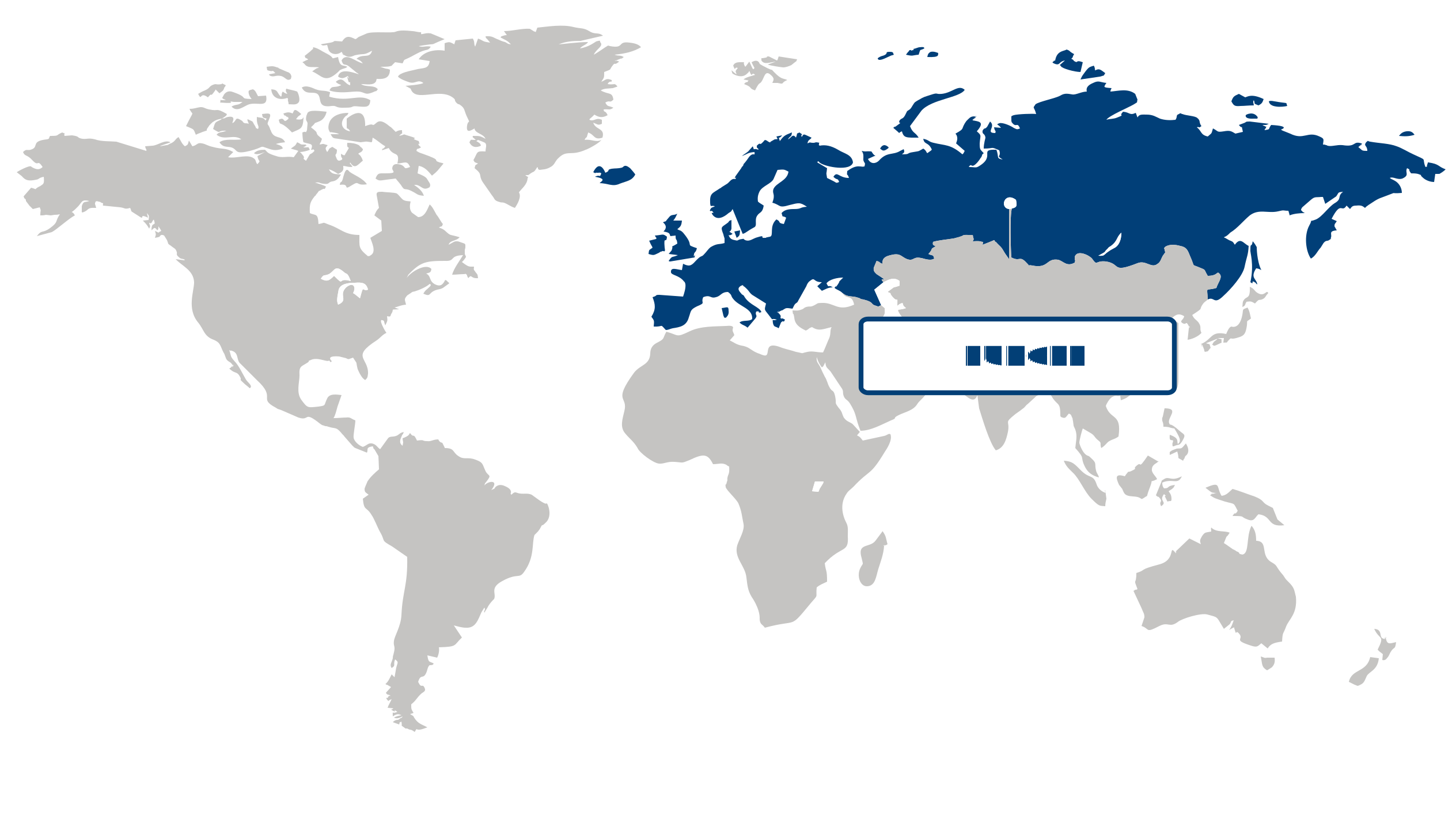
Largest Region
Europe
37.10% Market Share in 2025
Europe held a 37.10% share of the women's sports and swimwear market in 2025, supported by a well-established retail landscape, strong brand penetration, and steady consumer demand across both performance-oriented and fashion-led product categories. The region’s leadership is reinforced by the practical integration of sportswear and swimwear into everyday active lifestyles, where consumers regularly purchase products through mature offline chains and developed e-commerce channels. Broad product availability, frequent style refreshes, and sustained participation in fitness, leisure, and wellness activities continue to support purchasing activity across the region.
Asia Pacific is projected to expand at a 6.89% CAGR over the forecast period, with the women's sports and swimwear market gaining momentum as urban consumers increase spending on activewear and recreational apparel. Growth is being propelled by rising participation in fitness activities, wider adoption of athleisure-inspired clothing, and stronger access to products through digital commerce platforms that improve reach across diverse consumer bases. Demand is accelerating in practice as younger shoppers respond to changing lifestyle preferences, higher exposure to global fashion trends, and easier product discovery through online channels.
Key Country Insights
The U.S. women's sports and swimwear market is shaped by demand for versatile apparel combining performance, comfort, and style. Brands in the U.S. expand technical fabrics, inclusive sizing, and direct-to-consumer strategies to strengthen consumer engagement.
Japan emphasizes lightweight materials, ergonomic construction, and refined aesthetics across women's sports and swimwear collections. Companies in Japan continue introducing technically advanced products suited for active lifestyles and everyday versatility.
South Korea blends athletic performance with contemporary fashion trends in the women's sports and swimwear market. Domestic brands in South Korea invest in stylish functional collections and digital retail engagement to attract younger consumers.
Germany prioritizes environmentally responsible materials and durable product design within the women's sports and swimwear market. Brands in Germany increasingly incorporate recycled textiles and transparent sourcing to meet changing consumer purchasing preferences.
France supports demand for women's sports and swimwear through premium design, quality craftsmanship, and lifestyle branding. Companies in France focus on elegant product differentiation while integrating technical performance features into their collections.
Italy emphasizes fashionable sports and swimwear that combines technical functionality with distinctive design. Brands in Italy strengthen seasonal collections using premium fabrics and modern styling to appeal to both fitness and leisure consumers.
Segment Leadership and Growth Trends
Within the women's sports and swimwear market, offline held a 72% share in 2025, reflecting the continued strength of store-based purchasing for fit-sensitive apparel. This leadership is maintained through the practical need to assess comfort, sizing, support, fabric feel, and style in person before purchase, especially across sportswear and swimwear categories where performance and appearance both influence buying decisions. Physical retail also benefits from immediate product availability and assisted shopping, which helps maintain strong consumer conversion in the women's sports and swimwear market.
Online is the fastest-growing distribution channel in the women's sports and swimwear market as digital shopping becomes more effective at serving convenience-led and assortment-driven demand. Its momentum is tied mainly to the ease of browsing broader product selections, comparing styles and prices quickly, and purchasing across brands without location constraints. Compared with offline alternatives, online channels are seeing wider adoption because they better match changing shopping habits centered on speed, accessibility, and frequent product discovery.
Fiber Segment Analysis: Polyester (Largest Segment) vs Cotton (Fastest-Growing Segment)
Polyester accounted for a 57.75% share of the women's sports and swimwear market in 2025, making it the leading fiber segment due to its strong fit with performance-oriented apparel requirements. Its market leadership is reinforced through the material’s practicality in sports and swimwear applications, where durability, shape retention, and suitability for repeated active use matter directly to product performance and commercial viability. These functional advantages keep polyester firmly established across a wide range of offerings in the women's sports and swimwear market.
Cotton is emerging as the fastest-growing fiber segment in the women's sports and swimwear market as buyers show stronger interest in comfort-led apparel choices for more versatile and casual usage occasions. Its growth momentum is reinforced through evolving consumer demand for softer, more breathable fabric experiences, particularly where products are used beyond intensive performance settings. Relative to polyester and other synthetic alternatives, cotton is gaining ground where everyday wearability and natural feel are becoming more relevant to purchase decisions.
| Report Segmentation | |||
| Segment | Sub-Segment | Largest Segment | Fastest Growing Segment |
|---|---|---|---|
| Distribution Channel | Offline, Online | Offline | Online |
| Fiber | Cotton, Polyester, Cellulosic, Nylon | Polyester | Cotton |
 Read our Research Approach
Competitive Landscape and Market Positioning
Key companies in the women's sports and swimwear market:1. Nike Inc. (U.S.)
2. Adidas AG (Germany)
3. Lululemon Athletica Inc. (Canada)
4. Puma SE (Germany)
5. Under Armour Inc. (U.S.)
6. ASICS Corporation (Japan)
7. New Balance Athletics Inc. (U.S.)
8. Columbia Sportswear Company (U.S.)
9. Fila Holdings Corp. (South Korea)
10. Arena S.p.A. (Italy)
The women's sports and swimwear market is witnessing strong momentum driven by active lifestyle trends and performance-focused apparel demand. Sustainable material adoption is becoming more prominent in new collections. Product innovation emphasizes comfort and durability, while differentiation is achieved through design functionality and fabric advancement.
Industry Development/News
| Company Name | Date | Key Development |
|---|---|---|
| The Summer House | Sep-22 | The Summer House launched its ‘New Swim’ collection featuring ECONYL regenerated nylon materials, targeting sustainability-conscious consumers in the swimwear segment. This product development strengthens its positioning in eco-friendly apparel by integrating recycled textile inputs, supporting differentiation in a competitive women’s swimwear market increasingly driven by sustainable fabric innovation. |
| Oh Polly | Jul-21 | Oh Polly introduced its swimwear brand ‘Neena Swim,’ marking a brand-level expansion into dedicated swimwear offerings. The launch enhances its product diversification strategy within women’s fashion apparel, strengthening market presence in online-driven swimwear retail and supporting growth in digitally native fast-fashion swim segments. |
| Adidas AG | Jun-21 | Adidas AG launched its “Beyond the Surface” full-coverage swimwear line for women, targeting demand for culturally inclusive and modest swimwear solutions. The introduction expands Adidas’ swimwear portfolio and strengthens its positioning in diversified performance and lifestyle swim segments by addressing underrepresented consumer preferences in global markets. |
| Nike, Inc. | Apr-21 | Nike, Inc. launched its “Icon Collection” sustainable swimwear line incorporating more than 85% recycled materials. This initiative advances Nike’s sustainability strategy within women’s swimwear, strengthening its competitive positioning in eco-conscious apparel markets and supporting increasing demand for environmentally responsible sports and lifestyle swim products. |
| Adidas AG | Feb-17 | Adidas AG partnered with Parley to develop a swimwear range made from recycled ocean plastics, integrating sustainability into product innovation. The collaboration represents an early large-scale application of ocean plastic recycling in performance apparel, reinforcing Adidas’ long-term positioning in environmentally responsible sportswear manufacturing and circular textile innovation. |
Why Choose Us
Specialized Expertise: Our team comprises industry experts with a deep understanding of your market segment. We bring specialized knowledge and experience that ensures our research and consulting services are tailored to your unique needs.
Customized Solutions: We understand that every client is different. That's why we offer customized research and consulting solutions designed specifically to address your challenges and capitalize on opportunities within your industry.
Proven Results: With a track record of successful projects and satisfied clients, we have demonstrated our ability to deliver tangible results. Our case studies and testimonials speak to our effectiveness in helping clients achieve their goals.
Cutting-Edge Methodologies: We leverage the latest methodologies and technologies to gather insights and drive informed decision-making. Our innovative approach ensures that you stay ahead of the curve and gain a competitive edge in your market.
Client-Centric Approach: Your satisfaction is our top priority. We prioritize open communication, responsiveness, and transparency to ensure that we not only meet but exceed your expectations at every stage of the engagement.
Continuous Innovation: We are committed to continuous improvement and staying at the forefront of our industry. Through ongoing learning, professional development, and investment in new technologies, we ensure that our services are always evolving to meet your evolving needs.
Value for Money: Our competitive pricing and flexible engagement models ensure that you get maximum value for your investment. We are committed to delivering high-quality results that help you achieve a strong return on your investment.
Select Licence Type

