Fundamental Business Insights and Consulting
Home Industry Reports Custom Research Blogs About Us Contact us

Automotive Adaptive Cruise Control Market Size & Share, By Technology (Lidar, Radar, Laser, Ultrasonic), Vehicle Type (Passenger Car, Commercial Vehicle), End-User (OEM, Aftermarket) - Growth Trends, Regional Insights (U.S., Japan, South Korea, UK, Germany), Competitive Positioning, Global Forecast Report 2025-2034

Report ID: FBI 16013

|

Published Date: Apr-2025

|

Format : PDF, Excel

Market Size and Growth Outlook

Automotive Adaptive Cruise Control Market size is projected to grow from USD 33.06 billion in 2024 to USD 69.42 billion by 2034, with a CAGR surpassing 7.7% throughout the forecast period (2025-2034). The industry revenue for 2025 is anticipated to be USD 35.1 billion.

Base Year Value (2024)

USD 33.06 Billion

19-24 x.x %
25-34 x.x %

CAGR (2025-2034)

7.7%

19-24 x.x %
25-34 x.x %

Forecast Year Value (2034)

USD 69.42 Billion

19-24 x.x %
25-34 x.x %
Automotive Adaptive Cruise Control Market

Historical Data Period

2021-2024

Automotive Adaptive Cruise Control Market

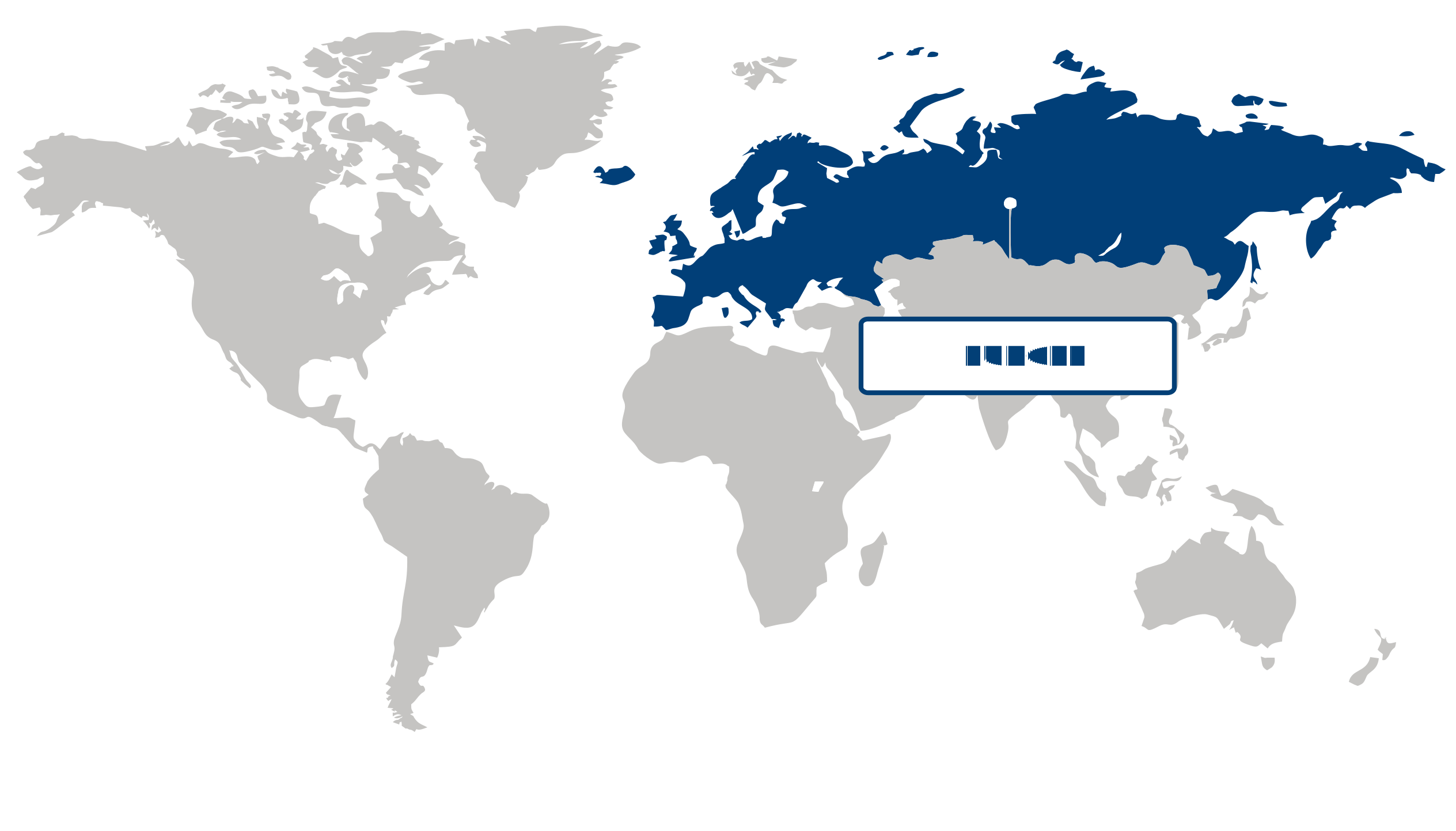
Largest Region

Europe

Automotive Adaptive Cruise Control Market

Forecast Period

2025-2034

Get more details on this report -

Key Takeaways

In terms of segmentation, the global Automotive Adaptive Cruise Control market is analyzed on the basis of Technology, Vehicle Type, End-User.

Market Growth Drivers and Industry Trends

Growth Drivers & Opportunities The Automotive Adaptive Cruise Control (ACC) market is witnessing significant growth due to the rise in consumer demand for enhanced safety features. With an increasing emphasis on reducing road traffic accidents and improving overall vehicular safety, manufacturers are integrating advanced driver-assistance systems (ADAS) into new vehicle models. The shift towards automation and semi-autonomous vehicles is further propelling the demand for adaptive cruise control systems, creating new opportunities for innovation and development. Technological advancements in sensor technology and artificial intelligence are also driving the ACC market. Improved radar, camera, and LiDAR systems have enhanced the reliability and functionality of adaptive cruise control, making it more appealing to consumers. These improvements allow vehicles to maintain safe following distances and navigate varying traffic conditions effectively, thereby elevating the driving experience. Furthermore, government regulations promoting the adoption of safer driving technologies are strengthening market growth. Initiatives aimed at reducing carbon emissions and enhancing fuel efficiency align with the capabilities of adaptive cruise control systems, which contribute to overall vehicle performance and ecological sustainability. The increasing awareness around green technologies is likely to influence consumer preferences, creating burgeoning opportunities for manufacturers who focus on environmentally friendly automotive solutions. Industry Restraints: Despite its growth potential, the Automotive Adaptive Cruise Control market is also contending with several Industry Restraints:. One primary concern is the high cost associated with developing and implementing advanced technology systems in vehicles. Smaller manufacturers may struggle to compete with larger automotive companies that can better absorb these costs, potentially leading to market consolidation. Another significant restraint is the technological limitations of current adaptive cruise control systems. While advancements have been made, there are still challenges related to varying road conditions, inclement weather, and the interaction of these systems with unpredictable drivers. This calls into question the reliability of ACC systems and presents a barrier to widespread consumer adoption. Moreover, consumer apprehensions regarding the reliability of automated technologies contribute to a sluggish acceptance rate. Some drivers remain skeptical about relinquishing control to automated systems, fearing malfunctions or system failures. This mindset can hinder market growth as it directly impacts consumer confidence in adopting vehicles equipped with adaptive cruise control features. Additionally, data privacy concerns related to the processing of user data by these systems can further complicate consumer trust and acceptance in the long term.

Unlock insights tailored to your business with our bespoke market research solutions - Click to get your customized report now!

Regional Demand Dynamics

Automotive Adaptive Cruise Control Market

Largest Region

Europe

XX% Market Share in 2024
Access Free Report Snapshot with Regional Insights
North America The North American automotive adaptive cruise control market is expected to maintain a robust presence, predominantly driven by advancements in automotive technology and a growing emphasis on vehicle safety. The United States stands out as the largest market in the region, propelled by a strong automotive industry and increasing consumer demand for high-tech features in vehicles. Canada is also anticipated to contribute positively to market growth, especially as automakers introduce innovative adaptive cruise control systems that enhance driver convenience and safety. The regulatory environment in North America, with a focus on enhancing road safety, further supports the gradual adoption of advanced driver assistance systems, including adaptive cruise control. Asia Pacific In the Asia Pacific region, the automotive adaptive cruise control market is poised for significant expansion, with China leading the charge. The country's rapid urbanization, increasing vehicle ownership, and investment in smart automobile technologies have catalyzed market growth. Japan follows closely behind, backed by a well-established automotive sector that prioritizes technological innovations. South Korea is also emerging as a key player, with its automotive manufacturers focusing on integrating cutting-edge cruise control systems into their vehicles. The combination of rising consumer awareness regarding safety features and government initiatives promoting intelligent transport systems is expected to drive the adoption of adaptive cruise control across Asia Pacific. Europe Europe's automotive adaptive cruise control market is robust, characterized by a strong emphasis on safety and environmental regulations. Germany is at the forefront, leveraging its position as an automobile manufacturing powerhouse to integrate advanced technologies in vehicles. The UK and France are also key markets, with increasing consumer interest in features that promote safer driving experiences. European manufacturers are notable for their early adoption of autonomous driving technologies, influencing the market growth for adaptive cruise control. Additionally, stringent EU regulations aimed at reducing road accidents are likely to further propel the demand for adaptive cruise control systems across these countries, making Europe a vital region in this market landscape.

No card data available for this language/report.

Segment Leadership and Growth Trends

  Automotive Adaptive Cruise Control Market by Technology The technology segment of the automotive adaptive cruise control market is diverse, comprising Lidar, Radar, Laser, and Ultrasonic systems. Among these, Radar technology is currently the most widely used due to its reliability, lower cost, and robust performance under various environmental conditions. Radar-based adaptive cruise control systems can function effectively in adverse weather conditions like rain and fog, making them an essential choice for many automotive manufacturers. Lidar technology, although more expensive, is gaining traction due to its high precision and ability to create detailed 3D maps of the surrounding environment, which enhances vehicle safety and navigation. Laser and Ultrasonic technologies, while useful in specific applications, have a more limited scope in terms of overall adaptive cruise control functionality. As demand for advanced driver-assistance systems escalates, the market for Radar and Lidar technologies is expected to exhibit the largest market size and fastest growth. Automotive Adaptive Cruise Control Market by Vehicle Type In the vehicle type segment, the market is divided into passenger cars and commercial vehicles. Passenger cars dominate the market, driven by the increasing demand for enhanced safety features and technological advancements in consumer vehicles. Manufacturers are increasingly integrating adaptive cruise control systems in their newer models to appeal to safety-conscious consumers, thereby driving significant growth in this segment. On the other hand, the commercial vehicle segment is also witnessing considerable growth, propelled by the need for fleet management and fuel efficiency. Fleet operators are adopting these systems to minimize driver fatigue and optimize driving patterns, leading to lower operational costs. Collectively, the passenger car segment is anticipated to exhibit the largest market size, while commercial vehicles may outperform in growth rates as advancements in technology cater to the specific needs of the fleet industry. Automotive Adaptive Cruise Control Market by End-User The end-user segment of the automotive adaptive cruise control market is categorized into OEM and aftermarket. The original equipment manufacturer (OEM) segment is expected to hold the largest market share, as most advanced adaptive cruise control systems are being integrated into vehicles at the manufacturing stage. Automakers are increasingly prioritizing safety technology to meet regulatory standards and consumer demand, fuelling growth in this segment. Conversely, the aftermarket segment is also on the rise, primarily due to growing consumer interest in upgrading older vehicles with advanced safety features. As the automotive industry shifts focus towards electrification and automation, the aftermarket for adaptive cruise control systems is expected to witness significant growth, driven by innovations and the desire for existing vehicle owners to enhance their vehicle functionalities. The OEM segment is set to dominate the market size, while the aftermarket is positioned for fast growth as vehicle technologies evolve.

Competitive Landscape and Market Positioning

The competitive landscape in the Automotive Adaptive Cruise Control Market is characterized by rapid technological advancements and increasing consumer demand for safety and convenience features in vehicles. Major players are focusing on developing innovative technologies that enhance the functionality of adaptive cruise control systems, such as integration with artificial intelligence and machine learning for better traffic management. Collaborations, mergers, and acquisitions are common strategies employed by companies to strengthen their market position and expand their product offerings. Moreover, regulatory frameworks promoting advanced driver assistance systems (ADAS) are boosting market growth, encouraging manufacturers to invest in research and development. The presence of key automotive giants, along with specialized technology firms, contributes to a dynamic and competitive environment. Top Market Players 1. Bosch 2. Denso Corporation 3. Continental AG 4. ZF Friedrichshafen AG 5. Aptiv PLC 6. Autoliv Inc. 7. Valeo SA 8. NXP Semiconductors 9. Mobileye (Intel Corporation) 10. Tesla, Inc.

Why Choose Us

Specialized Expertise: Our team comprises industry experts with a deep understanding of your market segment. We bring specialized knowledge and experience that ensures our research and consulting services are tailored to your unique needs.

Customized Solutions: We understand that every client is different. That's why we offer customized research and consulting solutions designed specifically to address your challenges and capitalize on opportunities within your industry.

Proven Results: With a track record of successful projects and satisfied clients, we have demonstrated our ability to deliver tangible results. Our case studies and testimonials speak to our effectiveness in helping clients achieve their goals.

Cutting-Edge Methodologies: We leverage the latest methodologies and technologies to gather insights and drive informed decision-making. Our innovative approach ensures that you stay ahead of the curve and gain a competitive edge in your market.

Client-Centric Approach: Your satisfaction is our top priority. We prioritize open communication, responsiveness, and transparency to ensure that we not only meet but exceed your expectations at every stage of the engagement.

Continuous Innovation: We are committed to continuous improvement and staying at the forefront of our industry. Through ongoing learning, professional development, and investment in new technologies, we ensure that our services are always evolving to meet your evolving needs.

Value for Money: Our competitive pricing and flexible engagement models ensure that you get maximum value for your investment. We are committed to delivering high-quality results that help you achieve a strong return on your investment.

Select Licence Type

Single User

US$ 4250

Multi User

US$ 5050

Corporate User

US$ 6150