Barley Flakes Market Size & Growth Forecast 2027–2036, By Segments (Product, Distribution Channel), Regional Demand Trends (North America, Asia Pacific, Europe), Key Country Insights (U.S., Japan, South Korea, Germany, France, Italy), and Competitive Landscape
Jump to content
Market Size and Growth Outlook
Barley Flakes Market size was worth USD 8.9 billion in 2026 and is poised to grow at a 4.75% CAGR between 2027 and 2036, attaining USD 14.16 billion by 2036. The industry revenue for 2027 is assessed at USD 9.26 billion.
Get more details on this report
Request Free Sample ReportBarley Flakes Market Intelligence Snapshot
Regional Market Dynamics
- Europe held a 34.13% market share in 2026, supported by established consumption patterns, a mature grain-processing industry, strong distribution networks, and steady demand across breakfast, bakery, and health-focused food products.
- Asia Pacific is projected to grow at a 5.76% CAGR, fueled by changing food habits, rising demand for convenient grain-based products, expanding urban retail access, and greater use of barley ingredients in localized packaged foods.
Segment Momentum
- Conventional barley flakes held a 70.85% share in 2026 due to broad consumer familiarity, established sourcing and processing systems, and widespread availability across mass-market retail channels for everyday consumption.
- Online distribution is growing fastest as consumers increasingly prefer digital grocery shopping, easier product discovery, convenient home delivery, and broader access to niche and health-focused barley flakes options.
Market Expansion Drivers
- Rising health-conscious snacking increasing demand for fiber-rich barley-based food products.
- Growing prevalence of cardiovascular and diabetic conditions boosting functional cereal consumption.
- Expanding clean-label breakfast and energy snack categories strengthening barley flakes utilization.
Leading Market Participants
- Prominent companies in the barley flakes market include WK Kellogg Co (United States), Nestlé S.A. (Switzerland), The Quaker Oats Company (United States), Bob's Red Mill Natural Foods, Inc. (United States), Briess Malt & Ingredients Co. (United States), Honeyville, Inc. (United States), Shiloh Farms (United States), Vitasana Foods Pvt. Ltd. (India), Cereal Food Manufacturing Co. (Saudi Arabia).
Global Market Forecast Snapshot
Market Outlook
- 2026 Market Size: USD 8.9 billion
- 2027 Estimated Market Size: USD 9.26 billion.
- Projected Market Size: USD 14.16 billion by 2036
- Growth Forecast: 4.75% CAGR (2027-2036)
Regional and Segment Outlook
- Leading Regional Market: Europe
- High-Growth Regional Hub: Asia Pacific
- Core Revenue Segment: Conventional (Product) | Supermarket/Hypermarket (Distribution Channel)
- Emerging Opportunity Segment: Organic (Product) | Online (Distribution Channel)
Market Growth Drivers and Industry Trends
Rising health-conscious snacking increasing demand for fiber-rich barley-based food products
Growing consumer awareness of balanced nutrition is supporting the barley flakes market as shoppers increasingly look for snacks containing dietary fiber and recognizable grain-based ingredients. Barley flakes can be incorporated into breakfast foods, snack mixes, cereal products, and homemade preparations, giving manufacturers and consumers flexibility in developing nutrient-oriented food options. The increasing preference for snacks perceived as wholesome and less heavily processed is encouraging the use of whole-grain ingredients across multiple food categories. Barley's fiber content and compatibility with convenient food formats make barley flakes relevant to consumers seeking more nutritious alternatives within everyday snacking and meal occasions.
Growing prevalence of cardiovascular and diabetic conditions boosting functional cereal consumption
The rising prevalence of cardiovascular and diabetic conditions is increasing consumer and healthcare attention toward dietary patterns associated with better metabolic and cardiovascular health, supporting the barley flakes market. Barley-based foods are increasingly considered within functional cereal choices because of their dietary fiber content and suitability for incorporation into balanced diets. Food manufacturers can use barley flakes in cereals, porridges, snack products, and other formulations designed around nutrition-focused positioning. As consumers become more attentive to ingredient choices and the relationship between everyday food consumption and long-term wellness, demand for grain products with functional nutritional attributes is gaining greater relevance.
Expanding clean-label breakfast and energy snack categories strengthening barley flakes utilization
Expansion of clean-label breakfast and energy snack categories is creating additional applications for barley flakes across packaged and prepared food products. Consumers are increasingly interested in products made with familiar grains and straightforward ingredient profiles, while food manufacturers are seeking versatile ingredients that can support nutritional and texture requirements. Barley flakes can be incorporated into cereals, granola-style products, snack bars, baked foods, and other convenient formats, allowing manufacturers to broaden their product offerings without relying on highly complex ingredient systems. The growing overlap between convenience, whole-grain nutrition, and clean-label positioning is encouraging greater utilization of barley flakes in breakfast and energy-oriented food formulations.
| Growth Driver | Impact on CAGR | Regulatory Influence | Geographic Relevance | Adoption Rate | Impact Timeline |
|---|---|---|---|---|---|
| Rising health-conscious snacking increasing demand for fiber-rich barley-based food products | 2.00% | Low | North America, Europe | High | Near Term |
| Growing prevalence of cardiovascular and diabetic conditions boosting functional cereal consumption | 1.80% | Moderate | North America, Asia Pacific | High | Mid Term |
| Expanding clean-label breakfast and energy snack categories strengthening barley flakes utilization | 1.30% | Low | Europe, Asia Pacific | Emerging | Mid Term |
Unlock insights tailored to your business with our bespoke market research solutions.
Click to get your customized report now.
Regional Demand Dynamics
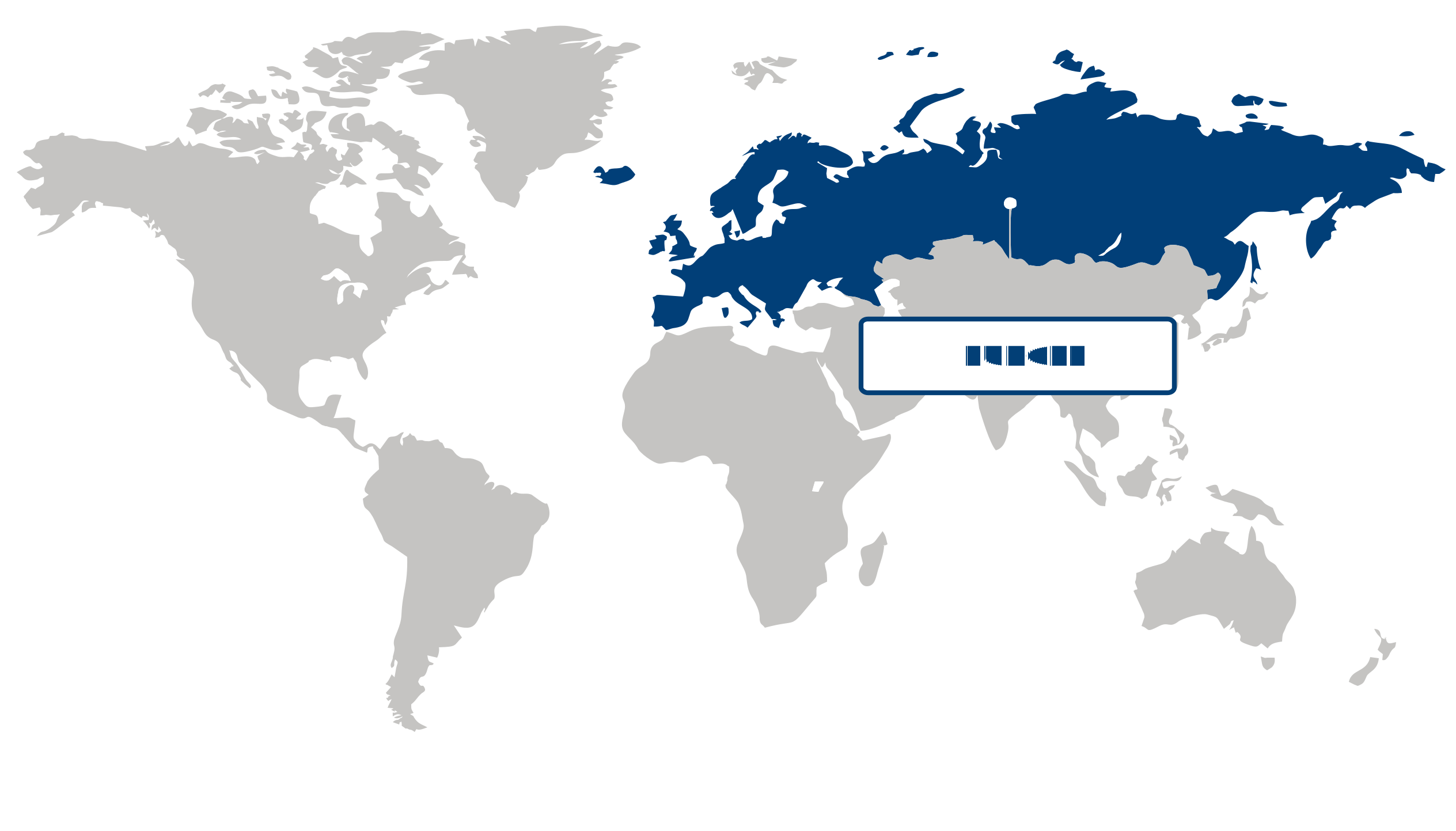
Europe (Largest Region)
Europe accounted for the largest share of the barley flakes market at 34.13% in 2026, supported by established demand for nutritious breakfast foods, strong consumer awareness of whole grains, and growing interest in healthier dietary choices. Barley flakes benefit from the region's mature cereal and bakery industries, as well as increasing consumer preference for foods associated with fiber content, balanced nutrition, and convenient meal preparation. Demand is also supported by the expansion of natural and minimally processed food offerings across retail channels, while greater attention to functional nutrition is encouraging consumers to incorporate whole-grain ingredients into everyday diets.
Asia Pacific (Fastest-Growing Region)
Asia Pacific is the fastest-growing region, driven by changing dietary preferences, expanding urban populations, and increasing awareness of healthy and convenient food options. Rising disposable incomes and the development of modern retail and online grocery channels are improving access to packaged cereal products across the region. Growing interest in high-fiber foods and western-style breakfast choices, combined with evolving food habits among urban consumers, is creating additional opportunities for barley flakes manufacturers.
| Parameter | North America | Asia Pacific | Europe | Latin America | MEA |
|---|---|---|---|---|---|
| Innovation HubiScaleNascentDeveloping Advanced | |||||
| Cost-Sensitive RegioniScaleLowMedium High | |||||
| Regulatory EnvironmentiScaleRestrictiveNeutral Supportive | |||||
| Demand DriversiScaleWeakModerate Strong | |||||
| Development StageiScaleEmergingDeveloping Developed | |||||
| Adoption RateiScaleLowMedium High | |||||
| New Entrants / StartupsiScaleSparseModerate Dense | |||||
| Macro IndicatorsiScaleWeakStable Strong |
Key Country Insights
Germany 🇩🇪
Whole Grain PreferenceGermany is emphasizing barley flakes in breakfast products and bakery applications that align with consumer interest in whole grains and natural ingredients. Food producers are incorporating barley into premium cereal and healthy snack portfolios to diversify grain offerings.
France 🇫🇷
Premium Cereal ApplicationsFrance is increasing the use of barley flakes in premium breakfast products, artisanal bakery items, and organic food ranges. Manufacturers are responding to consumer demand for minimally processed grains while broadening applications across healthy packaged foods.
Italy 🇮🇹
Traditional Grain RevivalItaly is blending traditional grain preferences with modern health trends by incorporating barley flakes into breakfast foods, baked products, and specialty recipes. Food companies are promoting ingredient authenticity while introducing convenient formats for everyday consumption.
Japan 🇯🇵
Functional Food IntegrationJapan is incorporating barley flakes into convenience foods and health-focused products that support balanced nutrition and everyday wellness. Domestic food manufacturers are developing innovative grain-based formulations that match evolving consumer preferences for functional ingredients.
South Korea 🇰🇷
Wellness Product DevelopmentSouth Korea is expanding barley flakes across cereals, beverages, and nutritional food products as wellness-focused consumption continues to influence purchasing decisions. Brands are highlighting natural grain ingredients and product versatility to attract health-conscious consumers.
United States 🇺🇸
Health-Oriented ConsumptionThe U.S. barley flakes market is benefiting from consumer demand for nutritious breakfast cereals, baking ingredients, and plant-based food formulations. Manufacturers are expanding product variety with clean-label positioning and functional grain blends to address changing dietary preferences.
Barley Flakes Market Share (%), by Product, 2026
Go beyond the chart, access full insights & data tables
Request Free Sample ReportProduct Segment Analysis: Conventional (Largest Segment) vs Organic (Fastest-Growing Segment)
The conventional segment led the barley flakes market with a 70.85% share in 2026, supported by its broad consumer acceptance, established production practices, and accessibility across mainstream food channels. Conventional barley flakes benefit from familiar taste and nutritional positioning, while their availability at competitive prices makes them suitable for everyday breakfast and food preparation. Established processing and distribution networks further strengthen their presence among households and food manufacturers seeking consistent supply and product performance.
Organic barley flakes represent the fastest-growing segment, reflecting increasing consumer interest in cleaner-label foods, natural ingredients, and agricultural practices perceived as more environmentally responsible. Rising awareness of food quality and wellness is encouraging consumers to seek minimally processed and organically produced grain products. This shift is also supporting greater product differentiation within the barley flakes category, particularly as retailers and food producers expand offerings aimed at health-conscious and sustainability-oriented consumers.
Distribution Channel Segment Analysis: Supermarket/Hypermarket (Largest Segment) vs Online (Fastest-Growing Segment)
Supermarket/hypermarket channels accounted for the largest share of the barley flakes market, reaching 61.3% in 2026. Their dominance is supported by broad product availability, established grocery purchasing habits, and consumers' preference for evaluating packaged food products directly before purchase. These outlets also provide strong visibility for barley flakes through organized shelf placement, promotional activity, and access to multiple product variants, reinforcing their importance for routine household purchases.
Online distribution is advancing rapidly as consumers increasingly value convenience, home delivery, and broader product selection. Digital channels allow shoppers to compare barley flakes based on attributes such as product type, ingredients, and nutritional positioning while accessing specialized offerings that may have limited availability in physical stores. The growing integration of online grocery purchasing into everyday consumption is therefore strengthening the role of e-commerce as an increasingly important route to market.
| Segment | Sub-Segment | Largest Segment | Fastest Growing |
|---|---|---|---|
| Product | Conventional, Organic | Conventional | Organic |
| Distribution Channel | Convenience Stores, Supermarket/Hypermarket, Online | Supermarket/Hypermarket | Online |
Competitive Landscape and Market Positioning
Prominent players in the barley flakes market:
1. WK Kellogg Co (United States)
2. Nestlé S.A. (Switzerland)
3. The Quaker Oats Company (United States)
4. Bob's Red Mill Natural Foods Inc. (United States)
5. Briess Malt & Ingredients Co. (United States)
6. Honeyville Inc. (United States)
7. Shiloh Farms (United States)
8. Vitasana Foods Pvt. Ltd. (India)
9. Cereal Food Manufacturing Co. (Saudi Arabia)
The barley flakes market is witnessing rising demand driven by increasing consumer preference for nutritious breakfast alternatives and functional food products. Producers are emphasizing clean-label formulations, high-fiber offerings, and sustainable sourcing practices to strengthen market positioning. Product innovation focused on convenience foods and plant-based nutrition is also contributing to broader consumer appeal and expanding retail penetration within the barley flakes market.
| Company | Market Share | Company Revenue | Revenue CAGR (%) | Product Portfolio | Geographic Presence | Innovation / R&D Focus | Strategic Developments |
|---|---|---|---|---|---|---|---|
| WK Kellogg Co (United States) | |||||||
| Nestlé S.A. (Switzerland) | |||||||
| The Quaker Oats Company (United States) | |||||||
| Bob's Red Mill Natural Foods Inc. (United States) | |||||||
| Briess Malt & Ingredients Co. (United States) | |||||||
| Honeyville Inc. (United States) | |||||||
| Shiloh Farms (United States) | |||||||
| Vitasana Foods Pvt. Ltd. (India) | |||||||
| Cereal Food Manufacturing Co. (Saudi Arabia). |
Customize Your Report
Explore examples of how this report can be tailored to different research needs, including custom segments, additional topics or chapters, and related reports. Click a section of the wheel or its numbered marker to explore the available options.
Barley Flakes Market — Custom Segments
| Segment | Sub-Segment |
|---|---|
| Application | Breakfast Cereals, Bakery Products, Snack Foods, Food Ingredients |
| Packaging Type | Pouches & Bags, Boxes, Bulk Packaging, Single-Serve Packs |
| Price Tier | Economy, Mid-Range, Premium |
Barley Flakes Market — Custom TOC
| Custom Chapter | Chapter Details |
|---|---|
| Functional Food Innovation Landscape |
|
| Health and Wellness Consumption Opportunities |
|
| Breakfast Category Evolution |
|
Need a different cut of the data?
Request Custom ResearchFrequently Asked Questions
What is the current revenue of the barley flakes market?
What are the growth projections for the barley flakes industry?
How are health-focused food trends influencing demand for barley flakes?
Why are clean-label and functional nutrition trends strengthening the barley flakes market?
Why do conventional barley flakes lead the barley flakes market?
Why is the online channel the fastest-growing distribution segment in the barley flakes market?
Why does Europe lead the barley flakes market?
What is driving barley flakes market growth in Asia Pacific?
Which companies are driving growth in the barley flakes landscape?
Our Clients
"The report provided a thorough look at market trends, technological advancements, and the competitive landscape. The depth of insights was really valuable."
ITC Limited
"We would highly recommend Fundamental Business Insights & Consulting to anyone looking for reliable, detailed, and comprehensive market research in the Food industry."
Tyson Foods
"The clarity and presentation of the information were commendable. The report was delivered timely, which made the overall experience smooth and convenient."
Mondelēz International
Our Research Team & Methodology
Every Fundamental Business Insights report is built by a dedicated vertical research team, validated through a structured primary-and-secondary methodology, and reviewed for accuracy before it reaches you.
Delivery
Published
Available
Support
- Market Size & Forecast
- Market Segmentation
- Regional Analysis
- Growth Drivers & Challenges
- Market Dynamics
- Competitive Landscape
- Company Profiles
- Competitive Benchmarking
- Mergers & Acquisitions
- Market Share Analysis or Key Company Strategies
- Value Chain Analysis
- Porter's Five Forces
- PESTLE Analysis
- Pricing Trends
- Supply-Demand Analysis
- Technology Landscape
- Regulatory Landscape
- Investment & Funding Landscape
- Emerging Opportunities
- Future Market Outlook