



Biomass Boiler Market Size & Growth Forecast 2027–2036, By Segments (Product, Feedstock, Application), Regional Demand Trends (North America, Asia Pacific, Europe), Key Country Insights (U.S., Japan, South Korea, Germany, France, Italy), and Competitive Landscape
Market Size and Growth Outlook
Biomass Boiler Market size was assessed at USD 16.1 Billion in 2026 and is poised to grow at 8.8% CAGR between 2027 and 2036, surpassing USD 37.42 Billion by 2036. The industry revenue for 2027 is calculated at USD 17.3 Billion.
Base Year Value (2026)
USD 16.1 Billion
CAGR (2027-2036)
8.8%
Forecast Year Value (2036)
USD 37.42 Billion

Historical Data Period
2022-2026

Largest Region
Europe

Forecast Period
2027-2036
Biomass Boiler Market Intelligence Snapshot:
-
Regional Market Dynamics:
- Europe held 43.46% in 2025, supported by renewable heating policies, decarbonization efforts, established biomass supply chains, and district heating infrastructure.
- Asia Pacific is expanding rapidly through rising energy demand, industrialization, renewable heat adoption, and greater utilization of agricultural and forestry residues.
-
Segment Momentum:
- The fluidized bed segment held a 68.93% market share in 2025 and is also the fastest-growing, supported by superior combustion efficiency, fuel flexibility, lower emissions, and suitability for large-scale heating and power generation.
- Agricultural waste is the fastest-growing feedstock segment as waste-to-energy initiatives, circular economy practices, and improved biomass collection and handling encourage greater use of crop residues as renewable boiler fuel.
-
Market Expansion Drivers:
- Rising demand for renewable heating solutions driving shift toward biomass-based thermal systems
- Government incentives and carbon reduction policies accelerating adoption of green heating systems
- Industrial decarbonization initiatives replacing fossil fuel boilers with biomass alternatives
-
Leading Market Participants:
Key companies in the biomass boiler market include ANDRITZ AG (Austria), Viessmann Group (Germany), Hurst Boiler & Welding Company, Inc. (United States), Thermax Limited (India), Babcock & Wilcox Enterprises, Inc. (United States), John Cockerill S.A. (Belgium), Hargassner Ges mbH (Austria), ÖkoFEN Forschungs- und Entwicklungsgesellschaft m.b.H. (Austria), Guntamatic Heiztechnik GmbH (Austria), Froling Heizkessel- und Behälterbau GmbH (Austria)
Global Market Forecast Snapshot:
-
Market Outlook:
- 2026 Market Size: USD 16.1 Billion
- 2027 Estimated Market Size: USD 17.3 Billion
- Projected Market Size: USD 37.42 Billion by 2036
- Growth Forecasts: 8.8% CAGR (2027-2036)
-
Regional and Segment Outlook:
- Leading Regional Market: Europe
- High-Growth Regional Hub: Asia Pacific
- Core Revenue Segment: Fluidized Bed (Product) | Woody Biomass (Feedstock) | Residential (Application)
- Emerging Opportunity Segment: Fluidized Bed (Product) | Agricultural Waste (Feedstock) | Industrial (Application)
Market Growth Drivers and Industry Trends
Rising demand for renewable heating solutions driving shift toward biomass-based thermal systems
The transition toward cleaner heating technologies is encouraging households, commercial establishments, and industrial facilities to replace conventional fossil fuel-based systems with renewable thermal alternatives. This shift will drive the biomass boiler market growth as biomass-fueled heating systems provide an effective solution for reducing dependence on traditional energy sources while utilizing renewable feedstocks. Their ability to generate reliable heat from agricultural residues, forestry by-products, and other organic materials also supports circular resource utilization and improves energy diversification across a broad range of heating applications.
Government incentives and carbon reduction policies accelerating adoption of green heating systems
Supportive regulatory frameworks and environmental policies promoting low-carbon energy solutions are encouraging greater investment in sustainable heating infrastructure. The biomass boiler market benefits from these initiatives as financial incentives, emissions reduction programs, and renewable energy targets improve the economic attractiveness of biomass heating installations. Compliance with evolving environmental regulations is also motivating building owners, public institutions, and industrial operators to transition toward cleaner heating technologies that align with long-term decarbonization objectives.
Industrial decarbonization initiatives replacing fossil fuel boilers with biomass alternatives
Manufacturing industries are increasingly adopting lower-emission process heating technologies as part of broader sustainability and energy transition strategies. These initiatives will propel the biomass boiler market growth by supporting the replacement of conventional coal, oil, and gas-fired boilers with biomass-based systems capable of delivering dependable thermal energy for industrial operations. Facilities processing food, chemicals, pulp and paper, and other heat-intensive products are also utilizing biomass fuels to reduce carbon emissions while improving the use of renewable and locally available energy resources.
| Growth Driver Assessment Framework | |||||
| Growth Driver | Impact On CAGR | Regulatory Influence | Geographic Relevance | Adoption Rate | Impact Timeline |
|---|---|---|---|---|---|
| Rising demand for renewable heating solutions driving shift toward biomass-based thermal systems | 2.4% | High | Europe, Asia Pacific | High | Near Term |
| Government incentives and carbon reduction policies accelerating adoption of green heating systems | 2.3% | High | Europe, North America | High | Mid Term |
| Industrial decarbonization initiatives replacing fossil fuel boilers with biomass alternatives | 2.1% | High | Asia Pacific, Europe | High | Mid Term |
Unlock insights tailored to your business with our bespoke market research solutions - Click to get your customized report now!
Regional Demand Dynamics
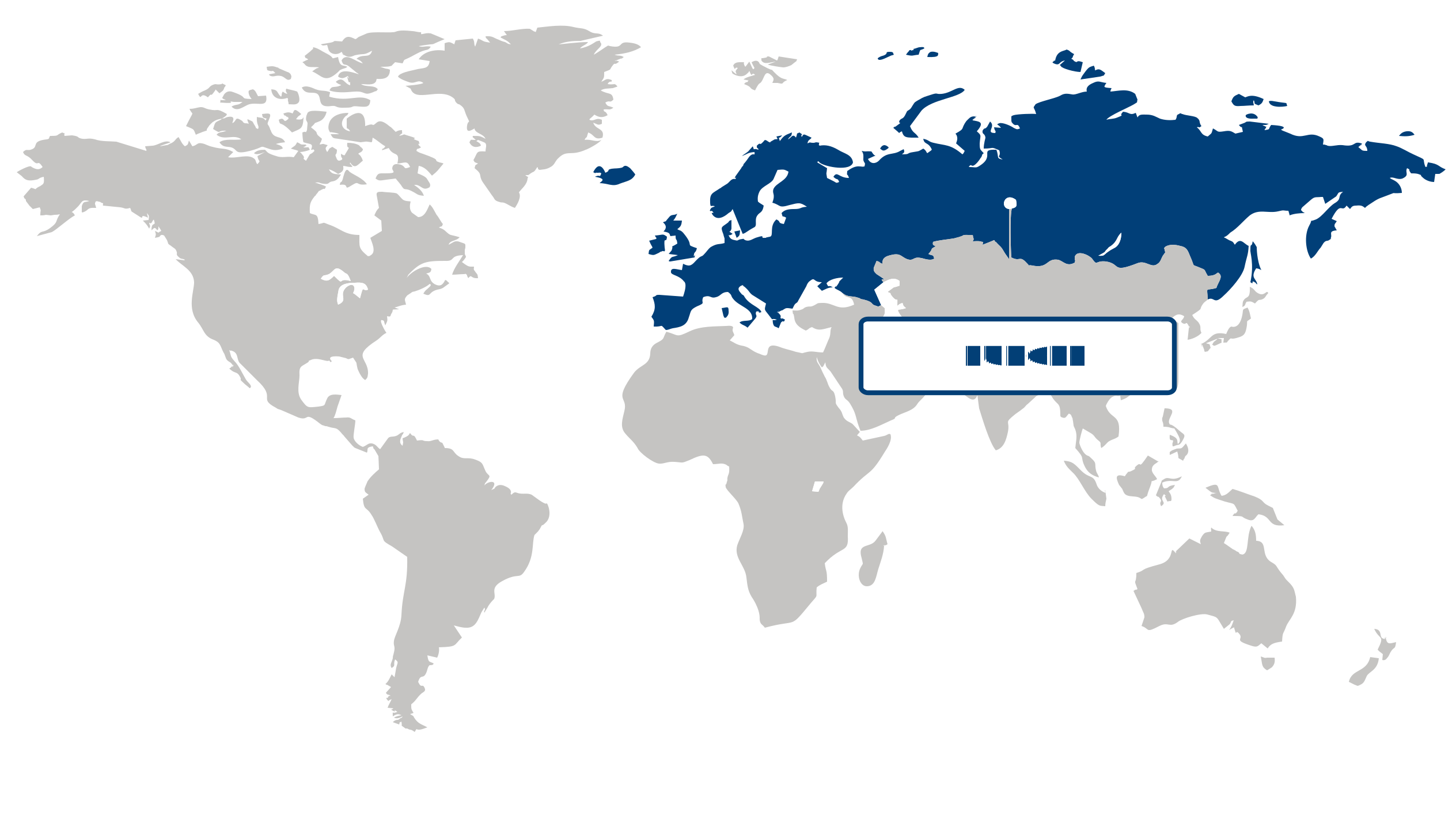
Largest Region
Europe
43.46% Market Share in 2026
Europe (Largest Region) vs Asia Pacific (Fastest-Growing Region)
Europe accounted for 43.46% of the biomass boiler market in 2026, reflecting strong policy emphasis on renewable heating, decarbonization of energy systems, and reduced dependence on fossil fuels. The region's established district heating infrastructure and demand for lower-carbon thermal energy provide a favorable environment for biomass-based heating technologies. Biomass boilers are also gaining relevance among industrial, commercial, and residential users seeking alternatives to conventional heating fuels, while sustainability targets and incentives for renewable energy deployment continue to encourage investment. The availability of established biomass supply chains and technological expertise further supports adoption across the region.
Asia Pacific is expected to register the fastest growth, supported by rising energy demand, industrialization, and increasing interest in renewable sources for heat generation. Countries across the region are seeking to diversify their energy mix while managing the environmental impact of conventional fuels, creating opportunities for biomass-based thermal systems. Expanding manufacturing and commercial activity is also increasing the requirement for reliable process and space heating, particularly in markets with accessible agricultural and forestry residues. Greater attention to waste utilization, renewable energy development, and cleaner industrial operations is expected to further stimulate demand for biomass boilers across the region.
No card data available for this language/report.
Segment Leadership and Growth Trends
Product Segment Analysis: Fluidized Bed (Largest & Fastest-Growing Segment)
The fluidized bed product segment dominated the biomass boiler market with a market share of 68.93% in 2026 while also emerging as the fastest-growing segment. Its leading position is supported by its ability to efficiently process a broad range of biomass fuels with varying moisture content and particle sizes, making it highly suitable for large-scale heating and power generation applications. The technology offers superior combustion efficiency, improved fuel flexibility, and lower emissions compared with conventional systems, encouraging wider adoption across commercial and industrial installations. Increasing emphasis on cleaner energy solutions, stringent environmental standards, and ongoing improvements in combustion performance continue to strengthen the segment's market leadership and accelerate its adoption across diverse end-use sectors.
Feedstock Segment Analysis: Woody Biomass (Largest Segment) vs Agricultural Waste (Fastest-Growing Segment)
Holding the largest share of 52.89% in 2026, the woody biomass feedstock segment benefited from its consistent availability, stable calorific value, and well-established supply chains. Wood residues, forestry by-products, and wood pellets provide reliable combustion characteristics that improve boiler efficiency and operational stability, making them the preferred feedstock for a wide range of biomass heating systems. The widespread availability of processing infrastructure and increasing utilization of forestry waste further reinforce the segment's dominant market position.
The agricultural waste feedstock segment is anticipated to witness the fastest growth as industries and agricultural communities increasingly seek productive uses for crop residues and farming by-products. In the biomass boiler market, growing interest in waste-to-energy initiatives and circular economy practices is encouraging the conversion of agricultural residues into renewable fuel sources. Expanding efforts to reduce open-field residue burning, combined with improvements in biomass collection, storage, and handling technologies, are expected to support the rapid adoption of agricultural waste as a sustainable boiler feedstock.
Application Segment Analysis: Residential (Largest Segment) vs Industrial (Fastest-Growing Segment)
The residential application segment held the largest share in 2026, supported by rising demand for renewable heating systems in homes and residential buildings. Homeowners are increasingly adopting biomass boilers as an alternative to conventional fossil fuel-based heating because they provide improved energy efficiency while utilizing renewable fuel sources. Supportive sustainability initiatives and growing awareness of low-emission heating technologies have further strengthened residential demand.
The industrial application segment is expected to register the fastest growth due to increasing demand for reliable, high-capacity thermal energy across manufacturing, food processing, pulp and paper, and other energy-intensive industries. Industrial facilities are progressively integrating biomass boilers to improve energy security, reduce dependence on conventional fuels, and utilize production waste as a valuable energy source. These trends continue to expand the role of industrial biomass heating solutions across diverse manufacturing operations.
| Report Segmentation | |||
| Segment | Sub-Segment | Largest Segment | Fastest Growing Segment |
|---|---|---|---|
| Product | Stocker, Fluidized Bed | Fluidized Bed | Fluidized Bed |
| Feedstock | Woody Biomass, Agricultural Waste, Industrial Waste, Urban Residue, Others | Woody Biomass | Agricultural Waste |
| Application | Residential, Commercial, Industrial | Residential | Industrial |
 Read our Research Approach
Competitive Landscape and Market Positioning
Key companies in the biomass boiler market:
- ANDRITZ AG (Austria)
- Viessmann Group (Germany)
- Hurst Boiler & Welding Company, Inc. (United States)
- Thermax Limited (India)
- Babcock & Wilcox Enterprises, Inc. (United States)
- John Cockerill S.A. (Belgium)
- Hargassner Ges mbH (Austria)
- ÖkoFEN Forschungs- und Entwicklungsgesellschaft m.b.H. (Austria)
- Guntamatic Heiztechnik GmbH (Austria)
- Froling Heizkessel- und Behälterbau GmbH (Austria)
Shifting industrial and commercial heating requirements are encouraging biomass boiler manufacturers to compete through combustion efficiency, fuel adaptability, and operational automation. Equipment providers are refining system designs that accommodate a wider range of biomass feedstocks while reducing maintenance demands and improving emissions performance, allowing customers to manage fuel variability without compromising operational stability. Competition is also extending into engineering services, installation expertise, and ongoing technical support as buyers increasingly favor suppliers capable of delivering complete heating solutions tailored to local fuel availability and regulatory conditions. Growing emphasis on digital monitoring and remote operational control is further reinforcing the importance of lifecycle performance as a key differentiator across both new installations and modernization projects.
Industry Development/News
| Company Name | Date | Key Development |
|---|---|---|
| Orlen Termika | Jul-26 | Orlen Termika secured PLN 144 million in financing to develop a 45 MWt biomass boiler project in Poland. This investment significantly advances the company’s biomass-based cogeneration capacity and reinforces its commitment to scaling low-carbon heat generation infrastructure within the regional industrial energy sector. |
| Vihaan Clean & Green Tech | Apr-26 | Vihaan Clean & Green Tech commissioned a new biomass-based boiler plant in Gujarat, India. This facility expansion broadens the company’s manufacturing footprint and enhances its ability to provide integrated biomass boiler solutions for industrial energy applications, reflecting a strategic move to capitalize on growing demand for renewable industrial heat. |
| DP CleanTech | Nov-25 | DP CleanTech was contracted to design, engineer, and deliver a 50 MWe biomass boiler and associated flue gas cleaning system for the La Robla Green Project in Spain. This major infrastructure deployment highlights the company’s role in scaling high-capacity biomass power generation and strengthening renewable energy supply chains. |
| Saica Group | Sep-25 | Saica Group inaugurated a new biomass boiler at its Champblain-Laveyron paper facility in France. The installation is a key component of the company’s broader industrial modernization program, designed to increase operational energy efficiency and transition manufacturing processes toward sustainable, biomass-based energy sources. |
| Valmet | Jul-25 | Valmet secured a contract to supply a bubbling fluidized bed biomass boiler and auxiliary flue gas handling equipment for a new combined heat and power plant in Sweden. This project underscores Valmet’s competitive strength in deploying advanced, high-efficiency biomass boiler technologies for large-scale energy infrastructure. |
| Jansen Combustion & Boiler Technologies | Apr-25 | Jansen Combustion & Boiler Technologies completed the acquisition of Lundberg LLC. This strategic consolidation strengthens Jansen’s existing combustion and boiler technology portfolio, expanding its technical capabilities and service reach within the industrial energy systems market. |
| Nestlé Lanka | Feb-25 | Nestlé Lanka invested Rs. 1.1 billion to commission a new biomass boiler at its Kurunegala manufacturing facility. This project represents a material shift in the company's operational energy strategy, replacing traditional energy sources with biomass to enhance renewable energy utilization across its industrial production network. |
| BM GreenTech Bhd | Jul-24 | BM GreenTech formalized a share acquisition agreement to acquire Plus Xnergy Holdings for RM110 million. This strategic investment broadens the company’s clean energy portfolio and improves its competitive positioning in the sustainable industrial energy sector, specifically strengthening its integrated biomass boiler operations and service offerings. |
| Babcock & Wilcox | Apr-24 | Babcock & Wilcox Renewable Service secured a contract exceeding USD 7 million to modernize three biomass-fired boilers at a facility in Southeast Asia. The project involves significant mechanical upgrades to pressure parts and air systems, aimed at enhancing steam output, improving operational efficiency, and reducing overall emissions. |
| Sugimat | Jul-23 | Sugimat partnered with Casa Alta to deploy a custom biomass steam boiler and hot gas generator fueled by olive cake. The installation demonstrates technical innovation in adapting combustion systems to handle complex agricultural byproducts, supporting the decarbonization of industrial processes through sustainable, circular energy solutions. |
Why Choose Us
Specialized Expertise: Our team comprises industry experts with a deep understanding of your market segment. We bring specialized knowledge and experience that ensures our research and consulting services are tailored to your unique needs.
Customized Solutions: We understand that every client is different. That's why we offer customized research and consulting solutions designed specifically to address your challenges and capitalize on opportunities within your industry.
Proven Results: With a track record of successful projects and satisfied clients, we have demonstrated our ability to deliver tangible results. Our case studies and testimonials speak to our effectiveness in helping clients achieve their goals.
Cutting-Edge Methodologies: We leverage the latest methodologies and technologies to gather insights and drive informed decision-making. Our innovative approach ensures that you stay ahead of the curve and gain a competitive edge in your market.
Client-Centric Approach: Your satisfaction is our top priority. We prioritize open communication, responsiveness, and transparency to ensure that we not only meet but exceed your expectations at every stage of the engagement.
Continuous Innovation: We are committed to continuous improvement and staying at the forefront of our industry. Through ongoing learning, professional development, and investment in new technologies, we ensure that our services are always evolving to meet your evolving needs.
Value for Money: Our competitive pricing and flexible engagement models ensure that you get maximum value for your investment. We are committed to delivering high-quality results that help you achieve a strong return on your investment.
Select Licence Type

