Birch Water Market Size & Growth Forecast 2027–2036, By Segments (Type, Application, Distribution Channel), Regional Demand Trends (North America, Asia Pacific, Europe), Key Country Insights (U.S., Japan, South Korea, Germany, France, Italy), and Competitive Landscape
Jump to content
Market Size and Growth Outlook
Birch Water Market size was more than USD 1.9 billion in 2026 and is set to grow at a 7.51% CAGR between 2027 and 2036, surpassing USD 3.92 billion by 2036. The industry revenue for 2027 is assessed at USD 2.02 billion.
Get more details on this report
Request Free Sample ReportBirch Water Market Intelligence Snapshot
Regional Market Dynamics
- Europe leads the market through established consumption habits, strong sourcing networks, developed supply chains, and consumer preference for minimally processed, plant-based beverages.
- Asia Pacific is forecast to expand at an 8.93% CAGR as interest in functional hydration, premium natural beverages, and clean-label products grows alongside improving retail and digital distribution.
Segment Momentum
- Beverages held a 76.67% market share in 2026 as birch water is primarily consumed for hydration and wellness, making drink applications the most familiar and scalable route for consumer adoption.
- Cosmetics & Personal Care is expanding rapidly as manufacturers increasingly incorporate naturally derived botanical ingredients into topical formulations to strengthen clean-label positioning and product differentiation.
Market Expansion Drivers
- Rising demand for natural functional beverages increasing birch water consumption among health-conscious consumers.
- Sustainable harvesting practices and eco-friendly packaging strengthening premium plant-based beverage adoption.
- Expansion of specialty retail and e-commerce channels improving accessibility of premium botanical beverages.
Leading Market Participants
- Leading companies in the birch water market include TREO Brands LLC (United States), Sibberi Ltd. (United Kingdom), BelSeva AB (Sweden), Birch Tree Water Company (United Kingdom), Sapp International AS (Norway), Nature On Tap Ltd. (United Kingdom), DrinkBirk ApS (Denmark), Flavoredly AB (Sweden), Sealand Birk ApS (Denmark), Byarozavik LLC (Belarus).
Global Market Forecast Snapshot
Market Outlook
- 2026 Market Size: USD 1.9 billion
- 2027 Estimated Market Size: USD 2.02 billion.
- Projected Market Size: USD 3.92 billion by 2036
- Growth Forecast: 7.51% CAGR (2027-2036)
Regional and Segment Outlook
- Leading Regional Market: Europe
- High-Growth Regional Hub: Asia Pacific
- Core Revenue Segment: Unflavored (Type) | Beverages (Application) | B2C (Distribution Channel)
- Emerging Opportunity Segment: Flavored (Type) | Cosmetics & Personal Care (Application) | B2B (Distribution Channel)
Market Growth Drivers and Industry Trends
Rising demand for natural functional beverages increasing birch water consumption among health-conscious consumers
Consumer interest in beverages perceived as natural, refreshing, and functionally beneficial is expanding the range of plant-based alternatives available beyond conventional soft drinks and juices. The birch water market is supported by this preference as health-conscious consumers explore botanical beverages that can fit into wellness-oriented lifestyles and everyday hydration routines. Interest in naturally sourced beverages also encourages product development around clean-label positioning and functional attributes, allowing birch water to appeal to consumers seeking alternatives to highly processed or heavily formulated beverage options.
Sustainable harvesting practices and eco-friendly packaging strengthening premium plant-based beverage adoption
Environmental considerations are becoming increasingly important in beverage purchasing, particularly among consumers who associate responsible sourcing and packaging with premium product quality. Sustainable harvesting practices can enhance the positioning of the birch water market by demonstrating greater attention to responsible use of natural resources and maintaining the ecological value of birch-producing environments. At the same time, recyclable, lightweight, or otherwise eco-conscious packaging can reinforce the sustainability appeal of botanical beverages, helping premium products connect with consumers who consider both product attributes and environmental impact when making purchasing decisions.
Expansion of specialty retail and e-commerce channels improving accessibility of premium botanical beverages
Broader distribution through specialty food stores, health-focused retailers, and digital commerce platforms is improving consumer access to niche beverages that may have limited presence in conventional retail outlets. For the birch water market, expanded specialty retail placement can increase product visibility among wellness-oriented shoppers, while e-commerce enables consumers to discover and purchase botanical beverages beyond their immediate geographic markets. Digital channels also provide manufacturers with opportunities to communicate sourcing, formulation, and product characteristics directly to consumers, supporting greater awareness of premium beverage offerings.
| Growth Driver | Impact on CAGR | Regulatory Influence | Geographic Relevance | Adoption Rate | Impact Timeline |
|---|---|---|---|---|---|
| Rising demand for natural functional beverages increasing birch water consumption among health-conscious consumers | 2.00% | Moderate | North America, Europe | High | Near Term |
| Sustainable harvesting practices and eco-friendly packaging strengthening premium plant-based beverage adoption | 1.70% | Moderate | Europe, Asia Pacific | Medium | Mid Term |
| Expansion of specialty retail and e-commerce channels improving accessibility of premium botanical beverages | 1.30% | Low | North America, Asia Pacific | Emerging | Mid Term |
Unlock insights tailored to your business with our bespoke market research solutions.
Click to get your customized report now.
Regional Demand Dynamics
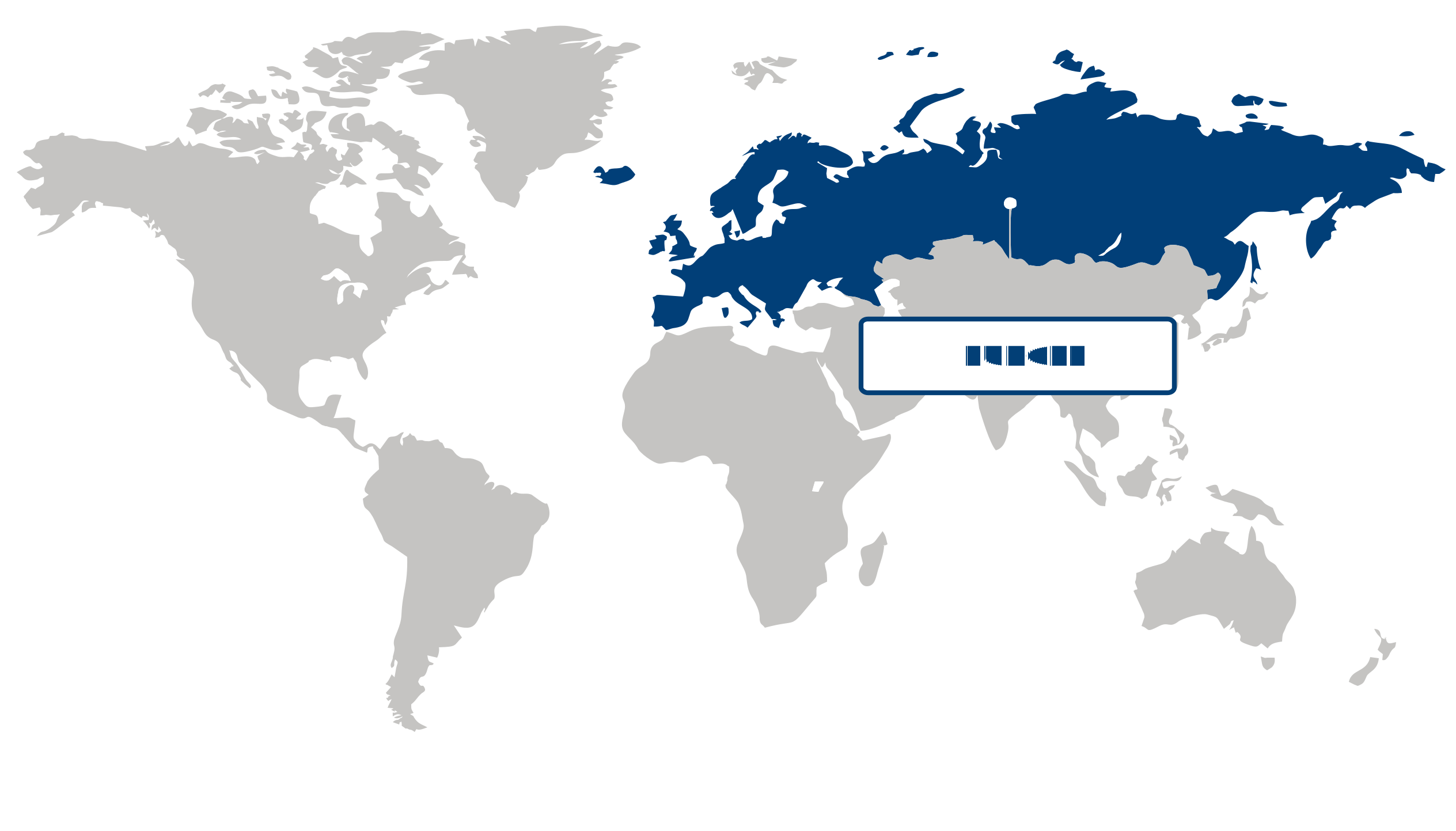
Europe (Largest Region)
Europe held the largest share of the birch water market in 2026, supported by strong consumer interest in natural beverages, plant-based products, and functional hydration options. Birch water is increasingly positioned as a natural alternative to conventional soft drinks and as a beverage associated with wellness and clean-label consumption. Consumers across the region are showing greater interest in products with recognizable origins and minimally processed ingredients, supporting demand for naturally derived beverages. Established organic and specialty food channels also provide favorable distribution opportunities, while premium positioning and sustainable sourcing can enhance appeal among environmentally conscious consumers.
Asia Pacific (Fastest-Growing Region)
Asia Pacific is projected to experience the fastest growth as consumer interest in functional beverages, natural ingredients, and healthier alternatives to conventional drinks continues to expand. Urbanization and changing lifestyles are encouraging consumers to explore beverages that combine convenience with perceived wellness benefits. Growing awareness of plant-derived ingredients is creating opportunities for birch water to enter broader beverage categories, particularly through premium and specialty product offerings. Expansion of modern retail and e-commerce is also improving access to emerging beverage products, while local adaptation of flavors and formats can help increase consumer acceptance across diverse markets.
| Parameter | North America | Asia Pacific | Europe | Latin America | MEA |
|---|---|---|---|---|---|
| Innovation HubiScaleNascentDeveloping Advanced | |||||
| Cost-Sensitive RegioniScaleLowMedium High | |||||
| Regulatory EnvironmentiScaleRestrictiveNeutral Supportive | |||||
| Demand DriversiScaleWeakModerate Strong | |||||
| Development StageiScaleEmergingDeveloping Developed | |||||
| Adoption RateiScaleLowMedium High | |||||
| New Entrants/StartupsiScaleLowMedium High | |||||
| Macro IndicatorsiScaleWeakStable Strong |
Key Country Insights
Germany 🇩🇪
Natural Ingredient PreferenceGermany is showing growing interest in birch water products that align with demand for minimally processed and naturally derived beverages. Producers in Germany are emphasizing clean-label positioning and sustainable sourcing to differentiate products in the premium drinks segment.
France 🇫🇷
Botanical Drink PositioningFrance is integrating birch water into the premium natural beverage segment where consumers increasingly favor botanical and organic ingredients. Market participants in France are focusing on product authenticity and selective retail placement to establish category recognition.
Italy 🇮🇹
Artisanal Beverage AppealItaly is developing a niche market for birch water through specialty beverage retailers and health-focused consumer channels. Italian brands are positioning birch water as an alternative refreshment product that complements demand for natural and premium drink experiences.
Japan 🇯🇵
Wellness Beverage InnovationJapan is exploring birch water as part of its broader market for functional and low-calorie beverages. Companies in Japan are introducing smaller-format products and experimenting with flavor combinations that appeal to health-conscious consumers seeking alternatives to traditional soft drinks.
South Korea 🇰🇷
Premium Hydration NicheSouth Korea is adopting birch water within the premium beverage category, supported by consumer interest in beauty and wellness-oriented products. Beverage companies in South Korea are using digital marketing and lifestyle branding to build awareness of the category.
United States 🇺🇸
Functional Beverage ExplorationThe U.S. birch water market is benefiting from consumer interest in plant-based hydration and naturally sourced functional beverages. Brands in the U.S. are positioning birch water as a premium wellness drink and expanding distribution through specialty retail and online channels.
Birch Water Market Share (%), by Type, 2026
Go beyond the chart, access full insights & data tables
Request Free Sample ReportType Segment Analysis: Unflavored (Largest Segment) vs Flavored (Fastest-Growing Segment)
Unflavored birch water held the largest share of 62.47% in 2026 in the birch water market, supported by consumer preference for a natural taste profile and the appeal of minimally processed beverage options. Its straightforward formulation allows the inherent characteristics of birch sap to remain prominent, aligning with growing interest in simple and naturally positioned beverages. Demand for products perceived as clean, refreshing, and less dependent on added flavoring continues to reinforce the established position of unflavored birch water.
Flavored birch water is the fastest-growing type as beverage consumers increasingly seek greater variety and distinctive taste experiences within natural drink categories. Added flavors can broaden the appeal of birch water by making the product more approachable to consumers who prefer differentiated beverage profiles. Product innovation and the growing demand for novel functional and naturally positioned beverages are supporting greater interest in flavored variants.
Application Segment Analysis: Beverages (Largest Segment) vs Cosmetics & Personal Care (Fastest-Growing Segment)
The beverages segment represented the largest share of 76.67% in 2026 in the birch water market, reflecting the product's primary positioning as a naturally derived drink and its appeal among consumers seeking alternatives to conventional beverages. Birch water is increasingly associated with hydration and natural ingredient attributes, supporting its use in packaged beverage products. Growing consumer interest in plant-derived drinks and differentiated hydration options continues to sustain demand within beverage applications.
Cosmetics & personal care is the fastest-growing application as interest expands in naturally sourced ingredients with potential functional benefits for skincare and personal-care formulations. Birch-derived ingredients can support product development focused on natural positioning and ingredient differentiation, creating opportunities beyond direct beverage consumption. The broader shift toward botanical and naturally derived personal-care formulations is encouraging greater exploration of birch water within cosmetic and personal-care applications.
| Segment | Sub-Segment | Largest Segment | Fastest Growing |
|---|---|---|---|
| Type | Unflavored, Flavored | Unflavored | Flavored |
| Application | Beverages, Cosmetics & Personal Care, Pharmaceuticals | Beverages | Cosmetics & Personal Care |
| Distribution Channel | B2B, B2C, Supermarkets & Hypermarkets, Convenience Stores, Online, Others | B2C | B2B |
Competitive Landscape and Market Positioning
Major players in the birch water market:
1. TREO Brands LLC (United States)
2. Sibberi Ltd. (United Kingdom)
3. BelSeva AB (Sweden)
4. Birch Tree Water Company (United Kingdom)
5. Sapp International AS (Norway)
6. Nature On Tap Ltd. (United Kingdom)
7. DrinkBirk ApS (Denmark)
8. Flavoredly AB (Sweden)
9. Sealand Birk ApS (Denmark)
10. Byarozavik LLC (Belarus)
Rising interest in natural hydration alternatives is supporting growth in the birch water market, particularly among health-conscious consumers seeking low-calorie beverages. Flavor innovation and functional enhancements are expanding product appeal across diverse consumer segments. Distribution expansion and product experimentation are further shaping visibility within the birch water market.
| Company | Market Share | Company Revenue | Revenue CAGR (%) | Product Portfolio | Geographic Presence | Innovation / R&D Focus | Strategic Developments |
|---|---|---|---|---|---|---|---|
| TREO Brands LLC (United States) | |||||||
| Sibberi Ltd. (United Kingdom) | |||||||
| BelSeva AB (Sweden) | |||||||
| Birch Tree Water Company (United Kingdom) | |||||||
| Sapp International AS (Norway) | |||||||
| Nature On Tap Ltd. (United Kingdom) | |||||||
| DrinkBirk ApS (Denmark) | |||||||
| Flavoredly AB (Sweden) | |||||||
| Sealand Birk ApS (Denmark) | |||||||
| Byarozavik LLC (Belarus). |
Industry Development / News
| Company Name | Date | Key Development |
|---|---|---|
| Nordic Tree Water | Sep-25 | Nordic Tree Water launched the “Extra Strong Birch Water” product line in Finland, derived from organically grown trees. The development expands its commercial product portfolio in the birch water segment and strengthens its positioning in premium natural hydration beverages within the Nordic market. |
| Yönalé | Jan-19 | Yönalé expanded into the U.S. market with the launch of a mineral-rich birch water product line. The initiative represents geographic expansion into a key international beverage market, enhancing distribution reach and supporting the commercialization of birch water as a functional natural hydration product in North America. |
Customize Your Report
Explore examples of how this report can be tailored to different research needs, including custom segments, additional topics or chapters, and related reports. Click a section of the wheel or its numbered marker to explore the available options.
Birch Water Market — Custom Segments
| Segment | Sub-Segment |
|---|---|
| Source | Wild-Harvested Birch, Cultivated Birch |
| Packaging Format | Bottles, Cans, Cartons, Pouches |
| Price Tier | Economy, Mid-Range, Premium |
Birch Water Market — Custom TOC
| Custom Chapter | Chapter Details |
|---|---|
| Natural Beverage Consumer Trend Analysis |
|
| Functional Hydration Opportunity Assessment |
|
| Premium Beverage Positioning Analysis |
|
Need a different cut of the data?
Request Custom ResearchFrequently Asked Questions
How much revenue does the birch water market generate?
What are the growth projections for the birch water industry?
How are consumer wellness preferences driving growth in the birch water market?
Why are sustainability and distribution expansion becoming strategic growth drivers in the birch water market?
Which application dominates the birch water market?
Why is Cosmetics & Personal Care the fastest-growing application in the birch water market?
Why is Europe the leading region in the birch water market?
What factors are driving birch water market growth in Asia Pacific?
What are the prominent companies operating in the birch water landscape?
Our Clients
"The report provided a thorough look at market trends, technological advancements, and the competitive landscape. The depth of insights was really valuable."
ITC Limited
"We would highly recommend Fundamental Business Insights & Consulting to anyone looking for reliable, detailed, and comprehensive market research in the Food industry."
Tyson Foods
"The clarity and presentation of the information were commendable. The report was delivered timely, which made the overall experience smooth and convenient."
Mondelēz International
Our Research Team & Methodology
Every Fundamental Business Insights report is built by a dedicated vertical research team, validated through a structured primary-and-secondary methodology, and reviewed for accuracy before it reaches you.
Delivery
Published
Available
Support
- Market Size & Forecast
- Market Segmentation
- Regional Analysis
- Growth Drivers & Challenges
- Market Dynamics
- Competitive Landscape
- Company Profiles
- Competitive Benchmarking
- Mergers & Acquisitions
- Market Share Analysis or Key Company Strategies
- Value Chain Analysis
- Porter's Five Forces
- PESTLE Analysis
- Pricing Trends
- Supply-Demand Analysis
- Technology Landscape
- Regulatory Landscape
- Investment & Funding Landscape
- Emerging Opportunities
- Future Market Outlook