



Cocoa Derivatives Market Size & Growth Forecast 2027–2036, By Segments (Distribution Channel, Application, Type), Regional Demand Trends (North America, Asia Pacific, Europe), Key Country Insights (U.S., Japan, South Korea, Germany, France, Italy), and Competitive Landscape
Market Size and Growth Outlook
Cocoa Derivatives Market size was over USD 27.73 billion in 2026 and is likely to grow at a 5.89% CAGR between 2027 and 2036, attaining USD 49.15 billion by 2036. The industry revenue for 2027 is estimated at USD 29.11 billion.
Base Year Value (2026)
USD 27.73 billion
CAGR (2027-2036)
5.89%
Forecast Year Value (2036)
USD 49.15 billion

Historical Data Period
2022-2026

Largest Region
Europe

Forecast Period
2027-2036
Cocoa Derivatives Market Intelligence Snapshot:
-
Regional Market Dynamics:
- Europe held a 37.42% share in 2026, supported by its established cocoa processing industry, strong confectionery manufacturing base, and consistent industrial demand for cocoa-derived ingredients.
- Asia Pacific is projected to grow at a 7.01% CAGR as processed food consumption rises, confectionery production expands, and manufacturers increase the use of cocoa-based ingredients across consumer products.
-
Segment Momentum:
- B2B remains the largest distribution channel because bulk purchasing, long-term supply agreements, and steady ingredient demand from food and beverage manufacturers drive large-scale procurement.
- Personal Care & Cosmetics is the fastest-growing application as cocoa butter and related derivatives gain wider use in skincare and cosmetic formulations requiring emollient performance and desirable product texture.
-
Market Expansion Drivers:
- Rising demand for functional and premium confectionery products driving cocoa derivative consumption.
- Expansion of sustainable sourcing and certification trends strengthening global cocoa supply chains.
- Increasing use of cocoa derivatives in nutraceutical and cosmetic formulations supporting diversification.
-
Leading Market Participants:
Prominent companies in the cocoa derivatives market include Barry Callebaut AG (Switzerland), Cargill, Incorporated (United States), Olam Group Limited (Singapore), Natra, S.A. (Spain), JB Foods Limited (Singapore), ECOM Agroindustrial Corporation Limited (Switzerland), Blommer Chocolate Company (United States), Fuji Oil Holdings Inc. (Japan), United Cocoa Processor, Inc. (Philippines), Altinmarka Gida Sanayi ve Ticaret A.S. (Turkey).
Global Market Forecast Snapshot:
-
Market Outlook:
- 2026 Market Size: USD 27.73 billion
- 2027 Estimated Market Size: USD 29.11 billion.
- Projected Market Size: USD 49.15 billion by 2036
- Growth Forecasts: 5.89% CAGR (2027-2036)
-
Regional and Segment Outlook:
- Leading Regional Market: Europe
- High-Growth Regional Hub: Asia Pacific
- Core Revenue Segment: B2B (Distribution Channel) | Food & Beverage (Application) | Cocoa Powder (Type)
- Emerging Opportunity Segment: B2C (Distribution Channel) | Personal Care & Cosmetics (Application) | Cocoa Butter (Type)
Market Growth Drivers and Industry Trends
Rising demand for functional and premium confectionery products driving cocoa derivative consumption
Consumer interest in premium and function-oriented confectionery is increasing the use of cocoa-based ingredients across product formulations, with manufacturers emphasizing differentiated taste and product attributes. This shift will drive the cocoa derivatives market as demand expands for cocoa ingredients that support premium positioning and evolving confectionery preferences.
Expansion of sustainable sourcing and certification trends strengthening global cocoa supply chains
Greater emphasis on responsible sourcing and certification is encouraging participants across the cocoa industry to strengthen traceability and supply-chain practices. For the cocoa derivatives market, these developments support more structured procurement relationships and improve the integration of sustainability considerations into sourcing and processing activities.
Increasing use of cocoa derivatives in nutraceutical and cosmetic formulations supporting diversification
Cocoa-based ingredients are finding applications beyond conventional confectionery as formulators incorporate their functional and formulation-related properties into nutraceutical and cosmetic products. The cocoa derivatives market will benefit from this broader application base, which enables processors and suppliers to diversify demand across consumer product categories.
| Growth Driver Assessment Framework | |||||
| Growth Driver | Impact On CAGR | Regulatory Influence | Geographic Relevance | Adoption Rate | Impact Timeline |
|---|---|---|---|---|---|
| Rising demand for functional and premium confectionery products driving cocoa derivative consumption | 2.00% | Low | Europe, North America | High | Near Term |
| Expansion of sustainable sourcing and certification trends strengthening global cocoa supply chains | 1.70% | High | Europe, Asia Pacific | Medium | Mid Term |
| Increasing use of cocoa derivatives in nutraceutical and cosmetic formulations supporting diversification | 1.50% | Moderate | North America, Europe | Medium | Mid Term |
Unlock insights tailored to your business with our bespoke market research solutions - Click to get your customized report now!
Regional Demand Dynamics
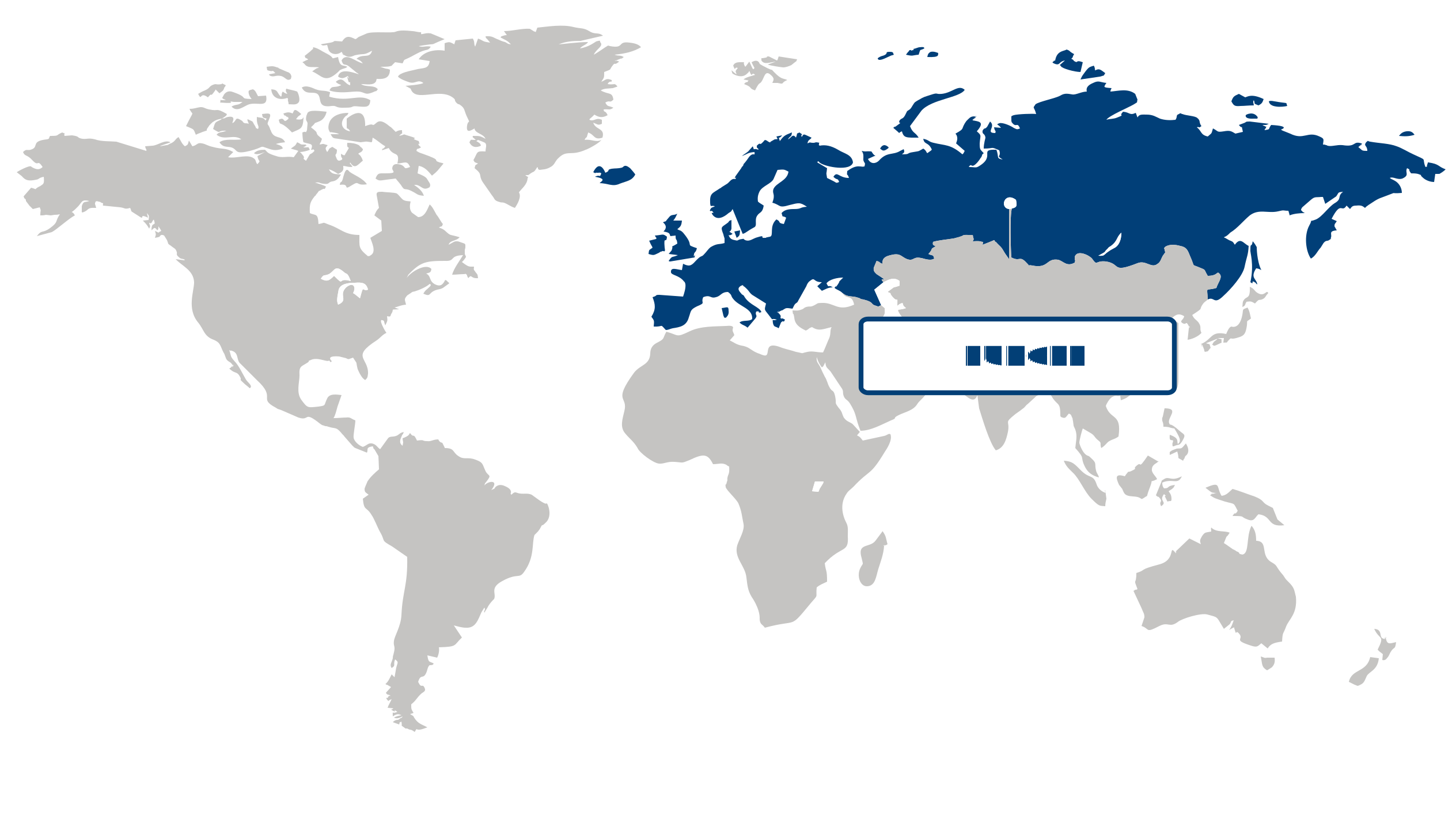
Largest Region
Europe
37.42% Market Share in 2026
Europe (Largest Region) vs Asia Pacific (Fastest-Growing Region)
In the cocoa derivatives market, Europe accounted for the largest share of 37.42% in 2026, supported by its sophisticated chocolate and confectionery industry, strong food processing capabilities, and established consumer demand for cocoa-based products. Cocoa derivatives are extensively utilized across confectionery, bakery, beverages, dairy, and other processed food applications, creating a diversified demand base. The region's mature food manufacturing infrastructure and emphasis on product quality, ingredient functionality, and premium formulations further support consumption. Demand for specialty chocolate products and growing interest in sustainably sourced and traceable cocoa ingredients are also encouraging innovation in derivative processing and product development.
Asia Pacific is the fastest-growing market, supported by expanding food processing industries, rising consumer interest in chocolate and cocoa-based foods, and increasing urbanization. Growing disposable incomes and evolving dietary preferences are broadening consumption of confectionery, bakery products, and cocoa-flavored beverages across regional markets. The development of modern retail and foodservice channels is improving product accessibility, while manufacturers are expanding processed food offerings to meet changing consumer tastes. Increasing use of cocoa ingredients in premium and innovative food formulations is further strengthening demand for cocoa derivatives throughout the region.
Key Country Insights
The U.S. cocoa derivatives market emphasizes premium cocoa ingredients for confectionery, bakery, dairy, and functional food applications. Manufacturers in the U.S. continue to invest in sustainable sourcing and product reformulation to address evolving consumer preferences and food manufacturer requirements.
Japan emphasizes cocoa derivatives that enable refined flavor profiles and premium confectionery innovation. Japanese food manufacturers focus on ingredient consistency, reduced sugar formulations, and premium cocoa applications aligned with evolving consumer expectations.
South Korea is expanding the use of cocoa derivatives in premium snacks, beverages, and functional confectionery products. Local manufacturers increasingly combine cocoa ingredients with health-oriented formulations and distinctive product concepts to strengthen market differentiation.
Germany prioritizes high-quality cocoa derivatives for chocolate manufacturing and industrial food processing. German processors increasingly integrate traceable supply chains and cleaner ingredient profiles to support premium product positioning across domestic and export markets.
France maintains strong demand for cocoa derivatives that support artisan chocolate, bakery, and gourmet dessert production. French manufacturers prioritize premium ingredient quality, sustainable cocoa sourcing, and authentic flavor development to reinforce product value.
Italy incorporates cocoa derivatives extensively across premium bakery, confectionery, and dessert manufacturing. Italian producers emphasize ingredient quality, formulation flexibility, and consistent cocoa characteristics to support differentiated finished products.
Segment Leadership and Growth Trends
Distribution Channel Segment Analysis: B2B (Largest Segment) vs B2C (Fastest-Growing Segment)
B2B accounted for the largest share of the cocoa derivatives market in 2026, reflecting the substantial role of cocoa-derived ingredients in commercial food manufacturing and other industrial applications. Manufacturers rely on cocoa derivatives as inputs for producing a wide range of finished and intermediate products, creating sustained business-to-business demand. Large-scale procurement, established processing relationships, and the widespread use of cocoa ingredients across commercial production support the segment's dominant position.
B2C is expected to be the fastest-growing distribution channel as consumers increasingly seek direct access to cocoa-derived products through convenient purchasing formats. Greater product availability through consumer-oriented channels is improving accessibility and enabling producers to engage more directly with end users. Rising interest in premium, specialized, and value-added cocoa products is further supporting the expansion of consumer-focused distribution.
Application Segment Analysis: Food & Beverage (Largest Segment) vs Personal Care & Cosmetics (Fastest-Growing Segment)
The food & beverage segment dominated the cocoa derivatives market in 2026, supported by the extensive use of cocoa ingredients across confectionery, beverages, bakery products, and other food applications. Cocoa derivatives provide distinctive flavor, color, and functional characteristics that make them important ingredients across a broad range of formulations. Consistent consumer demand for chocolate and cocoa-based products continues to underpin the segment's substantial market position.
Personal care & cosmetics is projected to be the fastest-growing application segment as cocoa-derived ingredients gain greater relevance in formulations focused on skin conditioning, sensory properties, and natural-origin positioning. Growing consumer interest in ingredient-conscious personal care products is encouraging manufacturers to explore plant-derived functional ingredients. Increasing incorporation of cocoa-based components into beauty and personal care formulations is therefore creating additional demand beyond traditional food applications.
| Report Segmentation | |||
| Segment | Sub-Segment | Largest Segment | Fastest Growing Segment |
|---|---|---|---|
| Distribution Channel | B2B, B2C | B2B | B2C |
| Application | Food & Beverage, Personal Care & Cosmetics, Others | Food & Beverage | Personal Care & Cosmetics |
| Type | Cocoa Powder, Cocoa Butter, Cocoa Mass/Liquor, Others | Cocoa Powder | Cocoa Butter |
 Read our Research Approach
Competitive Landscape and Market Positioning
Prominent players in the cocoa derivatives market:
1. Barry Callebaut AG (Switzerland)
2. Cargill Incorporated (United States)
3. Olam Group Limited (Singapore)
4. Natra S.A. (Spain)
5. JB Foods Limited (Singapore)
6. ECOM Agroindustrial Corporation Limited (Switzerland)
7. Blommer Chocolate Company (United States)
8. Fuji Oil Holdings Inc. (Japan)
9. United Cocoa Processor Inc. (Philippines)
10. Altinmarka Gida Sanayi ve Ticaret A.S. (Turkey)
The cocoa derivatives market is expanding as demand increases across food, beverage, and confectionery applications. Innovation in processing techniques is improving flavor consistency and product versatility. Broader integration across supply ecosystems is strengthening value chain efficiency and output quality. The cocoa derivatives market continues to grow with rising consumer preference for diverse cocoa-based ingredients.
Industry Development/News
| Company Name | Date | Key Development |
|---|---|---|
| Nohi Chocolateries | Apr-24 | Nohi Chocolateries entered a five-year distribution partnership to export its locally processed cocoa products into the Algerian market. This strategic initiative strengthens the company’s regional export footprint and enhances intra-African cocoa derivatives trade channels, representing a move toward greater value-added processing and market diversification for Cameroonian cocoa manufacturers. |
| Government of Cameroon | Apr-24 | Cameroon commissioned a new 32,000-ton industrial cocoa processing plant in Baré Bakem. This facility significantly increases the nation's domestic processing capacity, aligning with strategic national goals to shift away from raw cocoa bean exports and capture more value within the domestic cocoa derivatives supply chain. |
| Natra | Apr-24 | Spanish chocolate producer Natra has been identified as a party interested in the potential acquisition of Witor’s, a manufacturer of cocoa-based confectionery. This development points to ongoing consolidation within the European chocolate and derivatives manufacturing sector, as companies look to scale their operations and integrate broader product portfolios amid changing market dynamics. |
Why Choose Us
Specialized Expertise: Our team comprises industry experts with a deep understanding of your market segment. We bring specialized knowledge and experience that ensures our research and consulting services are tailored to your unique needs.
Customized Solutions: We understand that every client is different. That's why we offer customized research and consulting solutions designed specifically to address your challenges and capitalize on opportunities within your industry.
Proven Results: With a track record of successful projects and satisfied clients, we have demonstrated our ability to deliver tangible results. Our case studies and testimonials speak to our effectiveness in helping clients achieve their goals.
Cutting-Edge Methodologies: We leverage the latest methodologies and technologies to gather insights and drive informed decision-making. Our innovative approach ensures that you stay ahead of the curve and gain a competitive edge in your market.
Client-Centric Approach: Your satisfaction is our top priority. We prioritize open communication, responsiveness, and transparency to ensure that we not only meet but exceed your expectations at every stage of the engagement.
Continuous Innovation: We are committed to continuous improvement and staying at the forefront of our industry. Through ongoing learning, professional development, and investment in new technologies, we ensure that our services are always evolving to meet your evolving needs.
Value for Money: Our competitive pricing and flexible engagement models ensure that you get maximum value for your investment. We are committed to delivering high-quality results that help you achieve a strong return on your investment.
Select Licence Type

