



Coffee Beans Market Size & Growth Forecast 2027–2036, By Segments (Product, Application), Regional Demand Trends (North America, Asia Pacific, Europe), Key Country Insights (U.S., Japan, South Korea, Germany, France, Italy), and Competitive Landscape
Market Size and Growth Outlook
Coffee Beans Market size was worth USD 39.74 billion in 2026 and is expected to grow at a 7.51% CAGR between 2027 and 2036, attaining USD 81.98 billion by 2036. The industry revenue for 2027 is assessed at USD 42.25 billion.
Base Year Value (2026)
USD 39.74 billion
CAGR (2027-2036)
7.51%
Forecast Year Value (2036)
USD 81.98 billion

Historical Data Period
2022-2026

Largest Region
Europe

Forecast Period
2027-2036
Coffee Beans Market Intelligence Snapshot:
-
Regional Market Dynamics:
- Europe leads due to deeply rooted coffee consumption, dense roaster and specialty networks, and mature retail and foodservice channels supporting frequent household, café, and hospitality demand.
- Asia Pacific is projected 8.93% CAGR driven by expanding café culture, younger consumers, rising retail availability of whole-bean products and e-commerce-driven premiumization and repeat purchases.
-
Segment Momentum:
- Arabica accounted for 62.79% of the coffee beans market in 2026, supported by strong demand across retail, cafés, and packaged beverages where flavor profile and perceived quality remain key purchasing priorities.
- Pharmaceuticals is the fastest-growing application as coffee bean-derived compounds gain traction in formulations with functional properties, creating faster growth from newer application development beyond conventional food use.
-
Market Expansion Drivers:
- Rising youth coffee consumption and café chain expansion accelerating premium beverage demand.
- Expanding pharmaceutical and cosmetics applications increasing commercial utilization of coffee extracts.
- Growing demand for specialty and ethically sourced coffee strengthening premium retail positioning.
-
Leading Market Participants:
Prominent companies in the coffee beans market include Nestlé S.A. (Switzerland), JDE Peet's N.V. (Netherlands), Starbucks Corporation (United States), Luigi Lavazza S.p.A. (Italy), illycaffè S.p.A. (Italy), The J.M. Smucker Company (United States), Kicking Horse Coffee Co. Ltd. (Canada), Death Wish Coffee Company LLC (United States).
Global Market Forecast Snapshot:
-
Market Outlook:
- 2026 Market Size: USD 39.74 billion
- 2027 Estimated Market Size: USD 42.25 billion.
- Projected Market Size: USD 81.98 billion by 2036
- Growth Forecasts: 7.51% CAGR (2027-2036)
-
Regional and Segment Outlook:
- Leading Regional Market: Europe
- High-Growth Regional Hub: Asia Pacific
- Core Revenue Segment: Arabica (Product) | Food (Application)
- Emerging Opportunity Segment: Robusta (Product) | Pharmaceuticals (Application)
Market Growth Drivers and Industry Trends
Rising youth coffee consumption and café chain expansion accelerating premium beverage demand
Changing beverage preferences among younger consumers and the expansion of café culture will drive the coffee beans market growth by increasing demand for diverse, higher-quality coffee experiences. Younger consumers are increasingly exposed to specialty beverages, café-based social occasions, and varied preparation methods, encouraging greater interest in distinctive coffee flavors and origins. At the same time, expanding café chains require consistent supplies of beans across their beverage portfolios, supporting demand for roasted and specialty-grade coffee suitable for espresso-based drinks, brewed beverages, and other premium preparations.
Expanding pharmaceutical and cosmetics applications increasing commercial utilization of coffee extracts
Beyond beverage consumption, expanding use of coffee-derived extracts in pharmaceutical and cosmetic applications is creating additional commercial demand in the coffee beans market. Coffee compounds can be incorporated into formulations associated with antioxidant properties, personal care products, and functional ingredients, allowing processors to develop value-added applications from coffee materials. Increasing interest in botanical and naturally derived ingredients is also encouraging manufacturers to investigate coffee extracts for skincare, personal care, and other specialized formulations, broadening the commercial relevance of coffee beyond traditional beverage production.
Growing demand for specialty and ethically sourced coffee strengthening premium retail positioning
Consumer attention toward quality, traceability, responsible sourcing, and distinctive origins is strengthening the coffee beans market as retailers and specialty sellers increasingly differentiate products through provenance and production practices. Ethically sourced beans can appeal to consumers seeking greater transparency regarding farming conditions, supply chains, and environmental considerations, while specialty coffee provides opportunities to emphasize flavor characteristics and origin-specific attributes. This combination is supporting premium product positioning across specialty stores, cafés, online channels, and other retail formats.
| Growth Driver Assessment Framework | |||||
| Growth Driver | Impact On CAGR | Regulatory Influence | Geographic Relevance | Adoption Rate | Impact Timeline |
|---|---|---|---|---|---|
| Rising youth coffee consumption and café chain expansion accelerating premium beverage demand | 2.00% | Low | Asia Pacific, North America | High | Near Term |
| Expanding pharmaceutical and cosmetics applications increasing commercial utilization of coffee extracts | 1.40% | Moderate | Europe, Asia Pacific | Medium | Mid Term |
| Growing demand for specialty and ethically sourced coffee strengthening premium retail positioning | 1.60% | Moderate | Europe, North America | High | Mid Term |
Unlock insights tailored to your business with our bespoke market research solutions - Click to get your customized report now!
Regional Demand Dynamics
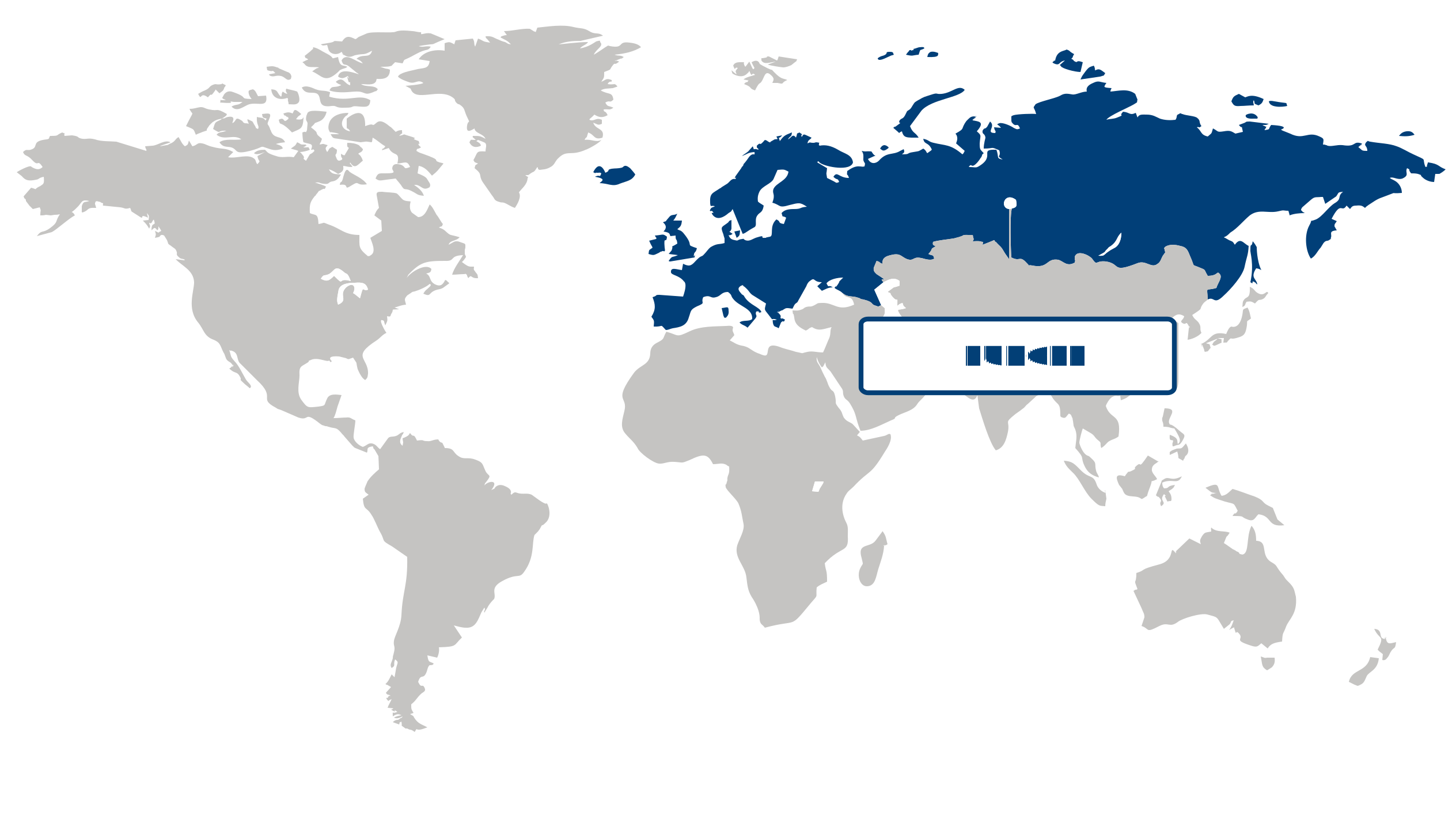
Largest Region
Europe
Largest Market Share in 2026
Europe (Largest Region) vs Asia Pacific (Fastest-Growing Region)
Europe held the largest share of the coffee beans market in 2026, reflecting a well-established coffee culture and strong consumer preference for diverse coffee varieties and premium-quality products. Widespread consumption across households, cafés, restaurants, and specialty coffee establishments supports consistent demand for coffee beans. Growing interest in specialty coffee, origin-specific products, and artisanal preparation methods is also encouraging consumers to explore higher-value offerings, while mature retail and foodservice infrastructure strengthens product availability throughout the region.
Asia Pacific is the fastest-growing region in the coffee beans market, supported by expanding coffee consumption, urbanization, and changing consumer preferences. Growing café culture and increasing exposure to specialty coffee are encouraging consumers to explore freshly prepared and higher-quality coffee products. Rising disposable incomes and the expansion of modern retail and foodservice channels are improving access to coffee beans, while evolving lifestyles are supporting greater consumption beyond traditional tea-oriented markets.
Key Country Insights
The U.S. coffee beans market continues to emphasize specialty offerings, premium roasting profiles, and diverse sourcing options. Coffee companies are expanding product differentiation through origin-focused beans, sustainable sourcing practices, and formats that support home brewing and café-quality experiences.
Japan’s coffee beans market is supported by strong interest in refined brewing methods and carefully selected beans. Market players are developing premium offerings with distinctive origins, detailed flavor characteristics, and packaging innovations that appeal to quality-focused consumers and specialty cafés.
South Korea’s coffee beans market benefits from a strong café culture and growing interest in premium coffee experiences. Suppliers are prioritizing specialty beans, unique flavor profiles, and high-quality roasting approaches to support independent cafés and sophisticated consumer preferences.
Germany’s coffee beans market is shaped by demand for consistent quality, sustainable sourcing, and premium blends. Roasters and suppliers are focusing on traceability, responsible production practices, and tailored flavor profiles to serve consumers seeking both traditional and specialty coffee experiences.
France’s coffee beans market is influenced by increasing appreciation for artisanal roasting and distinctive coffee origins. Roasters are emphasizing premium quality, sustainable supply chains, and curated selections to attract consumers seeking elevated coffee experiences beyond conventional products.
Italy’s coffee beans market remains closely connected to espresso culture and professional café applications. Suppliers are focusing on consistent roasting standards, blended profiles, and premium beans that support traditional preparation methods while adapting to evolving consumer interest in specialty coffee.
Segment Leadership and Growth Trends
Product Segment Analysis: Arabica (Largest Segment) vs Robusta (Fastest-Growing Segment)
Arabica accounted for the largest share of the coffee beans market in 2026 at 62.79%, supported by its strong consumer preference, distinctive flavor profile, and extensive use in premium and specialty coffee products. Its perceived quality and suitability for diverse brewing methods make arabica a preferred choice across household, café, and foodservice consumption. Continued interest in differentiated coffee experiences and higher-quality beverages reinforces its established market position.
Robusta is the fastest-growing product segment as demand increases for coffee varieties that provide stronger flavor characteristics, higher body, and suitability for blends and instant coffee applications. Its role in cost-conscious formulations and commercial coffee products supports broader utilization. Growing coffee consumption and innovation in blends and ready-to-consume products are creating additional opportunities for robusta beans.
Application Segment Analysis: Food (Largest Segment) vs Pharmaceuticals (Fastest-Growing Segment)
The food segment dominated the coffee beans market in 2026, accounting for 69.31% share, reflecting the primary use of coffee beans in beverages and food-related preparations. Coffee remains deeply integrated into household consumption, cafés, restaurants, and foodservice operations, creating broad and recurring demand for beans. Product innovation across brewed coffee, specialty beverages, and food formulations continues to support the segment's leading position.
Pharmaceutical applications are growing at the fastest pace as interest increases in the functional compounds present in coffee and coffee-derived ingredients. Research and product development around bioactive components are creating opportunities for coffee-derived materials in specialized health-related applications. Greater interest in natural functional ingredients and the exploration of coffee compounds beyond conventional beverage consumption are supporting this emerging use.
| Report Segmentation | |||
| Segment | Sub-Segment | Largest Segment | Fastest Growing Segment |
|---|---|---|---|
| Product | Arabica, Robusta | Arabica | Robusta |
| Application | Pharmaceuticals, Food, Cosmetics | Food | Pharmaceuticals |
 Read our Research Approach
Competitive Landscape and Market Positioning
Prominent players in the coffee beans market:
1. Nestlé S.A. (Switzerland)
2. JDE Peet's N.V. (Netherlands)
3. Starbucks Corporation (United States)
4. Luigi Lavazza S.p.A. (Italy)
5. illycaffè S.p.A. (Italy)
6. The J.M. Smucker Company (United States)
7. Kicking Horse Coffee Co. Ltd. (Canada)
8. Death Wish Coffee Company LLC (United States)
The coffee beans market is shaped by evolving consumption preferences and premiumization trends. New roasting profiles and sourcing approaches are being introduced to enhance flavor diversity. Expansion across specialty retail and hospitality channels is strengthening market penetration. Research efforts are also improving cultivation techniques and post-harvest quality consistency.
Industry Development/News
| Company Name | Date | Key Development |
|---|---|---|
| Keurig Dr Pepper | Apr-26 | Keurig Dr Pepper acquired JDE Peet’s in an approximately US$18 billion all-cash transaction, significantly expanding its global coffee portfolio. The acquisition strengthens the company’s competitive position across single-serve, ready-to-drink, and branded coffee segments while driving product innovation and deeper supply chain integration. |
| Sahel Capital | Mar-26 | Sahel Capital extended a US$1 million financing facility to a Kampala-based Ugandan coffee exporter and processor sourcing beans from over 4,000 smallholder farmers. The investment expands operational capital for regional sourcing and processing, enhancing export capacity and supply chain resilience within East Africa. |
| OFI | May-25 | OFI operationalized a new soluble coffee manufacturing plant in Brazil, enabling localized production of spray-dried, freeze-dried, and liquid formats. The industrial facility expands the company's global processing footprint and strengthens supply chain capabilities to support high-volume regional and international export networks. |
| Luckin Coffee | May-24 | Luckin Coffee commissioned China's largest coffee roasting facility to service escalating domestic consumption. The infrastructure investment significantly enhances the company's automated roasting capacity and strengthens its vertically integrated manufacturing model to optimize supply chains across its expansive retail footprint. |
| 321 Coffee | Sep-25 | 321 Coffee transitioned operations into a larger, dedicated roasting facility to triple its core production capacity. The expansion scales up manufacturing infrastructure to accelerate wholesale distribution networks and accommodate increasing volume requirements from corporate partners. |
| Lantern Coffee Bar & Lounge | Apr-25 | Lantern Coffee Bar & Lounge established a dedicated roasting plant designed to quadruple its existing production capacity. The upgrade provides the infrastructure required to transition from local retail operations into broader e-commerce distribution and national wholesale markets. |
| Saudi Coffee Company | Feb-25 | Saudi Coffee Company finalized seven strategic memoranda of understanding to accelerate infrastructure development within Saudi Arabia's coffee sector. The collaborative frameworks target domestic production capabilities, sustainable farming integrations, and the expansion of Middle Eastern coffee exports to global markets. |
| Koppie | Feb-26 | Belgian food-tech startup Koppie secured new funding and finalized industrial-scale production trials for its beanless alternative coffee products. The capital injection and manufacturing validation support commercialization timelines, positioning the firm to scale alternative agricultural technologies amid climate risks. |
| Atomo | Jan-25 | Atomo initiated its international expansion by launching its beanless alternative coffee line into the United Kingdom market. The commercial entry introduces a climate-resilient alternative product designed to mitigate ongoing commodity price volatility and crop supply vulnerabilities within the traditional coffee bean sector. |
| 7-Eleven Japan | Oct-25 | 7-Eleven Japan partnered with UCC Ueshima Coffee to commercialize 7CAFÉ Hydrogen Roasted Coffee across its retail network. This initiative marks the large-scale deployment of advanced hydrogen roasting technology, driving product differentiation and integrating sustainable processing methods into high-volume consumer segments. |
Why Choose Us
Specialized Expertise: Our team comprises industry experts with a deep understanding of your market segment. We bring specialized knowledge and experience that ensures our research and consulting services are tailored to your unique needs.
Customized Solutions: We understand that every client is different. That's why we offer customized research and consulting solutions designed specifically to address your challenges and capitalize on opportunities within your industry.
Proven Results: With a track record of successful projects and satisfied clients, we have demonstrated our ability to deliver tangible results. Our case studies and testimonials speak to our effectiveness in helping clients achieve their goals.
Cutting-Edge Methodologies: We leverage the latest methodologies and technologies to gather insights and drive informed decision-making. Our innovative approach ensures that you stay ahead of the curve and gain a competitive edge in your market.
Client-Centric Approach: Your satisfaction is our top priority. We prioritize open communication, responsiveness, and transparency to ensure that we not only meet but exceed your expectations at every stage of the engagement.
Continuous Innovation: We are committed to continuous improvement and staying at the forefront of our industry. Through ongoing learning, professional development, and investment in new technologies, we ensure that our services are always evolving to meet your evolving needs.
Value for Money: Our competitive pricing and flexible engagement models ensure that you get maximum value for your investment. We are committed to delivering high-quality results that help you achieve a strong return on your investment.
Select Licence Type

