Collaborative Manufacturing Robots Market Size & Growth Forecast 2027–2036, By Segments (Payload, Application, Component, Mobility, End Use), Regional Demand Trends (North America, Asia Pacific, Europe), Key Country Insights (U.S., Japan, South Korea, Germany, France, Italy), and Competitive Landscape
Jump to Content
Market Size and Growth Outlook
Collaborative Manufacturing Robots Market size was estimated at USD 144.39 million in 2026 and is projected to grow at a 10.92% CAGR from 2027 to 2036, exceeding USD 407.04 million by 2036. The industry revenue for 2027 is estimated at USD 158.03 million.
Get more details on this report
Request Free Sample ReportCollaborative Manufacturing Robots Market Intelligence Snapshot
Regional Market Dynamics
- Europe leads through advanced industrial automation, strong manufacturing capabilities, and widespread adoption of flexible robotics. Smart manufacturing initiatives and demand for improved productivity, precision, and workplace safety reinforce deployment.
- Asia Pacific is expected to grow fastest as expanding manufacturing capacity, rising labor costs, and smart factory investments encourage collaborative robot deployment across electronics, automotive, machinery, and consumer goods production.
Segment Momentum
- Robots with payloads up to 5 kg accounted for 41.15% of the market in 2026, supported by their suitability for assembly, inspection, sorting, and light material movement in flexible production environments.
- Material handling accounted for 43.99% of the market in 2026 and is the fastest-growing application segment. Demand is driven by repetitive loading, unloading, sorting, and positioning tasks, alongside efforts to improve productivity and workplace ergonomics.
Market Expansion Drivers
- Rising adoption of automation and Industry 4.0 in manufacturing.
- Increasing demand for lightweight, flexible, and safe collaborative robots.
- Technological innovation in AI-enabled and sensor-integrated cobots.
Leading Market Participants
- Leading players in the collaborative manufacturing robots market include Universal Robots (Denmark), FANUC (Japan), ABB (Switzerland), KUKA (Germany), Yaskawa (Japan), Techman Robot (Taiwan), Doosan Robotics (South Korea), Omron (Japan), Kawasaki Robotics (Japan), Mitsubishi Electric (Japan).
Global Market Forecast Snapshot
Market Outlook
- 2026 Market Size: USD 144.39 million
- 2027 Estimated Market Size: USD 158.03 million
- Projected Market Size: USD 407.04 million by 2036
- Growth Forecast: 10.92% CAGR (2027-2036)
Regional and Segment Outlook
- Leading Regional Market: Europe
- High-Growth Regional Hub: Asia Pacific
- Core Revenue Segment: Payload (Up to 5 Kg) | Application (Material Handling) | Component (Hardware) | Mobility (Stationary) | End Use (Small & Medium Enterprises (SME))
- Emerging Opportunity Segment: Payload (5-10 Kg) | Application (Material Handling) | Component (Hardware) | Mobility (Mobile) | End Use (Small & Medium Enterprises (SME))
Market Growth Drivers and Industry Trends
Rising Adoption of Automation and Industry 4.0 in Manufacturing
The increasing adoption of automation and industry 4.0 practices is driving demand for collaborative manufacturing robots as manufacturers seek to improve productivity, operational flexibility, and process consistency. Collaborative robots can work alongside human operators while supporting repetitive and physically demanding tasks, making them suitable for manufacturing environments with evolving production requirements. Their integration with connected production systems is also enabling greater visibility, process coordination, and automation across manufacturing workflows, encouraging broader deployment across industrial applications.
Increasing Demand for Lightweight, Flexible, and Safe Collaborative Robots
The growing need for flexible and adaptable automation is supporting the adoption of lightweight collaborative robots across manufacturing operations. Their compact designs, ease of redeployment, and ability to operate in shared workspaces make them suitable for facilities where production layouts and task requirements frequently change. Enhanced safety features are further enabling collaborative robots to perform alongside workers with reduced physical separation, supporting applications where manufacturers seek to combine human skills with automated handling, assembly, inspection, and material movement.
Technological Innovation in AI-Enabled and Sensor-Integrated Cobots
Technological advancements in artificial intelligence, machine vision, and integrated sensing are expanding the capabilities of collaborative manufacturing robots. AI-enabled systems can improve task recognition, adaptive movement, object handling, and decision-making, while advanced sensors support greater awareness of surrounding workers and equipment. These developments are enabling cobots to perform increasingly complex tasks with improved precision and adaptability, supporting their integration into manufacturing processes that require dynamic responses and closer interaction between humans and automated systems.
| Growth Driver | Impact on CAGR | Regulatory Influence | Geographic Relevance | Adoption Rate | Impact Timeline |
|---|---|---|---|---|---|
| Rising adoption of automation and Industry 4.0 in manufacturing | 4% | Short term (≤ 2 yrs) | North America; Europe; spillover: Asia Pacific | Medium | Fast |
| Increasing demand for lightweight, flexible, and safe collaborative robots | 3% | Medium term (2–5 yrs) | Europe; Asia Pacific; spillover: North America | Low | Moderate |
| Technological innovation in AI-enabled and sensor-integrated cobots | 2% | Long term (5+ yrs) | North America; Asia Pacific; spillover: Europe | Low | Slow |
Explore Growth Opportunities
Request Free Sample ReportRegional Demand Dynamics
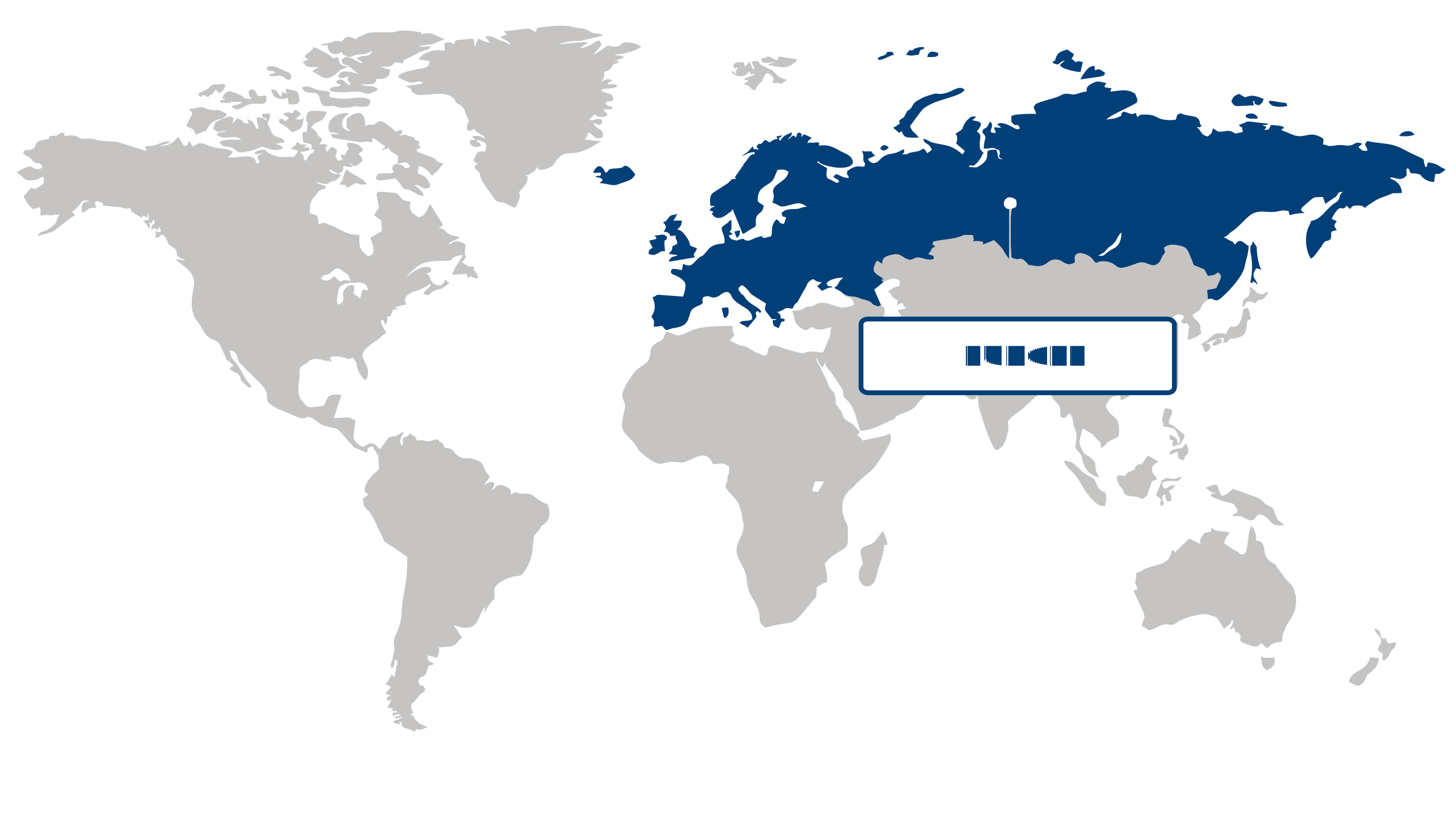
Europe (Largest Region)
Europe held the largest share of the collaborative manufacturing robots market in 2026, propelled by advanced industrial automation, strong manufacturing capabilities, and increasing adoption of flexible robotic solutions across production environments. Manufacturers are increasingly deploying collaborative robots to improve productivity, precision, and workplace safety while enabling closer interaction between workers and automated systems. The region’s emphasis on smart manufacturing, digital transformation, and efficient production processes is further encouraging the integration of collaborative robotics across automotive, electronics, machinery, and other industrial applications. In addition, growing demand for flexible automation that can support changing production requirements and address labor availability challenges is strengthening the adoption of collaborative manufacturing robots.
Asia Pacific (Fastest-Growing Region)
Asia Pacific is expected to witness the fastest growth in the collaborative manufacturing robots market, backed by rapid industrialization, expanding manufacturing capacity, and increasing investments in factory automation. The region’s large electronics, automotive, machinery, and consumer goods manufacturing base is creating strong demand for robotic solutions that can improve production efficiency while maintaining operational flexibility. Rising labor costs, growing emphasis on manufacturing quality, and increasing adoption of smart factory technologies are encouraging manufacturers to integrate collaborative robots into assembly, material handling, inspection, and other production processes. Furthermore, expanding investments in industrial digitalization and the modernization of manufacturing facilities are accelerating the adoption of collaborative automation across emerging industrial economies.
| Parameter | North America | Asia Pacific | Europe | Latin America | MEA |
|---|---|---|---|---|---|
| Innovation HubiScaleNascentDeveloping Advanced | |||||
| Cost-Sensitive RegioniScaleLowMedium High | |||||
| Regulatory EnvironmentiScaleRestrictiveNeutral Supportive | |||||
| Demand DriversiScaleWeakModerate Strong | |||||
| Development StageiScaleEmergingDeveloping Developed | |||||
| Adoption RateiScaleLowMedium High | |||||
| New Entrants / StartupsiScaleSparseModerate Dense | |||||
| Macro IndicatorsiScaleWeakStable Strong |
Key Country Insights
United States 🇺🇸
Flexible Automation AdoptionThe U.S. market emphasizes collaborative robots for adaptable production, particularly in automotive, electronics, logistics, and small-batch manufacturing. Manufacturers are prioritizing easier programming, worker-robot collaboration, safety integration, and rapid deployment where labor availability and production flexibility influence automation decisions.
Germany 🇩🇪
Integrated Factory AutomationGermany is integrating collaborative robots into highly automated production environments, with emphasis on precision assembly, machine tending, inspection, and material handling. Industrial users prioritize seamless integration with existing machinery, safety systems, and digital manufacturing platforms while maintaining established requirements for reliability and process consistency.
Japan 🇯🇵
Human-Robot ProductionJapan is applying collaborative robots to support manufacturing workflows where human expertise and automated handling operate together. Demand centers on compact systems for assembly, inspection, machine tending, and repetitive tasks, with practical emphasis on safe interaction, space efficiency, ease of operation, and workforce support.
South Korea 🇰🇷
Smart Production IntegrationSouth Korea is deploying collaborative robots within electronics, automotive, and precision manufacturing operations, where compact automation supports repetitive and quality-sensitive processes. Market priorities include integration with smart-factory systems, production monitoring, flexible handling, and reliable operation across increasingly automated manufacturing lines.
France 🇫🇷
Flexible Industrial RoboticsFrance is adopting collaborative robots for flexible automation across automotive, aerospace, food processing, and general manufacturing applications. Users increasingly value systems that can be redeployed between tasks, simplify programming, and operate safely alongside workers, particularly where production environments require greater process adaptability.
Italy 🇮🇹
SME Automation SolutionsItaly is using collaborative robots to automate repetitive manufacturing tasks across machinery, automotive components, packaging, and other production settings. Practical demand centers on accessible automation for smaller manufacturers, with emphasis on straightforward deployment, rapid changeovers, compact footprints, and integration with existing production equipment.
Collaborative Manufacturing Robots Market Share (%), by Payload, 2026
Go beyond the chart, access full insights & data tables
Request Free Sample ReportPayload Segment Analysis: Up to 5 Kg (Largest Segment) vs 5-10 Kg (Fastest-Growing Segment)
The up to 5 kg payload segment accounted for the largest share of 41.15% in 2026, supported by the broad suitability of lightweight collaborative manufacturing robots for a wide range of industrial tasks. These robots are particularly well suited to applications that require precision, flexibility, and frequent interaction with human workers, including assembly, inspection, sorting, and light material movement. Their compact form factor and relatively lower payload requirements make them easier to integrate into existing production environments, especially where workspace availability and operational flexibility are important considerations. In addition, the increasing adoption of automation among manufacturers seeking to improve productivity while maintaining adaptable production processes is supporting demand for collaborative robots designed for lighter payload applications.
The 5-10 kg payload segment is expected to grow at the fastest rate in the payload segment, driven by rising demand for collaborative robots capable of handling moderately heavier components while maintaining flexibility and safe human-robot interaction. These systems can address a broader range of manufacturing activities than lower-payload models, including component handling, machine tending, packaging, and assembly of larger parts. As manufacturers increasingly automate repetitive and ergonomically demanding tasks, the need for robots that combine higher load-handling capability with collaborative operation is becoming more prominent. The growing diversity of manufacturing workflows and increasing emphasis on flexible automation are therefore expected to support stronger adoption of 5-10 kg collaborative robots.
Application Segment Analysis: Material Handling (Largest & Fastest-Growing Segment)
The material handling application segment accounted for the largest share of 43.99% in 2026 and is also expected to grow at the fastest rate, reflecting the increasing use of collaborative manufacturing robots for repetitive movement, loading, unloading, sorting, and positioning tasks. Material handling is particularly suitable for collaborative automation because these activities are often repetitive, physically demanding, and require consistent cycle performance, while still benefiting from flexible deployment alongside human operators. Collaborative robots can help manufacturers streamline the movement of components and materials between different production stages without requiring extensive changes to existing workflows. Increasing efforts to improve workplace ergonomics, reduce repetitive manual activities, and enhance production efficiency are further supporting the expansion of collaborative robots across material handling applications.
Component Segment Analysis: Hardware (Largest & Fastest-Growing Segment)
The hardware segment represents the largest component segment share in 2026 and is also expected to register the fastest growth, reflecting the essential role of physical robotic equipment in the deployment of collaborative manufacturing systems. Hardware encompasses the core physical elements required for collaborative robot operation, including robotic arms, sensors, controllers, end-of-arm tooling, and related equipment that enable robots to perform manufacturing tasks safely and accurately. Increasing adoption of collaborative automation is directly supporting demand for these components as manufacturers expand robotic capabilities across production environments. At the same time, ongoing improvements in sensing, motion control, gripping, and safety-related hardware are enabling collaborative robots to perform a broader range of tasks with greater flexibility, precision, and interaction capability, strengthening the growth prospects of the hardware component segment.
| Segment | Sub-Segment | Largest Segment | Fastest Growing |
|---|---|---|---|
| Payload | Up to 5 Kg, 5-10 Kg, 10-25 Kg, More Than 25 Kg | Up to 5 Kg | 5-10 Kg |
| Application | Material Handling, Assembling & Dissembling, Welding & Soldering, Dispensing, Processing, Others | Material Handling | Material Handling |
| Component | Hardware, Software | Hardware | Hardware |
| Mobility | Stationary, Mobile | Stationary | Mobile |
| End Use | Large Enterprises, Small & Medium Enterprises (SME) | Small & Medium Enterprises (SME) | Small & Medium Enterprises (SME) |
Unlock insights tailored to your business with our bespoke market research solutions.
Click to get your customized report now.
Competitive Landscape and Market Positioning
Analyst Perspective:
Adoption across the collaborative robotics sector is driven by flexible workstation integration rather than maximum payload or reach statistics. Safety mechanisms—including force-limiting sensors and responsive collision monitoring—allow cobots to operate alongside human workers, though full safety compliance remains dependent on task-specific tooling and layout risk assessments. To accelerate deployment, vendors prioritize intuitive teach pendant interfaces and reusable programming routines, which lower barriers for facilities lacking specialized software engineers. Moreover, optimizing physical footprints extends beyond compact arm designs; suppliers compete on flexible mounting and overall cell efficiency to integrate automation directly into existing production lines without altering established material flows.
Key companies in the collaborative manufacturing robots market:
- Universal Robots (Denmark)
- FANUC (Japan)
- ABB (Switzerland)
- KUKA (Germany)
- Yaskawa (Japan)
- Techman Robot (Taiwan)
- Doosan Robotics (South Korea)
- Omron (Japan)
- Kawasaki Robotics (Japan)
- Mitsubishi Electric (Japan)
| Company | Market Share | Company Revenue | Revenue CAGR (%) | Product Portfolio | Geographic Presence | Innovation / R&D Focus | Strategic Developments |
|---|---|---|---|---|---|---|---|
| Universal Robots (Denmark) | |||||||
| FANUC (Japan) | |||||||
| ABB (Switzerland) | |||||||
| KUKA (Germany) | |||||||
| Yaskawa (Japan) | |||||||
| Techman Robot (Taiwan) | |||||||
| Doosan Robotics (South Korea) | |||||||
| Omron (Japan) | |||||||
| Kawasaki Robotics (Japan) | |||||||
| Mitsubishi Electric (Japan) |
Industry Development/News
| Company Name | Date | Key Development |
|---|---|---|
| ABB Robotics | September 2024 | ABB Robotics introduced the Ultra Accuracy feature for its GoFa collaborative robots, achieving superior precision rates exceeding 0.03 mm. This technological advancement addresses stringent spatial orientation requirements across electronics, automotive, and aerospace manufacturing sectors. |
| Schneider Electric | March 2024 | Schneider Electric unveiled its Lexium RL 3 and RL 12 collaborative robot models at MODEX 2024, featuring high-speed motion controls capable of managing over 130 axes per processor to enhance industrial manufacturing flexibility and environmental sustainability. |
| Yaskawa America | March 2024 | Yaskawa America launched the MOTOMAN HC30XP collaborative robot, engineered with IP67 water resistance and explosive-environment certifications to facilitate safe human-robot collaboration within hazardous industrial settings. |
Customize Your Report
Explore examples of how this report can be tailored to different research needs, including custom segments, additional topics or chapters, and related reports. Click a section of the wheel or its numbered marker to explore the available options.
Collaborative Manufacturing Robots Market — Custom Segments
| Segment | Sub-Segment |
|---|---|
| Safety Collaboration Level | Power-and-force limited cobots, Speed-and-separation monitored cobots, Safety-rated collaborative cobots |
| Programming Method | Teach pendant programming, Graphical and tablet-based programming, Hand-guided programming, Offline programming |
| Deployment Model | Standalone cobot cells, Integrated production cells, Flexible and reconfigurable cobot systems |
Collaborative Manufacturing Robots Market — Custom TOC
| Custom Chapter | Chapter Details |
|---|---|
| Human-Robot Workforce Strategy |
|
| Collaborative Robot Deployment Economics |
|
| Robotics-as-a-Service Opportunity Assessment |
|
Need a different cut of the data?
Request Custom ResearchFrequently Asked Questions
How much revenue does the collaborative manufacturing robots market generate?
What is the expected industry size of collaborative manufacturing robots by 2036?
How is Industry 4.0 adoption changing deployment patterns for collaborative manufacturing robots?
How are AI and sensor integration expanding the commercial role of collaborative robots?
Why do lightweight collaborative robots dominate the collaborative manufacturing robots market?
How is material handling driving growth in the collaborative manufacturing robots market?
Why does Europe lead the collaborative manufacturing robots market?
What is driving collaborative manufacturing robot adoption in Asia Pacific?
Which companies dominate the collaborative manufacturing robots landscape?
Our Clients
"The team at Fundamental Business Insights & Consulting demonstrated a commitment to excellence, not only in the quality of the report but also in their client-centric approach."
FANUC
"The level of detail in the market segmentation provided were particularly noteworthy. The detailed country-level insights were also very helpful."
B&R Industrial Automation GmbH
"The consultant took the time to understand our specific business objectives, ensuring that the reports were tailored to address our unique challenges and opportunities."
KUKA SE & Co. KGaA
Our Research Team & Methodology
Every Fundamental Business Insights report is built by a dedicated vertical research team, validated through a structured primary-and-secondary methodology, and reviewed for accuracy before it reaches you.
This report was prepared by the Industrial Automation & Equipment Research Team at Fundamental Business Insights, a dedicated research group specializing in industrial automation technologies, manufacturing systems, and industrial equipment markets. Our analysts continuously monitor advancements in factory automation, robotics, industrial IoT (IIoT), smart manufacturing, process optimization, equipment modernization, supply chain developments, industrial safety standards, and evolving digital transformation initiatives across manufacturing industries to deliver timely and reliable market intelligence. The research is developed using a structured methodology that combines primary discussions with equipment manufacturers, automation solution providers, system integrators, industrial end users, distributors, and industry experts, along with company annual reports, regulatory publications, government industrial statistics, industry associations, technical standards, engineering publications, and other authoritative secondary sources. Market estimates are validated through multiple research techniques, including top-down and bottom-up analysis, before undergoing an internal quality review to ensure accuracy, consistency, and methodological integrity prior to publication.
Delivery
Published
Available
Support
- Market Size & Forecast
- Market Segmentation
- Regional Analysis
- Growth Drivers & Challenges
- Market Dynamics
- Competitive Landscape
- Company Profiles
- Competitive Benchmarking
- Mergers & Acquisitions
- Market Share Analysis or Key Company Strategies
- Value Chain Analysis
- Porter's Five Forces
- PESTLE Analysis
- Pricing Trends
- Supply-Demand Analysis
- Technology Landscape
- Regulatory Landscape
- Investment & Funding Landscape
- Emerging Opportunities
- Future Market Outlook