Donkey Milk Market Size & Growth Forecast 2027–2036, By Segments (Form, Application), Regional Demand Trends (North America, Asia Pacific, Europe), Key Country Insights (U.S., Japan, South Korea, Germany, France, Italy), and Competitive Landscape
Market Size and Growth Outlook
Donkey Milk Market size was worth USD 36.7 million in 2026 and is expected to grow at a 9.41% CAGR between 2027 and 2036, exceeding USD 90.21 million by 2036. The industry revenue for 2027 is calculated at USD 39.61 million.
Get more details on this report
Request Free Sample ReportDonkey Milk Market Intelligence Snapshot
Regional Market Dynamics
- Europe leads with established specialty dairy production, premium artisanal supply chains, and strong demand across niche food and personal care applications that support higher-value commercialization.
- Asia Pacific is expected to grow at an 11.3% CAGR as awareness of alternative dairy and wellness products increases, supported by expanding retail and digital distribution channels.
Segment Momentum
- Powder leads due to easier storage, transport, and supply chain handling, enabling broader availability and more efficient distribution across commercial channels compared with liquid formats in the donkey milk market.
- Food & Beverages is the fastest-growing application as rising demand for alternative dairy drives consumption-based use, enabling stronger innovation cycles and higher repeat purchase behavior across nutritional products.
Market Expansion Drivers
- Growing demand for highly digestible and nutrient-rich dairy alternatives boosting donkey milk consumption.
- Rising use of donkey milk in skincare and cosmetic formulations expanding commercial applications.
- Increasing clean-label and immunity-focused nutrition trends supporting adoption of powdered donkey milk products.
Leading Market Participants
- Key companies in the donkey milk market include Eurolactis Italia S.r.l. (Italy), Hellenic Asinus Farms (Greece), Golden Donkeys Farm (Cyprus), The Donkey Dairy Pty Ltd (Australia), Stephenson Group Ltd. (United Kingdom), Asinus Atlanticus S.A. (Portugal), Donna Tina Farm (Italy), Dolphin IBA (France), The White Sea & Baltic Company Limited (United Kingdom), VRO Enterprises (India).
Global Market Forecast Snapshot
Market Outlook
- 2026 Market Size: USD 36.7 million
- 2027 Estimated Market Size: USD 39.61 million.
- Projected Market Size: USD 90.21 million by 2036
- Growth Forecast: 9.41% CAGR (2027-2036)
Regional and Segment Outlook
- Leading Regional Market: Europe
- High-Growth Regional Hub: Asia Pacific
- Core Revenue Segment: Powder (Form) | Cosmetics & Personal Care (Application)
- Emerging Opportunity Segment: Liquid (Form) | Food & Beverages (Application)
Market Growth Drivers and Industry Trends
Growing demand for highly digestible and nutrient-rich dairy alternatives boosting donkey milk consumption
Consumer interest in easily digestible and nutrient-dense dairy alternatives will drive the donkey milk market growth as more individuals seek products that align with specialized dietary preferences and wellness-oriented consumption. Donkey milk is valued for its relatively light composition and nutritional profile, making it attractive among consumers looking for alternatives to conventional dairy products. Its perceived digestibility can support consumption among people who experience difficulty with heavier dairy products, while its protein, vitamins, minerals, and other naturally occurring nutrients enhance its positioning within premium nutrition categories. Growing awareness of alternative animal-based milk sources is also encouraging consumers to explore products beyond conventional cow, goat, and buffalo milk, particularly in markets where functional nutrition and differentiated food products are gaining attention.
Rising use of donkey milk in skincare and cosmetic formulations expanding commercial applications
The donkey milk market growth is being supported by the increasing incorporation of donkey milk into skincare and cosmetic formulations, broadening its relevance beyond food and nutrition. Its association with moisturizing, nourishing, and skin-conditioning properties has encouraged its use in products such as soaps, creams, lotions, cleansers, and other personal care formulations. Cosmetic manufacturers can leverage its premium and natural image to develop differentiated products aimed at consumers seeking botanical or animal-derived ingredients with traditional wellness associations. This expanding application base also creates additional demand for processed and standardized donkey milk ingredients, while the growing popularity of premium skincare products strengthens opportunities for products positioned around gentle formulations and nutrient-rich ingredients.
Increasing clean-label and immunity-focused nutrition trends supporting adoption of powdered donkey milk products
Clean-label purchasing behavior and stronger consumer attention to immune-supportive nutrition are creating favorable conditions for powdered dairy alternatives, which will boost the donkey milk market demand. Powdered formats offer greater convenience, easier storage, and improved handling compared with fresh milk, making them suitable for consumers and manufacturers seeking flexible product formats. The natural nutritional composition associated with donkey milk can complement wellness-focused positioning, particularly where consumers prioritize recognizable ingredients and nutrient-dense foods. Powdered products can also facilitate broader distribution by reducing dependence on immediate cold-chain consumption, enabling the ingredient to be incorporated into nutritional preparations, beverages, and other formulations where convenience and shelf stability are important purchasing considerations.
| Growth Driver | Impact on CAGR | Regulatory Influence | Geographic Relevance | Adoption Rate | Impact Timeline |
|---|---|---|---|---|---|
| Growing demand for highly digestible and nutrient-rich dairy alternatives boosting donkey milk consumption | 1.80% | Moderate | Europe, Asia Pacific | Medium | Near Term |
| Rising use of donkey milk in skincare and cosmetic formulations expanding commercial applications | 1.50% | Low | Europe, North America | High | Mid Term |
| Increasing clean-label and immunity-focused nutrition trends supporting adoption of powdered donkey milk products | 1.30% | Moderate | Asia Pacific, Europe | Emerging | Mid Term |
Unlock insights tailored to your business with our bespoke market research solutions.
Click to get your customized report now.
Regional Demand Dynamics
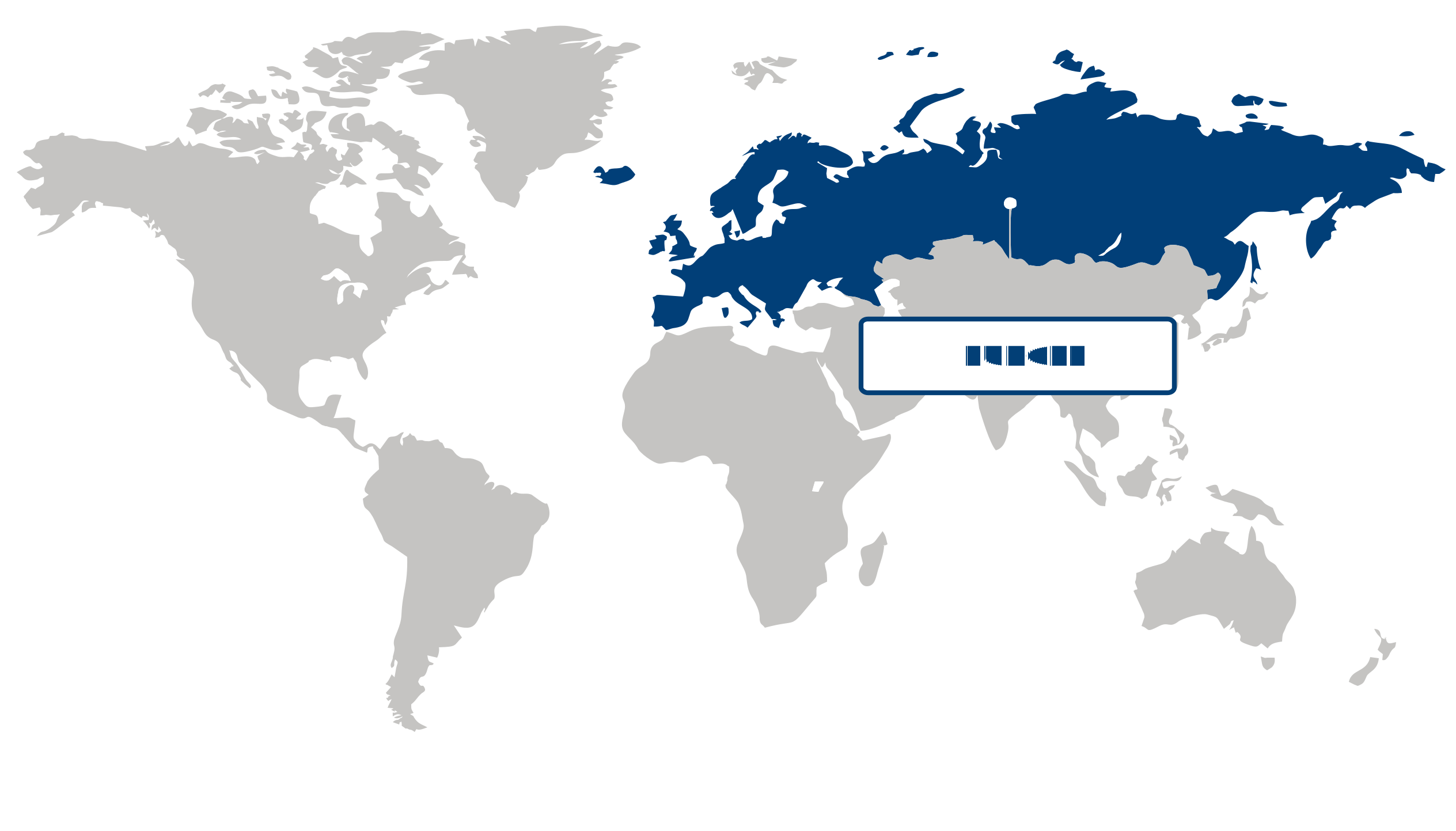
Europe (Largest Region)
The donkey milk market was led by Europe in 2026, supported by established consumer awareness of specialty dairy products and longstanding interest in premium and differentiated nutritional offerings. Demand is reinforced by the region’s developed food distribution infrastructure, growing preference for natural products, and increasing consumer interest in alternative dairy options with distinctive nutritional characteristics.
Asia Pacific (Fastest-Growing Region)
Asia Pacific is the fastest-growing region, driven by rising consumer awareness of specialty dairy products, expanding disposable incomes, and increasing interest in premium nutritional foods. Improving modern retail infrastructure and broader access to differentiated dairy offerings are creating favorable conditions for product adoption, while evolving dietary preferences support wider market penetration.
| Parameter | North America | Asia Pacific | Europe | Latin America | MEA |
|---|---|---|---|---|---|
| Innovation Hub i Scale Nascent Developing Advanced | |||||
| Cost-Sensitive Region i Scale Low Medium High | |||||
| Regulatory Environment i Scale Restrictive Neutral Supportive | |||||
| Demand Drivers i Scale Weak Moderate Strong | |||||
| Development Stage i Scale Emerging Developing Developed | |||||
| Adoption Rate i Scale Low Medium High | |||||
| New Entrants / Startups i Scale Sparse Moderate Dense | |||||
| Macro Indicators i Scale Weak Stable Strong |
Key Country Insights
Germany 🇩🇪
Functional Nutrition PositioningGermany is witnessing interest in donkey milk as a specialty dairy alternative used in wellness and nutraceutical applications. Market participants in Germany are focusing on product quality, traceability, and premium formulations that appeal to consumers seeking distinctive functional ingredients.
France 🇫🇷
Artisanal Dairy NicheFrance maintains a specialized donkey milk market centered on premium cosmetics and artisanal food applications. Producers in France are highlighting traditional production methods and limited-scale sourcing to reinforce the exclusivity and premium positioning of donkey milk products.
Italy 🇮🇹
Heritage-Based Premium ProductionItaly's donkey milk market benefits from established small-scale farming traditions and demand for specialty nutrition and cosmetic applications. Producers in Italy are focusing on product authenticity and value-added formulations that leverage the ingredient's distinctive heritage and premium appeal.
Japan 🇯🇵
Premium Beauty Ingredient AdoptionIn Japan, donkey milk is gaining attention primarily in cosmetics and premium health products where gentle and natural ingredients are valued. Producers and importers in Japan are emphasizing formulation quality and product differentiation in niche consumer categories.
South Korea 🇰🇷
Cosmeceutical Ingredient IntegrationSouth Korea's donkey milk market is closely linked to the country's active beauty and skincare industry. Brands in South Korea are incorporating donkey milk into premium cosmetic formulations to differentiate products and respond to consumer demand for novel natural ingredients.
United States 🇺🇸
Premium Wellness Ingredient DemandThe U.S. donkey milk market is driven by niche demand for premium nutrition and natural personal care products. Companies in the U.S. are positioning donkey milk as a specialty ingredient with perceived digestive and skincare benefits, supporting product innovation in high-value consumer segments.
Segment Leadership and Growth Trends
Donkey Milk Market Share (%), by Form, 2026
Go beyond the chart, access full insights & data tables
Request Free Sample ReportForm Segment Analysis: Powder (Largest Segment) vs Liquid (Fastest-Growing Segment)
Powder held the largest share of the donkey milk market in 2026, primarily because processing milk into a powdered format improves storage stability, portability, and handling while helping extend usability compared with fresh products. Powdered donkey milk is well suited to applications where transportation and longer storage are important, including specialty nutrition and personal care formulations. Its convenient format also supports integration into formulated products without requiring continuous cold-chain handling.
Liquid donkey milk is gaining momentum as consumers increasingly seek minimally processed and convenient formats that preserve the natural characteristics of the product. Its direct usability appeals to food, beverage, and wellness applications where fresh or liquid ingredients are preferred. Growing consumer interest in premium, natural, and specialty dairy alternatives is supporting broader exploration of liquid donkey milk across consumption and formulation uses.
Application Segment Analysis: Cosmetics & Personal Care (Largest Segment) vs Food & Beverages (Fastest-Growing Segment)
In the donkey milk market, cosmetics & personal care accounted for the largest share in 2026, supported by interest in donkey milk as a premium natural ingredient for skincare and beauty formulations. Its association with moisturizing, conditioning, and skin-nourishing properties makes it attractive for products positioned around gentle and naturally derived ingredients. The broader consumer shift toward premium personal care products and ingredient-conscious formulations continues to support its use in creams, lotions, soaps, and other cosmetic applications.
Food & beverages is expanding as growing consumer interest in distinctive nutritional products creates opportunities for donkey milk beyond traditional cosmetic uses. Its positioning as a specialty dairy ingredient can support demand among consumers seeking novel, premium, and naturally sourced food and beverage options. Increasing awareness of alternative nutritional products and diversification of specialty dairy offerings are contributing to broader application opportunities in this segment.
| Segment | Sub-Segment | Largest Segment | Fastest Growing |
|---|---|---|---|
| Form | Liquid, Powder | Powder | Liquid |
| Application | Food & Beverages, Cosmetics & Personal Care | Cosmetics & Personal Care | Food & Beverages |
Competitive Landscape and Market Positioning
Key companies in the donkey milk market:
1. Eurolactis Italia S.r.l. (Italy)
2. Hellenic Asinus Farms (Greece)
3. Golden Donkeys Farm (Cyprus)
4. The Donkey Dairy Pty Ltd (Australia)
5. Stephenson Group Ltd. (United Kingdom)
6. Asinus Atlanticus S.A. (Portugal)
7. Donna Tina Farm (Italy)
8. Dolphin IBA (France)
9. The White Sea & Baltic Company Limited (United Kingdom)
10. VRO Enterprises (India)
Rising interest in premium and natural dairy alternatives is strengthening the donkey milk market. Manufacturers are introducing specialized nutritional products while adopting sustainable farming and processing practices to address evolving consumer preferences and niche health applications.
| Company | Market Share | Company Revenue | Revenue CAGR (%) | Product Portfolio | Geographic Presence | Innovation / R&D Focus | Strategic Developments |
|---|---|---|---|---|---|---|---|
| Eurolactis Italia S.r.l. (Italy) | |||||||
| Hellenic Asinus Farms (Greece) | |||||||
| Golden Donkeys Farm (Cyprus) | |||||||
| The Donkey Dairy Pty Ltd (Australia) | |||||||
| Stephenson Group Ltd. (United Kingdom) | |||||||
| Asinus Atlanticus S.A. (Portugal) | |||||||
| Donna Tina Farm (Italy) | |||||||
| Dolphin IBA (France) | |||||||
| The White Sea & Baltic Company Limited (United Kingdom) | |||||||
| VRO Enterprises (India). |
Industry Development/News
| Company Name | Date | Key Development |
|---|---|---|
| Ghenadie Balan | Dec-25 | A farming operation in Orhei, Moldova, has successfully scaled its herd to 50 donkeys, evolving into a sustainable commercial enterprise. The development illustrates the professionalization of smallholder livestock production, as operations increasingly focus on processing milk for its therapeutic and functional properties to serve the growing demand for specialized health-oriented dairy. |
| The Donkey Palace | Jun-25 | The Donkey Palace has scaled its operations to become a major Indian livestock producer, establishing a dedicated supply chain for cosmetic manufacturing. This industrial integration underscores the growing reliance of personal care firms on specialized, ethically sourced animal-derived ingredients to meet rising consumer demand for natural and restorative skincare formulations. |
| Johannes Visagie | Jun-24 | Producer Johannes Visagie announced the resumption of international donkey milk exports to the United States following the lifting of COVID-19-related trade suspensions. This restoration of cross-border supply chains signals a recovery in the market for specialized nutritional and cosmetic ingredients, facilitating renewed access to high-value global consumer markets. |
| Dhiren Solanki | Apr-24 | A commercial dairy operation in Patan, Gujarat, has achieved a stable production output of approximately 42 donkeys, generating consistent regional revenue. The operation demonstrates the commercial viability of small-scale donkey milk farming within India, highlighting the transition from niche traditional usage toward a structured, premium-tier dairy business model. |
Customize Your Report
Explore examples of how this report can be tailored to different research needs, including custom segments, additional topics or chapters, and related reports. Click a section of the wheel or its numbered marker to explore the available options.
Donkey Milk Market — Custom Segments
| Segment | Sub-Segment |
|---|---|
| Distribution Channel | Direct-to-Consumer, Specialty Retail, Supermarkets & Hypermarkets, Online Retail |
| Consumer Group | Infants & Children, Adults, Cosmetics & Personal Care Manufacturers |
| Price Tier | Economy, Mid-Range, Premium |
Donkey Milk Market — Custom TOC
| Custom Chapter | Custom Details |
|---|---|
| Premium Consumer Segmentation and Purchase Drivers |
|
| Authenticity, Traceability and Premium Branding |
|
| Infant Nutrition and Cosmetic End-Use Opportunities |
|
Need a different cut of the data?
Request Custom ResearchWhat is the current revenue of the donkey milk market?
What is the forecasted size of the donkey milk industry?
How are changing consumer preferences driving adoption in the donkey milk market?
Why is powdered donkey milk gaining strategic importance in market expansion?
Why does powder dominate the donkey milk market?
Where is fastest growth coming from in donkey milk applications?
Why does Europe lead the donkey milk market?
What is driving growth in the Asia Pacific donkey milk market?
Which companies are driving growth in the donkey milk landscape?
Our Clients
"The report provided a thorough look at market trends, technological advancements, and the competitive landscape. The depth of insights was really valuable."
ITC Limited
"We would highly recommend Fundamental Business Insights & Consulting to anyone looking for reliable, detailed, and comprehensive market research in the Food industry."
Tyson Foods
"The clarity and presentation of the information were commendable. The report was delivered timely, which made the overall experience smooth and convenient."
Mondelēz International
Our Research Team & Methodology
Every Fundamental Business Insights report is built by a dedicated vertical research team, validated through a structured primary-and-secondary methodology, and reviewed for accuracy before it reaches you.
Research Team Overview
Prepared by the Food & Beverage Research Team
Delivery
Published
Demand
Available
Support
Trust & Compliance
Research Domains
10 coverage areasResearch Intelligence
| Source | Reference |
|---|---|
| Food and Agriculture Organization (FAO) | www.fao.org |
| World Health Organization (WHO) | www.who.int |
| U.S. Food & Drug Administration (FDA) | www.fda.gov |
| European Food Safety Authority (EFSA) | www.efsa.europa.eu |
| U.S. Department of Agriculture (USDA) | www.usda.gov |
| Codex Alimentarius Commission | www.fao.org/fao-who-codexalimentarius |
| International Organization for Standardization (ISO) | www.iso.org |
| AOAC INTERNATIONAL | www.aoac.org |
| Institute of Food Technologists (IFT) | www.ift.org |
| International Dairy Foods Association (IDFA) | www.idfa.org |
| International Sweeteners Association (ISA) | www.sweeteners.org |
| International Probiotics Association (IPA) | internationalprobiotics.org |
| Good Food Institute (GFI) | gfi.org |
| American Feed Industry Association (AFIA) | www.afia.org |
| International Feed Industry Federation (IFIF) | ifif.org |
| Specialty Food Association (SFA) | www.specialtyfood.com |
| Brewers Association | www.brewersassociation.org |
| International Bottled Water Association (IBWA) | bottledwater.org |
| International Alliance for Dietary/Food Supplement Associations (IADSA) | www.iadsa.org |
| OECD Agriculture & Food | www.oecd.org/agriculture |
Research Workflow & Quality Assurance
Data Collection
Verified information gathered through primary and secondary research.
Data Triangulation
Cross-validation using multiple independent data sources.
Forecast Modelling
Market estimates developed using historical trends and analytical models.
Analyst Validation
Findings reviewed by domain experts for accuracy and consistency.
Editorial & Quality Review
Final editorial, quality, and compliance checks before publication.
Final Publication
Released after successful completion of the internal review process.
Report Coverage
📊 Market Assessment
- Market Size & Forecast
- Market Segmentation
- Regional Analysis
- Growth Drivers & Challenges
- Market Dynamics
🏢 Competitive Intelligence
- Competitive Landscape
- Company Profiles
- Competitive Benchmarking
- Mergers & Acquisitions
- Market Share Analysis or Key Company Strategies
🔍 Strategic Analysis
- Value Chain Analysis
- Porter's Five Forces
- PESTLE Analysis
- Pricing Trends
- Supply-Demand Analysis
🚀 Future Outlook
- Technology Landscape
- Regulatory Landscape
- Investment & Funding Landscape
- Emerging Opportunities
- Future Market Outlook
Have a question about this report or need a custom scope?
Request Customization