



Eco-Friendly Food Packaging Market Size & Forecasts 2026-2035, By Segments (Material, Product Type, End-use), Growth Opportunities, Innovation Landscape, Regulatory Shifts, Strategic Regional Insights (U.S., Japan, China, South Korea, UK, Germany, France), and Competitive Dynamics (Amcor, Mondi, Sealed Air, Smurfit Kappa, Tetra Pak)
Market Size and Growth Outlook
Eco-Friendly Food Packaging Market size is predicted to expand from USD 202.2 billion in 2025 to USD 383.14 billion by 2035, with growth underpinned by a CAGR above 6.6% between 2026 and 2035. The industry revenue outlook for 2026 is USD 213.85 billion.
Base Year Value (2025)
USD 202.2 Billion
CAGR (2026-2035)
6.6%
Forecast Year Value (2035)
USD 383.14 Billion

Historical Data Period
2021-2025

Largest Region
Europe

Forecast Period
2026-2035
Key Takeaways
- Europe region captured more than 39.1% revenue share in 2025, spurred by strict regulations promoting sustainable packaging.
- Asia Pacific region will grow at around 8% CAGR during the forecast period, driven by growing consumer demand for green solutions.
- Securing 49.5% of the market in 2025, recyclable segment was strengthened by wide adoption due to established recycling infrastructure.
- The food service segment recorded 46.35% revenue share in 2025, impelled by high demand in restaurants and takeaway services.
- Achieving 41.2% share in 2025, containers segment maintained its lead, sustained by versatility in food storage and takeaway applications.
- The top participants in the eco-friendly food packaging market are Amcor (Australia), Mondi (UK), Sealed Air (USA), Smurfit Kappa (Ireland), Tetra Pak (Sweden), Huhtamaki (Finland), WestRock (USA), DS Smith (UK), Stora Enso (Finland), BioPak (Australia).
Market Growth Drivers and Industry Trends
Rising Adoption of Biodegradable and Compostable Packaging
The increasing consumer demand for sustainable products is significantly influencing the eco-friendly food packaging market, with biodegradable and compostable packaging becoming a focal point. According to the World Economic Forum, consumers are increasingly prioritizing environmentally responsible options, prompting companies to innovate. Brands like Unilever and Nestlé have committed to reducing plastic waste by investing in biodegradable materials, reflecting a shift in corporate strategy towards sustainability. This trend not only aligns with consumer preferences but also meets regulatory pressures, as governments worldwide implement stricter regulations on single-use plastics. Such developments create strategic opportunities for established players to enhance their sustainability profiles while allowing new entrants to capture market share by offering innovative, eco-friendly alternatives.
Corporate Sustainability Commitments Driving Packaging Innovation
Corporate sustainability commitments are reshaping the eco-friendly food packaging market by driving innovation and setting industry benchmarks. Major corporations, including Coca-Cola and PepsiCo, have pledged to achieve significant reductions in plastic use and increase the recyclability of their packaging. These commitments are catalyzing partnerships with startups focused on sustainable materials, fostering a culture of innovation that benefits the entire supply chain. As companies strive to meet these ambitious goals, the demand for advanced eco-friendly packaging solutions rises, creating avenues for both established players to diversify their portfolios and new entrants to introduce cutting-edge technologies. The ongoing commitment to sustainability not only enhances brand loyalty but also positions companies as leaders in a rapidly evolving market landscape.
Development of Edible and Plant-Based Packaging Solutions
The emergence of edible and plant-based packaging solutions represents a transformative growth driver within the eco-friendly food packaging market. Innovations from companies like Loliware and Notpla are pioneering the use of materials that can be consumed alongside their contents, significantly reducing waste. This aligns with the growing consumer interest in health and wellness, as well as sustainability, creating a unique intersection of market demands. The development of such packaging solutions not only meets consumer expectations but also addresses environmental concerns, presenting a competitive edge for businesses willing to invest in research and development. As consumer awareness of environmental issues continues to rise, the market for edible and plant-based packaging solutions is poised for expansion, offering strategic opportunities for both existing players to innovate and new entrants to disrupt traditional packaging paradigms.
Industry Restraints:
Regulatory Compliance Burdens
The eco-friendly food packaging market is significantly constrained by the complex landscape of regulatory compliance. Governments worldwide are increasingly enacting stringent regulations aimed at reducing plastic waste and promoting sustainable practices. However, the variability in regulations across regions creates operational inefficiencies for companies attempting to navigate these requirements. For instance, the European Union's Single-Use Plastics Directive mandates specific reductions in plastic use, compelling manufacturers to invest heavily in compliance measures. This situation not only raises operational costs but also leads to delays in product development and market entry, particularly for new entrants lacking the resources to adapt swiftly to evolving regulations. As noted by the Food and Agriculture Organization, these compliance burdens can stifle innovation, as companies may prioritize meeting regulatory standards over developing pioneering packaging solutions.
Supply Chain Constraints
Supply chain vulnerabilities pose another formidable restraint on the eco-friendly food packaging market. The sourcing of sustainable materials often involves complex logistics and higher costs, which can deter companies from fully committing to eco-friendly initiatives. For example, the reliance on biodegradable materials like PLA (polylactic acid) is hampered by limited availability and fluctuating prices, as highlighted in a report by the World Economic Forum. This scarcity not only affects established companies but also presents a significant hurdle for startups aiming to penetrate the market. The interdependence of suppliers and manufacturers can lead to disruptions, particularly in times of economic uncertainty, further complicating the ability to deliver sustainable products consistently. As the demand for eco-friendly packaging continues to rise, addressing these supply chain challenges will be crucial for market participants, shaping strategies that balance sustainability with operational feasibility in the near to medium term.
| Growth Driver Assessment Framework | |||||
| Growth Driver | Impact On CAGR | Regulatory Influence | Geographic Relevance | Adoption Rate | Impact Timeline |
|---|---|---|---|---|---|
| Rising adoption of biodegradable and compostable packaging | 2.50% | Short term (≤ 2 yrs) | Europe, North America (spillover: Asia Pacific) | High | Fast |
| Corporate sustainability commitments driving packaging innovation | 2.00% | Medium term (2–5 yrs) | Asia Pacific, Europe (spillover: North America) | High | Moderate |
| Development of edible and plant-based packaging solutions | 1.30% | Long term (5+ yrs) | Europe, North America (spillover: MEA) | Medium | Slow |
Unlock insights tailored to your business with our bespoke market research solutions - Click to get your customized report now!
Regional Demand Dynamics
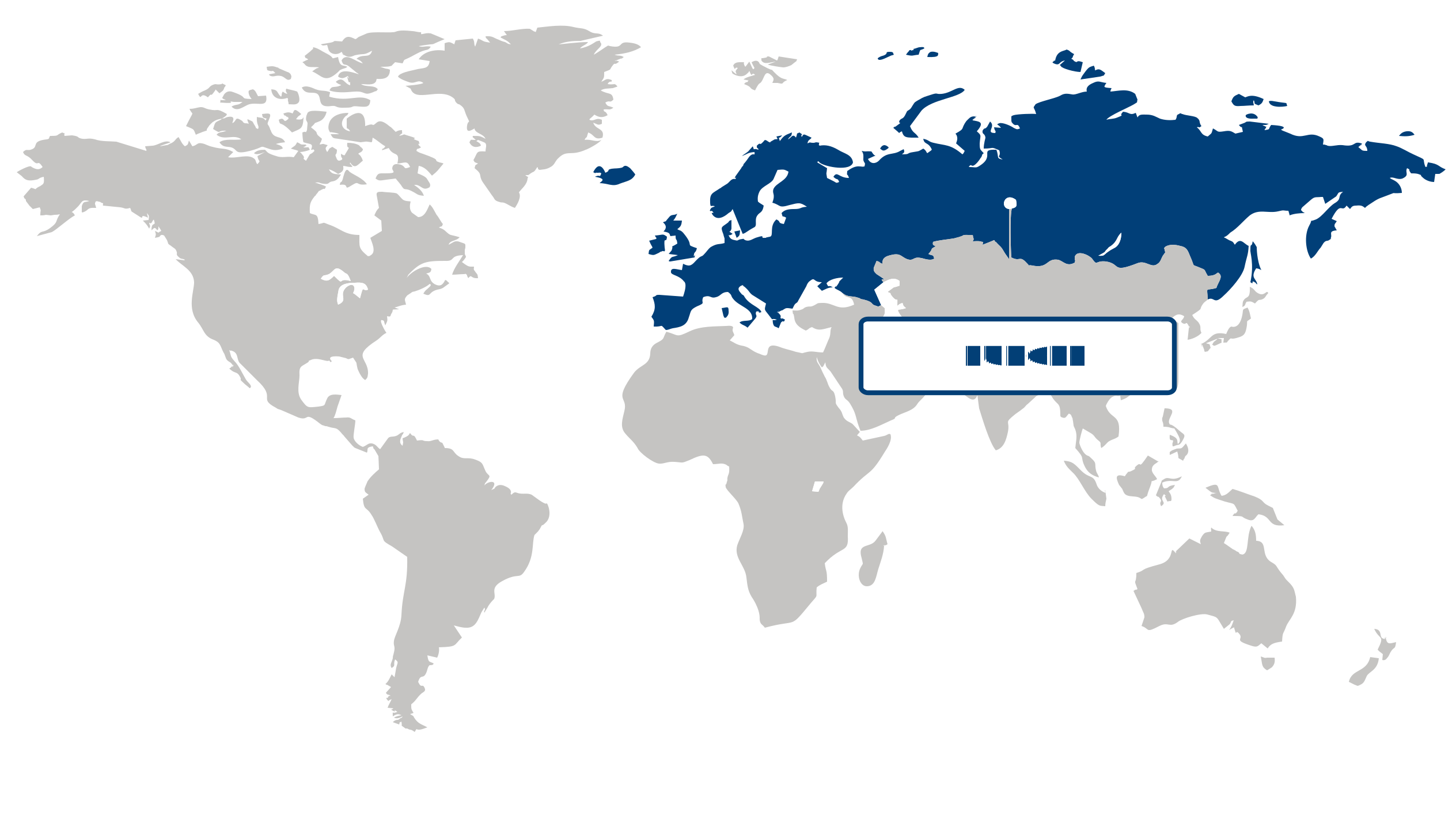
Largest Region
Europe
39.1% Market Share in 2025
Europe Market Statistics:
Europe represented more than 39.1% of the global eco-friendly food packaging market in 2025, establishing itself as both the largest region. This dominance is largely driven by strict regulations promoting sustainable packaging, which have significantly influenced consumer preferences towards environmentally friendly options. The increasing emphasis on sustainability has led to a shift in spending patterns, where consumers are willing to pay a premium for products that align with their ecological values. Furthermore, advancements in technology and operational efficiencies in production are enhancing the availability and affordability of eco-friendly materials. According to the European Commission, initiatives aimed at reducing plastic waste and improving recycling rates have fostered a conducive environment for growth in this sector. As a result, Europe presents substantial opportunities for investment in eco-friendly food packaging, driven by a robust regulatory framework and a strong consumer demand for sustainable solutions.
Germany anchors the eco-friendly food packaging market within Europe, showcasing a unique blend of consumer demand and regulatory support. The country’s commitment to sustainability is evident in its ambitious policies aimed at reducing plastic consumption, as highlighted by the Federal Ministry for the Environment, Nature Conservation, and Nuclear Safety. German consumers increasingly favor products with minimal environmental impact, pushing companies to innovate in packaging solutions. For instance, major brands like Unilever have committed to using recyclable or reusable packaging by 2025, reflecting the market's competitive landscape. This alignment between regulatory frameworks and consumer expectations positions Germany as a key player in the eco-friendly food packaging market, reinforcing regional opportunities for growth.
France also plays a pivotal role in the eco-friendly food packaging market, driven by a strong cultural commitment to sustainability. The French government has implemented stringent regulations aimed at phasing out single-use plastics, compelling businesses to adopt eco-friendly alternatives. According to the Ministry of Ecological Transition, these policies have catalyzed significant investments in sustainable packaging innovations. Companies like Danone are leading the charge by transitioning to biodegradable materials, thus responding to both regulatory pressures and consumer demand for greener options. This cultural and regulatory synergy enhances France’s position within the European market, creating a fertile ground for eco-friendly food packaging solutions and aligning with the region's overarching growth trajectory.
Asia Pacific Market Analysis:
The Asia Pacific region emerged as the fastest-growing market for eco-friendly food packaging, registering rapid growth with a CAGR of 8%. This remarkable growth is driven by a growing consumer demand for green solutions, as more individuals and businesses prioritize sustainability in their purchasing decisions. The shift towards eco-friendly packaging is not merely a trend; it reflects a broader change in consumer behavior, where environmentally conscious choices influence market dynamics. Furthermore, governments across the region are implementing policies that encourage sustainable practices, creating a conducive environment for innovation in eco-friendly materials and technologies.
Japan plays a pivotal role in the Asia Pacific eco-friendly food packaging market, characterized by a strong cultural emphasis on sustainability and innovation. The growing consumer demand for green solutions is particularly evident in the food sector, where Japanese consumers increasingly prefer products with minimal environmental impact. This preference has prompted food manufacturers to adopt biodegradable and recyclable packaging options, aligning with government initiatives aimed at reducing plastic waste. For instance, the Ministry of the Environment in Japan has been actively promoting the use of plant-based materials, which has led to significant advancements in packaging technology. As a result, Japan's commitment to sustainability not only enhances its market presence but also positions it as a leader in eco-friendly food packaging innovations within the region.
China, as another major player in the Asia Pacific eco-friendly food packaging market, showcases a unique landscape shaped by rapid urbanization and changing consumer preferences. The increasing demand for green solutions is reflected in the country's stringent regulations aimed at reducing plastic consumption. The Chinese government has introduced policies that encourage the use of sustainable materials, driving food producers to explore biodegradable packaging alternatives. Companies such as Alibaba have begun to integrate eco-friendly practices into their logistics and packaging strategies, responding to the heightened consumer awareness around environmental issues. This proactive approach not only meets regulatory requirements but also taps into the growing market of environmentally conscious consumers, reinforcing China's strategic importance in the regional eco-friendly food packaging sector. Together, Japan and China exemplify the dynamic shifts within the Asia Pacific region, highlighting significant opportunities for growth in the eco-friendly food packaging market.
North America Market Trends:
The North America region has maintained a significant share in the eco-friendly food packaging market, driven by a robust consumer shift towards sustainable practices and heightened awareness of environmental issues. This market's prominence is underscored by a growing preference for biodegradable and recyclable materials, as consumers increasingly prioritize sustainability in their purchasing decisions. According to the U.S. Environmental Protection Agency, the rise in regulatory frameworks supporting eco-friendly initiatives has catalyzed innovation and investment in sustainable packaging solutions. Moreover, the region's strong economic resilience and technological advancements in manufacturing processes have further bolstered the market's growth potential. As a result, North America presents substantial opportunities for stakeholders looking to capitalize on the evolving landscape of eco-friendly food packaging, particularly as brands strive to meet both consumer demand and regulatory requirements.
The U.S. plays a pivotal role in the North American eco-friendly food packaging market, exhibiting lucrative growth driven by stringent regulations and consumer demand for sustainable products. The Food and Drug Administration has implemented guidelines that encourage the use of recyclable materials, which has spurred innovation among packaging manufacturers. Companies like Amcor and Sealed Air are leading the charge by developing advanced sustainable packaging solutions that align with consumer preferences for environmentally responsible products. Furthermore, the competitive landscape is intensifying, with startups entering the market, offering innovative biodegradable options that appeal to eco-conscious consumers. This dynamic environment positions the U.S. as a critical player in shaping the future of eco-friendly food packaging, ultimately enhancing regional opportunities as businesses adapt to these transformative trends.
Canada also contributes significantly to the eco-friendly food packaging market in North America, characterized by a growing commitment to sustainability and innovation. The Canadian government's initiatives promoting green technology have fostered an environment conducive to the development of eco-friendly packaging solutions. For instance, the Canadian Plastics Industry Association has reported a surge in demand for compostable packaging, reflecting a cultural shift towards environmental stewardship among consumers. The collaboration between industry leaders and academic institutions is further driving advancements in materials science, yielding innovative packaging solutions that meet both sustainability goals and consumer expectations. As Canada continues to prioritize eco-friendly practices, its role in the North American market is set to strengthen, presenting valuable opportunities for investment and collaboration in the eco-friendly food packaging sector.
No card data available for this language/report.
Segment Leadership and Growth Trends
Analysis by Material
The eco-friendly food packaging market in the material segment is led by recyclable options, which held a commanding 49.5% share in 2025. This dominance is largely attributed to the wide adoption due to established recycling infrastructure, which has made it easier for consumers and businesses to engage in sustainable practices. Increasing customer preferences for recyclable materials, driven by heightened environmental awareness, have further fueled demand. According to the Environmental Protection Agency (EPA), effective recycling programs significantly reduce waste and promote sustainability, aligning with the growing regulatory focus on reducing plastic waste. This segment presents strategic advantages for established firms looking to enhance their sustainability credentials and for emerging players aiming to innovate in recycling technologies. Given the ongoing developments in recycling processes and infrastructure improvements, this segment is expected to maintain its relevance in the near to medium term.
Analysis by End-use
The eco-friendly food packaging market within the end-use segment is significantly influenced by the food service industry, which captured over 46.4% share in 2025. This leadership is driven by high demand in restaurants and takeaway services, where sustainable packaging solutions are increasingly prioritized to meet consumer expectations. The shift towards eco-friendly packaging in food service is bolstered by changing dining habits and a stronger emphasis on sustainability among consumers, as highlighted by the National Restaurant Association's reports on consumer trends. This segment offers substantial opportunities for established brands to differentiate themselves and for new entrants to capitalize on the growing market for sustainable dining options. With the ongoing expansion of the food service sector and increasing regulatory support for sustainable practices, this segment is poised for continued relevance.
Analysis by Product Type
In the eco-friendly food packaging market, the product type segment is led by containers, which represented more than 41.2% of the market in 2025. The versatility in food storage and takeaway applications positions containers as a preferred choice among consumers and businesses alike. This preference is driven by evolving consumer behaviors that favor convenience and sustainability, as noted by the Food Packaging Institute, which emphasizes the importance of eco-friendly solutions in consumer purchasing decisions. The container segment creates strategic advantages for established firms seeking to innovate their product lines and for startups focusing on sustainable materials. As advancements in material science and production techniques continue to emerge, this segment is expected to remain relevant, catering to the growing demand for sustainable food packaging solutions.
| Report Segmentation | |||
| Segment | Sub-Segment | Largest Segment | Fastest Growing Segment |
|---|---|---|---|
| Material | Biodegradable, Recyclable, Compostable | ||
| Product Type | Bags, Containers, Boxes and cartons, Bottles and jars, Others | ||
| End-use | Food service, Retail, Food processing | ||
 Read our Research Approach
Competitive Landscape and Market Positioning
Key players in the eco-friendly food packaging market include Amcor, Mondi, Sealed Air, Smurfit Kappa, Tetra Pak, Huhtamaki, WestRock, DS Smith, Stora Enso, and BioPak. These companies are not only recognized for their innovative approaches to sustainable packaging solutions but also for their commitment to reducing environmental impact. Amcor stands out with its extensive portfolio and global reach, while Mondi is noted for its integration of sustainability into its product design. Sealed Air leverages its technological expertise to enhance packaging efficiency, and Smurfit Kappa is renowned for its circular economy initiatives. Tetra Pak emphasizes the importance of renewable materials, whereas Huhtamaki focuses on biodegradable options. WestRock, DS Smith, and Stora Enso are also pivotal players, each contributing unique solutions that align with evolving consumer preferences for eco-conscious packaging. BioPak rounds out this influential group with its focus on compostable products, reflecting a strong alignment with sustainability trends.
The competitive landscape of the eco-friendly food packaging market is characterized by dynamic interactions among these leading companies, which are actively pursuing various initiatives to enhance their market standing. Collaborations between firms facilitate the sharing of innovative technologies, leading to the development of next-generation sustainable packaging solutions. New product introductions are frequently observed, reflecting a commitment to meeting consumer demand for environmentally responsible options. Furthermore, strategic investments in research and development are evident, as companies seek to refine materials and processes to create packaging that not only meets regulatory standards but also exceeds consumer expectations. These initiatives collectively contribute to a more competitive environment, fostering innovation and positioning these players favorably in an increasingly eco-conscious market.
Strategic / Actionable Recommendations for Regional Players
In North America, companies may benefit from exploring partnerships with local universities and research institutions to drive innovation in biodegradable materials. Engaging in community-focused initiatives can also enhance brand loyalty among environmentally conscious consumers, creating a strong local presence.
In the Asia Pacific region, tapping into the rapidly growing e-commerce sector presents opportunities for eco-friendly packaging solutions tailored to online retailers. Collaborating with logistics companies to develop sustainable packaging that minimizes waste during transportation can significantly enhance market appeal.
In Europe, leveraging advancements in recycling technologies can provide a competitive edge, particularly in creating closed-loop systems that enhance sustainability. Fostering alliances with regulatory bodies can also help navigate the complex landscape of environmental legislation, positioning companies as leaders in compliance and innovation.
Why Choose Us
Specialized Expertise: Our team comprises industry experts with a deep understanding of your market segment. We bring specialized knowledge and experience that ensures our research and consulting services are tailored to your unique needs.
Customized Solutions: We understand that every client is different. That's why we offer customized research and consulting solutions designed specifically to address your challenges and capitalize on opportunities within your industry.
Proven Results: With a track record of successful projects and satisfied clients, we have demonstrated our ability to deliver tangible results. Our case studies and testimonials speak to our effectiveness in helping clients achieve their goals.
Cutting-Edge Methodologies: We leverage the latest methodologies and technologies to gather insights and drive informed decision-making. Our innovative approach ensures that you stay ahead of the curve and gain a competitive edge in your market.
Client-Centric Approach: Your satisfaction is our top priority. We prioritize open communication, responsiveness, and transparency to ensure that we not only meet but exceed your expectations at every stage of the engagement.
Continuous Innovation: We are committed to continuous improvement and staying at the forefront of our industry. Through ongoing learning, professional development, and investment in new technologies, we ensure that our services are always evolving to meet your evolving needs.
Value for Money: Our competitive pricing and flexible engagement models ensure that you get maximum value for your investment. We are committed to delivering high-quality results that help you achieve a strong return on your investment.
Select Licence Type

