



Essential Oils Market Size & Growth Forecast 2027–2036, By Segments (Sales Channel, Application, Product), Regional Demand Trends (North America, Asia Pacific, Europe), Key Country Insights (U.S., Japan, South Korea, Germany, France, Italy), and Competitive Landscape
Market Size and Growth Outlook
Essential Oils Market size was worth USD 30.7 billion in 2026 and is poised to grow at a 8.55% CAGR between 2027 and 2036, attaining USD 69.73 billion by 2036. The industry revenue for 2027 is assessed at USD 32.91 billion.
Base Year Value (2026)
USD 30.7 billion
CAGR (2027-2036)
8.55%
Forecast Year Value (2036)
USD 69.73 billion

Historical Data Period
2022-2026

Largest Region
Europe

Forecast Period
2027-2036
Essential Oils Market Intelligence Snapshot:
-
Regional Market Dynamics:
- Europe accounted for 52.36% of the market in 2026, supported by mature demand across personal care, food, aromatherapy, and household applications, along with reliable processing and distribution capabilities.
- Asia Pacific is projected to grow at an 8.59% CAGR, driven by expanding manufacturing, rising use of natural ingredients, and broader commercialization across cosmetics, wellness, and food applications.
-
Segment Momentum:
- Direct Distribution held a 49.61% market share in 2026 because commercial buyers prioritize product consistency, batch traceability, purity specifications, and reliable supplier relationships for quality-focused procurement.
- Food & Beverages is the fastest-growing application as manufacturers increasingly adopt essential oils for natural flavoring and aroma ingredients, aligning product development with cleaner ingredient preferences.
-
Market Expansion Drivers:
- Rising consumer preference for natural and clean-label wellness and personal care products.
- Expanding applications in food, pharmaceuticals, and aromatherapy boosting cross-industry demand.
- Growing demand for natural flavoring and fragrance ingredients in processed food and beverages.
-
Leading Market Participants:
Prominent companies in the essential oils market include Givaudan SA (Switzerland), International Flavors & Fragrances Inc. (United States), Robertet Group (France), Young Living Essential Oils, LC (United States), doTERRA International, LLC (United States), Biolandes SAS (France), Ungerer & Company (United States), Essential Oils of New Zealand Ltd. (New Zealand), Veda Oils Private Limited (India), Falcon Essential Oils (India).
Global Market Forecast Snapshot:
-
Market Outlook:
- 2026 Market Size: USD 30.7 billion
- 2027 Estimated Market Size: USD 32.91 billion.
- Projected Market Size: USD 69.73 billion by 2036
- Growth Forecasts: 8.55% CAGR (2027-2036)
-
Regional and Segment Outlook:
- Leading Regional Market: Europe
- High-Growth Regional Hub: Asia Pacific
- Core Revenue Segment: Direct Distribution (Sales Channel) | Spa & Relaxation (Application) | Orange (Product)
- Emerging Opportunity Segment: Retail Distribution (Sales Channel) | Food & Beverages (Application) | Lavender (Product)
Market Growth Drivers and Industry Trends
Rising consumer preference for natural and clean-label wellness and personal care products
Growing consumer interest in naturally derived and clean-label ingredients is supporting the essential oils market as wellness and personal care buyers increasingly scrutinize product composition. Essential oils are widely associated with plant-based formulations and are incorporated into products designed around sensory, wellness, and personal care attributes. Manufacturers are responding to this preference by developing formulations that emphasize naturally sourced ingredients, botanical positioning, and simplified ingredient profiles, increasing the integration of essential oils into skincare, haircare, bath, and other personal care applications.
Expanding applications in food, pharmaceuticals, and aromatherapy boosting cross-industry demand
Diversification across food, pharmaceutical, and aromatherapy applications is broadening the essential oils market beyond traditional personal care uses. In food applications, essential oils can serve functional and sensory purposes, while pharmaceutical and wellness formulations utilize selected oils in products associated with therapeutic and supportive applications. Aromatherapy represents another established area of use, with oils incorporated into diffusers, topical products, and relaxation-oriented formulations. This expanding application base allows demand to emerge from multiple end-use industries with different product requirements and consumption patterns.
Growing demand for natural flavoring and fragrance ingredients in processed food and beverages
The shift toward naturally sourced flavor and fragrance components is creating additional demand for the essential oils market within processed food and beverage applications. Essential oils can provide distinctive sensory characteristics and botanical flavor profiles, enabling manufacturers to incorporate natural-origin ingredients into formulations where consumers increasingly value recognizable and plant-derived components. Their use in beverages, confectionery, bakery products, and other processed foods also supports product differentiation through varied flavor profiles, while fragrance applications benefit from the aromatic properties of selected essential oil varieties.
| Growth Driver Assessment Framework | |||||
| Growth Driver | Impact On CAGR | Regulatory Influence | Geographic Relevance | Adoption Rate | Impact Timeline |
|---|---|---|---|---|---|
| Rising consumer preference for natural and clean-label wellness and personal care products | 2.20% | Moderate | Europe, North America | High | Near Term |
| Expanding applications in food, pharmaceuticals, and aromatherapy boosting cross-industry demand | 1.90% | Moderate | Asia Pacific, Europe | High | Mid Term |
| Growing demand for natural flavoring and fragrance ingredients in processed food and beverages | 1.60% | Moderate | Asia Pacific, North America | Medium | Mid Term |
Unlock insights tailored to your business with our bespoke market research solutions - Click to get your customized report now!
Regional Demand Dynamics
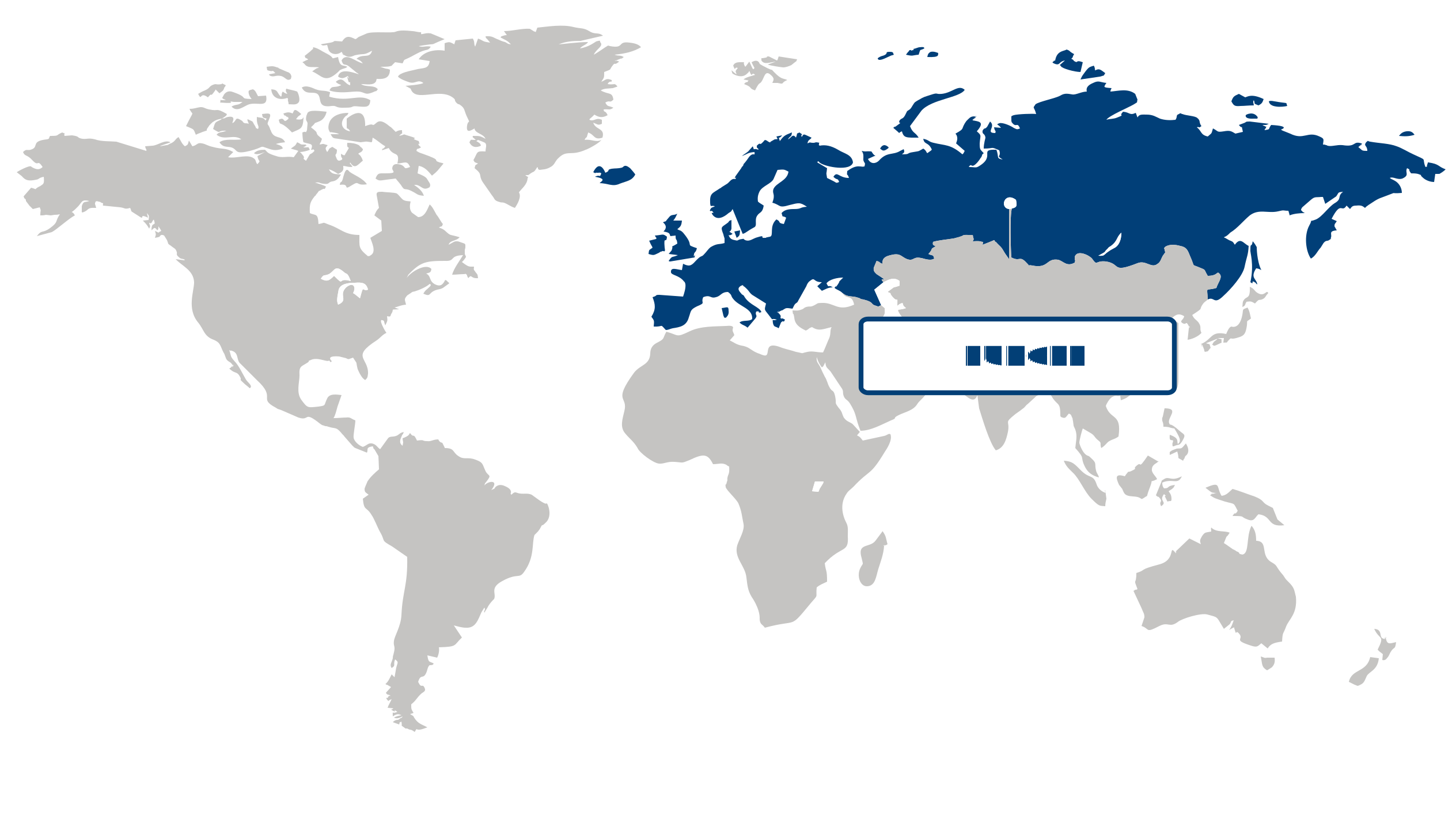
Largest Region
Europe
52.36% Market Share in 2026
Europe (Largest Region) vs Asia Pacific (Fastest-Growing Region)
Europe dominated the essential oils market with a 52.36% share in 2026, reflecting strong consumer interest in natural wellness products, established aromatherapy practices, and broad applications across personal care, cosmetics, food, and household products. Demand is supported by growing preferences for plant-derived ingredients and clean-label formulations, while established wellness and beauty industries provide diverse channels for essential oil consumption. Regulatory attention to product quality and ingredient safety also encourages the use of standardized formulations, reinforcing consumer confidence and supporting sustained regional demand.
Asia Pacific is the fastest-growing regional market, benefiting from deep-rooted traditions involving botanical ingredients, expanding wellness awareness, and rising consumer spending on natural personal care products. Increasing urbanization and exposure to modern aromatherapy and beauty trends are broadening applications for essential oils beyond traditional uses. Expanding e-commerce, specialty wellness retail, and demand for natural ingredients in cosmetics and household products are further improving accessibility and supporting market expansion across the region.
Key Country Insights
The U.S. essential oils market benefits from strong demand for natural ingredients in personal care, aromatherapy, and functional wellness products. Companies in the U.S. are expanding premium blends and transparent sourcing programs to meet consumer interest in clean-label formulations.
Japan is integrating essential oils into wellness, household, and personal care applications that emphasize relaxation and sensory experiences. Japanese companies are developing innovative fragrance combinations and premium packaging to appeal to health-conscious consumers.
South Korea's essential oils market is closely linked to the country's advanced beauty and skincare industry. Manufacturers in South Korea are incorporating botanical extracts and essential oils into premium cosmetic formulations that emphasize natural product positioning.
Germany emphasizes quality assurance and formulation consistency in essential oils used across cosmetics and natural health products. German manufacturers increasingly prioritize certified sourcing and traceability to support demand for high-purity botanical ingredients.
France maintains strong demand for essential oils through its established fragrance and cosmetic industries. French producers are focusing on sustainably sourced botanical ingredients and sophisticated aroma compositions to support premium product development.
Italy's essential oils market is supported by demand for natural ingredients in cosmetics, wellness products, and specialty fragrances. Italian companies are emphasizing locally sourced botanicals and small-batch production techniques that enhance product authenticity and differentiation.
Segment Leadership and Growth Trends
Sales Channel Segment Analysis: Direct Distribution (Largest Segment) vs Retail Distribution (Fastest-Growing Segment)
Direct distribution held the largest share of the essential oils market in 2026 at 49.61%, supported by the greater control producers have over product presentation, customer relationships, pricing, and supply consistency through direct selling channels. This channel is particularly relevant for essential oils because consumers and professional users often seek product authenticity, quality assurance, and detailed information about sourcing and applications. Direct engagement also enables suppliers to respond more closely to changing preferences and build stronger customer confidence in a product category where purity and formulation characteristics influence purchasing decisions.
Retail distribution is emerging as the fastest-growing channel as essential oils become increasingly accessible through physical and organized retail outlets. Broader retail availability allows consumers to purchase products conveniently for wellness, personal care, household, and lifestyle uses. Rising consumer interest in natural products and greater awareness of aromatherapy and self-care applications are supporting wider shelf presence and encouraging retailers to expand their essential oil offerings.
Application Segment Analysis: Spa & Relaxation (Largest Segment) vs Food & Beverages (Fastest-Growing Segment)
The spa & relaxation segment dominated the essential oils market in 2026, accounting for 48.34% share, reflecting the established use of essential oils in aromatherapy, massage, wellness treatments, and relaxation-focused services. Their association with stress relief, sensory experiences, and personal wellness has made essential oils an important component of spa-oriented offerings. Growing consumer attention to holistic wellness and self-care is reinforcing demand for aromatic products across professional and at-home relaxation routines.
Food & beverages represents the fastest-growing application as essential oils gain attention as concentrated natural flavoring and aromatic ingredients. Demand is supported by increasing interest in natural and botanical ingredients, particularly as food and beverage producers seek alternatives that can provide distinctive sensory characteristics. Expanding experimentation with plant-derived ingredients and clean-label product development is creating additional opportunities for essential oils within food and beverage formulations.
| Report Segmentation | |||
| Segment | Sub-Segment | Largest Segment | Fastest Growing Segment |
|---|---|---|---|
| Sales Channel | Direct Distribution, Retail Distribution, MLM Distribution | Direct Distribution | Retail Distribution |
| Application | Medical, Food & Beverages, Spa & Relaxation, Cleaning & Home | Spa & Relaxation | Food & Beverages |
| Product | Basil, Black Pepper, Cinnamon, Citronella, Clove, Eucalyptus, Frankincense, Ginger, Lavender, Lemon, Lemongrass, Orange, Rosemary, Tea Tree, Others | Orange | Lavender |
 Read our Research Approach
Competitive Landscape and Market Positioning
Prominent players in the essential oils market:
1. Givaudan SA (Switzerland)
2. International Flavors & Fragrances Inc. (United States)
3. Robertet Group (France)
4. Young Living Essential Oils LC (United States)
5. doTERRA International LLC (United States)
6. Biolandes SAS (France)
7. Ungerer & Company (United States)
8. Essential Oils of New Zealand Ltd. (New Zealand)
9. Veda Oils Private Limited (India)
10. Falcon Essential Oils (India)
Rising demand for natural wellness and aromatherapy solutions is fueling expansion in the essential oils market. Innovation in extraction methods and formulation diversity is improving product purity and application range. Continuous product development and sustainability focus are strengthening differentiation within the essential oils market.
Industry Development/News
| Company Name | Date | Key Development |
|---|---|---|
| Berjé Inc. | May-24 | Berjé Inc. acquired Global Citrus International and Acelim del Peru, two prominent Peruvian producers and growers of essential oils. This strategic acquisition significantly enhances Berjé’s vertical integration, strengthening its global sourcing footprint, production capabilities, and overall supply chain resilience within the essential oils sector. |
| Turpaz Industries | Jun-24 | Turpaz Industries acquired Nicola-J, representing its sixth strategic acquisition since early 2025. This transaction bolsters the company's competitive positioning within the African flavor and fragrance market and expands its existing portfolio of specialized ingredients utilized across essential oil and fragrance applications. |
| Kosé Corporation | May-24 | Kosé Corporation acquired premium Thai wellness and beauty brand Pañpuri. The move is designed to scale Kosé’s footprint in the premium wellness segment and consolidate its portfolio of products leveraging aromatherapy and essential oil-based formulations, supporting broader market expansion in Southeast Asia. |
| Turpaz Industries | Jun-23 | Turpaz Industries completed the acquisition of Hungarian firm Food Base for approximately USD 9.5 million. The deal provides Turpaz with enhanced capabilities in the development and supply of essential oils, herbal extracts, and flavors, specifically strengthening its operational reach within the European food and beverage ingredient sector. |
| PT Indika Energy Tbk | Jan-23 | PT Indika Energy Tbk, through its subsidiary PT Indika Multi Properti, acquired a 46% ownership stake in PT Natura Aromatik Nusantara for IDR 179.60 billion. This investment marks a strategic diversification into the essential oils sector, establishing a new operational foothold in the production and commercialization of aromatic ingredients. |
| Azelis | Oct-23 | Specialty chemicals distributor Azelis finalized the acquisition of French firm BLH SAS. The transaction expands Azelis's distribution network and service capabilities in the fine perfumery industry, specifically deepening its market position within the supply chain for high-quality fragrance ingredients and essential oil components. |
| Young Living | Apr-24 | Young Living entered a multi-year strategic partnership with Pentafon, a Mexican customer experience provider. The initiative is aimed at optimizing operational efficiency and enhancing global customer engagement capabilities, supporting the scalable distribution and service requirements of its international essential oils and wellness product business. |
Why Choose Us
Specialized Expertise: Our team comprises industry experts with a deep understanding of your market segment. We bring specialized knowledge and experience that ensures our research and consulting services are tailored to your unique needs.
Customized Solutions: We understand that every client is different. That's why we offer customized research and consulting solutions designed specifically to address your challenges and capitalize on opportunities within your industry.
Proven Results: With a track record of successful projects and satisfied clients, we have demonstrated our ability to deliver tangible results. Our case studies and testimonials speak to our effectiveness in helping clients achieve their goals.
Cutting-Edge Methodologies: We leverage the latest methodologies and technologies to gather insights and drive informed decision-making. Our innovative approach ensures that you stay ahead of the curve and gain a competitive edge in your market.
Client-Centric Approach: Your satisfaction is our top priority. We prioritize open communication, responsiveness, and transparency to ensure that we not only meet but exceed your expectations at every stage of the engagement.
Continuous Innovation: We are committed to continuous improvement and staying at the forefront of our industry. Through ongoing learning, professional development, and investment in new technologies, we ensure that our services are always evolving to meet your evolving needs.
Value for Money: Our competitive pricing and flexible engagement models ensure that you get maximum value for your investment. We are committed to delivering high-quality results that help you achieve a strong return on your investment.
Select Licence Type

