Eubiotics Market Size & Growth Forecast 2027–2036, By Segments (Form, Application, Product, End-use), Regional Demand Trends (North America, Asia Pacific, Europe), Key Country Insights (U.S., Japan, South Korea, Germany, France, Italy), and Competitive Landscape
Market Size and Growth Outlook
Eubiotics Market size was around USD 6.8 billion in 2026 and is slated to grow at a 8.65% CAGR from 2027 to 2036, reaching USD 15.59 billion by 2036. The industry revenue for 2027 is assessed at USD 7.3 billion.
Get more details on this report
Request Free Sample ReportEubiotics Market Intelligence Snapshot
Regional Market Dynamics
- Europe leads through its mature animal nutrition industry, advanced feed production systems, strong adoption of gut health solutions, and structured regulatory environment supporting consistent commercial use.
- Asia Pacific is forecast to grow at a 9.94% CAGR as livestock and aquaculture production expand, encouraging wider adoption of organized feed practices and health-supportive nutritional formulations.
Segment Momentum
- Solid formulations held a 63% share in 2026 because they provide stability, easier storage, and compatibility with established feed manufacturing and mixing processes for large-scale livestock production.
- Immunity is the fastest-growing application as livestock producers increasingly prioritize solutions that strengthen natural defenses and support preventive health management alongside productivity goals.
Market Expansion Drivers
- Antibiotic ban regulations accelerating adoption of probiotics and feed alternatives in livestock nutrition.
- Rising global meat consumption increasing demand for gut health–enhancing animal feed additives.
- Expanding precision livestock nutrition solutions improving feed efficiency and animal immunity outcomes.
Leading Market Participants
- Key players in the eubiotics market include BASF SE (Germany), Cargill, Incorporated (United States), Koninklijke DSM N.V. (Netherlands), Evonik Industries AG (Germany), Chr. Hansen Holding A/S (Denmark), Novozymes A/S (Denmark), Kemin Industries, Inc. (United States), Lesaffre Group (France), Biomin Holding GmbH (Austria), Bluestar Adisseo Company (China).
Global Market Forecast Snapshot
Market Outlook
- 2026 Market Size: USD 6.8 billion
- 2027 Estimated Market Size: USD 7.3 billion.
- Projected Market Size: USD 15.59 billion by 2036
- Growth Forecast: 8.65% CAGR (2027-2036)
Regional and Segment Outlook
- Leading Regional Market: Europe
- High-Growth Regional Hub: Asia Pacific
- Core Revenue Segment: Solid (Form) | Gut Health (Application) | Probiotics (Product) | Poultry Feed (End-use)
- Emerging Opportunity Segment: Liquid (Form) | Immunity (Application) | Phytogenic (Product) | Swine Feed (End-use)
Market Growth Drivers and Industry Trends
Antibiotic ban regulations accelerating adoption of probiotics and feed alternatives in livestock nutrition
Stricter restrictions on the use of antibiotics in animal production are encouraging livestock producers to explore nutritional alternatives that can support animal health and performance, driving eubiotics market growth. Probiotics, prebiotics, organic acids, and related eubiotic solutions can be incorporated into feed strategies to support beneficial microbial activity and maintain a healthier intestinal environment. As producers adapt feeding practices to comply with regulatory requirements while maintaining livestock productivity, interest is increasing in alternatives that can contribute to gut health without relying on routine antibiotic use. Feed manufacturers are consequently incorporating eubiotic approaches into nutritional programs designed to support digestive function and animal well-being.
Rising global meat consumption increasing demand for gut health–enhancing animal feed additives
Growing demand for meat is encouraging livestock producers to improve animal performance and maintain efficient production systems, which will propel eubiotics market growth through greater use of functional feed additives. Maintaining digestive health is important for efficient nutrient utilization, consistent animal development, and overall livestock condition, making gut-focused nutritional strategies increasingly relevant to intensive and commercial production systems. Eubiotics can support beneficial microbial populations and contribute to a balanced intestinal environment, allowing them to be integrated into feed formulations for different livestock categories. As producers seek nutritional approaches that support animal health alongside efficient production, demand is increasing for feed additives with targeted gut health functions.
Expanding precision livestock nutrition solutions improving feed efficiency and animal immunity outcomes
The adoption of precision nutrition is creating greater opportunities for targeted feed formulations designed around the specific health and performance requirements of livestock, supporting eubiotics market demand. Precision livestock systems increasingly emphasize optimized nutrient delivery, monitoring of animal conditions, and formulation strategies that address digestive health and productivity more specifically. Eubiotics can complement these approaches by supporting intestinal microbial balance, nutrient utilization, and immune function within tailored feeding programs. Their integration into precision nutrition strategies allows producers and feed specialists to consider gut health as part of a broader approach to managing animal performance, particularly where feeding efficiency and consistent livestock health are important operational priorities.
| Growth Driver | Impact on CAGR | Regulatory Influence | Geographic Relevance | Adoption Rate | Impact Timeline |
|---|---|---|---|---|---|
| Antibiotic ban regulations accelerating adoption of probiotics and feed alternatives in livestock nutrition | 2.40% | High | Europe, North America | High | Near Term |
| Rising global meat consumption increasing demand for gut health–enhancing animal feed additives | 2.10% | Moderate | Asia Pacific, Latin America | High | Mid Term |
| Expanding precision livestock nutrition solutions improving feed efficiency and animal immunity outcomes | 1.70% | Moderate | Europe, Asia Pacific | Emerging | Long Term |
Unlock insights tailored to your business with our bespoke market research solutions.
Click to get your customized report now.
Regional Demand Dynamics
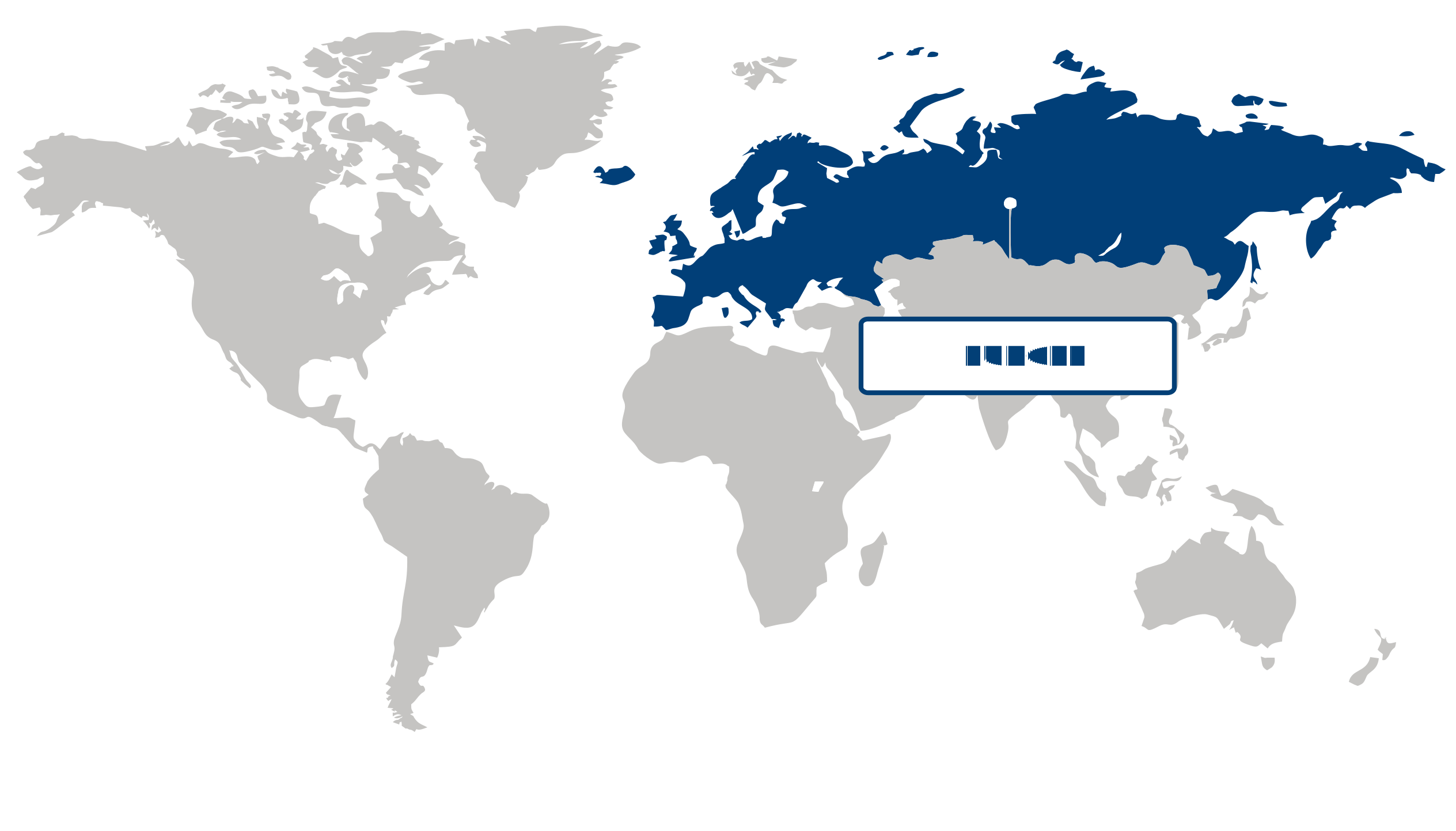
Europe (Largest Region)
Europe held the largest share of the eubiotics market in 2026, supported by a mature animal nutrition industry, strong emphasis on livestock health, and growing preference for feed solutions that promote animal performance and gut health without relying heavily on conventional antibiotic-based approaches. Increasing attention to sustainable livestock production and responsible antimicrobial use is encouraging the adoption of probiotics, prebiotics, organic acids, and other eubiotic ingredients in animal feed. The region's established regulatory environment and focus on food safety and animal welfare further support demand for functional feed additives with well-defined health and performance benefits. Advanced livestock farming practices and strong research capabilities are also facilitating the incorporation of eubiotics into modern nutrition strategies across poultry, swine, ruminant, and other animal production systems.
Asia Pacific (Fastest-Growing Region)
Asia Pacific represents the fastest-growing regional market for eubiotics, driven by expanding livestock and aquaculture production, rising demand for animal protein, and increasing awareness of animal health and feed efficiency. Producers are increasingly seeking nutritional approaches that can support digestion, immunity, and animal performance while addressing concerns associated with antimicrobial resistance. Improvements in commercial farming practices and the modernization of animal production systems are creating favorable conditions for greater use of functional feed additives. Rising investments in intensive livestock operations, growing adoption of scientifically formulated feeds, and increasing regulatory attention toward food safety and responsible animal production are further strengthening the role of eubiotics across the region.
| Parameter | North America | Asia Pacific | Europe | Latin America | MEA |
|---|---|---|---|---|---|
| Innovation Hub i Scale Nascent Developing Advanced | |||||
| Cost-Sensitive Region i Scale Low Medium High | |||||
| Regulatory Environment i Scale Restrictive Neutral Supportive | |||||
| Demand Drivers i Scale Weak Moderate Strong | |||||
| Development Stage i Scale Emerging Developing Developed | |||||
| Adoption Rate i Scale Low Medium High | |||||
| New Entrants / Startups i Scale Sparse Moderate Dense | |||||
| Macro Indicators i Scale Weak Stable Strong |
Key Country Insights
Germany 🇩🇪
Feed Efficiency SolutionsGermany emphasizes eubiotics that enhance feed conversion and animal welfare across commercial livestock operations. Manufacturers continue developing scientifically validated formulations aligned with evolving regulatory expectations and sustainable farming practices.
France 🇫🇷
Animal Health IntegrationFrance supports eubiotics through livestock nutrition strategies focused on digestive health and responsible production practices. Feed manufacturers increasingly collaborate with producers to develop targeted additive solutions for multiple animal species.
Italy 🇮🇹
Functional Feed DevelopmentItaly advances the eubiotics market by incorporating functional feed additives into poultry, swine, and ruminant nutrition programs. Manufacturers focus on product consistency and nutritional performance while supporting evolving animal health requirements.
Japan 🇯🇵
Precision Feed FormulationJapan integrates eubiotics into high-quality livestock nutrition programs designed to improve gut health and consistent production performance. Companies prioritize advanced feed formulations supported by research and stringent quality standards.
South Korea 🇰🇷
Modern Livestock PracticesSouth Korea expands eubiotics adoption as livestock producers seek healthier production systems and improved feed efficiency. Domestic demand encourages innovation in microbial and plant-based feed additives tailored to commercial farming operations.
United States 🇺🇸
Livestock Nutrition FocusThe U.S. eubiotics market prioritizes feed solutions that improve animal health, digestive performance, and production efficiency. Producers increasingly adopt probiotics, prebiotics, and phytogenic additives to support sustainable livestock management and reduce antibiotic dependence.
Segment Leadership and Growth Trends
Eubiotics Market Share (%), by Form, 2026
Go beyond the chart, access full insights & data tables
Request Free Sample ReportForm Segment Analysis: Solid (Largest Segment) vs Liquid (Fastest-Growing Segment)
Solid products dominated the eubiotics market, accounting for a 63% share in 2026. Their leading position is supported by convenient handling, storage stability, and established use in animal feed formulations. Solid eubiotics can be incorporated efficiently into feed manufacturing processes, making them suitable for broad livestock and poultry applications. Growing emphasis on gut health, animal productivity, and alternatives to conventional growth-promoting approaches is strengthening demand for functional feed additives, while the practicality of solid formulations continues to support their widespread adoption.
Liquid eubiotics are experiencing the fastest growth as feed producers increasingly seek flexible delivery formats that can be incorporated into drinking water and liquid feed systems. Liquid formulations can facilitate more targeted and convenient administration, particularly where producers require adaptable supplementation practices. Growing attention to animal health management, feed efficiency, and convenient delivery methods is encouraging greater adoption of liquid eubiotics across modern livestock production systems.
Application Segment Analysis: Gut Health (Largest Segment) vs Immunity (Fastest-Growing Segment)
Gut health represented the largest application segment of the eubiotics market, accounting for a 37.1% share in 2026. The segment benefits from increasing recognition of the relationship between intestinal function, nutrient utilization, animal performance, and overall health. Eubiotics such as probiotics, prebiotics, and related functional ingredients can support a balanced intestinal environment, making them increasingly relevant as producers seek effective approaches to maintain animal health and productivity. The growing focus on preventive nutrition is further reinforcing the importance of gut-focused applications.
Immunity is advancing at the fastest pace as livestock producers place greater emphasis on strengthening animals' natural defenses and reducing health-related production disruptions. Eubiotic solutions that support immune function align with the broader movement toward preventive animal health and improved resilience. Increasing attention to animal welfare, sustainable production, and reducing reliance on conventional interventions is creating additional opportunities for immunity-focused eubiotic applications.
| Segment | Sub-Segment | Largest Segment | Fastest Growing |
|---|---|---|---|
| Form | Liquid, Solid | Solid | Liquid |
| Application | Gut Health, Immunity, Yield, Others | Gut Health | Immunity |
| Product | Probiotics, Prebiotics, Organic Acids, Phytogenic, Enzymes | Probiotics | Phytogenic |
| End-use | Cattle Feed, Poultry Feed, Swine Feed, Aquatic Feed, Others | Poultry Feed | Swine Feed |
Competitive Landscape and Market Positioning
Top players in the eubiotics market:
1. BASF SE (Germany)
2. Cargill Incorporated (United States)
3. Koninklijke DSM N.V. (Netherlands)
4. Evonik Industries AG (Germany)
5. Chr. Hansen Holding A/S (Denmark)
6. Novozymes A/S (Denmark)
7. Kemin Industries Inc. (United States)
8. Lesaffre Group (France)
9. Biomin Holding GmbH (Austria)
10. Bluestar Adisseo Company (China)
The eubiotics market is gaining momentum due to rising focus on gut health and animal nutrition optimization. Scientific advancements are improving microbial balance solutions for feed efficiency. The eubiotics market is expanding as demand for sustainable and antibiotic-alternative solutions increases globally.
| Company | Market Share | Company Revenue | Revenue CAGR (%) | Product Portfolio | Geographic Presence | Innovation / R&D Focus | Strategic Developments |
|---|---|---|---|---|---|---|---|
| BASF SE (Germany) | |||||||
| Cargill Incorporated (United States) | |||||||
| Koninklijke DSM N.V. (Netherlands) | |||||||
| Evonik Industries AG (Germany) | |||||||
| Chr. Hansen Holding A/S (Denmark) | |||||||
| Novozymes A/S (Denmark) | |||||||
| Kemin Industries Inc. (United States) | |||||||
| Lesaffre Group (France) | |||||||
| Biomin Holding GmbH (Austria) | |||||||
| Bluestar Adisseo Company (China). |
Industry Development/News
| Company Name | Date | Key Development |
|---|---|---|
| Huvepharma | Mar-26 | Huvepharma launched Huvezym neXo, a fibre-degrading enzyme complex for poultry and swine feed applications. The product combines multiple cellulases and xylanase to improve digestion of high-fibre feed ingredients, enhancing nutrient availability and feed efficiency in livestock production systems using alternative raw materials and cost-optimized feed formulations. |
| Orffa | Dec-25 | Orffa launched its Elovital portfolio of amino acids and vitamins at Poultry India 2025 in Hyderabad, expanding its feed additive offerings across poultry, aquaculture, and livestock segments. The portfolio targets improved feed consistency and nutritional efficiency, strengthening Orffa’s position in high-growth South Asian animal nutrition markets. |
| dsm-firmenich Animal Nutrition & Health | Aug-25 | dsm-firmenich ANH commissioned a new feed additives manufacturing facility in Jadcherla, India, expanding its production footprint for eubiotics and related solutions. The site integrates production and warehousing infrastructure and is designed to strengthen regional supply capabilities while supporting rising demand for gut health and mycotoxin risk-management solutions in livestock nutrition markets. |
| Evonik | Apr-25 | Evonik launched Ecobiol, a Bacillus subtilis-based probiotic for poultry gut health improvement in China. The product targets feed efficiency and intestinal health enhancement, reflecting increasing demand for functional and sustainable eubiotics in livestock production systems, particularly in high-growth Asian poultry markets focused on antibiotic reduction strategies. |
| Novus International | Jan-25 | Novus International partnered with Resilient Biotics to develop microbial feed solutions targeting immune health and respiratory performance in swine. The collaboration focuses on microbiome-based approaches designed to improve gut and respiratory function, supporting antibiotic-free livestock production trends and advancing biologically driven eubiotics innovation in animal health applications. |
| Evonik | Jan-25 | Evonik launched Ecobiol Soluble Plus, a water-soluble probiotic for poultry at Poultry India 2025 in Hyderabad. The solution is designed to enhance gut health, nutrient absorption, and pathogen resistance in poultry production systems, reinforcing Evonik’s focus on sustainable feed additive innovation and microbiome-based performance improvement. |
| Novibio Inc. | Dec-24 | Novibio Inc. launched Poultrirom Plus, a feed additive product designed to improve intestinal health in broilers and turkeys. The development reflects continued expansion in gut health-focused eubiotics solutions aimed at enhancing poultry productivity and supporting digestive health management in commercial livestock production systems. |
| Novus International | Oct-24 | Novus International and Ginkgo Bioworks formed a partnership to develop next-generation feed additives, initially focusing on enzyme-based solutions to enhance livestock health and productivity. The collaboration strengthens innovation capabilities in microbial and biotech-enabled eubiotics, supporting improved feed efficiency and broader adoption of advanced biologically derived animal nutrition solutions. |
| DSM-Firmenich | Dec-21 | DSM-Firmenich acquired Midori USA, Inc., a biotechnology start-up specializing in next-generation eubiotics platforms, expanding its animal nutrition portfolio. The acquisition strengthens DSM’s capabilities in microbiome-based feed solutions and complements its existing eubiotics assets, reinforcing its strategic position in advanced livestock health and nutrition technologies. |
Customize Your Report
Explore examples of how this report can be tailored to different research needs, including custom segments, additional topics or chapters, and related reports. Click a section of the wheel or its numbered marker to explore the available options.
Eubiotics Market — Custom Segments
| Segment | Sub-Segment |
|---|---|
| Livestock Production System | Intensive Production, Semi-Intensive Production, Extensive Production |
| Mode of Administration | Feed, Drinking Water, Topical Application |
| Sales Channel | Direct Sales, Feed Manufacturers, Distributors & Dealers, Online Channels |
Eubiotics Market — Custom TOC
| Custom Chapter | Custom Details |
|---|---|
| Antibiotic Reduction Strategy Assessment |
|
| Precision Nutrition Adoption Landscape |
|
| Emerging Application Opportunity Mapping |
|
Need a different cut of the data?
Request Custom ResearchHow large is the eubiotics market?
How will the eubiotics industry grow in terms of size and CAGR by 2036?
How are antibiotic restrictions influencing purchasing strategies in the eubiotics market?
Why is precision livestock nutrition becoming a key growth driver for the eubiotics market?
Why is the solid form the leading segment in the eubiotics market?
Why is immunity the fastest-growing application in the eubiotics market?
Why is Europe the leading regional market for eubiotics?
How is Asia Pacific strengthening growth in the eubiotics market?
Who holds a significant market share in the eubiotics landscape?
Our Clients
"The report provided a thorough look at market trends, technological advancements, and the competitive landscape. The depth of insights was really valuable."
ITC Limited
"We would highly recommend Fundamental Business Insights & Consulting to anyone looking for reliable, detailed, and comprehensive market research in the Food industry."
Tyson Foods
"The clarity and presentation of the information were commendable. The report was delivered timely, which made the overall experience smooth and convenient."
Mondelēz International
Our Research Team & Methodology
Every Fundamental Business Insights report is built by a dedicated vertical research team, validated through a structured primary-and-secondary methodology, and reviewed for accuracy before it reaches you.
Research Team Overview
Prepared by the Food & Beverage Research Team
Delivery
Published
Demand
Available
Support
Trust & Compliance
Research Domains
10 coverage areasResearch Intelligence
| Source | Reference |
|---|---|
| Food and Agriculture Organization (FAO) | www.fao.org |
| World Health Organization (WHO) | www.who.int |
| U.S. Food & Drug Administration (FDA) | www.fda.gov |
| European Food Safety Authority (EFSA) | www.efsa.europa.eu |
| U.S. Department of Agriculture (USDA) | www.usda.gov |
| Codex Alimentarius Commission | www.fao.org/fao-who-codexalimentarius |
| International Organization for Standardization (ISO) | www.iso.org |
| AOAC INTERNATIONAL | www.aoac.org |
| Institute of Food Technologists (IFT) | www.ift.org |
| International Dairy Foods Association (IDFA) | www.idfa.org |
| International Sweeteners Association (ISA) | www.sweeteners.org |
| International Probiotics Association (IPA) | internationalprobiotics.org |
| Good Food Institute (GFI) | gfi.org |
| American Feed Industry Association (AFIA) | www.afia.org |
| International Feed Industry Federation (IFIF) | ifif.org |
| Specialty Food Association (SFA) | www.specialtyfood.com |
| Brewers Association | www.brewersassociation.org |
| International Bottled Water Association (IBWA) | bottledwater.org |
| International Alliance for Dietary/Food Supplement Associations (IADSA) | www.iadsa.org |
| OECD Agriculture & Food | www.oecd.org/agriculture |
Research Workflow & Quality Assurance
Data Collection
Verified information gathered through primary and secondary research.
Data Triangulation
Cross-validation using multiple independent data sources.
Forecast Modelling
Market estimates developed using historical trends and analytical models.
Analyst Validation
Findings reviewed by domain experts for accuracy and consistency.
Editorial & Quality Review
Final editorial, quality, and compliance checks before publication.
Final Publication
Released after successful completion of the internal review process.
Report Coverage
📊 Market Assessment
- Market Size & Forecast
- Market Segmentation
- Regional Analysis
- Growth Drivers & Challenges
- Market Dynamics
🏢 Competitive Intelligence
- Competitive Landscape
- Company Profiles
- Competitive Benchmarking
- Mergers & Acquisitions
- Market Share Analysis or Key Company Strategies
🔍 Strategic Analysis
- Value Chain Analysis
- Porter's Five Forces
- PESTLE Analysis
- Pricing Trends
- Supply-Demand Analysis
🚀 Future Outlook
- Technology Landscape
- Regulatory Landscape
- Investment & Funding Landscape
- Emerging Opportunities
- Future Market Outlook
Have a question about this report or need a custom scope?
Request Customization