



Fertility Tourism Market Size & Growth Forecast 2027–2036, By Segments (Age Group, Treatment, Country), Regional Demand Trends (North America, Asia Pacific, Europe), Key Country Insights (U.S., Japan, South Korea, Germany, France, Italy), and Competitive Landscape
Market Size and Growth Outlook
Fertility Tourism Market size was assessed at USD 2.6 billion in 2026 and is poised to grow at a 23.85% CAGR between 2027 and 2036, surpassing USD 22.08 billion by 2036. The industry revenue for 2027 is estimated at USD 3.12 billion.
Base Year Value (2026)
USD 2.6 billion
CAGR (2027-2036)
23.85%
Forecast Year Value (2036)
USD 22.08 billion

Historical Data Period
2022-2026

Largest Region
Europe

Forecast Period
2027-2036
Fertility Tourism Market Intelligence Snapshot:
-
Regional Market Dynamics:
- Europe leads due to a strong network of fertility clinics, advanced reproductive treatments, and established cross-border patient flows seeking diverse procedures and reduced waiting times across the region.
- Asia Pacific is growing at 26.84% CAGR driven by affordable treatment options, expanding fertility centers, improved clinical capabilities, and increasing international patient flows through structured medical travel services.
-
Segment Momentum:
- The 35–44 age group accounted for 44.57% of the market in 2026 because patients increasingly travel abroad for timely access to specialized, cost-effective fertility treatments while remaining broadly eligible for assisted reproduction.
- Donor Egg Treatment is the fastest-growing segment as patients seek international access to donor programs when domestic availability, regulations, or treatment costs limit conventional fertility options.
-
Market Expansion Drivers:
- Rising infertility prevalence increasing cross-border demand for IVF and reproductive treatment services.
- Expansion of advanced IVF clinics and ART infrastructure improving international patient accessibility.
- Growing fertility financing and treatment affordability programs supporting medical travel adoption.
-
Leading Market Participants:
Leading companies in the fertility tourism market include Bumrungrad International Hospital (Thailand), Apollo Fertility (India), Barcelona IVF (Spain), IVF-Life Group (Spain), Alpha IVF & Women’s Specialists (Malaysia), Manchester Fertility Services Ltd. (United Kingdom), San Diego Fertility Center (United States), Eva Fertility Clinics (Cyprus), Genesis IVF Centre (India).
Global Market Forecast Snapshot:
-
Market Outlook:
- 2026 Market Size: USD 2.6 billion
- 2027 Estimated Market Size: USD 3.12 billion.
- Projected Market Size: USD 22.08 billion by 2036
- Growth Forecasts: 23.85% CAGR (2027-2036)
-
Regional and Segment Outlook:
- Leading Regional Market: Europe
- High-Growth Regional Hub: Asia Pacific
- Core Revenue Segment: 35-44 (Age Group) | IVF With Own Egg (Treatment) | Turkey (Country)
- Emerging Opportunity Segment: 45-54 (Age Group) | Donor Egg Treatment (Treatment) | Spain (Country)
Market Growth Drivers and Industry Trends
Rising infertility prevalence increasing cross-border demand for IVF and reproductive treatment services
Increasing infertility concerns are encouraging individuals and couples to explore treatment options beyond their home countries, which will drive the fertility tourism market growth through greater demand for cross-border reproductive care. Differences in treatment availability, regulatory frameworks, waiting periods, and costs can influence patients when selecting international destinations for assisted reproductive procedures such as in vitro fertilization. International treatment can also provide access to specialized reproductive techniques or clinical expertise that may not be readily available in a patient's domestic healthcare system. As more patients seek timely and suitable fertility interventions, medical travel is becoming an important pathway for accessing reproductive treatment services.
Expansion of advanced IVF clinics and ART infrastructure improving international patient accessibility
The development of specialized fertility clinics and assisted reproductive technology infrastructure is making treatment destinations more capable of serving patients from overseas, thereby strengthening the fertility tourism market. Modern IVF facilities with advanced laboratory capabilities can provide a broader range of reproductive procedures, while experienced clinical teams and integrated patient services can simplify treatment for international visitors. Improvements in laboratory processes, fertility diagnostics, embryo management, and treatment coordination also support greater confidence among patients considering care abroad. The availability of specialized infrastructure across established and emerging fertility destinations expands the range of locations where international patients can pursue assisted reproductive treatment.
Growing fertility financing and treatment affordability programs supporting medical travel adoption
The availability of financing arrangements and affordability-focused fertility programs is reducing some of the financial barriers associated with reproductive treatment, contributing to greater participation in the fertility tourism market. Fertility procedures can involve multiple consultations, laboratory services, medications, and treatment cycles, making overall affordability an important consideration when patients compare domestic and international options. Financing programs, installment-based payment structures, and treatment packages can improve access for patients who may otherwise delay or reconsider treatment. When combined with differences in treatment costs across destinations, these financial mechanisms can make cross-border fertility care more feasible for a broader patient population.
| Growth Driver Assessment Framework | |||||
| Growth Driver | Impact On CAGR | Regulatory Influence | Geographic Relevance | Adoption Rate | Impact Timeline |
|---|---|---|---|---|---|
| Rising infertility prevalence increasing cross-border demand for IVF and reproductive treatment services | 2.00% | Moderate | Europe, Asia Pacific | High | Near Term |
| Expansion of advanced IVF clinics and ART infrastructure improving international patient accessibility | 1.80% | High | Europe, Asia Pacific | High | Mid Term |
| Growing fertility financing and treatment affordability programs supporting medical travel adoption | 1.40% | Moderate | North America, Asia Pacific | Emerging | Mid Term |
Unlock insights tailored to your business with our bespoke market research solutions - Click to get your customized report now!
Regional Demand Dynamics
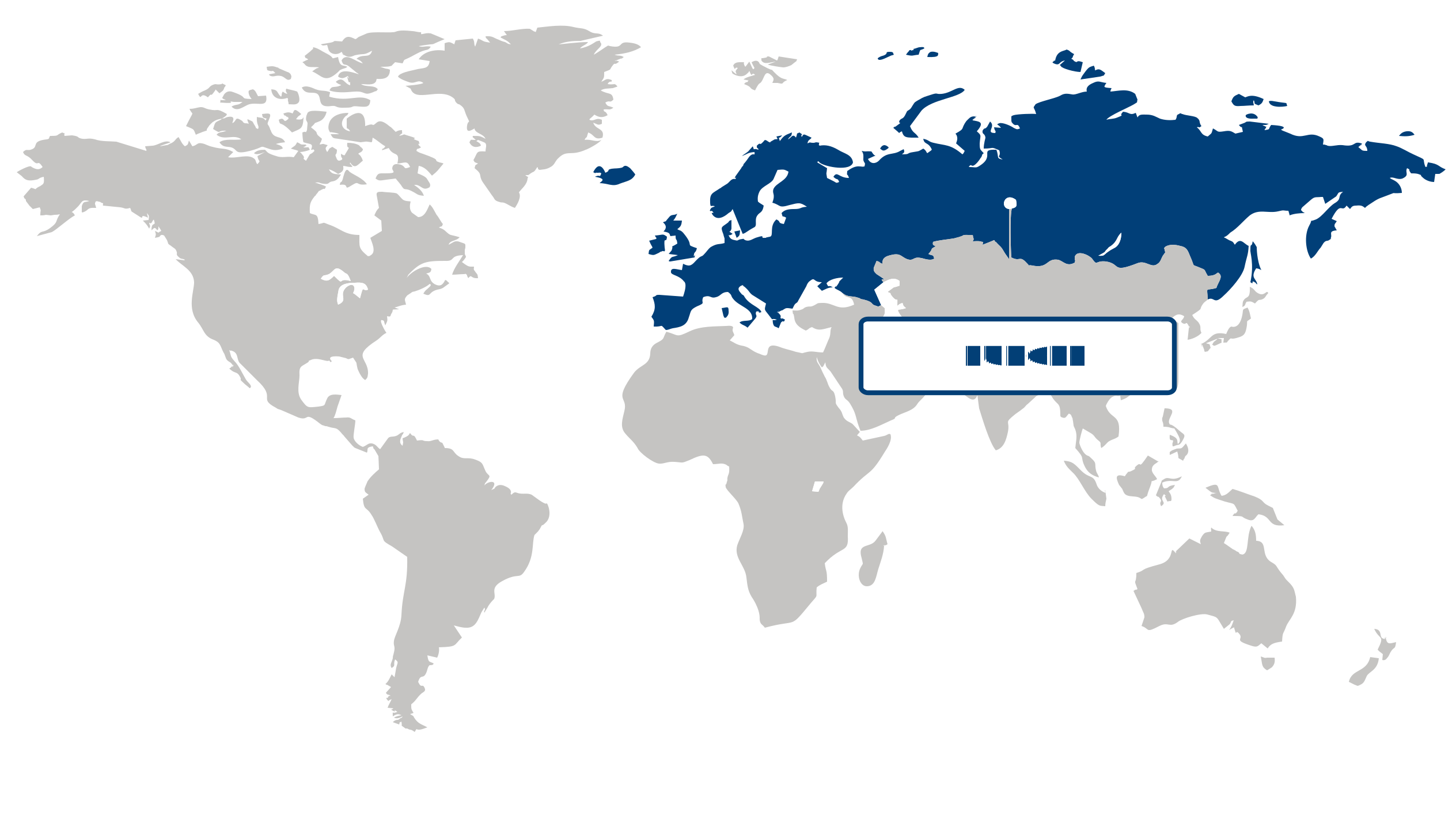
Largest Region
Europe
Largest Market Share in 2026
Europe (Largest Region) vs Asia Pacific (Fastest-Growing Region)
Europe accounted for the largest share of the fertility tourism market in 2026, supported by established reproductive healthcare infrastructure, availability of specialized fertility services, and cross-border demand for assisted reproductive treatments. Differences in treatment availability, regulatory environments, and access conditions across European countries encourage patients to consider destinations offering suitable procedures and supportive care pathways. Strong medical tourism infrastructure, specialist expertise, and established international patient services further reinforce Europe's attractiveness for fertility-related travel.
Asia Pacific is experiencing the fastest growth in the fertility tourism market as fertility awareness increases and reproductive healthcare capabilities continue to expand across the region. Growing demand for assisted reproductive services, improving specialist infrastructure, and rising healthcare expenditure are encouraging patients to explore treatment options beyond their local markets. Expanding medical tourism ecosystems and greater availability of advanced fertility procedures are also strengthening the region's appeal among domestic and international patients seeking accessible reproductive care.
Key Country Insights
The U.S. attracts fertility tourism through specialized reproductive medicine, advanced assisted reproductive technologies, and access to complex treatment options. International patients seek U.S. clinics for individualized care, donor programs, and sophisticated laboratory capabilities that support diverse fertility needs.
Japan emphasizes technologically advanced fertility treatment supported by experienced specialists and modern clinical infrastructure. International interest in Japan is driven by high-quality reproductive care, particularly among patients seeking advanced laboratory procedures and personalized treatment protocols.
South Korea combines fertility treatment with its established medical tourism ecosystem, offering coordinated patient services and advanced reproductive technologies. South Korea continues strengthening multilingual support, digital patient engagement, and streamlined care pathways for international fertility travelers.
Germany's fertility tourism market is supported by well-established clinical standards and highly specialized reproductive healthcare providers. Germany continues to attract patients seeking reliable treatment quality, although regulatory requirements influence the range of fertility services available to international visitors.
France supports fertility tourism through specialized reproductive medicine centers operating within a carefully regulated healthcare framework. France remains attractive for patients seeking clinically rigorous treatment, experienced fertility specialists, and comprehensive reproductive health services aligned with established medical standards.
Italy offers fertility tourism through specialized clinics that emphasize individualized treatment plans and patient-centered reproductive care. Italy continues attracting international patients seeking experienced clinicians, advanced IVF procedures, and integrated healthcare services within established fertility centers.
Segment Leadership and Growth Trends
Age Group Segment Analysis: 35-44 (Largest Segment) vs 45-54 (Fastest-Growing Segment)
The 35-44 age group held the largest share of the fertility tourism market at 44.57% in 2026, reflecting the increasing demand for fertility treatments among individuals and couples who may require assisted reproductive services as they pursue parenthood later in life. Patients in this age group may also seek specialized treatment options, broader access to reproductive technologies, and potentially more favorable treatment availability in international destinations. The combination of reproductive planning and access to specialized fertility care supports this group's strong market position.
The 45-54 age group is the fastest-growing segment as advancements in fertility treatment and increasing awareness of available reproductive options encourage older individuals to explore assisted reproductive services. Patients in this age range may seek treatment in destinations offering specialized expertise, advanced reproductive technologies, and broader service availability. Greater awareness of cross-border fertility care is also contributing to the expanding participation of older patients in fertility tourism.
Treatment Segment Analysis: IVF With Own Egg (Largest Segment) vs Donor Egg Treatment (Fastest-Growing Segment)
IVF with own egg accounted for the largest share of the fertility tourism market, reaching 53.49% in 2026. Its leading position is supported by patient preference for treatment using their own genetic material and the established role of IVF in assisted reproduction. International fertility centers offering specialized reproductive services can attract patients seeking access to treatment expertise, advanced laboratory capabilities, and broader care options, supporting continued demand for own-egg IVF.
Donor egg treatment is experiencing the fastest growth as patients facing age-related fertility challenges or reduced ovarian reserve increasingly consider donor-assisted reproductive options. Cross-border treatment can provide access to specialized donor programs and reproductive services that may have varying levels of availability across countries. Greater awareness of donor-assisted conception and expanding acceptance of alternative pathways to parenthood are supporting stronger demand for this treatment segment.
| Report Segmentation | |||
| Segment | Sub-Segment | Largest Segment | Fastest Growing Segment |
|---|---|---|---|
| Age Group | 18-24, 25-34, 35-44, 45-54 | 35-44 | 45-54 |
| Treatment | Donor Egg Treatment, IVF With Own Egg, Surrogacy, Donor Embryo, Sperm Donation | IVF With Own Egg | Donor Egg Treatment |
| Country | U.S., UK, Spain, Czech Republic, Portugal, Thailand, Malaysia, India, South Korea, Turkey | Turkey | Spain |
 Read our Research Approach
Competitive Landscape and Market Positioning
Major players in the fertility tourism market:
1. Bumrungrad International Hospital (Thailand)
2. Apollo Fertility (India)
3. Barcelona IVF (Spain)
4. IVF-Life Group (Spain)
5. Alpha IVF & Women’s Specialists (Malaysia)
6. Manchester Fertility Services Ltd. (United Kingdom)
7. San Diego Fertility Center (United States)
8. Eva Fertility Clinics (Cyprus)
9. Genesis IVF Centre (India)
The fertility tourism market is increasingly shaped by integrated healthcare and travel support services designed to improve patient convenience and treatment accessibility. Clinics are adopting teleconsultation platforms, multilingual support systems, and personalized treatment coordination to attract international patients. Competitive differentiation is also being influenced by specialized fertility programs, advanced reproductive technologies, and patient-centric care models.
Industry Development/News
| Company Name | Date | Key Development |
|---|---|---|
| Sabine Hospitals | Jun-24 | Sabine Hospitals secured USD 50 million in a funding round led by CX Partners. This capital infusion is earmarked for expanding clinical service offerings and upgrading operational infrastructure, enhancing the hospital’s capacity to support complex reproductive healthcare procedures and improve patient outcomes in the competitive fertility treatment sector. |
| Birla Fertility & IVF | Aug-23 | Birla Fertility & IVF, part of the CK Birla Group, announced a USD 59.4 million investment plan to scale its presence in the Indian market. The strategy focuses on establishing 10–12 new clinical centers across southern India within a two-year timeframe, significantly increasing its operational footprint and regional capacity for fertility services. |
| Alpha IVF Group | Jan-26 | Alpha IVF Group began construction of an international-standard fertility center in Bali. This facility is designed to provide high-end reproductive healthcare services tailored for medical tourists, marking a strategic geographic expansion that strengthens Bali’s status as a regional hub for fertility tourism and increases the availability of advanced IVF treatments. |
| TMRW Life Sciences | Mar-24 | TMRW Life Sciences introduced CryoLink, a specialized workstation for the digital management of frozen specimen inventories in fertility clinics. By integrating with TMRW’s automated storage solutions and Digital Specimen Management system, this technology enables enhanced laboratory standards and operational efficiency for high-volume fertility treatment providers globally. |
| First Fertility PGS Center Limited | Jun-25 | First Fertility PGS Center Limited launched a dedicated Indian Lounge in Thailand to facilitate cross-border patient intake. This initiative streamlines the patient experience for those traveling from India for reproductive procedures, reinforcing the company's competitive positioning in the international fertility tourism market through improved concierge and support services. |
Why Choose Us
Specialized Expertise: Our team comprises industry experts with a deep understanding of your market segment. We bring specialized knowledge and experience that ensures our research and consulting services are tailored to your unique needs.
Customized Solutions: We understand that every client is different. That's why we offer customized research and consulting solutions designed specifically to address your challenges and capitalize on opportunities within your industry.
Proven Results: With a track record of successful projects and satisfied clients, we have demonstrated our ability to deliver tangible results. Our case studies and testimonials speak to our effectiveness in helping clients achieve their goals.
Cutting-Edge Methodologies: We leverage the latest methodologies and technologies to gather insights and drive informed decision-making. Our innovative approach ensures that you stay ahead of the curve and gain a competitive edge in your market.
Client-Centric Approach: Your satisfaction is our top priority. We prioritize open communication, responsiveness, and transparency to ensure that we not only meet but exceed your expectations at every stage of the engagement.
Continuous Innovation: We are committed to continuous improvement and staying at the forefront of our industry. Through ongoing learning, professional development, and investment in new technologies, we ensure that our services are always evolving to meet your evolving needs.
Value for Money: Our competitive pricing and flexible engagement models ensure that you get maximum value for your investment. We are committed to delivering high-quality results that help you achieve a strong return on your investment.
Select Licence Type

